
Translated material
"This is more than justification for actions." Participants in the invasion of Ukraine appeared on Orthodox icons
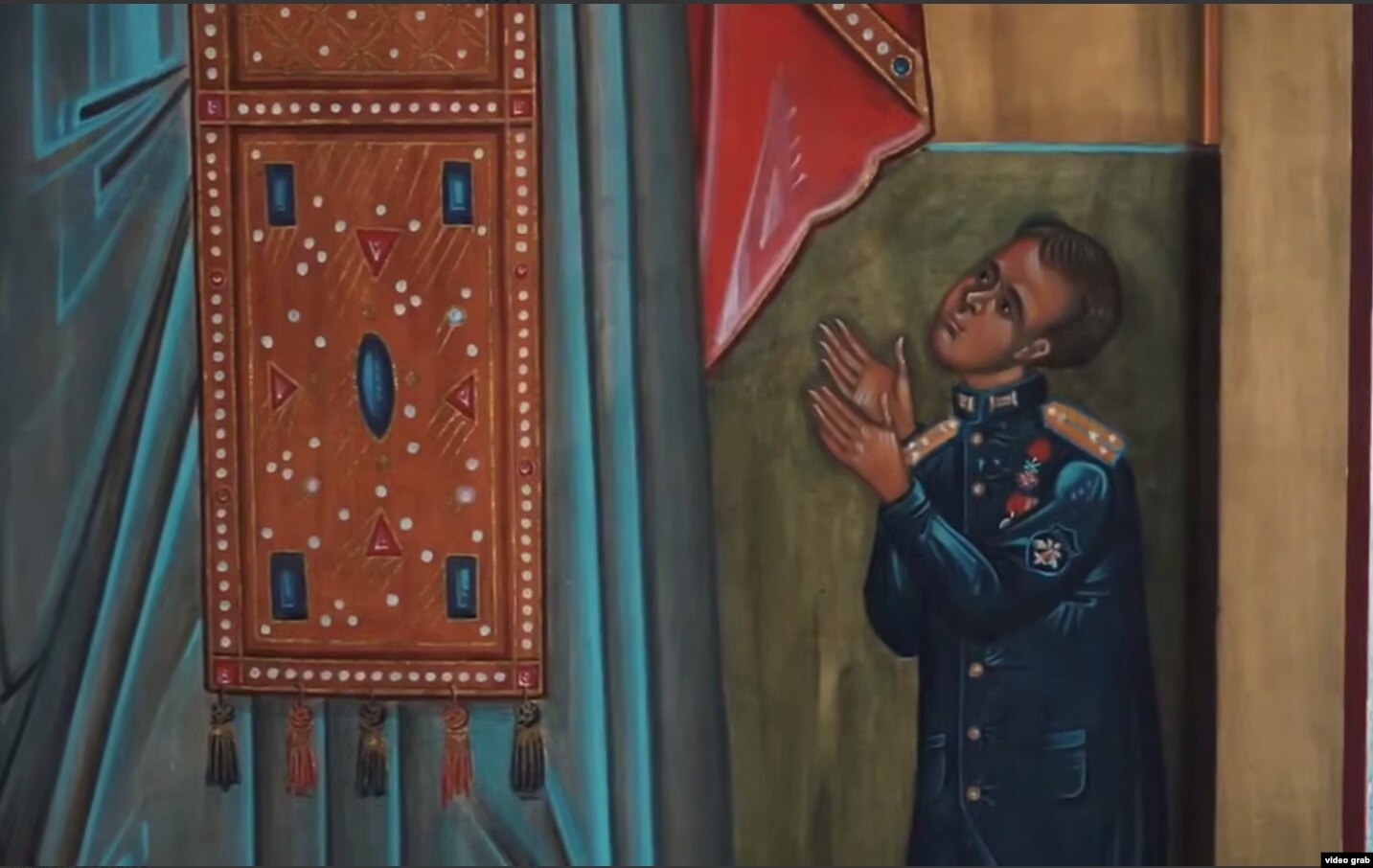
In mid-February, the governor of the Pskov region, Mikhail Vedernikov, advertised new icons in his Telegram channel - depicting SVO participants. And not collective images, but specific paratroopers of the 76th Airborne Division who died in Ukraine in 2023. Attempts to sacralize a “special military operation” have been made more than once, but such targeted glorification of the soldiers of the aggressor army has never happened before, experts say. This, they believe, testifies not so much to state intervention in the affairs of the church, but to the birth of a “new religion” on the basis of Russian Orthodoxy.
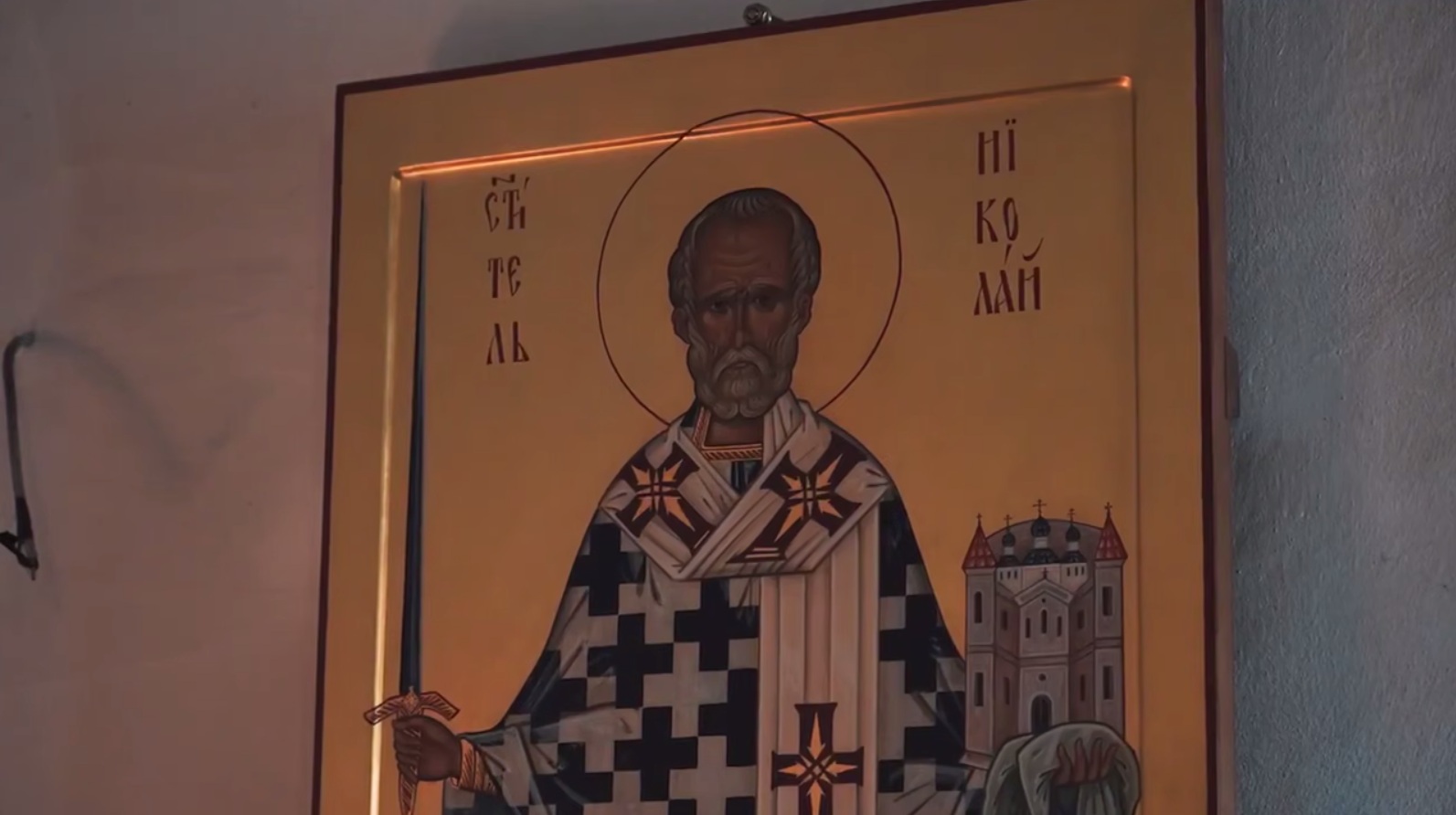
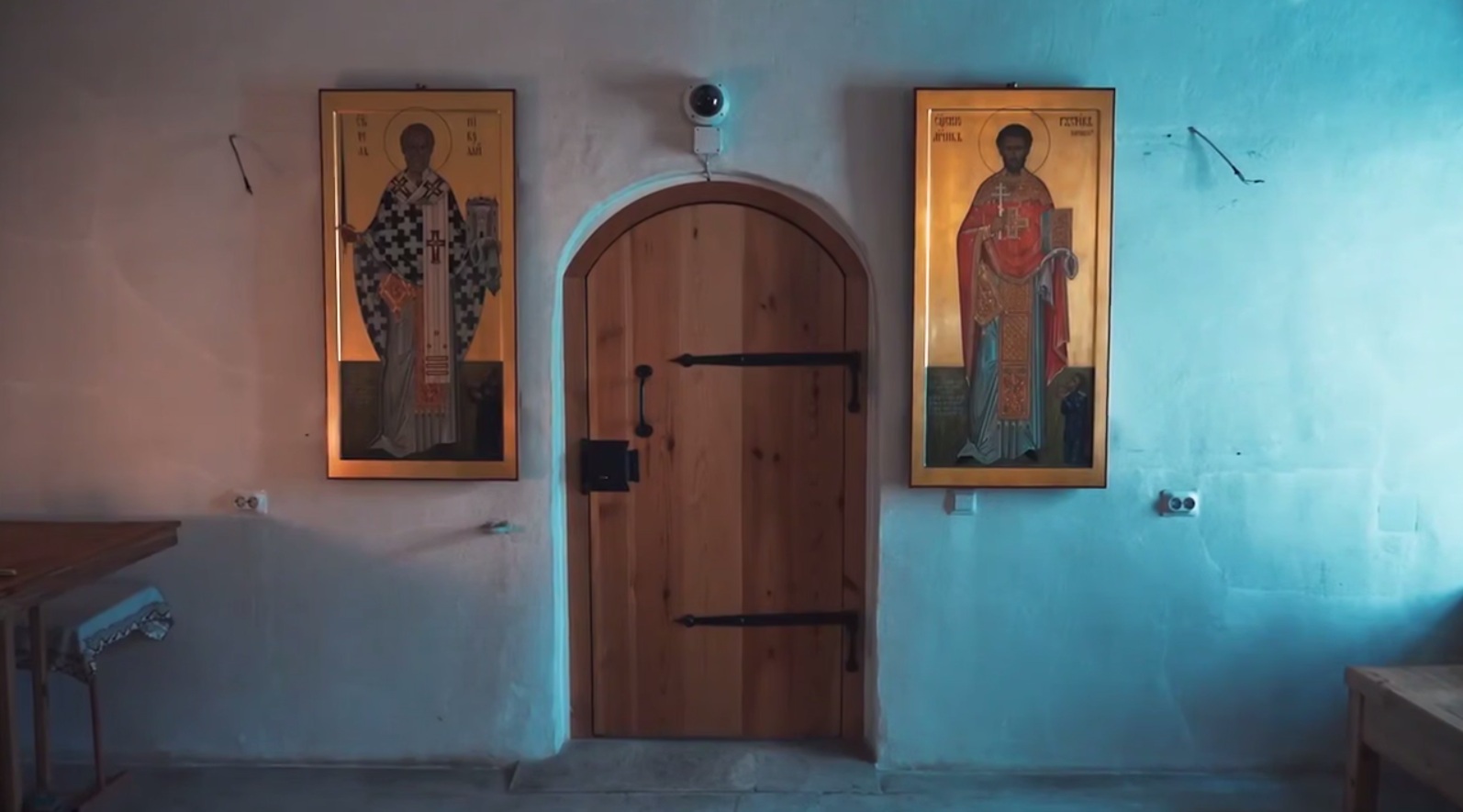
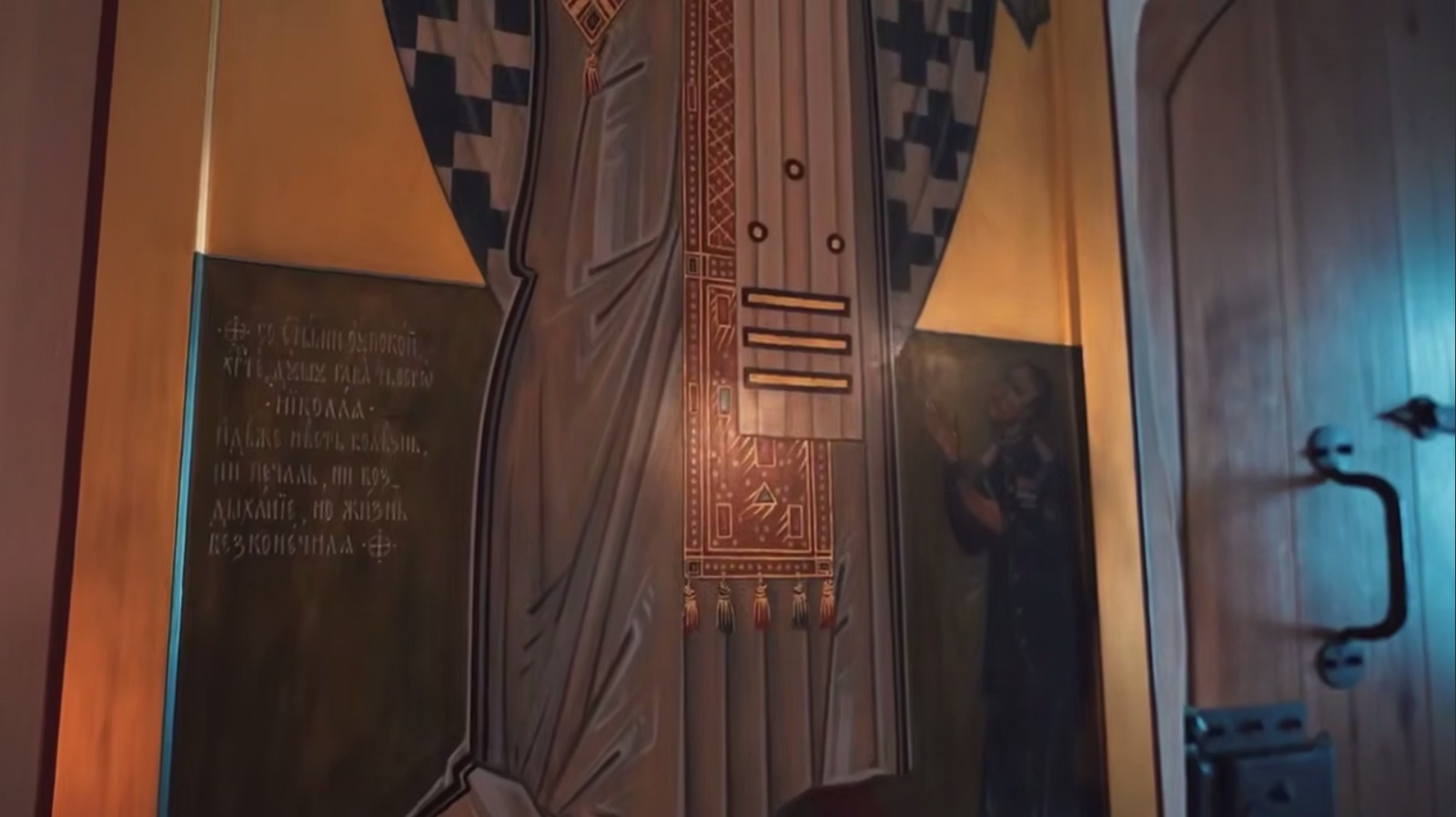
“Everyone can venerate these unique icons, and also pray for all our soldiers who defend our country,” wrote Mikhail Vedernikov. A video is attached to the post - two loose icons written in the classical style. On one is Saint Nicholas of Mozhaisky (the main, large figure), and below at his feet (small image) is senior warrant officer Nikolai Savchenko. On the second - Saint Rusticus, Hieromartyr of Paris and Senior Lieutenant Ruslan Sheika. Both of them died in the war in Ukraine in 2023.
“I didn’t choose it on purpose”
The icons are in the temple of the unmercenary saints Cosmas and Damian from Primostje. This is one of the old Pskov churches opposite the Kremlin (founded in 1462), a cultural heritage site of federal significance and part of the ensemble "Temples of the Pskov School of Architecture", included in the UNESCO World Heritage List in 2019. Its rector since 2008 is 60-year-old priest Mikhail Fedorov. In the Pskov diocese, he heads the department for prison ministry - visiting believers in pre-trial detention centers and colonies. In the Pskov department of the Federal Penitentiary Service, Father Mikhail holds the position of assistant chief for organizing work with believers.
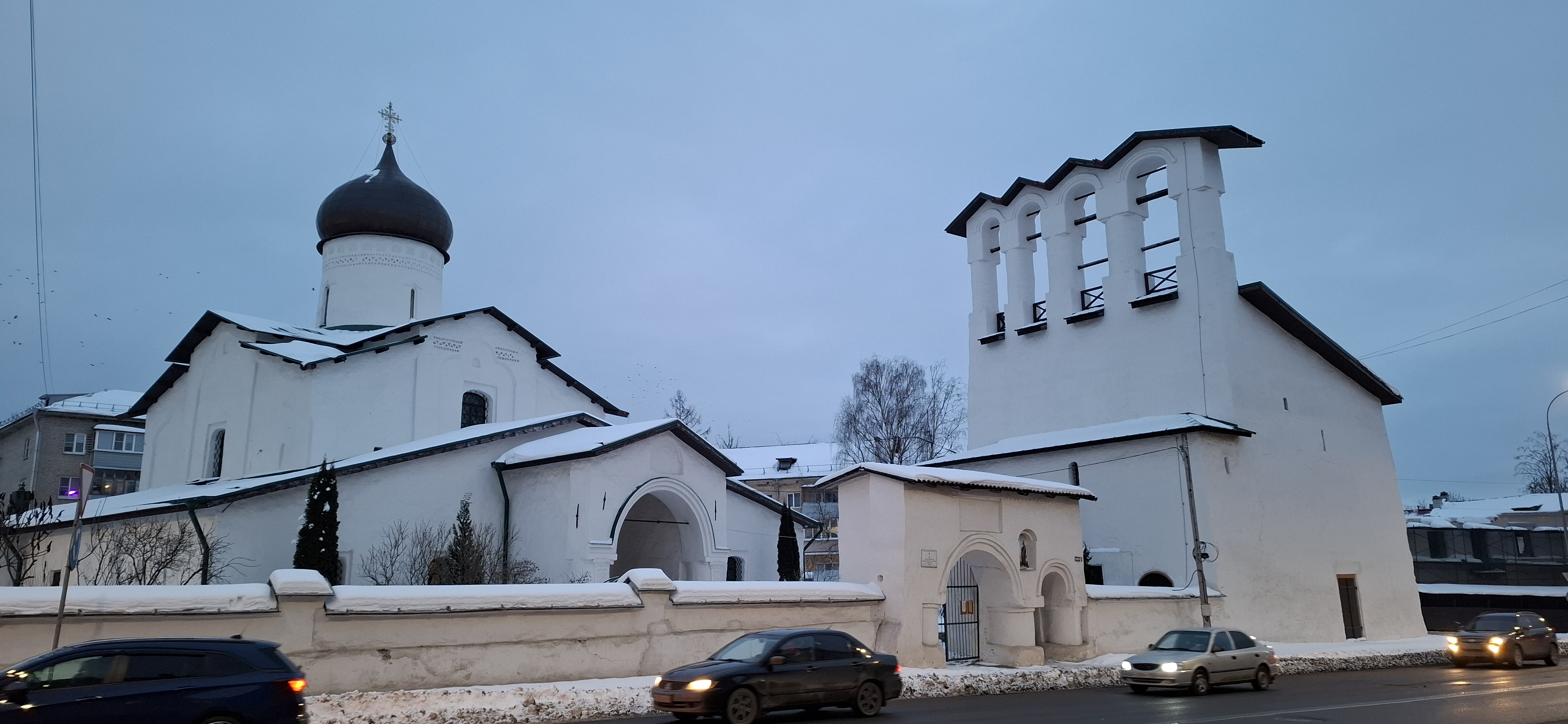
Although the new icons became famous only after the post of governor, they have been in the temple since last year. Written by order of Denis Ivanov, entrepreneur and deputy of the Pskov City Duma. He paid for the work and came up with the idea itself, the deputy confirmed to the Sever.Realii correspondent. When asked why, out of more than a thousand Pskovites who died during the “North War,” it was Sheika and Savchenko who ended up on the icons, Ivanov replied: “It just so happened, I didn’t choose it on purpose.” According to him, four such icons were planned, but two more families did not hand over images of their dead. Ivanov no longer began to tell the details. The editors were unable to contact the icon painter himself.
Both paratroopers on the icons are professional military men, both served in the 76th Airborne Division, stationed in Pskov, and participated in the war with Ukraine from the first day. The details of their “heroic death” are not mentioned in official reports.
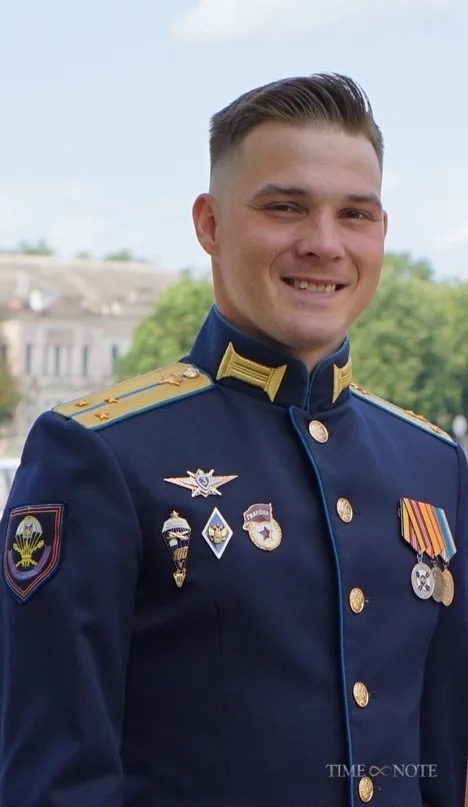
Ruslan Sheika (October 31, 1995 - August 9, 2023) - the son of a paratrooper officer, was born in Pskov, after graduating from the Ryazan Airborne School with the rank of guard senior lieutenant, he served as commander of an air assault platoon. He died “in the performance of military duty” on the territory of the “Lugansk People’s Republic.” During his lifetime he managed to earn the Suvorov medal, and was awarded the Order of Merit for the Fatherland, 4th class with swords, posthumously.
In November 2024, a memorial plaque in his honor was hung on the wall of Lyceum No. 8 , where Sheika studied for the last two years, tenth and eleventh grade. Before this, he graduated from the Pskov Orthodox Gymnasium (formerly the Pskov School of Regents). Ruslan's mother Lyubov Sheika refused to talk to the Sever.Realii correspondent: “I can’t talk about my son.”
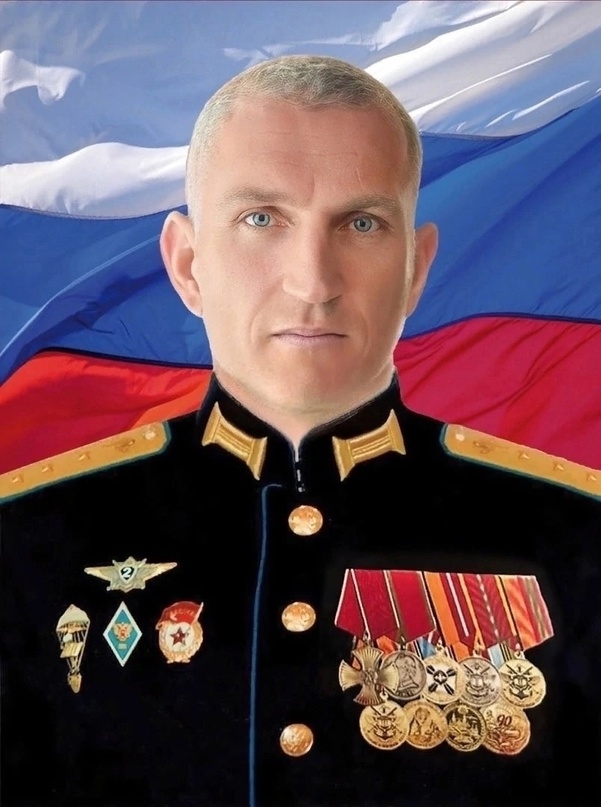
A month later, a memorial plaque was installed in honor of Nikolai Savchenko (03/17/1981 - 09/18/2023) - on the wall of the house on Shestaka Street in which he lived. He was born on the Chelbassy farm in the Krasnodar region. He entered the army by conscription, and after serving his military service, he signed a contract with the 76th Guards Air Assault Division. He was a participant in the Second Chechen War and other “special operations” of the Russian Armed Forces. He got married in Pskov and left behind a widow, Natalya, with a schoolgirl daughter and an adult son, who followed in his father’s footsteps into the paratroopers. Daniil Savchenko, like his father, ended up at the SVO, in the same material support company. After the death of Nikolai in the Zaporozhye region - “while performing a combat mission” - his son became an acting company sergeant major.
“Formal canonicity is not the whole of theology”
Nikolai Mozhaisky and Rustik Parisian in the company of paratroopers are “in-lay” icons, that is, donated to the temple. Sheika and Savchenko are depicted on a distinctly smaller scale, in the place traditionally reserved on the icon for the donor himself, the “investor,” or those for whom he asks to pray.
Practicing icon painter Alexander (name changed at the request of the hero) says that from the point of view of tradition, there are no formal violations: there are no halos over the military, they are not the only and not the main characters in the icon. This means that the icon painter does not cross the line:
– If someone tried to imagine a person with a halo, this would already be illegitimate. There were cases when, before canonization, people were depicted with halos - this is wrong. And here - why can’t we, conditionally, depict our beloved great-aunt: here she is praying to the Mother of God? Can. The meaning of such an image is to emphasize a person’s connection with God or to remind oneself and others: one must pray for him in a special way.
The author of the icon obviously supports the ideas of the so-called “SVO”.
– Since we represent only one side in this image, we are clearly demonstrating our preference for it. In this case, we show only one of the warring parties as coming to the saints, while the other side is silent, not implied. So, yes, this is support for “SVO,” explains the icon painter.
The news about icons depicting Russian soldiers killed in Ukraine looks scandalous, says Sergei Chapnin, director of communications at the Center for Orthodox Studies at Fordham University. He notes that it is important to distinguish between the question of admissibility and the question of appropriateness of such images - and the second is more significant from a theological point of view:
– From the point of view of Orthodox liturgical art, there is nothing unexpected in the very fact of the image. Pskov icons fit into the centuries-old tradition of ktitor and inlaid images. Suffice it to recall the 12th-century mosaic in the Palermo church of Santa Maria del Ammiraglio (better known as Martorana): the famous Sicilian admiral George of Antioch is depicted here prostrated at the feet of the Virgin Mary in prayer. A similar practice is also known in Russian church art - in ancient frescoes, in sewing, in ktitor (ktitor is a donor or trustee of a temple - SR) images. The builder of the temple, the donor, the fallen and commemorated warrior - all of them could be depicted at the feet of the Virgin Mary or their heavenly patron.
The image of a person in a prayerful pose in front of a saint is not canonization or a proclamation of holiness, Chapnin emphasizes.
– This is an image of prayer, intercession, intercession. Whether alive or deceased, a person in prayer is addressed to the saint - and here there is no claim that he himself is the object of worship. The icon does not affirm his righteousness, but his sincere need for the intercession of the saints. From a theological point of view, this position is modest, not arrogant. The Pskov icon is thus within the framework of the canonical norm, and not outside it.
However, Chapnin says, context and intent are just as important.
– George of Antioch built the church in Palermo on his own initiative, out of personal piety. The Pskov icons appear in a different context: they arise as an element of state mobilization, which a significant part of the Church sincerely supported. And this radically changes the theological character of the event. This is no longer so much a gesture of respect for patrons as a direct religious sanction of a political decision. In other words, the symbol of political loyalty addressed to society becomes more important than the image of prayer addressed to the saints.
The question that tradition has always considered decisive is this: where does this icon of a praying person orientate - towards the Kingdom of God or towards the earthly kingdom? Towards repentance or ideological mobilization? This is where the true limit of image perception lies. And this is not the border of the iconographic canon, but the eschatological border of our faith,” says Sergei Chapnin.
"Their death is actually sacralized"
The icon painter tried to introduce the Pskov paratroopers “into sacred space, without really thinking about how to justify this,” comments Orthodox priest and theologian Andrei Kordochkin. This is not a violation, but rather a new interpretation of the canon:
– After the Temple of the Armed Forces, it’s already difficult to talk about the canon. The canon is a living thing, it changes. But just as much as the ideas about good and evil were reset after the start of the war, so after this temple we can say that there is no canon: you can do whatever you want. If tomorrow I see Budyonny or Zhukov on an icon, I won’t be surprised at anything,” says Kordochkin.
In the new Pskov icons, he sees a continuation of the tone set by the mosaics with the military in the Moscow Church of the Armed Forces, but there are also fundamental differences.
“In that church, soldiers are mostly depicted collectively - as “participants” of the Great Patriotic War or “internationalist warriors,” without names, without specifying specific people,” says the theologian. – At the same time, we know that they tried to depict Putin, Shoigu and others in the mosaic (about the “annexation of Crimea”) - and after a public scandal they decided to take it back. And here is something fundamentally new - the depiction of specific participants in this war in the sacred space of the temple. Formally, this does not make them saints: yes, tradition allows for the depiction of non-canonized people - without halos. But their presence on the icon fits into the narrative that has already been spoken by church hierarchs, including in Pskov: that the death of soldiers in war is equated to martyrdom. And in this sense, their death is actually sacralized. Moreover, it is interesting that the difference between professional military men and, say, armed criminals is not indicated here in any way.
And another important point is aesthetic. The mosaics of the Church of the Armed Forces are stylistically much closer to the Moscow metro than to an Orthodox church. And here the traditional ancient Russian icon painting style is very well maintained. And due to this, the presence of these people on the icon begins to look like something “for granted.”
– But this is not “self-evident”?
- Of course not. They are clearly depicted not as people who have committed an atrocity, but in unity with the saints. And the key thing is that their images are introduced into the sacred space of the icon and the temple. This is an attempt to canonize them - not formally, not through an official act, but in the sense that their image is introduced into the church canon. This is a moral assessment. Their scale, of course, is smaller than that of a saint, but still it is more than a “justification of actions.” This is the introduction of an image into the church space as normative.
The demand for “military saints” in Russia is great, says Andrei Kordochkin. The canonization of commander Alexander Suvorov has actually already been initiated. Even the most peace-loving Russian saints are being mobilized “to the front.” For example, Seraphim of Sarov was declared the patron of nuclear weapons - only because closed atomic laboratories were built in Sarov after the war in his destroyed monastery.
Whether Nikolai Savchenko and Ruslan Sheika had special services to the Church is unknown. But if they were baptized and believers, this does not remove responsibility, but, on the contrary, emphasizes it, Father Andrei believes:
– Then this is a crime not only against humanistic ideas about man, but also against their faith. Their moral choices become even more difficult.
– In your opinion, is it more likely that the initiator of this kind of icons is the secular government, or could it have been born within the church?
- This is a painful topic. They often say: “the church has become an instrument of the state.” It seems to me that those who say this do not understand the depth of the processes. Nowadays such things are often done not by order, but sincerely. And priests, and monks, and icon painters. Therefore, in a sense, there is no longer a separation between church and state. There is a general militaristic frenzy in which people simultaneously feel like citizens of the state and members of the church - and do not share this. The paradox is that in fact we are talking about a new religion, where the function of the church is taken over by the state: the state becomes that through which God “acts on earth,” and the church turns into a liturgical appendage.
The Russian example is interesting because the church is formally separated from the state, and society in Russia as a whole is very non-religious, compared to Europe. But with this secularity, the state promotes a model close to the Iranian one: church and state power become inseparable, a form of theocracy. Putin no longer talks like a civil servant, but like a preacher. And the patriarch, when he talks about “traitors to the Motherland,” sounds like the head of a power structure. This is a stylistic substitution, behind which there is a semantic substitution.
– In society, the attitude towards war is ambiguous. How does the appearance of such icons affect the community if there are people there who do not support the war?
– People behave differently. There are three models. The first is that people leave the church completely or stop participating in worship. Secondly, people are leaving churches where they openly preach “holy war” and are looking for more neutral places (there are practically no openly anti-war churches anymore). Third, people stay because they are accustomed to the temple, the community, the priest. Even if we take as an example the temple where Father Alexey Uminsky served: after he was expelled and placed at his spiritual antipode, a certain number of people still remained - because there were other, “old” priests whom they knew. Some left, some remained.
“These icons will disappear pretty quickly.”
Icons with an ambiguous context could hardly appear in the temple against the will of the abbot.
– In Russia, churches are arranged vertically: if in the West the center of decisions is the parish council, then in our country the last word usually goes to the rector, including because he often pays for church icons. Of course, it happens that icons are given as gifts. But they don’t give “to any temple”: the donor chooses a temple for a reason – and often because there is a connection with the abbot. It’s hard for me to imagine that these icons appeared against the will of the abbot,” says Kordochkin.
Icon painter Alexander notes that support for the war in Ukraine is broadcast from the very top of the church hierarchy, so this kind of initiative does not cause resistance within the church:
– If we talk about the Russian Orthodox Church as an institution, and that Patriarch Kirill represents it, then he expresses his position quite clearly. And as I understand it, many “stand up” and accept the consensus that is voiced to them. The Russian Orthodox Church has historically largely followed the rules of life that are established by the authorities - both ecclesiastical and secular. And in Soviet times, too: it existed within the framework set by the state, and got used to this regime.
At the same time, the icon painter recalls, in Christianity, since ancient times, there has been a practice of rewriting icons when their content ceases to correspond to the political moment. A striking example is the Pala d'Oro in St. Mark's Basilica, where the enamel effigy of Doge Ordelafo Faliero was later replaced with a head and a halo. Another typical example is the mosaics in the Basilica of Sant'Apollinare Nuovo in Ravenna: after the city came under Byzantine rule, the figures of Theodoric the Great and his court were removed from the composition, replacing them with neutral decor. The “hands” of the removed characters are still visible on the columns.
– Many icons, frescoes and mosaics were redone over time because historical realities changed. Accordingly, here we can talk about a potential change in realities and a potential “correction” of the image in this regard. So to speak, an image with a shelf life equal to that of the regime (or almost), says Alexander.
Andrei Kordochkin also agrees that Pskov icons with paratroopers will not last forever:
– The political situation will change – history does not know unchanged political situations. But the church community is by nature rather inertial: changes come there last. On the other hand, the Russian church community has traditionally been able to react quite quickly to changes in society. I think if trials of war criminals begin, these icons will disappear pretty quickly.
"This is more than justification for actions." Participants in the invasion of Ukraine appeared on Orthodox icons