
Translated material
The Gulf is burning: the strike on Iran shook the whole world
Oil and gas prices are rising, the Emirates mourns an era of stability, Iran's "axis of resistance" has crumbled, and Hezbollah is banned by its own government

Emirates. Photo: AFP/East News
The Middle East is plunged into chaos and uncertainty after joint US and Israeli strikes on Iran. On February 28, Iran's Supreme Leader Ayatollah Ali Khamenei was killed in a strike on his residence. In a swift and furious response, Iran unleashed an indiscriminate barrage of missile and drone attacks on at least nine countries in the region. He hit not only American military facilities in these countries, but also, as has become fashionable in modern wars, civilian infrastructure and energy hubs. And these tactics have shown surprising effectiveness from the point of view of a regime driven into a corner. Without much opportunity to seriously annoy his immediate offenders - the United States and Israel - he hurts their allies. And through them - to the entire world economy and the world way of life in general. The escalation has disrupted global air travel, sent oil and gas prices soaring, and severely damaged the stability prospects of the Middle East's major economies, whose philosophy was (recklessly) built on the axiom of the absence of military threats. But now the threat of a real war with the subsequent redrawing of the geopolitical landscape hangs over the prosperous, fat countries of the Persian Gulf.
Impact on energy
So, Iran's retaliatory strike was aimed at Israel, as well as Saudi Arabia, the United Arab Emirates, Bahrain, Kuwait, Qatar, Oman, Jordan and Iraq - nine states in total. In Tehran, the strikes are described as attacks on “occupied territories and criminal American bases,” but in fact they hit not only military targets. Civil infrastructure, especially transport, was also damaged.
Energy facilities in Qatar and Saudi Arabia were hit. The airports of Dubai, Abu Dhabi, Doha and Kuwait were hit, and Bahrain also reported damage to its international airport. All this led to massive flight cancellations and disruption of global air travel.
The closure of airspace in several countries of the Persian Gulf - one of the main aviation hubs on the planet - forced airlines to urgently change routes.
Airplanes began en masse to bypass the region via Turkey, the Caucasus and the Indian Ocean, which increased the duration of flights between Europe and Asia by several hours. Hundreds of flights were canceled and tens of thousands of passengers were stranded in transit airports around the world.
This is particularly sensitive because the Gulf aviation hubs of Dubai, Doha and Abu Dhabi have emerged in recent decades as key hubs for global aviation. A huge share of transit flights between Europe, Asia, Africa and Australia pass through them. For example, Dubai Airport alone has been the busiest airport in the world in terms of international passenger traffic for many years. Therefore, any interruptions in the operation of these hubs instantly affect the global aviation system.
Global shipping is also suffering greatly.
The main reason is the Strait of Hormuz. This bottleneck between Iran and Oman is one of the most important sea corridors on the planet. About 20% of all global oil trade passes through it - more than 20 million barrels per day, as well as a significant part of the world's liquefied natural gas supplies from the Persian Gulf countries.
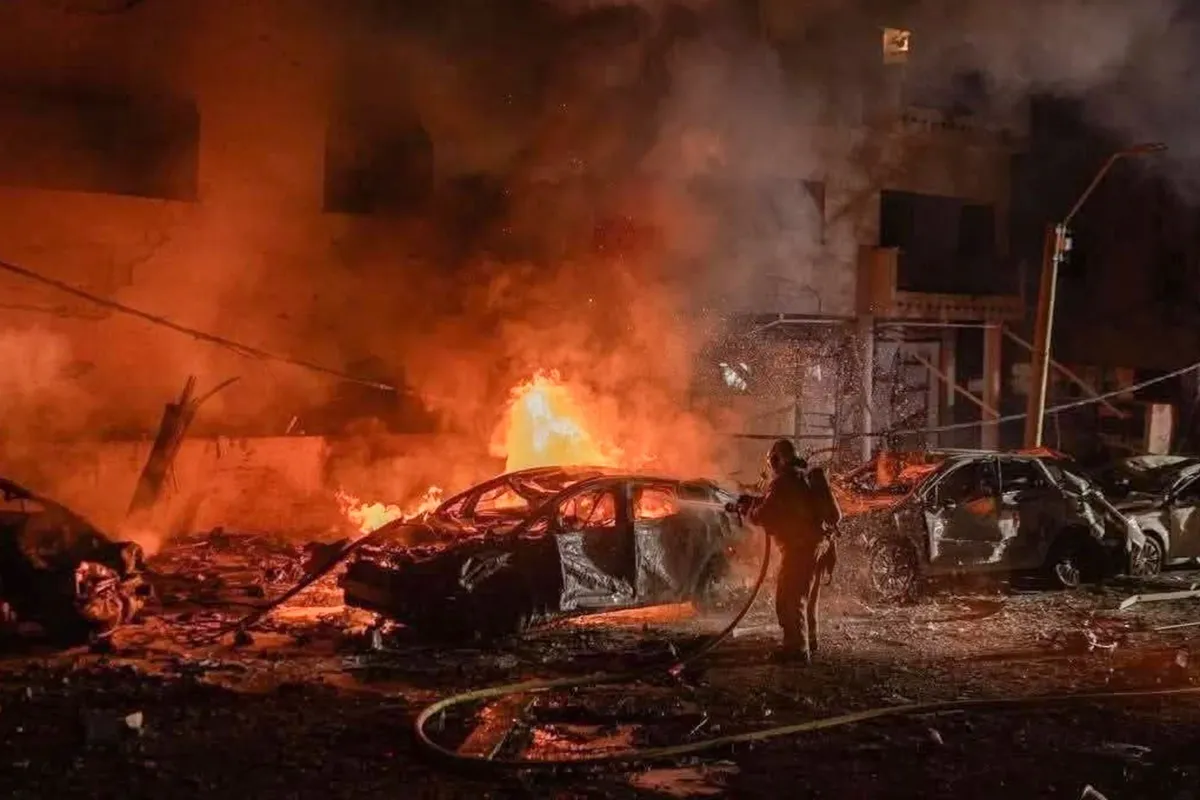
Formally, the strait has not yet been declared closed, but in fact, traffic there has sharply decreased. Tanker companies and container carriers have massively suspended passage through the region, dozens of ships are anchored at the entrance to the Persian Gulf, and some carriers have begun to turn their ships around and wait for developments. Marine insurers quickly raised military insurance premiums and, in some cases, refused to insure passage through the region altogether. This instantly increases the cost of any oil and gas transportation.
Any instability in this narrow sea corridor immediately affects the global energy sector: there are almost no alternative routes, and pipelines from Saudi Arabia and the UAE are able to compensate for only a small part of this flow. That's why
The mere threat of blocking Hormuz can rock global markets and drive up energy prices around the world.
The consequences of the conflict in the Middle East have overwhelmed even China, which is geographically distant from the region, because about 80% of Iranian oil is exported there, and any supply disruptions immediately affect the energy security of the world’s second economy. But the most painful blow to global energy stability is, of course, the consequences of the attack on Qatar. Drone strikes on the industrial city of Ras Laffan - the world's largest LNG export hub - and on Mesaieed forced QatarEnergy to completely shut down its liquefied natural gas production.
As a supplier of nearly 20% of the world's LNG, Qatar plays a key role in global energy. Its gas provides a significant portion of supplies to Europe and Asia. Therefore, even a short-term stop in Qatari exports instantly shook the markets. The indefinite closure of the world's largest gas hub - with no timetable for resumption - has caused gas prices in Europe and the UK to rise by 30-50%, with analysts warning of further price increases in Europe and Asia.
This could hit heating, energy supplies and industry in the coming months - especially if supply disruptions drag on.
Emirates: a storm in a calm haven
The example of the United Arab Emirates speaks volumes about how Iran's indiscriminate shooting affects the region's largest economies. A fact that all world agencies are citing today: every minute of downtime at Dubai Airport, one of the largest in the world, causes approximately one million dollars in damage. Today, there are rare flights from the airport, mostly evacuation ones, but it is impossible to talk about a full restoration of the airport’s activities. And it’s hard to even guess how long this downtime will last.
To understand the scale: Dubai Airport is the largest in the world in terms of international passenger traffic. Before the current crisis, about 90 million passengers passed through it annually. This is one of the main transit hubs on the planet. Of course, Dubai - a shining symbol of the Gulf's prosperity - is managing the crisis as best it can, combining its usual "stiffening ribs" with decisive measures associated with a difficult situation. Civil defense units are mobilized around the clock; Modern air defense systems, including THAAD, intercept numerous threats, and the Air Force is on full combat readiness. However, falling debris is causing fires near iconic sites such as the Burj Al Arab and Palm Jumeirah. Photos of these fires are scattered all over the world.
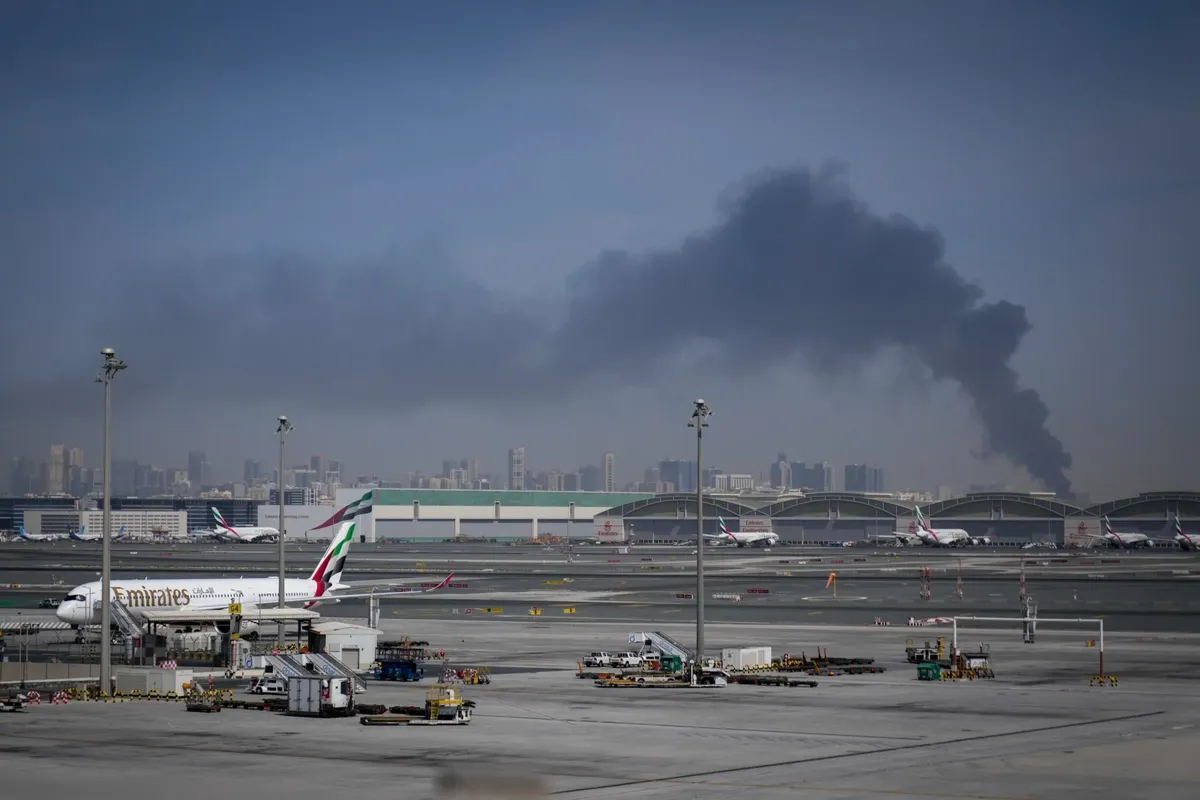
Authorities are calling for calm and warning against the spread of unverified rumors, stressing the stability of the Emirati security system. On Monday, an interview with a representative of the Emirati headquarters of CNN went viral: in brilliant English with a slight British accent, the officer explained to the public how the Emirates are fighting off any threat from Iran with virtually no effort. This is unusual and unusual: the world has never seen the Emirati military before, because the Emirates are not about war at all. But today it is important for the UAE to show that it is still an island of calm.
The UAE has for decades positioned itself as a place where nothing bad ever happens, only good things happen. A country that is located in the middle of the most explosive region in the world, but at the same time lives as if geography does not concern it. And that’s why today’s transport paralysis looks almost symbolic: if Dubai stops, it means the whole region is really shaking.
In recent decades, the United Arab Emirates has strengthened its reputation as a major logistics and business hub. Despite the fact that the country has long been associated primarily with oil, the structure of its economy has changed radically over the past decades. Today, about three quarters of the UAE's GDP is generated outside the oil sector. According to the country's government, by 2025 the share of non-oil industries will approach approximately 75–78% of the economy.
The Emirates' economy is built on trade, logistics, financial services, tourism, real estate and high-tech industries. The country is home to dozens of free economic zones, home to the regional headquarters of thousands of international companies, from banks and investment funds to technology giants and global logistics operators. In fact, the Emirates have turned into a huge trade crossroads between Europe, Asia and Africa, through which gigantic financial and commodity flows pass.
This, in turn, fuels the construction sector. A huge flow of expats - managers, financiers, engineers and entrepreneurs - creates a steady demand for housing. Foreigners are actively buying real estate in Dubai and Abu Dhabi: in recent years alone, the real estate market has experienced another boom, and the cost of luxury housing has increased by tens of percent.
Tourism is a different story. Before the current crisis, the UAE welcomed tens of millions of holidaymakers a year, and the contribution of tourism and related industries - hotels, restaurants, retail and entertainment - accounted for about 10-12% of the country's economy. Dubai has long become one of the most visited tourist capitals in the world.
That's why
The current war is hitting the Emirates especially hard. Airspace closures, flight cancellations, infrastructure attacks and troubling news from the region instantly undermine the country's main asset - its reputation as a safe and stable place to live, do business and invest.
And for the Emirates’ economy, this reputation is almost as strategic a resource as oil once was. If a country begins to lose its attractiveness for relocation, business building and tourism, this could be a colossal blow for it. Because the entire economic model of the UAE is built precisely on a sense of stability in the midst of one of the most unstable regions in the world.
The collapse of the "Axis of Resistance"
One of the main concerns about the current war is the behavior of Iranian proxies. What impact can they have on the current situation? What about Hezbollah, Hamas, Houthis and others?
It is worth saying that Iranian proxies in the current—in fact, already planetary—war, for which, in fact, they were raised for decades, have not yet shown themselves as many expected.
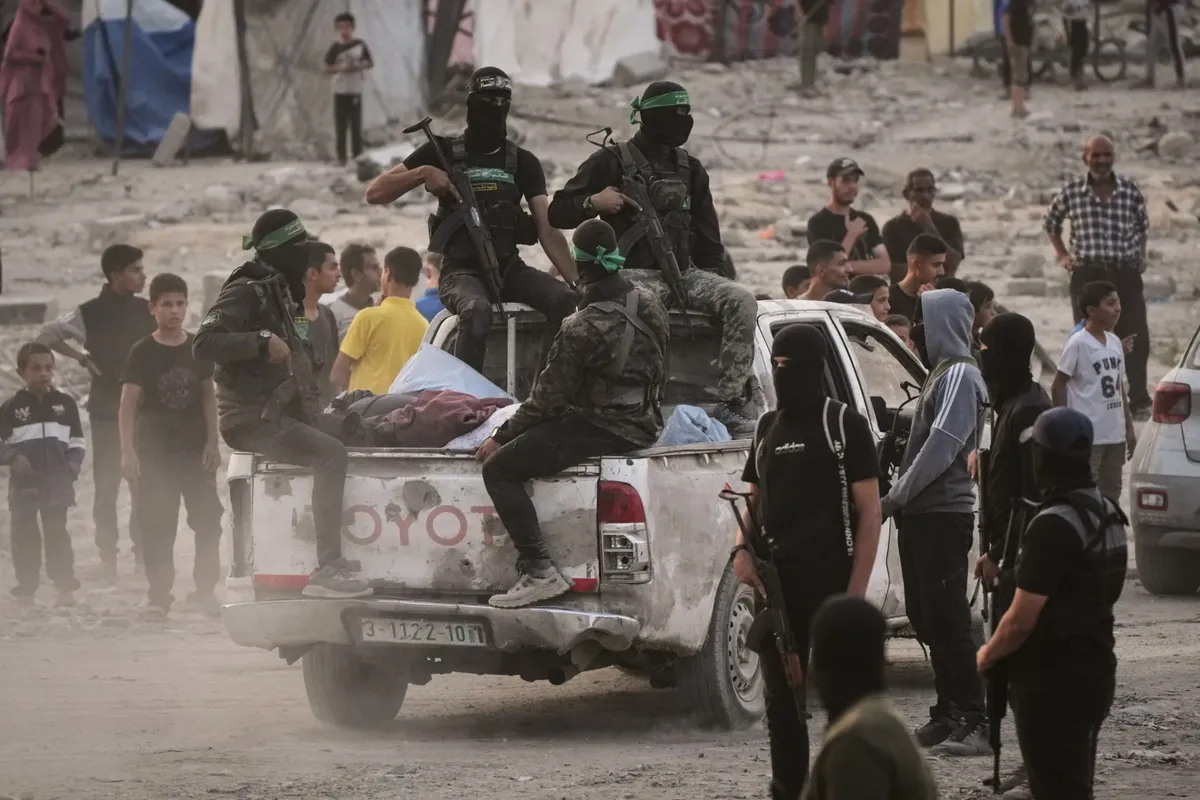
Hamas, for example, after the devastating war in Gaza, effectively lost the ability to carry out large-scale operations. The Israeli army destroyed much of its infrastructure and command. Many tunnels and weapons depots were destroyed, and the group's leadership was partially eliminated or forced into hiding. Therefore, Hamas is reacting to the current escalation with political statements and rare missile launches rather than with large-scale military actions - it simply does not have the resources to open a full-fledged second front.
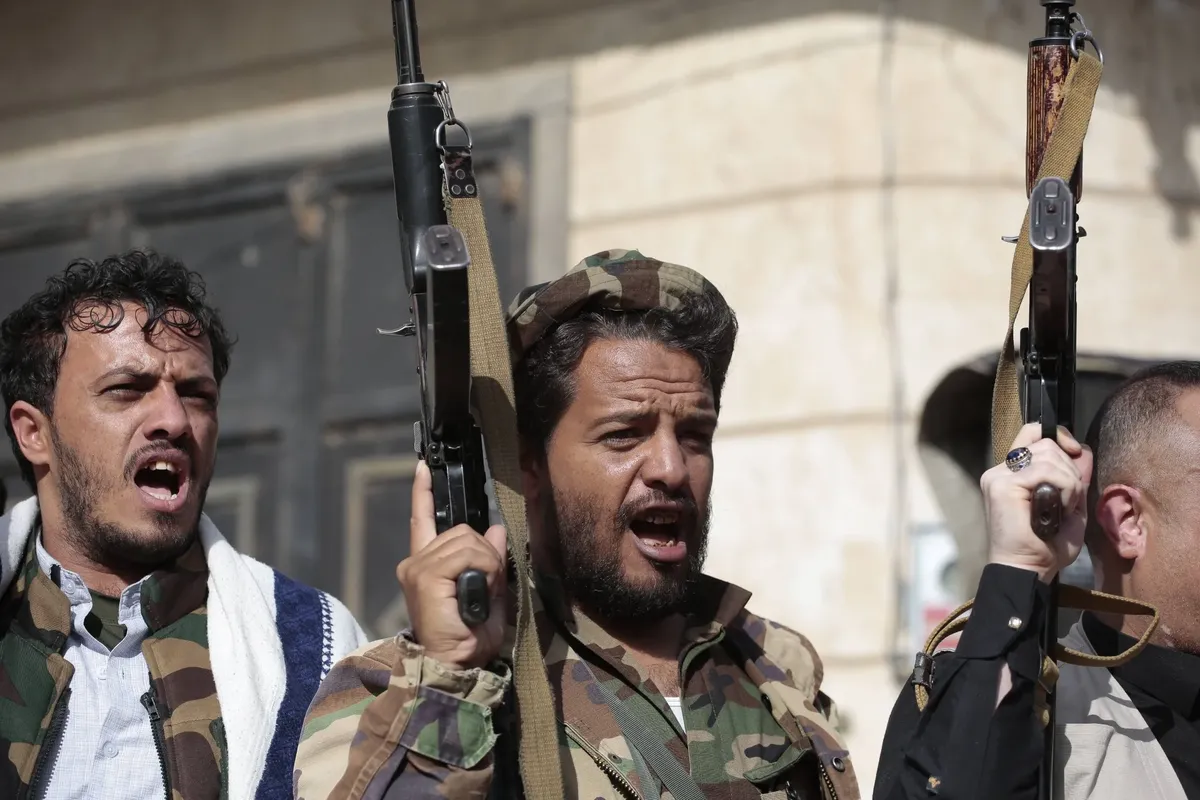
The Houthis in Yemen also appear surprisingly restrained. After a series of American and British attacks on their infrastructure in the Red Sea in 2024-2025, there was essentially a tacit agreement between the United States and the Houthi movement to reduce tensions. The essence of these agreements is that the Houthis are reducing attacks on international shipping and American military installations, and the United States is limiting the scope of its operations against their positions in Yemen. This may not be a formal peace, but a kind of controlled de-escalation regime, which now, apparently, both sides are trying not to violate.
But things have become noticeably more restless in Iraq. Pro-Iranian Shiite militias there—the so-called “popular mobilization forces,” which include groups such as Kataib Hezbollah—periodically launch drone and missile attacks on American military targets in the region. We are talking primarily about US bases in the area of Baghdad and Erbil, as well as logistics facilities of the coalition. These attacks are more of a demonstrative nature: they allow the groups to demonstrate loyalty to Tehran and maintain their reputation as part of the “axis of resistance.” But they have not yet developed into a full-scale campaign. At the same time, the Iraqi government is in an extremely difficult position: formally it cooperates with the United States, but a significant part of the country’s security forces is closely connected with the same pro-Iranian armed groups.
Separate tensions are also observed in Bahrain, where the majority of the population is Shiites, and power belongs to the Sunni Al-Khalifa dynasty. Amid the current crisis, there have been reports of protests in certain areas of the country. However, it is important to note here: we are not talking about armed pro-Iranian formations, but about local protests that have been occurring periodically in Bahrain for many years. The country remains a US ally and hosts the US Navy's Fifth Fleet, so any unrest there immediately attracts increased attention from regional security forces. And it is unlikely that the kingdom itself and its neighbors will allow Iran’s tentacles to grow here.
And yet, the main attention of observers, of course, is focused on the Lebanese Hezbollah. This powerful paramilitary structure has long been considered Iran’s most serious and dangerous proxy and a key element of the so-called “axis of resistance.” However, recent months have greatly undermined its potential. Israel has been systematically targeting Hezbollah's infrastructure for a long time, destroying weapons depots, rocket launchers and individual commanders.
At the end of February, reports emerged of large-scale attacks on Hezbollah warehouses and command posts in the Baalbek area and on the Lebanese-Syrian border, where, according to the Israeli military, Iranian missile storage facilities were located. On February 20, one missile strike allegedly covered the entire command of Hezbollah’s missile forces.
Following these events, Lebanese authorities, who formally share power with Hezbollah in a complex system of political quotas, began to carefully distance themselves from the group's activities. And they can be understood.
The paramilitary wing of Hezbollah has long been recognized as a terrorist organization in many countries around the world, with its activities, financial transactions and any form of support banned on the territory of the relevant states. One should not think that representatives of the Lebanese state do not understand the consequences of all this for their country. Moreover, after the overthrow of the regime of Bashar al-Assad, neighboring Syria fell out of the “Axis of Resistance” bracket. However, Hezbollah did not consider the signal from the Lebanese authorities and did not appreciate how the situation had changed.
Shortly after the start of the US-Israeli operation against Iran, Hezbollah forces attacked northern Israel. This blow was, by and large, symbolic - only 6 shells were fired. Not hundreds, as happened before. However, Israel responded to this demonstrative aggression with all severity: massive airstrikes on southern Lebanon and the Shiite suburbs of Beirut.
The consequences for the country were extremely severe. The Israeli strikes killed 31 people and wounded 149, according to the Health Ministry, and forced tens of thousands of residents in southern Lebanon to flee their homes. Roads to the north of the country were overloaded, schools and other municipal institutions turned into temporary temporary accommodation for refugees - and no one knows for how long. For Lebanon, which is experiencing one of the worst economic crises in its history, this was another blow to social and political stability.
Against this background, the Lebanese authorities have decisively distanced themselves from the actions of Hezbollah, effectively outlawing its paramilitary wing. The Lebanese government has officially stated that any armed operations on the country's territory must be carried out exclusively by the regular army. The authorities also emphasized that the paramilitary actions of non-state groups directed against Israel are not sanctioned by the state.
In addition, Lebanese security forces have strengthened control over the southern regions of the country and a number of transport corridors, trying to limit the movement of armed groups and prevent the country from further being drawn into war. These steps do not mean a formal ban on Hezbollah itself - the group remains a powerful political force and part of the complex system of Lebanese power. However, for the first time in a long time, the state is so openly making it clear that it is not ready to take responsibility for its actions. Lebanon is trying with all its might to save itself from the war waged on its territory by a foreign army. And there is definitely hope - after all, neighboring Syria succeeded!
And yes, in Syria the reaction to what is happening is completely different.
Having officially condemned Iran’s strikes on Arab countries (a statement on this subject was published by the Syrian Foreign Ministry), Syria, which has barely emerged from the civil war, and until recently the main support of the ayatollah regime in the region, is rejoicing over the strikes on Iran.
On the streets of Damascus and especially Homs, which borders Lebanon, people celebrate the death of Khamenei: street vendors hand out sweets, small spontaneous rallies with dancing interfere with traffic.
Syrians, and especially the residents of Homs, can be understood: this city is often called the “capital of the Syrian revolution.” It was there that some of the largest protests against the Assad regime took place in 2011–2012. And the Shiite Hezbollah, which fought on the side of Bashar al-Assad, brutally suppressed the local Sunni population. Homs was virtually destroyed during fighting that involved regime forces, Iranian IRGC units and Hezbollah fighters. Activists were killed, entire city blocks were destroyed.
It was in Homs that the famous American war journalist Mary Colvin, a correspondent for the Sunday Times, died in February 2012. She was in the besieged area of Baba Amr and was killed along with French photographer Remy Ochlik during an artillery attack by Syrian government forces. Western investigations later claimed that the attack on the media center could have been targeted: Assad did not want the West to know about the atrocities that his Shiite allies were committing in Homs.
In general, the actions of the IRGC, Hezbollah and allied militias that supported the Assad regime in Syria became part of a war that, according to various estimates, claimed more than 500 thousand lives and provoked one of the largest migration catastrophes of the 21st century - millions of Syrians were forced to leave their homes.
And therefore, those who observed that war with their own eyes have no strength to be surprised that today, when thousands of Lebanese Shiite refugees have reached across the Bekaa ridge into Syria, into neighboring Homs, the most common answer they encounter from previously hospitable and welcoming Syrians is: “No. Go away. We don't want to see you."
War kills people not only physically. She kills their souls too.