
Translated material
Are you smart or loyal?
Oral history exam: both selection for high school and loyalty test
On February 3, Education Minister Sergei Kravtsov announced plans to introduce an oral history exam for ninth-graders starting in the 2027–2028 school year. It is assumed that the exam will be held in January - April and will become an admission to the state final certification, that is, the OGE. This decision has already caused irritation among teachers and questions among parents. And it gave rise to funny memes on social networks.
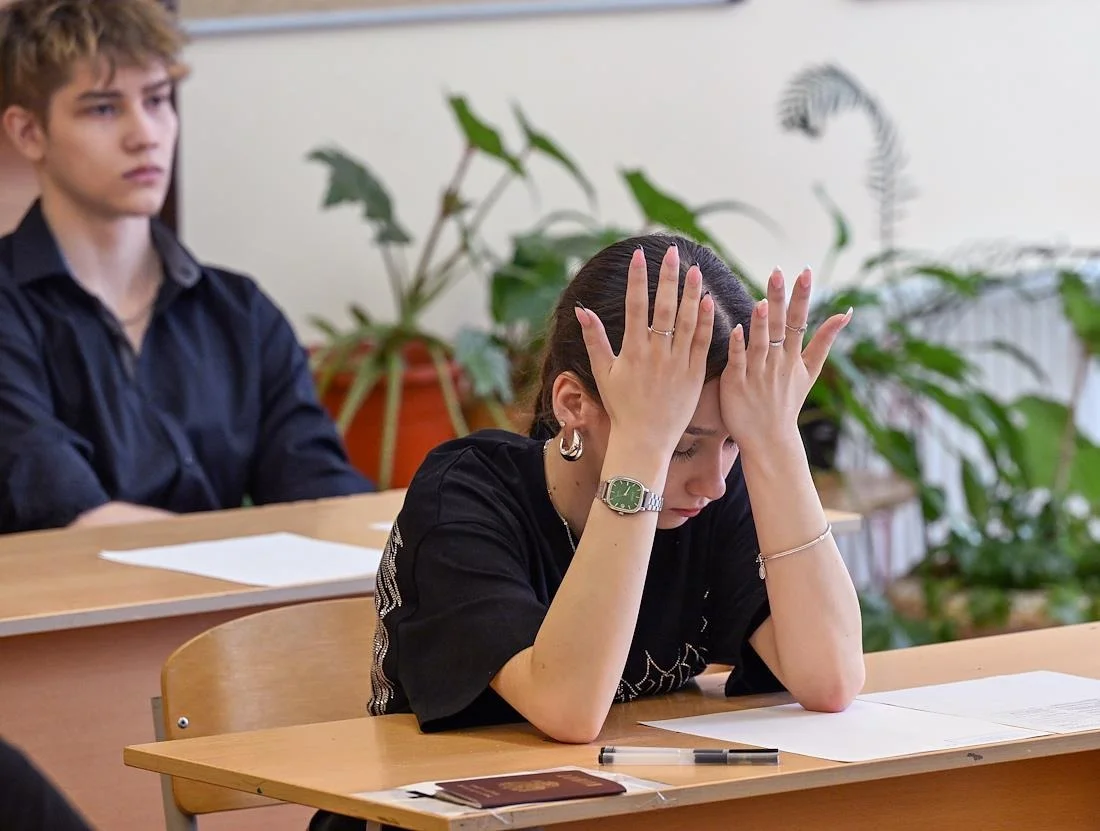
...Now in school practice there are already two tests that are considered “admission to the state final certification” - this is the final interview in the ninth grade and the final essay in the 11th grade. Those who closely follow the decision-making process in education will well remember how the essay and interview were introduced into school practice and how exactly the amazing status of “admission to the exam” came about.
The decision-making mechanism in this case is as follows (watch your hands):
The authorities decide that students must be able to do something. Well, for example, write essays or explain things orally.
The only way, according to the authorities, to force children to learn something is to introduce an exam for them, where some specific skill will be tested.
But here in the way of such a simple and understandable solution stands the law according to which we have the same exams: these are the Unified State Examination in the ninth grade and the Unified State Examination in the 11th grade. Moreover, there can be only one exam for one subject. Both in the ninth and 11th grades there are already exams in literature: this is a mandatory exam in the Russian language and an optional (optional) exam in literature. There is also an exam in history, and also optional. That is, a second history exam cannot be introduced either.
In this case, we have a simple and cunning solution: introduce an exam, but call it not an exam, but an admission to exams.
Thus, in our school practice, rather meaningless tests appeared, although they took a lot of time, effort and nerves: the final interview and the final essay. Now, probably, another “permission” will be added to them - and, judging by the practice of the first two, no more meaningful.
The new decision of the Ministry of Education raises many serious questions, not only about the content and status of the new exam, but also about the priorities of the school as a whole.
What will they hand over?
The program of basic general education, that is, for fifth to ninth grades, in history ends with the First World War. In practice, as school historians say, few people have time to reach it: they would have time to cope with the entire 19th century. So, children will be orally examined in a history course up to and including the 19th century, plus the First World War?
Hardly. The matter is complicated by the fact that history is considered an ideological subject. The task of fighting “falsification of history,” that is, any interpretations of historical events that do not coincide with today’s official position of the authorities, is set at the state level, and the main field of this struggle is the history of the 20th and 21st centuries. Therefore, the state considers it its duty to instill in citizens the necessary dogmas already at school. So, ways to introduce basic information about the history of the 20th and 21st centuries into the basic secondary school curriculum were actively discussed several years ago, and the result of these discussions was the creation and implementation of a special module “Introduction to the Contemporary History of Russia” in the Federal work program of basic general education in history. The module lasts approximately 17 hours and covers the period from 1914 to the present day. It talks about the 1917 revolution, the Great Patriotic War, the late USSR; The topics of the last five lessons are “The collapse of the USSR. The formation of a new Russia (1992–1999)" and "The revival of the country since the 2000s. Reunification of Crimea with Russia."

This module can be taught as a separate unit if the school decides to allocate hours for it, or integrated into the overall course if the teacher decides to connect individual topics to other topics taught in the lesson.
But 17 hours is not a systematic course in the history of the twentieth century, but an overview. And here the intrigue arises: if the oral exam becomes mandatory, what will it test? In order to test knowledge of the entire history course for grades five to nine, there is an OGE in history. If a separate exam is introduced, and even mandatory for everyone, doesn’t this mean that its urgent need is caused by the desire to force everyone to study this short module? Or make Medinsky’s textbook mandatory national reading, something like “A Short Course in the History of the All-Union Communist Party (Bolsheviks)”? Until the exam model is officially published, this question remains open.
When will this happen?
So far it has been announced that the introduction of the oral exam is planned for the 2027–2028 academic year. The development of the model should be undertaken by the Federal Institute of Pedagogical Measurements, which is responsible for conducting state final certification.
As a rule, there is a long path between the statement “everyone will take the exam” and its appearance: discussion, development, changes to existing documents (and this will be necessary).
The historians I interviewed so far brush it off: “in two years, either the Shah will die or the donkey will die.” Parents of those graduating from ninth grade this year and next are breathing a sigh of relief.
How many “tolerances” can there be?
This is perhaps the most interesting question so far. Maybe even more interesting than the question about the subject content of the new exam.
We have already seen how the final essay and the final interview became “admissions” to the Unified State Examination and the Unified State Examination. Now there is another final test in the ninth grade - and again in the status of “admission”.
Since the procedure for introducing newly invented exams into school practice has already been worked out, it is theoretically possible to use this method as much as you like: in fact, who will stop you from coming up with at least ten “admissions” to the Unified State Examination and the Unified State Examination? Well, let’s say, introduce a mandatory test in each of the “ideological” subjects: for example, I don’t know, the final geographical dictation or the final test on the spiritual and moral culture of the peoples of Russia...
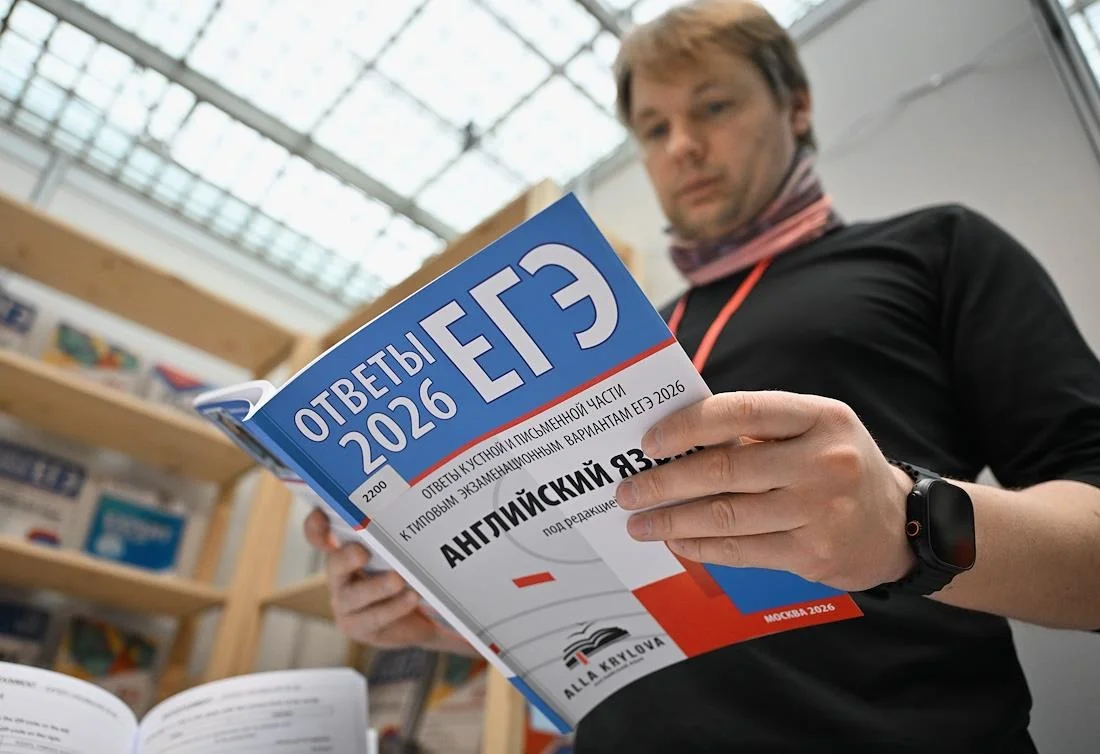
Now admission to the OGE is legally enshrined in the Procedure for conducting GIA-9. There are two conditions for it, they are indicated in paragraph 7 of the general provisions of the document: the absence of academic debt and credit for the final interview in the Russian language. There are no more “tolerances” in regulatory documents.
In order for any new test to appear at school, the federal Procedure for conducting GIA-9, a joint document of the Ministry of Education and Rosobrnadzor, approved by the Ministry of Justice, will have to be changed.
And here a fundamental question arises.
Admission is not just an additional test of knowledge and not a way to force all students to read Medinsky’s textbook in the evening in order to pass it in the morning. This is a legal filter: if you don’t pass, you won’t take the exams.
Can any additional exam be called admission? Formally - only if it is enshrined in a federal regulation. But who is preventing this act from being changed? And change it as many times as the conventional party line will fluctuate?
How many such “tolerances” can appear? Where is the limit for new ones to appear? What could be such a limit - legal considerations? Common sense? Or human endurance? Shall we experiment on children?
Practical Considerations
School historians ask other completely fair questions. First of all: who will conduct this interview and who will check it?
Every year I review final essays and interviews with other language arts colleagues. We have more than a dozen of them at our school, and most of them are busy checking for several days during the busy “final” season.
But historians have far fewer hours per week than language scientists. There are fewer of them in schools than there are teachers of Russian language and literature. In general, there can be only one historian for the entire school, and even with a workload of 36 hours a week. In the old days, these are two rates; in today’s times, it is the implementation of the May presidential decrees to increase teachers’ salaries.
Now let’s imagine that our historian will have to either interview two classes of 25–30 students alone, if an oral conversation is expected, or check 50–60 audio recordings, if a monologue is expected, as in the current oral interview. Even if it takes 10-15 minutes per student, the teacher will have to listen to 5-6 students per hour. In fact, he will face at least 10 hours of continuous, difficult, stressful and unpaid work. This is within the scope of your job responsibilities, what do you want?
New load
Supporters of the initiative say that history helps to form a civic position, and that a lively conversation with a teenager is necessary. But a “live conversation” and an exam are very different things. “Conversations about important things” were introduced as these very “live confidential conversations.” But the exam cannot be made confidential. Alive - theoretically possible, but this is a piece of work, and not a mass formalized event on a national scale. The oral format really helps to check how much the student understands the subject, but this is also a piece of work, not a formalized event. Formalized is a completely acceptable thing if we are talking about a language exam, when it is necessary to evaluate the coherence and logic of a statement, compliance with the topic, and the presence/absence of errors. The oral part is quite appropriate in a foreign language exam, and even the notorious final interview allows for a formal test of language knowledge by listening to an audio recording. But what exactly will be tested in the oral history exam? Knowing the facts? Their “correct” interpretation? Formed civic position, whatever that means?
Ninth grade is already a time of special exam pressure. For now, the ninth-grader must pass a final interview in Russian, two exams in compulsory subjects, and two in elective subjects. Let's add an oral history exam, and we get six exams. “Pfft,” my peers will say, but in their time... But no: in their time, in the Soviet eighth grade, we took four exams: Russian in writing (dictation or presentation, both with a grammar task), Russian orally, algebra in writing, geometry orally.
Each exam is additional stress. Even if it is very necessary, even if it is accepted by your teacher, even if there are two additional retakes.
Finally, an oral interview in the Russian language was introduced so that the children learned to speak well (I carefully remain silent about whether this goal justified these means). But if we introduce an oral history exam, it will inevitably evaluate not only facts, but also interpretations, emphases, and formulations. This means that transparency of criteria and independence of assessment are of particular importance.
Cutting mechanism
Now the OGE, in theory, is intended only to confirm whether the standard of basic general education has been mastered, and not to serve as a selection mechanism for high school.
In practice, children in the ninth grade are already beginning to be filtered: who will go on to study further and prepare for university in a specialized class, and who does not belong at school.
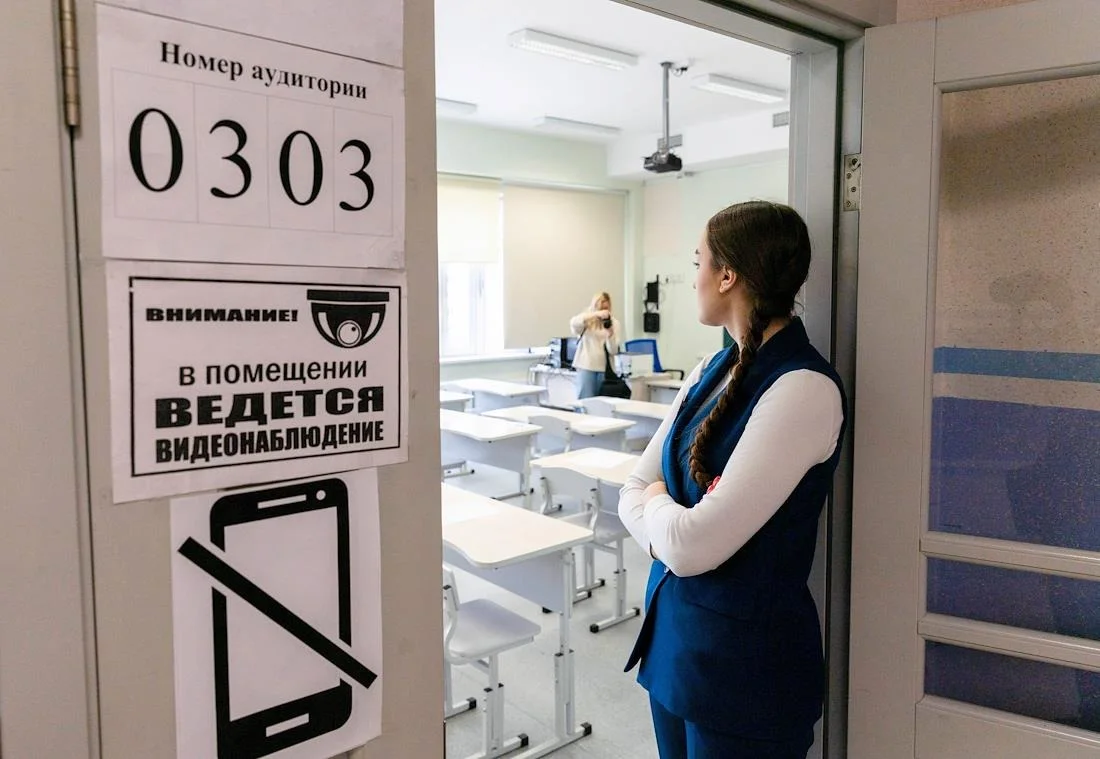
If you introduce another “admission”, the possible number of those “not admitted” to the exams will increase - that is, graduates stuck without a certificate, without the opportunity to enter the ninth grade, college or technical school. This means that we need to provide some alternative educational trajectories for them. Where should they go? They are not needed in the labor market: minors without education are a headache for the employer, not the labor force. In the second year? For family education? What exactly should they do?
And here there is also the opportunity to filter children by subject of an ideological nature - that is, to throw children out of the education system on ideological grounds.
Welder-medievalist
Last year and this year, several regions of Russia took part in an experiment to make it easier for ninth-grade graduates to enter secondary vocational education institutions. It’s as if the state is telling them: you don’t need anything, don’t suffer, don’t take two elective exams, pass the compulsory Russian and mathematics, if you don’t want to go to 10th grade, and go to secondary vocational education.
This reduces exam pressure on tenth graders, simplifies the route for those who connect the future with working professions, and provides for more flexible educational trajectories. At least that's how the meaning of this experiment was described.
Now it is proposed to introduce a mandatory oral history exam for everyone: both for those who have chosen the 10th grade and for those going to secondary vocational education. And here a contradiction arises.
On the one hand, it seems that the Ministry of Education is carrying out reforms that lower the examination threshold for ninth-graders going to secondary vocational education and reduce the academic load for them. Schoolchildren don’t even need to pass conventionally “profile” exams: they learned to read, write, count - that’s good, go get a profession. Some colleges and technical schools even cautiously expressed dissatisfaction with this matter, complaining about the low quality of preparation of applicants, but this is a separate subject for discussion.
What happens now? Will the new mandatory history exam help improve the quality of preparation of applicants in vocational education institutions? Obviously not. History is not directly related to professional skills, like elective subjects, does not provide basic literacy, like the Russian language, and is not instrumental, like mathematics. Then what function does this exam serve?
There are several options.
The first is a civic identity test. If a history course educates citizens, then it is a test of their understanding of their citizenship.
The second is the control of a single narrative: it is not knowledge of historical facts that is checked, but their correct interpretation and interpretation.
Third, there is a symbolic signal: the state demonstrates that the subject “history” has a special status, regardless of the student’s educational trajectory.
The paradox of today’s situation is that the state, with its left hand, radically reduces the academic requirements for applicants to secondary vocational education institutions, and with its right hand, it increases the requirements for knowledge of history. The logical question that follows from this is: do we need to improve the quality of education or increase the significance of ideology? Or, to use the Strugatskys’ catchphrase, are they needed to be smart or loyal?
If a teenager plans to become a cook or welder, why should he take a mandatory history exam? What competence does it test and confirm? Is this competence educational or civil-political?
If the academic requirements of the school become softer and more flexible, and the historical, worldview and civic requirements become stricter, what exactly does the school consider to be the main result of its work? Knowledge or beliefs?
And finally, here are the questions that have no answers yet:
What specific material will be tested on the exam?
What dictated the need for its oral form?
How will the evaluation criteria be spelled out, given that history is an interpretive subject?
How will children be protected from the subjectivity of assessment?
How many “admissions to final certification” can a schoolchild have and where is the legal limit on their number?
Where is the line between an exam and “admission”? Is the term "admission" becoming an easy way to introduce a new mandatory exam without formally increasing the number of exams and, in fact, circumventing the law?
Why does history become a compulsory exam for all educational routes, including vocational ones, while other elective exams become optional?
Is the focus on value loyalty rather than knowledge becoming the priority of the basic school?
Does ninth grade remain the final stage of compulsory education or does it become a system of early selection that makes access to upper secondary education difficult? Is school a space of learning or a space of selection?
Not only the fate of a particular exam, but also the fate of educational policy in the coming years depends on the answers to these questions. And the fate of specific children, that’s what it’s all about.
Pressing questions that have no answers yet
What is the exact scope of content? Will this be a test of the 17-hour module or, in fact, of the entire 20th century?
And the main question: is the purpose of basic school changing? Is this a learning space or is it completely a selection space?
Until the answers to these questions are fixed normatively, the initiative remains a political statement. But if it is implemented, it will be one of the most serious changes to the GIA-9 model in recent years.