
Translated material
A recruitment that never happened. Polina Yevtushenko was sentenced to 14 years in prison
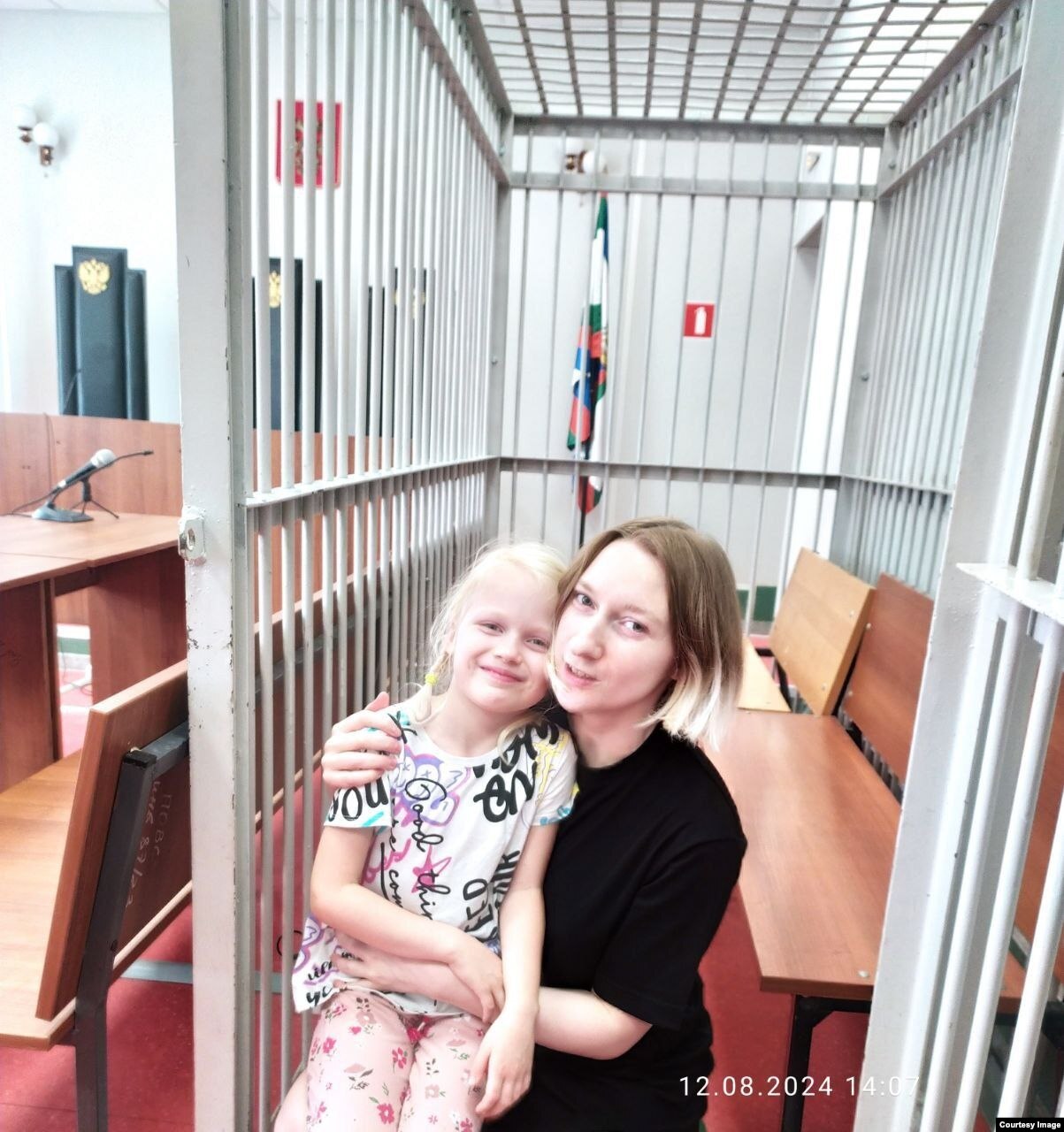
There were no victims, there was no treason, Polina Yevtushenko herself deleted the posts on social networks for which she is being tried even before a criminal case was opened against her. However, she has been in a pre-trial detention center for almost three years, and the prosecutor's office requested 18 years in prison for her - this, according to lawyers, is the longest sentence for a woman in post-Soviet Russian history for a non-violent crime, which, moreover, did not happen. Today in the District Military Court Polina Yevtushenko was found guilty and sentenced to 14 years in prison.
“This is a completely fabricated and empty case, there is nothing in it at all, and those records that exist and were presented to the court testify in favor of Polina - in them she constantly dissuades her friend Komarov from joining the Freedom of Russia Legion. He met her specifically so that later this vile criminal case would be opened against her, this is called provocation,” say Polina’s acquaintances who went to the trials (we do not name their names for the purposes of security). “Polina is a very courageous person, she is a great fellow and does not lose heart. But it is simply monstrous that she was given such a long sentence for no reason.”
“I thought they were taking me to kill me”
Polina Yevtushenko from Togliatti, Samara region, is now 27. In July 2023, she was arrested for allegedly “inducing a resident of Samara to commit high treason in the form of going over to the enemy’s side, namely, joining the armed formation “Russian Freedom Legion” to participate in hostilities against the Armed Forces of the Russian Federation on the territory of Ukraine” (“Preparation for High Treason” - Part 1 Art. 30, art. 275 of the Criminal Code of the Russian Federation).
That day, she took her daughter Alice to kindergarten, and at the exit more than a dozen men in civilian clothes were already waiting for her. “They put a plastic tie on my hands and threw me into the car as if I was a sack of potatoes. Then these men got into the car and put their feet on me. They didn’t explain anything. I thought that these were bandits and they were taking me to kill me. I screamed and called for help,” she later said.
After her arrest, five more articles of the Criminal Code of the Russian Federation were added to her: Yevtushenko was accused of “public calls for terrorist activities using the Internet” (Part 2 of Article 205.2 of the Criminal Code of the Russian Federation), in public calls for carrying out extremist activities also on the Internet (Part 2 of Article 280 of the Criminal Code of the Russian Federation), in the dissemination of deliberately false information about the use of the Armed Forces of the Russian Federation based on political hatred (clause "e" of Part 2 of Article 207.3 of the Criminal Code of the Russian Federation ) and the rehabilitation of Nazism (Part 4 of Article 354.1 Criminal Code of the Russian Federation). According to the Samara FSB Directorate, she persuaded her friend to go fight in the Russian Freedom Legion, carried out “propaganda work” and “posted instructions for Russian military personnel on surrendering.”
Seven dates and "treason"

Polina Yevtushenko in this photo is a slender young woman with blue hair like Malvina, wearing a T-shirt and pink jeans. She raised her little daughter alone, painted pictures that she published on her Instagram and VKontakte. There she also wrote about her anti-war views: she posted a petition demanding Putin’s resignation because of the war he started in Ukraine, published posts of the Russian Freedom Legion (at that time it had not yet been recognized by the Supreme Court as a terrorist organization and was not banned. - CP) and instructions on how to surrender in order to survive the war. She was always very sociable and she was interested in a variety of people, so she easily made contacts and made acquaintances, her friends say.
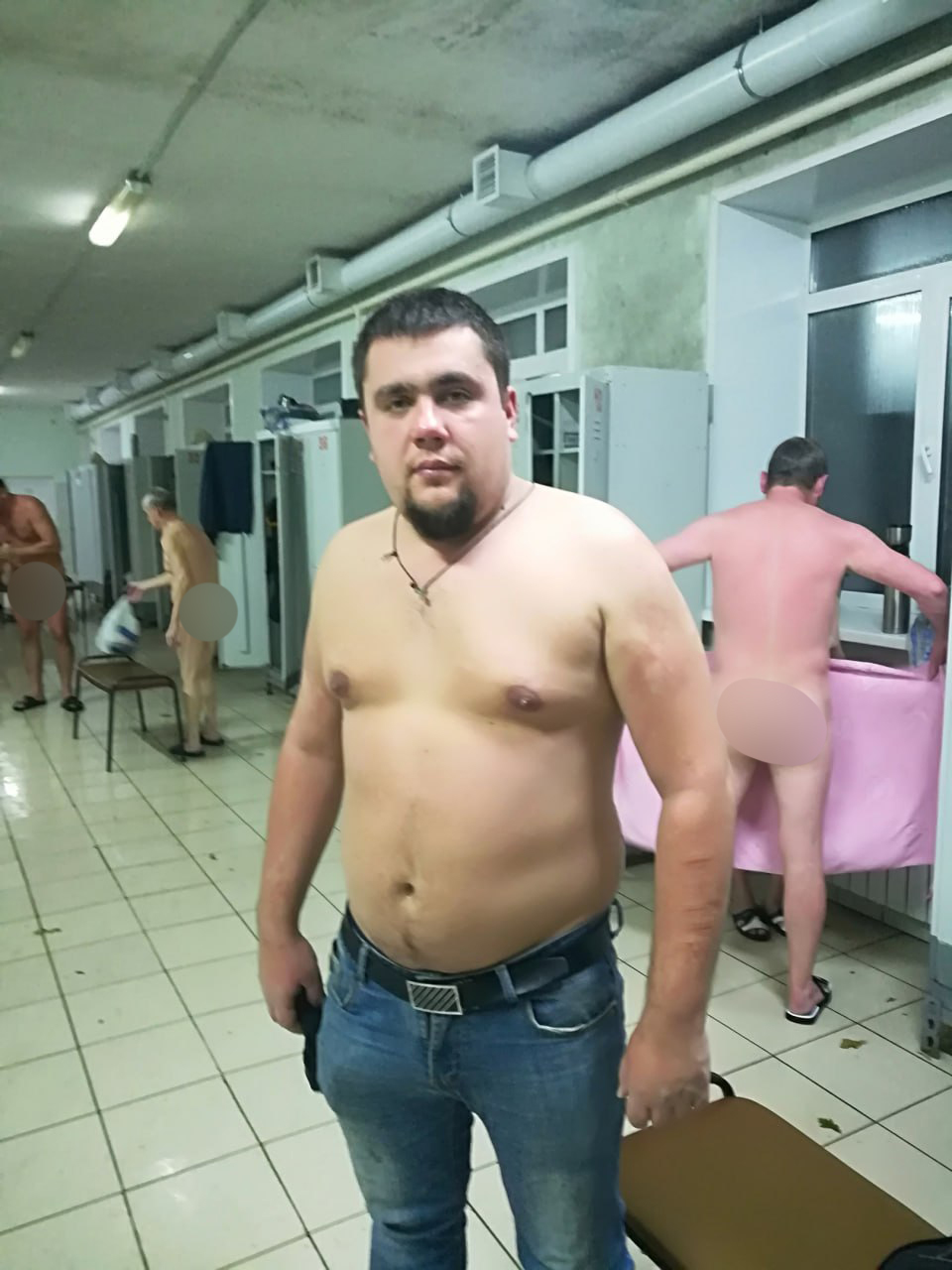
Nikolai Komarov wrote to her himself on VKontakte. That she is very pretty, draws well, and he really wants to meet her and date her. In addition, on her page it is written that she once worked at Yota, in a salon, but he has a question, he just can’t understand it, what if she figures it out? He lives in Samara, she lives in Togliatti, an hour away by bus, but this is not a problem - he will come.
“They had seven dates in total,” says Polina’s friend. “He always told her how much he liked her, invited her to a cafe, they rode bicycles together, played bowling, sang karaoke, he asked her about paintings and her daughter, that is, he made her understand in every possible way that he was interested in her precisely as a woman and he was courting her.
Later it turned out that he did not record only the first two meetings with a dictaphone.
“He constantly told her that he was afraid of mobilization and wanted to leave Russia, and that she should advise him where to go, what and how he should live then,” continues Polina’s friend. “She answered him that if he was so afraid, then let him go to China or Kazakhstan, open a Wildberries or Ozon store there and not worry about it. But he started such conversations again and again, asked her about the Legion “Freedom of Russia”, whose posts she set up, Polina told him that they were against the war and therefore she supported them, that she had Ukrainian blood. There were recordings at the trial where Polina told him many times that he did not need to go there and participate in all this, that she was dissuading him. And Komarov again, great: “I want to go to the legion, let’s choose a “drive” for me (that’s what he called “call sign”). She communicated with him in a friendly manner and did not want to get closer, because the conversations were the same.
Polina was then asked why she didn’t immediately recognize Komarov as a provocateur? She replied that she believed that “the FSB does not keep such narrow-minded people.”
At the trial, Komarov stated that he himself recorded Yevtushenko’s conversations on a tape recorder, and then became frightened by her speeches and decided to hand over the recordings to the FSB, because he decided that he himself might get into trouble because of her. The recordings show traces of editing, conversations are cut off, Polina said at the trial. During the investigation and in court, her defense demanded that they be acquainted with the full recordings, but they allegedly do not exist: Komarov stated that he had long ago sold both the voice recorder and the laptop from which he transferred the recordings onto disks for the FSB on the market. The court believed him.
"Eshnik", "FSB agent" or just a criminal on the hook?
In 2009, Nikolai Komarov was sentenced to two years of probation for stealing a Sony Ericsson mobile phone, Kholod found out . While his probation had not yet expired, he was caught again: he was charged with 17 counts of theft of cable and Internet equipment. In May 2011, he was convicted and sent to a colony for two years and one month, but after 11 months of imprisonment, in April 2012, he was released on parole.
“Actually, he can be sweet, handsome and charming, he knows how to get into the soul and girls usually like him, a kind of fraudster on trust,” says an acquaintance of Komarov, and you would not suspect that he had problems with the law. On the contrary, he tweeted , in which he demanded that the Samara authorities fill up the hole and finally resolve the issue with the open hatch and seemed to be a caring person and even an activist. However, all this happened before the war in Ukraine.
In 2017, Komarov appeared at Navalny’s Samara headquarters and introduced himself as a lawyer.
– He was a very active member of the headquarters, wanted to be friends with everyone, invited them to barbecues, said: “let’s drink vodka?”, hung around the headquarters all the time, willingly carried out any assignments - if he needed to buy water, he went without question. He participated in our actions and cubes,” says Marina Evdokimova, at that time an employee of Navalny’s headquarters. In 2021, after the destruction of headquarters throughout the country, she left Russia.
In 2019, during the Covid pandemic, she was the SMM officer at the headquarters.
– We had just the peak of cases, about which we wrote a post in telegram. And they wrote that doctors have no protection. An administrative case was opened against me, they guarded me near the house, they knocked on the door, but I didn’t open it, they went to the neighbors and questioned them,” continues Evdokimova. “There was a trial in May, and unexpectedly for me, Kolya Komarov was a witness for the prosecution. He had not been to the headquarters for a long time, he was offended by us because we did not fall for his strange proposals, and then he became friends with the communists and NOD members, posted photos with them, and participated in their actions.
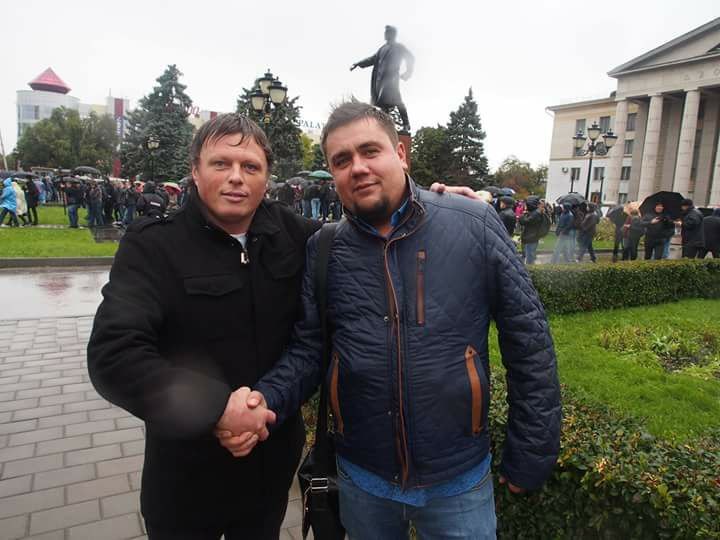
At the trial of Evdokimova, Komarov stated that he saw her walking through the market of the 15th microdistrict and allegedly heard her discussing on the phone that she would put this particular post in her telegram. “I heard about her criminal plans and could not help but report them to law enforcement agencies,” he told the court.
“Oddly enough, I was acquitted,” says Marina. - The lawyer asked him simple questions that he could not answer normally: “Where do you live? How did you end up in the market area at this time?” There was a pandemic and no one could move freely around the city, besides, many people had access to our telegram channel, it was impossible to prove that it was I who started it.
Egor Alasheyev from Navalny’s Samara headquarters also emigrated from Russia.
“In March 2017, we held a rally “Dimon will answer,” at which 23 of our supporters were detained,” he recalls. – We appealed all the fines and later canceled them. Komarov was also detained, but he refused our help, saying that he is a lawyer himself and “I know what I’m doing,” and then it turned out that he admitted guilt and received a fine. At the beginning, he was silent about this situation, then he called and asked to pay the fine (at this point he had already stopped communicating with the headquarters). I told him that we need to talk to lawyers, we’ll come up with something. But he did not communicate, and two weeks later they released a video on TV with “Navalny’s disillusioned volunteer.” And soon he began going to protests with NOD members. We broke through it and found out that Komarov was convicted of cable theft. However, there were suspicions that we had him here for a reason before; he always hung around the headquarters and listened carefully to what we said. But we didn’t attach much importance to them - he seemed harmless. Of course, we understood that they would definitely introduce someone to us and generally “keep an eye on us.”
The project "Protocol. Samara" in 2022 found out that Alexander Melikhov, with whom Komarov became friends, was introduced into Navalny's headquarters. Melikhov turned out to be a police lieutenant colonel; for the sake of this operation, his last name and passport were changed. Polina's acquaintances do not exclude the possibility that they were both introduced in parallel.
Already when the trial of Polina Yevtushenko was underway, it turned out that a criminal case had been opened again against Nikolai Komarov - he was accused of committing 37 crimes under paragraph "b" of Part 2 of Article 173.1 of the Criminal Code of the Russian Federation (illegal creation of legal entities or provision of documents). He was sentenced to 330 hours of compulsory work.
“It seems that he has been “on the hook” for a long time and firmly with the “eschniks” (Center “E” of the Ministry of Internal Affairs of the Russian Federation, which is engaged in the fight against extremism and all “dissenters.” - SR) and the FSB, but they also excuse him for this - there are 37 fake companies and just correctional work,” says a lawyer from Moscow who works with such cases.
A new way to recruit?
In July, it will be three years since Polina Yevtushenko has been in pre-trial detention. In June 2025, she was recognized as a “violator” of the regime - because she transferred cakes bought in a store to a neighboring cell; in July of the same year, she was sent to a punishment cell for 10 days because Polina described court hearings in her letters. All this time she saw her daughter only through glass; the judge allowed them hour-long visits. Alisa is raised by Polina's parents.
“Datings take place through glass with a conversation on the phone, lasting one hour. During this hour, I talk alternately with my mother, then with Alice. On the last date, I took with me a sketchbook in which I draw pictures for Alice. She really liked it,” wrote Polina from the pre-trial detention center. “Before that, I once showed Alice old photos of us with her from outside, but she burst into tears, and I decided that I wouldn’t do that again... Conversations through glass, of course, can hardly be called a date, but what we have, we are happy with. And in general, hugs are really missing. I want to hug and kiss Alice, but I can’t.”
“They write a lot to Polina in the pre-trial detention center, they support her, because many understand the injustice of everything that is happening to her. She doesn’t get discouraged, she enjoys every little thing, she learns English by correspondence,” says her friend, who went to all the courts. – How do we usually present a provocation by the special services? Persuasion, bribery, blackmail - classics of the genre. But in Polina’s case, an allegedly new method appeared, which became known when FSB expert Tatyana Naumova was interrogated. According to her, in the new manuals developed by FSB criminologists, which are not published anywhere, a new method of recruitment is supposedly when someone praises something - that the Free Russia Legion has good equipment, for example, this is a type of propaganda and recruitment. Polina's defense asked to let them familiarize themselves with this secret manual, but the judge refused. Then the lawyer asked the judge to study them himself and confirm that all this was really written there. But the judge refused this too. Naumova also said that Komarov is “a person conducting operational intelligence activities (operational search activities).” That is, in fact, in court she admitted provocation on the part of the special services. From the point of view of the European Court of Human Rights, this is a gross violation of the right to a fair trial (Article 6 of the Convention). And evidence obtained in this way is considered inadmissible by the ECtHR. And Russia, until it ceased to be a party to the European Convention on Human Rights due to the outbreak of war in Ukraine, was repeatedly punished for this (“Vanyan v. Russia” (2005) and “Lagutin and others v. Russia” (2014). - SR) .
From the last words of Polina Yevtushenko:
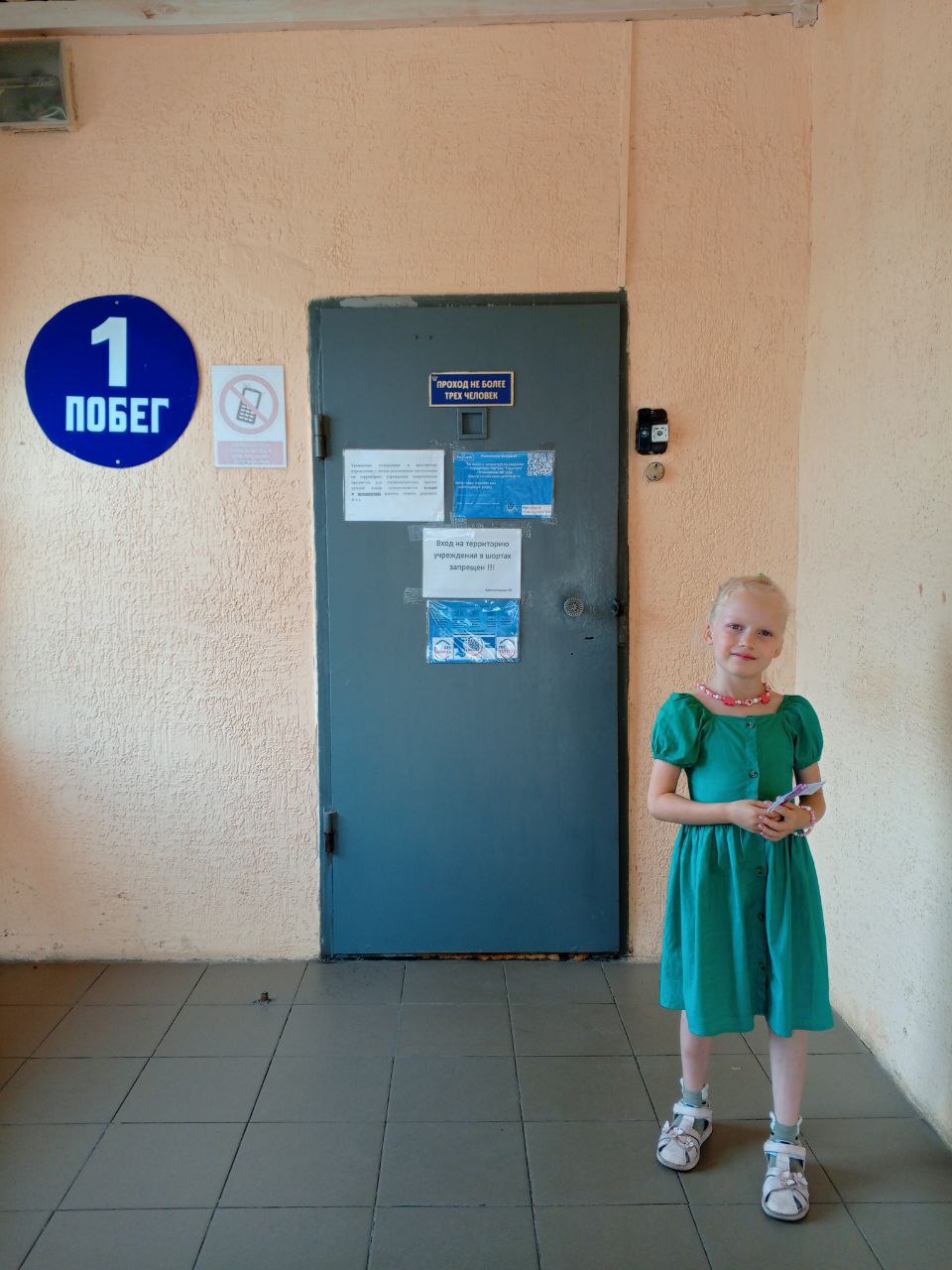
“Your Honor, you have known me for almost two years. I am sure that during these two years you have become convinced that I do not pose any danger to others and that I can be released.
For two years I have only seen my daughter through glass and cannot even hug her. The first year I didn’t see her at all. Last year Alisa went to first grade, and this year, on March 1, she will turn 8 years old. She needs maternal affection, care and help, and I need even more to be near her, to see how she grows, to educate her, to take care of her. To take care that she becomes a worthy person - educated, intelligent, well-read, who loves our Motherland.
Your Honor, I ask you to release me so I can raise my daughter. Become a conduit of happiness for two loving hearts - a mother and her child. I have never committed treason. I love my Motherland - Russia - and will never do anything that could harm it. If I have made any mistakes or violations, then being in prison for almost three years is already more than enough punishment for me.
I realized everything and I promise you from now on to behave in such a way that you will never be ashamed of me. I ask you to make a fair decision and let me go to my daughter."
According to a study by the human rights project “First Department” (as of mid-December 2024), in Russia, after the start of the full-scale invasion of Ukraine, 792 people became defendants in criminal cases of treason (Article 275 of the Criminal Code of the Russian Federation), espionage (Article 276 of the Criminal Code of the Russian Federation) and confidential cooperation with a foreign state (Article 275.1 of the Criminal Code of the Russian Federation). In 2024, 359 people received real sentences under these articles, and four more were prescribed compulsory treatment. Of the 359 people, 224 were found guilty under Article 275 of the Criminal Code of the Russian Federation, 38 under Article 275.1 and 101 people under Article 276. In total, 536 people have been convicted under these articles since the beginning of the war; Russian courts have not issued a single acquittal. According to the project, a significant part of such cases are based on provocation on the part of FSB officers or persons associated with them.
A recruitment that never happened. Polina Yevtushenko was sentenced to 14 years in prison