
Translated material
Surrender and gasoline. The second week of the war against Iran has begun
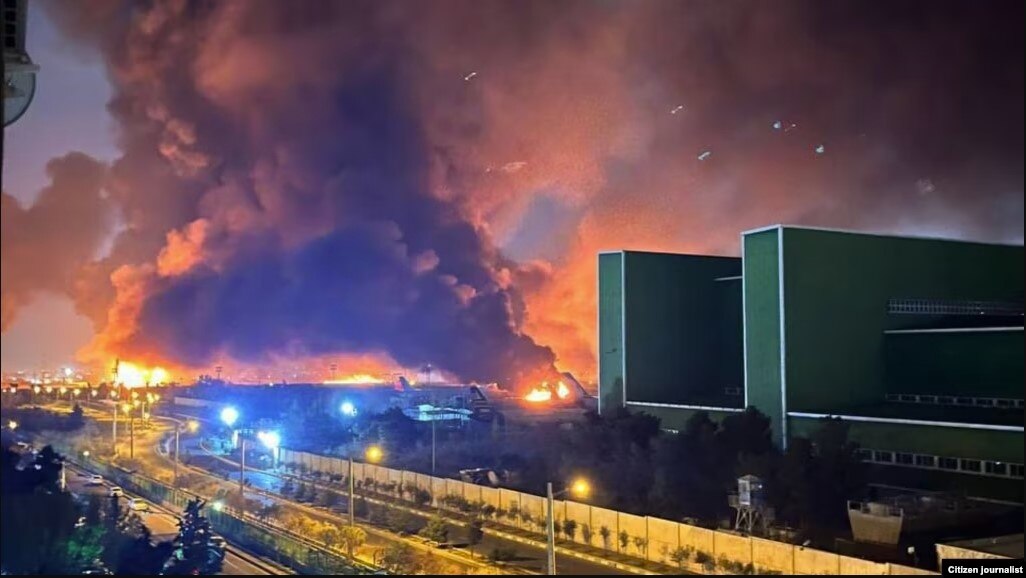
The war against Iran has entered its second week, and the initial shock has passed. Military successes come with growing economic and, as a result, political costs for the United States, and balancing them is a challenge that the administration of President Donald Trump will have to solve.
Hostilities. Brief summary
After the initial strikes killed Ayatollah Khamenei and dozens of senior Iranian officials, Iran began retaliating by attacking countries across the region (much to Trump's surprise, he said).
Even Cyprus was hit, and a bitter meme spread across the Internet that the phrase “Greece sends ships to defend the island from the Persians,” describing the wars of the ancient era, has regained relevance.
In the early days, the intensity of Iran's attacks was such that experts began to calculate which would run out faster: the region's air defense missile reserves or Tehran's ballistic missiles and drones. But U.S. and Israeli strikes have quickly minimized Iran's ability to launch missiles and significantly reduced the number of drone launches, although the overall situation remains challenging.
However, the question of price remains: Western anti-aircraft missiles are much more expensive and take longer to produce than cheap Iranian missiles and drones, including the Shaheds known from the Ukrainian war. This problem is familiar to Ukraine, which - under continuous massive Russian bombing - is constantly looking for cheap alternatives to anti-aircraft missiles, and is now offering to share technology with the United States and its Middle Eastern allies.
- The US and Israel now completely dominate the air, having carried out thousands of strikes on targets in Iran.
- As a result of the strikes in the country, according to Iranian authorities, more than 1,200 people were killed. The United States is investigating whether one of the strikes destroyed a girls' school in the city of Minab, killing at least 168 children, according to Iranian data.
- In Israel, 11 people became victims of Iranian strikes.
- Since the start of the war, six US military personnel have been killed.
Goals and methods of achieving them. Trump Quotes
At the beginning of the war, the President spoke about several reasons, goals and timing of the operation. The media counted the number (of a dozen) interviews that Donald Trump gave to various journalists. They offered different explanations and time frames:
- “I can run a long [campaign] or finish it in two or three days,” “four to five weeks,” “there are opportunities to continue much longer.”
- Elimination of Iran's missile threat, nuclear program and fleet, freedom for the Iranian people, someone who suits the United States coming to power to replace Khamenei in the current regime.
Trump's latest statements: "I must participate in the appointment of [the new leader of Iran], as I did ... in Venezuela." The president also called one of the most likely candidates, Mojtaba, the son of deceased Supreme Leader Ali Khamenei, unacceptable to him.
On Friday, Trump demanded "UNCONDITIONAL SURRENDER" and the election of an "ACCEPTABLE Leader", after which, as the president promised, joint efforts will make Iran "great again." There will be no deal without surrender, he said.
Such a demand could drag out the war for a long time, but Trump later clarified to Axios that this was not necessarily a formal surrender, and could mean “the complete destruction of the military capabilities” of the Iranian regime.
According to White House press secretary Caroline Levitt , “surrender” means that Iran will no longer pose a threat to the United States and its troops in the Middle East.
Iranian President Masoud Pezeshkian rejected the demand for surrender, but promised to stop attacks on those countries from which attacks on Iran are not carried out - and apologized to neighboring countries.
However, around the same time, a drone attacked the airport in Dubai.
Iranian drone hits Dubai international airport on Saturday morning, briefly suspending operations. Emirates has resumed flights on a limited schedule. pic.twitter.com/RIGj29Lrps
— Lucas Tomlinson (@LucasFoxNews) March 7, 2026
Trump on Saturday morning said Iran had lost to neighboring countries for the "first time in thousands of years" because of US and Israeli strikes and threatened to expand its bombing campaign.
The situation on the ground. What's next
One of the possible scenarios for the operation against Iran was obviously considered to be a popular uprising against an unpopular regime in the country, whose security forces had been sharply weakened by airstrikes. So far, no uprising has occurred and its prospects are unclear given the bloody crackdown on mass protests in Iran several months ago.
Without a ground operation, overthrowing the regime is difficult. The US does not yet want to send its military for a ground operation, although there has been no statement that this is completely ruled out.
Reports have emerged about the possibility of a movement against the Iranian regime, with American support, by groups of Kurds, an ethnic group living in Iran, Iraq, Syria and Turkey. Tehran, apparently, is launching preventive strikes against them. Iraqi Kurds reportedly do not want to be drawn into the war. In Iran itself, ethnic Kurds make up about 10% of the population.
Economic costs. The big picture
The targets of Iran's attacks were oil and gas facilities in Arab countries. The movement of tankers in the Strait of Hormuz, through which a fifth of the world's oil supplies passes, is difficult. Today, Iran reported that it had hit one of the tankers that was in the area.
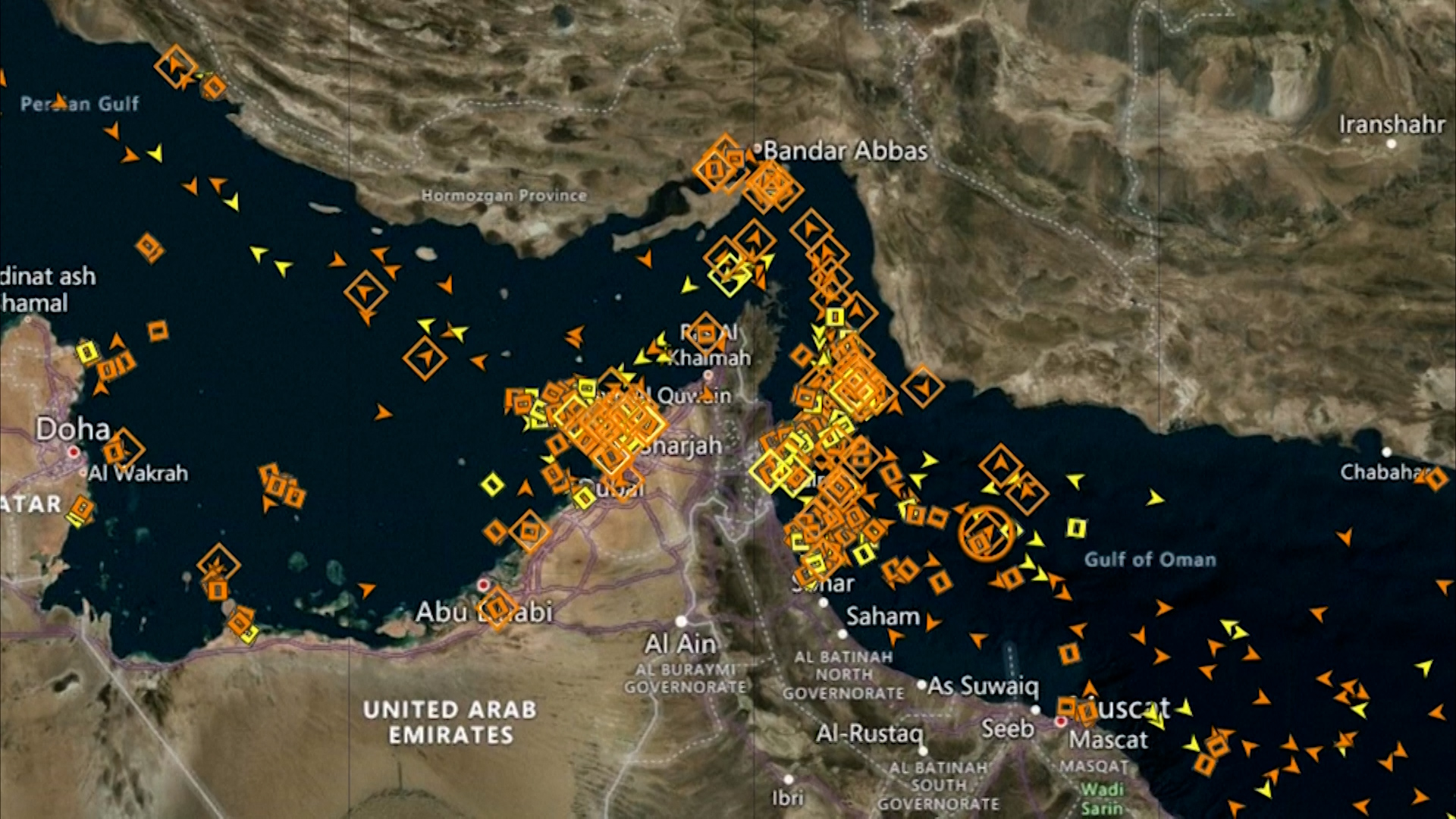
The result is a sharp rise in oil prices and a fall in markets fearing the fallout from the war will slow global economic growth. As analysts note, Iran is trying to influence the United States in this way in order to stop military actions.
Europe and Asia, which are heavily dependent on energy imports, will have a hard time. Reuters, however, writes, citing the reaction of oil traders, that they do not think that the conflict will drag on for long.
Politics versus economics. What's happening in the USA
The United States is the world's largest oil producer, but it is also feeling the economic consequences of the war. Gasoline prices are reported to have jumped from an average of about $3 to $3.40 per gallon over the week, an extremely sensitive issue for Americans.
⛽️ The national average gasoline price increased to $3.251 per gallon from $2.983 last week (+$0.268 WoW) and from $2.891 a month ago, indicating a strong recent upward move in retail fuel prices due to the #IranWar .The weekly increase is one of the largest since March 2022 at… pic.twitter.com/My0EN8c5lh
— MTS Insights (@MTSInsights) March 5, 2026
This increases the risk of inflation, which has still not been fully brought under control. Moreover, if the war leads to a slowdown in economic growth, the US Federal Reserve will find itself in a nasty fork: to fight inflation, it needs to raise lending rates, and to lower it to stimulate the economy. Data has just been released on the loss of 92 thousand jobs in the United States in February. This is pushing the Fed, which is to be headed by Trump's Kevin Warsh, to cut rates. A surge in inflation could prevent this.
Rising prices and “affordability of life,” that is, goods and services for consumers, are the central issue in the upcoming congressional elections in the fall, key for the second half of Trump’s presidential term.
Democrats are cautious about criticizing the war against Iran, given that an operation against the Iranian regime, a longtime enemy of the United States, could find support among American voters. But the economic fallout from the war leaves the president and Republicans vulnerable.
Trump entered the 2024 election with a promise to stop wars, but since returning to the White House he has been actively using military force - and although the isolationist MAGA movement as a whole remains loyal to the president (with the exception of certain figures like Tucker Carlson and Marjorie Taylor Greene), Democrats criticize Trump for being distracted from the main task - improving the living conditions of Americans.
Trump admits that a war may be accompanied by the death of American troops, the threat of terrorist attacks within the United States, and rising gasoline prices. But the president apparently believes that ultimately eliminating the Iranian regime, which has destabilized the Middle East for decades, sponsored terrorism and opposed the United States and Israel, will compensate for the human and economic losses of the war.
Republicans overwhelmingly support the president, but the election is decided by independent voters, and among them, polls show the war is now rather unpopular.
Consequences for Ukraine and Russia. Details
For Ukraine, the war against Iran turned out to have bad consequences.
- Now there is an even greater shortage of interceptor missiles.
- Rising oil prices increase Russia's income.
To reduce pressure on the fuel market, the United States has given India temporary permission to purchase Russian oil and is considering easing sanctions against it. US Treasury Secretary Scott Bessent , however, assured that this would not have a critical impact on Russia’s ability to finance the war in Ukraine.
It became known that Russia is providing Iran with information to launch attacks on the American military in the Middle East. But Trump and other U.S. officials said that was a minor factor.
Surrender and gasoline. The second week of the war against Iran has begun