
Translated material
Sounds of prison
Continuation of the diaries of political prisoner Lev Shlosberg* from the Pskov prison castle

Photo: Vladimir Gerdo / TASS
18+. THIS MATERIAL (INFORMATION) IS PRODUCED, DISTRIBUTED AND (OR) SENT BY FOREIGN AGENT SHLOSBERG LEV MARKOVITCH OR CONCERNES THE ACTIVITIES OF FOREIGN AGENT SHLOSBERG LEV MARKOVITCH.
A person living in prison has increased hearing. You can only know that many events are approaching by hearing the signs of their occurrence.
Prison sounds are divided into internal sounds, which are produced by the prison itself, and external sounds, which penetrate into the prison through the windows and sometimes through the walls.
The sounds of the prison itself are the sounds that occur as people move around inside, primarily the staff. All the sounds of the prison are made by people.
In prison, nothing can be done silently. The prison sounds constantly. Prison music is the sounds of prison employees coming into contact with the iron of the prison. In the hands of the employees are a bunch of keys for overhead locks, several keys on a ring. The keys in the hands of a person echo each other with a sound vaguely reminiscent of the ringing of bells - not clear, but ringing, only without an echo.
A person walking through a prison with a bunch of keys will open locks - either in the corridors, or on the stairs between floors, or in cells, or in walking “glasses”.
The most common sound of a prison is the sound of a key turning in a lock. The keys rotate loudly: they loudly enter the lock, turn loudly, and loudly pull out of the lock.
The mechanisms of large, about 20 cm on the wide side, rusty, repaired many times, clank with every movement, loudly confirming their need for prison.
The noisiest sounds are the sounds of slamming doors: corridors, staircases, and cell doors. Corridor and staircase doors slam shut loudly, with an echo, as if reporting a complete movement. With every action (both opening and closing doors), the door hinges creak, indicating the effort made by the person.
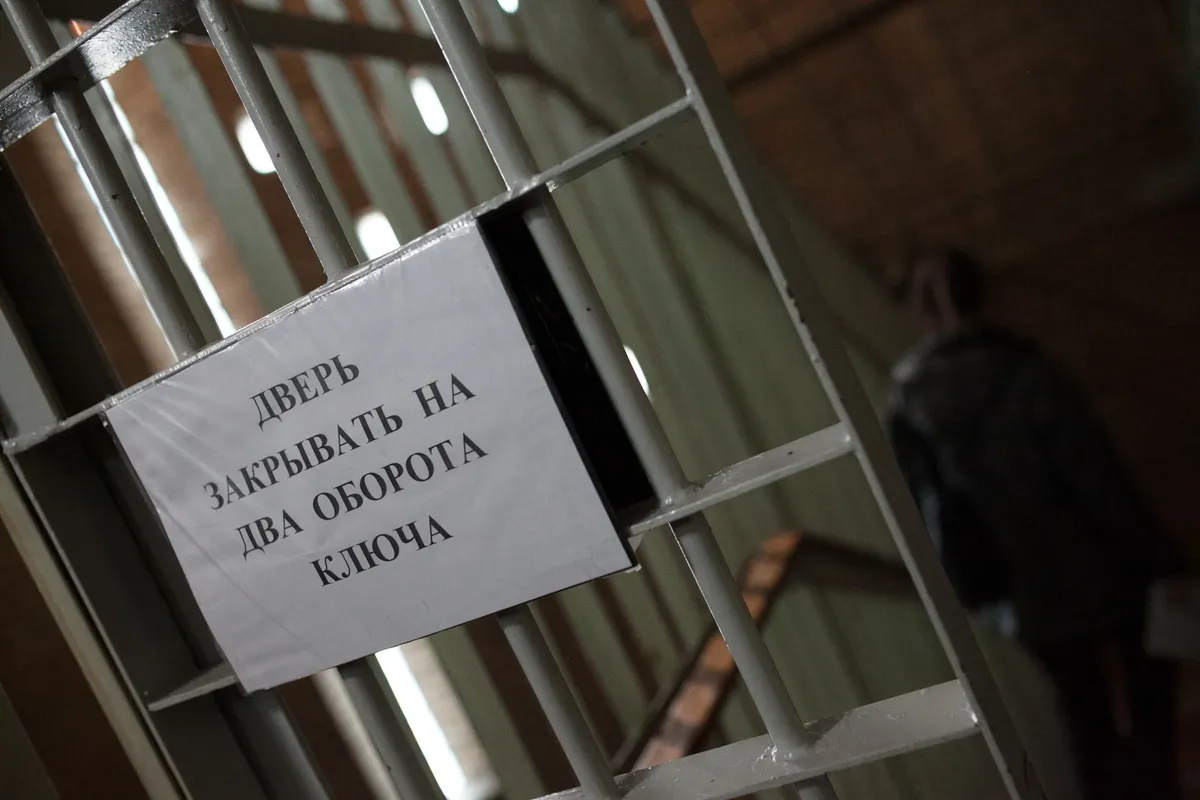
The sounds of staircase doors always inform about the movement of employees - arrival for morning and evening checks, night rounds, visits from managers and supervisors, delivery of breakfast, lunch and dinner, bringing mail, escorting prisoners.
The sounds of food moving around the prison are very distinctive. Breakfast at 7, lunch at 12, dinner at 16. About a quarter of an hour before this, through the window you hear movement in the yard - convicts working in the prison are dragging a cart with food. The food is laid out in large army flasks, cans and kettles. One convict pulls the cart by the lever, the second walks behind, holding the containers with both hands, followed by a prison officer.
The cart rolls loudly, metal containers filled to the brim make a full sound when they touch each other, confirming the presence of contents in them. Flasks of food are dragged between prison floors, up stairs, and placed loudly on the floor, paved with uneven Soviet-era ceramic tiles. Each floor has its own delivery trolley.
Moving around the floor, it rattles - metal wheels “count” all the unevenness of the tiles, open containers with food click on their lids, stacked aluminum bowls rattle.
Both the street carts and the carts inside the building have made their routes thousands and thousands of times, there is not a single centimeter of a flat surface on them, they have gone through thousands of contacts with other metal, the time of their production is hidden in the depths of the twentieth century, and it is not a fact that the final part of it.
When the cans, kettles and flasks are taken back to the catering unit, the sound of the movement of the cart changes: it becomes rattling, and the containers click against each other not with a full, but with a hollow sound.
People in prison feel the movement of a cart with food along the floor from cell to cell almost physically, because the key in the “feeding trough” - the rectangular window in the door of your cell - will turn exactly, the shelf will noisily tilt outward, towards the prison officer and the convict distributing food, and you will receive your portion. The sound of the “feeder” opening and closing is perceived as loud only because the window of your cell is opening; when the “feeder” is opened, the sound weakens even in the next cell.
The "feeding trough" is the incarcerated person's main window into the prison. Through the “feeding trough” they give letters, parcels, books, court documents, documents accompanying the head of the pre-trial detention center for your requests and applications outside the prison, and accounting invoices for purchases at a local store. Through the “feeding trough”, prison staff warn the person about the upcoming arrival of the heads of the pre-trial detention center and supervisory superiors: “Get up and line up near the bed, get ready for the report.”
Above the “feeder” there is a peephole, closed from the outside with a metal circle on a screw. When touched by an employee, the circle swings, making the quietest sound of the prison: “plume!..” - sometimes with a slight grinding sound.
The bolts - huge forged items from the beginning of the last or even the end of the century before last, placed next to the locks on the door of each cell - both when opening and closing, produce two adjacent sounds - a grinding and knocking.
The closest loud prison sound to you is the sound of your cell door opening and closing. You hear the sound of the lock being unlocked, then the sound of the bolt being pulled back, and finally the sound of the door itself opening - it is always opened and closed with force, and the sound of this movement of a huge metal thing includes everything - noise, knocking, grinding and creaking at the same time.
The doors of the cells were made, by all indications, in the 19th century - on each side of three sheets of metal, connected by iron strips with rivets and bolts, covered with dozens of layers of oil paint. The weight of the cell door is tens of kilograms. It is impossible to close such a door with one hand; it simply will not fit into the jamb. Doors are always closed with visible physical effort, with a sweeping movement of the employee’s entire body - arms and legs.
The sound of a cell door slamming behind your back or in front of your face is perhaps the only sound of prison that causes me strong internal rejection; it is perceived as a sonic shock to you personally.
Metal staircases between floors, fenced with bars on all sides, look like a musical staff. 20 metal steps. When people walk on the lower steps, the sounds are muffled and quieter, when on the upper steps they are louder and louder.
Employees at the posts talk to each other on walkie-talkies and through telephones, the appearance of which immediately referred me to the products of the Pskov Automatic Telephone Plant from the time I was at school. Perhaps this is them. The main thing about these retro products is the sound of the bell, indistinguishable from the sound of a classic Soviet alarm clock. During the day you hardly pay attention to it, but when this product rings at night, and the phone is not picked up on the first ring, then the thought that in a 19th-century prison it would be possible to do without 20th-century telephones inevitably comes to the mind of an awakened person.
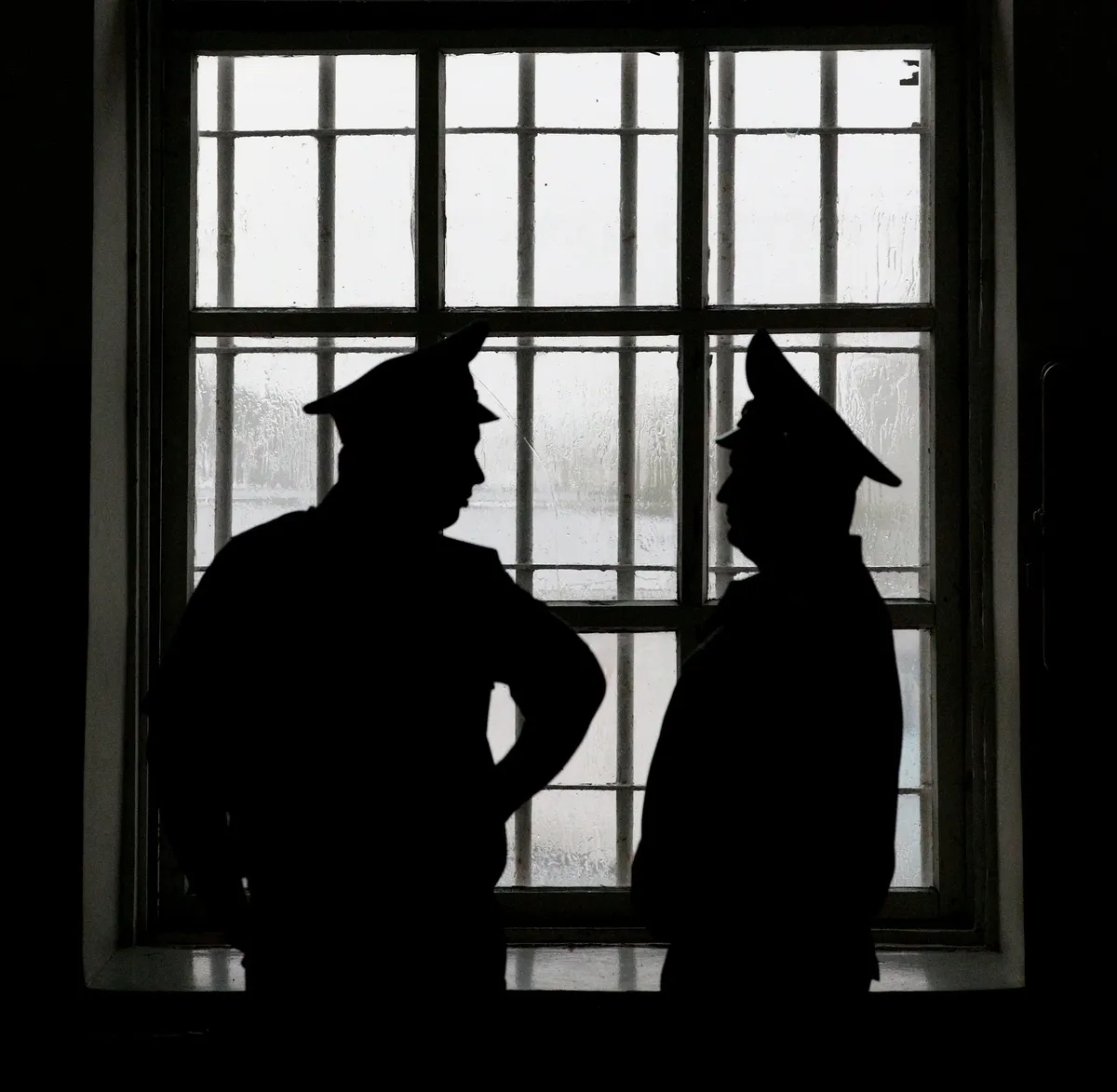
There was one sound of prison that I conquered, and on the very first night, from December 5 to 6. I was brought to my first cell after 10 pm, and I had to settle down for the night. While sorting things out, I almost immediately heard a ringing sound: two or three drops per second were hitting the metal sink from a leaking tap.
Several hours of such non-stop sound can punch a hole through the head of any person. The tap was closed all the way, but the droplets did not stop.
While exploring the space of the cell, I saw on the drain pipe under the sink a small rag, literally 10x20 cm, apparently, a piece of a dark T-shirt. Folded several times and placed in the sink where the drops fell, this magic rag made the sound of the drops breaking on the metal dull and almost inaudible. Thank you, unknown predecessor who sat here before me. A day later, I realized that the rag could be tied to the faucet and carefully lowered into the sink. Water flows through this design completely silently, and the nights have become completely quiet.
The very special sound of prison is the sound of water in the shower. Water bursts out of a horizontal plastic tube 25–30 cm long, in which dozens of holes are made. Some of them are clogged with limescale, but most of them are functional. Water bursts out of this faucet in a wide strip and falls onto the tiled floor, breaking into splashes, with the sound of a waterfall on the Slovenian Springs in Izborsk. This very sound - strong, stubborn - gives me pleasure. The bath time is limited, but I stand in this waterfall for several minutes, without moving, remembering “other shores, other waves.”
The sounds coming into the prison from outside are few. The prison is not configured to accept anything external, but it is impossible to tightly close the sound circuit of the prison. The windows of my cell overlook the prison's catering unit. The hood in the catering unit turns on every hour, its first breath is like a short howl, after which the hood hums smoothly, on one bass note, giving the impression that you are on the territory of some industrial enterprise.
Convicts in the prison yard are clearing snow, and the sounds of shovels moving on the ground are similar to the sounds of shovels of janitors working on the streets of the city, with the only difference being that the janitors are silent, and the convicts are talking among themselves and with the prison officer supervising them.
The city noise creeps into the camera window with the sound of cars moving, from which ambulance sirens are knocked out, blocking all other rustling. During city holidays, the voices of presenters from Children's Park and Oktyabrskaya Square, recognizable snatches of musical phrases, reach the prison, blurred by distance.
Prison inmates have been feeding pigeons for decades (if not centuries), and the very well-fed birds calmly sit on the window sill, pass through the two outer bars, jump over the lower frame of the window and walk along the window sill inside the cell. An internal grille with a five-centimeter pitch prevents them from entering the room.
The birds walk and coo loudly, brazenly demanding their share of the bread ration, and then noisily, flapping their wings, push each other away from the bread lumps. The sound of pigeons buzzing on the window is the only sound of a living organism constantly penetrating into the cell from outside the prison.
I ventilate the cell for several hours, and after the onset of frost I noticed that a sparrow began to fly to the outer grille of the window. The bird preened its feathers, sang intermittently and tapped its beak on the bars, creating sound points similar to the blows of a woodpecker, but much higher in tone - metal makes a ringing sound, and wood makes a dull sound.
The sparrow, unlike pigeons, is a timid bird, but even seeing my movements indoors, it did not fly away. A few minutes later it dawned on me that when the window of the room is open, heat comes out into the street, and in 15-20 degree frost, a sparrow flies to the bars of my window to bask. Now, when a sparrow arrives, I ventilate the room until the bird warms itself.
There is one very special, purely Pskov sound in the external sounds penetrating through the walls of the Pskov prison castle - the ringing of bells. Twice a day, for morning and evening services, the bells of Pskov churches echo each other.
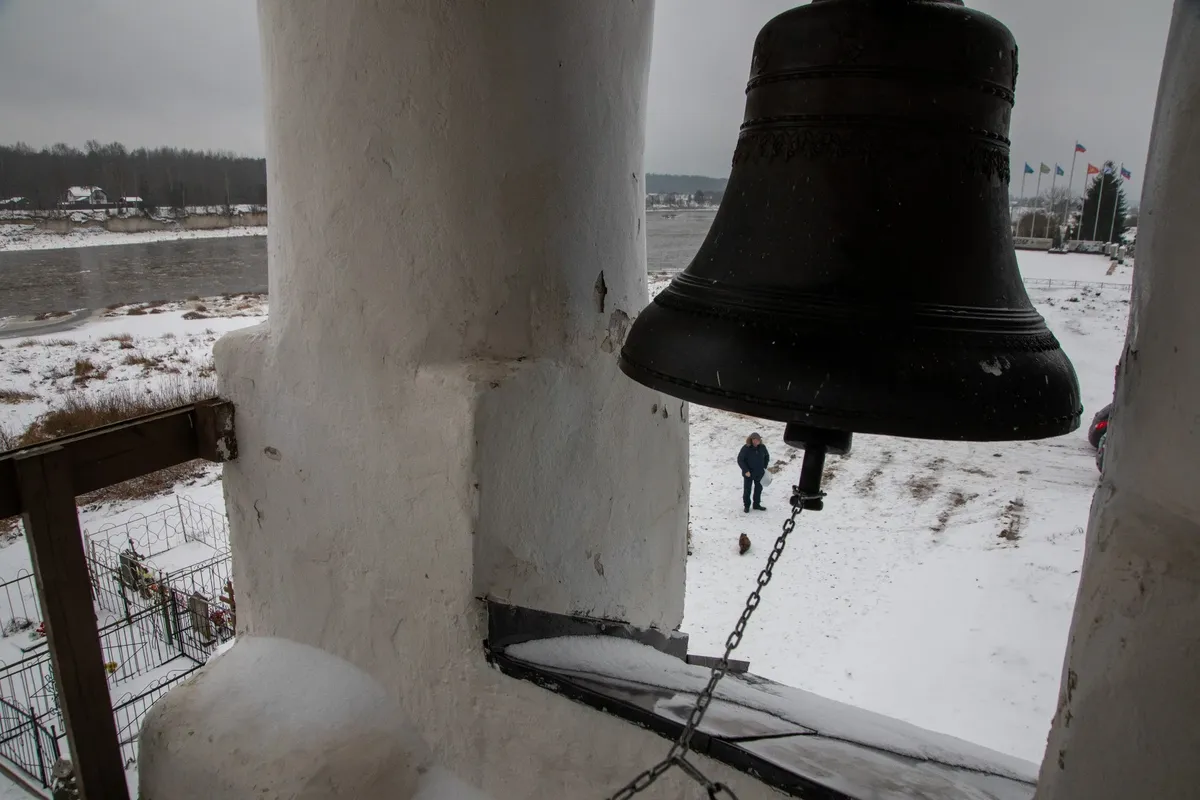
They are calling from St. Nicholas the Wonderworker from Torg. They are calling from Sergius of Radonezh from Zaluzhye. They're calling from Anastasia Roman in Kuznetsy. They are calling from Vasily the Great on Gorka. They are calling from St. Nicholas the Wonderworker from Usokha. They are calling from Michael and Gabriel the Archangels in Gorodets. They are calling from Epiphany from Zapskovye. They are calling from Kosma and Damian from Primostye. They are calling from the Dormition of the Virgin Mary from Paromenia. They are calling from the Cathedral of John the Baptist. They ring from the bell tower of the Trinity Cathedral.
Shimmering and intertwining in the clear air, rolling over the roofs of houses and descending along the walls, fingering the branches of trees, piercing the clouds and lifting thousands of birds into the sky, filling their open wings, penetrating into all the sounds of life’s bustle, the ringing of bells floats and soars over Pskov, announcing to the city and the world the thousand-year-old wisdom of King Solomon: “This too shall pass.”
Pskov Prison Castle