
Translated material
Is the performance over?
Let's sum up the protracted story with appointments and reassignments of acting. Rector of the Moscow Art Theater School

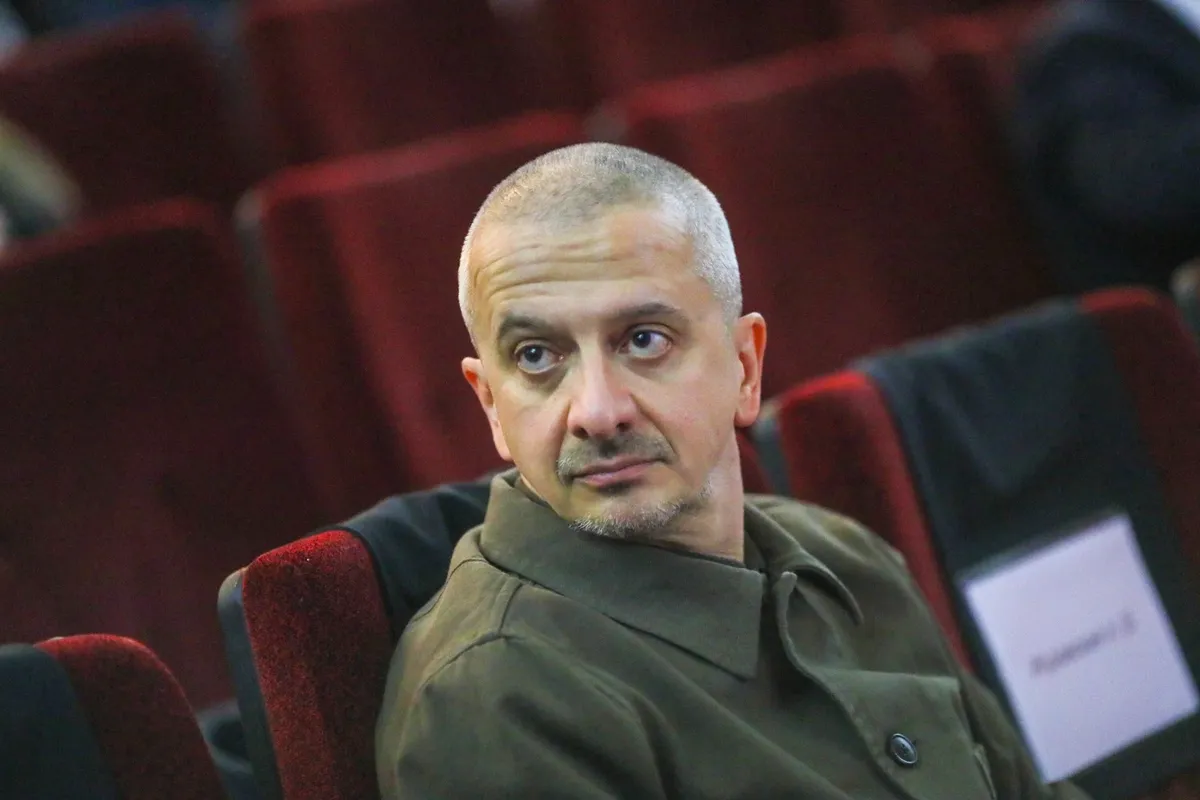
Konstantin Khabensky. Photo: Moscow Agency
After the long-awaited recusal of director Konstantin Yuryevich Bogomolov, the position of acting rector of the Moscow Art Theater School was empty for a long time, and no appointments were made from above. Prominent theater figures in the capital literally played “hot potato”, brushing off the rector in the public space. Thus, Dmitry Pevtsov stated that “the rector of the Moscow Art Theater School should only be a GRADUATE from it,” and Sergei Bezrukov referred to the fact that he has enough leadership of the Gubernia Theater, filming and teaching, and he does not apply for the post of rector (however, Sergei Vitalievich did not disdain the position of artistic director of the Gorky Moscow Art Theater). After the scandalous letter from students and graduates of the Studio School against the appointment of Bogomolov, everyone seemed to be afraid of this post.
On March 6, after a long pause, it became known that instead of one Konstantin Yuryevich, another, Khabensky, had been appointed acting rector of the Moscow Art Theater School. And at this moment everyone exhaled. This is, perhaps, the only candidate that satisfied almost everyone who has an opinion on this matter. Although the teaching staff is well aware of Khabensky’s busy schedule and is looking forward to who will become his deputy, who will probably make key decisions.
But even under this condition, Khabensky satisfied the students - as a highly professional artist who has something to say. In addition, Khabensky avoids direct political statements, and therefore does not arouse anger among either pro-government or liberal-minded cultural figures. And yet, some pro-government bloggers still managed to remain dissatisfied - for example, the popular pro-government telegram channel about the Zakulisk theater commented on the news very briefly, noting that “Konstantin Yuryevich Khabensky can be replaced at any time with the real Konstantin Yuryevich,” thereby expressing either dissatisfaction with the appointment, or resentment that their forecasts did not come true (previously they were sure that Bogomolov will retain his position).
After Khabensky’s appointment to the post of acting rector, the true reasons for the collective letter against Bogomolov became obvious. The fact is that the main thesis of this statement is that Ksenia Sobchak’s husband is not a graduate of the Moscow Art Theater School, and therefore cannot apply for the position of rector according to the charter. Only Konstantin Khabensky is also not a graduate of the Studio School, he graduated from the famous workshop of V.M. Filshtinsky in LGITMiK (now RGISI) in St. Petersburg. This means that the principle of continuity was of concern to the authors of the letter, but not in the first place.
The main reason for the sharp rejection of Bogomolov’s candidacy was the ethical and artistic principles of his work, which run counter to the traditions of the Studio School.
But Khabensky is lucky that he is the artistic director of the Moscow Art Theater. Chekhov, which means that people who do not understand theatrical structure will “count” such continuity for him - even in specialized telegram channels everyone has already mixed everything up.
And if we try to summarize: what does it mean that Konstantin Khabensky is the best possible choice for rector?
Firstly, all candidates from the current teaching staff were unable to take up the post for various reasons - some were not suitable in age, while others sensibly assessed their workload in other leadership positions. In addition, during the period of calm and “rectorlessness,” there was an opinion that combining two or more leadership positions was prohibited according to the charter, but Khabensky was forgiven for this.
Secondly, Khabensky is a sought-after actor, which means he is a very busy person. Whether this means that his position will be more of a nominal one is not yet clear. But obviously
that he does not plan to radically change the foundations of the Studio School and build his empire on blood - unlike his briefly delayed predecessor in office.
Yes, for the late Igor Zolotovitsky, the Moscow Art Theater School was the main activity, his brainchild and the main work of his life, but now it has not been possible to find a candidate who is equally selfless and in love with theater education, who would suit the Ministry of Culture. But the revolution, fortunately, is being cancelled, and the current staff of the Studio School will now again have weight in making key decisions.
Thirdly, Khabensky is equally successful in both theater and cinema, which means there is a possibility that during the training process attention will be paid to both types of art. In theater universities, the main emphasis is often on the theater, which is why graduates experience difficulties when they get on the set. This problem concerns the Moscow Art Theater School to a lesser extent, but it cannot be ruled out yet.
The question remains open: what will happen next? Is the show really over, and now the students will continue to study quietly, and the news feeds will find a new sensation? The candidacy of Konstantin Khabensky will still be approved at the Studio School and voted on by the academic council, but this is more of a formality.
The key decision will be who will become his first deputy - he will do all the main work for which Khabensky simply does not have time.
But it is already clear that the new stage, which, apparently, awaits the Studio School, cannot be called a turning point or historical. In essence, the university will continue to function as before; if there are any changes, they will most likely be minor. The Moscow Art Theater School continues to be the country's leading theater university, and there is reason to believe that under the leadership of Konstantin Khabensky it will retain its position.