
Translated material
Shabbat during the war
How from the holidays with the howl of sirens and the roar of interceptions of ballistic missiles, the residents of Israel returned to everyday life - of course, not at all what they were before

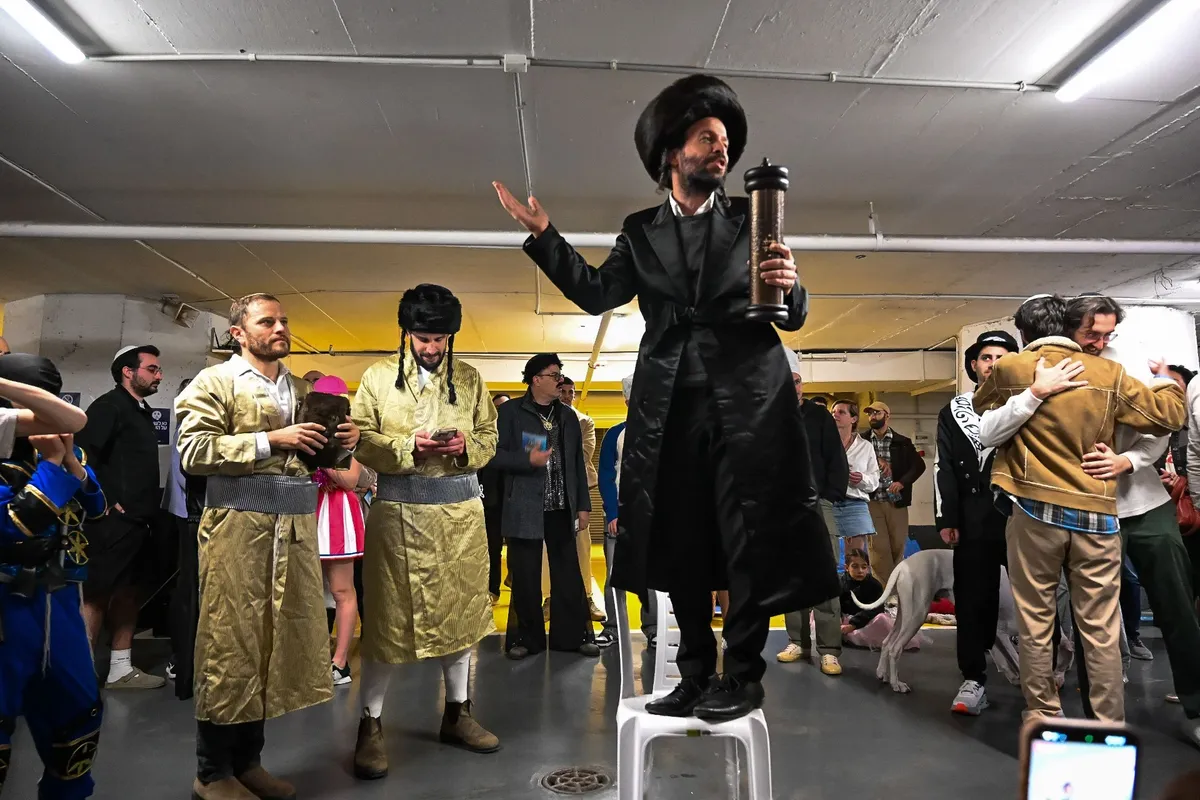
March 2, 2026. Tel Aviv. Israelis celebrate Purim in an underground garage. Photo: Zuma/TASS
The US war with Iran began on the last day of winter, when the Israelis were celebrating Shabbat and preparing for the joyful holiday of Purim. In the end, they had to celebrate, dress up, and even go on a rampage amid the wail of sirens and the roar of ballistic missile interceptions, already familiar to the Israelis from the previous Iranian campaign.
-Where are you all going? The war has not yet begun - a ticket inspector on a Jerusalem tram tries to hold back passengers from storming the doors at the Central Station stop. “There’s another tram coming next, no need to storm!”
- What, is the war coming soon? — I ask the transport supervisor.
- Certainly. “The end of the world,” my interlocutor answers in a secular tone, but without a hint of a smile. With his intonation, he literally copies the intonation of the hero Sergei Artsibashev from the film “DMB”; moreover, he then literally repeats his line from the now textbook scene, only in Hebrew: “The whole world is in ruins. Cards to be checked, please, have a nice trip everyone.”
By the time of the last pre-war Shabbat in Israel, the war had not yet really begun, although its imminent start was quite obvious: the American ambassador had already urgently asked all his employees who wanted to leave to do so immediately. Residents of the Jewish state were eating the last crumbs of six months of peace that reigned after Donald Trump's intervention led to the end of the protracted war in Gaza. The famous Jerusalem market has already begun selling costumes for the upcoming Purim, a holiday that serves as an annual carnival in the Jewish calendar.
The bright colors contrasted with the premonition of a great war in the air. In the most literal sense of the word, the stern and dull rumble of military aircraft, which had not been heard since the end of the war in Gaza, sounded in the air again on one low note.
The beginning of the second series of the Iranian war was announced by the squealing of cell phones, familiar from the summer Iranian campaign. The difference was that last summer this signal woke up the Israelis at exactly 3:30, but here they allowed them to sleep until eight in the morning on the weekend. And by lunchtime the air raid alarms had already sounded, and there was an unusually loud boom over Jerusalem. In the eight months that have passed since then, the Israelis have enjoyed the absence of an indispensable set of sounds and rituals, such as a quick run to bomb shelters, but have not had time to get used to it. For some Israelis, the “survivor’s mistake” effect was triggered, and therefore they reacted rather passively to returning to these very rituals and decided not to go to the nearest shelter - we swam, we know, we’ll stay at home.
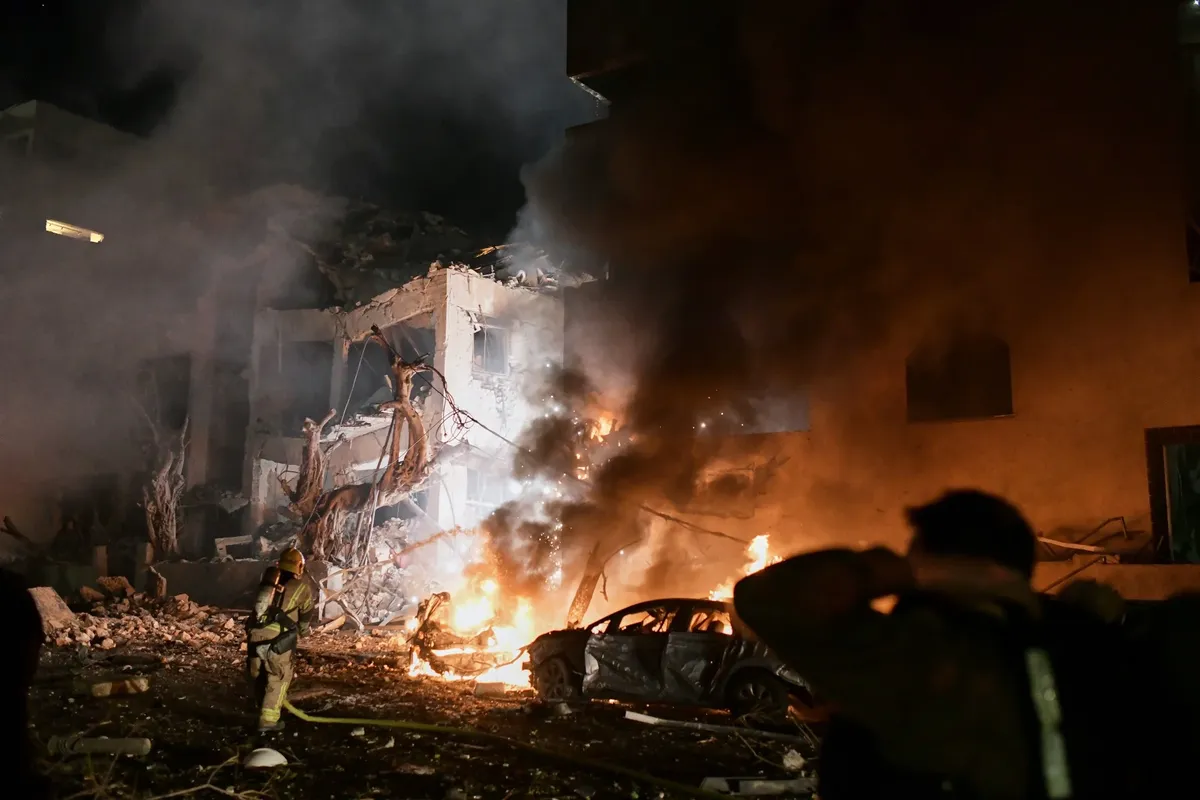
True, in the very first days of the war they were taught a cruel lesson - on March 1, an Iranian missile hit the synagogue in Beit Shemesh, under which there was a public bomb shelter. Nine people died, including children. In the last Iranian war, a similar tragedy (a missile hit a residential building and landed directly in a protected room) happened in Beersheba three minutes before the ceasefire, in this one almost immediately. By the way, an investigation by the civil defense service showed that at the very moment of the strike in Beit Shemesh, the dead were outside the shelter, and everyone who was inside survived. On the same day, a rocket hit a house in Tel Aviv, killing a Filipino citizen - a social worker who decided not to leave her elderly charge, who did not have time to go down to the shelter. As a result, the ward survived. There were more people in shelters after these two tragedies.
Mourning quickly gave way to preparations for the two-day Purim celebration. In general, the idea that someone specially timed the start of the operation to coincide with the holiday of the deliverance of the Jews from general extermination in Persia in 355-356 BC is impossible to drive away. Most likely, this was the case.
Military carnival
Purim is actually a martial holiday. Its ancient history, described in the Old Testament “Book of Esther,” consists of three parts. The first can be considered an attempt that arose, as they say, “on the basis of personal hostility” to “solve the Jewish question” within the framework of one empire, started by the court minister Amman and supported by King Ahasuerus: his decree ordered the Persians to exterminate Jews throughout the country. The second part is a complex court intrigue, started in response by the Jewish queen Esther and her relative, close associate of the Persian king Mordechai, as a result of which Amman ended up hanged on the very tree that he had prepared for Mordechai. It is curious that he achieved this together with Esther through the returned favor of Ahasuerus, who had recently been ready to organize a real holocaust in Persia. The third part is the most instructive: the tyrant could not cancel his order (in the huge Persia at that time, as now, there were problems with communication), but he issued a new one - in it he granted the Jews the right to defend themselves with impunity from attackers by any means. Actually, the day of victory over the pogromists determined the date of the holiday. Moreover, in the city of Susa (present-day Iranian Shush) the battle lasted a day longer - in connection with this, a tradition was established to celebrate Purim in the “cities beyond the wall” a day later. These in Israel included and still include Tiberias, Safed and the capital, Jerusalem.
So on the evening of March 3, while festive costumes were still being finalized (or purchased) in the capital of Israel, the sound for night raves was already being checked in Tel Aviv. There was only one problem - on Purim, Jews are ordered to party until they drop and get so drunk “so as not to distinguish Amman from Mordechai,” and the Home Front Command service quite definitely forbade gatherings of more than three. A rather compromise solution was found: the holiday moved to extensive bomb shelters and underground parking lots. So, for example, the police decided to disperse one of them, perhaps the most numerous - in the large parking lot of the Dizengoff Center, and therefore the audience moved to a similar room under the Abima Theater. There, the dancers occupied an entire underground floor, while residents of the surrounding houses were already sleeping on others.
But, as the local saying goes, “Tel Aviv dances, Jerusalem prays,” so on the evening of March 4, the streets of the ancient city were quiet and not crowded. Only in crowded synagogues was the Book of Esther read, traditionally drowning out every mention of the villain Amman with specially brought rattles. The Mahane Yehuda market, which usually serves as a place for mass celebrations, was deserted - from the lowered blinds, the graffiti and murals of the artist Solomon Sousa, who several years ago painted them with portraits of historical figures and thus created a unique corporate identity for this city landmark, looked out at the rare passers-by. However, the rare passersby looked quite expressive: a tired and not very sober “butterfly” shuffled past from work, she was overtaken by three frisky ancient Persians in company with a cowboy, speaking excellent American English; it seems that they came to visit their historical homeland and now they will clearly stay there longer than planned. Towards a family with small children, one of whom is dressed as an angel.
Turning around, you can see that instead of wings the baby has a B-2 bomber behind him. And the parallels that arose in the brain with Russian kindergarteners, who were dressed up in uniforms and caps last February 23, should be neglected.
Moreover, there were not many militaristic motives on this Purim: mostly superheroes, fairy-tale characters or heroes of the history of the holiday predominated. “Sitting with me in the miklat (public bomb shelter) are three ladybugs, two spider-men, a man with an octopus on his head, two Ahasuerus and a cat,” a resident of the capital of the Jewish state writes on social networks. Many took their children to shelters, taking with them board games, soda and speakers with music and, of course, costumes - they couldn’t leave the children without a holiday. And myself too: when the holiday in Jerusalem had already formally ended, several thousand people gathered in the market square, which only yesterday had its closed shutters looking at the rare passers-by. Having languished under a cover for a long time and bursting out as if from a burst bag, the fun turned out to be so violent and crowded that the police officially announced that they were afraid of a stampede and would not disperse anyone. There is reason to think that not all of those walking were Jerusalem residents - in Israel there is a tradition of coming to the capital from other cities for the “second Purim”.
In general, this Purim, celebration and anxiety (in both senses of the word) seem to have mixed, but not to a homogeneous mass: funny costumes and shelling, sounding sharper and more often than in the last war, suddenly appearing drunken crowds and the roar of smartphone applications, many times amplifying the signals of street air raid sirens. And as a constant background - the drone of an airplane sounding on one note, rhyming with the lead clouds in the March Jerusalem sky.
Routine
However, the holiday passed, and everyday life began - but not at all the same as before. Nevertheless, the martial law - and here the experience of sensations and experiences accumulated by the Israelis last summer, somehow imperceptibly, without announcements or pathos - entered and sat down on the side chair of the most ordinary life of the Israelis. For me personally, a symbol of this ordinariness of war was a trip to buy bread at the nearest district store at the hour of early Jerusalem sunset: on the way, in the sky that cleared that day, I saw a characteristic sinuous white thread, similar to strands of tzitzit, that is, tassels on a tallit, a Jewish prayer vestment. Emerging from the alley into the open area, I was about to admire the unusual celestial pattern until I saw at the near end of the thread a distant and tall small rocket with a very tiny, as if painted, red flame from the nozzle. She was busily flying somewhere about her monstrous business; the rear command did not issue any warnings or the alarm itself at that moment; Civil defense services try not to disturb citizens when they are sure that danger will fly by. After some time, already at the edge of the horizon, I saw another thread - perpendicular to the first one - indicating the trajectory of the Israeli interceptor missile. They met somewhere far beyond the horizon - there was not even the usual sharp roar, which is called here with the internationally understandable word “boom”.
In general, this time the war in some places resembled “Covid at minimum wage” - a large number of necessary stores and services switched to shortened hours or decided not to open at all, and schools invited students from the unexpectedly extended Purim holidays to Zoom.
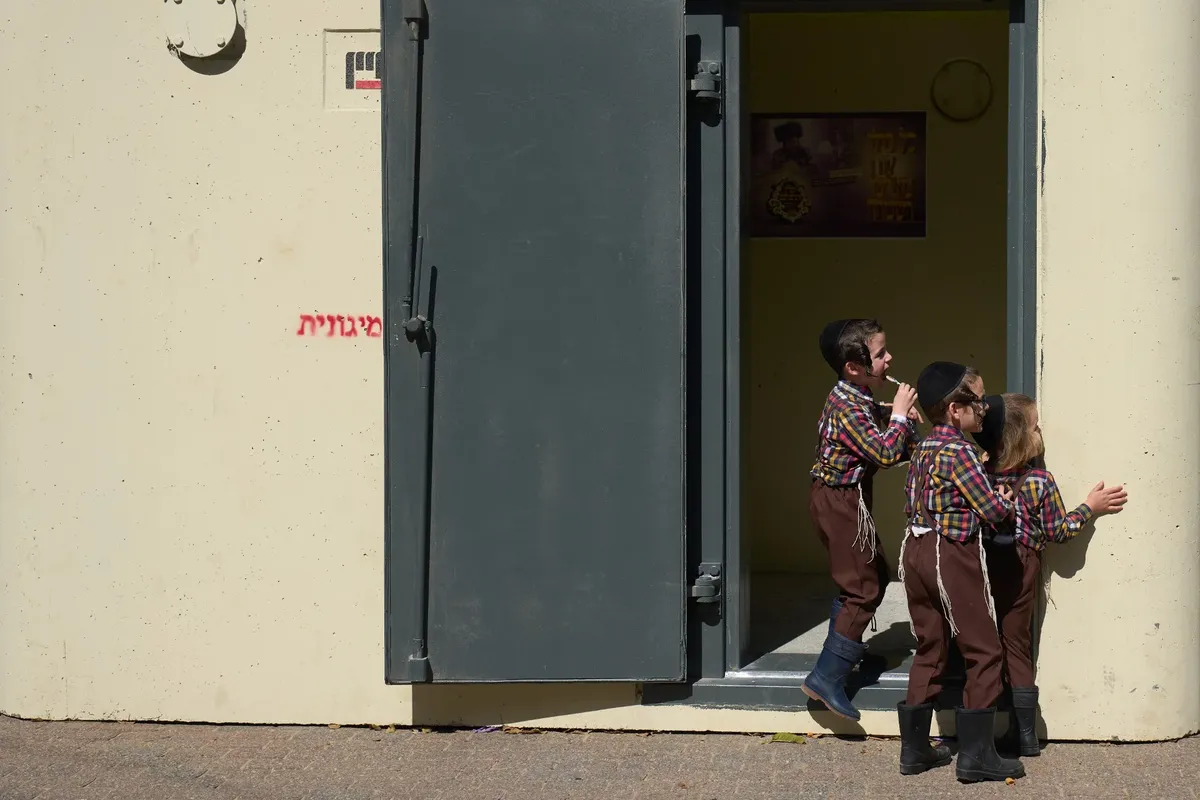
The ranks of agency employees have thinned out due to the conscription of reservists - usually it lasts several months, but in this case no one can say how many people will be pulled out of their normal lives and sent to military bases. But even in this sour situation, there was a place for gloomy Israeli humor: a video went viral on social networks in which parents, leaving for work, tell their young children: “Sorry, kids, kindergartens are not open. You are already a year and a half old, you are already old enough, so shout louder, let your neighbor hear you - she works from home.” In reality, everything is exactly the opposite - Israelis take care of children, love them to death, many simply began to come with their children to offices, shops and hospitals.
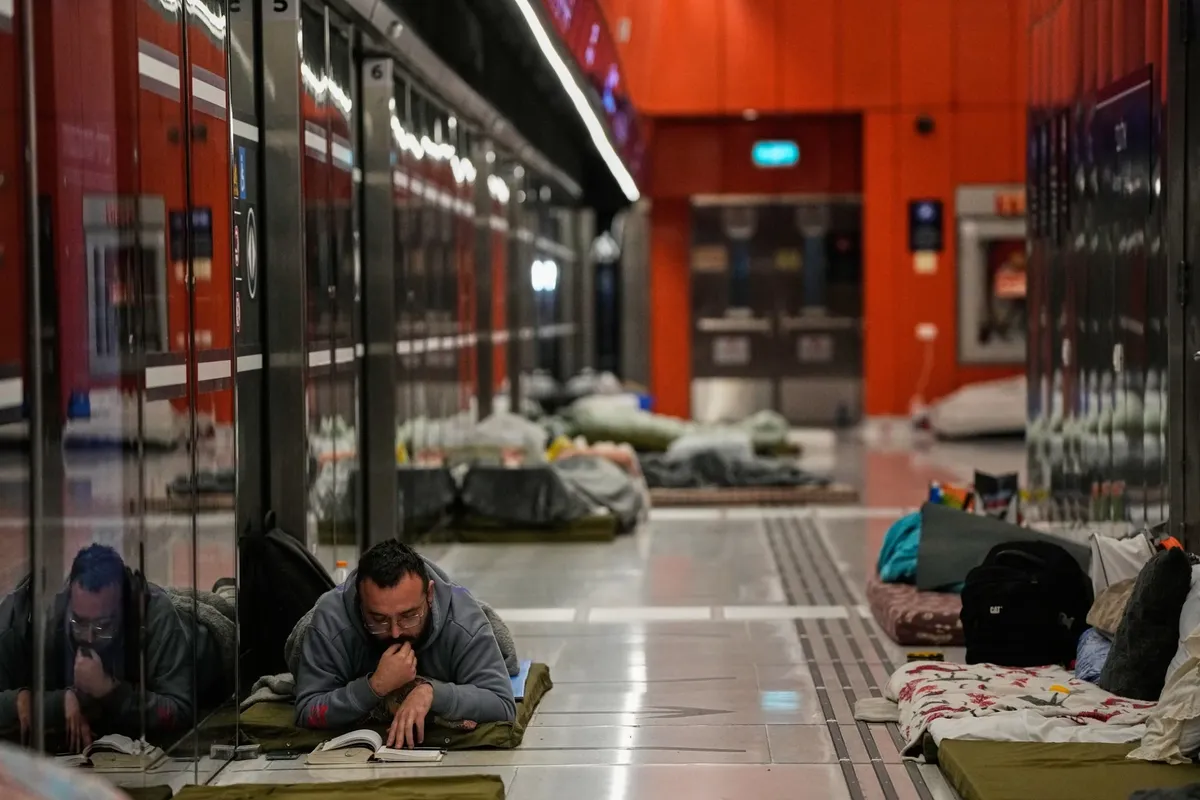
At the same time, no one canceled the shelling from Iran - and therefore the journey to and from work could become longer due to a visit to the nearest bomb shelter along the way. At some point, it seemed that there were even more of them than on holidays, but gradually their number began to decline. However, the Israelis would not be themselves if they did not start humoring the current situation. Social networks were filled with funny reels and stories on the topic of moving between an apartment and a shelter. Moreover, some witty IT specialists made an application that, based on the data received (army warnings, time elapsed since the last shelling, etc.), estimated the percentage chances of taking a shower without an alarm; When the shelling began, the arrow on the scoreboard fell sharply to the left. It’s not for nothing that the Jewish state calls itself a “startup nation.”
However, another quality of this nation - enterprise and efficiency - was also fully manifested these days. Chats for mutual transportation, as if on command, were again filled with drivers ready to take you to the checkpoint on the Egyptian border for a fairly substantial fee.
Having crossed it, you can take a taxi in about 40 minutes to Taba, from where holders of almost any passport can leave the Middle East with relative ease. The Israeli low-cost airline Arkiya learned lessons from the previous military campaign and quickly launched flights to nearby air harbors, from where it was possible to transfer to flights to many destinations. The flow also worked in the opposite direction: as always during wars, of which Israel has seen and experienced too many recently, its paradoxical citizens sought to return home - through the same Taboo. So the Egyptian drivers drove back to the border with the former enemy in the south not empty - like their enterprising brethren on the Israeli side.
Then Ben Gurion Airport partially opened - at first, however, delayed flights were accepted and departed. The Russians who were in Israel received two SMS - one from the Russian Consulate, asking them to contact and make themselves known, the other from a mobile operator, which gave them three days of communication and 500 MB of traffic. There was a certain level of anxiety in the communities and chats of various diasporas, but at the main and so far only international airport there was nowhere near the terrible crush and despair that reigned at that moment at the Dubai airport.
Those who returned and remained put off their plans for a vacation abroad for a long time during the Passover holiday (that is, from April 1 to 8) and, it seems, prepared to wait to see how the sequel to the Iranian war, which has every chance of dragging on for a long time, will end. In this new everyday life, all the already familiar elements are present - sleep deprivation among residents of the center, who experience up to six shellings per night, reaction to sharp sounds (for example, my dog and I jumped on the spot when, during an evening walk in the middle of completely empty tram tracks, a stop suddenly and unexpectedly spoke loudly to us, urging us in three languages not to forget our things). But what, oddly enough, there is absolutely no talk about politics, the causes of the war and the degree of its justification - although there were such questions last June.
“I don’t understand at all how to live here,” a young girl in a medical uniform tells her colleague on a tram passing through a wonderful road in the hills of Jerusalem’s Ein Kerem to the local Adassah Hospital campus. — Build a career, plan vacations, birth and education of children. I see that nothing depends on me here at all.”
Alexey Krizhevsky