
Translated material
Seven fortresses in Georgia that are worth seeing
A fortress from Parajanov’s film, a castle in the style of “1001 Nights” and 5 more fortifications that are definitely worth seeing in Georgia
Hundreds of castles and fortresses have been preserved in Georgia: from lonely defensive towers to powerful citadels, like in the Game of Thrones. Paper Kartuli tells the story of seven fortifications, each of which is definitely worth a weekend trip.
Along with walls and towers, you will see gardens, temples, and museums. Near some fortresses you can drink local mineral water directly from the source, while others will offer you an overnight stay or even a spa soak.
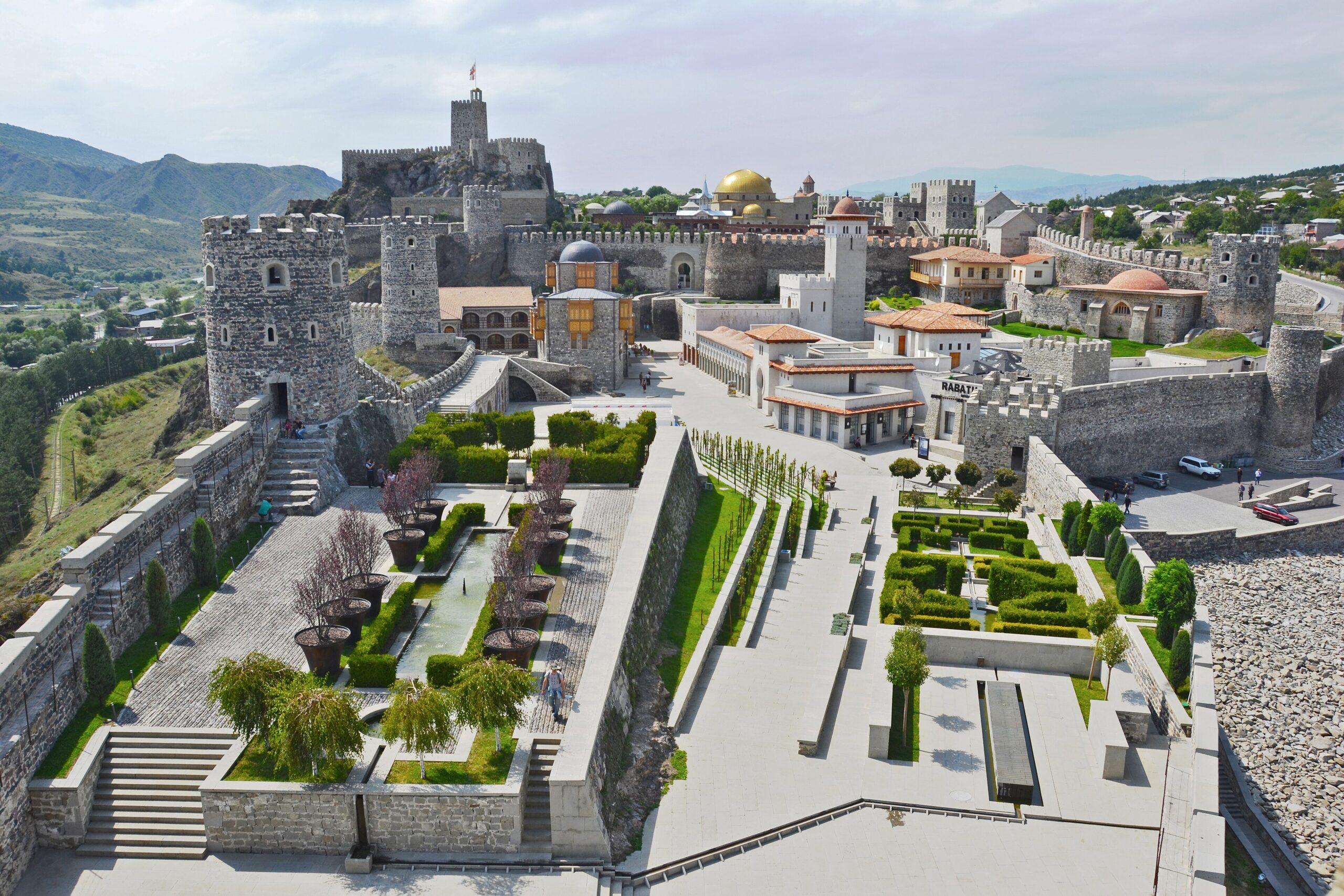
Akhaltsikhe
Story
Akhaltsikhe stands on the site of the ancient city of Lomsia, founded in the 9th century by the rulers of the principality of Tao-Klarjeti. By the end of the 9th century, the fortress became the ancestral possession of the Dukeli princes - one of the most influential families in southern Georgia and long-time rivals of the royal Bagrationi dynasty.
In 1579, the fortress passed into the hands of the Ottoman Empire without a fight. The Jakels converted to Islam and retained their possessions, only changing their Georgian title to Turkish. Akhaltsikhe turned into the center of the Ottoman pashalyk, that is, the region.
Until the beginning of the 19th century, the city remained a key center of Turkish military, political and cultural influence in the South Caucasus and a constant threat to Georgia. Only after the capture of the residence of the Akhaltsikhin Pashas by Russian troops in 1828 was the city reunited with the rest of the country. In guidebooks, the fortress is often called not by its Georgian name Akhaltsikhe, but by its Turkish name - Rabat. But local Georgian residents may be offended by its use.
What to see
Entrance to the fortress is paid, for foreigners without a Georgian residence permit - 20 GEL, for citizens and residents - 10 GEL.
Unlike the other fortresses on the list, this is not so much an ancient castle as a model of it. The ruins of the fortification were radically reconstructed in 2011–2012, the work was financed partly by the budget of Georgia, partly by Turkey. The builders cared not so much about historicity as about the spectacular appearance and tourist attractiveness.
The lower fortress was built from scratch in the 21st century, the upper one was greatly transformed. As a result, this is truly one of the most photogenic fortifications in Georgia: towers, walls, patterned balconies, fountains and rose gardens are reminiscent of illustrations from the fairy tales “1001 Nights” or the capital of the Dornish people from “Game of Thrones”.
In addition to the fortifications themselves, inside there is a huge but inactive Ahmed Pasha mosque, the building of a supposed harem, the tomb of the Pashas of Akhaltsikhe and the remains of an ancient Orthodox church of the 9th century.
Right in the lower courtyard of the fortress you can spend the night at the Gino Wellness Rabath hotel, which during the time of Mikheil Saakashvili regularly hosted parliamentary delegations from other countries. The hotel has a spa complex. Price per room - from 97 GEL per night. A bonus is the opportunity to get up and immediately go for a walk around the fortress before other tourists wake up.
How to get there
Akhaltsikhe is a large city, the capital of the Samtskhe-Javakheti region. Minibuses from Tbilisi run from the bus station near the Didube metro station every hour or more often, depending on how full it is. If you are in a hurry, you can take a suitable bus to Borjomi, and then transfer to a local minibus to Akhaltsikhe.
The journey by your own car will take about 3 hours. The fortress on a high hill is clearly visible from the central square of Akhaltsikhe.
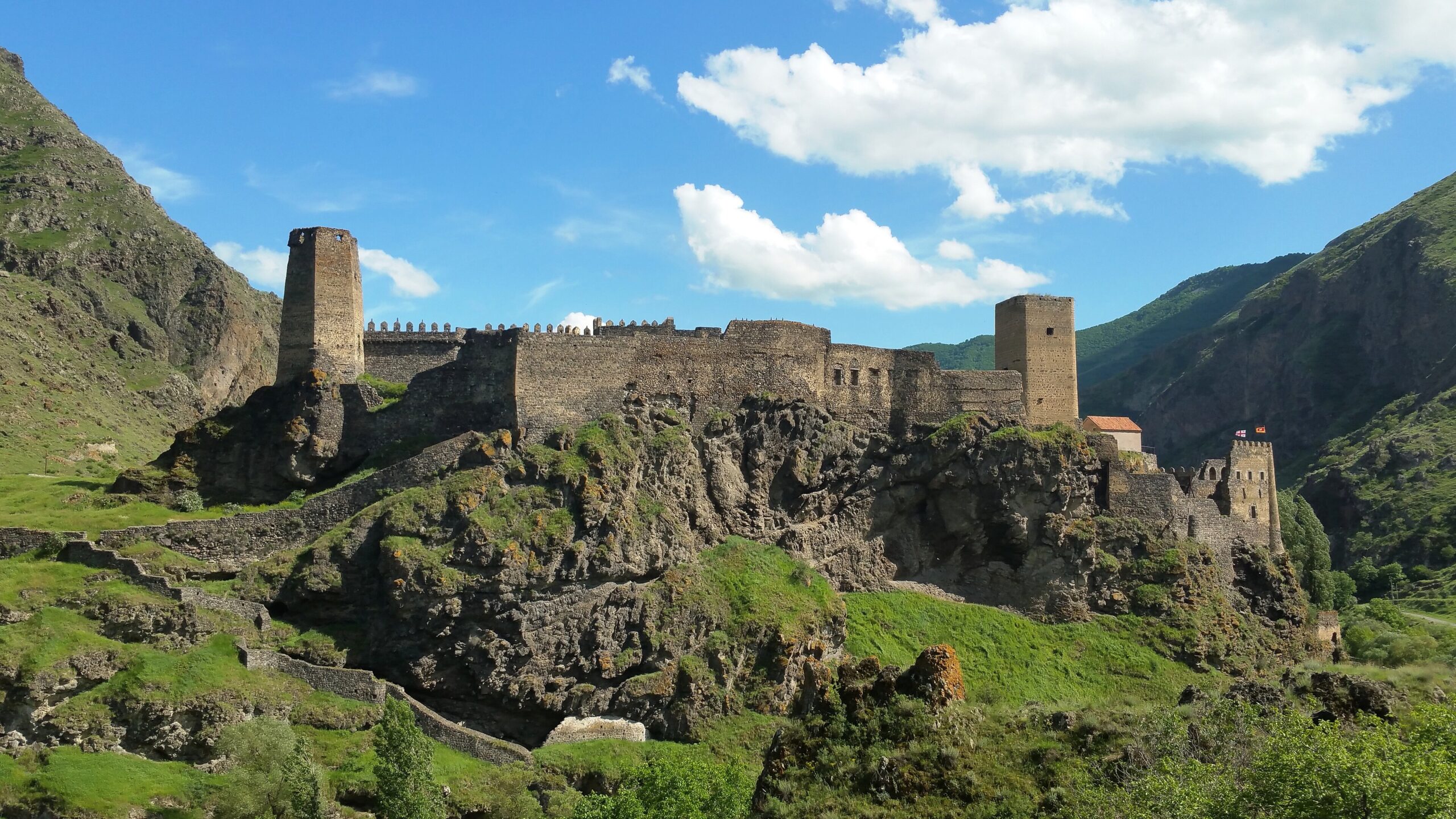
Khertvisi
Story
Chronicler Leontiy Mroveli claimed that Khertvisi arose in ancient times and was one of the first settlements in Georgia. But archaeologists have not yet discovered traces of an ancient city in this place - only a multi-layered fortress, which in different eras belonged to Georgians, Mongols, Turks and Russians.
The construction of fortifications began in the 10th century, but each subsequent conqueror first destroyed and then restored the fortress more powerful than before. It finally lost its military significance only in 1828, when, as a result of the next Russian-Turkish war, Khertvisi came under the rule of the Romanov Empire. Now these are picturesque ruins of two parts: the lower fortress and the upper citadel.
What to see
The fortress stands at the confluence of the Mtkvari and Paravani rivers. The castle forms a single whole with a powerful coastal rock, and therefore looks especially impressive from a distance. In 2017–2018, the Georgian authorities financed the reconstruction of the fortifications: they installed water supply and sewerage into the fortress, laid new stairs and wheelchair ramps, built a parking lot, and at the same time introduced a paid entrance.
The fortress is open from 10 am to 6 pm every day, ticket price is 10 lari. There are almost no buildings inside, with the exception of a chapel on one of the ledges of the citadel. Visitors pay more for the views from the upper tiers than for viewing the architectural attractions.
Having crossed the Paravani River along the road bridge near the fortress, to the right of it you can find the ruins of Ottoman baths. From this place a picturesque panorama of the castle on the opposite bank opens. The banks of Mtkvari in Khertvisi are connected by a pedestrian suspension bridge. Directly behind it, on the opposite bank from the fortress, are the remains of the so-called Nariman Tower, which once served as an additional line of defense for the crossing.
It is convenient to combine a visit to the Khertvisi fortress with trips to Akhaltsikhe and the Vardzia cave monastery.
How to get there
There are no direct minibuses passing through Khertvisi from the capital. You will first have to get to Akhaltsikhe or Aspindza and there change to local transport or take a taxi. There is logic in this: with a transfer in the regional center, you can see two impressive fortresses at once.
Many travel agencies offer full-day group tours with visits to Akhaltsikhe, Khertvisi and the cave city of Vardzia.
But still, it is most convenient to go to the fortress in your own or rented car. The road from Tbilisi will take about 3 hours 40 minutes.
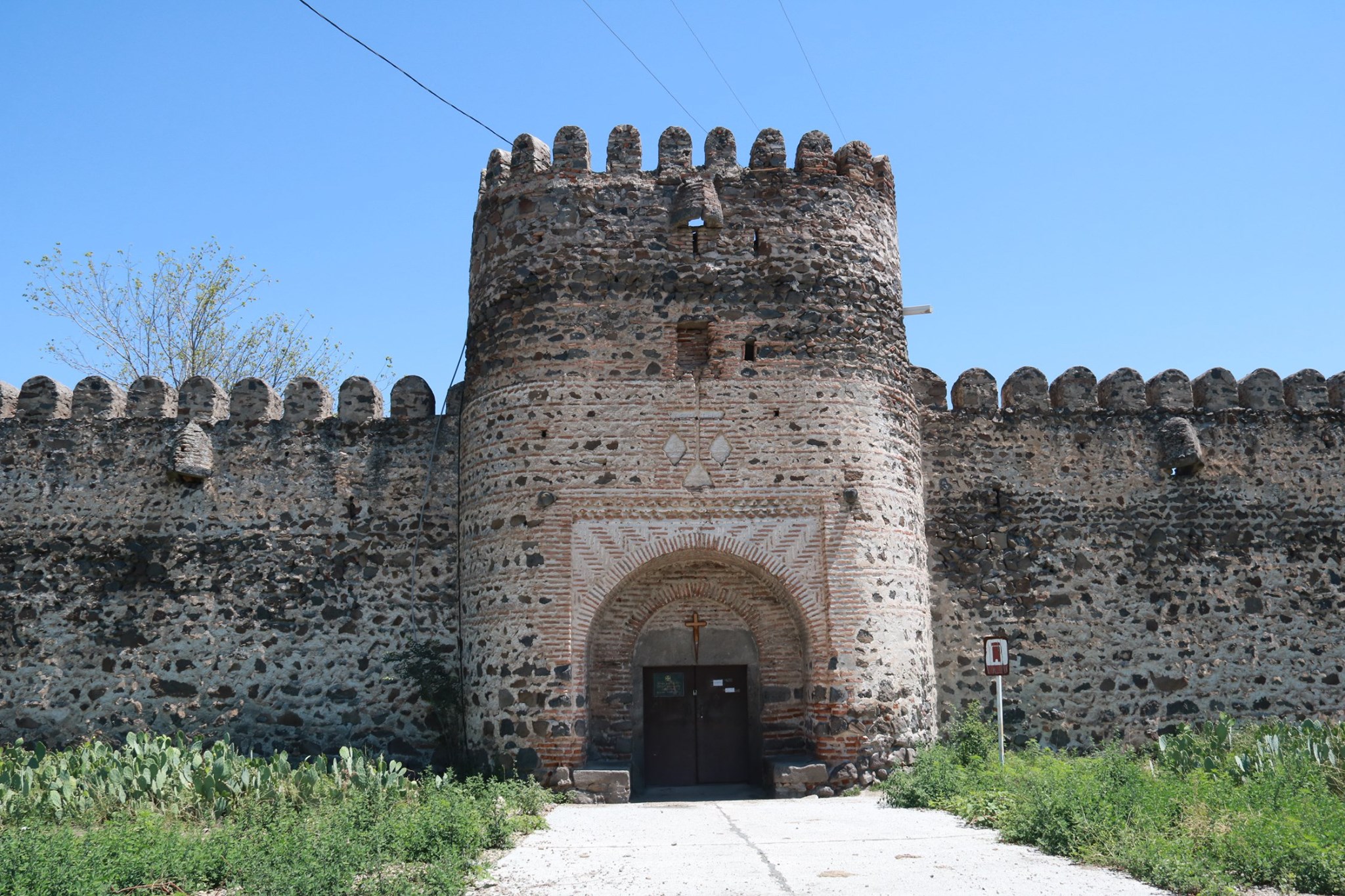
Kolagiri
Story
At the end of the 18th century, the Georgian queen Darejan built the Kolagiri fortress, or White Castle, as a line of defense against the Turks, who could attack Tbilisi from Akhaltsikhe. Soon after the completion of construction, Georgia lost its independence, and Russian troops occupied Akhaltsikhe. The Turkish threat disappeared, and the fortress never saw action.
What to see
The fortress has been preserved almost perfectly. It looks like a square of stone walls measuring 135 by 135 meters with four powerful corner towers. Back in the 1840s, the Russian authorities considered the castle an active military facility, so it simply did not have time to really collapse. Now Kolagiri has been turned into a monastery. When the fortress is open to the public, the monks open its western gates. But if the entrance is closed, don't get too upset. There is almost nothing inside except gardens, a cypress alley and a small monastery church. Kolagiri makes the greatest impression from the outside.
How to get there
The fortress adorns the small village of Tamarisi in Kvemo Kartli. Minibuses Tbilisi - Bolnisi and Tbilisi - Dmanisi pass by; on average, they depart every hour from the Samgori metro station. You can also take a minibus to the city of Marneuli and get off on the outskirts at the Smart supermarket. From this stop to the fortress it is 8.5 km, but finding an inexpensive taxi on the spot is not a problem.
By car you can get from Tbilisi to the Kolagiri fortress in less than an hour. It is convenient to combine the trip with a trip to Bolnisi. Paper Kartuli has a guide to this town with an extraordinary history .
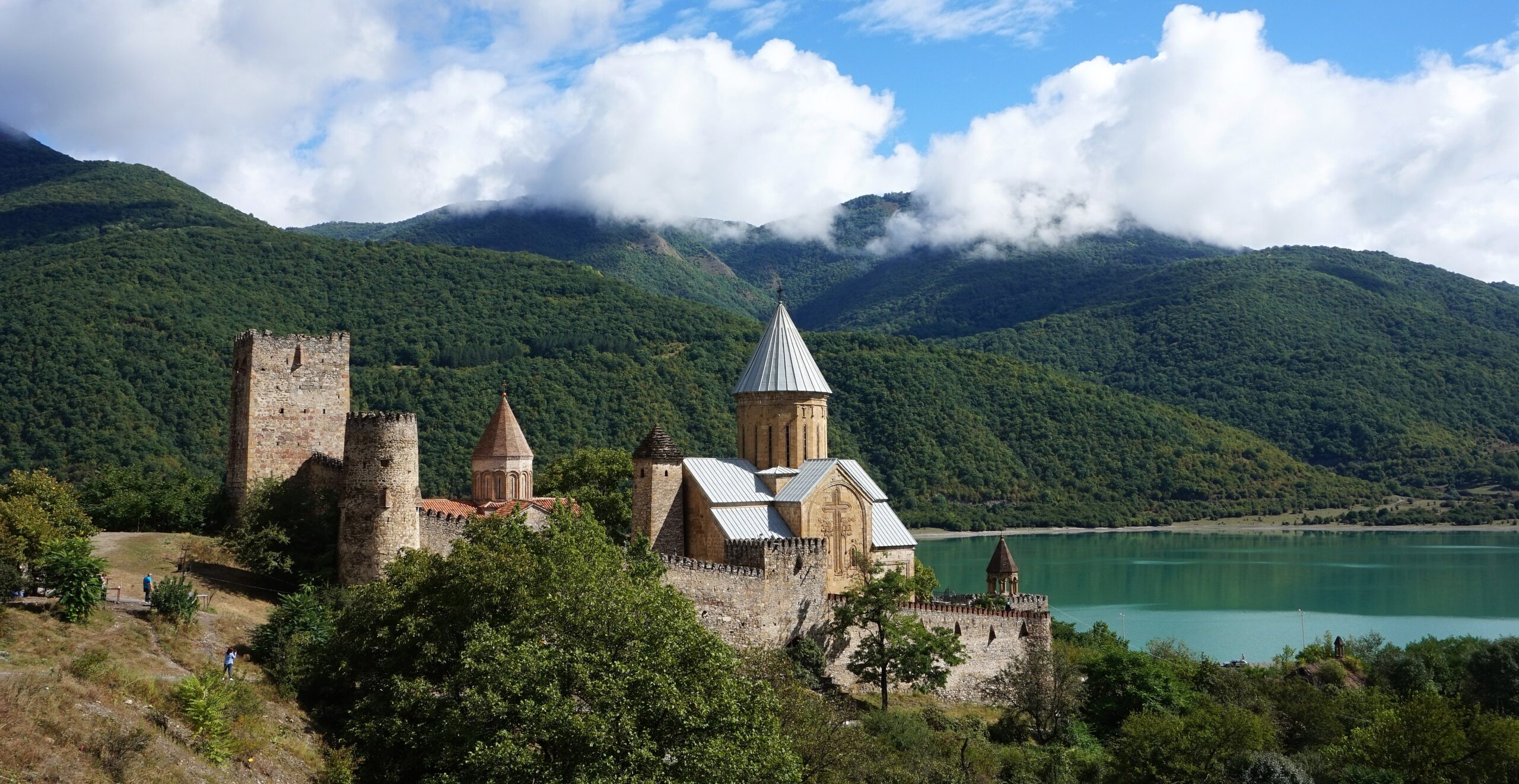
Ananuri
Story
The Ananuri fortress on the Georgian Military Road in ancient times guarded the road from the Daryal Gorge - then it was the only way from the North Caucasus to the South Caucasus. The oldest part of the complex is the defense tower, it was built in the 14th–15th centuries. Over time, the rulers and defenders of the Aragvi River valley, the Aragvi Eristavis, made Ananuri Castle the second most important residence after their capital, the city of Dusheti. In the 16th–18th centuries, they added a powerful castle with two rows of walls and churches inside to the old tower.
What to see
Apart from the Narikala fortress in Tbilisi, Ananuri is perhaps the most visited fortification in Georgia. It is truly simply impossible to ignore it: the picturesque castle forces even a tourist who has driven along the Georgian Military Road many times to slow down.
The fortress consists of an ancient defensive tower with a pyramidal roof, lower fortifications and an upper citadel. On the territory you can see two temples, a bell tower, a chapel-tomb of the Eristavis of Aragvi, the ruins of baths and a swimming pool. Pay attention to the frescoes in the Assumption Church, in the eastern part of the citadel. The scratches on them are traces of the daggers of the Lezgins, who captured and burned Ananuri in 1739.
If you come during the season when the water from the neighboring Zhinvali reservoir is drained, you will see another unusual attraction - a bridge in the “Stalin Empire” style with obelisk lanterns. Most of the time it is hidden in the waters of an artificial lake.
How to get there
All minibuses traveling from Tbilisi in the direction of Gudauri and Stepantsminda pass by the castle. They depart from the Didube bus station every 15–20 minutes. Be careful, not all drivers make a stop in Ananuri unless you remind them about it.
Any guide or travel agency must include the castle in their travel program along the Georgian Military Road, but it’s not difficult to get here on your own. It is convenient to combine the trip with a trip to Mtskheta and Stepantsminda.
Using a personal or rented car, the road to Ananuri from the capital will take a little over an hour, if you are lucky enough not to get stuck in a traffic jam when leaving Tbilisi.
Kvemo-Chala
Story
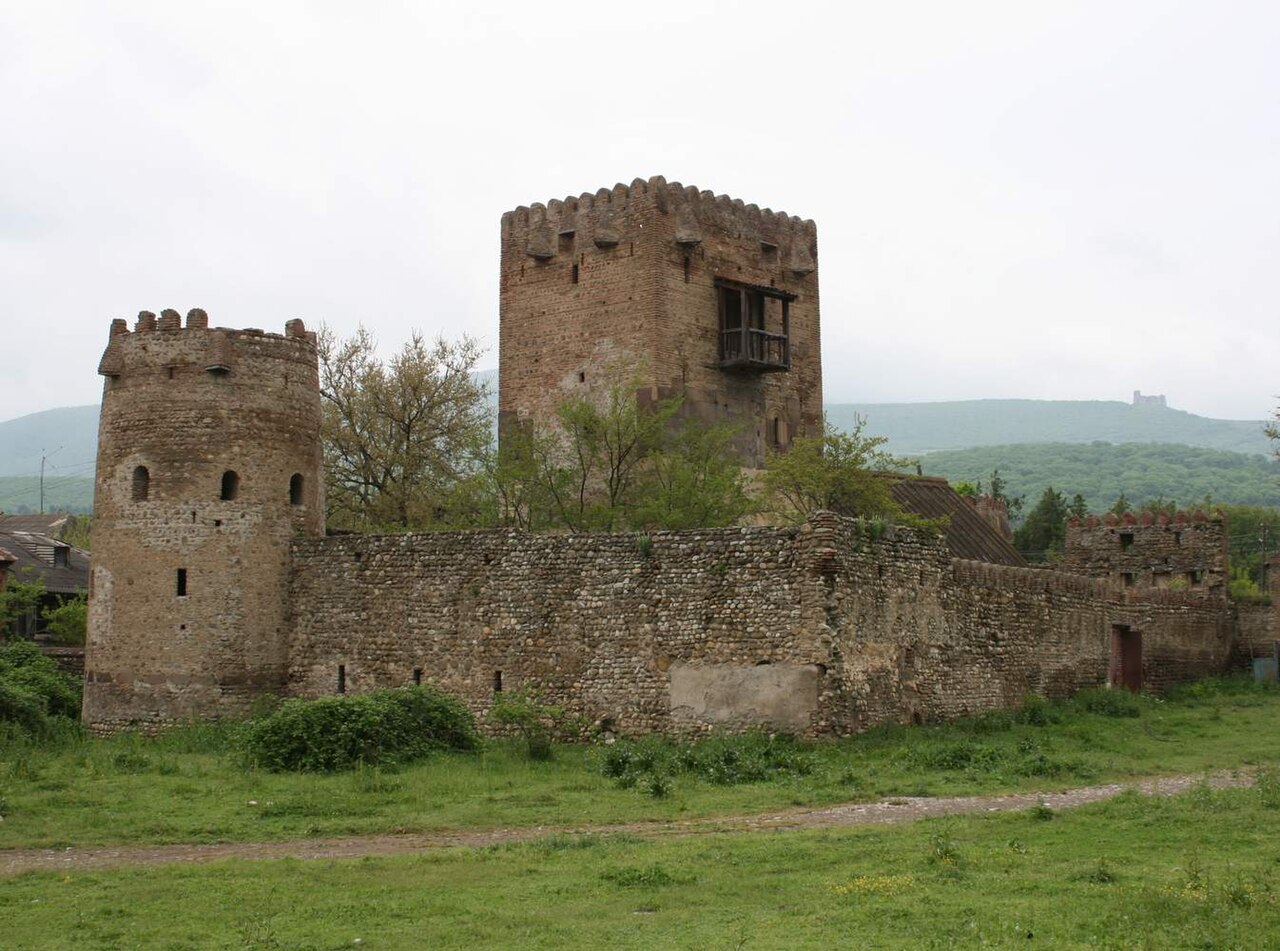
Kvemo-Chala or simply Chala is a feudal castle in the most European sense of the word. Many details of its history are forgotten, but the fortification was presumably erected at the beginning of the 18th century by the restless Prince Givi Amilakhvari as a personal residence. First, Givi Amilakhvari managed to be a mourav, that is, the ruler of the city of Gori under the rule of the kings of Kartli, then a sanjak bey, that is, a governor under the Turkish occupation, and, finally, a military leader under the Persian Shah Nadir. He helped the latter to drive out the Ottomans from Georgia, whom he himself had recently served.
Givi unsuccessfully rebelled against Nadir several times, but the Iranians spared the Georgian aristocrat. In addition to the Kvemo-Chala castle, Amilakhvari built the Kashveti Church and the Upper Betlemi Church in Tbilisi. In the 19th century, the descendants of Amilakhvari used the Kvemo-Chala castle as a country estate.
What to see
Three powerful towers have been preserved from the castle - one of them with a carved stone portal, a church, walls, the dilapidated house of the princes Amilakhvari and numerous outbuildings. In front of the entrance to the castle chapel you can see the gravestone of the ensign of the Russian army Vakhtang Simonovich Amilakhvari, who died in 1916 at the front of the First World War.
How to get there
From the bus station near the Didube metro station, you need to take the Tbilisi-Kaspi minibus and go to the village of Igoeti. The stop is located 5.5 km from the fortress, but you will have to go up, so calculate your strength in advance. It’s easier to transfer to the local bus Kaspi - Kvemo-Chala or take a taxi.
By car the journey from Tbilisi will take about an hour. It is convenient to combine a visit to the Kvemo-Chala fortress with a trip to another castle nearby - Skhivilo .
Surami
Story
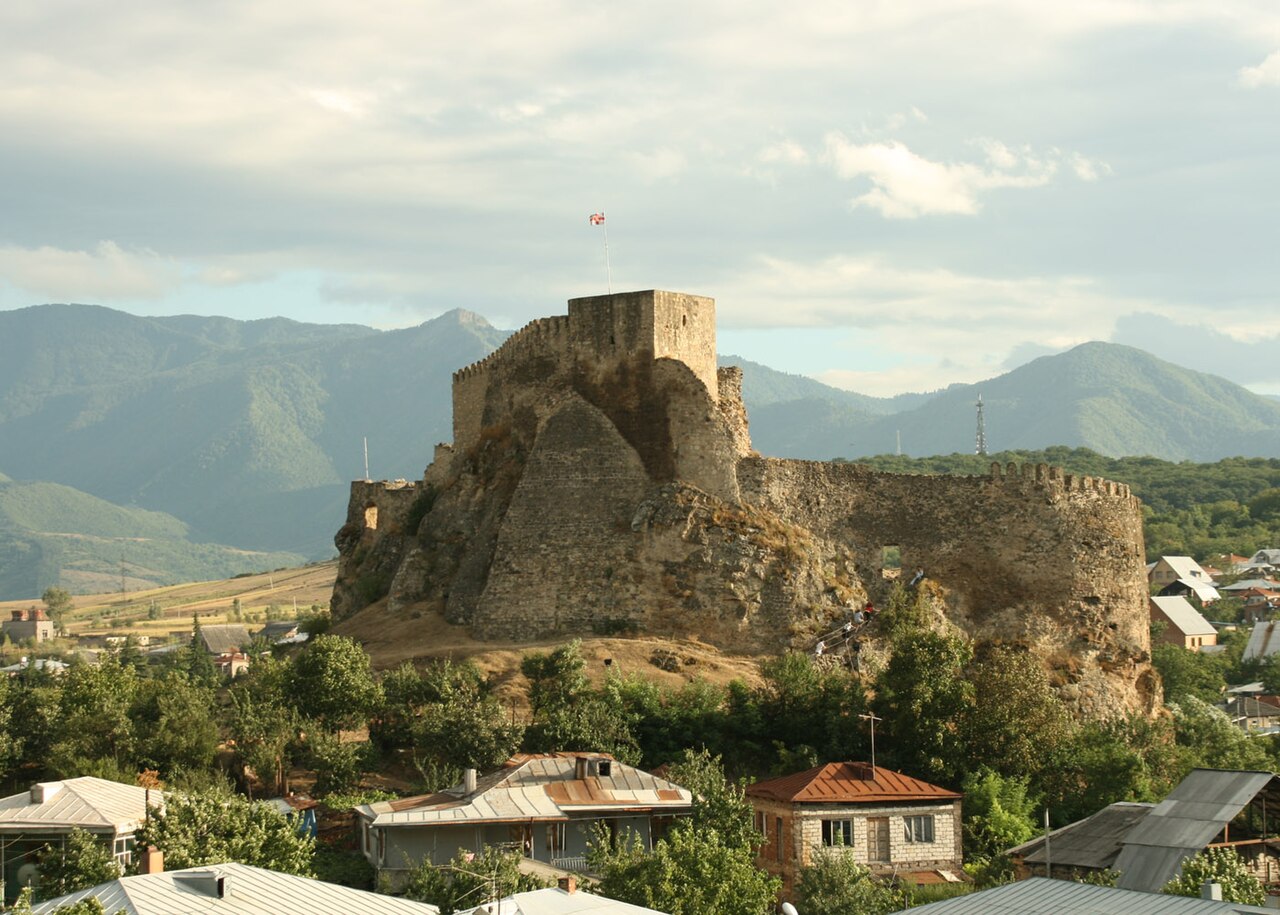
To the west of the present town of Surami rises the Surami Range - a mountain range separating Eastern and Western Georgia. A caravan road had been going through the pass on this ridge since ancient times, and the first Suram fortress was built to protect it. The fortress was rebuilt in different eras by Georgians, Persians and the military of the Russian Empire. The current fortifications date back, according to archaeologists and local historians, to the 17th–18th centuries.
The Surami fortress is known thanks to the legend associated with it. According to legend, in order to protect themselves from invaders, the residents of the city decided to build a fortress on the mountain next to it. However, every time the walls were built, they collapsed. Then, according to one version, a local sage, according to another, a fortune teller, told the townspeople a terrible condition: in order for the fortress to stand, the only son of one of the local mothers must be walled up in its wall.
The young man voluntarily agreed to sacrifice himself for the sake of his hometown, and after that the fortress acquired indestructible strength.
This legend was filmed in 1984 by director Sergei Parajanov in the film The Legend of the Suram Fortress. Although the filming did not take place in Surami itself, the film attracted many tourists to the city.
What to see
Today the inside of the fortress is empty, only dilapidated towers and walls remain. But due to the fact that the fortification is located at the highest point of the city, from here it is pleasant to admire the panorama of Surami with the 15th century Church of St. Giorgi. Near the fortress there is a small Surami synagogue. On the main street of the city you can drink mineral water from a public spring, and if you’re lucky, buy nazuki sweet flatbreads. If you are interested not only in history and fortification, but also in poetry, do not miss the Lesya Ukrainka Museum in Surami - it was in this town that the poetess died of bone tuberculosis on July 19, 1913.
How to get there
The village of Surami is a “satellite” of the larger city of Khashuri, where buses and minibuses stopping from Tbilisi to Zestafoni and Kutaisi. They depart from the Didube bus station, the smaller part passes directly through Surami, the larger part drops you off in the center of Khashuri, about 4 km from the Surami fortress. You can cover the last kilometers by taxi or local bus No. 1.
The journey from Tbilisi by car will take a little less than two hours.
Batonis-tsikhe
Story
Telavi was once the capital of the Kakheti kingdom. This is the same ancient city as Mtskheta: it existed even before Tbilisi and has been known to historians since the 1st century AD. Even when the city lost its administrative significance, it remained an important commercial and military center. There are four ancient fortresses in Telavi: the Batonis-tsikhe citadel, also known as Telavi Castle, the Vakhvakhishvili fortress, the Korchibashishvili fortress and the so-called Old Fence, Dzveli Galavani.
Paper Kartuli has a separate guide to Telavi .
What to see
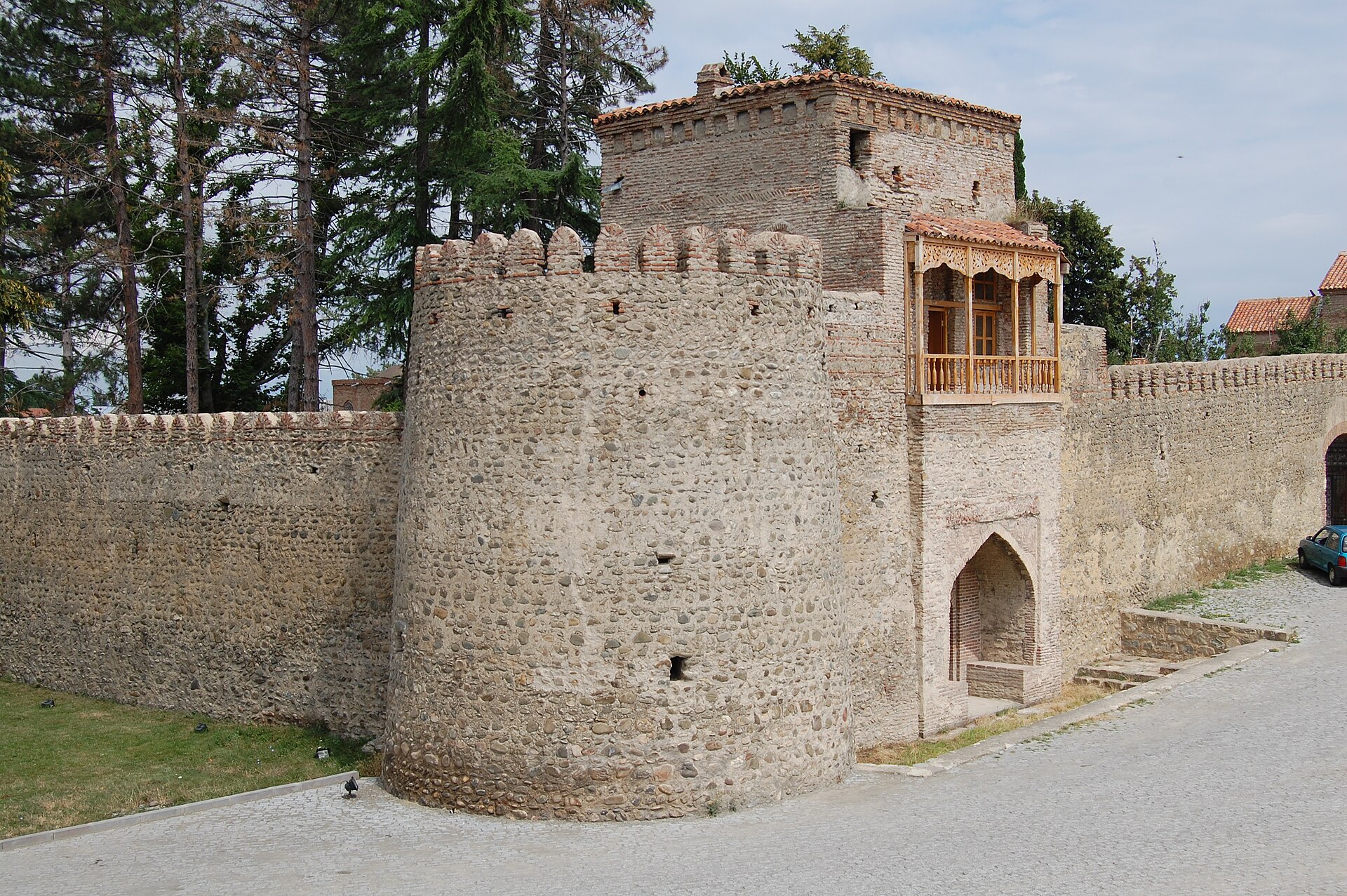
Batonis-tsikhe is the most representative fortress in Kakheti. Kings Archil II and Erekle II built Telavi Castle using Persian technology and in the Persian architectural style to protect their possessions from raids by the mountaineers of Dagestan. The model for the castle was the Kerim Khan fortress in the city of Shiraz in Iran, and therefore it is quite different from other Georgian citadels.
Inside the fortress there is a recreated palace of Erekle II with the throne room of the kings of Kakheti, the royal baths, the treasury building, the ruins of the seminary and the royal chapels. In the second courtyard there is the Telavi Historical Museum with a good collection of archaeological finds and a small painting gallery. An entrance ticket to the museum in 2025 cost 7 lari.
Although formally Batonis-tsikhe is only one of the four fortresses of Telavi, only modest ruins of the other three have survived. If your fortification hunger has not yet been satisfied, on the way back to Tbilisi you can stop at the popular Ujarma fortress or get to the Alaverdi Cathedral , also surrounded by a stone wall.
How to get there
You can get to Telavi by minibus from the Samgori metro station or from the Ortachala bus station; buses leave every 40 minutes.
The journey by taxi or your own car from the center of Tbilisi will take approximately 1 hour 40 minutes, if there are no traffic jams leaving the capital. The Batonis-tsikhe fortress is located in the central square of Telavi.
Cover photo: guidetoeurope.eu