
Translated material
Revolution of the Mind
Cultural takeoff against the backdrop of social upheaval always occurs, which leads to internal revolution or leads to spiritual decline

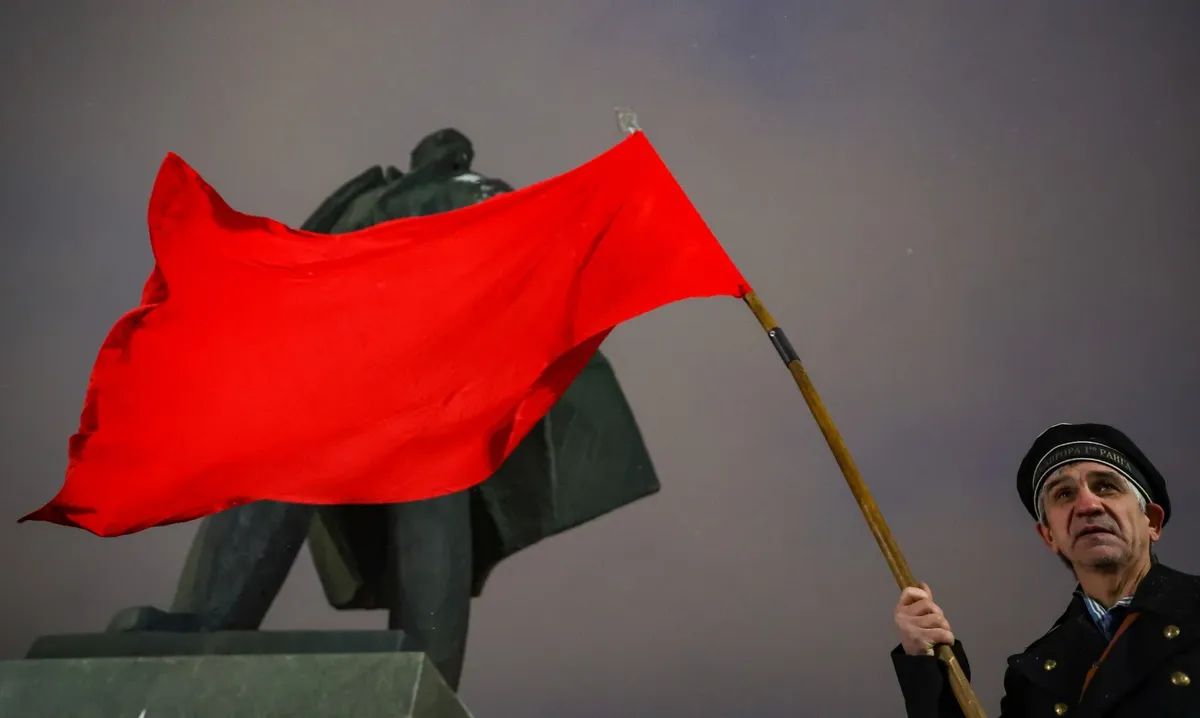
Destroyed monument to Vladimir Lenin in Voronezh. Photo: Egor Snetkov / Kommersant
*Blessed is he who has visited this world
His moments are fatal.*
F.I. Tyutchev
The First World War and the Russian Revolution of 1917 marked the beginning of the largest anthropological disasters of the last century. In the first third of the current century, the world is shaking, but, despite local protests, its political state, both good and bad, is still stable. But there are no cultural breakthroughs on the global horizon, apart from widespread digitalization. Philosopher Elena Yanushevskaya discusses the revolution of reason and its connection with social revolutions. How are they connected and is there an explanation for this connection?
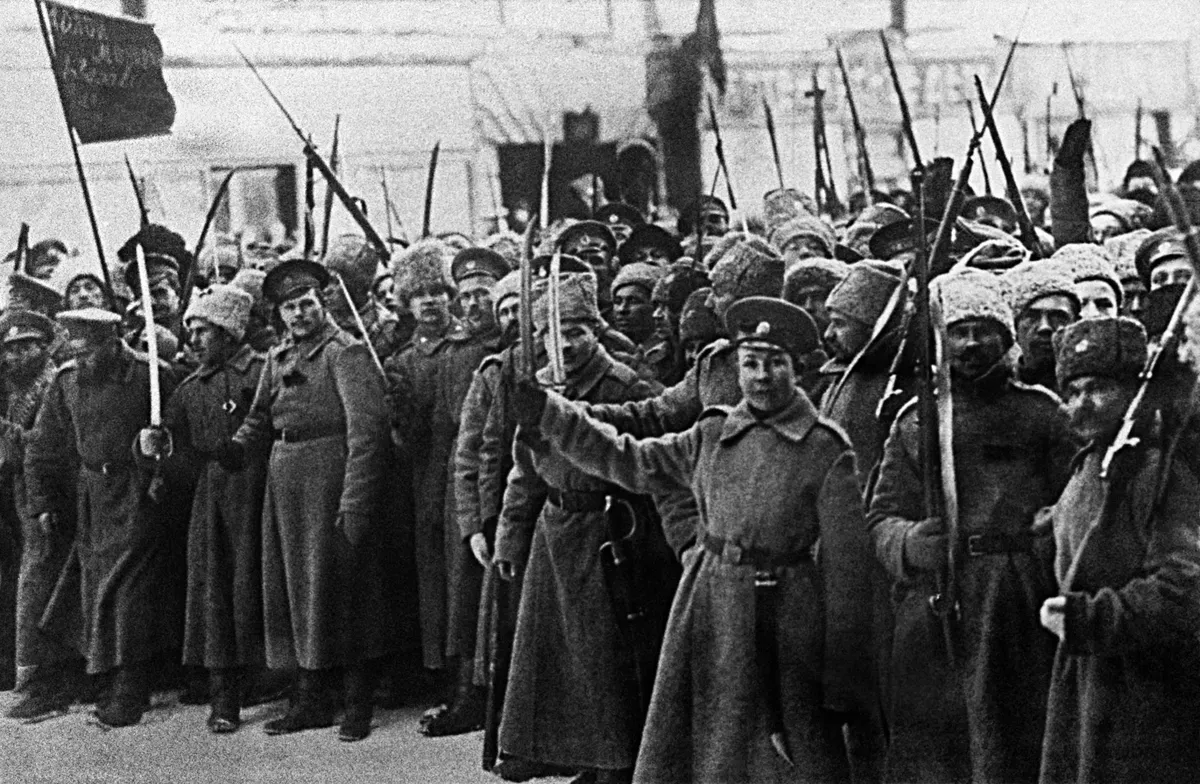
The Great Socialist Revolution in Russia is an event that undoubtedly determined the history of the 20th century. It was the revolution that became the first stage of the world political split - the first step towards a bipolar world led by two superpowers. At the same time, revolutions in the Netherlands (1566–1609), England (1642–1660), and France are assessed as historically necessary during the transition from feudalism to capitalism. But the Russian revolution, which by no means surpassed the Jacobin terror in its destructiveness, is seen as a source of historical evil that could have been avoided. More precisely, some adhere to a similar view, while others, on the contrary, see it as a consequence of the social crisis: from their point of view, it was the revolution of 1917 that pushed the country out of the state of a backward agrarian state.
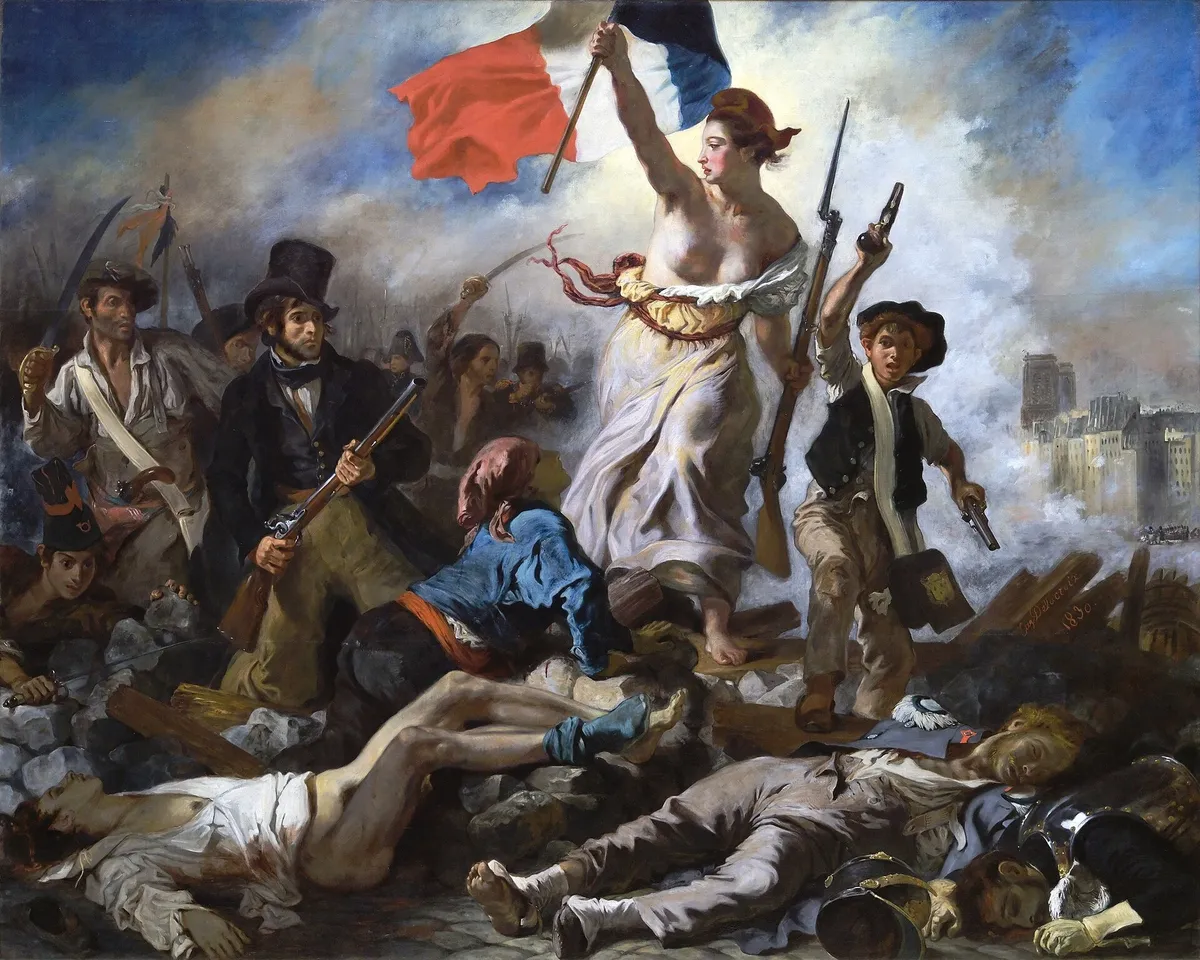
In a similar vein, the consequences of the French Revolution (as the largest transformation of the social and political system of France at the end of the 18th - beginning of the 19th centuries) are not simply assessed positively. Bastille Day is one of the largest national holidays for the French.
Leaving behind the brackets well-known historical interpretations, it would be interesting to understand this. What are the prerequisites for revolutions in reality - a sociocultural crisis or, conversely, an increase in the dynamics of cultural processes, a certain ascent of the nation to its historical acme?
That which cannot be mastered
The etymologies of the word and philosophical approaches to understanding “revolution” point to interesting semantic nuances.
Unexpectedly, “revolution” (from the late Latin revolutio - turn, revolution) initially implied a return to the previous state. Revolutio, in particular, although few people know about it, is also an astronomical term meaning circular orbital movement, the revolution of celestial bodies. The first mentions of revolutions in politics are also mentions of a return to the old system.
Today, revolution is understood as a sharp surge, violent disturbances of movement, an interval of explosive activity of a phenomenon, in the process and as a result of which it changes its qualitative certainties. What's important
in the political sense, revolutions cannot be confused with palace coups, putschs and the like: a revolution is never the fruit of a conspiracy of individuals or the arbitrary actions of a minority.
The impetus for the development of revolutionary ideology was given by the French Revolution. To this day, it remains one of the most important problems of social philosophy. Thomas Carlyle, author of the multi-volume work “The French Revolution. History,” understands the phenomenon psychologically: “The word “revolution” is just a few letters of the alphabet; revolution is a phenomenon that cannot be mastered, which cannot be locked away. Where is it located? What is it? This is the madness that lives in the hearts of people...” ( see footnote 1 )
According to historical materialism, social revolution is a consequence of the political economic crisis and class struggle. Defining the revolutionary situation, Karl Marx proceeds from the discrepancy between the nature and level of development of the productive forces and the relations of production: “From the forms of development of the productive forces, these relations turn into their fetters. Then comes the era of social revolution” ( see footnote 2 ). Class antagonism presupposes the need for a restructuring of industrial and social relations. The socialist (proletarian) revolution, accordingly, matures when the life of the exploited becomes unbearable, and thereby a new historical subject is determined - the working class, which overcomes alienation in the revolutionary struggle and becomes a class for itself from a class in itself. For Marx, revolution, in short, is “the locomotive of history.”
How culturologists evaluate the revolution and the spread of Christianity - as a fundamental ideological shift that occurred in the Ancient World, which became the result of the cultural development of the peoples of the Mediterranean over several millennia.
The slave uprising led by Spartacus can also be called an attempt at revolution. In this context, it is necessary to mention smaller, but no less significant revolutionary events in Europe in the 19th century - the revolution of 1848 in France and the revolution of 1848–1849 in Germany. From a historical point of view, they are united by two features: all these events, firstly, are inscribed in the history of the Western world, and not of countries with traditional cultures. Secondly, without them it would have been impossible to move into the future of European civilization. This can be said about both the English bourgeois revolution and the already mentioned Great French Revolution.
Critics of Marxism note that the concept of history and revolutionary practice that has developed in Marxism reveals one significant flaw. It does not explain the mechanisms of social development characteristic of traditional cultures and eastern despotism, where specific socio-economic “formations” are preserved unchanged over a significant historical period.
Other revolutions
All that has been said in sum suggests that there really is an explanation that reveals the essence of the revolution not only politically. A philosophical argument in favor of it can be considered the idea expressed by Vladimir Solovyov in his short essay “Historical Affairs of Philosophy.”
Soloviev begins the history of philosophy with Ancient India: the thought that awakened in metaphysical generalization fades away here, but manifests itself very productively from the Milesians to Marxism and Nietzscheanism in Europe. Soloviev identifies the main periods of philosophy and connects them with the social - emancipatory - role of philosophical reason. Acting on the principle of the negation of the negation, philosophical reason acts as the internal content of the development of European society: “So, what did philosophy do? It freed the human personality from external violence and gave it internal content. She overthrew all false foreign gods and developed in man the inner form for the revelations of the true deity” ( see footnote 3 ).
Meanwhile, the revolution of reason is a well-established phrase characteristic of the epistemological and scientific spheres. It means a fundamental restructuring in the very understanding of reason and its boundaries, a change in cognitive paradigms. In other words, not just a historical change in the existing picture of the world.
This, for example, can be considered a revision of the relationship between rational and irrational elements in knowledge, pluralization of knowledge and its sources (not only sensory and rational, but also meditative), and the development of thinking in categories of value.
The assumption that social revolution is a consequence of the revolution of reason is natural, but it will be a truism, as well as an indication of the well-known fact that one of the means of promoting the revolutions of the 18th and 19th centuries in Europe was the intellect - the work of social, philosophical and political thought.
With all the validity of such assessments, the revolution of reason should be understood differently than simply an intellectual prelude to a political revolution or a means of focusing social forces. The coincidence of peak manifestations of culture and revolutions, and not a certain sequential connection between them, obviously reveals itself in the European history of modern times and requires at least clarification of their relationship.
In the Russian language, it is worth noting that the word “revolution” is rooted in a variety of contexts - not only historical, political and sociosophical.
In addition to the revolution of the mind, we are talking about the gender revolution, about the cultural revolution, about the poetic revolution, about the revolution (return) of the planets, as has been said, in astronomy and astrology. This conceptual multilayeredness does not yet tell us about the synchronous homogeneity of revolutionary processes, however, it undoubtedly indicates the possibility of establishing such a connection.
Thus, the Great French Bourgeois Revolution, the French Revolution of 1848, and the revolution in Germany in 1848–1849 were clearly accompanied by a radical change in cognitive paradigms and inventions that radically transformed social experience.
In the middle of the 19th century, Barbizonians went out into nature to paint, and in 1860, the era of impressionism officially opened, reflecting more than just the development of painting technique. The Impressionists clearly expressed a change in the understanding of the relationship between subject and object - perception determines the qualities of the object. By the end of the 19th century, the interdependence of the subject and object of knowledge became generally recognized in European epistemology.
The construction of railways, the invention of the electric telegraph, the beginning of the use of anesthesia and the discovery of the planet Neptune against the background of such a revolution in thinking look like significant, but private facts.
I think there is no point in writing in connection with the question posed about the activities of French enlighteners as a revolutionary factor, about the significance of the “Encyclopedia” for awakening national self-awareness in a school way. Everyone, most likely, knows that “the harbingers of the Great French Revolution were Jean, Jacques, Rousseau...” (the phrase became a meme and went to the people after it was formulated in this way by a careless schoolboy).
It would be more appropriate to recall the revolutionary nature of Arthur Rimbaud's poetry, noting something from his biography that is not often mentioned. The sources of his revolutionary ideas were an unhappy childhood, the New Testament, possibly the teachings of Marx, involvement in the activities of the Paris Commune, and probably also a special sexual experience. The revolution of existence (escape from an oppressive mother, meeting with Paul Verlaine) predetermined the revolution of poetry. In Rimbaud's poems, unlike Baudelaire's works, we do not find melancholy. His attitude can be expressed in the famous lines of Alexander Blok: “Keep your step revolutionary! / The restless enemy never sleeps!” At the heart of Rimbaud’s poetics is the idea of the possibility of a mystical remelting of consciousness, without which a fundamental renewal of life is impossible.
The forties, approximately the middle of the 19th century, when Baudelaire takes part in street clashes (Baudelaire, who wrote “Carrion,” a revolutionary poem for world literature; published somewhat later, in 1857), is the time of the spread of photography. Without going into details, we can say that it was the middle 20 years of the century before last that were distinguished by the exceptional density of scientific discoveries, which increased again closer to the turn of the century. And it was the middle of the 19th century that gave a powerful impetus to the formation of a new type of rationality - non-classical. Just as the English bourgeois revolution led not only to the strengthening of capitalism, but also to the formation of a new cultural world in Europe - mechanistic, industrial, rationalistic; in exactly the same way, the turn of the 19th and 20th centuries was marked not only by a revolutionary upsurge, but also by a revolution of reason in all its directions - in science, technology, art, philosophy.
It only remains to add the parallelism of some revolutionary cultural and revolutionary social phenomena in Germany in the middle of the 19th century. In a work dedicated to Wagner, A.F. Losev emphasizes the great opera reformer’s passion for the idea of world revolution, his consistent appeal to this idea in his essays, in comparison with which the events that caused the composer’s flight from Germany look like an accident. Commenting on Wagner’s article “Art and Revolution”, A.F. Losev writes: “Wagner’s ideal, despite any life conflicts, always remained “free united humanity,” not subject, in the composer’s words, to “industry and capital,” which destroy art. This new humanity, according to Wagner, should be “endowed with social reason”, mastering nature and its fruits for the common good. Wagner dreams of “future great social revolutions,” the path to which is indicated by the transformative role of art” [4]. At the same time, a fundamentally new understanding of man was maturing in Marx’s head, which predetermined the creation of the 1st International in Europe...
The cultural situation in Russia during the revolutionary years is also well known and also does not allow us to assess the significance of the revolution as unambiguously spontaneously destructive - devastating for the lush gardens of the Russian cultural environment in the first third of the 20th century.
It was in the pre- and post-revolutionary years that active form-creation, independent of political processes, manifested itself in Russian and then Soviet culture.
This is the work of a whole galaxy of outstanding Russian philosophers (N.A. Berdyaev, Lev Shestov, V.V. Rozanov, P.A. Florensky, A.I. Vvedensky, G.G. Shpet), and the Silver Age of Russian poetry, and the flourishing of literature and music, which is finally receiving world recognition. In the post-revolutionary decades, the cultural process in Russia takes on different forms, but does not lose its quality. Now Soviet culture continues to experience a surge of passion right up to the beginning of World War II.
It makes no sense to deny that the political idea and its revolutionary embodiment in Russia affected all spheres of social practice and all social institutions, including education, upbringing and family, rethinking the social roles of men and women in connection with women's emancipation. The development of astronautics and militarized physics was a political prerequisite, but the potential for the release of new intellectual forces is unlikely to be a simple consequence of social upheaval.
If we talk about artistic art, then revolutionary searches in the field of renewal of form are a manifestation of its essence. They can lurk for a long time, like lava under the “skin” of the earth, and break out to the surface of the social process in a single impulse for renewal.
Cultural rise and personal fall
To summarize, we can draw a conclusion. Cultural processes occurring synchronously with events in the socio-political sphere, in essence, represent an expression of a single revolution of reason, producing a fundamental epistemological shift in culture.
It seems insufficient to explain this phenomenon solely within the framework of historical materialism, political science or sociology. You can turn to ideas about wave-like passionarity, about the influence of solar activity, its bursts and spontaneous impact on society, to the doctrine of Hegel’s World Spirit (a kind of nationalized version of Christian theodicy), to religious providentialism, and finally - why not? And so on.
One thing is certain. Revolutionary events mark the culmination of the development of nations and states at a certain period of history, coinciding with a significant intensification of culture.
It would be unfair to consider I.A. Bunina, A.I. Kuprina, M.A. Voloshina, A.A. Akhmatov, M.I. Tsvetaeva, S.V. Rachmaninov, I.F. Stravinsky, K.S. Malevich, M.Z. Chagala, S.P. Diaghilev and many others are the last flower of the decrepit autocracy.
The revolutionary impulse pushes towards multilateral form-creation, and to connect the revolution with a state of social decline would be to contradict the facts.
It is the rise of national forces, directed forward towards historical self-actualization, and manifesting themselves in indivisible spiritual, political and social tension, that is revealed in the Russian Revolution of 1917. Thus, there are enough reasons to see in the revolution an integral spiritual phenomenon, not determined exclusively materialistically by the needs of restructuring the system of social production. What is significant is that revolution, science, art and philosophy are predominantly products of Western European civilization. In other words, they developed in those countries where revolutions took place.
Revolution, in short, expresses a cultural takeoff - a historical acme of creative forces that require their practical disclosure in situations of their artificial containment in order to maintain the reactionary political and cultural status quo. Its essence, accordingly, is not in the “revolution”, “turn” or “return back”, but in the liberation of what should be manifested in history.
Такое видение не снимает болезненных вопросов о терроре и социальной мести, без которых не обошлась и относительно современная Кубинская революция. С исторической дистанции ни одно кровавое преступление из тех, что сопутствовали политическим переворотам, не выглядит оправданным.
И прежде всего подобный опыт говорит нам о том, насколько далек современный человек от того идеала, который представлен в христианской (опять же подчеркну — революционной) эсхатологии, этой своеобразной философии истории, дающей, пожалуй,
единственный приемлемый для всех ответ, к чему должна двигаться планета — к такой метаморфозе будущего, жизни и человеческой природы, когда, как сказано у Исайи, «Лев ляжет рядом с ягненком».
В свете этих слов опыт, который хотелось бы вычеркнуть из истории человечества, напоминает каждому о личной ответственности: насколько он приближает своей жизнью человечество к переходу в лучшее духовное состояние или наоборот.
Specifically. Будешь ли ты, как легендарный революционер Эрнесто Че Гевара, лично расстреливать из пистолета «врагов революции» и уподобишься «мяснику из Ла-Кабаньи» или будешь спасать возможных жертв таких «мясников», как это делал русский поэт Максимилиан Волошин, пряча в своем доме в Коктебеле красных от белых, белых — от красных в годы Гражданской войны.
footnotes
Карлейль Т. Французская революция. Story. — М., 1991. С. 506.
Маркс К. К критике политической экономии. — Маркс К., Энгельс Фр. Сочинения. 2nd ed. Т. 13. С. 7.
Соловьев В.С. Исторические дела философии // Вопросы философии. № 8, 1988. С. 118 –125.
Лосев А.Ф. Исторический смысл мировозрения Рихарда Вагнера // URL: http://wagner.su/node/109 (дата обращения: 05.10.2017).