
Translated material
Opportunism as a benefit
How to negotiate with the security forces. Law enforcement reform: goals and methods. Part 2

Photo: Moscow Agency
Security forces show considerable resistance to systemic changes from above. Only those changes are introduced that correspond to the interests of employees or fit well into the ideas of managers at all levels about the correct management methods.
The reform of law enforcement agencies can be helped by the total opportunism of the security forces - their readiness to act in their own interests in any situation. The main goal of reform should be to reduce violence. The publication is based on a chapter from the book “Normalization Platform: Returning the Future” and is part of the project of the same name “Who and how can return Russia to the trajectory of a “normal country”?”). Project materials will be available on the “What to do” website. The first text in this series detailed how much of the day-to-day activity of law enforcement is more beneficial than harmful to citizens. The magical disappearance of the police and other similar structures would make our lives worse, not better. However, the fact that a certain structure is rather useful does not mean that each of its employees strives precisely to bring benefit.
Social isolation of security forces
Law enforcement officers, as a rule, live in conditions of severe social isolation. They do not have the time and energy to maintain social connections with people outside their narrow family and professional circle, they do not have time for media consumption (up to 10% of the working time of security forces is spent on viewing state propaganda). Like their families, they are almost completely socially isolated. This is reinforced by the inevitable geographic isolation (especially relevant for the Federal Penitentiary Service, the army and the border service) due to the historical tradition of locating penal colonies and military camps.
As a result, each individual officer can only rarely find the opportunity to formulate his own position on an issue that does not directly concern his daily work or family problems (privates and sergeants - to an even lesser extent).
These people have some ideas about the world and what should be, but these views, with rare exceptions, represent the sum of the simplest common sense (to be honest, not drinking is better than drinking) and political propaganda, which permeates all law enforcement agencies.
For the same reason, they do not even have some political subjectivity.
The law enforcement agencies do not have trade unions or any serious associations of pensioners that set political rather than recreational or economic goals. Legislation limits trade union activity in law enforcement agencies, but pension associations are free from such restrictions. In some regions, associations of veterans of law enforcement agencies are strong, but they are often engaged in semi-criminal activities, acting as intermediaries between existing security forces and business.
Today's security forces are extremely numerous. They have serious and relatively evenly distributed benefits, not always associated with the real risks and difficulties of the service, and not very large salaries (taking into account working conditions). The possibilities of corruption for the vast majority of employees are extremely small. Attention to the factors that determine the nature of life and work of law enforcement officers will transform them (except for the top) from opponents into supporters of reforms (at a minimum, force them to take a neutral position). This is a basic condition, without which reforms are doomed to failure.
Opportunistic behavior as a resource for reforms
Security forces are characterized by total opportunism - the ability and readiness to act in any circumstances in accordance with their private interests (including completely legal ones). You can call this interest departmental or bureaucratic - obtaining the maximum amount of finance and influence within the administrative market while minimizing effort and costs. It is clear that here, too, there are individual people with altruistic or value motivation. But the general logic of the system and the principles for achieving success in it are in no way connected with such motivation. Oddly enough, this feature of law enforcement agencies can help reform them.
Opportunism implies not only activity in personal interests, but also the tendency of security forces to imitate activities, unless we are talking about direct, unambiguous orders from management.
In a situation of informational and social isolation, taking into account constant work overload, opportunism is almost the only survival strategy for any law enforcement officer.
The tendency for opportunistic behavior among law enforcement officers is increased by the regular rotation of regional leaders in all systems except the judicial one. As a result of manager rotation, lower-level employees are faced with constantly changing demands. For example, the old head of the department demanded, first of all, the regularity of patrols, the new one - the fastest possible response to citizens’ calls, and what the next one will require is unknown.
Almost every law enforcement employee has gone through three or four “radical” reforms in his or her life, which have greatly changed his (her) daily routine. This also pushes them to seek rent, which does not depend on the specific success of the employee in his place. Pension is one of these annuities.
If you know that your behavior does not affect the evaluation of your work, and agree to such conditions, then a completely organic strategy becomes the search for corruption or other rent that will provide income regardless of whether you can currently fulfill the requirements of your superiors and whether they are realistic.
This makes all security officials ready for any changes - both for the better and for the worse (there are still a certain number of idealists in the system). And this provides enormous potential for reform. Almost any reforms that do not radically worsen the situation of lower- and middle-level employees are unlikely to cause significant resistance and are unlikely to lead to hidden sabotage.

Security forces: who to talk to about reforms
Individual law enforcement agencies have features that can greatly affect their reformability. Thus, for most law enforcement agencies, the distinction between “headquarters” and “ground” is essential. The division into “headquarters” and “grassroots” structures is not related to hierarchy. Thus, the colonel who commands a regiment of the Russian Guard belongs to the “grassroots” structures, and the colonel who heads the drill department of the regional department of the Ministry of Internal Affairs belongs to the headquarters.
The main difference between “grassroots” work is the ability to cause some changes “on the ground.” There was a person - he was detained, there was a case in the police - it was transferred to the prosecutor's office. On the contrary, staff work involves holding coordination meetings, developing methodologies, transferring experience, preparing reports, etc. Real work occurs when a manager has a clearly limited area of responsibility in terms of content and space, and his poor quality work is directly visible from the outside.
This opposition is very important for all power structures. Reformers' potential allies are those who do the real work. But negotiations on reforms usually involve “headquarters” rather than “grassroots” structures. Going through this filter and going out to discuss reforms with those who lead departments “on the ground” is a difficult task, but it can be solved.
Within each department there are structures and specialists who are more associated with relatively intellectual work and decision-making, rather than work using simple algorithms (investigators within the Ministry of Internal Affairs, operational and economic services of the Federal Penitentiary Service, etc.), but are not staff employees.
The main driver of possible reforms of law enforcement structures is representatives of intellectual non-staff “professions”, who are deprived of the opportunity to enter into corrupt transactions .
Unlike business structures and many civilian departments, in law enforcement agencies, it is not “staff commanders” who can be involved in the dialogue on reforms, but simply active and communicatively adequate officers at the middle level of the system. They need to be involved in thinking about reforms at the first stage, in discussing principles and approaches.
The Ministry of Internal Affairs is the largest department with enormous internal diversity. It must be approached as carefully as possible. But it is in the Ministry of Internal Affairs that there are many mid-level officers ready for dialogue in positions devoid of corruption opportunities. With these people, correct ideological preparation and support for such dialogue are very important. The most problematic department is the Federal Penitentiary Service, since total violence and widespread violation of the law have become an organic part of its daily practice.
The remaining departments are not so large, and their individual characteristics are unimportant against the background of total opportunism. In the conditions of the formed consensus on the reform, the middle and grassroots composition will work according to any new rules. The opportunism of the security forces is such that you can either force them to organize a new 1937 or turn them into the German police of the 1980s (if you do not idealize the latter).
It is quite possible to come to an agreement with officers slightly above the average level (major - major general), who, by virtue of their positions, were not involved in corruption and violence (the vast majority of them). It is their benevolent neutrality, their loyalty that will make it possible to change and develop the security forces.
Employees who are not involved in committing crimes should be guaranteed benefits if they work in positions that offer them.
Organizing a dialogue with officers at this level is quite simple. Already now, the most active and adequate of them are involved in the work of various coordination meetings and working groups, the lists of which are published in the public domain. This makes it possible to identify the active part of the officers - those who are not only engaged in daily work, but also actively participate in other activities of their department, and to conduct a conversation with them.
Rhetorically, in negotiations on reform, it will be important to emphasize that one of its main goals is to increase the efficiency of law enforcement agencies and improve the quality of life of employees (not “we must endure hardships and hardships,” but “we will ensure a decent life for the defenders of the Motherland”). Increased efficiency will be facilitated by the cessation of bureaucratic work on microscopic matters and the abandonment of obviously meaningless activities. Nowadays there is a lot of such activity in law enforcement agencies (for example, up to a quarter of working time can be spent on handwritten duplication of printed text and vice versa). A reform of this kind will generate warm local support and will somewhat improve the quality of work of law enforcement agencies.
Reform vision: framework requirements and goals
Rapid change in law enforcement in the short term can be achieved in three main ways. This
reducing the level of violence in law enforcement agencies,
moving away from inflicting physical suffering as the main principle of punishment,
reducing the intervention of law enforcement agencies in the economy.
A substantive reform agenda should be discussed only after dialogue has become possible. Law enforcement officers who were personally involved in crimes must be punished. It is necessary to discuss the issue of complete or almost complete liquidation of bodies and structures that did not have any positive function, but were involved only in political repression (...).
Creating a coherent 500-day plan, where all the reforms and stages of each of them are spelled out step by step, is a useful intellectual exercise, but nothing more. In practice, taking into account resources and the balance of power, such a plan will have to be fundamentally revised at the start of reforms. Therefore, it seems more productive not to study in detail the goals and stages of reforms, but to practice common in business when guidelines are developed to which it is necessary to strive. You can then evaluate different proposals based on whether they make progress towards these benchmarks.
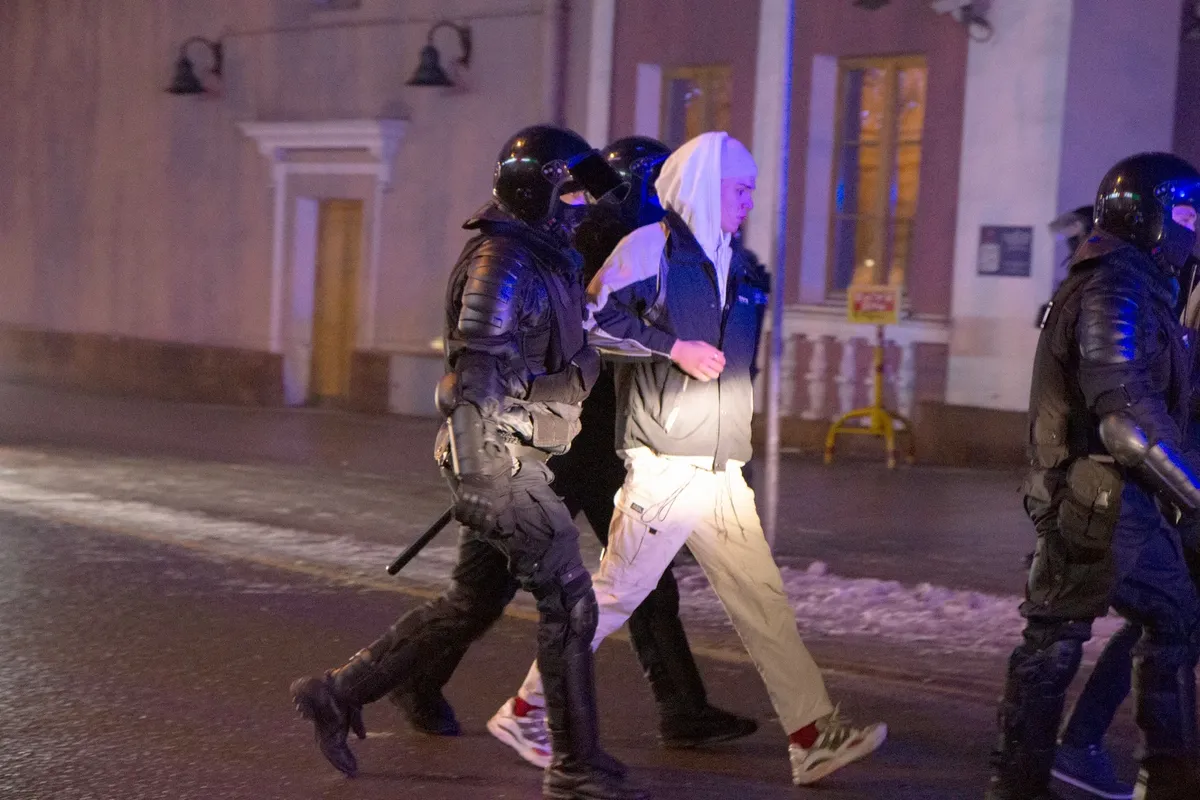
The basic goal of reform should be a radical reduction in the level of violence, illegal and legal.
This problem can be partially solved, for example, by creating a new government agency (temporary or permanent) responsible for the criminal prosecution of employees of law enforcement and other government agencies. Similar bodies have shown their effectiveness in a number of countries in the Asia-Pacific region (Korea, Thailand, etc.) and Eastern Europe (Romania, Czech Republic, etc.).
In this case, it will be necessary to protect not only ordinary citizens, but also conscientious security forces from excessive violence, because in such situations they can easily come under attack. In a pogrom situation, a corrupt deputy director of a department causes less anger than a conscientious district police officer who is trying to maintain order. However, due to the a priori weakness of such bodies and their tendency to compromise, they rarely make serious decisions related to radical structural and personnel changes.
The second measure necessary to reduce the level of violence is the independence of the court from law enforcement agencies (at least in terms of the appointment of judges, ongoing monitoring of court activities and technical reporting). The body responsible for prosecuting representatives of law enforcement agencies for crimes committed and an independent court are measures that should work together: even an independent court will not be able to conduct investigations on its own, and a dependent court will reduce the effectiveness of investigations into crimes by security forces.
It is necessary to categorically avoid legislative provisions (in the Criminal Executive Code and departmental instructions) of causing suffering to convicts, suspects, etc. as the main form of punishment. Let us explain: now, for example, for violating the rules, a convicted person can be punished by a sharp tightening of conditions of detention (up to direct harm to health), a ban on actions (writing and sending letters) that cannot lead to a “recurrence of violations.” Even if we close our eyes to the fictitiousness of a huge number of “violations” (“did not keep his hands behind his back” while receiving bed linen, left letters on the nightstand) and the disproportionality of punishments, the principle actually written down in the documents remains: for violating the rules, the prisoner must be punished with physical pain.

The practices of the modern FSIN differ little from the corporal punishment common in the past.
Deprivation of liberty should lead to isolation, to the cessation of illegal activities (for example, a prisoner who regularly conflicts with others may be transferred to solitary confinement, but should not be deprived of other benefits), to correction, but not to unnecessary suffering.
This problem is largely solved by editing departmental documents that describe possible punishments for convicts and the powers of employees.
The possibilities for law enforcement agencies to intervene in the economy (including raiding, blackmail, etc.) must be radically limited. Here, first of all, a change in judicial practice will be required, an explicit reform of the Criminal Code, prescribing standards for proving intent.
Now the main instrument of intervention of law enforcement agencies in the economy is the attribution of criminal intent to any action of an entrepreneur (sold cheaper to sell faster - embezzlement, agreed on a deferred payment - fraud, etc.). The same principle works with raiding and other forceful pressure on business. Every entrepreneur knows that, if necessary, he can be prosecuted for anything. This makes raiding and other corrupt activities against businesses possible. This instrument needs to be eliminated. But simple amendments to the Criminal Code can achieve little here; the work of the Supreme Court and the entire judicial system is needed to adjust practice.
Public and political control
In the course of reforms, the external control of law enforcement agencies should increase. This can be achieved through decentralization and granting broad rights of access to law enforcement agencies to external structures. In recent years, law enforcement agencies have in the vast majority of cases become more difficult to corrupt “from the side,” but they are absolutely open to political corruption. Having received an order “from above”, they will go to any lengths to violate the law in order to carry it out.
It is extremely important to create conditions in which lower ranks in the security forces are accountable not only to their superiors, but also to external actors to whom they can turn in the event of receiving an illegal order. This is not a sufficient condition for the development of the law enforcement system in the right direction, but without the formation of such a system, no development is possible in principle.
If the assessment of the activities of a particular police general in the region is carried out not by his boss, but by an independent commission, whose work is public and which is recruited from external structures (deputies, journalists, representatives of the bar, the prosecutor’s office and the legal community), then the logic of the work of law enforcement agencies will radically change. What is important here is not so much the powers of this commission (whether it makes recommendations, carries out a general assessment of the work or makes direct decisions),
how much there are no restrictions on the commission’s access to data and strict publicity of its work. What is important is not what the commission writes, but the facts that it reveals.
This will not lead to an immediate departure from the “stick” system - management mechanisms based on statistical indicators (often manipulated). This practice exists in all law enforcement systems of any size. The break with it should occur not through a refusal to collect statistical data and their careful analysis, but through a departure from the existing practice, when the decision about which statistical results are good and which are bad is made by the immediate superior, obeying departmental rules. Simply put, today a manager can evaluate this or that factor in one and only one way, without checking either its priority or the real situation. The involvement of independent actors will reveal the most absurd manifestations of this system.
A necessary condition for the effective development of the law enforcement system and courts are instruments of political and public control (through the media, professional associations, etc.). The mechanisms of such control are very variable, and their discussion is the subject of dialogue, which this text is intended to begin. In France, the media have the widest access to the courts, which, as in the United States, are controlled by the professional community. A prosecutor in the United States is an elected position. In the UK, the police are accountable to local parliaments, and in China - to party organs.
It would seem that in Russia this function is performed by the presidential administration and the FSB. But in reality this is not the case. The Administration controls the top of the department, and external accountability should cover the entire system, right down to the district departments. In addition, the supervisory authority must be publicly accountable for failures. But now no one will punish the district FSB detective for large-scale torture at the police department. Specific solutions will need to be developed at the start of reforms, but their main principle should be the unconditional openness of all law enforcement agencies.
Judicial system: framework requirements and objectives
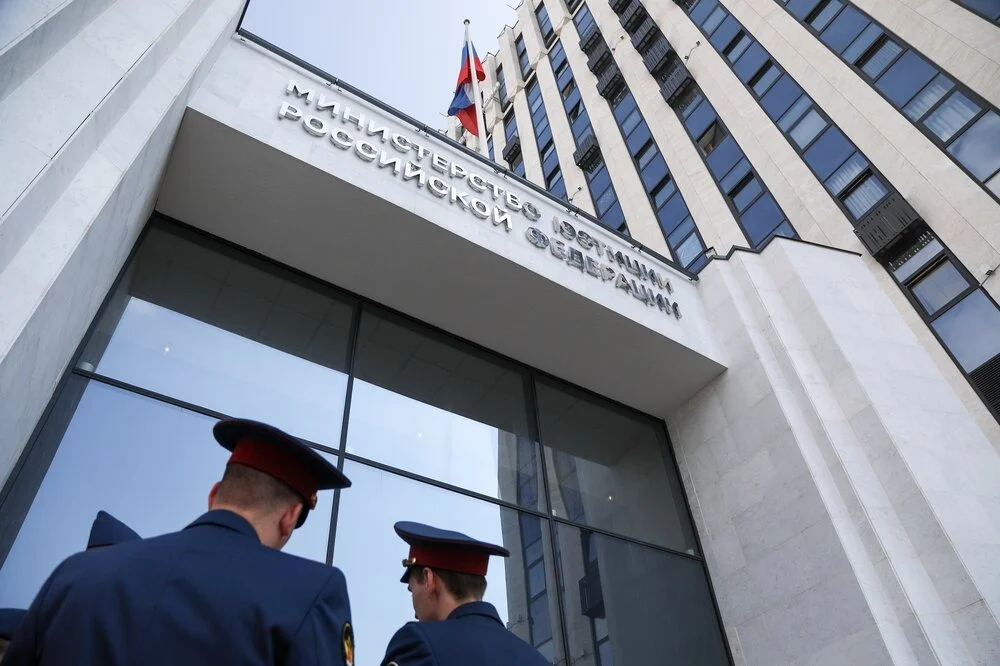
Now the judicial system is under dual control - law enforcement agencies and the central executive power. Control by law enforcement agencies is comprehensive: each candidate for judge goes through a specialized commission, in which an FSB officer and almost always a fairly large number of law enforcement veterans are represented “ex officio.” On the contrary, control by the central government covers only the top of the judicial system: the leadership of the Supreme Court, the chairmen of the cassation and appeal courts, and the heads of the judicial system in the largest regions. This control does not reach the level of district court chairmen.
Management is expected to manage the entire judicial hierarchy from top to bottom. This was the essence of the judicial reform of the early 2000s, carried out by Dmitry Kozak. It almost completely eliminated the horizontal dependence of the judicial leadership on regional authorities and regional representatives of the federal authorities, but built a strict system of vertical subordination, in which the position of senior leaders of the judicial system can almost instantly turn into a decision of a magistrate.
Ideally, both the control of the law enforcement system over the judicial system and the control over it by the central executive power should be destroyed. But in the initial stages of reform, the most important thing is to change the procedure for appointing lower-level judges.
The main thing is to introduce a legislative ban on the appointment of current and former law enforcement officers to the structures that make decisions on the appointment, punishment and removal of judges.
It is clear that a body of loyal judges has already been formed. However, it is their opportunism, discussed above, that will allow them to behave more demandingly and harshly towards law enforcement agencies: this reduces their own workload.
An important task is to eliminate the control of the central executive over the judicial system. To do this, it is necessary to establish a random and frequent rotation of court chairmen. This measure is extremely simple to implement, it will be supported by a significant part of the community and will create difficult barriers to overcome for those who are trying to control the courts from outside the judicial system: it makes no sense to establish the necessary relationships for control with a person who will leave his position in six months.
Conscientious judges must be protected from outside influence. This can be achieved by giving the judge full access to all documents that concern him/her and are being reviewed by the relevant authorities, with the opportunity to challenge the contents of any document. Now almost all personnel decisions are made on the basis of documents that are closed from the judges themselves. The author of such a document (operational certificate, statistical extract, etc.) has absolute freedom to falsify.
It is necessary to return to criminal courts the function of deciding on guilt, and not limit them only to deciding the amount of punishment, as is now the case in practice.
Statistics show that courts almost never change either the investigative decision on guilt or the qualification of the act. This can be achieved through expanding the practice of using jury trials and radical restrictions on appealing their verdict.
Jury trials are already being used more actively than 10 years ago (however, since 2022, the number of cases tried by juries has decreased significantly). Technically, there is no barrier to sending to a jury all cases in which the prosecution seeks a sentence of actual imprisonment. The jury makes up to a quarter of acquittal decisions, but in practice such decisions are often sent for a new trial, and this is repeated until a jury is assembled, which finally makes the necessary (indictment) decision. There are precedents when the same case went through (in a short time after the introduction of this institution at the level of district courts) six considerations by different jury compositions.
This problem can be solved by establishing that the cancellation of the jury’s verdict on procedural grounds (and another is impossible) should be considered by the full composition of the Plenum of the Supreme Court, and in this case an internal review should be ordered against the presiding judge.
***
The police (Ministry of Internal Affairs) and other law enforcement agencies can become the safest allies. Relying on them will allow us to count on the long-term institutional stability of the new order. The size of these two departments, in contrast to the compact and internally cohesive “Chekist” intelligence services, a priori does not allow them to develop a nucleus that might want to bury the new political order. By their nature, the Russian police are much closer to the principles of a democratic republic than the intelligence services, which trace their genealogy to the Bolshevik Cheka.
The new government should rely on the average officers of law enforcement agencies. Demographically, it represents the most active age group (30–45 years), and socio-economically, it is rooted in the middle strata of Russian society at the regional and city level. Reliance on this layer and on other stakeholders in political and economic modernization (business, residents of large cities) will allow the new government to stabilize the political and economic situation and enter a path of sustainable development, avoiding further chaos and stopping potential waves of violence.
Kirill Titaev, Professor of Social Sciences at the Faculty of Liberal Arts and Sciences in Montenegro