
Translated material
Relentless Avengers
How the dismantling of international law gives rise to the desire for “retaliation” operations. Interview with the scientific editor of the book “Operation Nemesis” Arena Vanyan

Cover of the book “Operation Nemesis” by Eric Bogosian
When a mass crime remains without legal assessment, retribution almost inevitably takes a private, extra-legal form. A hundred years ago, Operation Nemesis was such a response. Today, against the backdrop of the dismantling of international law, this story sounds frighteningly relevant.
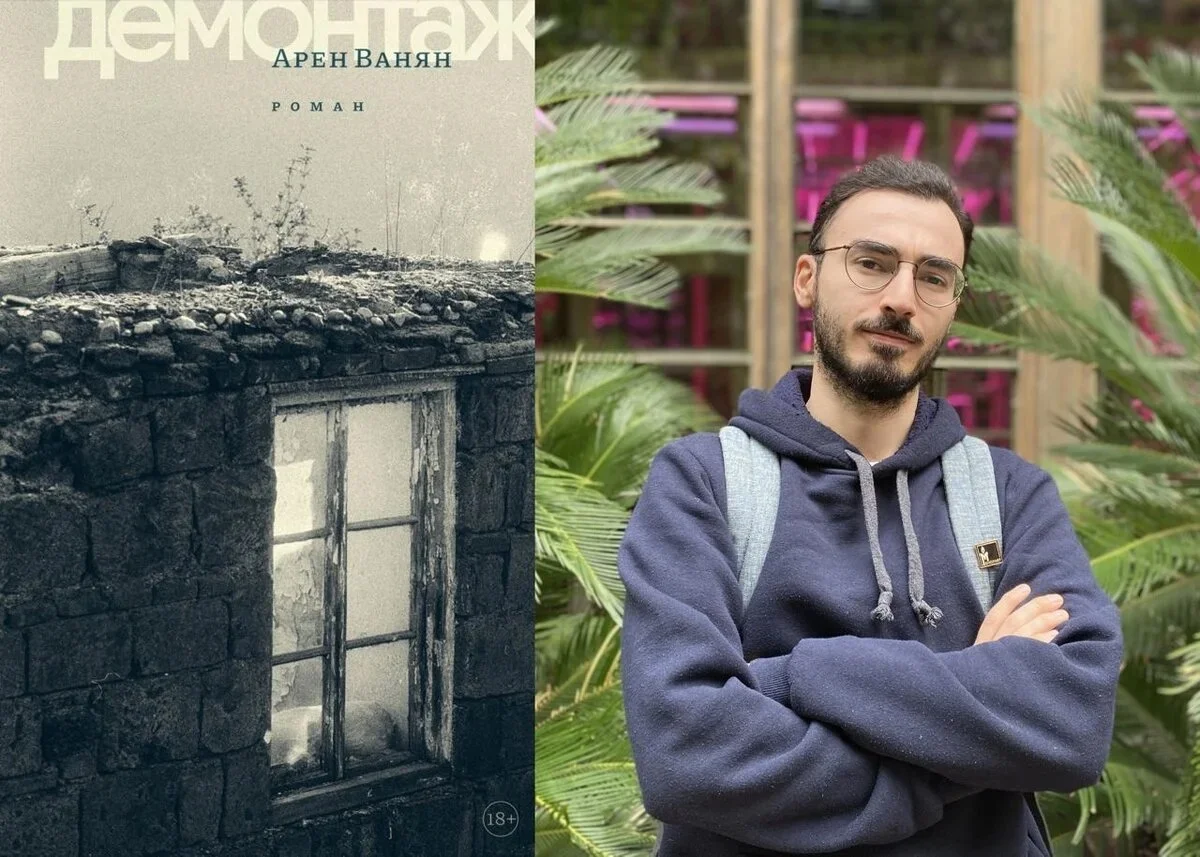
In 2015, American actor and playwright of Armenian origin Eric Bogosian published a large-scale popular science book, Operation Nemesis. The History of Retribution for the Armenian Genocide,” which he worked on for seven years. It focuses on the coordinated campaign of Armenian vigilantes who hunted down and killed key Turkish organizers of the Genocide in various cities in Europe and Asia in the early 1920s. Boghossian does not limit himself to chronicling acts of retribution. His book is an in-depth analysis of Armenian and Ottoman history, as well as the geopolitical games of the great powers of the early 20th century. This book is like a “black box” of a historical disaster: it cannot bring back the dead, but it allows us to decipher in detail the causes of the crash and understand how the consequences of an unacknowledged tragedy continue to shape the trajectory of the world a century later. At the end of last year, the publishing house Individuum presented the Russian translation of Eric Bogosian’s book “Operation Nemesis.” The presentation took place at the Yerevan book house “Zangak” with the participation of the editor-in-chief of the publishing house Alexey Kiselev, translator Anna Margolis and scientific editor of the Russian edition Aren Vanyan, author of the novel “Dismantling”. In the process of working on Nemesis, he carried out a deep verification of sources, found inaccuracies in the translated texts, and even went to Berlin to follow the route of the famous Armenian avenger Soghomon Tehlirian and more accurately restore the topography of events in the Russian text. We spoke with Aren Vanyan about how demythologization changes the moral weight of a story, why translation can distort the very logic of facts, and what Nemesis tells us about today.
Difference of views
— Individuum editor-in-chief Alexey Kiselev mentioned that he invited you to the project thanks to your book “Dismantling.” Did previous experience with difficult historical material help you in preparing this text?
- No, these are two different types of work. Writing a fictional novel (albeit one with a historical plot) and scientific editing involve completely different intellectual mechanisms. I read the text by Eric Bogosian, which was translated from English by Anna Margolis, and carefully looked at places that might have raised doubts - for her or for me. In some places it was necessary to check sources, in others it was necessary to check facts and eliminate inaccuracies. Among other things, my task was to clarify details where the original lacked the author’s expertise, and we coordinated the clarifications with Eric Bogosian.
— At the presentation, you said that during the preparation process you discovered inaccuracies and semantic discrepancies. What examples were the most illustrative?
— The simplest and most obvious are everything related to Russian and Soviet history. There were inaccuracies related to the events of 1917 - the February Revolution, the October Revolution. We simply wrote directly to the author and showed the places where difficulties arose, offering to correct them and add them to the text.

— Were there more difficult cases?
- Yes, and they are no longer so obvious. Eric Bogosian is a diasporic Armenian who grew up in the United States. And with this book, I was once again convinced that the diaspora is very different, depending on the cultural and historical context of emigration. American Armenians, for example, may have different ideas about Armenian history than Armenians who grew up in Russia. I lived in Russia for about thirty years, and my way of “getting knowledge” about Armenian history differs from the American experience. He's no worse or better, he's just different.
— How did this affect the text?
“This, for example, manifested itself in working with memories. Bogosyan often refers to the English translation of the memoirs of one of the book's key characters, Soghomon Tehlirian, and this text was noticeably different from the Russian translation. When I looked at the original, I was convinced that the Russian translation was more accurate in places. And Boghossian, of course, relied on the English version - and some of the distortions in the book arose precisely because the English translation was worse. We pointed this out to him, explained exactly where the problem was and what it was connected with. At the same time, Boghossian had very high-level consultants - outstanding researchers of the Armenian Genocide from France and the USA. He communicated with major historians, say, Raymond Kevorkian or Ronald Suni, so his basic history is built very strongly. That is, these inaccuracies arose not because of the quality of the examination, but because of errors that arose in the chain of translations or the historical and cultural background of various Armenian diasporas.
— What part of the job was the most difficult for you - emotionally or ethically?
— The very fact of a constant return to the evidence of genocide described in Boghossian’s book. No matter how much you read about it, it's hard every time. You get devastated when you read the testimonies of survivors, and sometimes it takes days to come to your senses. This feeling of emptiness does not diminish with age.
In the footsteps of Tehlirian
— You specifically went to Berlin to follow Tehlirian’s route. Why was this necessary?
- It happened by accident. It was almost the final stage of work on the book, the text was almost ready, and I just had free time in Berlin while I was waiting for the train. I started walking around the places where Tehlirian shot Talaat Pasha to understand how it really happened. It was an interesting experience - and overall immersion in history. I realized how close everything was: the apartments of Talaat and Tehlirian, meeting places of the Young Turks and Dashnaks, key city points - literally one or two streets from each other, in the Charlottenburg district, in the former West Berlin. And this helps to see the density of events - how they were “collected” in the city.
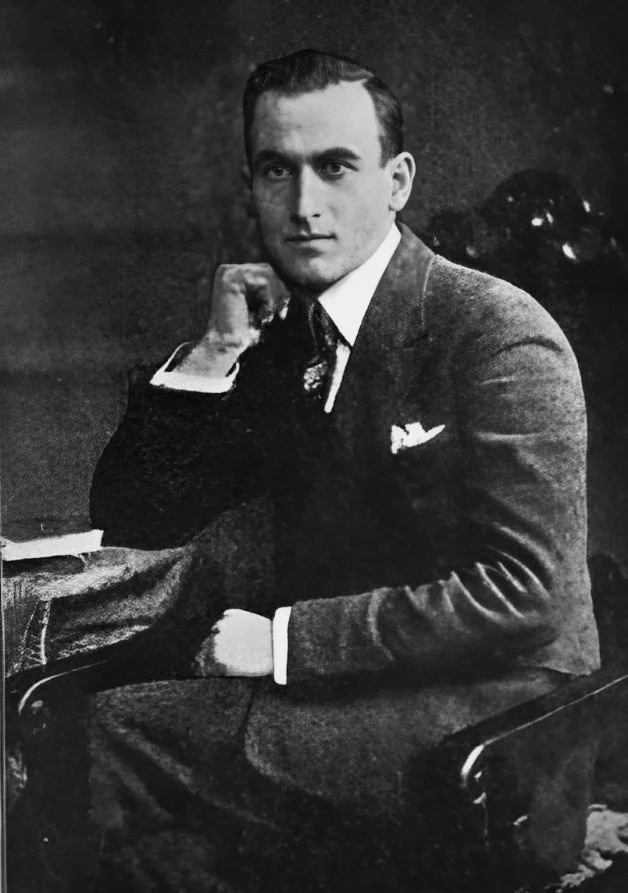
— In Armenian culture, there has long been a myth about Tehlirian as a lone avenger.
— In general, the figure of Tehlirian is part of the national historical “set”: almost any Armenian, both in Armenia and abroad, will sooner or later learn his story. And Bogosyan is interesting because he described it in documentary and detail: at first Tehlirian seemed to him a mythical figure, but then he figured out step by step what was behind this myth.
— Since we’re talking about myth, do you think it’s possible to maintain a balance between an emotional legend and revelation? Doesn't the book, by destroying this myth, risk depriving history of its emotional support?
— Demythologization is always a positive process. Yes, we are depriving history of the legend, but we are gaining knowledge that can show the participants in the operation from the other side - no less significant. For example, one of the myths is related to the fact that in the Berlin trial Tehlirian allegedly acted alone, taking “correct” revenge by shooting Talaat. And reading Boghossian, you understand: this is only half true.
Tehlirian had a personal motive, but behind him was a whole team - a network of Armenians around the world, including the USA, Europe, the Balkans, the USSR, the Middle East and the territory of present-day Armenia.
I was amazed that the Armenians were able to coordinate such a complex operation around the world - also in conditions when statehood was extremely fragile and virtually unrecognized. And at the same time, big powers were also interested in the operation - for example, Great Britain. This is a high level of organization.
— Doesn’t this strengthen the nationalist reading?
- No. Vice versa. This is an important point for Boghossian: the history of the operation is stripped of nationalistic romanticization and filled with a different content—dignity. In my opinion, dignity is more important than many other “healthy values”.
Law after a disaster
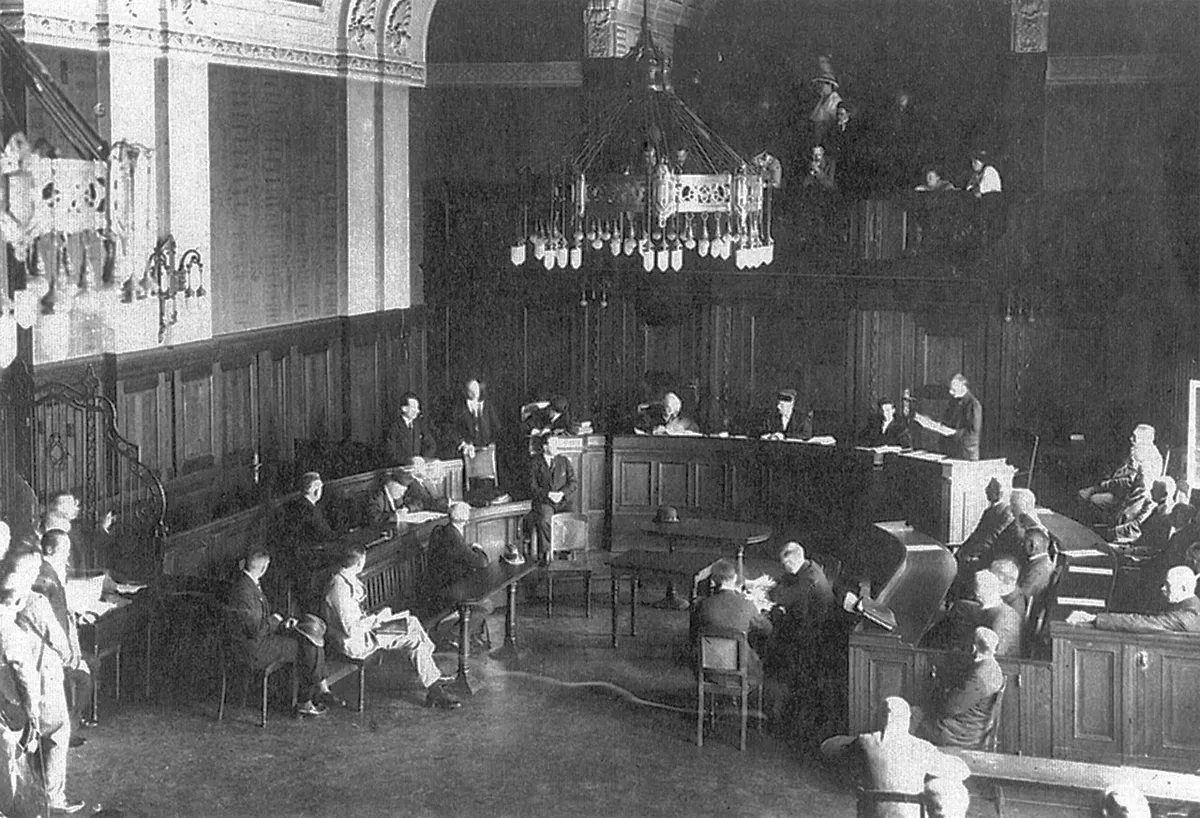
— The Berlin trial of 1921 is often called a dangerous precedent: the murderer was acquitted for reasons of moral righteousness. How do you rate this?
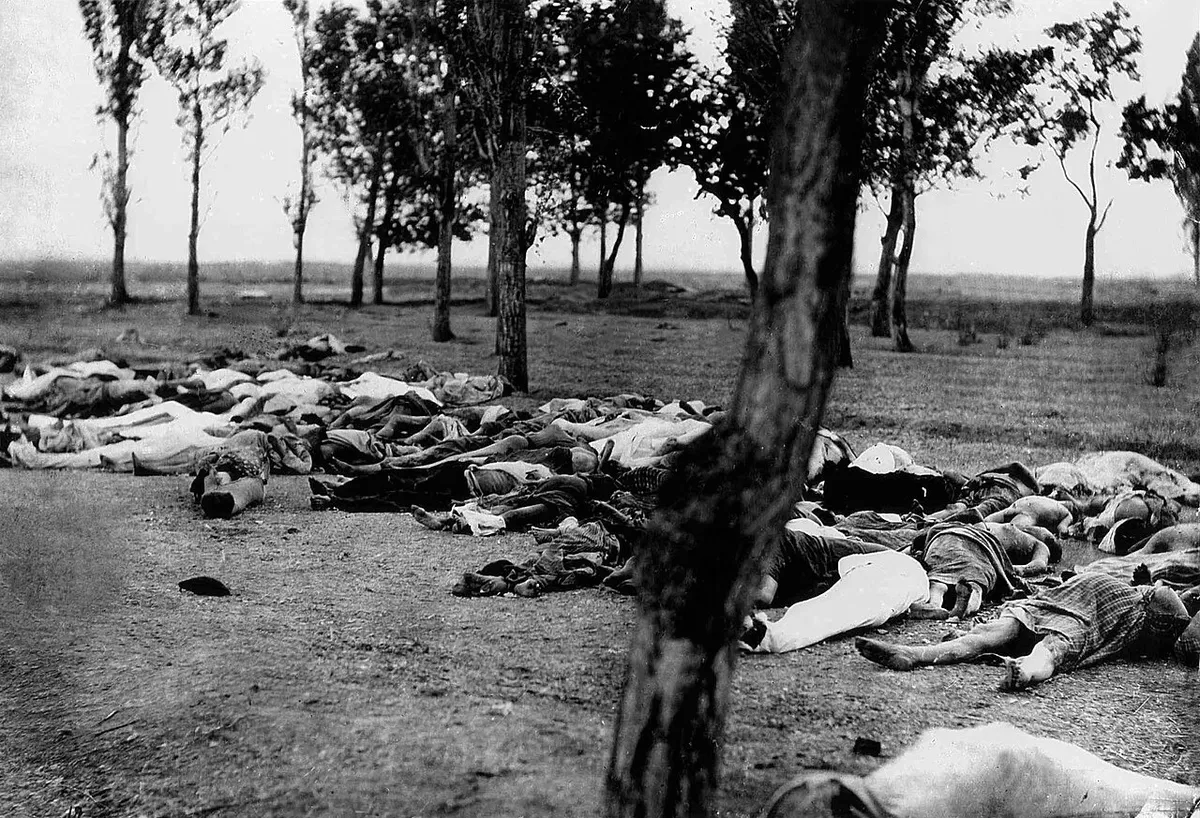
“This murder most likely would not have happened if the extermination of the Armenians had received a timely legal assessment. Boghossian shows that there have been attempts at assessment. The World War I allies—Great Britain, France, and Russia (then the Russian Empire)—used the phrase “crimes against humanity” for the first time in history when reports of mass deportations and murders of Ottoman Armenians began to emerge. Then the American “Wilson Mandate” and the issue of recognizing the borders of the Armenian state were discussed. Trials were carried out against the Turkish organizers of mass crimes in occupied Constantinople - however, Talaat and other main organizers of the genocide had already fled the country by that time. In short, it was the intention of the major international players that justice would be done. But this was not completed - and mass crimes remained unpunished. And Türkiye, reassembling under the leadership of Mustafa Kemal, continued the war - including in the eastern territories of the former Ottoman Empire and then in the territory of the Republic of Armenia.
For the then Armenian government, there was essentially little choice: only a secret retaliation operation remained to restore a sense of dignity.
Operation Nemesis grew out of this emotional element, which simply could not help but arise. And I am convinced: these days, when wars end without legal assessment, new “retaliation operations” appear.
— Did this process have consequences for international law?
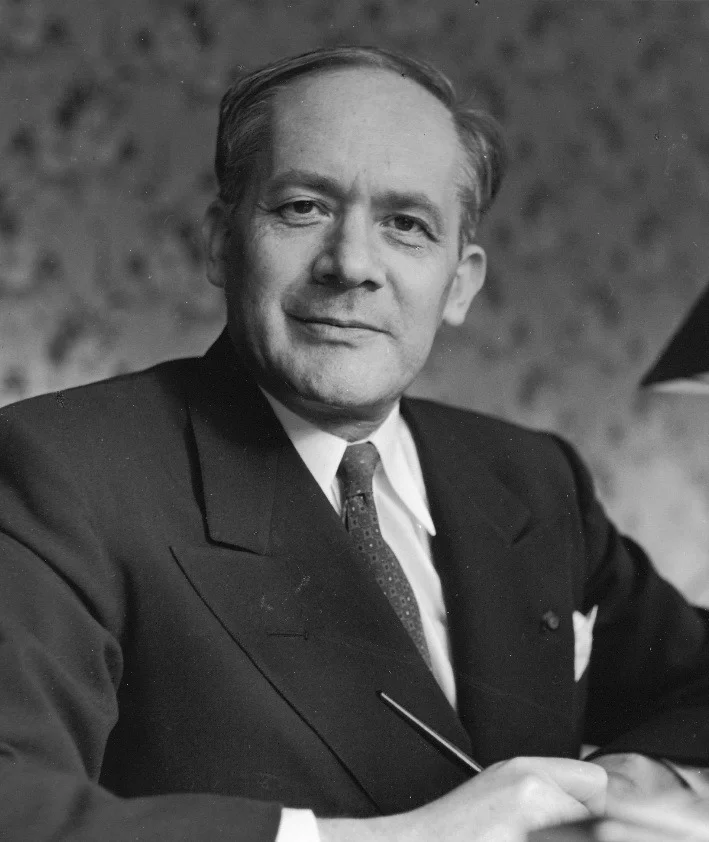
- Undoubtedly. Tehlirian's trial was followed by all the world's media. And one of those who watched him closely was a young law student, Raphael Lemkin, the future author of the term “genocide.” In his autobiography Totally Unofficial (which, by the way, was published relatively recently - in 2013), he describes in detail how he followed this process and argued with law teachers at Lviv University. The teachers, as far as I remember, adhered to a conservative position: they say that there is national sovereignty, and states should “figure it out themselves,” without external interference - that is, in fact, they rejected the idea of international law. Lemkin insisted: this cannot be the case—we need an international legal system that limits states and prevents such crimes. For him, this was the key question: how can a person be punished for killing one tyrant, but not a tyrant for killing millions? The Armenian tragedy and the Tehlirian trial became one of the key intellectual impetuses for him.
— Against the background of the erosion of international law, can we expect an increase in sympathy for retribution outside the law? And what can be countered to this at the civilian level?
- I don’t know and won’t guess. What is happening now is too big and too fast to predict with certainty where it will lead. But in this sense, Boghossian’s book is useful: it shows how the very idea of international law was gradually born from the situation of the absence of international law. That is, it shows what we are moving away from - and what can happen when there are no restraining mechanisms.
I would prefer to rely on scientific, verifiable knowledge - on demythologization, which can become one of the principles of civic thinking.
Boghossian's book is valuable precisely because it tries to show history as it was, and not as we want it to be.
— The book shows that the fate of the Armenians was sacrificed to diplomatic interests. Does Realpolitik always win over humanity?
— Diplomatic and state interests were almost always placed above humanitarian ones - this is not news. Another thing is that international law, which finally took shape after the Second World War, nevertheless became a mechanism of deterrence: it could force one to “slow down” even with the strongest national interests.
Boghossian's book shows what happens when this mechanism is missing: war sooner or later gives way to a new crime, genocide, for example. And here it is important to remember: this was a long process of Ottoman impunity, stretching over decades, with previous massacres and violence against Armenians in 1894-1896, in 1909 and, ultimately, in 1915, which was the peak of massacres.
I am not sure that my expertise is sufficient for a broad comparative analysis of today's politics - but based on the book, one can say for sure: when the leaders of major powers are not held accountable, tragedies repeat themselves.
And one more thing: Boghossian has a line about technological and military modernization - it has made it possible to commit mass crimes on an industrial scale. But the international players didn’t really control this. When such conditions coincide, that is, military-technological power is combined with legal permissiveness, tragedies become almost inevitable.
— Since Türkiye became one of the key NATO allies, the policy of non-recognition of the Genocide has essentially become entrenched. Now that attempts are being made in the region to establish a dialogue between Armenia and Turkey, could this influence the revision of this position - or do you not see the prerequisites for this?
— I do not see any grounds for official recognition of the Armenian Genocide in modern Turkey. Peace in the region largely does not depend on the wishes of Armenia - Armenia is rather in a passive role here: the maneuver space is very limited, and neighbors decide a lot. And Türkiye, if it moves towards peace, will do so on its own terms - one of which will probably be the requirement not to raise the topic of genocide.
But within the Armenian society it will not disappear, despite the current ideological agenda of the Armenian government. This is a fundamental part of collective memory: Armenian identity in the twentieth century was shaped by the memory of the genocide, it was passed on from generation to generation. There is no Armenian who does not know about the genocide. And this cannot be undone.
But in Turkey, the culture of memory also has a systemic character - the character of denial: for a hundred years, one generation of Turks after another grew up in the logic of “nothing happened.”
Many Turks, regardless of where they live, inside or outside Turkey, may indeed be unaware of the fact of genocide, let alone its scale and consequences. And this, unfortunately, is a pattern of systematic memory repression.
Therefore, I doubt that even a potential liberal government in Turkey would risk opening this topic: recognition of the genocide would raise too many questions - not only about the Armenians, but also about the Greeks, Kurds and other victims of Ottoman and then Turkish domestic politics. The current Turkish Republic would hardly withstand such pressure.
— What surprised you most about working on the material?
“I was surprised at how well and complexly Nemesis was organized, taking into account geography, economics and other things. Especially if you remember how fragile the Armenian statehood was in 1918–1921. And while the operation was successful, a series of other assassination attempts on the leaders of the Young Turks followed.
True, later it became part of a cult: in the 20th century, radical Armenian groups arose that committed terrorist acts - and this is another story, with which it is impossible to identify. Boghossian spells it out.
But inside Armenia I often don’t see this. If you look, for example, at how Operation Nemesis is presented in museum narratives, in the Armenian Genocide Museum, for example, then a rather conservative, “canonical” version is often presented there - but active reflection on the complexity of this story does not seem to have happened.
But perhaps there are objective reasons for this: Armenia constantly went through crises - earthquakes, wars, blockades, political upheavals. When a country lives in continuous turbulence, there is simply no time left for reflection.
— Why, in your opinion, is this book especially important for Russian-speaking readers today?
— When mass crimes and crimes against humanity remain unpunished, attempts at new “nemesis” inevitably arise. And don’t be surprised if they happen—or if they’re already happening. This is a natural human reaction: evil often provokes an instinctive, emotional response.
The book describes the events of the First World War and the post-war period - but we understand that we live in times of another change in the historical era. Then, too, there was a change of eras, and tragedies affected not only Armenians - many nations had their own disasters.
Personally, I found it interesting to read this book today as a 2010s text and compare how much our perception has changed in ten years. There is faith in the book: if we call a spade a spade, show “bad people”, expose their crimes, then we will draw conclusions and not repeat old mistakes. Now this belief, which I myself shared in the 2010s, seems a little naive to me. I think Eric Bogosian understands this too. Then, I repeat, it seemed to me that if I did the right thing, everything would be fine. But, as we see, this is not at all necessary.
Vasilisa Borzova