
Translated material
"It seems this is the end"
Cuba is facing the worst energy crisis in history. The US is blocking oil supplies, leaving millions of people without fuel, food and electricity
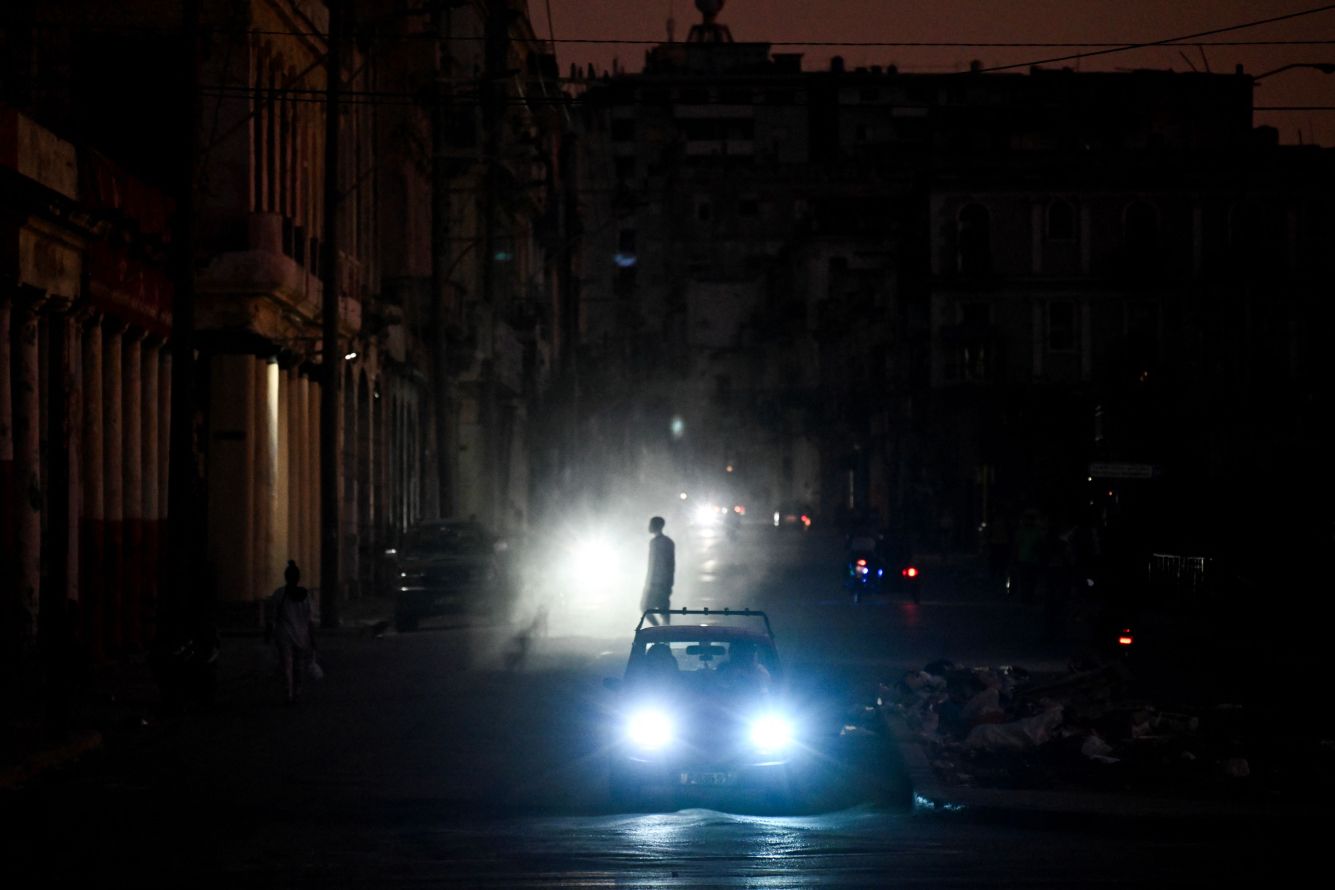
In the early months of 2026, a blockade of fuel supplies from Venezuela by the United States triggered an energy crisis in Cuba. Using economic pressure, the Donald Trump administration wants to change the government in a neighboring country to a more loyal one. As a result, millions of Cubans have been living without electricity and fuel for more than two months. Many people do not have enough food, and there is a transport collapse in the cities. Meduza understands the causes of the crisis between countries and talks about its possible consequences.
Listen to the audio version of this text on Radio Medusa
The confrontation between the United States and Cuba has lasted more than 60 years. Trump wants to change power in Cuba and prove to the whole world that he is stronger than his predecessors
Relations between the United States and Cuba have been in crisis for a very long time - since 1959, when, as a result of the revolution, the Communist Party led by Fidel Castro came to power in Cuba.
Under Castro, Cuba left the American sphere of influence and became an ally of the USSR. In 1960, the United States imposed an embargo against Cuba in response to the communist government's decision to nationalize the property of US citizens and companies.
Since then, the States and countries friendly to them have not supplied any goods to the island except medicines and food. And in 1962, President John Kennedy banned the import of goods from Cuba into the United States. Since then, the blockade has been tightened several times - for example, in the 1990s, third countries were prohibited from distributing Cuban-made goods into the United States.
The US even tried to change power in Cuba by force
In 1961, a CIA detachment, supported by the Cuban opposition from abroad, carried out a landing in the Bay of Cochinos, also known as the Bay of Pigs. American intelligence agencies and Cuban emigrants wanted to overthrow Castro's government and seize power in the country. However, the operation failed and, on the contrary, led to the strengthening of Castro’s position. Later that same year, 1961, relations between the United States and Cuba reached a peak of tension during the Cuban Missile Crisis, which nearly led to nuclear war.
According to historians, after the disastrous landing at the Bay of Pigs, American intelligence agencies repeatedly tried to kill Fidel Castro. However, all attempts failed.
In the late 20th and early 21st centuries, American presidents continued to put pressure on Cuba's communist government. Under Ronald Reagan, a neighboring state was declared a sponsor of terrorism. The policy of tightening sanctions continued under both Bushes. And Bill Clinton in the 1990s authorized a program to promote democracy in Cuba, designed to hasten the fall of the regime. A relative thaw has emerged under Barack Obama - he abolished the country's status as a sponsor of terrorism and relaxed the rules for visiting Cuba for Americans with close relatives there. However, the economic blockade continued.
Despite the demise of the Castro dynasty in 2021, Cuba remains a communist state. Therefore, the White House always wanted to change power there. This was explained by national security needs: the island state with a communist government is the United States' closest neighbor in the Caribbean. Cuba is only 180 kilometers away from the coast of Florida. Many American political strategists over the past half century have said that the Cuban authorities are interested in destabilizing the United States and are ready to provide their territory as a springboard for hostile forces: Russia and China.
In recent history, another reason for aggravated relations between countries has become the so-called Havana syndrome - a set of neurological symptoms, which were reported by 21 employees of the American Embassy in Havana in the fall of 2016. Diplomats heard strange noises and felt vibration and pressure. Some complained of memory and hearing loss, as well as nausea.
The first Trump administration used the Havana syndrome as one of the reasons to curtail the normalization of relations with Cuba, begun by Barack Obama, in the summer of 2017. The president expelled two Cuban embassy employees from the United States and reinstated most trade and travel restrictions against the country.
The same embargo that the United States imposed back in 1960 led in 2021 to the largest protests in Cuba in the 21st century. Tens of thousands of Cubans took to the streets to protest against the ration card system and demand access to medicine and hygiene products.
In the fall of 2024, the humanitarian crisis was aggravated by the consequences of Hurricane Oscar, a poor harvest and a reduction in fuel supplies from Venezuela. Because of all this, regular power outages have begun in Cuba over the past two years, which in turn have sparked new protests.
In Havana, blackouts lasted up to five hours a day, and on the rest of the island they could last for 20 hours. The government declared a state of emergency and suspended the activities of “all structures that are not vital and waste energy.” According to the human rights group Cuban Human Rights Observatory, Cubans faced shortages not only of electricity, but also of food, water and medicine. “The government simply doesn’t have the money to buy crude oil, diesel fuel or cooking gas,” Jorge Piñon, an energy expert at the University of Texas at Austin, said at the time. “It all comes down to money.”
During his second term, Donald Trump issued a memorandum outlining principles for engagement with Cuba. In the document, Trump wrote that it is necessary to continue the embargo and resist attempts by international organizations to achieve its lifting.
On January 11, 2026, after the capture of Maduro, oil production in Venezuela actually came under the control of the United States. This allowed Trump to tighten the embargo. The American president announced a complete cessation of supplies of Venezuelan oil to Cuba, and on January 29 issued a decree according to which increased duties would be imposed against any state supplying energy to Cuba.
The Atlantic wrote in March 2026 that behind the energy blockade of Cuba is not only the White House’s desire to expand its sphere of influence in the Western Hemisphere, but also Trump’s desire to ensure his status as one of the most influential presidents in history. Several members of Trump's administration and inner circle, who asked not to be identified, told the reporter that for him, subjugating Cuba (whatever that means) is a matter of personal prestige.
Trump White House staff said the president believes he alone can “solve” the situation in Iran, Venezuela and Cuba. As The Atlantic writes, Cuba occupies a special place in US foreign policy doctrine, even against the backdrop of other recent goals: “Overthrowing the communist regime has been a dream for presidents from both [Republican and Democratic] parties for 70 years. Havana was a source of general irritation. And Trump has already made it clear that it is important to him how he is remembered.”
The situation with electricity, food and medicine in Cuba has never been so bad. The crisis has affected everyone: from farmers to schoolchildren
Donald Trump calls Cuba an "extraordinary national security threat" because of its ties to China, Russia and other countries the White House considers political adversaries.
“Cuba has lived on large amounts of OIL and large amounts of MONEY from Venezuela for many years,” Donald Trump tweeted on January 11th. — In response, Cuba provided “security services” to the last two Venezuelan dictators, BUT THIS WILL NOT HAPPEN ANYMORE. CUBA WILL NO LONGER RECEIVE ANY OIL OR MONEY - ZERO. I strongly encourage them to make a deal BEFORE IT IS TOO LATE." At the same time, the American president did not specify what kind of deal he was talking about and under what conditions the United States would agree to end the blockade.
For the Cubans themselves, life in 2026 has turned into survival, writes the Spanish publication El Pais. President Miguel Diaz-Canel, in an address to the nation, called on municipalities to show more independence and look for a way out of the current situation without the federal government. He suggested that the population treat the situation as if it were wartime and “resist ingeniously.”
Residents of the island state had to urgently adapt to the almost complete absence of oil, gas and other energy resources. Now they cook with coal and wood. Blackouts last up to 18 hours a day. Hospitals only accept patients in serious condition.
The streets are littered with garbage: garbage trucks do not have enough fuel. To catch a taxi or take a bus, Havana residents must wait for hours at bus stops or wander the streets in search of drivers who still have fuel left.
Some food importing companies have stopped shipping to Cuba in recent months because meat and dairy products cannot be stored in refrigerators due to power outages. Suppliers of vegetables and fruits to Havana from remote regions of the country faced the same problem.
Many enterprises in the country have stopped working, and people are thinking about emigrating. "There's total uncertainty everywhere right now," chauffeur Mandy Pruna, who led tours of Havana in vintage cars before the crisis, told CNN. “We don’t know whether fuel will appear or how to pay for it. If gasoline is sold for dollars, where will I get them? There is no tourism."
Tourists stopped coming to the country in the very first days after the start of the fuel blockade. In 2025, the Latin American country was most actively visited by visitors from Canada and Russia. However, in February, flights to Cuba were suspended by three Canadian airlines that specialize in this destination due to a lack of fuel for aircraft. Following them, Russian airlines stopped flying to Cuba. Export flights were organized for four thousand Russian tourists already in Cuba.
Authorities in Canada, Russia and other countries have advised against traveling to Cuba unless absolutely necessary. Those who have already purchased tickets are now canceling their reservations. Restaurants and cafes are empty: there are no tourists left to visit them, and local residents save on everything they can.
According to 33-year-old Havana resident Alejandra, who spoke to El Pais, blackouts affect most daily activities. “One day I came home with my daughter, and once again we had no gas or electricity,” Alejandra recalled . — I just worked eight hours. I needed to feed my daughter, but I couldn’t do it. I just burst into tears."
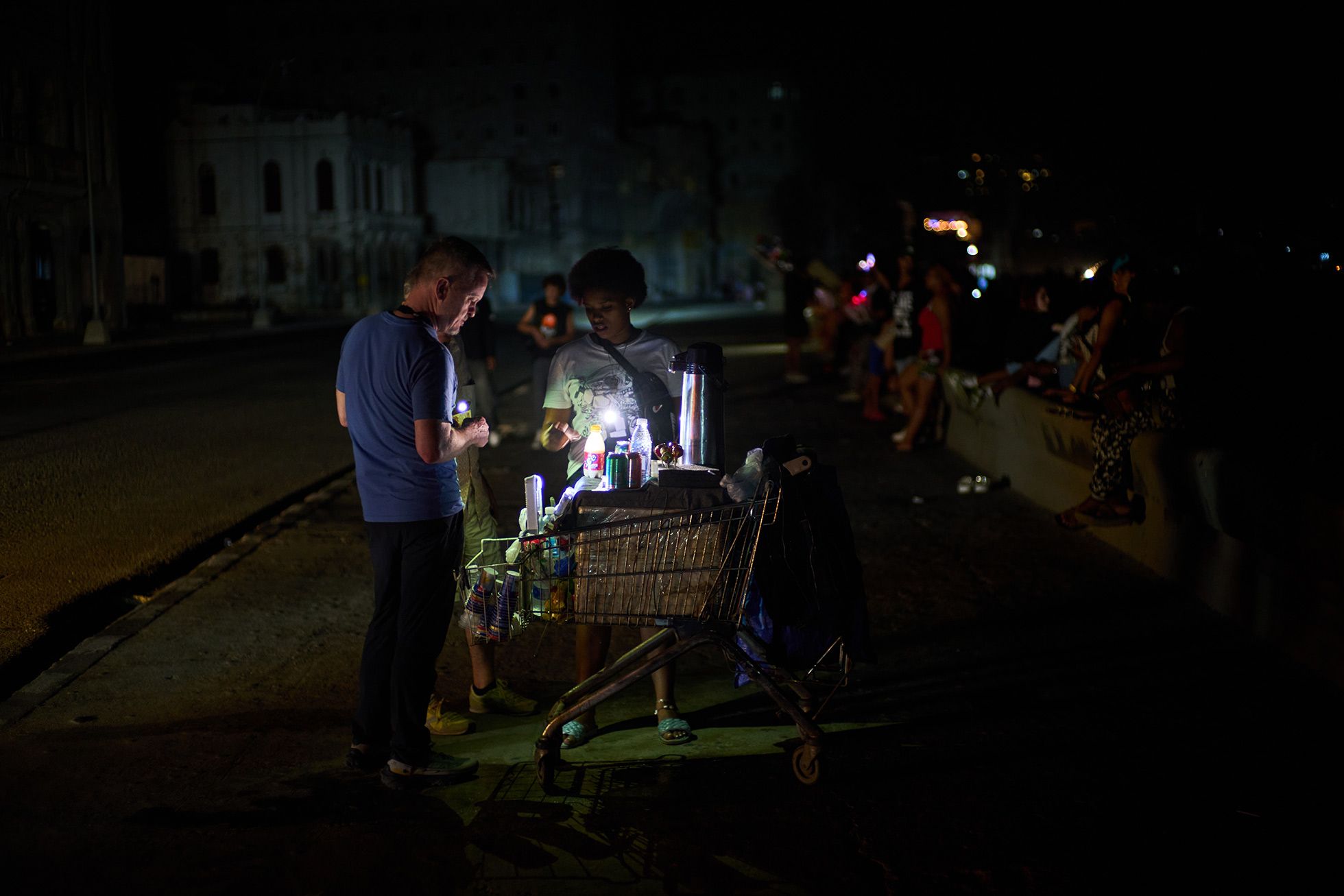
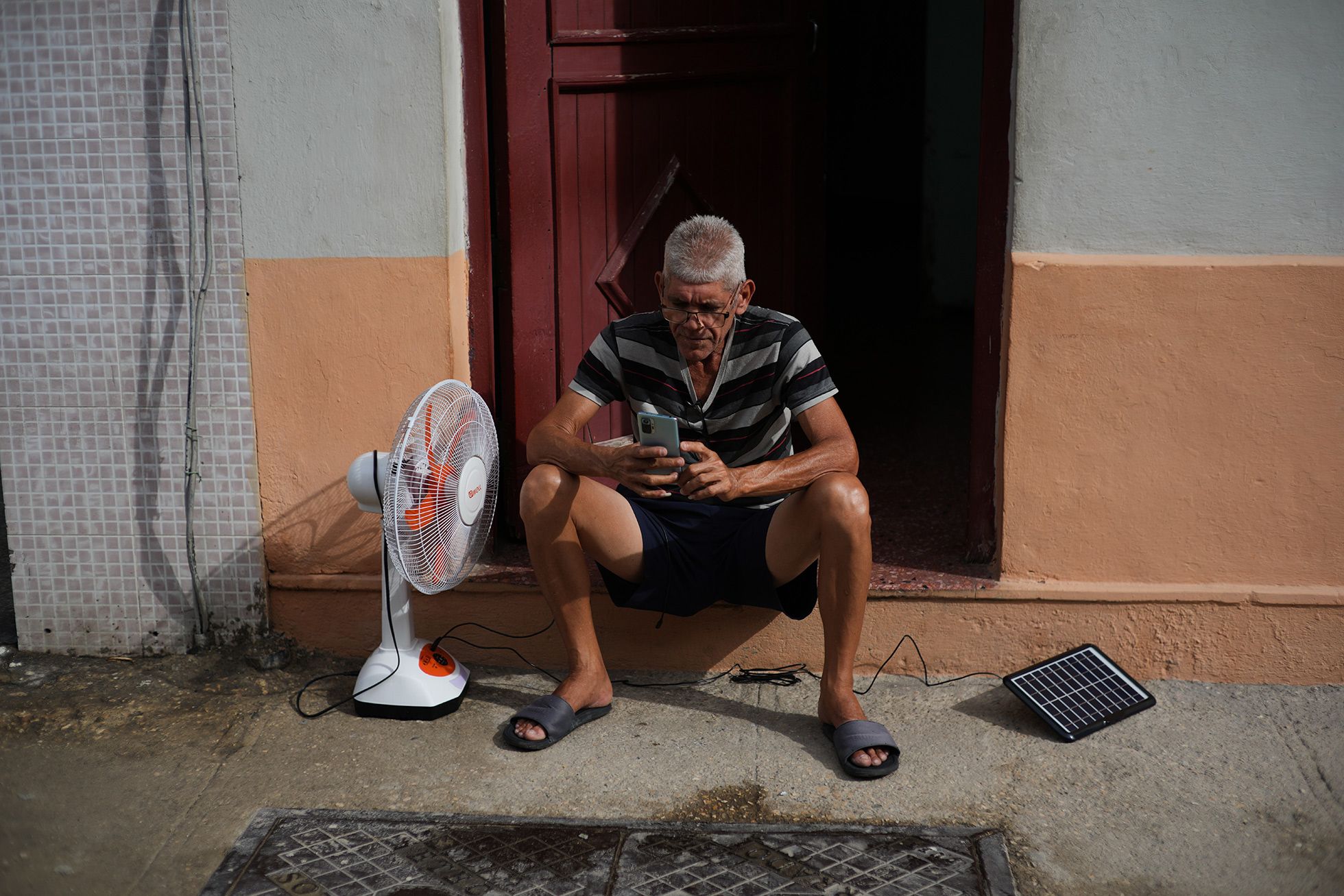
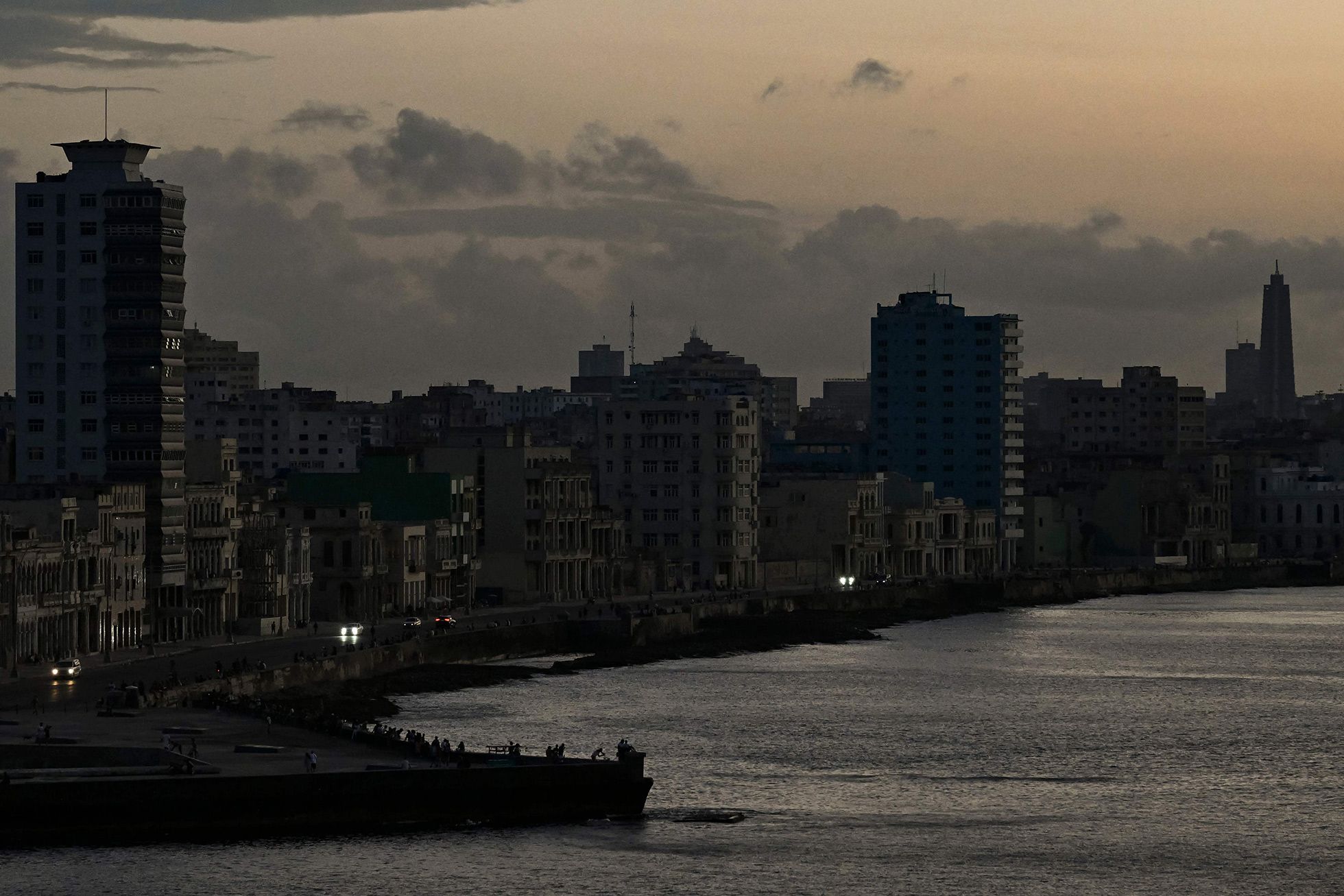
Alejandra's work involves managing social networks. Due to power and internet outages, she has already lost several clients. Another of Silvia Blanco’s interlocutors, Lidia, said that due to a lack of food and energy, she now makes pickles because they don’t require a stove and refrigerator. She spent her savings on a new computer on a bicycle to go to her parents, because there was no gasoline. According to Lydia, in recent weeks she has gotten used to walking a lot.
“When we go to bed, there is no electricity, and when we wake up, there is still no electricity,” said Maria, another Havana resident. “My daughter eats lunch at school, but I try to make sure she eats at least an egg for dinner at home.” According to Maria, almost all of her and her husband’s earnings go towards food. Many Cubans live exclusively on rice - they have no money for anything else.
“Every morning we go to the beach to collect firewood,” said Lisandra Boti, a housewife living in a Havana suburb. “Then we take it home to make breakfast.”
Soon after the blockade began in Cuba, most universities, high schools and municipal offices ceased to operate. Students living on campus were sent home. University administrations are trying to organize distance learning.
“The transformer broke down, there was no water,” University of Havana student Rafael Meña described the last days before the cancellation of classes. - It's like a pandemic. Only then were we kept at home, because it was possible to get infected on the street. Now you can go out, but there’s nowhere to go - everything is too expensive.”
At the same time, black markets have become popular in Cuba, where gasoline and essential goods, such as medicines, can be purchased at greatly inflated prices. Pharmacies don’t even have the most common medications. El Pais correspondent Silvia Blanco said that local residents sometimes stop rare tourists right on the street and ask if they have paracetamol or other painkillers with them.
“It seems that this is the end,” says a taxi driver in the capital, who did not give his name. — The country is in a stupor. This cannot continue.”
At the same time, many Cuban-Americans view what is happening as harsh but necessary measures that could put an end to the communist dictatorship.
“This is the moment when everything stopped,” said Florida House Representative Maria Elvira Salazar, a Republican. “No tourism, no remittances, no mechanisms to finance the regime. It hurts to think about the starving mothers and the children who need help. We are not indifferent to their suffering. But this is a brutal choice we have to make: relieve people of hardship in the short term or liberate Cuba forever.”
The Cuban authorities agreed to negotiations with the United States and have already made concessions. Trump said he could do “whatever he wants” with his neighbors.
It is still unclear how Trump plans to act if Cuba is turned into an American satellite. Several senior government officials in various countries complained to The Guardian that the United States had not provided its partners with any plan. What is known is that Trump wants to weaken the communist regime in Cuba as much as possible, depriving the country of energy.
One of The Guardian's interlocutors said: “We discussed [with members of the US government] that Cuba will change this year. But nothing was said about what would happen after.” Trump himself admitted in February that the blockade could result in a “friendly takeover.”
“They have no oil and no food,” the US President added. “This country is in serious trouble right now.” And they need our help." According to Trump, Secretary of State Marco Rubio, whose parents emigrated from Cuba to the United States in the 1950s, is in charge of negotiations with the Cubans from the United States.
On March 6, Trump said that “Cuba will fall soon” and that an agreement with the Cubans was “a couple of weeks away.” And on March 13, it became known about the start of negotiations between the United States and Cuba. Initially, not everyone believed that the “fall of Cuba” meant a change of government. For example, according to former US Ambassador to Cuba Jeffrey De Laurentiis, the White House could try to persuade the local government to negotiate on favorable terms, but not necessarily seek its replacement.
However, on March 17, The New York Times, citing four different sources familiar with the progress of the negotiations, reported that the United States had increased pressure on Cuba and was now definitely seeking a change in the country's president, Miguel Diaz-Canel. Trump said on the same day that he could do “whatever he wants” with Cuba.
“All my life I have heard about the [conflict] between the United States and Cuba,” the American president said. — When will the United States do something? I think I will have the honor of taking Cuba. Whether I free her or take her, I can do whatever I want with her. It is now a very weakened country.”
Apparently, the Trump administration's aggressive negotiating style has worked: Cuban authorities have already announced that they are open to foreign investment and will also allow expats to own businesses in Cuba, although this was previously prohibited. However, whether this will be enough to preserve the current government is still unclear.
Jeffrey De Laurentiis suggests that the relatives of 94-year-old Raul Castro (the younger brother of Fidel Castro, led the country from 2008 to 2018) could play a decisive role in the future of the country - although he does not hold any official positions, he still remains the most influential political figure in the country. These assumptions are confirmed by information from Axios, according to which Marco Rubio began informal negotiations with the grandson of the revolutionary Raul Rodriguez Castro back in February - before the start of formal meetings with the current leadership of the country.
"Jellyfish"