
Translated material
Prison color and prison light
Lev Shlosberg* - about how gray color tests a person’s strength and why the main source of light must be sought within oneself

Photo: Moscow Agency
18+. THIS MATERIAL (INFORMATION) IS PRODUCED, DISTRIBUTED AND (OR) SENT BY FOREIGN AGENT SHLOSBERG LEV MARKOVITCH OR CONCERNES THE ACTIVITIES OF FOREIGN AGENT SHLOSBERG LEV MARKOVITCH.
I found myself in the Pskov prison castle in early December - on the shortest days of the year, which in our region are very rarely sunny.
The prison itself is a gloomy place. The cell windows are small, the walls are thick, and seeing direct sunlight in a cell is a small prison joy.
For two weeks I lived in a cell on the first floor, where direct sunlight physically cannot penetrate - there is another prison building nearby, and the sky from the window of that cell was inaccessible to view.
The cell windows in the early 19th century building are located at a level above your head; you cannot go up to the window and look into it. But there is no great desire to look out the window anyway: one grille before the window, inside the cell, two after the window, outside - that’s still a frame. The windows are about half a meter by half a meter in size, with a square of light between the bars. The only place where this frame would be organic is Dima Markov’s photo album “Russia Squared”. The prison square, in which the sky is crossed out by three bars, is a very Russian picture of the world.
There is a bunk bed close to the wall with the window. Several times a day I climb onto the second tier to open the window slightly to ventilate the room. At these moments I see in front of me a piece of Gogol Street, the dome of the Alexander Nevsky Church, located on the territory of the prison, the roofs of the lower prison buildings, lined with barbed wire, the chimney of the prison stoker. I never had a desire to sit on the second tier of the bed and look out the window. I don’t perceive the window of a prison cell as a window into the world - the living world looks different, and I know it.
Prison dramatically reduces the amount of natural light in a person's life. The light lives outside the prison and stops on the prison walls. The reduction of living light in the world of one person is intended to make this world weak and lifeless.
Man is torn away from his roots in the solar system and left at the mercy of darkness, which envelops you from all sides and seems to suffocate you. The lack of light in prison can be compared to the lack of oxygen.
The main color inside the prison is grey. The doors of the cells, the slopes of the door jambs, all metal structures are painted gray - corridor and staircase doors, bars, furniture in the cells (bed, table, bench, shelf, stand), heating pipes and radiators, walls in the passages between parts of the building, window frames in the corridors.
The gray color adds gray to all the other colors of the prison. The walls of the chamber are covered with light ocher, but next to the rhythmic gray it becomes colder, more lifeless.
On the walls of the corridors inside the building there are a lot of Soviet-era tiles - gray, bluish - but the prevailing gray adds its own twilight to the color of the tiles, and there is no sun to wash the tiles from the gray cover.
The floors in the corridors of the prison are in most cases laid with Soviet tiles in different shades of ocher and carmine, but the gray color presses on the floor, mixing a gray shadow into the color of the tiles.
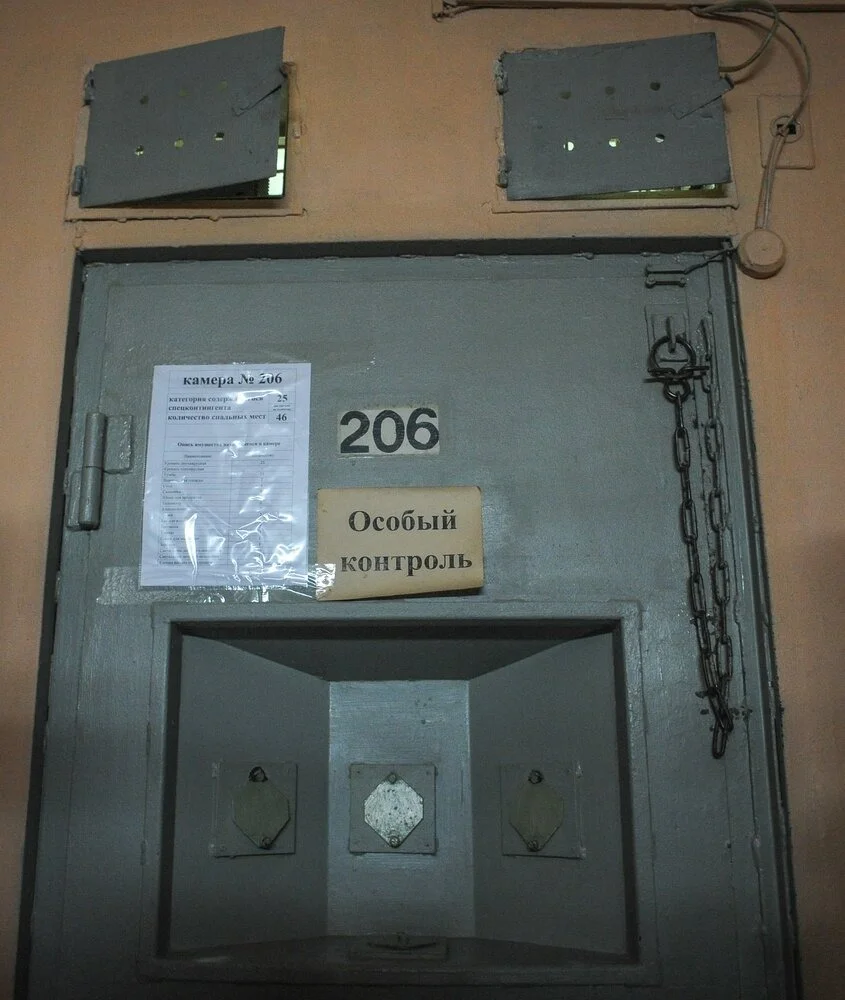
The peculiarity of gray color is its coldness. In the absence of direct sunlight, which brings warmth, the gray color in the prison takes the place of natural light, displaces sunlight from a person's life and replaces it with its all-encompassing colorlessness. The gray color discolors all the other colors of the prison, sucks the strength and brightness out of them, absorbs them in its veil.
There are no flowers in prison, not a drop of living green, because all objects in prison must be screwed to the floor or walls. There are no trees or bushes in the prison yard.
There is no sky in prison. A person in prison can see the sky in several cases: if the windows of your cell overlook an area open to the sky; if the area next to the stone “glass” for walking is not blocked by another building and - very briefly - when you are taken from the residential building to the administrative building for meetings with relatives or defenders and for investigative actions: a few tens of meters there and a few tens of meters back.
In the window of the cell overlooking the open space and behind the bars of the walking “glass” you see a checkered sky, and in cloudy weather the bars against the background of a gray, gloomy sky do not look like harsh dissonance, but on a sunny day the blue sky, cut by the bars of the bars, looks like it is deprived of freedom - as if the sky itself was imprisoned.
On a clear day, the sun creeps into the window of my cell. First, its rays gild the rusty bars of the external bars, quietly color the outer vertical slope of the window on the right, then gradually pass through all three bars and squeeze into the chamber. An oblique diamond of light, broken into pieces by the shadows of the bars, slowly moves along the wall of the cell, briefly coloring everything that falls into the field of the beam: the upper arch of the headboard, the shelf with books and a backpack, the dull ocher wall, washing out the gray from the ocher and saturating it for short minutes with living light.
The duration of the sunny part of the day increases every day, and now the sunny hole, streaked with shadows, reaches out to the gray chamber door, as if trying to illuminate it through.
On clear days, when the sun sets in the room, I stand on a bench and, closing my eyes, expose my face to the sun. Sunlight brings warmth, warms my skin, touches my head with rays.
At such moments, the window becomes dazzlingly bright - so much so that strong sunlight seems to dissolve the bars, melt the cold metal and free the window space from iron, creating a vision of pure light.
The prison has artificial lights on 24/7. He is an integral part of the prison. The space from which living light has been squeezed out is filled with light of technical origin. You get used to such light quickly, because artificial light is better than darkness. The light of the lamp is annoying at first at night, but you shield yourself from it with a blindfold and so go into your inner night.
Breaking the daily natural connection of a person with the living light, surrounding him with the gray color of everyday existence, the prison asks everyone who is imprisoned within its walls the question: how will you live without the sun, a person born under the sun? Will you stretch out like a green sprout in a dungeon, turning pale in the darkness? Will you wither away in the twilight? How will you live if you leave the sun outside the prison walls?
A person in prison, if he wants to preserve himself, to preserve the colors of his world, must switch from external to internal. How strong is your internal battery? How much power has she accumulated in her life? How long is it ready to work without connecting to a source of live light? A person cannot know the answers to these questions before prison. Only prison provides answers.
Man is the main source of light in prison for himself. The strength of this source does not depend on natural or unnatural lighting around. Inner light is a product of personal production.
Sunlight is the light of freedom. The colors of prison are the colors of unfreedom. By keeping the light within yourself in prison, you maintain a connection with freedom, the feeling, roots and strength of which will always be within yourself.
Lev Shlosberg ,
Pskov Prison Castle