
Translated material
Ricochet by ratings
The war with Iran has put Trump in a difficult position: Republicans' chances of maintaining control of Congress are steadily declining.
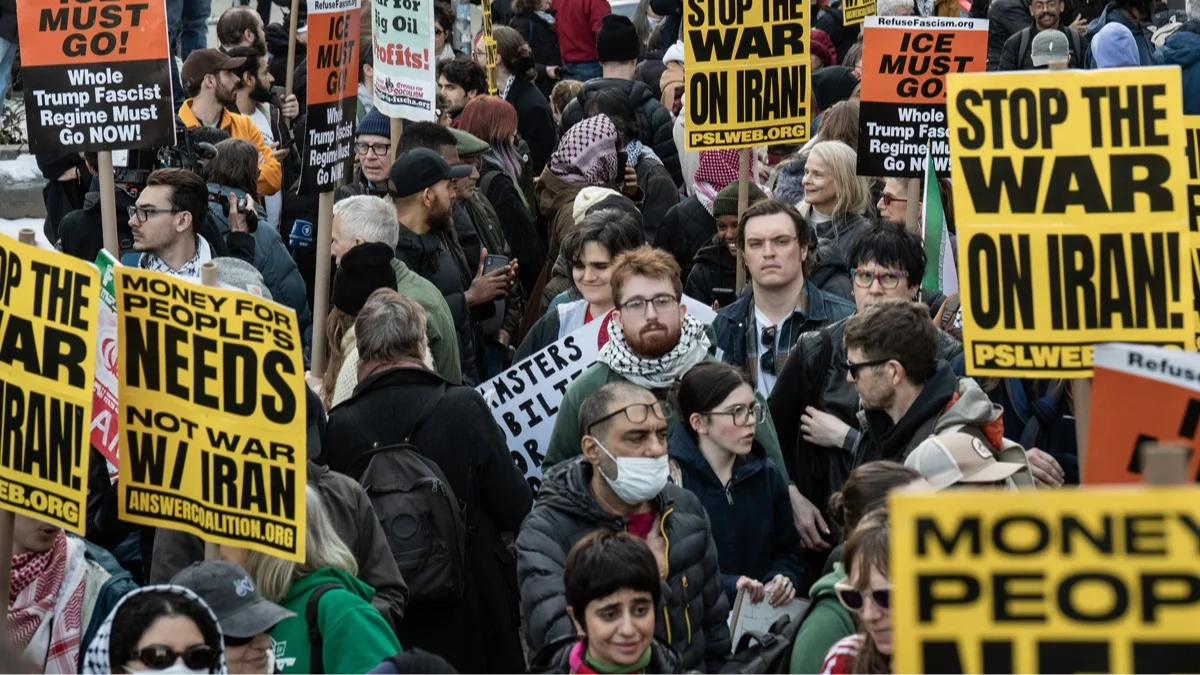
Participants protest against US military strikes on Iran, New York, February 28, 2026. Photo: Derek French/EPA
The ongoing US military operation against Iran is a serious blow to the electoral position of Republicans, who face the difficult task of maintaining control of both houses of Congress in the November 3 elections. Instead of consolidating society, the president received a drop in ratings among electorally important demographic groups, as well as a deep split in his own party and the MAGA movement. So far, Trump continues to maneuver between factions: he allows the “hawks” to believe in the continuation of the military campaign to the bitter end, and gives opponents of intervention and the markets hope for a quick completion of the “short-term operation.” But every day it becomes more and more difficult for him to do this.
We never came together
In 1970, American political scientist John Mueller, in the scientific article “Presidential Popularity from Truman to Johnson,” first described the effect of “rallying around the flag” - a sharp but short-term jump in the popularity of the current head of state at moments of acute international crises or the outbreak of wars. During such periods, the nation instinctively unites around the figure of the commander-in-chief, and the political opposition temporarily reduces the degree of criticism, fearing accusations of unpatriotism.
This concept is quite applicable to American history. After the Japanese attack on Pearl Harbor in 1941, Franklin Delano Roosevelt's approval rating instantly soared from 72% to 84%. The outbreak of Operation Desert Storm against Iraq in February 1991 catapulted George H. W. Bush's ratings from 58% to 89%. His son George W. Bush, after the terrorist attacks of September 11, 2001 and the start of the Afghan campaign, received an unprecedented 90% of support - an absolute record in the entire history of Gallup measurements.
Donald Trump's Iran operation did not have such a cohesive effect. On the contrary, it became , at the time of its outbreak, the most unpopular US war in the country's modern history, according to The New York Times. While 97% of Americans supported the United States' entry into World War II, and 92% supported the 2001 Afghan campaign, Trump's initiative resonated with only 41% of Americans (The New York Times took this figure from a CNN poll conducted February 28 - March 1). The closest indicators of support for the invasion of Libya in 2011 (47%) and Grenada in 1983 (53%) are closest to this mark.
Overall support for strikes on Iran ranges from 27% in a Reuters/Ipsos poll to 50% in a Republican-leaning Fox News poll. As The New York Times noted , the wide range indicates that public opinion is still being shaped as more Americans learn details about the attacks and their aftermath.
The initiator of the Iranian campaign, US President Donald Trump, also cannot boast of a high level of support. Averaged data from opinion polls show that Trump's net approval rating (the difference in percentage points between those who approve and disapprove of his work) has frozen in the negative zone at -13.9. This is worse than the performance of Trump's first term in the same period (-12.5), and worse than the performance of Joe Biden (-9.3) and Barack Obama (-7.9).
Confused about the reasons
The main reason for the low popularity of Trump’s initiative is the lack of clear explanations as to why all this was started. As American political science professor Charles Waldorf noted, large-scale wars of regime change have always been based on some kind of “history with a great purpose.” In the 1940s it was the fight against fascism, in the early 2000s it was the prevention of new terrorist attacks on the scale of September 11th. These narratives were a consequence of real traumas in American society and provided citizens with a moral justification for inevitable human and financial losses.
In addition to this, the authorities themselves made efforts to explain the need for military action. For example, in the lead-up to the 2003 invasion of Iraq, the George W. Bush administration spent a year carefully crafting its threat concept. National Security Advisor Condoleezza Rice published columns in leading media outlets proving that Saddam Hussein had weapons of mass destruction; Secretary of State Colin Powell, at a meeting of the UN Security Council, showed a test tube with a substance that was supposed to symbolize “biological or chemical weapons that Iraq was developing,” Bush himself also regularly explained to Americans the need for war.
Donald Trump did not bother with such preparation of public opinion. During his two-hour State of the Union address five days before the bombing began, he spent three minutes on Iran. And after the start of the operation on February 28, no single version was heard about the motives and goals. They spoke about the need to destroy the Iranian nuclear program, and about the desire for complete regime change, and about protection from an allegedly imminent attack from Tehran, and about retribution for interference in the American elections of 2020 and 2024. The wording used by White House press secretary Caroline Leavitt is indicative in its vagueness when trying to explain to journalists the need for the strikes: the president had a “factual hunch” that Iran was preparing a strike on American bases.
As a consequence,
62% of voters believe that the Trump administration has not provided a clear explanation of the reasons for the outbreak of hostilities.
However, according to a study from the Marist Institute for Public Opinion, only 44% of US citizens consider Iran a “serious threat” to national security (for comparison: before the 2003 war, 64% of Americans considered Iraq a “significant threat”). A Quinnipiac University poll confirms this skepticism: 55% of voters believe Iran did not pose an immediate military threat to the United States before the US strikes.
The words “before beginning” are important here. According to Fox News, 51% of registered voters believe Trump's Iran policy has made the US less secure. 77% of respondents believe it is “very likely” or “very likely” that a military operation will provoke terrorist attacks inside the United States.
How to lose the electorate
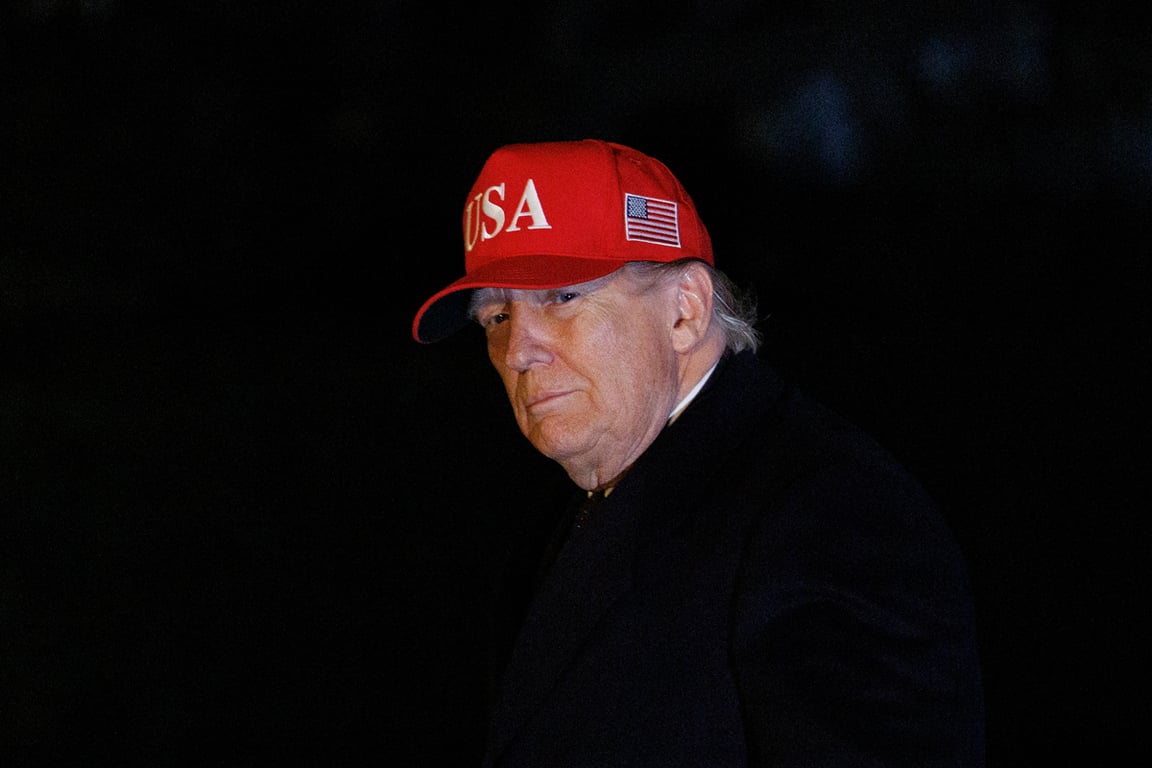
This development is extremely worrying for Trump, given the approaching November elections to the US Congress. The Iranian campaign is delivering its main political blow to that part of the electorate that ensured Donald Trump’s triumphant return to the White House in 2024. Immediately after that election, political scientists talked about a tectonic shift in American politics: Trump managed to attract to his side a significant part of young people, Latinos, black men - everyone who historically voted for Democrats. This was based not on a love of conservative values, but on a pragmatic calculation: voters wanted economic prosperity and an end to endless foreign interventions.
A demographic snapshot of the Quinnipiac University poll reveals the scale of the disaster for the Republican Party. Among voters aged 18 to 34, only 21% support war with Iran, while 71% are strongly opposed. Among “non-white voters without a college degree” (the group that largely provided the margin of victory in swing states in 2024), the numbers are identical: 69% against the war, 21% in favor. In just one week, Trump's support among Hispanic voters plummeted from 40% to 28%.
According to political scientist Douglas Hibbs' Bread and Peace theory , US election results are tied to two variables: the number of casualties in unprovoked conflicts and the growth of real incomes.
This has a particularly strong impact on Trump’s positions, since before his election he gave people hope for a future without wars and for an improvement in the economic situation.
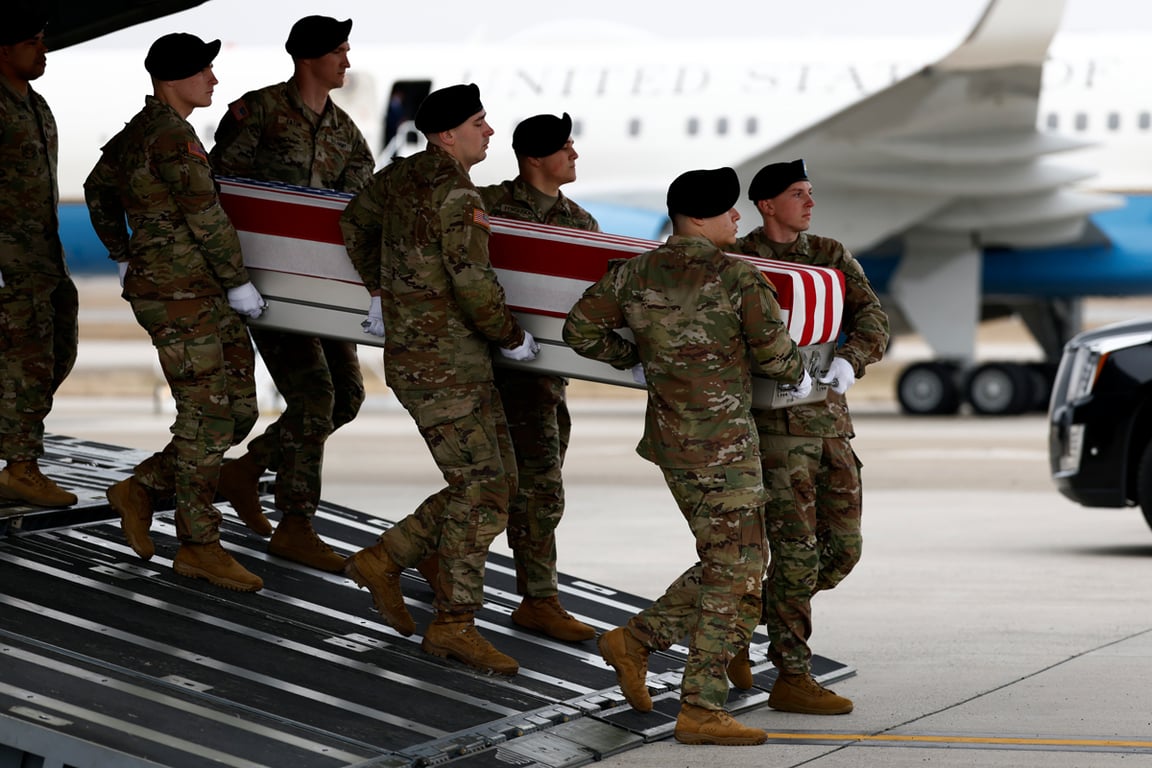
As for the first factor, at least 13 Americans have already died, and Trump does not hide the fact that there will likely be more victims. Economic stability is also under threat. According to research conducted in focus groups among swing voters in Michigan (people who voted for Joe Biden in 2020 and for Donald Trump in 2024), Americans directly link their economic fears to war. Note that Michigan is one of those few states in which the overall outcome of American elections usually depends on voting.
74% of voters are seriously concerned that the conflict will lead to a sharp jump in oil and gasoline prices within the United States. The fears are not unfounded: Morgan Stanley analysts directly warn that supply disruptions through the Strait of Hormuz will inevitably inflate domestic gasoline prices in the United States, accelerate consumer inflation and sharply slow down household consumption.
Inflation and expensive gasoline - the same factors that helped Trump win the election a year and a half ago - are now working against his party. The level of approval of the president's actions in the economic spherefell to 35%, which is an absolute anti-record.
Among other things, the Pentagon's spending on the campaign, estimated at $1–2 billion daily, is causing rejection. It has already been estimated that one day of bombing of Iran is equal to the annual Medicaid budget for 124 thousand Americans. “We have to help our own citizens first before we go to Iran, Iraq or anywhere else,” one focus group participant, a 48-year-old Michigan resident, summed up the sentiment of independent voters.
The Democratic Party, of course, will try to take maximum advantage of such sentiments in society in order to approach the November 3 elections in the best possible shape. And the first consequences of this are already visible - so far at the level of primaries. In March, Democratic primary turnout exceeded Republican turnout in heavily conservative Texas. Former member of the House of Representatives Marjorie Taylor Greene directly called this the result of outrage among the Republican Party base that Trump forgot his promise of “no foreign wars.” She warned of a real risk of Republicans losing the state's Senate seat, which would be a sensation: the last time a Democrat represented Texas in the upper house of Congress was 1993.
According to the analytical model of the Race to the White House portal,
Democrats now have a 69.3% chance of gaining control of the House of Representatives, while Republicans, who still control both houses, have a 30.7% chance.
On September 1, 2025, these figures were 62.1% and 37.9%, respectively.
In the Senate , Republicans still have an advantage - 57.1% versus 42.9%. But the trends speak for themselves: on Trump's inauguration day, January 20, 2025, it was 74.9% to 25.1%.
Elections to the legislative assemblies of individual states also speak a lot about the mood of voters. On March 10, Democrat Bobbie Baudman won the special election for the New Hampshire House of Representatives. She was running in a previously Republican-controlled district that favored Trump in previous presidential elections. In total, since the national vote in November 2024, Democrats have already taken 28 seats from Republicans in state legislatures. The Republicans, in turn, were unable to win a single mandate from the Democrats.
Trump the dissenter
The Republican establishment understands that a protracted conflict in the Middle East will bury their fragile majority in both houses of Congress. Party strategists remember well 2006, when growing American public dissatisfaction with the Iraq War cost Republicans control of both houses of Congress. The prospect of a repeat of this catastrophic scenario has split Donald Trump's inner circle into two factions.
The first group are ideological hawks. This is, for example, Secretary of State Marco Rubio, as well as Senators Lindsey Graham and Tom Cotton. They demand not to reduce military pressure and to bring the matter to the complete physical destruction of the Iranian nuclear infrastructure, and ideally to a regime change in Tehran. This faction is backed by major GOP megadonors such as Miriam Adelson (the widow of casino magnate Sheldon Adelson, who contributed more than $100 million to the Trump campaign) and billionaire Bill Ackman. For hawks, the current war is a historic chance to once and for all reshape the security architecture in the Middle East.
On the opposite flank are the political pragmatists and the economic bloc of the administration. White House chief of staff Susan Wiles and her deputy James Blair are assessing the war solely through the prism of the November elections. They are calling on the president to declare the goals achieved and wind down the operation before the economic costs completely bring down the ratings.
Perhaps the most difficult situation was for Vice President J.D. Vance. The unofficial leader of the anti-war wing of the Republican Party, who for years branded American intervention as a disaster and promised the millennial generation a deliverance from the neoconservative legacy of the George W. Bush era, has fallen into a trap.
Before the operation, Vance, according to American media sources, advised Trump to exercise caution and warned about the risks of an unpredictable conflict in the region.
However, he did not convince Trump, but, as sources said , he only disappointed him. Now the vice president, if he comments on events around Iran, does so with the utmost restraint: by saying that the administration will not allow a multi-year conflict without clear goals.
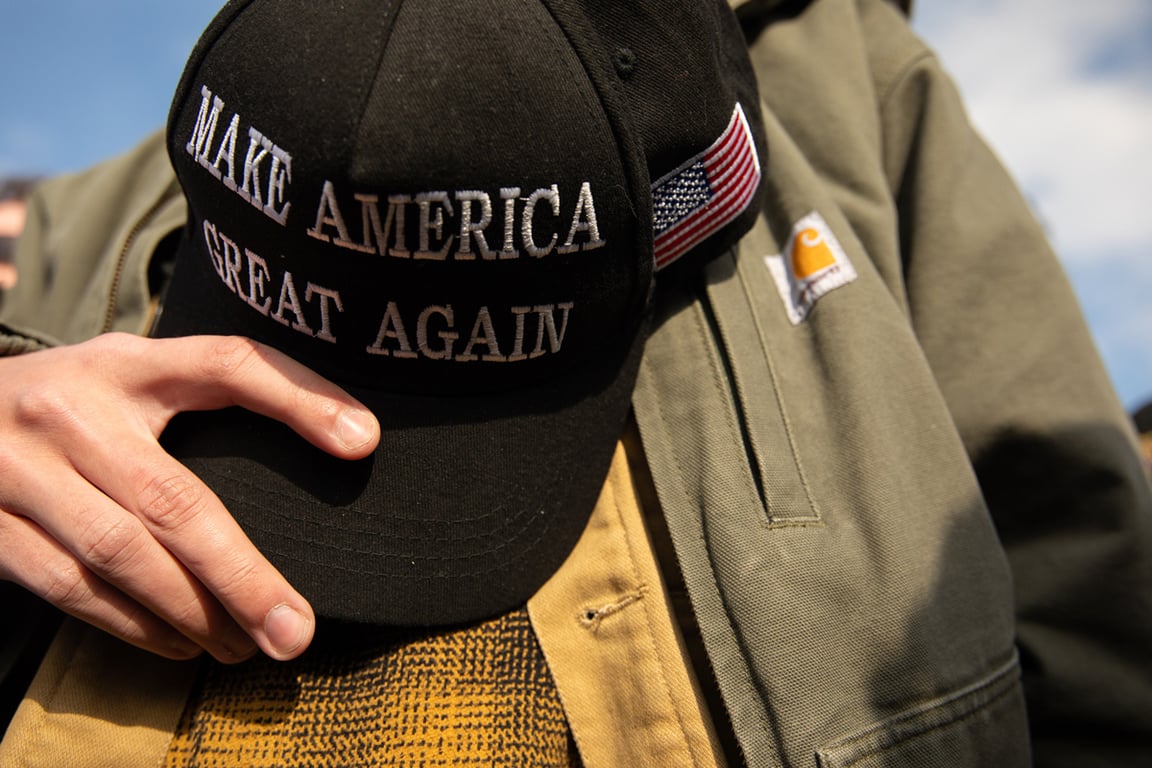
The most painful blow to Donald Trump’s positions is dealt by his own nuclear MAGA electorate (from the slogan “Make America Great Again”). Opinion leaders who recently unconditionally supported Trump have criticized his current steps. Thus, host Tucker Carlson, who has enormous influence on the right-wing electorate, called the missile attacks on Iran “absolutely disgusting and evil.” He argues that the conflict is not in the national interests of the United States, but only of Israel. Moreover, according to him , the CIA transferred materials to the US Department of Justice for the preparation of a criminal case - allegedly for some “conversations with people in Iran before the war.”
The most popular US podcaster Joe Rogan also joined in the criticism of the Iranian campaign. He called the war “madness” and, like Marjorie Taylor Greene, recalled the broken electoral contract: voters voted to end pointless foreign interventions, but what they got was a conflict whose goals the administration was unable to clearly articulate.
As Jack Posobiec, a popular conservative commentator and supporter of MAGA ideology, notes , a clear generational fault line has formed within the movement. The young MAGA electorate embraces a vision of pragmatic isolationism. His priorities, Posobiec notes, are the economic situation, the fight against illegal migrants, the prosecution of those on Jeffrey Epstein’s lists... These people perceive the Iranian campaign as a betrayal of the original ideals of the movement in favor of certain globalist interests. “Trump's success among young people was largely based on a promise to create more stability, not less,” agrees pollster John Della Volpe.
At the same time, voters over 40 still support the president's hard line. The foundation of this support is Christian Zionism
is an influential movement among American evangelicals that views Israel's survival and dominance not as a geopolitical issue but as a matter of faith. For this wing of the party, supporting Israel is a sacred duty.
Donald Trump doesn't seem to care about the rift. Speaking about Tucker Carlson, he notes without much regret that he simply “lost his way” and stopped being part of the MAGA movement. “MAGA loves what I do. MAGA likes everything I do. MAGA is me,” the head of the White House deduced the formula after the operation to capture Venezuelan leader Nicolas Maduro caused similar (albeit less violent) controversy in January.
One way or another, for now Trump continues to maneuver between factions: he allows the “hawks” to believe in the continuation of the military campaign to the victorious end, and gives opponents of intervention and the markets hope for a quick completion of the “short-term operation” .
However, this political juggling act is becoming increasingly difficult. Speaking to supporters in Kentucky last week, Trump unexpectedly declared that the United States had “already won” in Iran. People, many of whom were wearing MAGA hats, met these words with deafening silence.