
Translated material
"Iverieli" in service
The Primate of the Georgian Church, Ilia II, who took his throne under Brezhnev, has died. What was his life path like?

Catholicos-Patriarch of All Georgia Ilia II. Photo: ITAR-TASS
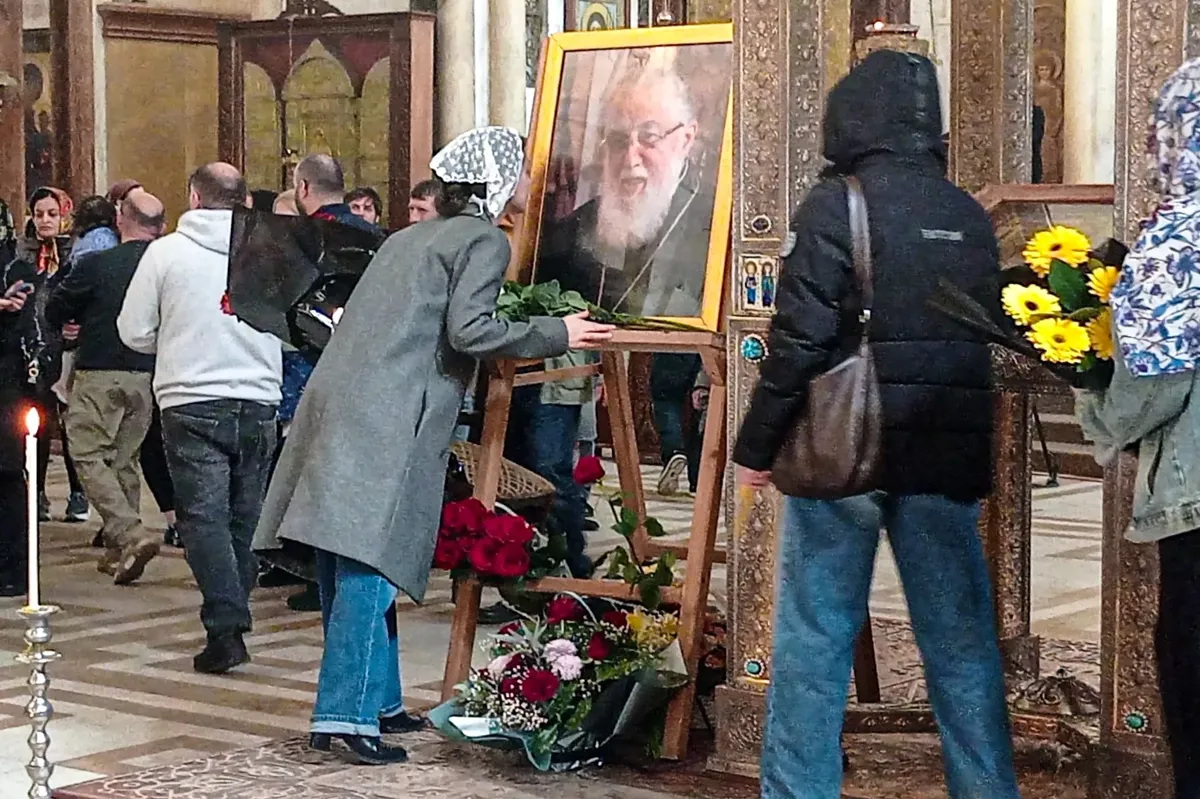
The 93-year-old head of the Georgian Orthodox Church, Catholicos-Patriarch Ilia II, died on March 17 at the Caucasus Medical Center in Tbilisi after severe gastrointestinal bleeding; mourning was declared in Georgia.
Elijah had hardly appeared in public for many years, but he did not formally leave his post. His almost half-century reign (since December 1977) turned out to be the longest in the history of the Georgian Church, and his personality and political position that the patriarch occupied at different moments in the very difficult modern history of Georgia have and will continue to cause controversy.
Not daring to formally retire, Ilia II transferred part of his powers to Metropolitan Shio (Mujiri) back in 2017, appointing him patriarchal locum tenens. From the point of view of canon law, it is possible to “guard the place” of the patriarch only when it is vacant. Now Metropolitan Shio has taken sole control of the patriarchal see, but he is not the only candidate to succeed Ilia II.
For many years now, in the Georgian Church there has been a struggle between factions that can be divided into pro-Moscow and anti-Moscow, and this struggle often takes on a criminal connotation.
Church career
According to the official chronology, Ilia II was the 80th Catholicos-Patriarch of All Georgia. This church considers itself autocephalous (independent) since the 5th century, but the all-Georgian Catholicosate appeared only in the 11th century. From the beginning of the 19th century until the revolution of 1917, the Georgian Church was absorbed by the Russian Church and underwent noticeable Russification. It was during that period that Joseph Dzhugashvili studied and became interested in Marxism at the Russian-language Tiflis Seminary. The full title of Ilia II was: “Catholicos-Patriarch of All Georgia, Archbishop of Mtskheta and Tbilisi, Metropolitan of Pitsunda, Sukhumi and Abkhazia.” Mention of the Abkhaz sees was included in it after the 2008 war, indicating the political position of the head of the church.
Ilia II (in the world - Irakli Georgievich) was the owner of the noble surname Gudushauri-Shiolashvili, his ancestors came from the mountainous region at the foot of Kazbek. But the future patriarch was born in January 1933 in Vladikavkaz, where by that time a large Georgian community had formed. He was baptized in a local Georgian church, which the then Moscow Patriarchate considered schismatic (renovationist), and he received his secondary education in a Russian school. The future patriarch did not have a higher secular education: immediately after school he entered the Moscow Theological Seminary, and then the academy, from which he graduated in 1960 with the title of candidate of theology. Heraclius was not drafted into the army, although there was no armor for seminarians in those years. Already in his first year at the academy, in 1957, he took monastic vows, and two years later, Patriarch Alexy I of Moscow ordained him a hieromonk.
After returning to Georgia, young Elijah began a rapid church career, fortunately he turned out to be the most educated cleric of the very small Georgian Church at that time: in 1960 he was already abbot, in 1961 - archimandrite, and in 1963, at the age of 30, he became Bishop of Shemokmed, vicar of Catholicos-Patriarch Ephraim II. The young hierarch occupies all the key positions in the Georgian Church: rector of the Mtskheta Theological Seminary, chairman of the Department of External Church Relations, representative of the Georgian Orthodox Church in international Christian organizations.
It is clear that in the realities of Soviet church-state relations, a hierarch with such powers, who often travels abroad, including to capitalist countries, could not avoid close contacts with state security agencies.
After the declassification of the archives of the KGB of the Georgian SSR, first in the Georgian and then in the Russian press, an account card of the agent “Iverieli”, recruited on January 10, 1967, appeared (it was also published by Novaya).
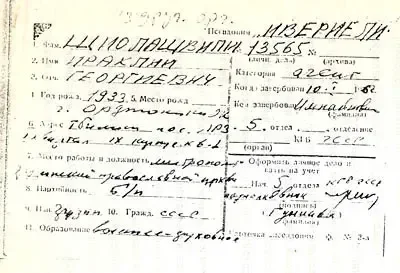
Soon after this, Elijah was appointed to the Sukhumi-Abkhaz See, elevated to the rank of Metropolitan, and the GOC joined the World Council of Churches (WCC) at an assembly in Uppsala, Sweden. Elijah coordinated his external activities with Metropolitan Nikodim (Rotov), the then head of the Department of External Church Relations of the Moscow Patriarchate and mentor of the future Patriarch Kirill. Elijah became a convinced ecumenist, and after his election in December 1977, Catholicos-Patriarch - one of the presidents of the World Council of Churches (until 1983). Ironically, it was this patriarch who had to make the decision to completely break the GOC with the ecumenical movement and to leave the WCC - because of the ultimatum of conservative Georgian monasticism in 1997.
The art of tacking
Ilia II showed extraordinary flexibility not only in the sphere of church politics. On the one hand, he was called the only constant in the ever-changing post-Soviet landscape of Georgian politics. On the other hand, he equally willingly blessed Mikheil Saakashvili and the pro-Kremlin Georgian Dream for power, participated in the funeral of Zviad Gamsakhurdia and signed a “constitutional concordat” with Eduard Shevardnadze. Equally ambiguous was Ilia II’s attitude towards Moscow and, in particular, towards Putin’s rule. On the one hand, he willingly made visits to Belokamennaya, served with Kirill and paid visits to Putin.
On the other hand, while in Georgia, he called on the US President to help in returning the territories seized from Georgia. Many years ago, in an interview with the author of these lines, Ilia II acknowledged the decisive role of Russia in Georgian foreign policy:
“As far as Russia pushes Georgia away, we are moving closer to the West.”
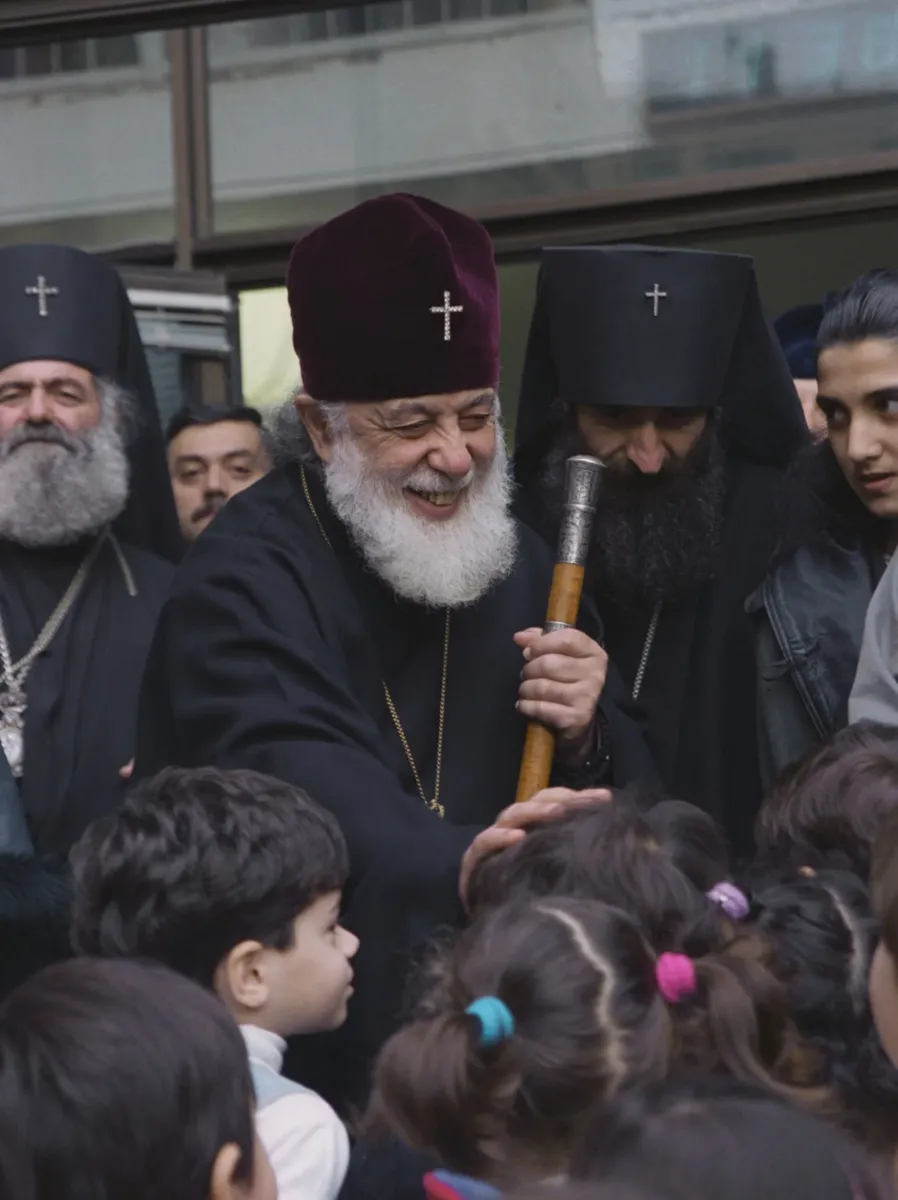
The patriarch’s attempts to participate in organizing negotiations between the warring parties during the civil war of 1991–1992 did not bring much success. But during the construction of the grandiose Holy Trinity Cathedral (Sameba) in Tbilisi and other churches, he did not disdain donations from various sources - including from billionaire Bidzina Ivanishvili, who today actually controls Georgia.
Ilia II’s attitude to the totalitarian Soviet past also remains a mystery. In a 2013 interview that coincided with the end of Saakashvili's presidency, the head of the Georgian Church admitted that he mourned Stalin's death:
“This is an outstanding personality. These are rarely born. He knew the global significance of Russia.” At the same time, after the catastrophic flood in Tbilisi, when eight people died and predators from the zoo fled, Ilia II scolded the communists for building the zoo with funds from valuables confiscated from the church. Against the backdrop of another political crisis, the patriarch called for the restoration of the monarchy in Georgia: “The ruler must be the guarantor of the unity of the country and the security of every person.”
Among the achievements that Ilia II was proud of was his specific participation in improving the demographic situation in the country. No, we are not talking about violating monastic vows. But in the early 2000s, the patriarch promised every family in which the parents were baptized, in the event of the birth of a third (and subsequent) child, to become his godfather at baptism. By the end of his patriarchate, Ilia II already had more than 51 thousand godchildren. The newly deceased patriarch was also gifted artistically: in 2007, a disc with his musical compositions was released; he painted icons and frescoes.
Passion of the Patriarchal Court
Over the past 35 years, the GOC has demonstrated significantly greater growth dynamics than the ROC. When Ilia II became patriarch, there were only seven bishops, one seminary and 34 registered churches in Georgia. (True, the specificity of Soviet Georgia was that the authorities turned a blind eye to periodic services in formally inactive churches. There were even four monasteries in the republic that operated without registration.) Today the GOC has 49 dioceses, 17 theological educational institutions, 170 monasteries, 550 parishes and more than 1000 clergy. Judging by the scandals in the press, its church life is much more public and dynamic than in the Russian Orthodox Church, where most problems and contradictions can be swept under the rug.
In 2017, a high-profile “cyanide case” broke out in Georgia, in which Archpriest Georgy Mamaladze was convicted, allegedly intending to poison the patriarch. Later, the charge was softened, but he was still imprisoned for his intention to poison the permanent and powerful secretary of Ilia II, Shorena Tetruashvili. A couple of years later, in 2019, Metropolitan Peter (Tsaava) of Chkondidi tried to start a fight right at the synod meeting, denouncing the patriarch of “sodomy” and demanding that the influential “blue lobby” be expelled from the church leadership. Peter was dismissed from all posts, banned from ministry, and today is seeking resubordination of the GOC to the Patriarchate of Constantinople. A little later, priest Georgiy Skhiladze added fuel to the fire of the scandal, accusing Metropolitan Zosima (Shioshvili) of Tsilkansky, a close associate of Ilia II, of harassing seminarians. The priest complained against the metropolitan to the church court, but the patriarch blocked the proceedings. As the scandal developed, it came to the point that Iason Tsamalaidze, the son of another truth-telling hierarch, Christopher, excommunicated from the GOC and heading one of the “alternative” Georgian jurisdictions, was found hanged in his Tbilisi apartment.
The current temporary head of the GOC, Patriarchal Locum Tenens Metropolitan Shio, has a reputation as the leader of the pro-Moscow faction in the Georgian episcopate - he is a graduate of the conservative St. Tikhon Institute in Moscow.
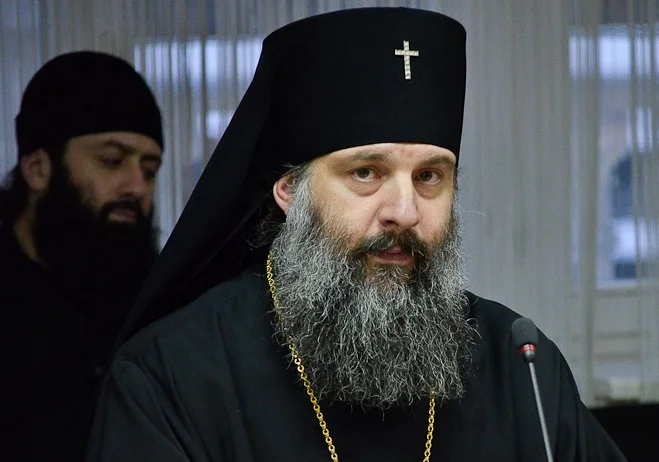
As possible alternatives, Georgian experts name the names of Metropolitans Jacob (Yakobashvili), Daniil (Datuashvili) and Gerasim (Sharashenidze). All of them were loyal to Ilia II and did not have any special sympathy for Moscow. Within 40 days after the death of the Catholicos-Patriarch, his locum tenens is obliged to convene a synod, which includes all ruling bishops in the GOC. The Synod elects three candidates for the patriarchate, whom it submits for consideration to the Local Council with the participation of clergy and laity. It is interesting that the charter of the GOC sets not only the lower (not less than 40 years old) but also the upper age limit for candidates - they should not be older than 70.
In general, given the current political situation in Georgia, it is difficult to expect the victory of an anti-Moscow candidate in the patriarchal elections, and the chances of the locum tenens Metropolitan Shio are the most obvious.
However, the change of primate will in any case introduce new dynamics into the life of the GOC, which was characterized by stagnation under the elder primate. We have to redefine our place in the family of local Orthodox churches, where the rift between the Constantinople and Moscow Patriarchates is becoming ever deeper.