
Translated material
Masha. Alexey. Paris
How the Moskalev family fled persecution in Russia and ended up in France. Report from a Parisian park
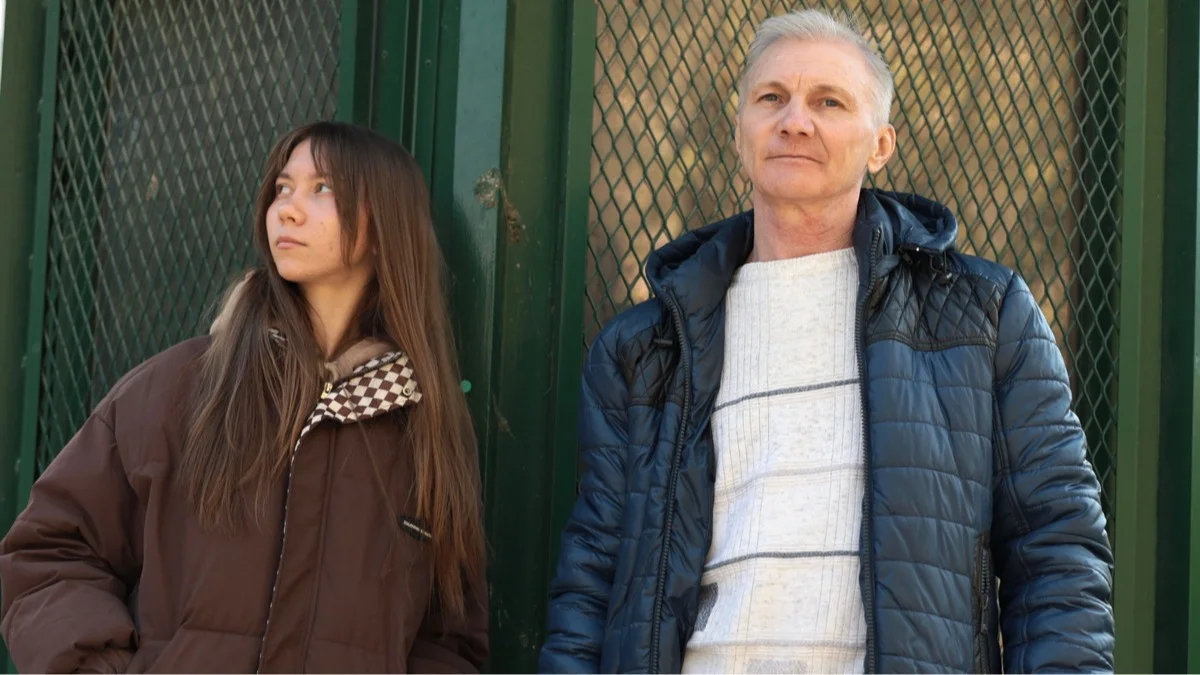
Alexey and Maria Moskalev. Photo: Yulia Kaneva / Novaya Gazeta Europe
Alexey and Maria Moskalev received humanitarian visas from France in March 2026 and moved to Paris from Yerevan. Before this, they had been waiting for more than a year and a half for an invitation to Europe from Germany, but they never received it due to the suspension of that country’s humanitarian assistance program to Russians. A correspondent for Novaya Gazeta Europe met with them in Paris, where a father and daughter, persecuted in Russia for a children’s anti-war drawing and posts on social networks, are planning to seek asylum.
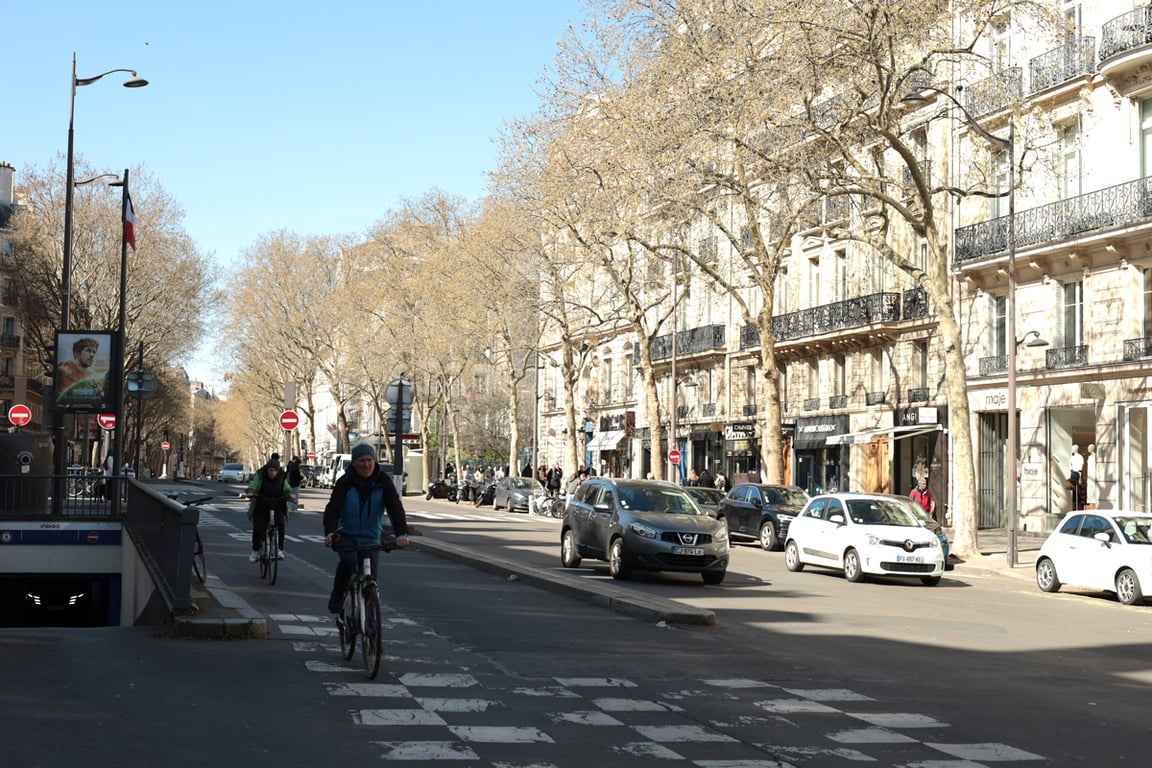
It's midday in Paris. I’m waiting for the family of Russian dissidents Alexei and Maria Moskalev at a coffee shop with an orange sign - they pour coffee into bright cups directly from the window, in front of him there is a crowd of Parisian youth. It's warm outside: the townspeople said goodbye to down jackets and put on sunglasses.
It's dirty all around. Lost napkins and energy drink cans sat in the corners. Homeless people on the boulevards put out cups for donations, someone wrapped his head in a blanket and slept. But it seems that nothing can overshadow the beauty of the city. From beige buildings with neat balconies, bas-reliefs of animals and smiling women stared at passers-by. Perhaps they once saw famous French writers, actors, singers and even emperors. Locals, competing with the city, try to dress up: they wear expensive trench coats and brimmed hats. They dress their dogs in sweaters and bright harnesses.
The menu, clumsily chalked on boards by the waiters, offers beef steak for twenty-six euros and ninety cents, duck kebab and stingray wings for twenty-one and ninety. For dessert, a loaf of chocolate, a calisson traditional for the south of France, and a lemon tart. Round tables on black legs huddle together, as if trying to hide from the winter Parisian winds. But today they are not. It's spring outside.
Daughter
Alexey and Masha are an hour late due to a previous interview and look around nervously. They don't know their way around the city well. Over the last two days, journalists took them around the area: they filmed videos near the Louvre, took photographs with the Eiffel Tower in the background.
“I don’t even know who I’m dating.” [Human rights activists and volunteers] will write to me about what I need to meet with this and that, what publication it runs. And that’s it, then I forget who it is,” says Masha, who took charge of all the interviews after moving to France.
Many major Russian and European publications wrote about Masha Moskaleva: in April 2022, as a 12-year-old sixth-grader, during an art lesson, she drew a woman with a Ukrainian flag protecting a child from Russian missiles. The school director considered the work anti-Russian and contacted the police. The main punishment fell on Alexei Moskalev, a former entrepreneur and single father, who himself has repeatedly spoken out on social networks against the war in Ukraine. He was fined for discrediting the army, and then sentenced to two years in prison. Masha was sent to a shelter.
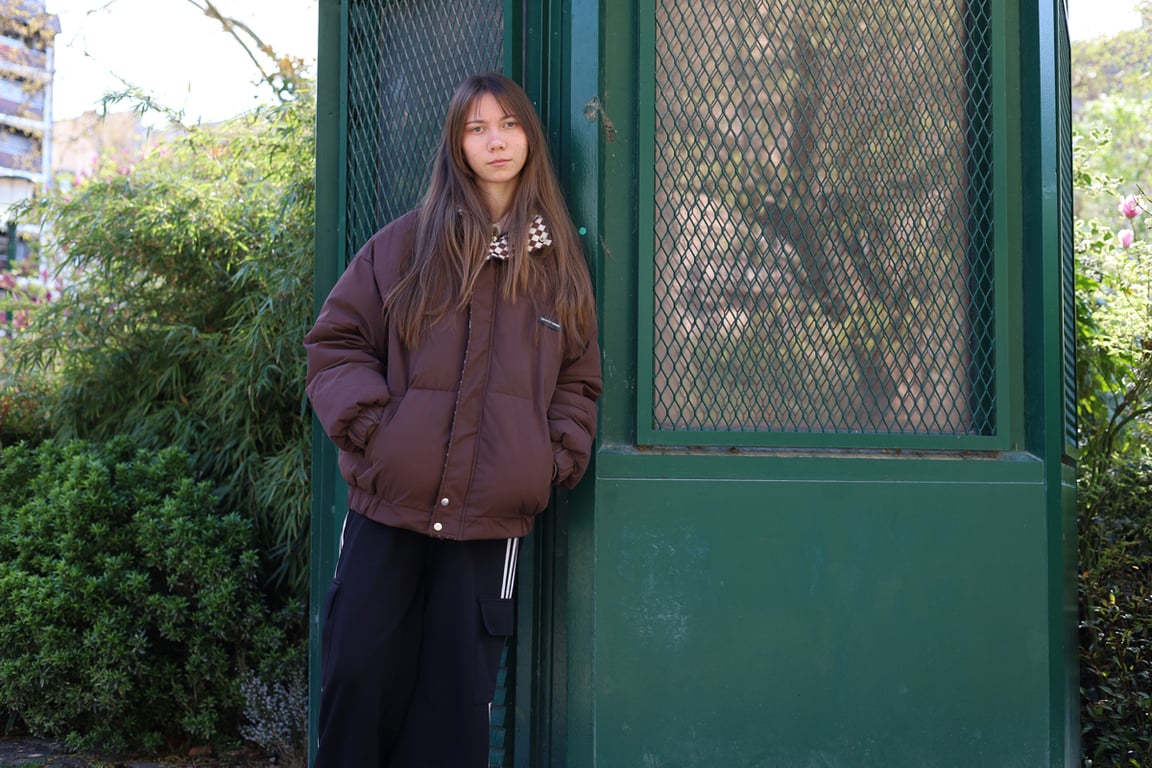
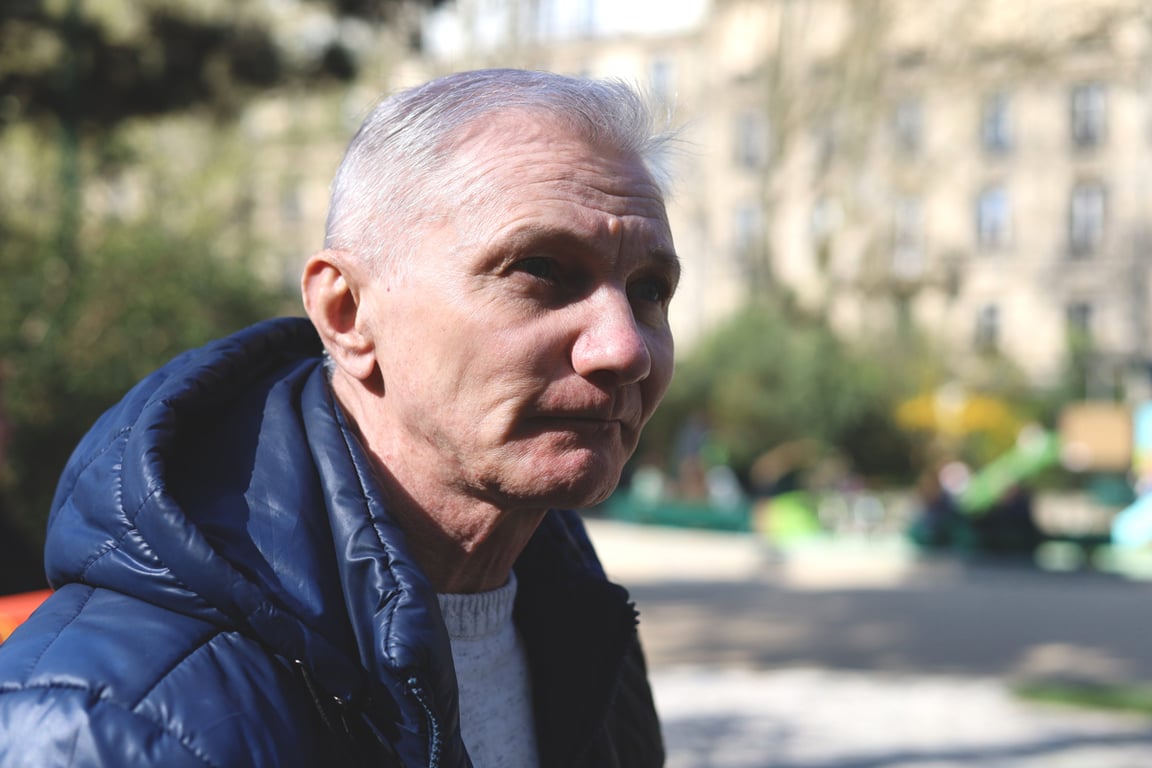
Alexey is 57 years old. He is gray-haired, unbearably pale and thin. He served almost two years in Russia and, it seems, continues to do what he is told, without saying goodbye to the prison routine. He doesn’t pay attention to me and looks with his eyes for somewhere to hide from the bustle of the city. He has an awkward briefcase in his hands - it contains all the family’s travel documents. Alexey is afraid to leave them at the hotel.
Masha recently turned 16. She quickly relaxes and turns from an organizer into a child. She has long hair, huge eyes and a southern Russian accent left over from living in the Tula region.
- [I like Paris] Very much! True, very much. Places, houses, parks, everything! We were in the park just now, there were parrots flying! The stores are not very different from those in Yerevan, for example,” says Masha, already experienced in shopping abroad.
The girl does not miss Efremov, a town of 30 thousand inhabitants 140 kilometers from Tula, where the family lived before emigrating and where Masha was persecuted by the security forces and the administration. He only remembers with warmth his friend, with whom he “walked around the city at night, rode bikes and went to the river.”
“There is a connection with her, but she is no longer the same person that I remember her.” She is growing up, there are no common interests. She has a different vibe,” Masha states and notes that she is now looking for new friends with whom she could spend time in Paris and Strasbourg, where sponsors rented an apartment for the family.
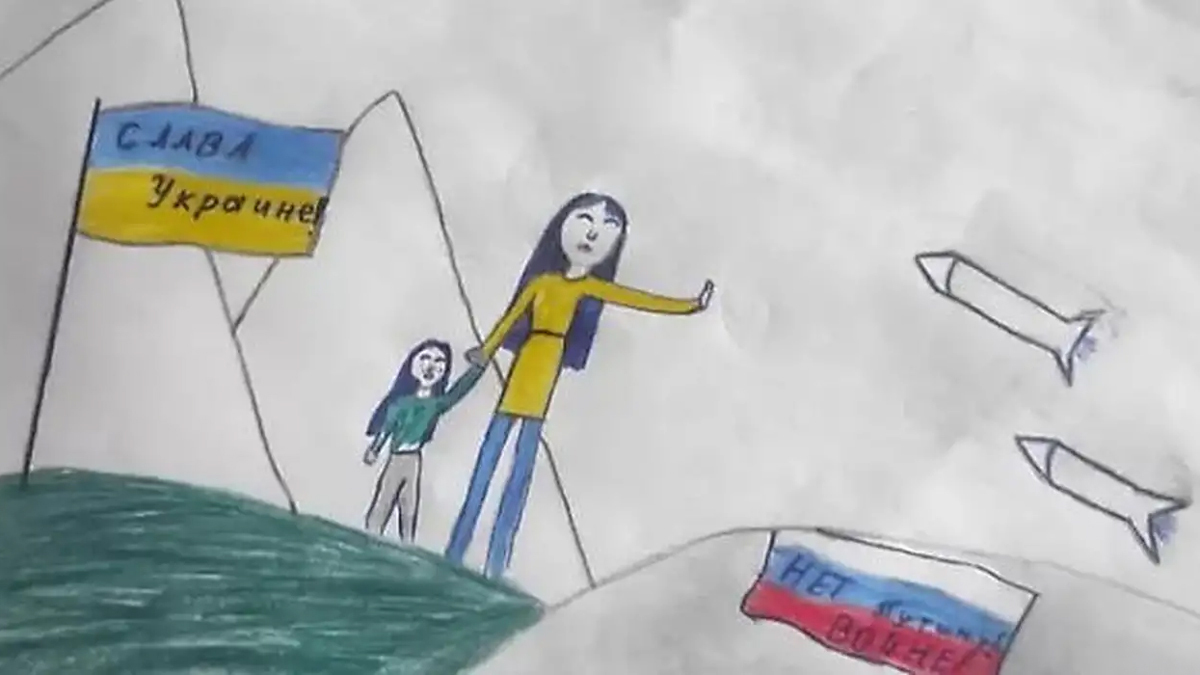
I ask Masha to tell me about the very drawing because of which she and her father ended up in exile.
“I just told you hundreds of times,” she insists, but continues. — In class we had an art lesson. The teacher came and asked a political topic, even though it was forbidden. She said: draw a picture in support of the Russian troops, in support of the war. Support the president.
I drew this drawing. After the lesson, a classmate came up to me; her dad works in the police. She became interested in this and started asking questions... She is 12 years old, but don’t consider them children! They are by no means small anymore.
A classmate complained to the teacher, who complained to the headmistress, and the latter went to the police. The cops came to the school two days later: in one office they interviewed Alexey, in another they convinced Masha to join the youth movement and support President Vladimir Putin. Moskaleva refused.
Father
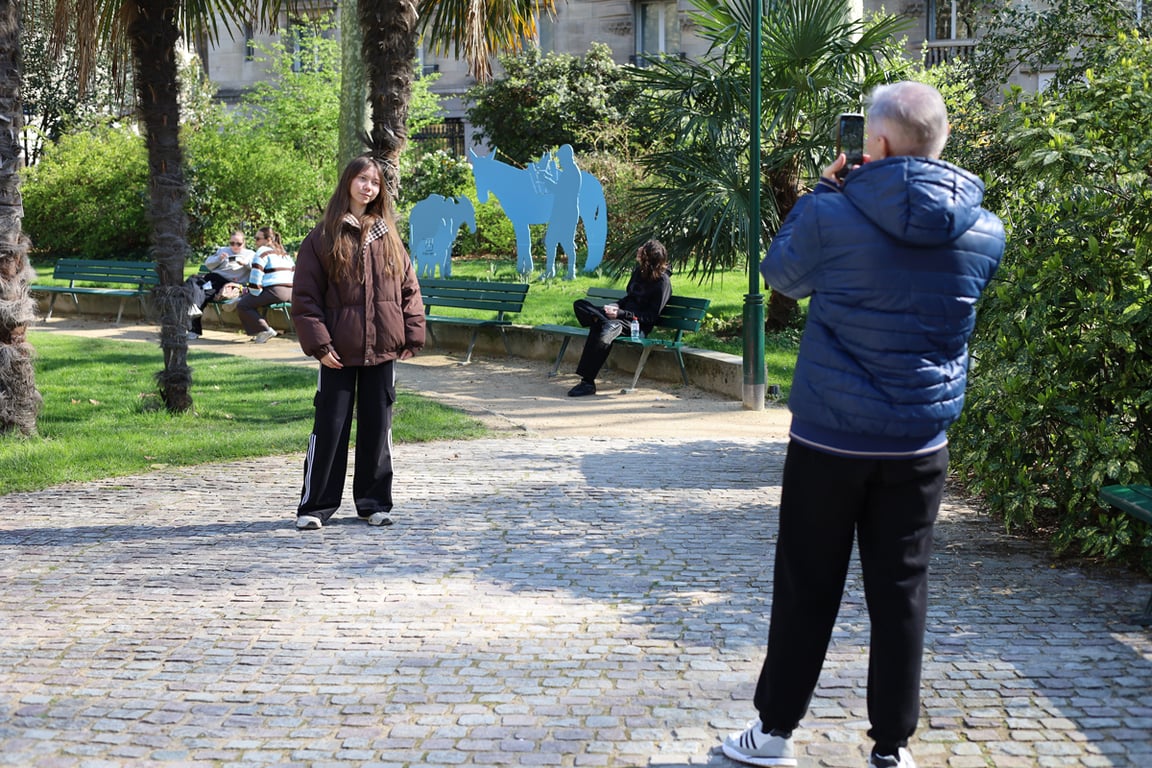
Despite the weekend, Paris is bustling. A shiny fire truck roars past us, a tram gives out a short “ding!” The first stage of municipal elections is taking place in Paris. Voted citizens rush with their children to parks, where they sunbathe in the spring sun and listen to the chirping of sparrows. We follow their example and turn into the park. It contains palm trees and a strange spruce with long branches and huge needles - as ChatGPT later explained to me, this is a Chilean araucaria. Alexey immediately takes out his phone and takes a photo of Masha against the backdrop of a pine tree. The girl tries to resist, but gives up.
- Yes, he takes pictures of everything! - explains Masha.
“No, not everything, but what I like,” Alexei retorts.
The park is a little quieter. Children slide down a plastic slide. Pigeons climb under your feet. It smells like perfume and a blooming apple tree. Alexey quickly sits down on the bench and clarifies what I’m interested in hearing about. Please tell us about the city of Efremov, where he was born and raised.
Alexey Moskalev's youth was in the 80s. He did not serve in the army - then conscripts were sent to war in Afghanistan, so “his parents helped out” so that Alexey avoided service.
“I didn’t intend to kill people either then or now,” he emphasizes.
In the 90s, “when they were surviving” and “crime was going on,” he had a retail outlet in Efremov: first he sold food, then building materials. In the 2010s, the entrepreneur closed the store. In its place a poultry farm appeared, where Moskalev raised hatching eggs. At the same time, the man had a long-awaited daughter, and with the help of a poultry house, he tried to instill in the child a love of animals.
— I had pheasants of different breeds, wild ducks, American turkeys, Kholmogory geese, decorative rabbits, chickens of 12 breeds. That is, such a family zoo for the soul. And Masha grew up, she was interested. She helped me take care of the animals,” says Alexey.
When security forces searched their apartment in December 2022, Alexey sold the bird for next to nothing, took his daughter and moved to Uzlovaya, a city in the Tula region 100 kilometers from Efremov.
I found an unofficial job, hoping that they would forget about him and Masha. But the security forces identified the family within a week, detained the father and placed him under house arrest. Masha was sent to a shelter.
The prosecutor requested two years in prison for Alexey for comments on the Internet against the war. During the process, the Moskalevs were supported by many famous people both in Russia and in Europe: from representatives of the European Commission to the head of the private military company Wagner, Yevgeny Prigozhin.
“If I didn’t need anything, just his support,” Alexey throws out.
Masha was pleased when the lead singer of the group “Naiv” wore a T-shirt with the inscription “Masha Moskaleva” at the concert, but she does not know the songs of this artist. “It’s nice, of course, but, to be honest, I’m used to everything.” She admits that in her free time she listens to the young singer Vanya Dmitrienko and watches Korean dramas.
Escape
The day before the verdict was announced - March 29, 2023 - Alexey decided to escape from house arrest to another country. The activists then convinced him that they would subsequently bring Masha to him.
“I was guarded by four cars: a special purpose vehicle, police, traffic police and the FSB. They stood at my entrance around the clock so that I wouldn’t run away. I had binoculars, I saw how they stood in a group and went to smoke. Six hours pass, these cars leave, the next batch arrives. The night [before the verdict was announced] I had to leave house arrest. It was very difficult. Around half past four in the morning I called a taxi and managed to get away. The cars just stood there near the entrance. Apparently, they fell asleep a little. After all, all people, all people... in quotes,” says Alexey.
The taxi driver dropped Alexey off 320 kilometers later - in Moscow. There, human rights activists helped the man cut off his electronic bracelet and bought a train ticket to Minsk. Alexey did not throw away the “bug” and kept it as a keepsake. He says that he “stupidly” decided that the beacon was only effective within his apartment. The State Bureau of Investigation of Belarus identified the fugitive the next day. Moskalev was transported first to Smolensk, then to Kursk, from there to Tula and finally to a colony in Novomoskovsk, whose administration endlessly sent the convict to a punishment cell (punishment cell).
“They will find any reason: either he didn’t hold his hands properly, or he didn’t say hello to the boss, or something else.” As I understand it, there were calls from the FSB, from higher authorities, to start putting pressure on me,
- Alexey suggests. — The punishment cell is a basement room. Brick vaults. Colossal cold. They gave me a light shirt and that was it. Mattresses were not always provided; we had to sleep on iron fittings. A thin blanket, I wrapped myself around my head like a doll so that the rats wouldn’t bite me. I was worried that they might get infections.
It was August outside then. The temperature in the basement rose no higher than 12 degrees Celsius: approximately the same as today in Paris. A month later, Alexey was transferred to the normal regime, which was “a little more comfortable,” but it didn’t make it any easier. On the second day, the prisoners, whose cigarette supplies had been cut off, staged a riot. The guards first filled Alexei’s cell with powder from a fire extinguisher, then called in the riot police.
“They said that they would start beating us for this nonsense.” A young guy, a gypsy, found out what awaited us, took out a piece of the blade and began to cut the veins. There was blood all over him. They tell us, go out into the corridor. Well, how? The man is sitting covered in blood. “We’ve seen hundreds of these, we don’t care.” You won't surprise them like this. We stood with our arms outstretched for two and a half hours, but, thank God, there was no beating at that moment,” Alexey recalls.
Mother
During the interview, Masha is sitting on the phone. Over the past few days, she seems to have learned her father's stories by heart. I carefully ask Alexey how he became a solo dad.
- She is a long-awaited child, a late child - I was 41 years old when she was born. We broke up with her mother, we didn’t get along, so to speak. She understood that I would not give up my child. And she didn't really insist. I gave my mother the freedom to arrange her personal life. “I raised two girls,” Alexey recalls.
Masha has a half-sister, Dasha, who is four years older than her. They lived together with Alexei until ten-year-old Dasha was taken by her mother.
“I planned for Dasha to live with me at least until she was 18, but she started asking to see her mother. Mom called: “Dasha, come, everything is fine here, the pool is near the house.” But in fact there is a village there: not a house, but a rotten barn, not a swimming pool, but a rotten pond. Well, that’s it, Dasha left, Masha continued to live with me,” explains Moskalev.
In the spring of 2023, when Alexey was arrested, his ex-wife Olga Sitchikhina took Masha from the shelter. As the man notes, this happened under pressure from the guardianship authorities, the city administration and volunteers, who renovated Olga’s house and even paid off her loans. Every month activists sent donations to support Masha.
Masha was able to talk to her imprisoned father for the first time a year and a half after the verdict.
“After my constant visits to the colony administration with statements, I was allowed to make a telephone card.
I will never forget this moment in my life. Masha picked up the phone. "Hello". I say: “Mash, hello, it’s me.” I didn't say dad. “Do you recognize me?” Pause, silence and wild crying.
She just started crying hysterically. In short, she cried all the money she had. We didn't even have time to say a word. I tried to calm her down, but it didn’t work,” Alexey recalls.
Masha, together with her lawyer, calculated the exact date when her father should be released from prison. She came to meet him from the colony with a pocket dog - a mini-York Moley, which a friend gave her.
When he was able to hug his daughter, Moskalev recalls, it was a moment of happiness, which was immediately replaced by fear that he would be arrested again. “Don’t think that when you are released, we will leave you alone,” Moskalev quotes the FSB officers who visited him in prison. The family decided to leave for Armenia immediately after Alexey’s release.
There was no talk of staying with her mother, Masha emphasizes.
- Where was mom these 10 years!? It's not that I'm offended. If we didn’t communicate, there’s no point in starting. “We are too different people,” she snaps.
Freedom
Having told about his conclusion, Alexey steps aside and admires the araucaria. We are keeping secrets with Masha. She admits that she has never gone on dates with boys and has never tried alcohol. Now she dreams of enrolling in a French school and transporting Molya, who did not have enough vaccinations to cross the border, from Yerevan.
We head back to the orange coffee shop. Alexey looks around anxiously and remembers as he goes that he needs to express support for Leonid Nevzlin, an Israeli businessman who sponsored the Moskalevs in Armenia and continues to help them in France.
— Before France issued us a visa, we sent a request to Germany and waited a very long time for an answer. The German authorities gave us neither positive nor negative.
At the end of December, Masha and I decided that there was nothing more to expect, we should try to apply for a visa to France. We were called to the French Embassy in Yerevan and on March 10 we were already issued a visa. I didn’t even think that we would be released from there, I was very worried, because Armenia has a cooperation agreement with Russia, and at Russia’s request [we] could be extradited,” Alexey recalls. - Thank God, everything worked out.
Around us are posters advertising expensive perfumes and portraits of Ryan Gosling, who starred in the new film. Signs above cafes and tobacco shops press onto the balconies of the second floors: maybe the French live there, maybe they are the same as the Moskalevs and me, emigrants who fled the dictatorial regimes of their countries.
I would like to wish the Moskalevs never to encounter the authorities of a small Russian district town again. Masha notes that she can return to Russia only if the government changes, and the government “will not change as long as there are such people” - these are those people from the administration who tried to separate them from their father and filed an application with the guardianship authorities to restrict Moskalev’s parental rights, and the housing office employees who turned off the gas to his father while he was under house arrest, and, of course, the teachers who inform on their students. Masha believes that they will always be in Russia.