
Translated material
Rosatom announced a new evacuation from the Bushehr nuclear power plant in Iran
IAEA warns of risks of nuclear accident
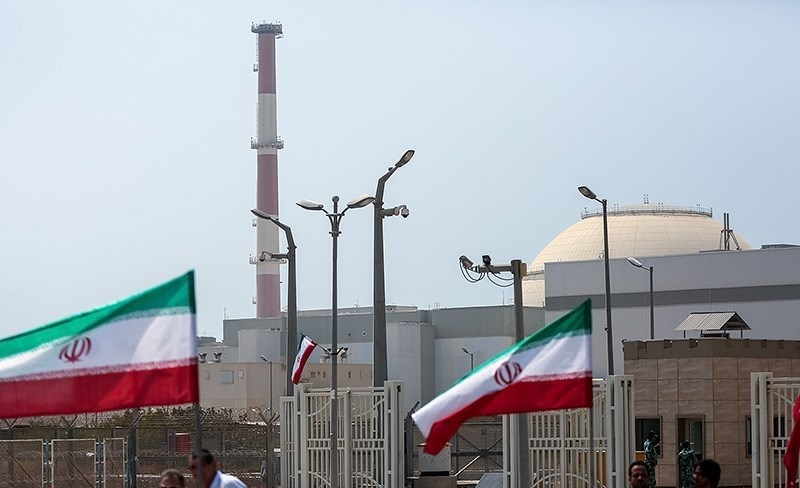
The Rosatom state corporation plans to conduct a new “powerful” stage of evacuation of employees from the Bushehr nuclear power plant in Iran amid the escalation of the conflict. Strikes have previously been recorded in the area of the plant, and international organizations are warning about nuclear safety risks.
Since February 28, Israel and the United States have been conducting a military operation, including against Iran’s nuclear program. It is not reported which side attacked the nuclear power plant area.
In order not to miss new texts from “Layout”, subscribe to our telegram channel
Evacuation of personnel and situation at the station
The head of Rosatom, Alexey Likhachev, said that the company is preparing a “central” evacuation, after which only a few dozen specialists will remain on the site. Before this, at least two waves of removal of personnel, including children of employees, had already taken place.
“It is clear that in general the situation is following an escalation line in the Persian Gulf, on Iranian territory. We are preparing another evacuation. This will probably be such a powerful, central evacuation, after which literally several dozen people will remain on the site,” Likhachev said.
Some employees - about 450 people - remain to monitor the equipment. The evacuation route has been worked out through Armenia.
“But we must save our comrades, our people. Therefore, as soon as the military-political situation allows, people will leave the station and Iran,” Likhachev emphasized.
Strikes in the nuclear power plant area and IAEA assessment
On March 17, a strike was recorded on the territory of the Bushehr nuclear power plant. According to Iran, there was no damage or casualties. Rosatom clarified that the shell fell next to the metrological service building, near the operating power unit.
The International Atomic Energy Agency (IAEA) said the shell hit a structure 350 meters from the reactor and destroyed it. The reactor itself was not damaged, the background radiation remains normal.
The head of the IAEA, Rafael Grossi, announced a violation of the principles of nuclear safety.
“Although there was no damage to the reactor or injury to personnel, any attack on or near nuclear power plants violates the seven essential principles of nuclear safety during armed conflict and should never occur,” Grossi said.
He also noted that the IAEA's attempts to contact Iranian nuclear control authorities remain unanswered.
Rosatom also warned that a possible accident at the plant would have regional consequences.
“If an incident occurs, it will be at least on a regional scale and will affect a large number of countries in the Middle East. <…> None of the participants in the conflict can avoid exposure to radiation if a serious accident occurs,” Likhachev noted. He called for no strikes on the facility.
According to the head of Rosatom, the US and Israeli military have accurate information about the location of the station’s facilities.
The Russian Foreign Ministry condemned the attack and called on the parties to de-escalate.
In order not to miss new texts from “Layout”, subscribe to our telegram channel
Islamic Revolutionary Guard Corps facilities are located near the nuclear power plant.
In the Bushehr area there is not only a nuclear power plant, but also military facilities , air defense positions and, according to Western estimates, elements of the infrastructure of the Islamic Revolutionary Guard Corps (IRGC), which are covered by the “umbrella” of a civilian facility. Targeting such infrastructure could be part of a campaign to weaken Iranian strike capabilities against Israel.
Following Iranian missile and drone attacks on Israeli territory, strikes on sites near Bushehr are seen as part of a “comprehensive response” to Iranian military activity, but not as an attempt to disable the nuclear power plant itself.
According to some analysts, the attack demonstrates to Iran that even symbolically “untouchable” objects are not out of reach, while the “red line” is de facto observed - not to cause direct damage to the reactor and not to provoke a radiation accident.
Bushehr NPP is the first Middle Eastern nuclear power plant of Rosatom
Bushehr NPP is the first nuclear power plant in Iran and the Middle East, built with the participation of Rosatom. Construction of the station began in 1975 and was resumed after a long mothballing in 1995 with the participation of Rosatom.
In September 2011, the first power unit was connected to the network for the first time and put into commercial operation in June 2013. Construction of a second power unit is underway, and a contract has been signed for the construction of a third.
Let us remind you that earlier “Layout” told how the ayatollahs created the atomic bomb and how Russia and Ukraine contributed to this. We also looked into how the rise in oil prices due to the war in Iran will affect the Russian budget.
Photo: Bushehr Nuclear Power Plant, Iran, September 10, 2016. Tasnim News Agency/CC BY 4.0 via Wikimedia Commons
Support “Vestka” - it’s important and safe →