
Translated material
The Ukrainian website “Zaborona” was deprived of hosting in Germany. The formal reason is a debt of 174 euros
Before this, Roskomnadzor demanded that journalists remove text about the torture of Ukrainians in the occupied territories
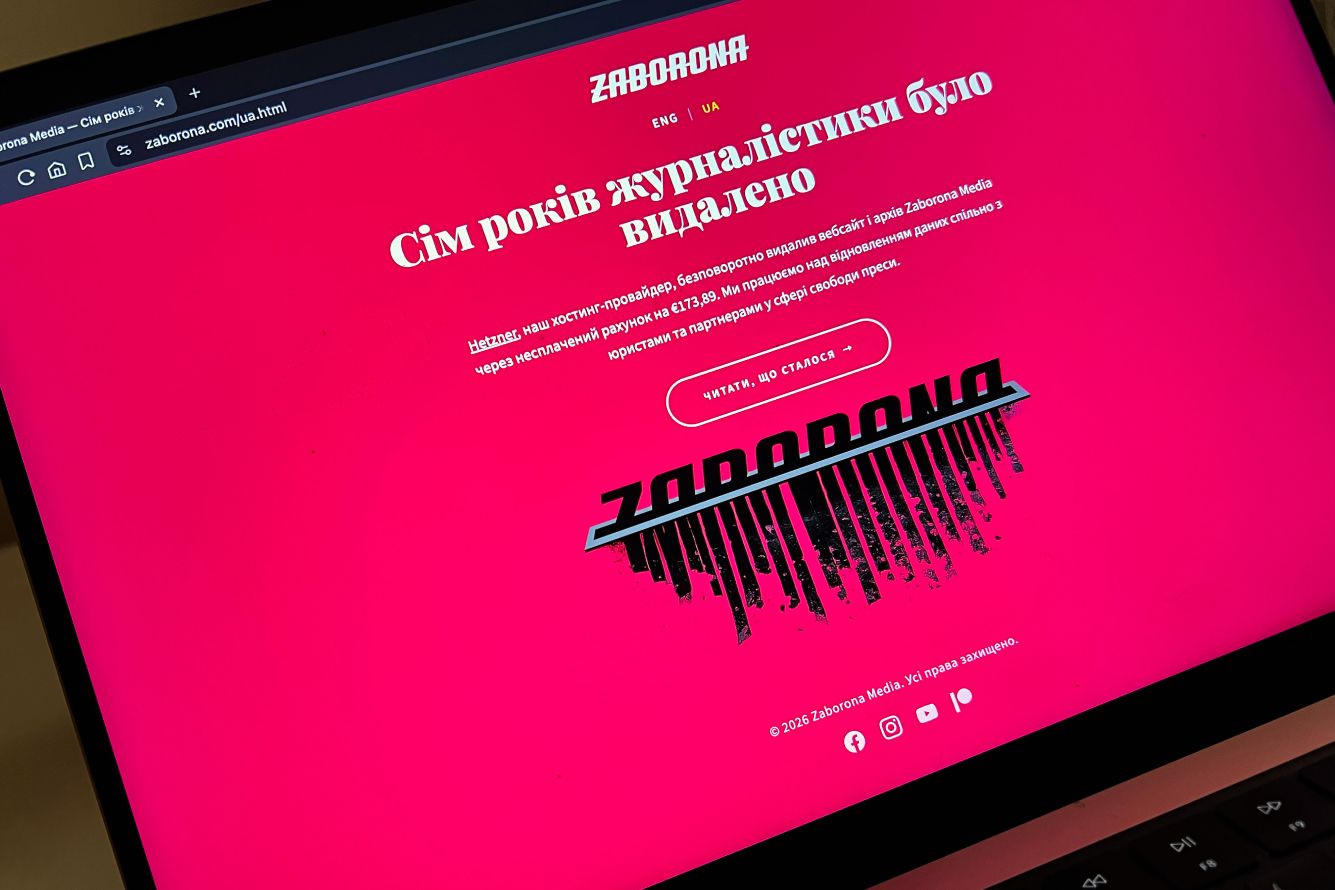
German hosting provider Hetzner blocked the website of the Ukrainian publication Zaborona and deleted all site data over the past seven years. The publication reported that this happened in November 2025. The provider cited the reason for blocking as overdue payment of 174 euros for two months of site hosting.
As Zaborona co-founder Katerina Sergatskova explained to Meduza, when the editors made the payment, the provider refused to restore access to the site, saying that everything had been deleted permanently.
“Usually, due to a slight delay in payment, the provider does not disconnect the service and does not permanently delete all data. Such things should not happen - this is very bad for any business,” emphasized the editor-in-chief of Zaborona.
Sergatskova added that the editors did not see the payment invoices from the provider in the mail in time, because these messages ended up in spam. “Automatic payments are regularly disabled due to the fact that the Ukrainian organization is under the regulation of Ukraine. Because of the war, there are very small limits on payments abroad,” she explained.
Before blocking the site, the German provider sent letters from Roskomnadzor (RKN) to Ukrainian journalists demanding that they remove some of Zaborona’s materials (Meduza has reviewed this correspondence). In total, Hetzner forwarded five letters from RKN to the editors with a request to “deal with this.”
One of the Zaborona materials, which the Russian agency sought to remove, described how to make Molotov cocktails. It was published in the early days of the full-scale Russian invasion of Ukraine. Another collected evidence of how the Russian military tortures Ukrainians in the occupied territories. RKN demanded the removal of materials, citing decisions of Russian courts.
“We wrote back to the provider several times and explained that we are Ukrainian media and have nothing to do with Russia. This is illegal, Russia attacked Ukraine, and this is a way to put pressure on us,” Sergatskova told Meduza.
According to her, when Hetzner deleted the entire website of the publication, representatives of the German provider said that they “never knew what Zaborona was and what was on their server.” Hetzner claims that the termination of service and deletion of the site were initiated automatically after non-payment of hosting. “They couldn’t help but know that Ukrainian media was on their servers—that’s just a lie,” Sergatskova said.
This is not the first time, Sergatskova says, that Hetzner has shut down publication sites following demands from Roskomnadzor - despite the fact that the German provider does not operate in Russian jurisdiction. In particular, using a similar scheme, Hetzner blocked the website Agentura.ru of the Russian investigative journalist Andrei Soldatov in 2023, as well as the Ukrainian website Glavkom.ua in 2014 and the website of Novaya Gazeta in 2016.
The editors of Zaborona require Hetzner to restore the archive of its materials or transfer this data in any usable form in order to re-publish them on a new hosting.
“If we cannot restore the archive, we will have to extract Zaborona’s publications piece by piece from web archives. There is no guarantee that everything that was published on our website has been preserved on the Internet. But we will try. It will take months to restore the archive, although it will no longer be the good old Zaborona,” the editorial office says.
Elizaveta Antonova