
Translated material
Events
Bonfires made from livestock carcasses burn in Siberia. Afterword

Photo: Artem Krasnov / Kommersant
*"It's a pity - it was a good village." *Vasily Shukshin. "Kalina red"
This is the second month of mass destruction and burning of livestock in Western Siberia (since the beginning of February). The inspection finally arrived from Moscow to Novosibirsk. On behalf of and under the close supervision of Deputy Prime Minister Dmitry Patrushev. It seems that in Siberia they have not yet lived up to the color differentiation of pants, as on the planet Plyuk, however, reports immediately began that the “epizootic storm” had subsided, “stabilization of the situation with rabies and pasteurellosis” was recorded, “a steady trend towards improvement is being demonstrated.”
“Epizootic storm” is a tautological at first glance formulation by the head of the regional center for veterinary and sanitary support, Yuri Schmidt (some media outlets quoting him have an even more mysterious and somewhat more symptomatic wording – “episodic storm”). Veterinarians and epidemiologists, however, say so, their term is a tracing-paper from English. This is exactly what, for example, they now call the bird flu outbreak in Pennsylvania this year. Which, by the way, is assessed as a “systemic failure of US biosafety.”
All this time, our epizootic did not have a name: the population tried to get the authorities to name the infection (since pasteurellosis does not kill livestock on a global scale, it is treated), but the authorities did not enter into explanations, did not show the documents - they were, they say, for official use. Simply: “a particularly dangerous disease.” No details. And the people who went out on single pickets and tried to block roads themselves gave the name to the infection - “an epidemic of lawlessness.” This refers to the methods and practices with which the authorities approach the fight against the disease.

There is no reason to think that the Moscow commission ordered the campaign to be curtailed as quickly as possible. Rather, here is the traditional ability of the authorities to keep up with the end. Well, this is the second month that cattle have been destroyed in the Novosibirsk region; in general, foci of infection have been detected in Siberia (Transbaikalia, Buryatia, the Altai Republic) since the end of last year. And so the cattle were slaughtered, burned, can we go? Towards the final bonfires of slaughtered animals?
Moreover, new outbreaks of pasteurellosis have not been registered in the region for half a month (as announced by the Novosibirsk authorities on March 20).
The Moscow inspection was headed by the head of Rosselkhoznadzor, Sergei Dankvert, and the Deputy Minister of Agriculture of the Russian Federation, Roman Nekrasov. Finally, the official point of view was formulated for the population: this is not foot-and-mouth disease, this is pasteurellosis, but mutated.
It is known from textbooks that pasteurellosis, unlike foot and mouth disease, is not a viral, but a bacterial disease. However, bacteria can, of course, mutate, although the mechanism is different.
Deputy Minister Nekrasov : “There are no risks for consumers. The situation as a whole is local in nature and will not have a significant impact on the development of livestock farming in the country.”
Head of the Veterinary Supervision Agency Dankvert : “Despite the fact that the disease has been studied for a long time, it has acquired a non-standard form, starting to mutate. To prevent the source of the disease, sufficiently stringent preventive measures were taken to curb its further spread, including within the framework of preserving and ensuring the country’s food security. In general, the situation in the Novosibirsk region is under control.” At the same time, Dankvert noted “the insufficiency of timely and complete work of regional authorities on the current situation.” Behind these soft and streamlined phrases, according to our information, there was a serious “debriefing” that took place these days (the last ones, albeit with a great delay), and it took place not only in Novosibirsk, but also in Moscow, and on the factual material of not just one region, but all the Siberian regions affected by the disaster. The Investigative Committee initiated an inspection of the Novosibirsk Ministry of Agriculture under the article “negligence”.
In the public sphere, Dankvert stated that one of the reasons for the occurrence of pasteurellosis could be the illegal transportation of farm animals without veterinary accompanying documents. Also, a large number of unregistered livestock have been identified on private farms in the Novosibirsk region, which creates risks for the spread of diseases (livestock identification is the responsibility of the constituent entities of the Russian Federation). That is
The feds laid the blame on the farmers themselves and local officials. Local officials and experts previously laid the blame only on farmers.
The already mentioned Yuri Schmidt (his center is directly subordinate to the regional government), I quote from the Emergency Info portal: “The infection today has acquired the so-called malignant-aggressive forms of development. The reasons are high overcrowding of livestock in private household plots, lack of sane regulations for providing animals with veterinary care, refusal of veterinary care, incl. refusal of routine vaccination services. <…> today the survival rate of the pathogen in the environment is such that the presence of an infected animal with clinical signs will require enormous efforts to disinfect the territory.”
He, I quote from TASS: “In essence, the questions of how this happened do not, of course, relate to any conspiracy theories. This is negligence in the management of private household plots, a violation of conceivable and unimaginable veterinary and sanitary rules. No matter how sad it may sound now, unfortunately, today the model for managing private household plots is not normatively and procedurally defined.”

From “extra person” to extra people
I can’t comment on the importance of this reason - concealing livestock from the relevant authorities - in the disaster that happened (and is not over yet), whether it is the key one, but Schmidt and Dankvert talk about what really exists. But why does the peasantry have this? However, there have been no peasants for a long time, and the last agrarian froze to death in a ravine about forty years ago. For lack of better words, let them be farmers. But what is the reason for this reason - the selfishness of these descendants of the peasants, their greed? No, and this is not even a birth injury. Cattle are still not registered or registered with veterinarians for fear of dispossession, which is inherited. This is already genetics.
Previously, agricultural censuses took place every 10 years, and in 1996, in 2006, census takers and farmers themselves told me about this.
In fact, this way of life is logical: Russia declared itself the successor of the USSR, everyone heard about it, but no matter how hard they listened to condemnation of Soviet practices, nothing like that was heard. Well, yes, the Constitution, laws... At the beginning of the 2000s, vaccination of deer against anthrax and against the subcutaneous gadfly took place in Taimyr. It was with great difficulty: the natives greeted the veterinarians extremely unfriendly, claiming that there was no need to vaccinate the deer. Why? Yes, everything is the same - fear of contact with the state, which has entered into blood and flesh. The immunity and protocols of action among livestock owners have been developed ironclad.

And earlier, when there were still elections, the most effective campaign in the village, I remember, was the one when, in order to discredit the candidate, shady personalities walked around the households on his behalf, allegedly conducting a livestock census.
However, Novosibirsk, Omsk, Tomsk regions, Altai, Khakassia are not Taimyr or Evenkia. Here, in general, everything is in plain sight. Well almost. And they destroyed livestock, including in large private farms, where all animals are registered and vaccinations are strictly according to schedule. Moreover, just five to seven days after vaccination (I can’t evaluate the sources of this evidence, but the videos with the stories of these farmers have not been refuted by anyone). “Vaccinal prevention of pasteurellosis turned out to be ineffective due to changes in the genetic material of the pasteurella [bacterium] itself. <...> There is such a concept - superinfections, hospital-acquired infections,” said Yuri Schmidt.
Let us leave aside the stories of some officials about sabotage; their evidence base is unknown.
For some it is an “episodic storm”, for others it is a tragedy of a lifetime. My great-grandfather Stepan Nikolaevich Razvalov in Volokolamsk in the early 30s of the last century did not survive dispossession. I didn’t want to give away my two breadwinner horses.
They took it, of course. The family was waiting to be exiled. It worked out. Perhaps because the head of the family, the great-grandfather, fell ill and died the next day. They said it was from a heart attack. Even now there is a lot of evidence about how they were taken out of the noose, how they fainted; Deputy of the Legislative Assembly of the Novosibirsk Region Vyacheslav Ilyukhin: “They simply treated people like beasts! They came without explanation; someone was not at home when their animals were killed!”

Some facts and events defy explanation. In Novosibirsk they say (based on data from the authorities and relevant departments) that the infection affected less than 1% of private households. Or even 0.6% LPH. Izvestia, with reference to the Analytics.Business.Pravo center , writes that in the region, out of 6,840 heads on farms, 3,398 were destroyed. And in the Altai Territory, for example, out of 77,950 heads, 77,140 were destroyed. This raises another question: why is everyone talking about the Novosibirsk protests and nowhere about the Altai protests? Or Khakass, Udmurt, Kalmyk, Penza, where in general farmers, judging by Izvestia, destroyed 100% of their livestock? Did they talk to people differently there, did they pay different money? In Transbaikalia, the destruction of livestock has been going on since November 25th, how much has leaked into the news from there?
And what kind of abnormal frosts is Rosselkhoznadzor talking about (with reference to the Federal Center for Animal Health Protection subordinate to it)? “In the winter of this year, outbreaks of pasteurellosis were recorded in a number of settlements in the Novosibirsk region. The reason for this was the abnormal frosts that came to Western Siberia in January. <…> infection of livestock most often occurs through feed, since the pathogen is contained in the soil and is quite resistant to the environment, including low temperatures. In this case, such a widespread disease was caused by a decrease in the immunity of animals against the background of stress caused by sudden temperature changes.”
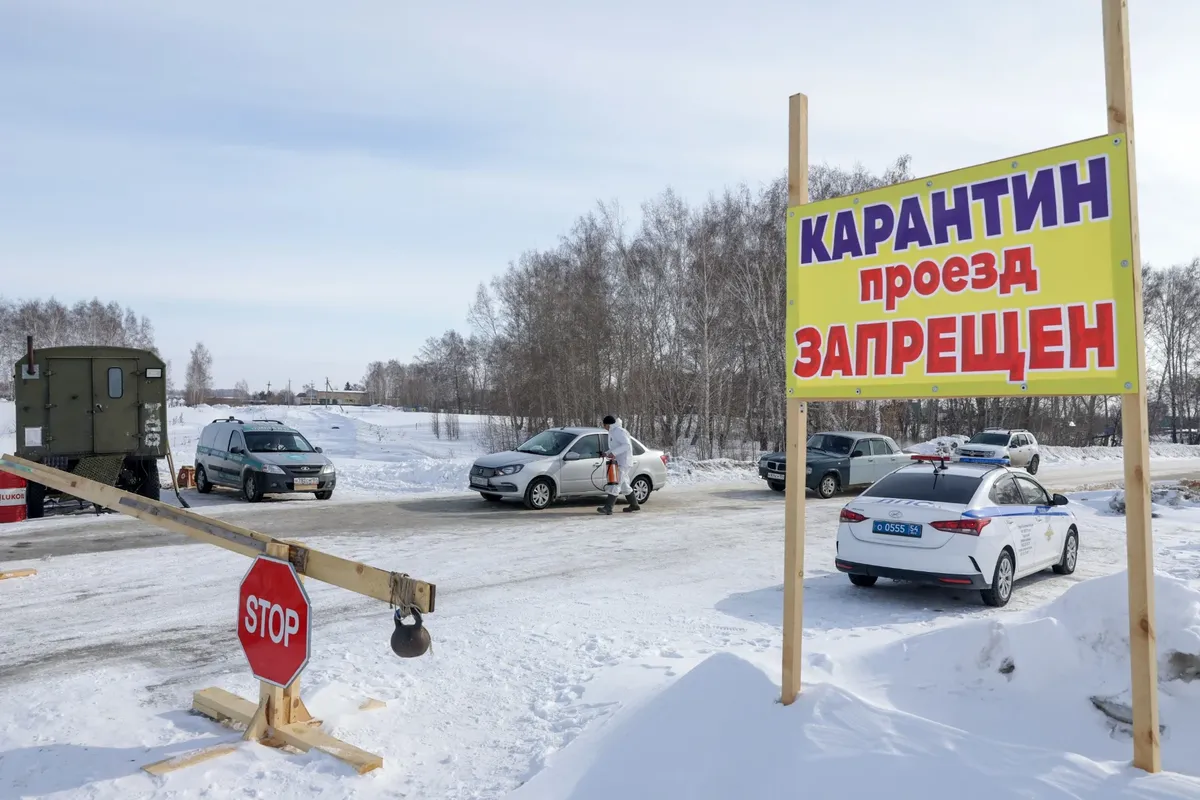
There were no anomalies in Siberia, there was just really a lot of snow, but this too can hardly be called an anomaly. And there is a lot of it nowadays everywhere, not only in Western Siberia. Roe deer cannot reach the grass, foxes cannot reach mice. Foxes come out to people, the other day a roe deer, running through the city of Nazarovo (west of the Krasnoyarsk Territory), jumped, breaking a window on the first floor, into a pensioner’s apartment and ran there for some time. It is the migration of wild animals in search of food that explains the sharp increase in rabies outbreaks. For example, in the Altai Territory alone, 31 have been registered since the beginning of the year. Including in Barnaul (regional center), Belokurikha (resort). In the Novosibirsk region since the beginning of the year - 42.
Versions about the economic background of the emergency (farmers are eliminated as competitors to agricultural holdings, etc.), although they are now most actively discussed in chats and in comments on Zen, do not stand up to criticism. Once again: there is nothing unusual in the emergency itself, it happens; There are unusual failures in the response of local authorities. But no intent is visible behind this. It's just the way things are. Objectively. Indeed, what could be more objective than the “genetic code,” as officials have been fond of putting it for some time now? More objective than the genetics of the descendants of peasants? And the genetics of the other side, the “progressive” one, with its unchanging attitude (actually, judging by the fruits, hatred) towards the archaic way of life of dark people on their land.
There were no more peasants, no more collective farmers, no more farmers. Will there be no farmers? People are driven to cities to fit into certain structures, under supervision.
This is in line with the general trend of decreasing freedoms and increasing “security”. In the general trend of Russian development. Closing of schools and hospitals in rural areas - optimization, abolition of unnecessary links (village councils, town councils, district councils) - reform of local self-government, all this has been going on for a long time and consistently. And when the “cosmonauts” went home, there was no one to object to them.
People are not needed, especially with their own baggage train, with a house, with graves, with animals, cows and cats, with their horizontal connections, numerous relatives, any beliefs and knowledge. People are superfluous.
Mutation race
Some things have to be done without asking public opinion (especially if its existence - both opinion and society - is in big question). Animals are slaughtered if they pose a danger to humans, and treatment does not guarantee success or for some reason is impossible or there is no time for it, etc. At the same time - not just today, but a long time ago - certain protocols of action have been developed. It is advisable that this does not happen in front of children. With the presentation of comprehensive papers. Regulatory acts on the introduction of emergencies and quarantine cannot be secret, since they affect the rights and responsibilities of citizens. When seizing livestock, a certificate must be issued. There must be adequate payments. Well, minimal explanations (at least a diagnosis).
The population did not expect anything fantastic from the authorities; no one demanded, as with the destruction of the entire mink population in Denmark (during the Covid pandemic), debates in parliament and measurements of public opinion. Then, by the way, they also talked about a mutated coronavirus that is transmitted to humans, but later the Danish government admitted that the decision was made without legal grounds.
We, of course, are not in Denmark, we don’t need debates in the State Duma, and we don’t need polls, but we are talking about such primary things, the foundations of life, that in any country people have the right to hope for elementary order in such matters. Because this happens - when the medicine turns out to be more destructive than the disease.
Schmidt, quoting from TASS: “Algorithms for interaction between the state veterinary service and government authorities will be revised to prevent the things that happened.”
Mutation of protocols and damage to response methods are worse than mutation of the pathogen.
Why this happens is not a question of microbiology, but rather of politics. The answer is - officially - no.
But everyone knows him.
The Kazakh authorities are vaccinating all livestock in the Pavlodar region, which borders the Novosibirsk region. The media of Russia and Kazakhstan write about this with reference to Deputy Prime Minister Kanat Bozumbayev. Some media from a neighboring country report urgent vaccination of all livestock in Kazakhstan.
The name of the infection is not specified.