
Translated material
From Stalin to SVO
At the 98th year of his life, Patriarch Filaret of Kiev, cursed by the Russian Orthodox Church and heroized in his homeland, left this world

Patriarch of Kyiv Filaret. Photo: Zuma TASS
The middle of the current Lent was marked by significant, truly symbolic losses for the Orthodox world. One after another, the two oldest patriarchs, who had passed a significant part of their earthly journey together, under the same historical conditions, left this world.
On March 17, at the 94th year of his life, Catholicos-Patriarch of All Georgia Ilia II died, and on March 20, at the 98th year of his life, Patriarch of Kiev Philaret, Hero of Ukraine. The first was generally recognized in world Orthodoxy and “canonical”, the second was almost rejected and a “schismatic”. This is probably why the life of Filaret, who managed to both serve as a temporary primate in the Russian Orthodox Church (patriarchal locum tenens in 1990) and receive anathema (in 1997), is filled with drama. His biography is a chronicle of the tragedy of Orthodoxy in the 20th century and attempts to find a way out of it in the 21st.
Mikhail Antonovich Denisenko, as he was called in the world, was born on January 23, 1929 in the village of Blagodatnoye, Amvrosievsky district, Donetsk region, which in August 2014 came under the control of the DPR. His family was not distinguished by active religiosity: his father was a miner, and his grandfather, a simple peasant, died during the famine of the early 1930s, which was especially severe in the rural regions of Donbass.
As Filaret himself admitted, the death of his father at the front in 1943, in fact, turned the future patriarch to faith: “The question arose before me: if my father does not exist, and I love him, then what, do I love an empty place? Is it possible to love the empty, non-existent? No". So, at the age of 14, he firmly decided, out of loyalty to his father, to take the path of serving the church, which happily coincided with the turning point of Stalin’s policy towards the church, when the dictator decided to “recreate” a completely controlled church structure.
In the minds of the young and then mature Filaret, sincere religiosity was always combined with civic patriotism and a willingness to serve the authorities not out of fear, but out of conscience.
Even after becoming an active supporter of Ukrainian independence, until the end of his life he refused to publicly repent of his collaboration with the Soviet regime, arguing that cooperation with the KGB was a condition for the existence of the church, “and the authorities knew that I would never betray my Motherland.”
Filaret’s agent pseudonym, Antonov, coincided with his patronymic, and he did not deny that he used this pseudonym.
The newly converted young man had minimal experience of confrontation with the Soviet system: at the age of 15, he was briefly expelled from school for preaching the faith among his classmates, then, as a villager, they did not want to give him the passport necessary to enter the seminary. The issue was resolved by 500 rubles provided by the local church elder.
Contrary to the rules, Denisenko was accepted into the Odessa Seminary before reaching adulthood, in 1946, and even immediately into the third grade, so that already in 1948, at the age of 19, Mikhail became a student at the Moscow Theological Academy - the youngest. By the way, in Odessa the future patriarch had a fiancée, Zhenya Rodionova, who rejected the “future priest” for the sake of some Komsomol worker. True, the romantic story did not end there, and we will return to it later.
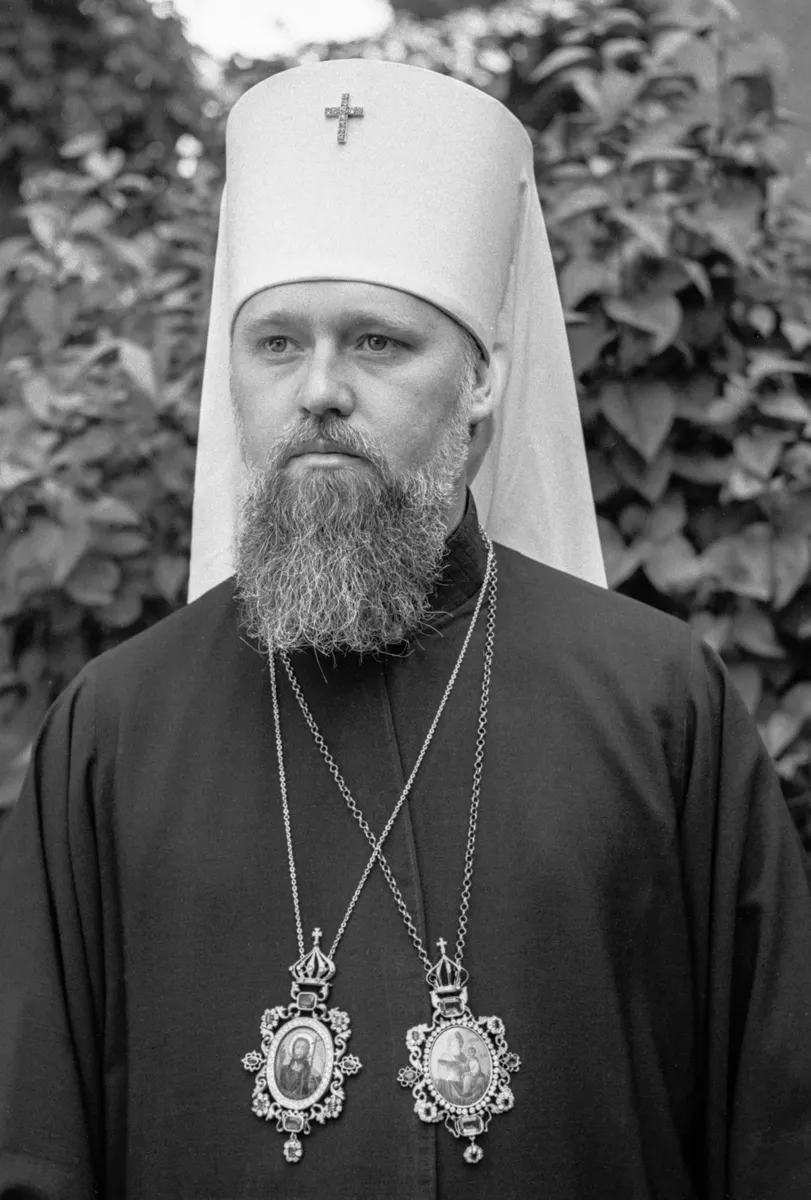
On the New Year of 1950, a 20-year-old young man was tonsured a monk at the Trinity-Sergius Lavra, and he immediately received the prestigious position of caretaker of the patriarchal chambers of the monastery, which brought him closer to Patriarch Alexy I. He quickly ordained his novice as a hieromonk, and after graduating from the academy in 1952, Filaret became its teacher and acting. dean of the Trinity-Sergius Lavra, received the title of associate professor, and became abbot. Around the same years, a cleric with great career prospects was recruited by the GB.
And then, having learned about his rapid career, the same Zhenya Rodionova came to the Lavra, regretting her rash choice of groom. After Filaret was transferred to Kyiv in 1958 with his appointment as rector of the Kyiv Theological Seminary and manager of the affairs of the Ukrainian Exarchate of the Russian Orthodox Church, they began to live together, and then children appeared who were declared adopted.
The issue of Filaret’s personal life is very complicated: it was the central topic of discussion at the 1992 Council of Bishops of the Russian Orthodox Church, shortly after which the “Filaret schism” occurred. According to the recollections of eyewitnesses (the meetings of that cathedral were closed), Filaret admitted that he lived in the same apartment with a woman “like brother and sister,” recalling that many present at the cathedral live with young men, and not always as brothers.
After this, the issue of condemning Filaret “for violating monastic vows” was dropped, and Russian propaganda returned to it only in 2018, against the backdrop of the Ukrainian Church headed by Filaret receiving autocephaly from the Patriarchate of Constantinople.
Evgenia Petrovna, who gained a reputation as the formidable “Mistress of Kyiv”, influencing the appointment of bishops in Ukraine, died in the late 90s, and then Filaret, who had already become Patriarch, served funeral liturgies for her for 40 days in a row...
Evil tongues attributed the saying to Filaret: “For the KGB I am married, but for believers I am a monk,” but he took the real secret of his personal life with him into eternity.
During the era of “Khrushchev’s persecutions,” the Kyiv Seminary was closed, which was marked for Filaret with a new career takeoff. In February 1962, he became Bishop of Luga, vicar of the Leningrad diocese, which a year later was headed by Metropolitan Nikodim (Rotov), the most active hierarch of the Russian Orthodox Church of that era and mentor of the future Patriarch Kirill.
For 15 years, Philaret and Nikodim worked together in the field of “external church relations” - in the World Council of Churches, the Conference of European Churches, the Christian Peace Conference, in the Vatican, etc., carrying out very delicate tasks from the competent authorities. Already at the age of 33, Filaret became the exarch of Central Europe, and then the bishop of Vienna and Austria, and later headed the Russian Orthodox Church commission on issues of Christian unity - the main ecumenical body of the Moscow Patriarchate.
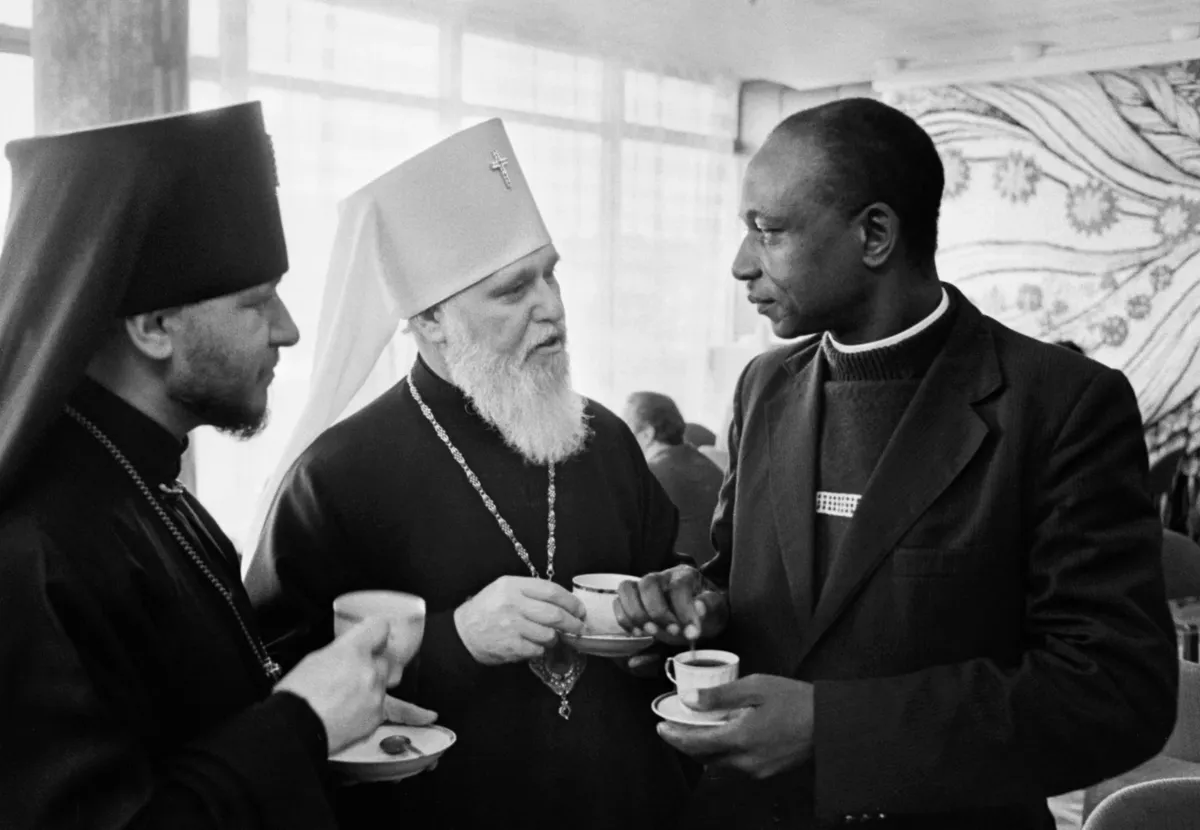
In 1964–1966, Filaret was the rector of the main educational institution of the Russian Orthodox Church - the Moscow Theological Academy and Seminary, and on May 14, 1966, he was appointed to the Kyiv department - exarch of Ukraine. Thus, he occupied this chair for almost 60 years, although the last 34 of them are considered “schismatic” by the Russian Orthodox Church.
In general, Filaret turned out to be the most senior hierarch of world Orthodoxy by consecration: his episcopal service was 64 years. However, his status is the subject of a dispute between the two main centers of world Orthodoxy: the Moscow Patriarchate deprived Philaret of his rank, and the Patriarchate of Constantinople (aka the Ecumenical) recognized this deprivation as illegal.
Filaret’s canonical and human drama coincided with the history of the collapse of the USSR and the restoration of Ukrainian statehood. When in 1988–1989 the Greek Catholic (Uniate) and autocephalous (national Orthodox) churches, driven underground and into emigration by the Soviet regime, began to revive in Ukraine, Filaret, as exarch of the Moscow Patriarchate, spoke out categorically against them and used all his connections in the party apparatus and state security to prevent “alternative” churches from being registered. As a result of this policy, the process of “returning to the union” of churches that Stalin forcibly annexed to the Russian Orthodox Church in the 1940s in the western regions of Ukraine acquired a landslide character, accompanied by violent excesses.
Despite all the growth of Ukraine’s national self-awareness, the process of democratization in Kyiv lagged behind that in Moscow, and, going to the Local Council in 1990 after the death of Patriarch Pimen, Filaret was confident (having received guarantees from curators from the Central Committee) that he would become the next patriarch of the Russian Orthodox Church. Filaret was already a patriarchal locum tenens, and according to the practice that developed in Soviet times, this automatically meant election as patriarch. But perestroika made its own adjustments: the 1990 council was held with minimal control by the authorities and the KGB, voting for the patriarch at it was secret, alternative and took place in several rounds.
The real sensation was that Filaret received only 66 out of 316 votes. Alexy (Ridiger) became Patriarch with 139 votes, and Filaret, during Alexy’s enthronement, whispered to his vicar: “Before us is the last patriarch of the united Russian Church.”
Already in October 1990, Alexy II granted independence and independence to the former Ukrainian Exarchate; it became the Ukrainian Orthodox Church (UOC), only symbolically dependent on the Russian Orthodox Church. After the declaration of independence of Ukraine, in the fall of 1991, the UOC cathedral in Kyiv demanded complete autocephaly from Moscow, and the issue seemed almost resolved, until at the beginning of 1992 the scales of history began to tip in the opposite direction. The Moscow Patriarchate agreed with three bishops of the UOC that they would withdraw their signatures from the appeal for autocephaly; their conflict with Filaret began, the “war of incriminating evidence”, which ended with an attempt to try him at the Moscow Council in April 1992. “I walked through Golgotha at the cathedral,” said Filaret, returning to Kyiv. He refused to fulfill his promise to the council to resign and to convene a council of the UOC to elect a new primate - a new split in the Ukrainian Church was a foregone conclusion.
At first, quite a significant number of bishops sided with Filaret, including such heavyweights of the future UOC-MP as Lazar of Crimea and Hilarion of Donetsk. They held a fairly representative press conference in Kyiv. But Moscow, blackmailing them with incriminating evidence, gradually achieved their departure from Filaret, who was left with only two bishops - Andrei Lvovsky and Jacob Pochaevsky. After this, with the blessing of Alexy II and contrary to the charter of the UOC, an extraordinary Ukrainian council was convened in Kharkov, which dismissed Filaret and elected Vladimir (Sabodan), who was then serving outside Ukraine, in Rostov-on-Don, as the new primate.
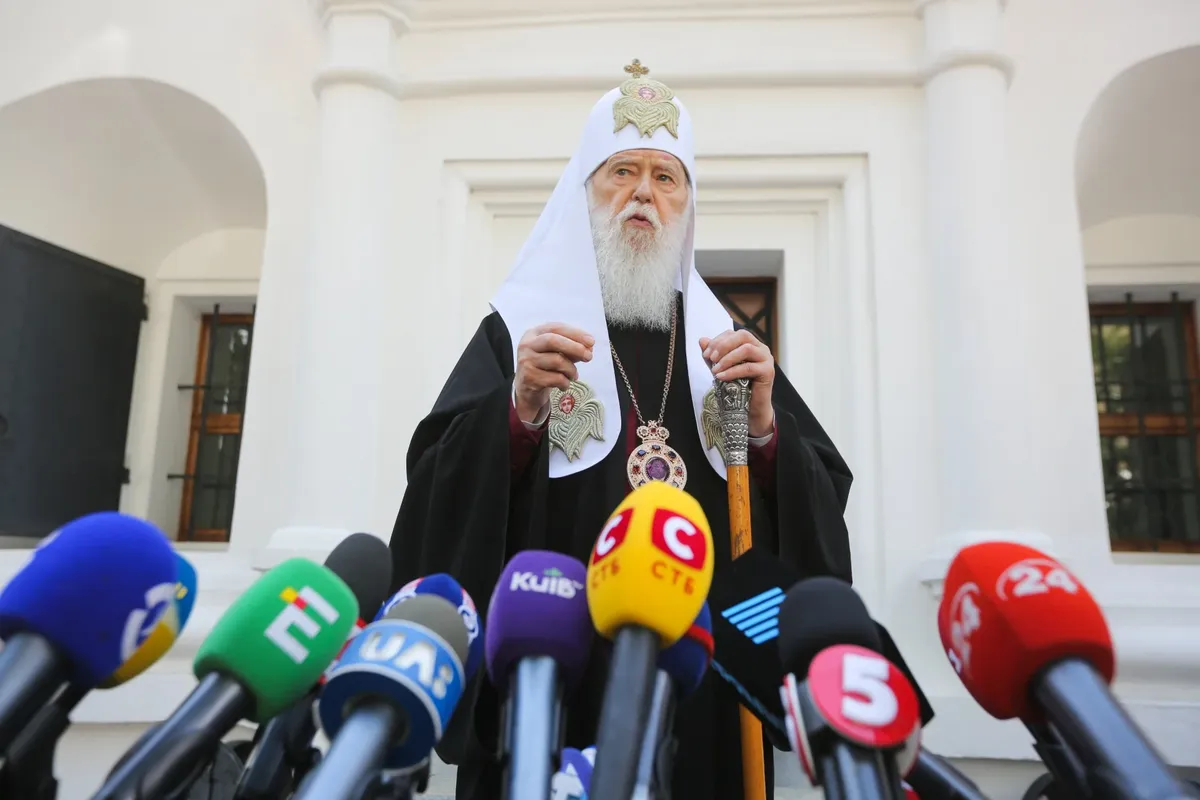
This was a double violation of the church charter and gave Filaret and his supporters legal grounds not to recognize the decisions of the Kharkov Council. Without waiting for defrocking at the next extraordinary council in Moscow in June 1992, Filaret united the remnants of the UOC loyal to him with the Ukrainian Autocephalous Orthodox Church (UAOC), which was then headed by Patriarch Mstislav (Skrypnik), who lived in America, a former adjutant of Simon Petliura. The united structure received the name of the Ukrainian Orthodox Church of the Kyiv Patriarchate (UOC-KP) - with this brand Filaret lived to death, although the current Ukrainian authorities do not recognize the UOC-KP (it was deregistered in 2019 due to the formation of the “canonical” Orthodox Church of Ukraine - OCU) on its basis.
With the light hand of Leonid Kravchuk, with whom Filaret was friends, the UOC-KP got the assets of the UOC, including the Vladimir Cathedral and the residence on Pushkinskaya Street.
Rumors then circulated for a long time in the Ukrainian press about the laundering of funds of the Communist Party of Ukraine controlled by Kravchuk through the accounts of the Kyiv Patriarchate...
After the mysterious death of the second patriarch of the UOC-KP Vladimir (Romanyuk) in 1995, Filaret finally becomes patriarch and dons the white kukol - the headdress of the Moscow patriarchs. Part of the church does not recognize this election, remembering the KGB-Soviet past of the new primate, and is reviving the UAOC.
Thus, until 2018, Ukrainian Orthodoxy remains “threefold”: the numerically dominant UOC-MP, recognized by world Orthodoxy, but dependent on Moscow; relatively numerous (up to five thousand parishes) UOC-KP, not recognized by other churches; and the small UAOC, which especially emphasizes its national-Ukrainian character.
Only in 2018, on the initiative of Petro Poroshenko, who managed to come to an agreement with the Patriarch of Constantinople, who condemned the events in Crimea and Donbass, the UOC-KP and UAOC united, two bishops of the UOC joined them, and a new “church of the majority” appeared - the OCU, recognized by Constantinople (he provided it with the “Tomos of Autocephaly”), but not recognized Moscow.
Filaret becomes an “honorary patriarch” in the OCU (Constantinople insisted on the abolition of the patriarchate in the OCU), and his young viceroy, Metropolitan Epifaniy (Dumenko), became a nominal (as Filaret believed) primate. However, Epiphany’s young team pushes Filaret out of power, he slams the door and announces in June 2019 the re-establishment of the UOC-KP. Filaret denounces the OCU that instead of its previous dependence on Moscow, it decided to become dependent on Constantinople, and the Ukrainian Church, as one of the oldest and largest in the world, deserves more - its own patriarch! Among other things,
the calculation was made for the arrival of a new president, Zelensky, who at that time actively criticized all the achievements of Petro Poroshenko, including receiving a tomos from Constantinople, which the new president, in his characteristic manner, called a thermos (later, however, he apologized for this).
The calculation did not come true; the aging (he was already over ninety) Akella-Filaret missed. The recreated UOC-KP scraped together only a few dozen parishes, but Filaret did not give up until the last day - his stubbornness and willpower can be envied. Having lost his state registration, he continued to fight as best he could, retained the cathedral and residence in the capital and never ceased to call for the unification of all Ukrainian Orthodoxy around the Kyiv patriarchal throne.
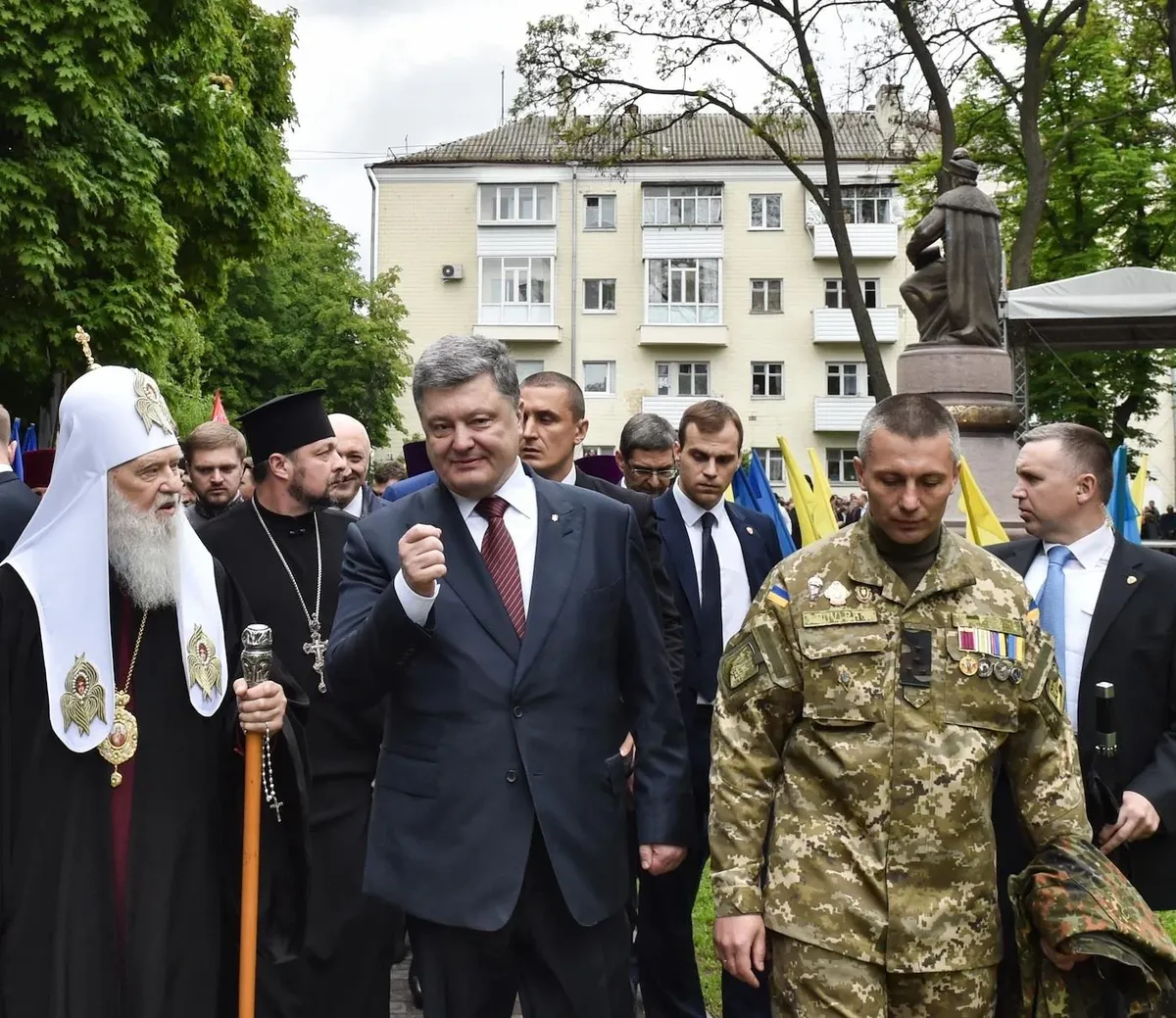
Filaret can hardly be called a convinced nationalist, but he did not doubt the victory of Ukraine for a minute. The refrain of his sermons in recent years has been the phrase “the truth is on our side, and God is with the one on whose side the truth is.” Demonstrating the strong traits of his character, Filaret continued to serve in Kyiv, even when the line of military contact lay a few kilometers from the cathedral.
On the day of the 30th anniversary of his patriarchal enthronement, in October last year, he signed a will in the altar of the Vladimir Cathedral in Kyiv, prohibiting the OCU hierarchs from performing his funeral service. The last time he came to his temple was at Christmas this year, and the last time he appeared in public was in early February - it was a meeting with Yulia Tymoshenko, who again declared her presidential ambitions.
At the end of January, Filaret made an unexpected visit to the residence of his main competitor, the Primate of the OCU, Metropolitan Epiphanius, in St. Michael’s Golden-Domed Monastery. Filaret spoke with difficulty, but it seemed that he was praising Epiphanius. Ill-wishers immediately stated that the elder does not control his actions, and the OCU wants to return him to its fold at any cost. It looks like Philaret will be buried twice - by the remnants of the UOC-KP in the Vladimir Cathedral and by the bishops of the OCU in the Golden-Domed Monastery. But the Kyiv Patriarchate does not have any prospects for independent existence without Filaret - the official website of this church is no longer available.
A figure of such magnitude has gone that it covers the size of an entire church jurisdiction.
This happens in church history, although rarely. Of course, Filaret, like any person, had something to repent of, but the leadership of the Russian Orthodox Church would have acted nobly by admitting some of its injustice towards him. Alas, in the current political conditions we will not see such nobility.