
Translated material
"Obviously this is crap"
Why the anti-Putin Oscar documentary is harmful
The film “Mr. NOBODY against Putin” about how brainwashing is done in Russian schools, in theory, should not have caused a holivar and shitty rain. Especially in the opposition environment, where no one argues about the harm of state propaganda and militarism. But after the film’s director, Pavel Talankin, a teacher who buried the discs with school contents and then took them out of Russia, received one of the main awards in the film industry, everyone had a fight. The main complaints of those who did not like the film were that they made a one-sided picture to please the audience in the West. Theses are flying in pursuit that the plot is staged, and Talankin was helmed by director David Borenstein, who pointed out how to make it more dramatic. Why the film was so crap by those whose political views should have made it the other way around, No Future was told by punk documentarian Sergei Erzhenkov, who in his films shows the naked reality of the bottom and underground and knows about life outside of Moscow not only from the movies.
This movie is complete crap. This is not about the stated theme, but how it is performed, how it is filmed, what the message is there. It is obvious to anyone who has seen it that this is shit. But everyone continues to play some kind of performance, depending on the chosen roles, depending on the chosen political position, whether they like this movie or not. But if you simply abstract from the political context and look at this movie with open eyes, then it is simply very poorly made. And what is the idea there? Okay, propaganda is bad.
This is not a documentary, but a feature film that mimics a documentary. This is a staged film, and for two thirds of the film we see how a professional cameraman films Pavel Talankin. You can see in this film what is called the director's hand. The voice-over text, which is then spoken by Pavel Talankin, was written by an American screenwriter, most likely, because his entire speech gives the impression of a reverse translation. And even the speech we saw at the Oscars was most likely originally written in English. I believe it was a speech written by an American producer, as was the entire film. It is obvious that they wrote the script for this film in the first frames. My complaint is that Pavel Talankin, although he is stated as the first director, is not the director of this film at all. He is an actor in this film, who carried out the instructions of the director who shot this film for the BBC.
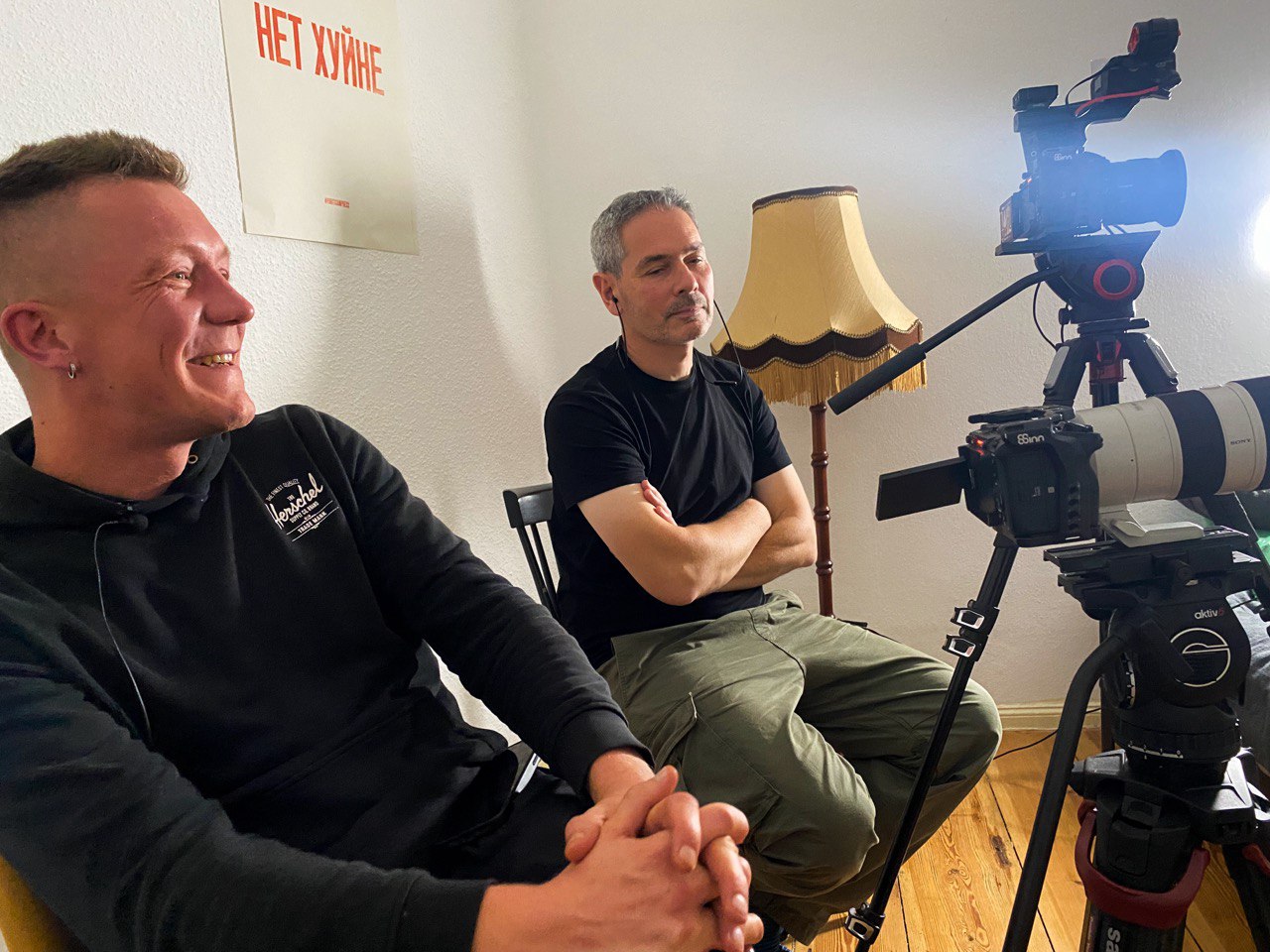
There are a lot of stretches there. With these hard drives [with footage from the school, which Talankin buried in the garden in the story], it’s completely fucked up. The Western viewer looks and thinks: “fuck, in this Karabash, like in Africa, there is not even the Internet - people bury their hard drives.” Well, this is absolute shit. The Internet in this Karabash is faster, I’m sure, than fucking all these people who watched this film. Western, I mean. Any person who undertakes to film for the BBC undertakes that at the end of the shooting day he will send all the filmed materials via the Internet. These are security protocols. Even I, working on the poor Dozhd TV channel, traveling to regions more dangerous than Karabash, such as the DPR, spent every evening sending all the materials over the Internet. And in the film, he digs up hard drives that he is going to smuggle across the border - this, of course, was the director’s move that was pre-written. Talankin was told that he must, in order to send shivers down the spine of every Western viewer, [film how] somewhere in Karabash a poor teacher, in order to bring out these valuable materials, buries them under a tree.
I could forgive the documentarian and director of this film for some staged shots. But if only he had given a slightly more complex picture of Russian reality. However, we see that even against the will of the screenwriter, this film breaks through the ambiguity and complexity of what happens in an ordinary average Russian school. Then you see these children, for whom this propaganda has flown into one ear and out the other. Here I refer you to Alexey Yurchak’s wonderful book “It Was Forever Until It Ended” - how Soviet propaganda worked. It had no effect, in fact, on people. People lived parallel lives. Yes, it was necessary to observe some rituals, school lines, May Day demonstrations. People worked this out so that people would simply leave them behind. But at the same time, they sat and tuned into the Voice of America, listened to the Beatles and lived a completely normal, full life. Just like modern teenagers, such as we saw in Karabash. But the reality that was created in the film, it seems to me, greatly simplifies everything.
For Western inexperienced viewers who know about Russia only from this film, a false picture will emerge. And then - the domino principle. Western politicians [who make decisions regarding Russia] also form their point of view thanks to films like this. You cannot make the right decisions based on false premises and false facts. If there is an error somewhere in the equation, then you will not get the final version correct. That is, people who accept sanctions against Russia will do so under the impression, relatively speaking, of films like these. <…> You need to be very careful with this. Not all ends justify the means. To achieve even a good goal, as it seems to all enlightened humanity, it is necessary only to use honest methods, and not such false ones.
Documentary films must be made from the heart. You must not know the ending of your documentary. The hero should lead you, and you should not make this movie according to pre-prepared patterns. But our documentary filmmakers, I think, having seen this worldwide success of Pavel Talankin, the next time they choose a topic for their documentary and apply for grants, they will think several times about what to film and what is in demand among Western audiences.
An independent documentarian has no chance. If only he overcomes all other feelings, the unconditional love for pure, unalloyed art, for documentary cinema, in fact. Only if, based on moral and volitional qualities, he, spending his time, his personal savings, will take on this movie, which will be doomed to a very narrow limited circle of viewers, to several tens of thousands of views. Of course, there will be those who really love cinema and do not make films in order to win the next festival and receive some kind of grant. But there will be fewer and fewer directors like this, because we understand that this will not feed you either in exile or in Russia. Unfortunately, documentary filmmaking, auteur documentary filmmaking, is disappearing from the scene, and in its place such large projects are appearing, which, as a rule, are supervised by a large corporation like the BBC. That is, these are full-fledged productions; it can no longer even be called, strictly speaking, a documentary film; it is rather a feature film, which, according to formal criteria, can be classified as a documentary film.
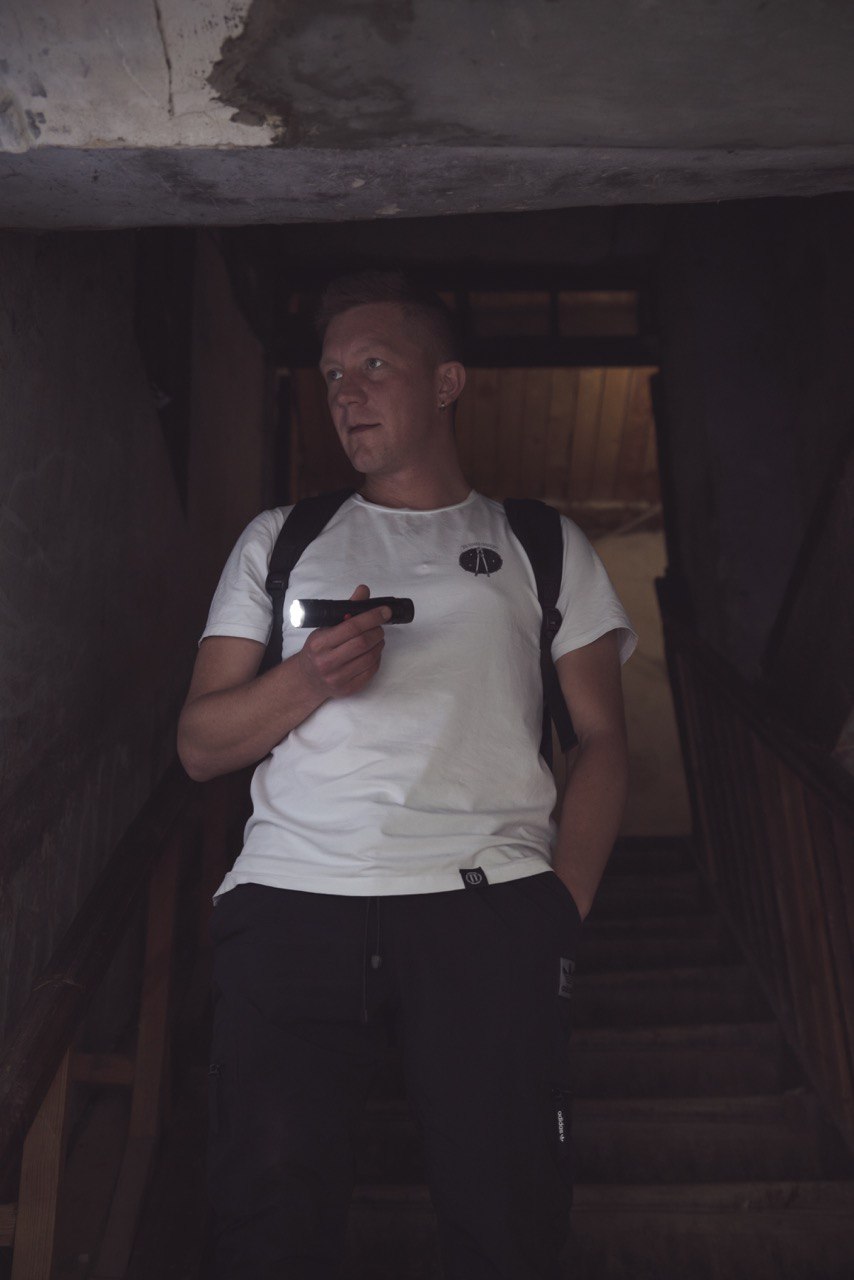
A good documentary should bring together groups of people who could, under any circumstances, fight with each other. Real cinema, ambiguous, attracts the attention of both supporters of one point of view and another <...> This is good, in my opinion, specifically for art. This film by Talankin is not good for art. Because it gives birth to only one thought. It further deepens the ditch that exists between these two irreconcilable groups of people. Documentary cinema should, as it were, give rise to a whole swarm of sometimes mutually exclusive, contradictory feelings and thoughts. This film gives rise, at best, to one half-thought. Because everything is clear in this film. And that's why it was filmed. This is really fast food. This is documentary fast food, so that people who initially sympathize with Pavel Talankin admire this film. And so that people from among the Russian propaganda, who are initially opposed to this film, pour shit on it. Well, that is, it does not bring different audiences together.
For some reason, the Russian opposition agrees with the opinion of the Western viewer. Although I admit that among them there are probably people who have not traveled beyond the Garden Ring and really think that Karabash is some kind of darkness, and only zombified people and children walk there, the personification of Mordor, or some kind of repetition of North Korea. It is infinitely far from North Korea, and the reality of these provincial small towns is much more colorful and richer. It cannot be said that the 30,000-strong Kasimov or, I don’t know, the 20-30,000-strong Karabash completely supports the war only on the grounds that several hundred people from there left for the Northern Military District. Or just because someone displays flags or puts a Z sticker on their car. It’s just difficult for people to understand; they haven’t been in a reality where there are jobs, but this is only in the budgetary sector. You cannot get away from this pressure from the state, which forces you to put on these stickers, forces you to participate in parades and military parades. It is good to condemn these people, being a free and rich Westerner, but none of these people were in this reality, in the shoes of these people.
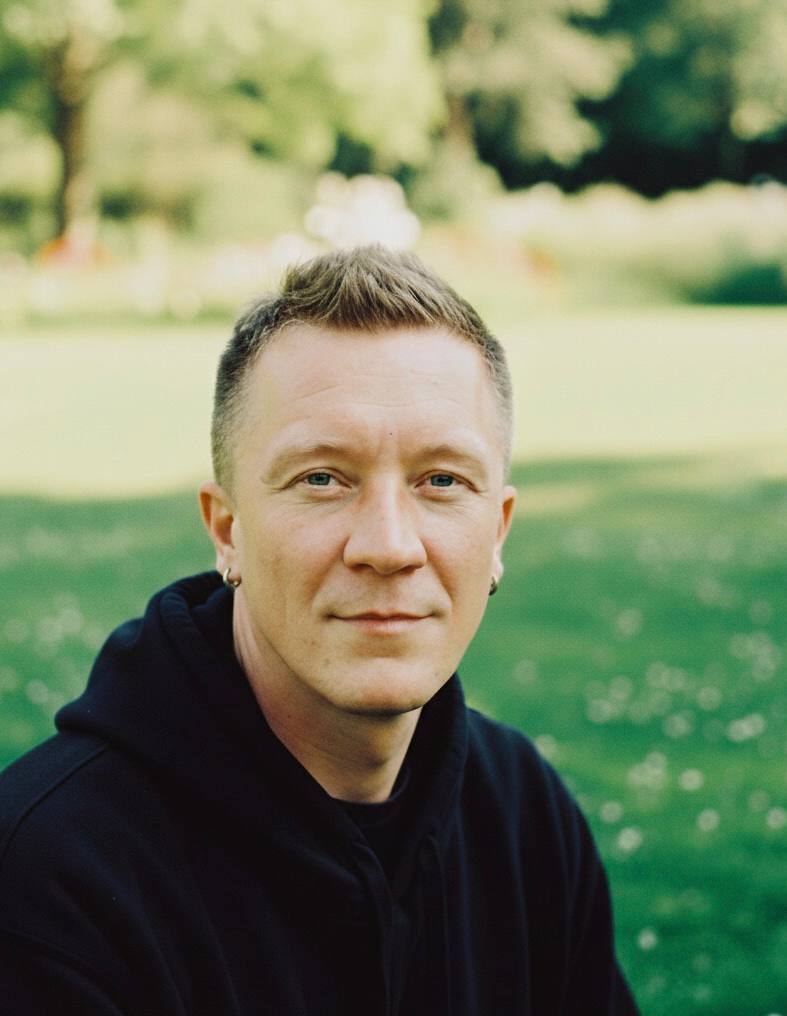
I am grateful, in fact, despite my sharp criticism of this film , for raising this topic and intensifying the debate around school education in Russia. Since the beginning of the war, colossal changes have occurred in schools over these four years, which no one has reflected on. At least we haven't seen a single film on this topic. There have been attempts to film reports about how propaganda works in schools. But this theme has never sounded so loudly before, either in texts or, especially, in films. <…> I would really like to see some kind of alternative movie on this topic, but with a broader view of the problem, not as narrow as it was in Talankin’s film.
XXX
To publish materials more often, we need your donations. We will spend them on fees for authors, photographers and illustrators. Below are opportunities to donate any amount for the future No future.
You can give us some money or sign up for a regular donation in rubles
You can donate currency to us through our Patreon