
Translated material
Mooing is a sign of disagreement
In the Novosibirsk, Penza, Samara regions and Transbaikalia, veterinarians, security forces and municipal officials come to private homes and destroy livestock. Everything is justified as a “particularly dangerous disease.” However, no documents are presented that would make the killing of animals legal and justified. To date, thousands of cows have been destroyed. “Such cases” tell from the scene how people in the Novosibirsk region are being deprived of their only opportunity to feed their family
Behind the village of Chernokurya there are fields covered with snow. The day is blindingly sunny, the sky is bright blue. Thick black smoke rises over the white field and stretches like a ribbon along the village. These are 164 cows, three calves and 18 rams that belonged to the Polezhaev family and were killed by the authorities. For better flammability, the bodies of the animals are covered with rubber tires and freshly cut timber. The field, turned into a cattle burial ground, was the arable land of the Polezhaevs, where they grew grain for cows.
At the same time, at the Chernokurya House of Culture, a meeting of village residents with the head of the Karasuk district, Vyacheslav Kulakov, takes place. Mostly men are present. Those sitting in the auditorium are very angry. Others, on chairs near the stage, are silent.
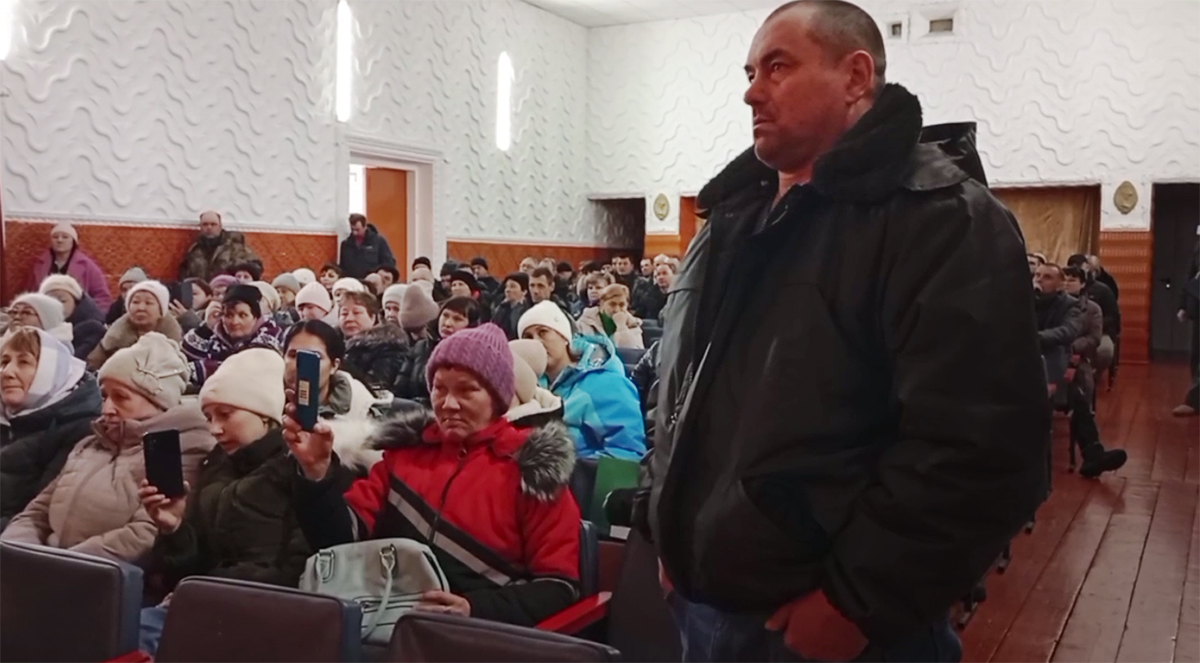 Meeting with officials at the House of Culture in the village of ChernokuryaPhoto: screenshot from a video of local residents
“The disease was first identified in the Cherepanovsky district of the Novosibirsk region,” reports a respectable man, chairman of the Association of Peasant Farms of the Novosibirsk Region, Alexey Salnikov. — The animals were vaccinated, but, as it turned out, not against the strain that affects the region. But we didn’t have a vaccine for this strain in our region. They urgently began to order it and revaccinate livestock. District veterinarians advised large farmers to purchase the vaccine themselves as quickly as possible. A budget had to be allocated for the second vaccine, and this takes time. Therefore, for money - for efficiency. We purchased two and a half thousand doses. I personally gave 75 thousand rubles - 480 heads were pierced. In addition, in the sector of our village, another 80 cows were vaccinated in private farms. The rest was sent to the veterinarian. So far we haven’t even asked questions about a refund, just to save the situation...”
“And I have nothing left to save,” throws Konstantin Polezhaev. “My animals, 30 years of my work, my whole life are burning there in the field.”
People and clubs
The first videos about the destruction of cows appeared on the Internet in early March from the Bagansky district of the Novosibirsk region. A mother of many children enters her yard, where her cow is convulsing on the ground; the animal is held by the neck by a man in a red and blue uniform. A woman films the death of her only cow on her phone and cries. People try to get an explanation from the veterinarian. She answers: “A dangerous disease.” When asked which one, the doctor reacts irritably: “What’s the difference!” People demand documents from the veterinarian, from the police accompanying her and from officials, and they are told: “We have an order.” “But there are criminal orders!” - a woman from the crowd objects. They brush her off: “This is the governor’s order! Order! And the police have orders. If they are ordered, they will come for you.”
On March 12, Novosibirsk journalist Ivan Frolov was detained for a video report about how livestock was taken away from people in the Bagansky region. The police department explained to him that an investigation was being carried out under Article 207.1 of the Criminal Code of the Russian Federation (“Public dissemination of knowingly false information about circumstances posing a threat to the life and safety of citizens”).
 Konstantin PolezhaevPhoto: screenshot from Natalia Nekhlebova’s video
Authorities have been recording cases of pasteurellosis in Siberia since the end of 2025. In Transbaikalia, a state of emergency due to an outbreak of pasteurellosis was declared at the end of November 2025. In the Altai Republic in mid-January 2026, there were 40 outbreaks and two thousand sick animals. By February 10, there were already 70 outbreaks. But on March 3, regional authorities reported no cases of the disease over the past month, and restrictions in force in the region gradually began to be lifted. The slaughter of livestock and the sale of meat were allowed. Now, according to authorities, 53 outbreaks of rabieshave been identified in the Novosibirsk region. Pasteurellosis was detected in five districts - Cherepanovsky, Karasuksky, Ordynsky, Bagansky and Kupinsky.
Nadezhda Polezhaeva is a slender woman who has been working as a primary school teacher in Chernokurye for 19 years. Together with her husband Konstantin, they developed their farm for 34 years. Everything was done mostly by just the two of us. Cows are vaccinated as planned at the expense of the state - in spring and autumn.
The Polezhaev animals were urgently vaccinated three times in February with an interval of 10 days. The last vaccination was on February 24th. Two days after the third vaccination, some cows showed signs of illness. As Konstantin says, runny nose and drooling. But after three days the animals recovered. Konstantin reported the disease to the veterinary service. Five cows were tested. The man has not yet received test results. But on March 2, workers hired by the local administration came to the Polezhaevs’ field and began digging a hole to burn the cows. And on Friday, March 13, the head of the Karasuk district, Vyacheslav Kulakov, brought veterinarians and police to the Polezhaev barns. Only Nadezhda was at home.
“I thought my heart would stop when they came for our cows,” the woman recalls. “Everything is still shaking.” There were about 20 riot police alone. It's like we're terrorists. These black people in balaclavas threw their batons out of the car into the snow, they dismantled them and formed a cordon. It's like a paramilitary regiment. I closed the curtains everywhere and didn’t leave the house...”
The street where the Polezhaevs' house stands was blocked. Filming and photography were prohibited. Veterinarians were not immediately found to euthanize the cows. One female veterinarian who was brought in became ill with her heart and refused to participate in the murder. I had to look for another specialist.
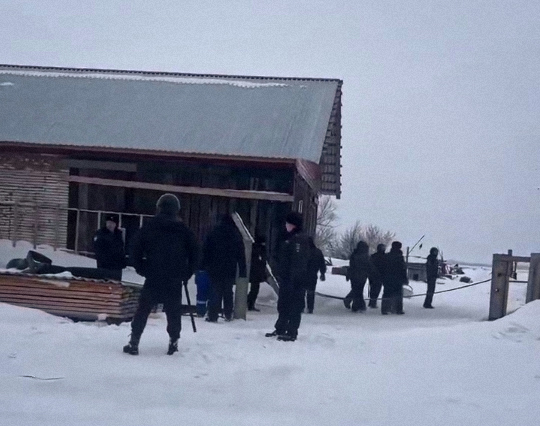 The street where the Polezhaevs' house stands was blocked by security forces. Photo: screenshot from a video of local residents
One of the village residents, with a Bible in her hands, approached the tractor, which was clearing the road of snow for the passage of special equipment to the Polezhaevs’ cowsheds. She fell to her knees in front of the tractor and started crying. The driver abandoned the car and left.
“They broke into my house when I was away, destroyed my animals, but I still don’t have any documents,” says Konstantin Polezhaev. — No act of seizure of animals, no test results. Nothing. Nobody contacted me about compensation... “A particularly dangerous disease”... But why were they all not in protective suits, but with batons and body armor? They violated all sanitary standards! On their shoes, on these clothes, they carried this “secret disease” further throughout the district, and perhaps throughout the region!”
In two weeks, Konstantin lost 11 kilograms and cannot sleep. Nadezhda shows packages of pills: “These are for blood pressure, these are sedatives. We rely only on them.”
Her husband closes his eyes.
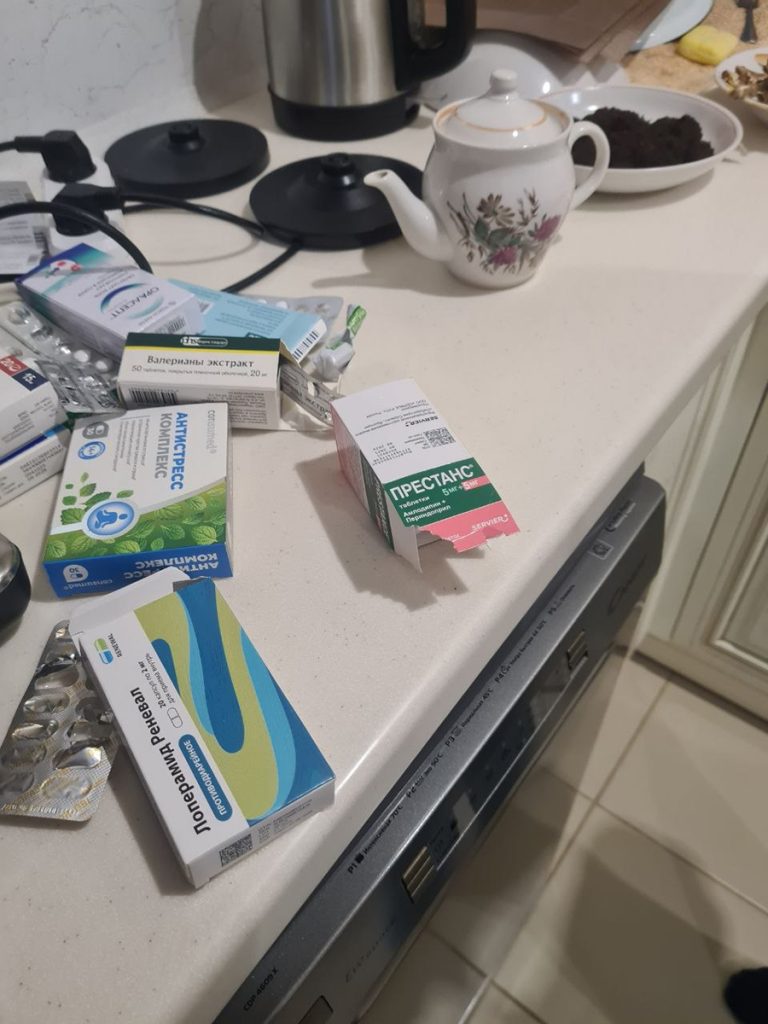 Medicines on the Polezhaevs’ tablePhoto: Natalia Nekhlebova for TD
“Why don't they talk to us? If everything had been explained to me (showed tests, an order to destroy the livestock), if everything had been legal, I would have organized everything myself... The livestock would have been euthanized quickly and humanely. And they tortured my animals for two days. And they were transported out in KamAZ trucks.”
Nadezhda still lives in fear that riot police could break into their place at any moment: “When they left, one car remained and stood next to our house all night. I saw the headlights and couldn’t sleep.”
The Polezhaevs received notification of the seizure of the cows by mail - after the animals were taken away.
“This is the work of my whole life, very hard work: every day, seven days a week, from five in the morning until late at night. — Konstantin speaks evenly, without emotion, he is very tired. — To earn money for animal feed, I also felled wood. It's hot, mosquitoes. I myself sowed my arable land with grain. We lived honestly, we wanted to save up for a decent old age. Now we are promised compensation of 171 rubles per kilogram of weight. This is funny: we sold meat for 300–500 rubles per kilogram. Everything that they took from me and burned is worth about 25 million rubles. And of course, no one will return it to me. I don't believe them."
Konstantin doesn’t want to grow and breed livestock anymore: “How can I do this? If at any moment they can come and take everything away again?!”
"Take our word for it"
Anton Dolzhenko from the village of Chernokurya is 24 years old. His family has 60 sheep. All animals were urgently vaccinated in February.
“The administration came and threatened to take away the cattle without any documents,” says the young man. “They say: “Take our word for it - there is a decree from the governor, but we won’t show it to you, trust us.” They said they wouldn't take tests. They say: “Are we going to go into all the yards and take tests?”
Decree of the Government of the Russian Federation No. 310 of May 26, 2006 “On approval of the Rules for the seizure of animals and (or) products of animal origin during the elimination of foci of especially dangerous animal diseases” states that when seizing animals, the owner must be provided with the results of laboratory tests.
In Chernokurye, notices about the imminent seizure of livestock began to be thrown into yards over the fence on March 16.
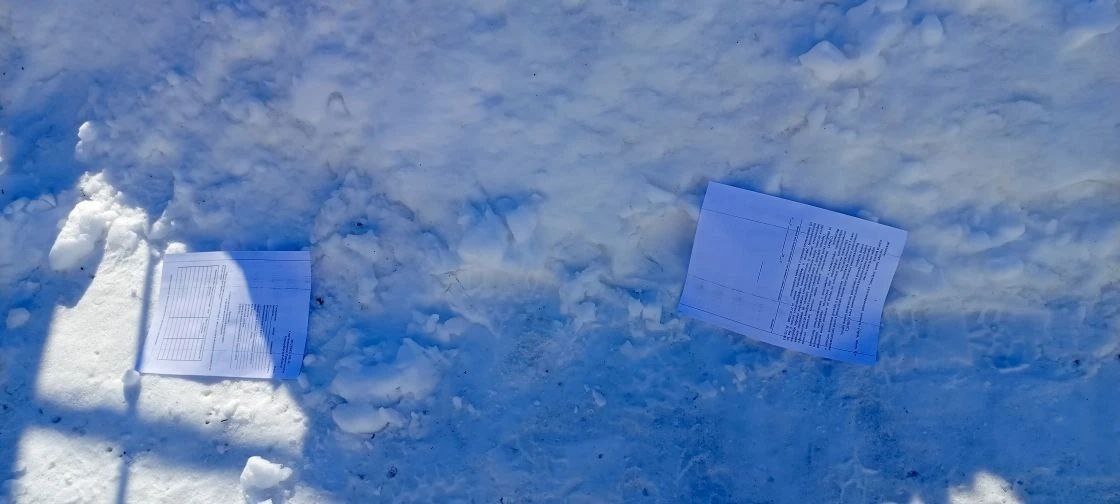 Notifications about the seizure of livestock in Chernokurye were thrown over the fence. Photo: from the personal archive of local residents
“The documents say that there will be compensation, but only if we bought livestock from farmers or from the state. We do not have any receipts or documents. We bought them four years ago and don’t keep receipts. I believe that there will be no compensation,” says Dolzhenko.
Anton is a member of the SVO . In March 2022, he was wounded and his right arm is disabled. He tried to find a job - get a job as an electrician or go to construction. But as soon as the young man strains his right arm even a little, cramps and severe pain begin. Housekeeping is the only source of income for Anton and his family.
“The tablets that helped me with seizures are no longer available in Russia this year. Now I have cramps almost once a week.”
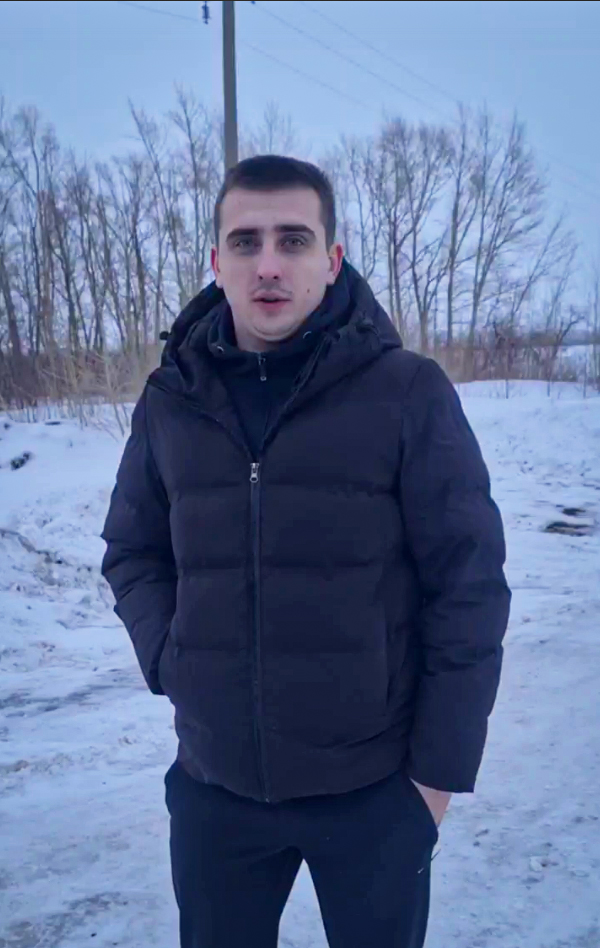 Anton DolzhenkoPhoto: Natalia Nekhlebova for TD
Anton's stepfather does not get out of bed: stage four cancer. Anton’s mother is so worried that, according to her son, she has been ill for three weeks: “She is not sleeping. Her head hurts like crazy, no painkillers help. Even if she sleeps 15 minutes a night, she has nightmares about coming and killing our healthy animals.”
Work in Chernokurye is only available on the farm, in kindergarten, school and hospital. But, according to local residents, almost all doctors at the hospital have been laid off. Livestock is the main source of income for village residents.
Anton has severe PTSD. Nightmares, anxiety, depression. It hasn't happened in four years.
“I dream about how my friends die, how shells explode under me. When you do housework, you get distracted and don’t think. All my life I dreamed of creating my own farm. Now my animals will be killed, and I don’t know what to do. I cannot get a job on a shift or somewhere else due to health restrictions. What can I do, drink myself to death?
One of the residents of Chernokurya, after learning that the cattle would be killed, tried to commit suicide.
“People don’t understand what they have to live on,” says another local resident, Denis, at a meeting with the head of the district. — We have mothers with many children with sons in the Northern Military District. And their livelihood is taken away. So people are getting into the loop. This mythical order of the governor on the confiscation of livestock for official use has not been published anywhere, they do not show it to us, but only tell about it! And it is, as they say, dated March 4, and they began digging a hole for a cattle burial ground on the Polezhaevs’ land on March 2. Is it the government that works in advance? How do you manage everything? It’s as if the authorities don’t give a damn about the Criminal Code, the veterinary code, our civil rights... They no longer have any trust! Never!"
The head of the district is silent.
Search and escape
Novoklyuchi is a small village in the Kupinsky district of the Novosibirsk region. Near the village there is a former collective farm named after Lenin, where, according to local authorities, a focus of pasteurellosis was discovered. On February 14, a quarantine was declared in Novoklyuchi. A checkpoint has been set up at the entrance to the village and the wheels of exiting cars are being treated. Locals were prohibited from exporting meat and dairy products from the village. All residents of Novoklyuchey who worked on the collective farm lost their jobs - about a hundred people. On February 20, collective farm cows began to be killed and burned. Almost immediately, pasteurellosis was discovered on the farm of ZAO Lukoshino. There, too, they killed and burned all the livestock. According to residents, about four thousand cows were destroyed in total.
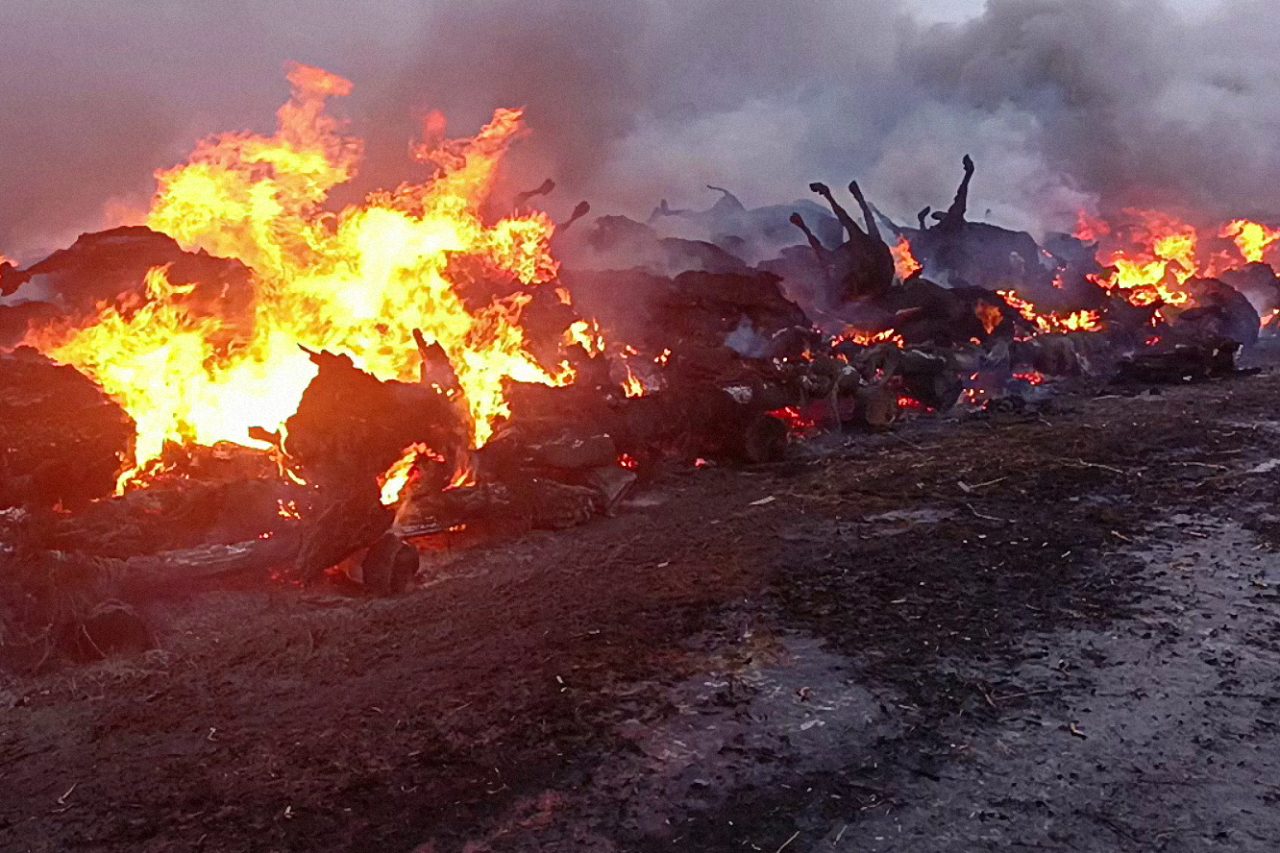 Disposal of animal carcassesPhoto: screenshot from video by Ivan Frolov
On February 26, animals began to be vaccinated in Novoklyuchi. At first they collected 70 rubles from residents for the vaccine, but then they gave the injections for free. Cows in six yards fell ill: increased salivation, runny nose. The owners reported the symptoms to the veterinary service. Then about 50 heads were taken and euthanized. People were not promised any compensation: they signed a paper on the voluntary surrender of sick animals.
“They didn’t tell us what exactly they were vaccinating against,” explains Novoklyuchey resident Elena Savelyeva, “just against a “particularly dangerous disease.” The head of the rural settlement, Vladimir Titarenko, explained that this is the only way we can save our livestock. We all know that pasteurellosis can be treated. That’s why we were shocked that the collective farm cows were burned.”
Over the course of 20 years, Svetlana Panina and her husband created a large farm: 200 cows, two camels and a baby camel.
“You get up at five in the morning and work until late at night,” says Svetlana. “Not only can’t you go on vacation, you don’t have time to go to the hospital.” Very hard physical work. Animals get sick. Sometimes little ones don’t suck milk, so they have to feed from a nipple all night. Cows have difficult births. We need to pull out the calves, pump them out..."
 Elena Savelyeva, resident of the village of NovoklyuchiPhoto: Natalia Nekhlebova for TD
On March 6, the veterinarian of the Kupinsky district, the head of the rural settlement, the head of the agricultural department of the city of Kupino and the police came to the village for a meeting. Residents invited a journalist from Novosibirsk, Ivan Frolov.
“The first thing the police did was to kick the journalist out,” recalls Svetlana, “but we fought him off. They said that this is an independent press, what right do you have?”
The veterinarian explained to the residents that an outbreak of a “particularly dangerous disease” had been discovered on Svetlana Panina’s farm and therefore it was necessary to destroy all the cows in the village. Residents were read the governor's order No. 167 on the need to destroy cows. But since the paper was for official use, they were not allowed to photograph it or pick it up. The villagers began looking for orders on the official resources of the regional government, but they couldn’t find them. They began to ask whether an unpublished document was valid at all.
“After that, they all wanted to run away from us,” Svetlana gets angry. “We caught them at the door, the men didn’t let them out, they sat them back down.” We asked the veterinarian what the signs of this “especially dangerous disease” are. All our cattle are healthy. Those who were sick, people gave it to you voluntarily. You declared a quarantine for us due to pasteurellosis - this is how it is treated, according to all veterinary standards! We don't want to put our animals on fire; we raised them from birth! Someone was crying. The veterinarian replied that he did not know what the symptoms of this disease were. “I haven’t seen it, I don’t know,” he answered.”
Then the residents of Novoklyuchey promised that they would not allow anyone into their yards. They made a collective appeal to the Investigative Committee stating that they wanted to kill the cows without any documents, and dispersed.
On March 8, the police, a veterinary service car and a tractor arrived at Svetlana Panina’s house and began clearing snowdrifts at the entrance to the barns. Residents did not appreciate such a gift for International Women's Day, blocked the path of the tractor, and forced the driver to get out of the cab. The police and veterinary service had to retreat.
The next day, a closed meeting was announced in the village. Only local residents were allowed in. Not a single journalist got inside. Even the Minister of Agriculture of the Novosibirsk Region, Andrei Shindelov, a veterinarian of the region and the head of the Kupinsky district, came. The officials repeated: all cows must be burned. And for the first time they promised people compensation - 171 rubles per kilogram of cattle weight. Residents asked to show them the test results, or at least some kind of document. A veterinarian in the Novosibirsk region responded that Svetlana Panina’s animal disease had become latent.
“We were ready to cooperate if everything was explained to us properly,” Svetlana sighs. “We don’t want the infection to spread, but talk to us normally, constructively, prove the necessity and legality of the actions!” Explain how and what payments we will receive. 171 rubles is less than a third of the cost of the animals’ weight. But no, the authorities decided to do this to us—lawlessly, breaking into houses like bandits.”
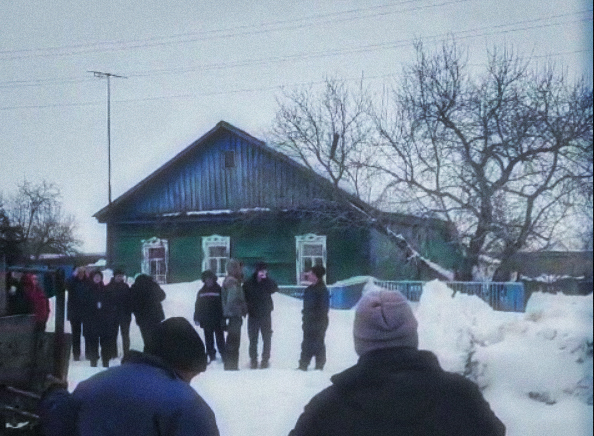 Village of Novoklyuchi, March 12 Photo: screenshot from video of local residents
On March 12 at one o'clock in the afternoon in Novoklyuchi the power, Internet and mobile communications were turned off. The police (about 50 people) and veterinarians arrived. The sky above the village was controlled by several drones. Security forces surrounded Panina's house. Neither Svetlana herself nor her husband were there - they went to Novosibirsk to the hospital. Men in black balaclavas had to get behind the wheel of tractors and clear the snow from the entrance to the cowsheds themselves - all local men refused.
Yuri Pushkarev, a resident of Novoklyuchey, tried to film what was happening on his phone. The police took his phone, everything he managed to film was deleted, the man himself was restrained and taken to the police station for a day. The next day they came to search him. Now Yuri is charged with setting fire to a cattle disposal site based on “operational information and characteristics of the head of the district, Vladimir Shubnikov.”
Veterinarians euthanized Panina's cows from three o'clock in the afternoon until midnight. Only veterinarians wore protective suits. The carcasses were loaded onto tractors and taken to a burning pit one and a half kilometers from the village.
“Dead carcasses were transported on a tractor past my house,” says Elena Savelyeva. “They were dripping blood and some other liquid right onto the road. Apparently, when they were loaded with a ladle, they were pierced. And all this “especially dangerous disease” poured into the street.”
According to local residents, from March 12 to 16, the animals simply lay in this pit and were not burned. The bodies were gnawed by foxes and badgers, who were not aware of the “especially dangerous disease” that was rampant in the Novosibirsk region.
At the same time, the Minister of Agriculture Andrei Shindelov gave an interview to Novosibirsk television, where he talked about how livestock was removed from private farms. According to him, all participants in what is happening act carefully, consistently and according to the law: “The owner and veterinary services sign the act of confiscation of the animal, the weight of the livestock is recorded. The Veterinary Department receives information about the owner’s bank account, and based on average market prices, the amount to be transferred to the owner’s bank account is calculated.”
The reality is strikingly different from the minister's assurances. People explained this to the official in a variety of terms in the comments under the video on social networks.
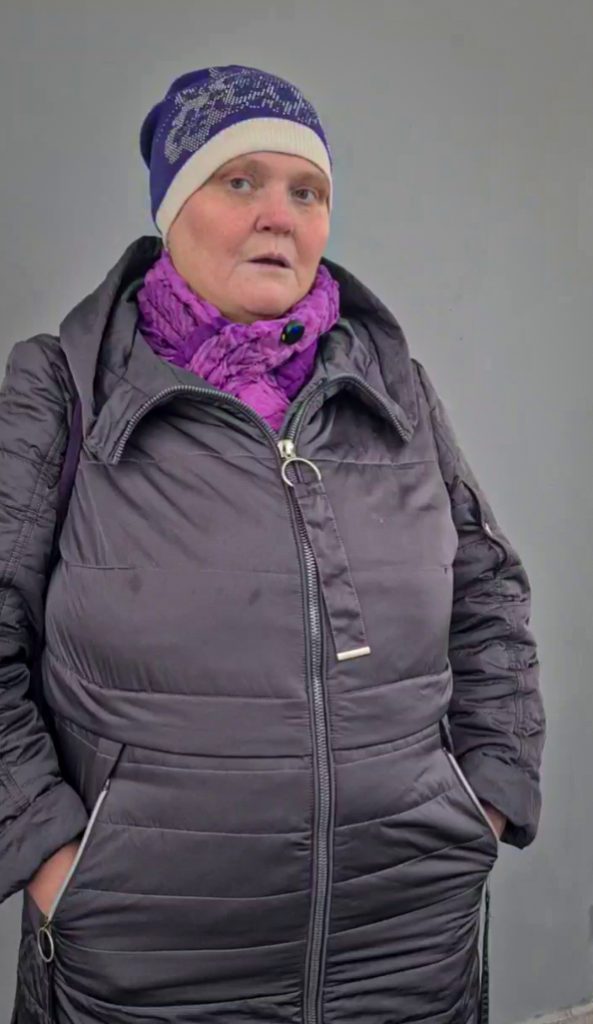 Svetlana PaninaPhoto: Natalia Nekhlebova for TD
Svetlana Panina's husband was charged with setting fire to a cattle disposal site. The damage is estimated at 1 million 54 thousand rubles. Sleepers and rubber tires burned out. The man became ill with his heart and had to go to hospital in Novosibirsk. Until now, no one has contacted Svetlana or provided documents about the seizure and destruction of her animals.
But the next day after the killing of the cows, the police came to Svetlana with a search.
“They showed me a search warrant signed by the judge of the Kupinsky district,” recalls Svetlana. “And they said that if I didn’t let them in, they would come in on their own.” They entered and demanded to hand over prohibited items. And I don’t have a single prohibited item. They ransacked the entire house and outbuildings. We looked under the sofas, in the sofas, everything was scattered everywhere..."
On March 14 and 15, Svetlana Panina stood with a single picket in front of all administrative buildings in Novosibirsk. The administration of the Novosibirsk region, the prosecutor's office, the Investigative Committee. On Monday, March 16, a woman came to Andrei Shindelov. She was not allowed into the office - they said that the minister was at a meeting, had left, and was calling the governor.
“My nerves gave way, I opened the door to his office. And he is there! I asked him: “How is this possible?” But he didn’t answer, he just ran away from me. I chased him through the corridors and up the stairs. He ran away from me and locked himself in some office.”
Panina went to the governor's reception room.
“I asked how I would live now, how I would pay for electricity in a month, what I would eat. You came in my absence and robbed me. They took away my only source of income!”
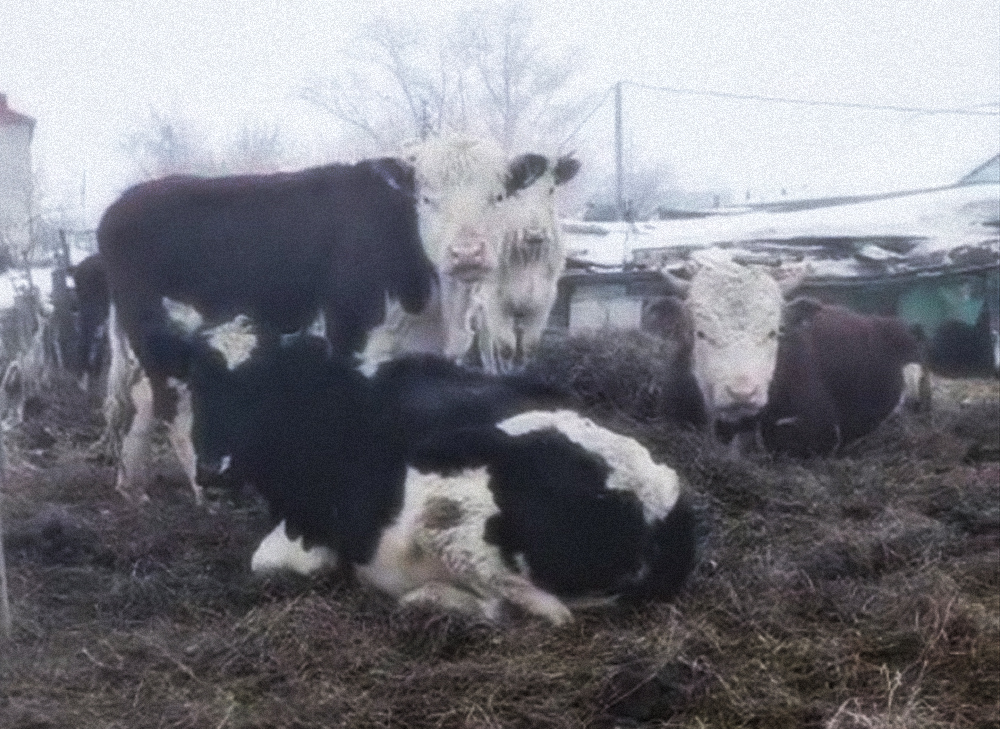 Cows that were destroyed in the village of Novoklyuchi, March 12 Photo: screenshot from a video of local residents
A veterinarian from the Novosibirsk region was invited to talk with Svetlana.
“He assured me that they would have an emergency meeting. And they will pay people a living wage of 18 thousand rubles for nine months. That is, after I explained to them that people would have nothing to eat, they came up with this measure.”
A subsistence minimum will be paid to those whofind themselves in difficult life situations due to the seizure of livestock. People will not only have to experience poverty, but also have to document it.
Now in Novoklyuchi, animals have been destroyed in almost all yards. The villagers lived by selling milk and meat. For now they still have supplies of potatoes and carrots, but they don’t know what to do next.
“I don’t understand where people will work, how to live? - says Elena Savelyeva. — At least pensioners have a pension. For men there is only one way - to the military registration and enlistment office. And the payments that we were promised are very small.”
According to the government decree on the seizure of animals due to especially dangerous diseases, owners who have lost livestock must be paid its market value. It is unknown where the amount of 171 rubles per kilogram announced by the authorities came from. In the Trans-Baikal Territory they pay 243 rubles per kilogram. But in the Penza region they do not pay anything (the official refusal to compensate the farmer is at the disposal of the editors).
The cows are healthy
The village of Kozikha, Ordynsky district, is large and very friendly. Residents unanimously claim that not a single cow in their village was sick. Indeed, the animals look healthy and well-fed.
But on March 6, quarantine was declared here. They set up a barrier at the main entrance, and covered the rest with snow. At the edge of the village they began to dig a pit for burning cows. They brought tires and sleepers soaked in toxic creosote.
“This site for the disposal of livestock was built 200 meters from the village border, there are houses nearby,” says Kozikha resident Daria Mironenko. — When everything burns, the smog will cover the village for three to five days. People will breathe this, and in the future, when the snow melts, everything will flow through the melt water into the Irmen River near our village. The Irmen flows into the Ob. And all this water will be in our taps. We still want to know how well this burn site is managed.”
Instead of answering all these questions, the police detained municipal deputy Larisa Vyunnikova, who does not even have her own household. She came to support her fellow villagers who were trying to keep equipment out of the village.
Under the article on organizing the illegal presence of citizens in public places, Larisa was sentenced to two days of arrest. Another seven people received a fine of 12 thousand rubles for “organizing a mass simultaneous presence of citizens in a public place.”
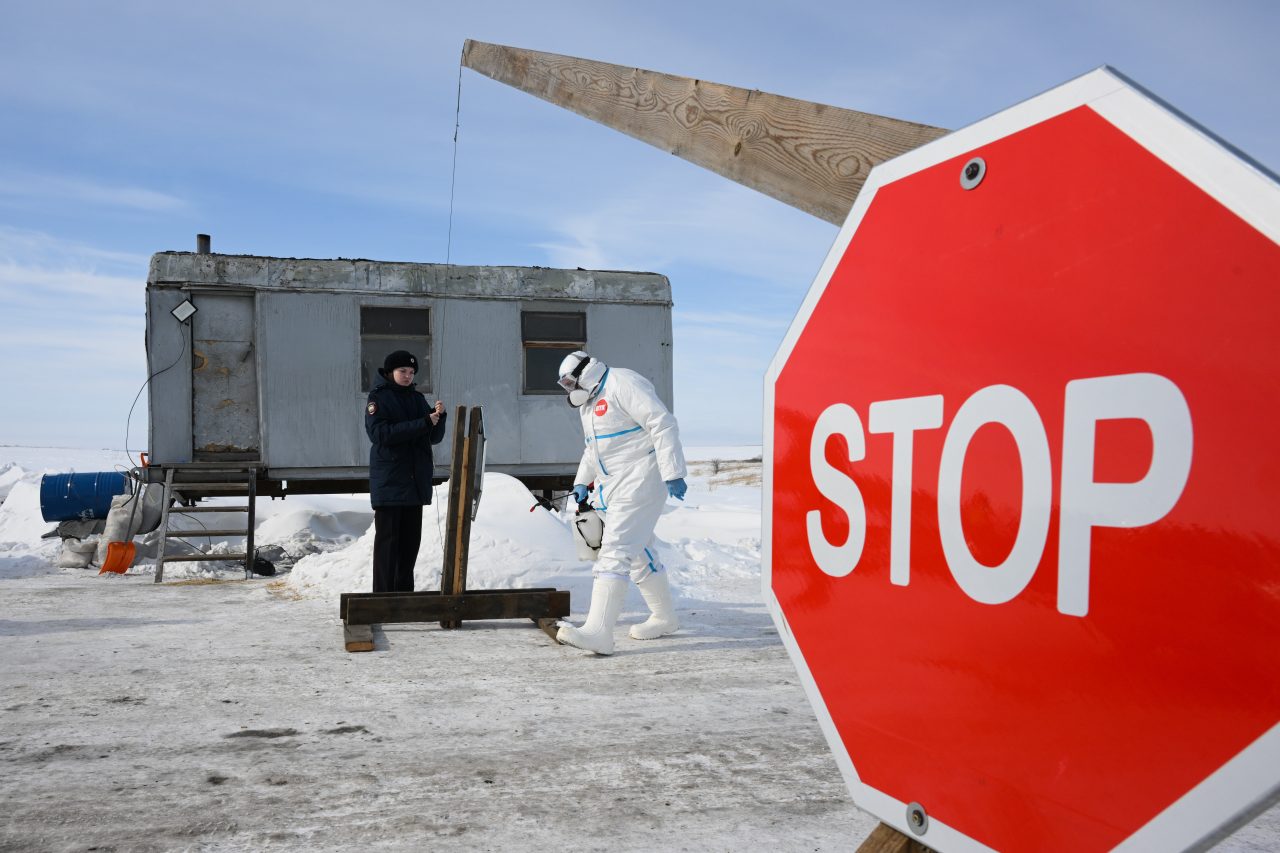 A police officer and a veterinary service employee at a quarantine post near the village of Kozikha, Novosibirsk Region, where quarantine has been introduced for livestock pasteurellosis. A state of emergency was declared in the region due to outbreaks of rabies and pasteurellosis in livestock. Photo: Alexander Kryazhev / RIA Novosti
Marina, a resident of Kozikha, has 11 milk cows. She created her farm for 15 years. The woman shows us a black and white plump cow in a large barn.
“This is my Chamomile. Look! The cows are healthy, no drooling or foaming at the mouth. My cows were urgently vaccinated in February. At the Horde veterinary laboratory they told me that it was from foot and mouth disease. Vaccinated twice. They said that in 10 days they should do it a third time. And they never came again. We were declared quarantine. They were vaccinated against foot-and-mouth disease, but it turned out that the area was affected by pasteurellosis and rabies, and in general a “particularly dangerous disease.” What kind of disease is this when all my cows are healthy?!”
Thanks to her farming, Marina escaped poverty. She used to work in the city as a conductor, and once she even had to spend the night in a building, because there was no money to rent an apartment. Then the woman received a dilapidated house in Kozikha from her relatives. And in 2012, her parents gave her two one-year-old cows.
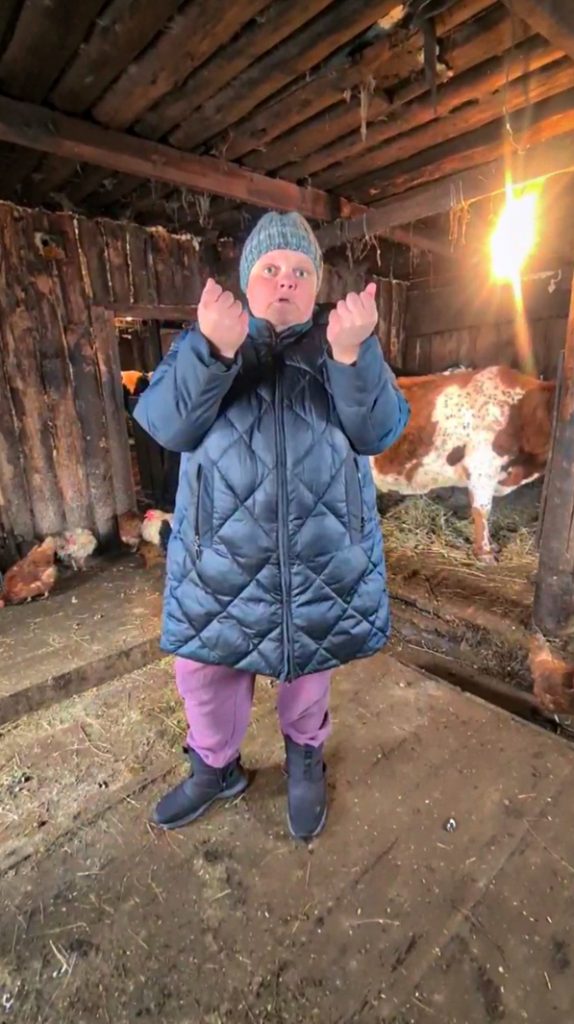 Marina Kolodina, village KozikhaPhoto: Natalia Nekhlebova for TD
“I slowly, year after year, raised calves,” says Marina. “I fed each one myself.” Only I bought Varka and Marta. It's not easy raising a cow. So much work, so much money! It takes five years! And now they are offering us to simply put them to sleep, burn them, they want to take away from people the last thing they live on. Thanks to my cows, I built a house and a bathhouse. I started living normally! Let them at least explain to us what is happening! The cows will be tested! The documents will be shown. Do they want to send us back to poverty?”
Marina sells milk, cottage cheese and sour cream at the market. She has regular customers. All veterinary control of her cows goes through the state system "Mercury". In addition, every month the milk is checked at the market itself. A woman pays 130 thousand rubles a year for tests of livestock and milk.
Marina has not been able to sell milk for a month now due to quarantine. He feeds it to the calves and pours it out to the pigs. The family has to save a lot.
“All of us in the village are running out of money. Because everyone lives from their own farm. Dasha Mironenko went and delivered humanitarian aid. This is what we have come to!”
Marina has two children. My son is 15 years old. He has cerebral palsy. Every three months Marina takes him to a paid massage course. “The doctors said he wouldn’t walk or talk,” she recalls. “But these massages lifted him up.” He walks, talks, studies..."
After Marina spoke about the situation with the cows on social networks, the guardianship authorities became interested in her: they called and came. “Well, they are obliged to come once every three months to check,” explains Marina. “Everything is clean at my house, there are medicines and food for the child.”
However, other residents of Kozikha believe that the guardianship allegedly threatened Marina with the removal of the child if she continued to write on social networks about the problem with the destruction of livestock. Marina herself doesn’t want to talk about it.
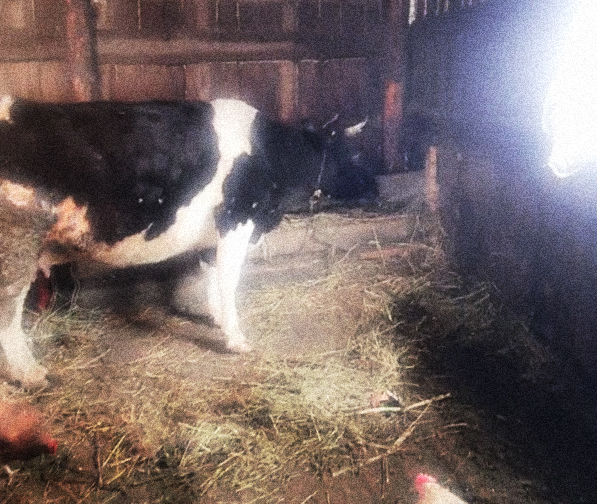 One of Marina’s cowsPhoto: Natalia Nekhlebova for TD
Early in the morning of March 19, several police cars, trucks and veterinarians arrived at the Aquarius peasant farm neighboring Kozikha. A video of a caravan of flashing lights and terrified farm workers begging for help quickly went viral on social media.
The owner of Aquarius, Vladimir Gurkin, was not there at the time. By lunchtime, the police and veterinarians left with nothing. We returned on the morning of March 20. In Kozicha, communications were cut off, and animals on the farm began to be killed. Dead cows were loaded by cranes onto trucks.
Gurkin created his company for six years. He owned 600 Hereford cows and 220 sheep.
“All this time we were served by the veterinary department of the Ordynsky district,” Gurkin tells “Takim Dela.” — We strictly fulfilled all plans and requirements for vaccinations. In February, the district veterinarian Svetlana Aldonina personally approached me with a request to urgently pay for the purchase of the newest vaccine produced in Vladimir. 2.5 thousand units were purchased. The entire herd was vaccinated with this vaccine. There are no protocols; we don’t know what kind of vaccine they gave us. After five to seven days, 17 of our cows began to feel sick—slight salivation. These are cows whose calves are suckling and their immunity is weakened. We turned to the Veterinary Department of the Ordynsky District to figure it out and decide what to do. They took tests from five animals and allegedly sent them to the laboratory. But we have not seen any test results. We were verbally informed that we had tested positive for some “especially dangerous disease.” You can’t say anything, you can’t ask anything, all papers are for official use. My whole herd is in excellent condition, healthy. And the district administration forced us to purchase injections to kill animals...”
“What did we do to deserve this?”
The village of Novopichugovo, Ordynsky district, also came under quarantine. Its residents also tried to protest. On March 11, Andrei Gavrilenko and Maxim Vil were detained. Maxim, a local paramedic, asked the policeman to “take his hands off” when he grabbed his wife by the jacket. The men were taken to the police department, charged with organizing “illegal presence of citizens in a public place,” and sentenced to two days of arrest. The small courthouse where the verdict was handed down was cordoned off by police.
The Siberian Ear farm is located in Novopichugov. From March 11 to 16, two thousand cows and a thousand sheep were killed there.
“Not a single animal died there naturally,” emphasizes Svetlana Kozhevnikova, a resident of Novopichugova. “If it was pasteurellosis or a “particularly dangerous disease,” the animals would lose weight, stop eating, and die, but this did not happen!”
 Svetlana Kozhevnikova, resident of the village of Novopichugovo Photo: Natalia Nekhlebova for TD
According to Svetlana, on March 17, dead animals were still lying on the farm grounds. “There are wild animals walking around them, birds pecking at their eyes. Now it’s going to get warm - they won’t have time to take it out, there will be a stink..."
On March 18, residents of Novopichugov were gathered at the local House of Culture and informed that all animals in the village would be destroyed. They will not show any tests or documents. If the owners do not allow the liquidators in of their own free will, the police and riot police will come to them. And those who do not voluntarily give up their livestock will be left without compensation at all. The wife of Andrei Gavrilenko, who had previously been sentenced to two days of arrest, left the building of the cultural center and fell unconscious. Hypertensive crisis, blood pressure 220/100.
“At the meeting they said: “What do you think, Putin and Bastrykin don’t know anything? They know everything,” her daughter writes on social networks. “And at the same time they say that my mother slipped and fell herself.” Who will be responsible for this? This is not the destruction of livestock, but the destruction of humans. They mock people without any shame or conscience. And they only said that they would destroy the livestock. What will happen to her when they come to kill him? What if the father can’t stand it? Because of your vile politics and greed, will I lose both my parents? What did we do to deserve this? They lived honestly and earned their living through hard work! Why? So that they would then come, kill, destroy, taking away the last thing from the people?! The world has gone crazy. What should we do if the people who are supposed to protect the law and us violate it themselves? Stop, because everyone has a choice and their own opinion! The police are people too. Be human now, not soulless machines.”
The diagnosis mutates
In the fight against a “particularly dangerous disease,” the authorities use not only forceful methods, but also, one might say, information disorientation: they do not give people any specific information. First, it was announced that there were foci of pasteurellosis in the region, then - a “particularly dangerous disease” (pasteurellosis is not included in the list of particularly dangerous diseases). On March 18, the head of Rosselkhoznadzor, Sergei Dankvert, said that this is mutated pasteurellosis . On March 20, the head of the Novosibirsk Regional Center for Veterinary and Sanitary Support, Yuri Shmidt, reported that “vaccine prevention turned out to be ineffective” due to changes in the genetic material of the Pasteurella bacterium itself. Literally three days before, he stated that the people themselves were to blame, since they did not comply with sanitary rules. It is clear that in this chaos a huge number of conspiracy theories were born - from assumptions that a place is being cleared in the region for a large agricultural holding, to the idea that “this is a ritual sacrifice.”
The latest “version” from authorized persons is that vaccination did not work. But, for example, in the village of Chernokurya, all 414 ungulates were urgently vaccinated on February 23 not against mutated pasteurellosis, but against foot-and-mouth disease. This is stated in the act of carrying out diagnostic and veterinary preventive measures. The animals were injected with a sorbed polyvalent vaccine against foot and mouth disease, produced by the Federal State Budgetary Institution "ARRIAH" in Vladimir. Series 3011024, manufactured in October 2024.
“There are seven serotypes of foot-and-mouth disease,” explains Svetlana Shchepyotkina, veterinary epidemiologist, candidate of veterinary sciences. - A, O, C, Asia-1, SAT-1, SAT-2, SAT-3 and more than 60 serovars. If an animal has been ill or vaccinated against one serotype, this does not protect against another. There is no cross immunity. An analysis of the government procurement website indicates that a vaccine from strains A, O, Asia-1 was purchased in the Novosibirsk region.”
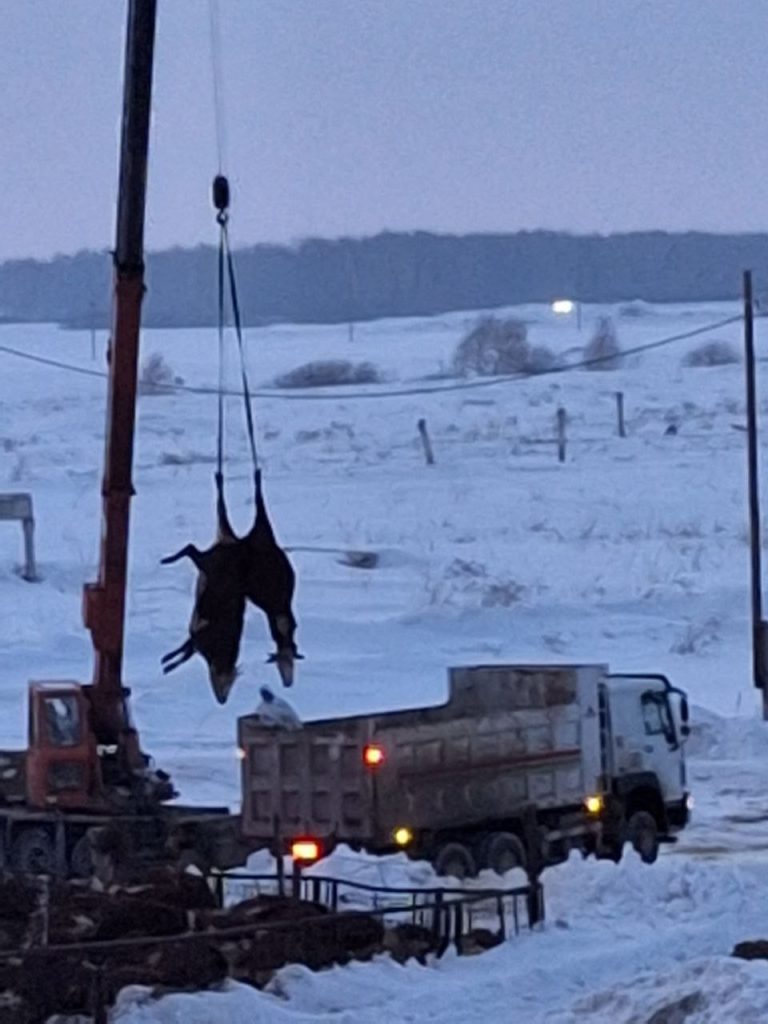 Loading of killed animals into the Aquarius farm Photo: screenshot from a video of local residents
According to the epidemiologist, it is important to constantly monitor which strain is circulating or which was brought into the territory by wild animals. Veterinarians suggest that the new strain could have been brought to the Novosibirsk region by roe deer, which have migrated to Kazakhstan in huge herds since the end of last year. Many fell on the ice of lakes in the Novosibirsk region, could not get up and died. Especially massively - on the lake in the Karasuk region, which was one of the first to be quarantined. Local residents saved the roe deer as best they could, but they were unable to help everyone, and the dead animals remained on the ice.
“The vaccine, which was urgently used in villages where animals fell ill, contains the SAT-1 strain,” continues Shchepyotkina. — The letters from the State Veterinary Service contain information that the SAT-1 strain is circulating. Although these letters are now being declared fakes. But we can assume that the SAT-1 strain of foot-and-mouth disease is circulating in the Novosibirsk region.”
Svetlana explains why some animals began to drool and snot after vaccination. “The animals’ immune system had already produced antibodies to this strain and was working under strain, but since the vaccine was introduced, despite the fact that the virus is inactivated and killed, it still causes a load on the immune system. She began to work at an increased rate, and a clinical disease manifested itself. Perhaps it's foot and mouth disease. But there is no way to confirm this, Shchepyotkina emphasizes, this requires laboratory tests. But they are not available."
Как рассказала «Таким делам» эпидемиолог, по официальным данным Россельхознадзора, якобы зарегистрированы очаги «особо опасного заболевания» в 15 регионах . Но в рассылке, которую делают негласно среди чиновников, значится около 28 регионов. О каком конкретно заболевании идет речь, неясно.
 Светлана ЩепёткинаФото: страница Светланы в ВК
«Тотальное уничтожение животных неоправданно, — замечает Светлана Щепёткина, — так как проводится с нарушением законодательства и за счет вывоза животных из эпизоотического очага приводит ко все большему распространению “особо опасной болезни”».
Ветеринары, с которыми поговорили «Такие дела», предположили, что животных умерщвляют препаратами на основе миорелаксанта «Дитилина» — возможно, это «Адилин» . Препарат вызывает паралич мышц и заставляет коров умирать от удушья. Президент Российской ассоциации практикующих ветеринарных врачей Сергей Середа уже писал открытые письма с призывом прекратить применять этот препарат. Он может использоваться для обездвиживания животных, чтобы проводить диагностические операции, но не для убоя. Однако, как утверждает ветеринарный эпидемиолог Светлана Щепёткина, другого препарата в России для умерщвления животных просто нет.
«Мы никто»
Сейчас, после широкого общественного резонанса, власти в Новосибирской области «спрятали дубинки» и пытаются уговорить жителей сдать скот добровольно. Обещают выплаты до миллиона рублей. Всего на компенсации выделено 200 миллионов. Примерно столько стоили животные только в одном КФХ «Водолей».
21–22 марта 2026 года животных умерщвляли в Чернокурье, Козихе и Новопичугове. Жители писали добровольные согласия.
Антон Долженко, участник СВО из Чернокурьи, не хотел отдавать своих животных. «Но оказалось очень много рычагов давления на нашу семью, — рассказывает его сестра Даша, — брату звонить начали. Нашли даже номера тех, с кем он служил в армии еще пять лет назад. Они звонили, просили удалить все видео, что он записывал в нашу защиту, и отдать животных».
Мама, по словам девушки, очень плохо себя чувствует. Хотели вызывать скорую.
«Ее трясло, она уже за нас боялась, за Антона. У нее просто не было больше сил сопротивляться. Она как будто свой последний день доживала и подписала добровольное согласие».
Всех баранов семьи усыпили 21 марта. После этого отчиму Антона и Дарьи, страдающему тяжелым онкологическим заболеванием, стало хуже. «Он всю жизнь разводил этих баранов, — говорит Даша. — Он не может двигаться и говорить. Мы готовимся сегодня-завтра с ним проститься».
 Жительница села Новопичугово Светлана Гавриленко потеряла сознание, когда вышла из местного ДК после собрания, на котором жителям объявили, что скот будут уничтожатьФото: из личного архива местных жителей
Еще Даша рассказывает, что ветеринары, которые умерщвляли животных, сами очень переживали. Они даже поругались с начальством и отказывались уходить со двора семьи Долженко, пока всех животных не заберут. Говорили: «Не пойдем дальше усыплять, пока вы не заберете всех, чтобы они не лежали тут до ночи. Чтобы люди могли дома находиться и не смотреть на своих убитых животных».
Одного ягненка все-таки забыли. Он спрятался в сарае и умер уже там. За ним приехали позже.
В то же время семья Долженко начала получать выплаты — по 120 рублей за килограмм. Всего им должны выплатить около 120 тысяч рублей. По рыночной цене за живое стадо на рынке семья получила бы 300 тысяч. За мясо — 650 тысяч рублей. Даша говорит, что больше они не будут разводить животных.
«Наверное, в город уедем. Начинать все заново — а потом опять отнимут… Это просто невозможно выдержать».
В Чернокурье коровы остались только у Петра Полежаева, брата Константина. Он залез на крышу дома, облил себя бензином и обещал поджечь.
«Они все равно у него коров заберут, — считает Дарья, — в психиатрическую больницу, наверное, отправят, а животных заберут».
В селе Козиха 12 человек отказались подписывать согласие на изъятие животных. Жители не выходят из дома, чтобы не оставлять своих коров. Тем, кто согласился на изъятие, стали выдавать аванс наличными — 30 тысяч рублей за корову. 21 марта в Козихе задержали Ивана Отраковского — ветерана войны в Чечне, кавалера ордена Мужества. Его оштрафовали на четыре тысячи рублей по статье о неповиновении полиции.
Особенно тяжело, судя по всему, уничтожение коров проходит в селе Новопичугово. Там очень многие жители отказываются подписывать согласие. Вместе с ветеринарами во дворы заходят силовики. Полиция применила силу к местной жительнице Лилии Смирновой. «Сотрудники полиции вломились во двор к соседям с этими уничтожителями коров, — рассказала она. — Убили трех коров. Я стала возмущаться: какое право имеет полиция вот так вламываться на частную территорию? Скрутили меня в четыре руки, закинули в машину, увезли…»
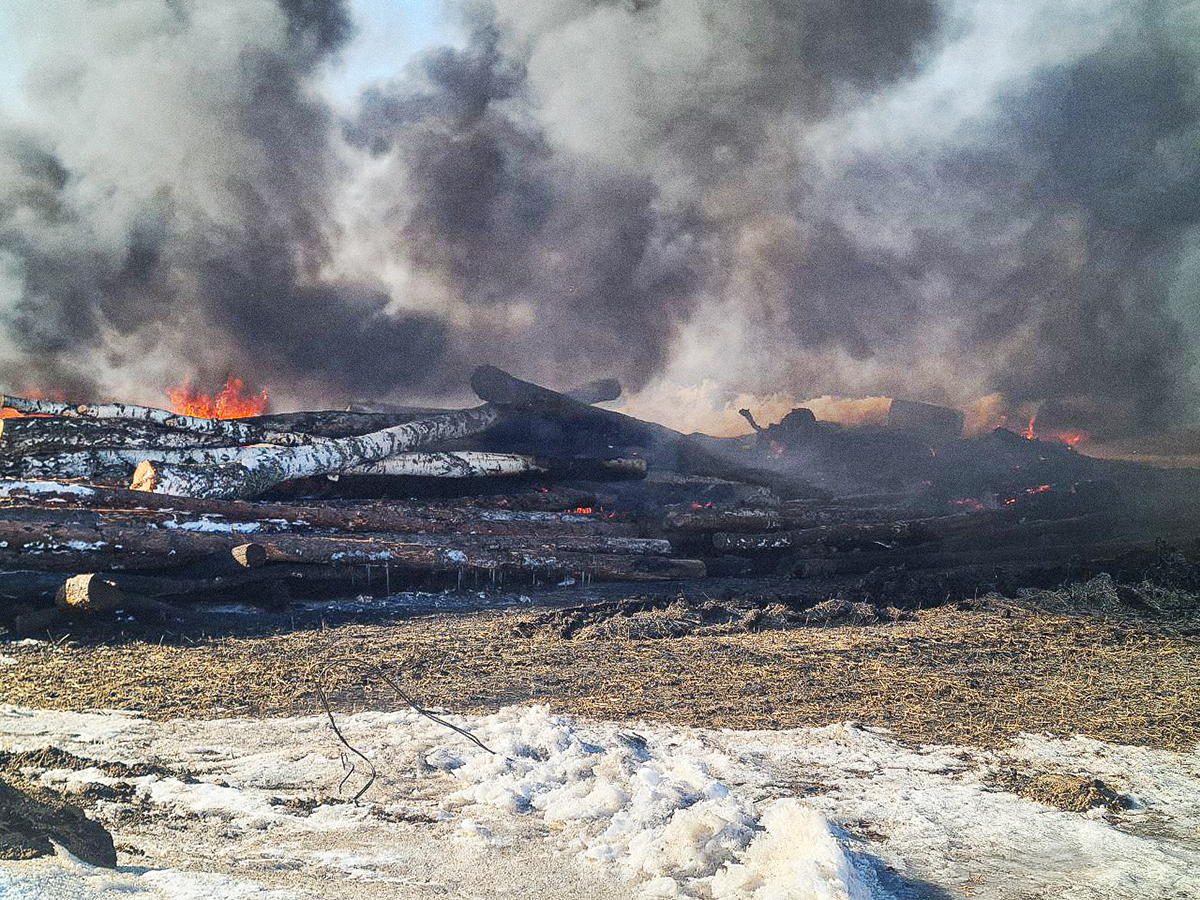 Дым от горящих туш животных над деревней ЧернокурьяФото: Наталия Нехлебова для ТД
«Пятнадцать человек полиции у нас, — эмоционально рассказывает жительница Новопичугова Светлана Кожевникова. — Сами заходят во дворы с ветеринарами и убивают. Мы им говорим: “Детишки же здесь, детишки смотрят, что вы делаете…” Мы никто… не народ… мы стадо баранов! Власти нет для нас. Она сама для себя! Никто это согласие добровольное не подписывает. Но как я их не пущу? Кто я против ОМОНа? Зайдут и убьют. Сидим дома, боимся. Мы в ФСБ ездили просили помощи, у всех просили помощи, никто нам не помог — и вы нам не помогли».
На вопрос «Таких дел» о том, с каким «опасным заболеванием» сражается Новосибирская область и почему собственникам, у которых уничтожают животных, не предъявляют никаких документов, управление ветеринарии Новосибирской области ответило: «Диагностические исследования проводятся в установленном порядке с применением аккредитованных методов и лабораторий. Решения принимаются на основе совокупности полученных данных и эпизоотологической оценки. Распоряжения не опубликованы в открытом доступе, так как предназначены для служебного пользования. Граждане, чьи хозяйства непосредственно затрагиваются проводимыми мероприятиями, ознакомляются с документами в индивидуальном порядке».
* * *
Светлана Панина из Новоключей, у которой уничтожили 200 животных, всегда мечтала иметь верблюдов. Они с мужем завели пару. Потом родился верблюжонок.
«Мы его Русик назвали, — говорит Светлана, — в честь России. Он такой добрый был. Соседи рассказывали, что он очень плакал, когда ветеринары животных моих убивали. Я пришла когда… искала его — а его нет. Только веревочка обрезанная».
При участии Ксении Лысенко
Редакция благодарит Анну Тажееву за помощь в сборе информации
Редактор — Инна Кравченко
The material uses links to publications on social networks Instagram and Facebook, and also mentions their names. These web resources are owned by Meta Platforms Inc. — it is recognized as an extremist organization in Russia and is banned.