
Translated material
Spring will show
Russia is advancing, but is losing thousands of fighters every day. What's happening at the front?
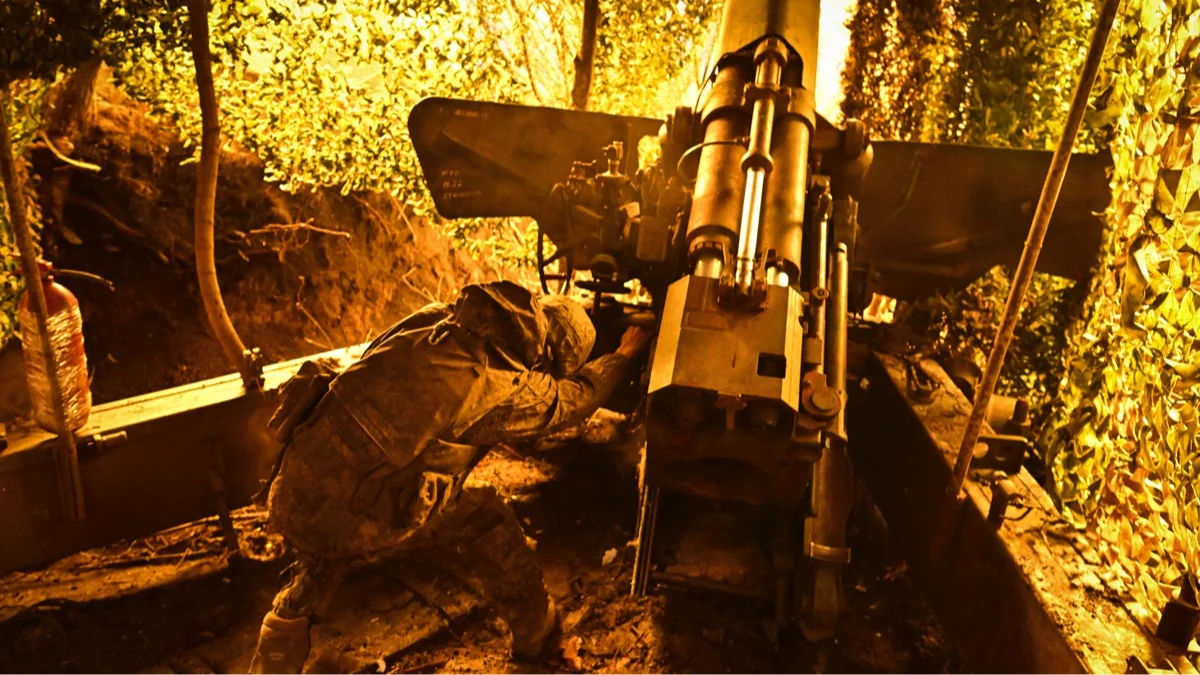
A Russian soldier fires a cannon in the Donetsk region, Ukraine, March 18, 2026. Photo: Stanislav Krasilnikov / Sputnik / Imago Images / Scanpix / LETA
The Russian army went on the offensive, but was unable to achieve significant success. At the same time, the losses of the Russian armed forces in March 2026 have already become one of the highest in the entire war. “New Europe” discussed the situation on the Russian-Ukrainian fronts with experts.
"Belt of Fortresses"
After an operational pause that lasted more than a month, things are getting hot again on the line of combat contact. The Ministry of Defense of the Russian Federation reported on new victories and, as an example , reported on the capture of the village of Potapovka in the Sumy region.
The American Institute for the Study of War (ISW) reports in its analysis that Russian troops have likely launched a planned offensive in the spring-summer of 2026 on the Ukrainian “Fortress Belt,” Ukraine’s main line of defense in the Donetsk region, which includes the cities of Kramatorsk, Slavyansk, Druzhkovka and Konstantinovka.
“Russian forces have begun intensified ground operations in the direction of Liman with the aim of advancing towards Slavyansk, the northern tip of the “Fortress Belt” from the northeast, likely to create conditions for a further attack on Slavyansk from the east and southeast,” ISW analysts write. — On March 19, units of the 1st Guards Tank Army and the 20th Guards Combined Arms Army conducted a mechanized and motorized offensive in the direction of the city of Liman. Russian troops deployed more than 500 Russian infantry, dozens of armored vehicles and more than 100 motorcycles, buggies and all-terrain vehicles. This battalion-scale offensive is far superior to most Russian mechanized attacks in recent months. The estuary could serve as a stronghold for Russian efforts to capture both Slavyansk and Kramatorsk.
Russian troops are increasing pressure on Ukrainian forces by intensifying offensives using large numbers of infantry and equipment."
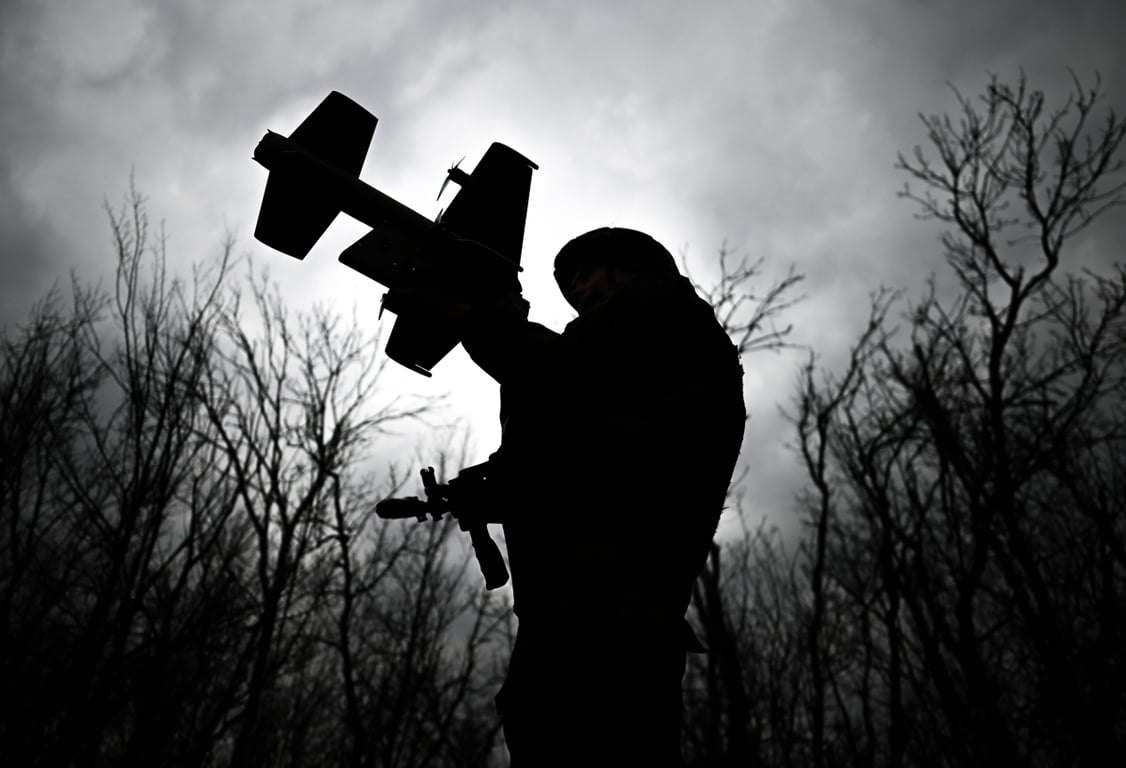
ISW analysts also note that Russian troops are adapting their tactics, moving from attacks in mechanized columns to dispersing equipment along different directions of attack at the same time, similar to infantry dispersal tactics. At the same time, Russian troops can attack in various directions in order to suppress and distract the Ukrainian defense based on the use of drones. The Russian Army is launching more and more attacks in the direction of Liman with KAB-3000 guided glide bombs, Lancet loitering ammunition and Molniya drones. These air and drone strikes are likely a continuation of Russia's battlefield air interdiction campaign, which aims to weaken Ukrainian logistics and defensive capabilities ahead of ground operations.
Ground assaults
“Russian troops are also creating the conditions to begin intensifying ground operations in the Kramatorsk and Konstantinovka directions with the aim of developing an offensive on the “Belt of Fortresses” from the south,” ISW analysts continue. — Ukrainian Lieutenant Colonel Dmitry Zaporozhets reported on March 21 that Russian troops have recently intensified ground assaults in the Slavyansk and Kramatorsk directions in preparation for future offensive operations and advances to the heights on the approaches to Konstantinovka. Zaporozhets also reported that Russian troops are actively transferring personnel to the approaches to Konstantinovka, intensifying strikes from FPV drones and Molniya drones from Chasov Yar (northeast of Konstantinovka), bringing up armored vehicles and doubling artillery and tactical air strikes in the direction of Kramatorsk. Russian troops are intensifying ground assaults and strikes, and the transfer of heavy equipment and troops to the front line is likely being carried out with the aim of creating conditions for the spring-summer offensive of 2026.”
According to ISW, Zaporozhets said that Russian troops are trying to capture key heights east of Slavyansk, including near the village of Krivaya Luka, which Ukrainian troops are currently using as positions for drone operators. In addition, the Russian army will continue ground assaults to secure its flanks, since Ukrainian troops currently maintain advantageous positions. The Ukrainian Armed Forces' control of the commanding heights east of Slavyansk should complicate Russia's advance towards this city from the relatively low-lying area around Seversk.
ISW analysts believe it is unlikely that Russian troops will be able to capture the “Fortress Belt” in 2026. At the same time, the Russian army will likely achieve some tactical successes at the cost of significant losses. Citing reports from the Ukrainian military, ISW writes that Russian forces lost 405 of the more than 500 troops involved in the mechanized assault on March 19, and notes that this level of casualties is unacceptable and will likely reduce Russia's ability to carry out such large-scale assaults in the medium to long term.
Colossal losses
“We can say that the first phase of the spring-summer offensive campaign of the Russian Army began on March 17,” Alexander Kovalenko, military-political observer of the Information Resistance group, tells New Europe. “And it was one of the most disastrous offensives of the entire war.” In the first 24 hours, Russian troops lost over 1,700 soldiers killed and wounded, managing to capture only a little more than 8 square kilometers of Ukrainian territory. In 72 hours of attacks, Russian losses exceeded 4,800 people, and in total, in a week of active hostilities, the Russians have conquered only 28 square kilometers and have lost 8,710 thousand personnel. These are simply colossal losses and one of the worst figures for Russia during the entire period of a full-scale invasion.”
“The Russian Armed Forces continue to attack the border areas of the Sumy region in order to scatter the attention of the Ukrainian command and create a buffer zone in the border area,” military researcher Kirill Mikhailov tells Novaya-Europa. — At the same time, the Ukrainians actually report an increase in losses of Russian infantry during assault operations, which is confirmed by their system of visual recording of losses. One of the most dangerous areas remains the Slavyansko-Konstantinovskaya agglomeration, which the Russian Armed Forces will inevitably try to capture this year.”
“A full-scale Russian offensive will unfold in early April. Now the so-called preparatory formative operations are underway,” military expert, reserve colonel of the Armed Forces of Ukraine Roman Svitan tells Novaya-Europa. — Every year, the Russians begin active offensive operations about a month before May 9. After all, Putin at the parade in Moscow needs to boast about new high-profile victories and seizures of populated areas. So the Kremlin sends orders to the troops to attack with the available forces. Already now, along the entire front, the Russian army has begun to carry out reconnaissance in force. Moreover, these events are most often carried out not by professional intelligence officers, but by attack aircraft - cannon fodder, who pay for information about the location of Ukrainian Armed Forces positions with their lives. They are thrown onto the Ukrainian defense to identify firing points and weak points. Most die in the first assault.”
Roman Svitan says that
The Russian army loses about 1.5 thousand people every day during combat operations. The transfer of personnel to the front line began, and the Russians began to en masse fall into the kill zones created by the Ukrainian side.
Many of them were not even able to reach the positions of their units and were attacked by drones along the way.
Alexander Kovalenko claims that the village of Potapovka, the capture of which was announced by the Russian Ministry of Defense, is located literally on the border with Russia and was in a gray zone. There were no defense lines or positions of the Ukrainian Armed Forces. The Russian Army seizes such settlements and often, under the guise of evacuation, takes them to the territory of the Russian Federation, effectively taking them hostage. Sometimes such people are used in propaganda videos to show the Kremlin’s care for people. However, the Russians cannot go several kilometers deep into Ukraine.
At the same time, Alexander Kovalenko says that the Russians have had little tactical success in the direction of Gulyaypole, where the Russian command is trying to expand the zone of control towards the urban village of Zaliznichnoye and reach the railway and the P-85 highway leading from the Zaporozhye region through Gulyaypole. Today, military operations are taking place along the riverbed of the Gaichur River, but the Russian army cannot yet gain a foothold on its banks.
Counterattack of the Ukrainian Armed Forces
“The line of combat contact today is about 1,200 kilometers,” military analyst and former SBU employee Ivan Stupak tells New Europe. — According to my data, the Russian Federation has increased its group in Ukraine by 7 thousand people since the beginning of this year. Now its number reaches 719 thousand military personnel. After Elon Musk turned off Starlink communication terminals for Russians on February 5, coordination in their departments was disrupted. The Ukrainian Armed Forces took advantage of this and began to carry out counter-offensive actions. At the same time, the command of the 29th Army of the Russian Federation, occupying positions at the junction of the Zaporozhye and Dnepropetrovsk regions, in its reports to the leadership deliberately overstated its achievements and was engaged in “taking on credit” territories and settlements, often brazenly recording them as already captured. During the counterattacks, the 20th Army Corps of the Ukrainian Armed Forces was able to occupy more than 440 square kilometers in the gray zone, gaining control over seven settlements in the Dnepropetrovsk region and three in the Zaporozhye region.” Thus, according to Ivan Stupak, the Ukrainian army is drawing away Russian resources, undermining offensive capabilities.
“We must take into account that in many areas the Ukrainian army, during the retreat and retreat to prepared defense lines, left significant areas of territory,” reminds Roman Svitan. “However, the Russians never occupied them, not having the required number of troops to do so. The result is a huge gray area.
Recently, the Ukrainian Armed Forces, having received new reserves, moved forward and regained control over many areas, with a total area of more than 400 square kilometers, gaining a foothold in them.
Thus, almost the entire Dnepropetrovsk region was liberated.”
According to Alexander Kovalenko, on January 29, 2026, the Ukrainian Armed Forces managed to return under its control more than 440 square kilometers of Ukrainian territory in the Dnepropetrovsk and Zaporozhye regions and some other regions. We are talking, in particular, about the advance of the Ukrainian army in the area of Stepnogorsk and the Gaichur River, as well as along the administrative border of the Dnepropetrovsk and Zaporozhye regions.
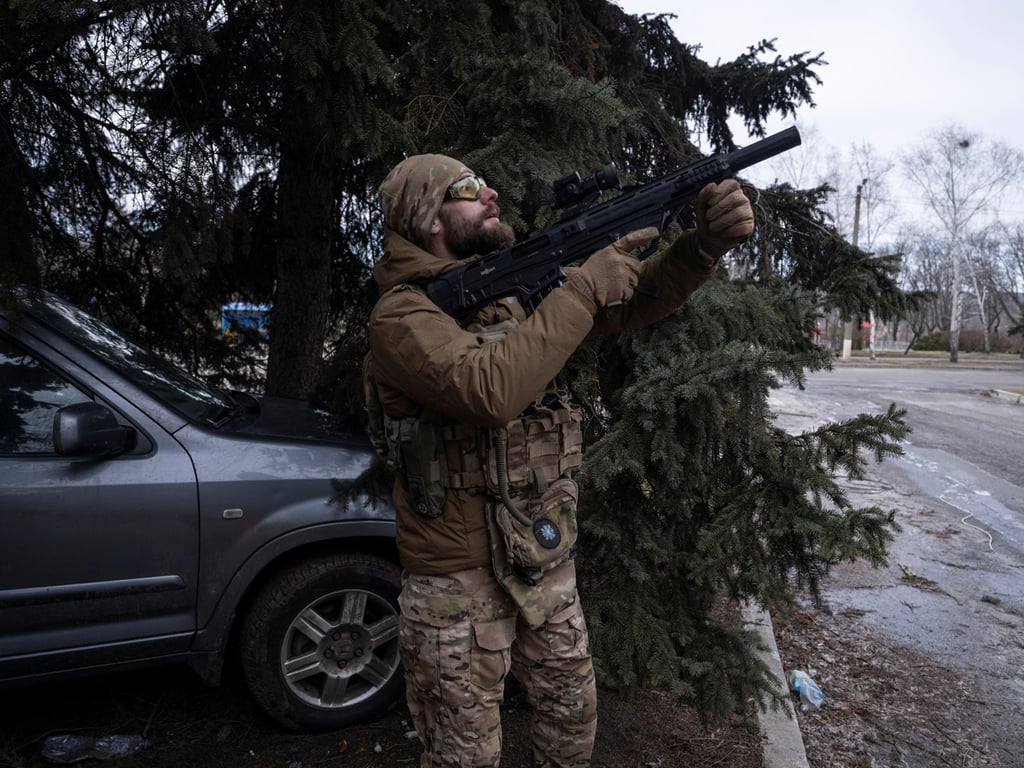
In the Pokrovsk area, on March 20, the Ukrainian Armed Forces, using a drone, managed to shoot down a Russian Ka-52 attack helicopter of the 17th Army Aviation Brigade from Kamensk-Uralsky. The crew commander was 29 years old, and the navigator was only 27. Alexander Kovalenko believes that the Ukrainian Armed Forces thus opened the hunting season for Russian combat helicopters using FPV drone interceptors.
Dangerous situation
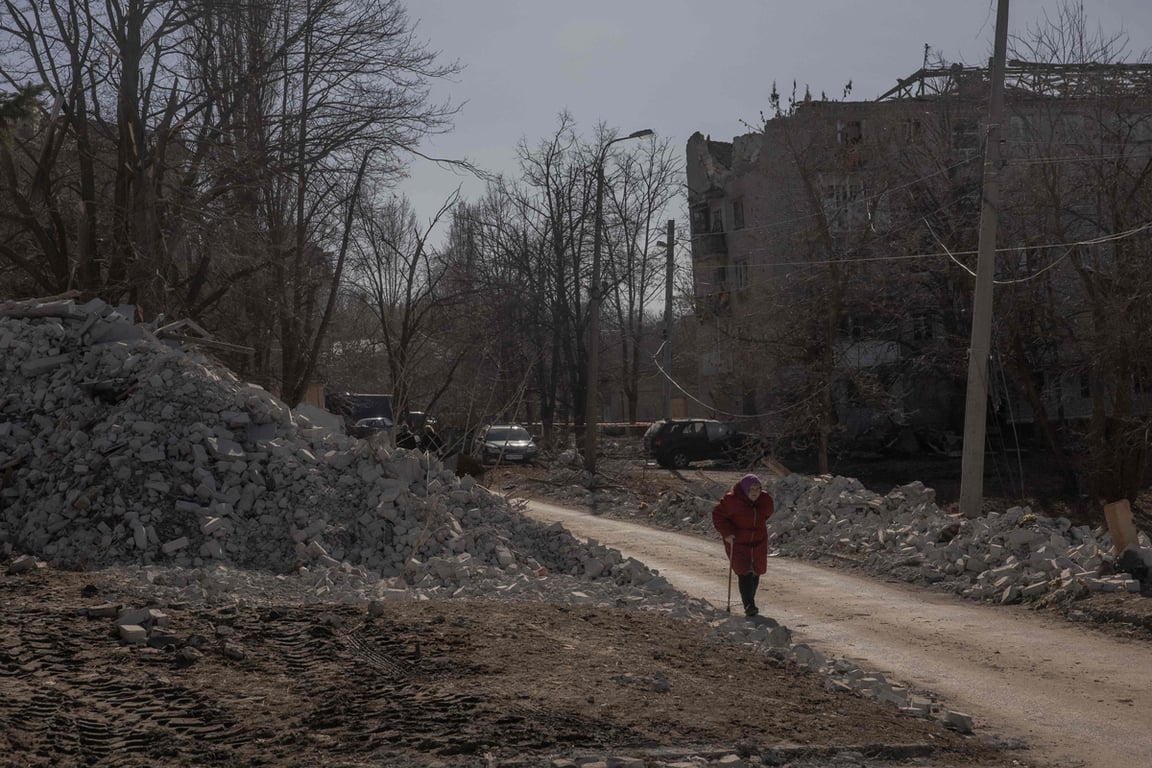
The most dangerous situation for Ukraine today, according to Alexander Kovalenko, is developing on the eastern flank of the Slavyansk-Kramatorsk agglomeration in the direction of the city of Seversk. This is the right bank of the Bakhmutka River, as well as the area between the Seversky Donets River and the M-30 highway. At the same time, events on the southern and northern flanks of this agglomeration are developing quite predictably.
In addition to the attack on the “Belt of Fortresses,” the Russians will try to continue pressure in the Zaporozhye region in the spring and summer, suggests Alexander Kovalenko. At this point, the offensive campaign in this area has clearly failed. The Russians are forced to regroup their forces, sending additional units of the 40th Marine Brigade to reinforce the 36th and 29th armies. Over the coming days, the Russians will replenish their formations with recruits and again begin large-scale attacks.
“I have information that the Russians have collected 58 thousand soldiers in reserve for the spring-summer offensive,” explains Ivan Stupak. — I am sure that Russian generals want to receive their next awards by May 9 and are now starting to try to achieve some victories. To do this, you need to first report to the top about the results. Therefore, the attacks will intensify. There are already 10-15 clashes a day near Liman.”
Roman Svitan is confident that in about two weeks, having found out the location of Ukrainian positions, Russian commanders will send their troops to the weakest areas of the Ukrainian Armed Forces’ defense. The Russian Army will bring up reserves to these areas and begin intensive assaults in two or three main directions. The expert suggests that these will be the areas of Konstantinovka, Slavyansk and Dobropolye. According to Roman Svitan,
For several months now, the Russians have been successfully infiltrating their attack aircraft into the urban areas of Konstantinovka. It is in this city that the Russians can have tactical successes.
Ukrainian servicemen told Ivan Stupak that in the Konstantinovka area the Russian army continues to use infiltration tactics, drawing deeper and deeper into the residential areas of the city. Apparently, Russian commanders are setting their subordinates the task of cutting the highway leading from Konstantinovka to neighboring Druzhkovka. If they succeed, it will become extremely difficult to hold the city's defense.
Ivan Stupak says that the Russian Rubicon drone unit, which is engaged in hunting for equipment and personnel of the Armed Forces of Ukraine, is causing very painful problems for Ukrainians. The new KVN drones (“Prince Vandal of Novgorod”) have a fiber optic cable reel for 50 kilometers. These UAVs have already attacked Kramatorsk and other Ukrainian cities. The Ukrainian Armed Forces are engaged in identifying and destroying the positions of Russian drone operators.
“The soil is already drying up, and soon the equipment will be able to move without getting stuck in the ground,” notes Roman Svitan. “During the operational pause, the Russians recruited fresh soldiers, concentrated reserves and are now preparing for the real start of the spring-summer offensive. This campaign, as I can imagine, will have two main strategic objectives: in Zaporozhye and the Dnepropetrovsk region, where the Russian army will try to expand the land corridor to Crimea to a distance of 150 kilometers from the seashore, and in the “Belt of Fortresses”, where the main target will be the water pipeline from Raigorodok in Slavyansk, through which Putin hopes to deliver water to the Donbass. Now the width of the corridor is on average 100 kilometers. Its expansion is necessary to build a deeply echeloned air defense line that will allow intercepting Ukrainian drones and missiles.”