
Translated material
Trial by Hormuz
How the Iranian war became a test of NATO's strength
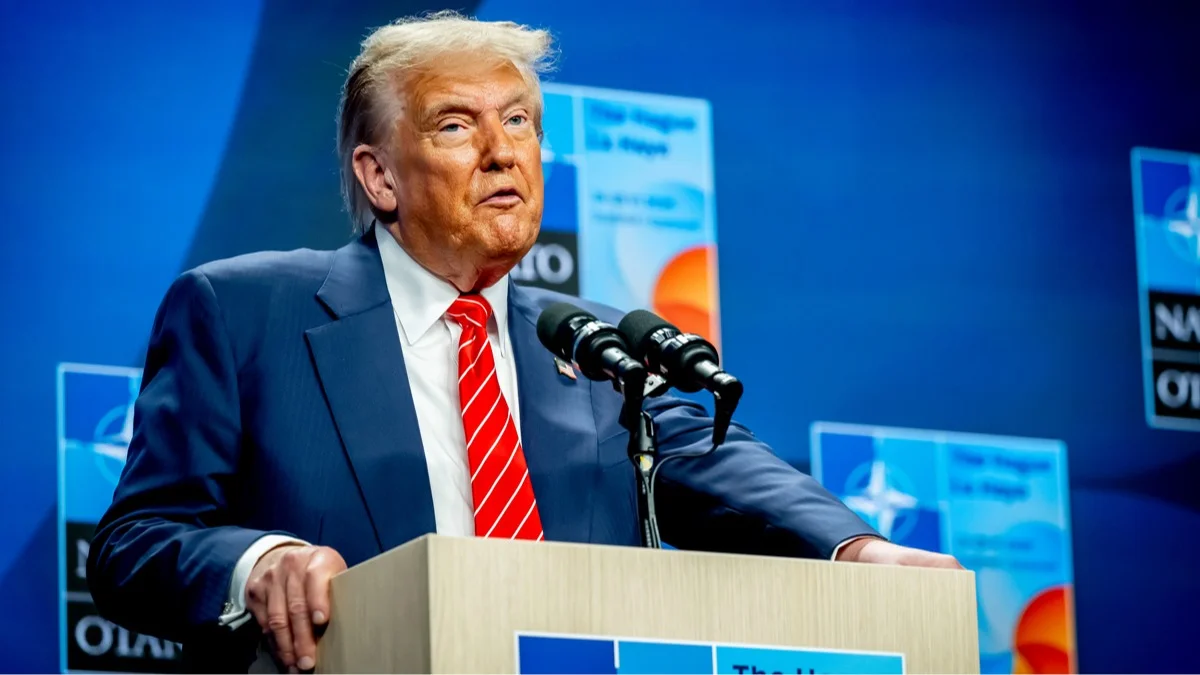
Donald Trump during a press conference following the NATO summit in The Hague, Netherlands, June 25, 2025. Photo: ddp/Vida Press
The American-Israeli operation against Iran became a serious test of NATO's strength. Before the strikes began, Washington did not conduct any consultations with Brussels, but then US President Donald Trump began to harshly demand the participation of allies in everything that was happening - either by providing the Americans with military bases, or through direct intervention to unblock the Strait of Hormuz. These demands were not met with understanding from European leaders, which provoked Trump’s anger. Statements have again been heard from Europe that transatlantic relations in their previous form have been completely destroyed. Against this background, NATO Secretary General Mark Rutte again had to take on the role of peacemaker.
No longer a "benevolent hegemon"
“Just as, in my opinion, there can be no return to relations with Russia that existed before February 24, 2022, I also believe there can be no return to transatlantic relations before January 20, 2025,” German President Frank-Walter Steinmeier said on March 24, referring to the day of Donald Trump’s inauguration. At the same time, he assured: Germany must learn lessons from how it got rid of “excessive dependence” on Russia, and apply this experience in relations with the United States.
Steinmeier spoke on behalf of Germany, but he could well have said this on behalf of the European Union as a whole. Similar statements are being heard throughout Europe these days. Indicative, for example, is the interview with Finnish President Alexander Stubb. On March 22, he told The Telegraph that the US used to be a “benevolent hegemon”: “It consulted its allies first [before intervening. — Approx. Ed. ] - in Libya, Iraq and Afghanistan - and also sought approval from the UN Security Council. And if this failed, they acted together with the allies.” But now, Stubb noted, not without a hint of disappointment, the United States has stopped “being a benevolent hegemon.” True, the Finnish leader avoided answering the journalist’s clarifying question about how the United States can now be characterized.
It is significant that these words were uttered by the President of Finland - a man who, from the very beginning of Donald Trump’s second term, emerged as one of the key negotiators with him from Europe and, it must be admitted, has established good personal relations with the head of the White House. Both leaders' love for golf helped. But the previous time they had joint parties long before the Americans began preparing strikes on Iran.
Supported by a Minority
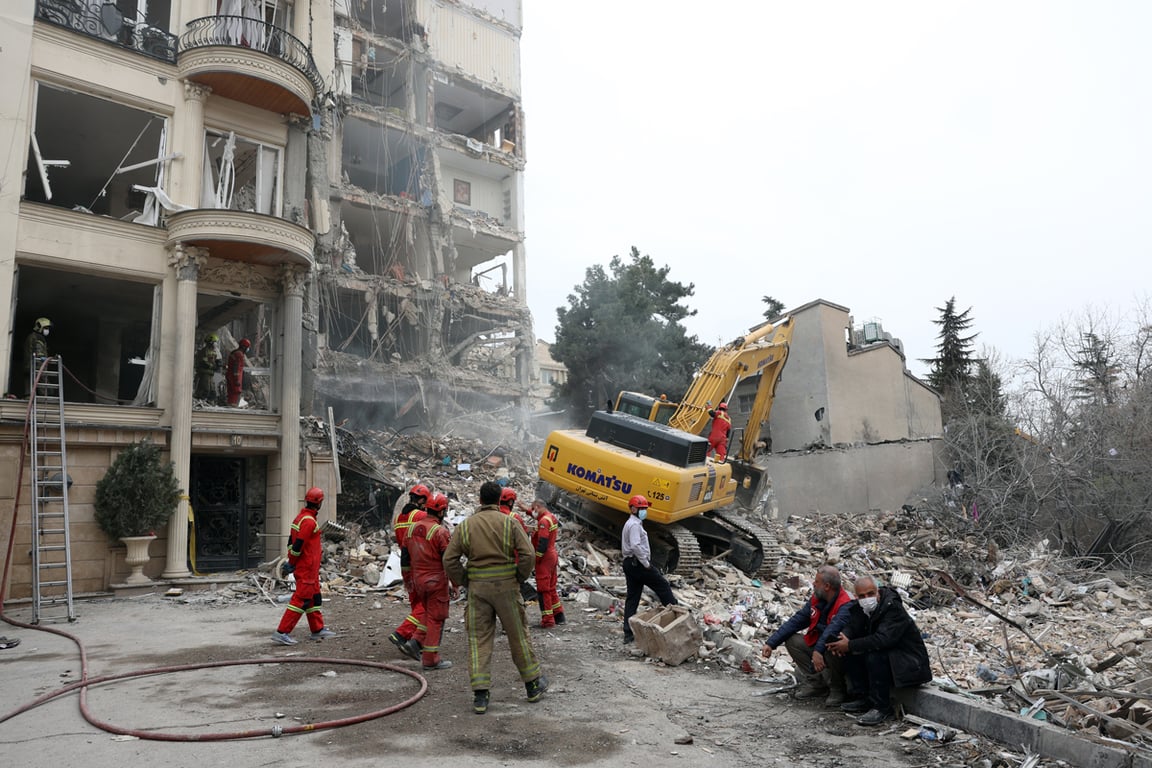
The strikes that began on February 28 caught the US's nominal and real allies by surprise and clearly did not make them happy. As US General Alexus Grinkevich, NATO's Supreme Allied Commander in Europe, argued, "by and large, the vast majority of European allies support" the campaign against Iran. True, he made a reservation that we were talking, first of all, about support among the military. But at the political level it was not particularly noticeable this month. According to Forbes' calculations, only six NATO countries - the Czech Republic, Albania, North Macedonia, Lithuania, Latvia and Canada - have publicly expressed support for the White House's actions.
Many countries had to maneuver during these weeks. For example, Great Britain initially refused to allow the American military to involve British bases in the operation. But after some hesitation, amid criticism from Trump, London allowed Americans access to the bases, albeit with a caveat: they could be used solely for defensive operations to protect British interests and allies in the Persian Gulf from Iranian retaliatory strikes.
One way or another, Iran did not pay attention to these subtleties and, according to media reports , tried to attack the joint US and British military base on the island of Diego Garcia in the Indian Ocean with ballistic missiles (in Iran itself, however, they claim that this was an “Israeli false flag operation”).
At the same time, some European countries showed much more determination than Great Britain. The most striking example is Spain, which prohibited the American side from using two joint bases for attacks on Iran - in Rota (Cadiz) and Moron de la Frontera (Seville). American refueling aircraft were forced to leave Spain and temporarily relocate to France.
“It is possible to be against a hated regime—as Spanish society generally views the Iranian regime—and at the same time oppose an unjustified and dangerous military intervention that goes beyond the framework of international law,”
- Spanish Prime Minister Pedro Sanchez explained his tough position.
This position angered Trump, who supported calls for the closure of American bases in Spain (the need for such a step, in particular, was discussed by influential Republican Senator Lindsey Graham). In addition, the head of the White House threatened to stop “all trade” with Madrid. However, since these statements, no specifics have been made, and, most likely, the threats will remain just threats.
"This is not a NATO war"
Meanwhile, Trump is not just trying to ensure that the allies provide the American military with infrastructure: they, the head of the White House is sure, must themselves actively intervene in the ongoing armed conflict. Thus, the head of the White House is waiting for NATO countries to send warships to the Strait of Hormuz to ensure safe navigation there. The closure of this key transport artery in the region - the bottleneck through which about 20% of the world's oil and an impressive share of liquefied natural gas passes - caused a sharp jump in oil prices , the consequences of which have already been felt by both Europeans and Americans.
The Iranians claim that the Strait of Hormuz is not closed. As Iranian Foreign Minister Abbas Araghchi noted on March 22, the movement stopped not through the fault of Tehran, but solely because of the fears of insurers related to the war, and all responsibility for this lies with those who started the conflict - the United States and Israel.
The White House's demand sounded extremely pragmatic: Europe is critically dependent on Middle Eastern oil, therefore, European fleets must take over clearing and patrolling the strait. But as of now, the most the allies are willing to do is to participate in defensive missions in Cyprus, whose territory Iranian drones previously attempted to attack. Spain, Greece and France sent their warships to the shores of the island, where British bases are located.
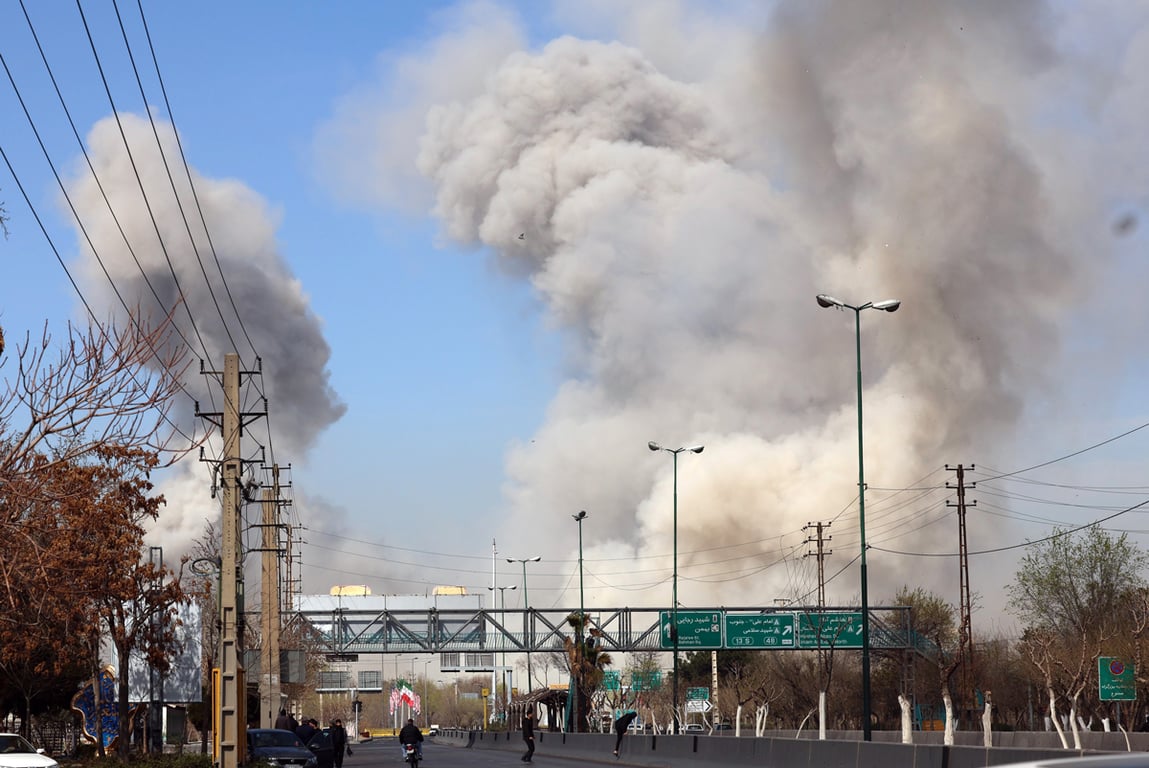
Trump supporters believe that the time has long come for the application of Article 5 of the NATO charter (that an attack on one is an attack on all), in particular because Cyprus and Turkey are in the attack zone of Iranian missiles and drones. However, NATO Secretary General Mark Rutte admitted that such an issue is not even being discussed.
The position of the majority of members of the North Atlantic Alliance was recently expressed by the representative of the German Chancellor Stefan Cornelius: “This war has nothing to do with NATO. This is not a NATO war." Retired French Lieutenant General Michel Yakovleff spoke even more frankly. According to him, the Americans demand help, but are not even able to clearly state their strategic goals: “They improvise day after day. In fact, they don't care about our frigates. They just want us to share the political bill for their fiasco.”
Europe is guided by a sober assessment of risks. Any coalition in the Persian Gulf would immediately become a target for Iranian missile systems and swarms of cheap kamikaze drones. The cost of fending off these attacks—a multimillion-dollar interceptor missile being spent on a tens of thousands of drones—turns such a mission into a financial black hole. And this is especially worrying for Europeans, given the need to maintain the previous pace and volume of support for Ukraine.
They will remember this
Thus, the leaders of the 31 NATO countries found themselves in a difficult situation. The task is not to compromise one’s principles and not to disappoint one’s voters, but at the same time not to completely anger the main, 32nd member of the alliance. Since the start of the attacks on Iran, Trump has repeatedly made angry statements addressed not only to individual states, but also to NATO as such.
“I have always viewed NATO as a one-way structure: we spend hundreds of billions of dollars a year defending these countries - and they do nothing for us when we need it,” he wrote on Truth Social on March 17. And three days later he continued the topic: “Without the United States, NATO is a paper tiger!” Accusing European leaders of cowardice, the head of the White House added: “We will remember this!”
This statement did not go unnoticed in those countries that have long-standing contradictions with the EU. “President Trump is disappointed in NATO and criticizes it for a “very stupid mistake.” He will not forget the lack of reciprocity,” wrote , for example, the head of RDIF X, one of the key Russian negotiators with Washington, Kirill Dmitriev, on the social network. Meanwhile, Alexander Lukashenko, speaking with journalists, shared an exclusive from his meeting with representatives of the Trump administration on March 19: “They, of course, are very sensitive about this... They say: “We have always helped them.” We know how much we helped. Both NATO and economically. They simply could not exist without the Americans.”
This is not the first time in history that NATO members do not support US military initiatives. For example, there was a serious split before the start of the 2003 Iraq War. France, Germany and Belgium opposed the fighting and, in particular, blocked NATO plans to transfer troops and weapons to Turkey, the only alliance country directly bordering Iraq. But in the end, this did not prevent the United States from bypassing the alliance from launching Operation Shock and Awe, which was also joined by Great Britain, Australia and Poland.
Meanwhile, the current story is unique in that for the first time in history the United States is led by a president who is extremely skeptical of NATO and even threatened to withdraw his country from there. This option is as unlikely as, for example, the mentioned threat to stop all trade with Spain. But, as Senator Thom Tillis, the head of the Republican group of senators on NATO relations, rightly noted , the president has other options: “He can make the alliance effectively incapacitated if he wants.”
Tillis himself considers this scenario catastrophic, because “thanks to the NATO alliance, many American lives were saved, and without it there will be many losses.” In addition, the legislator criticized the statement of the president and his fellow party member that members of the alliance are cowards. “These are not cowards, but people who were not consulted in advance on a major military operation. I would react the same way if I were the head of state,” said Thom Tillis.
Between one and thirty-one
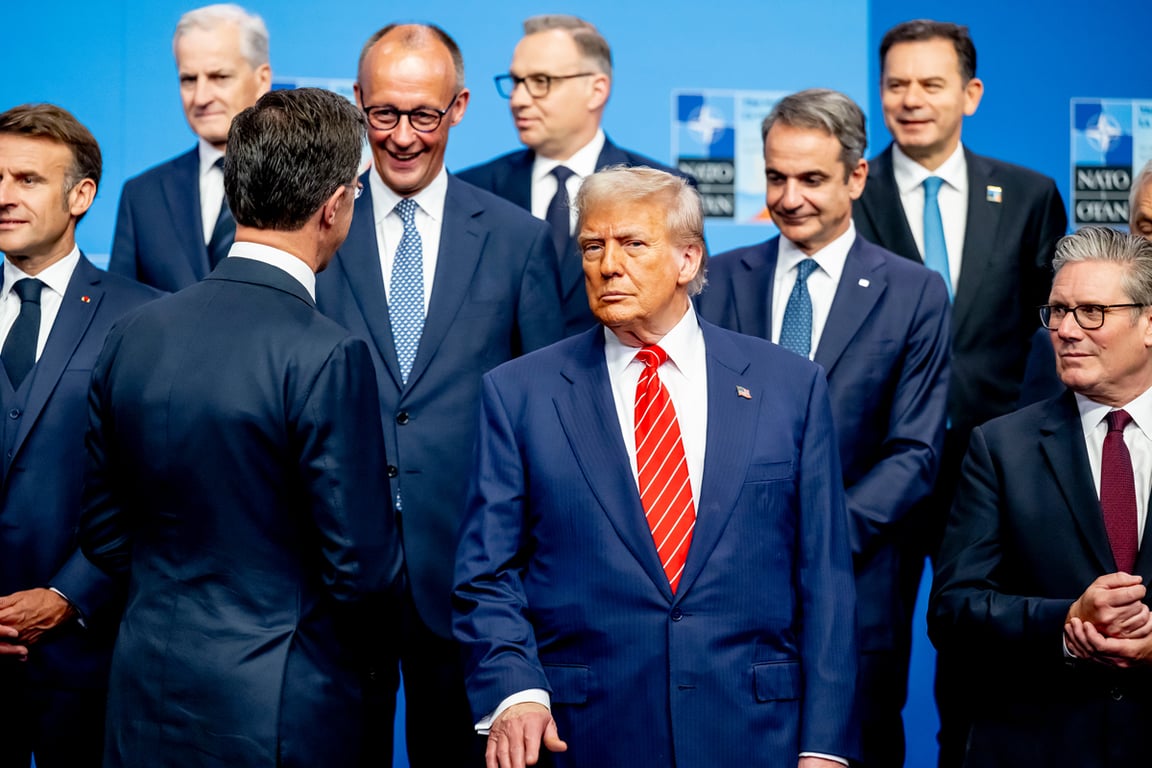
The development of the situation has become a serious challenge for NATO Secretary General Mark Rutte, who understands perfectly well that without the United States, the North Atlantic Alliance is, if not a “paper tiger,” then certainly not as strong a structure as it is now. You can at least pay attention to the fact that the United States accounts for 14.9% of total direct funding to NATO - this is the largest share along with the contribution of Germany.
Like Alexander Stubb, Mark Rutte, at the beginning of 2025, was among those leaders who felt their way to the US President. And now he has taken on the role of peacemaker. Rutte said he spoke with President Trump several times last week and may have tried to convey to him the conciliatory message he expressed in the CBS News interview. On the one hand, Rutte noted, it is absolutely clear why the United States did not inform the Europeans - the task was to maintain the element of surprise of American and Israeli strikes. On the other hand, it is quite logical that European countries took time to get together and coordinate their positions.
At the same time, now, as Mark Rutte added, US allies have something to please Washington. “From Thursday [March 19. — Approx. Ed. ] 22 countries—most of them NATO members, as well as Japan, Korea, Australia, New Zealand, Bahrain, the United Arab Emirates—came together to essentially answer three questions: What do we need? When do we need it? Where is it needed? Work is now underway on these issues in order to respond to the call of the US President and ensure free navigation through the Strait of Hormuz,” said the NATO Secretary General.
With hopes for de-escalation
The first result of the work of this new coalition was a joint statement issued on March 21, which stated its readiness to contribute to ensuring safe passage through the strait. On March 24, Politico reported that the UK plans to soon organize a meeting of countries that are interested in unblocking passage through the Strait of Hormuz. And The Telegraph newspaper wrote that the Royal Navy is considering chartering civilian ships to help clear the Strait of Hormuz of Iranian mines.
Meanwhile, it is likely that the true goal of the US allies remains the same: to avoid involvement in the conflict, but not to completely anger Trump. In particular, as Politico wrote on March 23, citing four unnamed EU diplomats, European governments “fear that for the contemptuous refusal of calls for help in the Middle East, the American president may retaliate against America’s European allies, primarily by stopping aid to Kiev.”
Given this, Trump’s March 23 announcement of a temporary de-escalation was likely greeted with a sigh of relief in the countries of the new “coalition of twenty-two.” The head of the White House wrote on the Truth Social social network that the United States and Iran held “very good and productive” negotiations on “a complete and final resolution of the conflict in the Middle East,” and contacts will continue in the coming days. As a result, the head of the White House decided - in order to give diplomacy a chance - to postpone for five days attacks on Iran's energy infrastructure (these attacks could begin on March 24 as a response to the blockage of the Strait of Hormuz).
True, the Iranian side immediately called the report about certain negotiations untrue, emphasizing :
"Trump has backed off from attacking critical infrastructure as Iran's military threats have become more credible."
Information from sources on the Israeli portal Ynet, which reported on March 24, has not yet received official confirmation: the new Supreme Leader of Iran, Mojtaba Khamenei, allegedly agrees to negotiations with US representatives.
The supposed demands of Washington and Tehran on each other also seem unrealizable. As The New York Times reported , the United States gave Iran, through intermediaries in Pakistan, a 15-point plan to end the war. Among them there are some that are categorically unacceptable to Tehran.
What does the US demand from Iran?
Dismantling the already accumulated nuclear potential.
Iran undertakes to never seek to acquire nuclear weapons.
Enrichment of nuclear materials is prohibited on Iranian territory.
All enriched materials will be transferred to the IAEA.
The nuclear facilities at Natanz, Isfahan and Fordo will be decommissioned and destroyed.
The IAEA will have full access to facilities in Iran.
Iran will abandon the paradigm of proxy wars, as well as financing and arming groups in the region.
The Strait of Hormuz will remain open and the parties undertake not to block it.
Iran's missile program will be limited in the number of warheads and their range, and Tehran is committed to using it only for self-defense.
What the US is offering Iran in return:
Cancellation of all sanctions.
Assistance in the development of a peaceful nuclear program.
Refusal of threats of renewed sanctions.
In turn, Iran, as the WSJ reported , presented no less high demands to the US presidential administration to begin negotiations. Among them, in particular, the closure of all American bases in the Persian Gulf countries and the payment of reparations. Real negotiations will only become possible if the parties abandon their maximalist positions.
Thus, it is still premature to talk about a turn to long-term de-escalation. And it cannot be ruled out that US allies will ultimately not be able to limit themselves to just a vague statement of readiness to “contribute” to the situation around the Strait of Hormuz. Otherwise, they will quickly lose their status as allies in the eyes of President Trump.