
Translated material
The epidemic that cannot be named
The government's silence on foot-and-mouth disease could trigger the death of cows and other livestock across the country. Investigation "New-Europe"
Illustration: Rina Lu / “Novaya Gazeta Europe”
The situation with mass slaughter of livestock in Russia has gotten out of control. Authorities in several regions send veterinarians to private farms, accompanied by police squads, who confiscate, kill and burn dozens of cows and other domestic animals. Farmers are fainting, threatening to burn themselves, trying to hide their livestock and recording appeals to Putin. Officials offer almost no explanation for their actions. Conspiracy theories are spreading throughout the country. Novaya Gazeta Europe managed to talk with a representative of an agricultural holding that does business in the Novosibirsk region. He claims that owners of large livestock know the answer to the question of what is happening: an epidemic of foot-and-mouth disease has begun in Russia, a very contagious and dangerous disease for animals. Until officials admit this, more than half of the regions will not be able to start using vaccinations for prevention. Businesses fear livestock pestilence across the country.
EDITOR'S NOTE
The material contains obscene language.
What you will learn from this investigation:
- The conspiracy of agricultural holdings, it seems, does not exist after all: large companies destroyed thousands, and some - tens of thousands of heads of livestock;
- How the infection started back in February and how it spread ; ****
- Why didn't anyone say anything to the farmers;
- Why is it so important for the authorities to keep it secret;
- Why the epidemic can spread to the whole of Russia.
“Everything became clear to the agricultural holdings quite quickly,” says a representative of one of the livestock farms with more than a thousand heads of cattle located in the Novosibirsk region.
The interlocutor of Novaya Gazeta Europe wished to remain anonymous. The authorities have already made a lot of efforts not to reveal the real reasons for the mass slaughter of livestock in the Novosibirsk region, despite the large-scale scandal. Therefore, any person who tells details about what really happened on the spot risks incurring their wrath. Big business in Russia is highly dependent on the decisions of the authorities, and forceful methods of pressure are widely used against business.
The story of the interlocutor of “New Europe” is internally consistent. The source provided documents to confirm some facts, and some are also confirmed by open data. This story sheds light on how the situation developed in the Novosibirsk region, why farmers were left without livestock and did not receive any explanations from officials, and the danger of this conspiracy of silence.
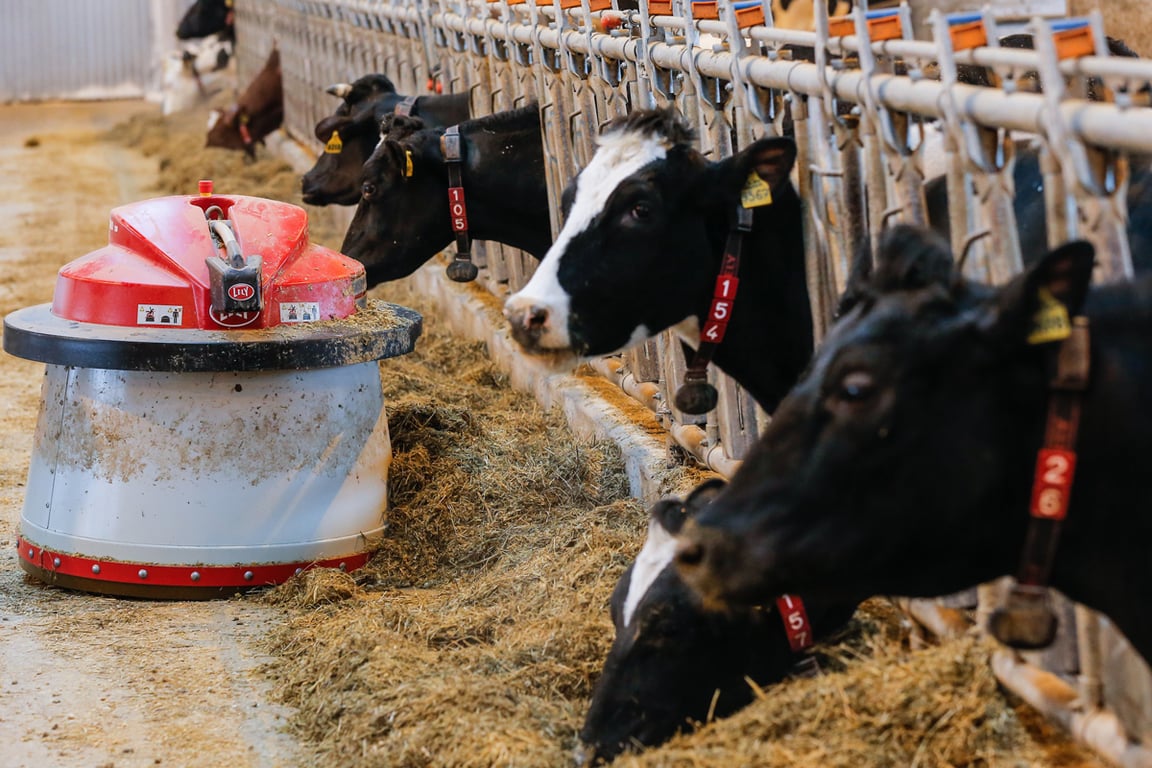
How the situation in the Novosibirsk region developed from the end of January to March
“We have encountered problems since the beginning of February,” says a representative of the agricultural holding. — Veterinarians at large enterprises regularly conduct inspections and usually quickly notice diseases in animals. The clinical signs of foot and mouth disease are quite clear. It’s clear, we all read the rules, so the sequence of actions is very simple: you call the veterinary service, they take samples. The procedure for the actions of agricultural holdings is clearly defined and known to everyone.
The interlocutor of “New Europe” reported that the state veterinary service soon indeed confirmed the suspicions of the veterinarians who worked at the production site. According to him, large farms, even earlier than farmers, were faced with the fact that the only way to cope with the epidemic was the complete destruction of the entire outbreak. They have been doing this since February.
“We didn’t want to kill anyone either.” But then it turned out that the infection had spread beyond the region. And it went very quickly. Unfortunately, this disease is dealt with in one way so far: by completely eliminating and burning the outbreak. That is, they burn everywhere - in Europe, in America. We have a tourniquet.
Large farms, our interlocutor says, destroyed thousands of cows and pigs. But, unlike small farms, they did this voluntarily and without attracting public attention.
To confirm his words, the source provided correspondence with regional officials about possible compensation for damage due to the forced destruction of livestock. The correspondence concerns significant amounts. “New Europe” cannot name the order of the numbers, so as not to reveal the scale of the economy in question.
“That is, if we are talking about a conspiracy of agricultural holdings, then we were not included in this conspiracy,” sums up a large livestock breeder.
When several cases of foot-and-mouth disease were discovered in large enterprises, the authorities decided to conduct research throughout the region.
— After [the discovery of] large outbreaks, widespread testing began and some kind of quarantine was [introduced]. That is, when they realized that there were a certain number of outbreaks, then they went home to check everything,” says a representative of the agricultural holding. — And then they came specifically to those who had positive tests.
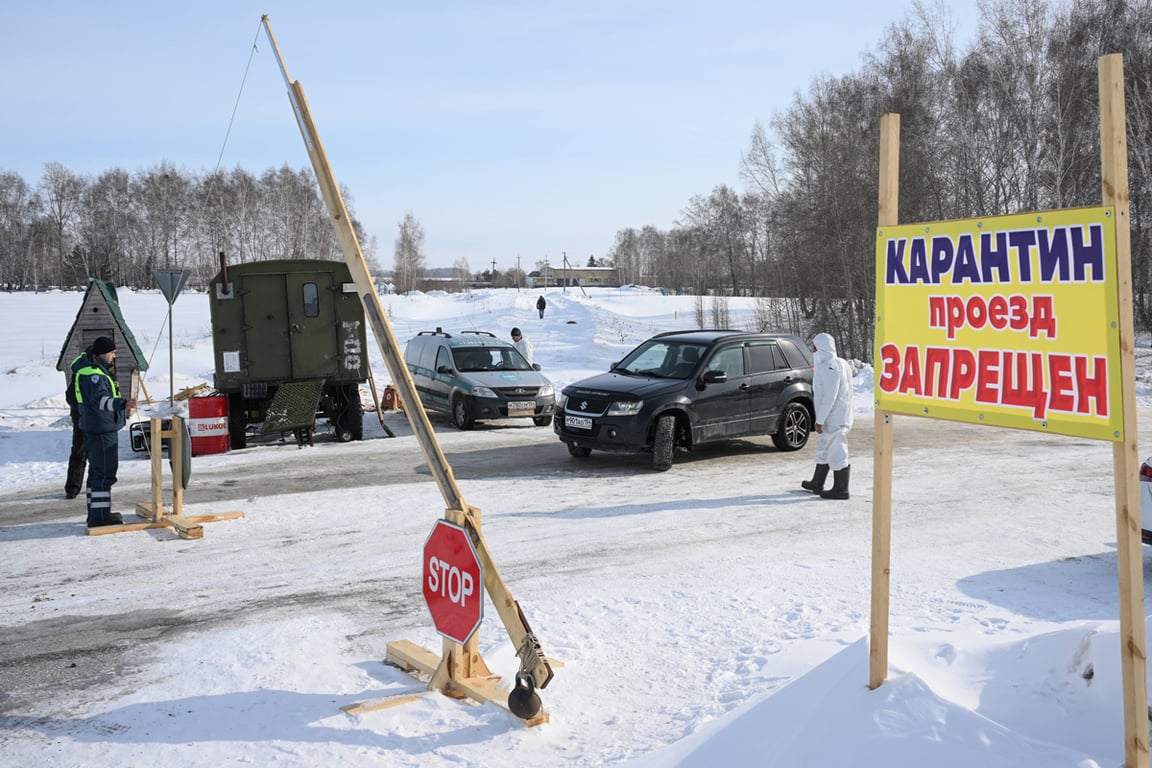
Indeed, already at the beginning of March, quarantine began to be declared in some villages of the Novosibirsk region. Moreover, the roads were blocked with checkpoints, but no official document on the introduction of restrictions was published anywhere. In conversations with local residents, officials referred to the fact that these were documents for official use.
From the very beginning, officials decided to maintain a regime of increased secrecy.
Why is it so important for officials to hide the epidemic?
In May 2025, Russia received the status of a country free from foot-and-mouth disease. It helps Russian exports, and the country does not want to lose it.
This status is assigned by the World Organization for Animal Health (OIE), a body under the World Trade Organization (WTO), which Russia has been a member of since 2012.
- What's the point of all the secrecy? - says our interlocutor. “The point is that the country has certain international obligations that we violated. As a WTO member, Russia is required to report confirmed cases of foot-and-mouth disease in domestic animals. And from this moment on, the country loses its prosperous status.
The order of the Ministry of Agriculture indeed obliges any laboratory to notify the OIE within 24 hours about cases of foot-and-mouth disease. This order is based on the international Terrestrial Animal Health Code , which Russia has signed and ratified.
If a foot-and-mouth disease outbreak occurs in a country, other states may prohibit the import of meat and dairy products from that country. Russia itself does this: for example, in 2025, Rosselkhoznadzor banned the import of meat products from the EU due to an outbreak of foot-and-mouth disease.
At the same time, the pace of Russian meat exports has been growing steadily in recent years. Thus, in 2025, Rosselkhoznadzor recorded a historical maximum, when 820,000 tons of meat products were supplied abroad. Among the main importing countries are Belarus, Kazakhstan, China and the Middle East.
An epidemic of foot and mouth disease, if recorded, could significantly affect Russian meat producers.
— Export is now a big incentive for pig farming, because self-sufficiency in meat in Russia already exceeds 100%. Global markets provide an opportunity for companies to grow and increase profits. In addition, export allows us to sell parts of the carcass that are less in demand in Russia at more favorable prices, the National Meat Association told New Europe. “Restricting such exports would be a serious blow to the industry. [The status of a country free from foot-and-mouth disease] is important for any country, not just for Russia.
In addition, if OIE status is lost, it is not so easy to obtain it again. The commission meets once a year. In addition, it is necessary to first eliminate the outbreak, then carry out mass vaccination, prove that there have been no new outbreaks for a long time, and collect a huge package of documents. This may take several years.
“What amazes me in this story is the scale of efforts that are aimed at maintaining this status. You can only fight like this for something that you are very interested in for some reason. And here we think, first of all, about large meat exporters, for whom this is important,” says a representative of the agricultural holding.
“We have never in our lives seen our Ministry of Agriculture and our respected comrades fight so hard for something.
However, while helping Russian exports, officials have driven small farms in several regions of the country to complete despair.
“In fact, we don’t know what the situation was for small farmers,” says a source in the agricultural holding. — Small farmers themselves did not report problems with livestock to the veterinary services.
Perhaps this is due to the peculiarities of how foot and mouth disease occurred in the Novosibirsk region.
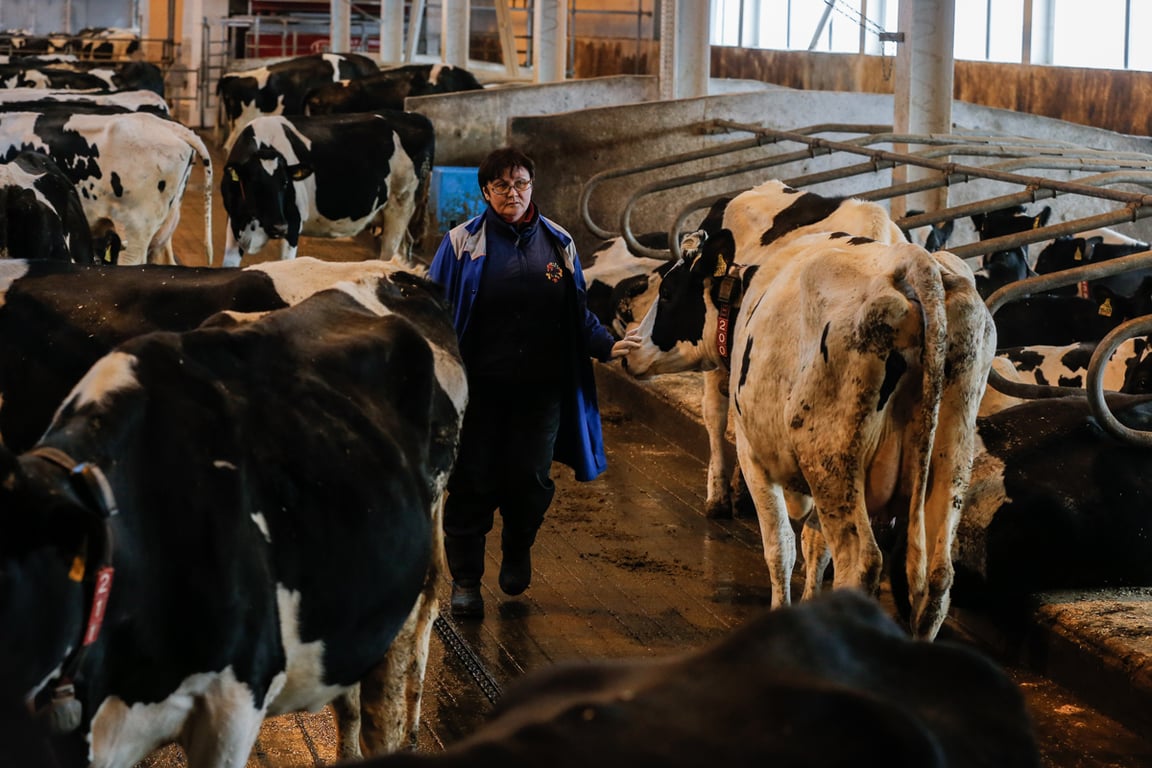
Why did such a scandal erupt in the Novosibirsk region?
The situation began to spiral out of control in the first weeks of March, when authorities began visiting small farms. Officials offered almost no public explanation for their actions.
From fragmentary information from the farmers themselves, the following picture can be reconstructed: at first, without much fuss, veterinarians came to the farms and took tests - this did not raise any special questions among local residents. Some farmers also say that animals were vaccinated en masse. The government services did not explain why exactly, and the farmers were not particularly interested. Then a quarantine was established in some villages and entrances and exits were blocked. Cattle slaughter began.
Livestock was destroyed in the absence of the owners, taken away by force with the help of the police. The farmers were not shown any documents; in conversations they referred to an epidemic of pasteurellosis (another common infection among animals) or rabies. Pasteurellosis has since become the main version of officials throughout Russia.
But pasteurellosis is a relatively harmless infection that can be easily treated with antibiotics and does not require the slaughter of animals (except birds). Numerous experts speak about this, and this is also stated in the order of the Ministry of Agriculture itself.

In the absence of clear explanations from officials, farmers tried to hide their livestock, recorded video messages to the president and promised to burn themselves along with their livestock. During the slaughter, both the livestock owners and the veterinarians who came to kill the cows became ill. Officials came to the slaughter with police and riot police. The most active villagers who tried to stop the killing of cows were detained.
“The officials did a very bad job.” I can’t even imagine how a region can be worked out so poorly. This is complete bullshit
— a representative of the agricultural holding evaluates the actions of the Novosibirsk authorities.
“Initially, they wanted to do everything as quietly as possible, so that the fire would be small and no one would notice anything,” says the interlocutor of Novaya-Europe. - Nobody expected such a scale.
Such rapid development was not expected because in the Novosibirsk region animals are regularly vaccinated against foot and mouth disease. One theory that was widely circulated on social media was even that faulty vaccines were to blame. But a representative of the agricultural holding says that the reason is different.
A new strain of the disease has arrived in the region, which has not existed in Russia before, and the vaccinations given do not help against it. This opinion was expressed in a conversation with the publication “Takie Dela” by veterinary epidemiologist, candidate of veterinary sciences Svetlana Shchepyotkina.
According to a source from Novaya-Europa, animals tolerate this new strain of foot-and-mouth disease not like other types, but more easily.
- Why are the peasants, why are the farmers so worried? They say: they are taking away healthy animals from us! What the peasants see on their farm: the animal is absolutely healthy, the milk yield does not drop. I understand why they are shocked: you had a cow with a fever for three days - that’s all! She no longer has any symptoms. And at the same time, some people came, took tests, and said nothing. Then they came and said, like, we’re confiscating the livestock and liquidating it. Of course, damn it, this is hysterical!
What is foot and mouth disease and were the actions of officials logical to combat it?
Foot and mouth disease is a dangerous viral disease that quickly spreads among cows, pigs, sheep, goats and other artiodactyls. This disease has a high mortality rate; among adults, 1-5% of the livestock die from it, but in young animals the risk of death is even higher - up to 20%. There is no cure for foot-and-mouth disease, and vaccination does not always help: the animal can still get sick or become a carrier of the virus. Even animals that appear healthy can carry the disease. Foot and mouth disease is not dangerous for people, but they also become carriers of the virus. The virus is also easily airborne over long distances, transmitted through milk and hay, and is found in animal transport.
“If we imagine that there is an epidemic of foot-and-mouth disease in the country, then we can say that the authorities are generally acting in accordance with the protocol for its localization,” says beef cattle expert Arsen Islamov. — Such quarantines, such measures of euthanasia and disposal of animals are typical and necessary. That is, what they do with their hands is okay. But what they do according to the documentation, that they do not voice the diagnosis, that they do not issue documents, is, of course, not okay.
According to another version, animals in the Novosibirsk region survive foot and mouth disease easier than usual, not so much because of the characteristics of the strain, but because the vaccine, which was regularly used in the Novosibirsk region, worked well.
“It’s like with the flu or Covid in people: vaccination makes the course of the disease milder,” a representative of the agricultural holding recounts another version, which is informally discussed by veterinarians and officials. Moreover, even those animals that have suffered from foot-and-mouth disease, but did not die, remain carriers of the disease for a long time.
Scientific articles do say that vaccination can contribute to a milder course of the disease.
It is impossible to reliably find out why the disease spreads so quickly and passes without the usual severe symptoms without laboratory tests, and they are classified.
The regime of increased secrecy that officials chose not only drove farmers to revolt. It creates large-scale risks that can lead to the death of livestock throughout Russia.
In order to understand this, you need to understand how the OIE regional classification for foot and mouth disease works.
Why is the silence of officials dangerous?
The infection has long spread beyond the Novosibirsk region. Farmers in the Altai Republic, Penza , Tomsk regions and Transbaikalia complained about the mass slaughter of livestock. The Tatarstan authorities recently let it slip that foci of a “dangerous infection” have been identified in 15 regions of Russia.
In fact, the scale may be even greater. “New Europe” analyzed messages in regional public pages on Telegram and local media. According to our analysis, information about a “dangerous infection” or “epidemic of pasteurellosis,” which authorities chose as an official euphemism for a real disease, appeared in the news in at least 18 regions.
But the biggest danger is that foot and mouth disease can spread to the Northern and Central regions of Russia. They have a special OIE status, which, on the one hand, is the most profitable from an export point of view, but at the same time leaves the animals defenseless against infection.
So, the OIE can assign one of three statuses to a country:
- country not free from foot and mouth disease;
- FMD free country with vaccination;
- a country free from foot and mouth disease without vaccination.
There are also statuses at the regional level.
Thus, according to the decision of the international OIE, Russia as a whole is a country free from the disease, but at the same time 55 Russian regions are free from foot-and-mouth disease without vaccination, and 33 regions are recognized as free, but must carry out vaccination (the latter includes the Novosibirsk region).
The status “without vaccinations” is the most favorable. It allows regions to export absolutely any meat or dairy products, including those that have not undergone heat treatment.
On the other hand, according to the rules of the OIE, vaccinations are expresslyprohibited in such territories. The fact is that many tests for foot and mouth disease do not distinguish between a real infection and the vaccine administered to an animal.
— In order for livestock throughout the country to be protected, vaccinations are now needed! - says a New-Europe source in the agricultural holding. “And of course, the fact that we now have regions where vaccination of all farms is prohibited is very scary. That is, the owner wants, in theory, to vaccinate everyone, everywhere, in all regions, in order to provide at least some protection. But this is not allowed again, because the status. There are attempts to informally persuade officials to carry out vaccinations in all regions. But so far it’s a complete refusal.
Not only veterinarians and anonymous sources talk about foot and mouth disease
Authorities of the Novosibirsk region. Deputy head of the Bagan village council Valentina Zenkova accidentally let slip about the possible presence of foot-and-mouth disease in the region when Ivan Frolov, a journalist from the People's Television of Siberia, called her. In response to Frolov’s direct question about how long the foot-and-mouth disease epidemic will last in the region, Zenkova replied: “We know that there is such a situation, but no one is specifying a time frame. But this information is not for open conversations.” At the same time, the rest of the officials interviewed by Frolov denied the foot-and-mouth disease epidemic. Shortly after the publication of the story, the journalist was detained in Novosibirsk. The police department informed him that an investigation was underway under Article 207.1 of the Criminal Code of the Russian Federation (public dissemination of knowingly false information about circumstances posing a threat to the life and safety of citizens).
Sverdlovsk region. The publication “Caution, News,” citing sources, also reported that the governor of the Sverdlovsk region, Denis Pasler, spoke about foot-and-mouth disease at a closed meeting with representatives of the agricultural complex.
Rare documents obtained by journalists. The publication “Takie Dela” refers to the act of carrying out diagnostic and veterinary preventive measures, according to which animals are now being massively vaccinated against foot-and-mouth disease, and to letters from the state veterinary service, which talk about the spread of foot-and-mouth disease.
- Everyone is afraid. Everyone is very afraid that there will be a massive loss of livestock,” says the livestock farmer. - At the same time, there is some kind of faith that now we will contain all this and will continue to live as if nothing had happened, and nothing terrible will happen! But if it spreads to areas where animals cannot be vaccinated, it will all be complete trash. It will be possible to close down the business in principle.
With the participation of Alexey Stepanov and Alesya Sokolova.