
Translated material
An archaeologist must dig. Dot
And to the question “Whose Crimea?” answer without hesitation: “King Mithridates, of course.” Once again about the case of the historian Butyagin

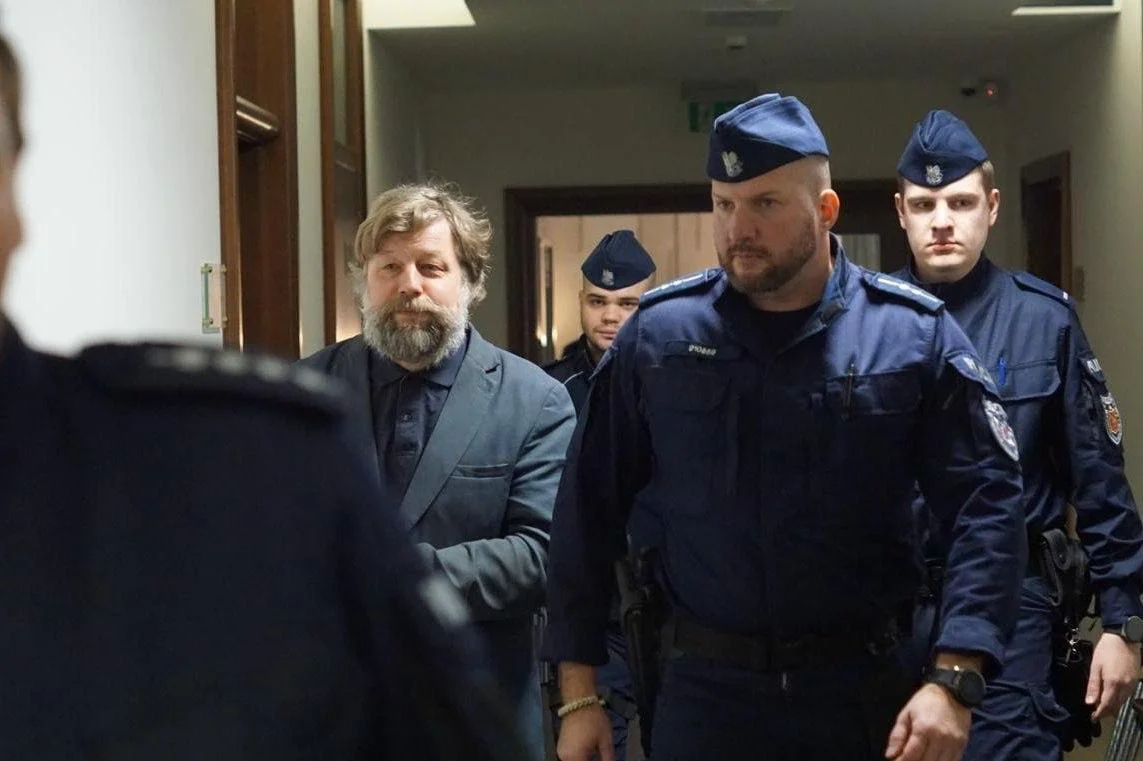
Alexander Butyagin. Photo: social networks
A Warsaw court decided to satisfy Ukraine's request for the extradition of Russian archaeologist and Hermitage employee Alexander Butyagin. The Ukrainian prosecutor's office accuses him of illegal excavations of the ancient settlement of Myrmekiy in Crimea, as well as of the destruction of the archaeological complex and causing multimillion-dollar financial damage to Ukraine. The Polish court's decision is not final; an appeal is ahead.
Alexander Butyagin is one of the largest Russian antiquities scholars. He has led the Myrmekian archaeological expedition conducting excavations near Kerch since 1999. His research interests focus on the Bosporan Kingdom, which existed in the region from the 5th century BC. In addition, Butyagin is known as a researcher of Roman antiquity and a brilliant popularizer (in particular, he is a regular lecturer at the Arzamas project).
He ended up in Poland a few months ago as part of a “short European tour” (an expression from Butyagin’s telegram channel), during which he gave a lecture “The Last Day of Pompeii” in Amsterdam and Prague. Butyagin was scheduled to give a lecture in Warsaw on December 4, 2025, and the final destination of the program was Belgrade. But upon arrival in Warsaw he was detained and sent to prison. The Eurotour, alas, has been delayed.
Immediately after Butyagin’s arrest, a dispute began on social networks that has not stopped to this day. Some were jubilant. Others argued that Butyagin was innocent or pointed out the apparent disproportion of the potential punishment to the alleged crime. As the Americanist Ivan Kurilla* put it:
“I think that digging in Crimea after 2014 was wrong. I don’t think an archaeologist deserves to go to jail for doing this ‘wrong’.”
And here I need to say two things that seem important to me.
First. They like to accuse Russians of legal nihilism. In order to get rid of this stigma, the new Russian emigration decided to profess legal fetishism. All you can hear is: “Oh, international law!”, “Oh, the Criminal Code of Ukraine!”, “Oh, the Hague Convention!” The hereditary Hasid speaks with less aspiration about the Sinai revelation than our neophytes speak about the Geneva protocols and the Roman statute.
The strangest thing is that you have to hear this not only from lawyers, who by definition are supposed to look at the world through the prism of codes and constitutions, and ordinary people who have little idea of the work of scientists, but also from historians and philologists. Yes, a humanitarian is most often a law-abiding person and no less than Ostap Bender respects the Criminal Code. The problem is that the interests of researchers and the law come into conflict every now and then. And not only in Russia.
One of the most obvious examples is the law on the protection of personal data, because of which it is impossible to look at your “character’s” personal file, find out when he left the apartment, find the address of his descendants, or much more. It is clear that almost any historian who deals with something more or less modern is looking for ways to circumvent this law. Leaked databases, acquaintances in the police or passport offices, banal exchange of information for money - everything is used.
Or inherited copyright, which hinders the introduction of materials into scientific circulation, academic publications, work on biographies, etc. The struggle to change legislation in this area has been going on for a long time, but the beneficiaries here have incomparably greater lobbying capabilities than supporters of the free exchange of information.
And there are dozens of such points. I’m talking about the humanities because my understanding of the natural sciences is much worse. However, judging by the recent arrest of Harvard employee Ksenia Petrova while trying to import samples of frog embryos into the United States, there are also a lot of meaningless barriers piled up there.
Butyagin's prosecutors refer to his violation of the second protocol to the 1954 Hague Convention governing the protection of cultural property in the event of armed conflict. According to this protocol, any excavations are prohibited in the disputed territory, with the exception of certain specifically specified cases. And it is clear that those who composed the convention had good intentions. But in reality, 1/10 of the benefit is 9/10 of the harm. Because literally following this protocol for decades will paralyze any archaeological activity not only in Crimea, but also in Northern Cyprus, East Jerusalem, Judea, Abkhazia and many other places - in any territory with an unsettled legal status or with a discrepancy between de jure and de facto sovereignty.
It is paradoxical that Butyagin’s critics would never think of speaking with respect about the “Stalinist” Article 58 of the RSFSR Criminal Code or its successor, Article 70 (“anti-Soviet agitation and propaganda”). As well as about any punishments for “fakes”, “discrediting”, “insulting feelings”, “rehabilitation of Nazism”, etc. But as soon as the words “Geneva” or “UN” are heard, the pumpkin immediately turns into a carriage, the law from the “drawbar” becomes an object of worship.
Here, by the way, is the answer to a popular question: why did Butyagin, knowing about the SBU investigation launched against him, go to Europe? The archaeologist himself, in an interview with the BBC from the pre-trial detention center, answered this question exhaustively: “I believed that the traditions of freedom, reason and humanity would not allow Europe to join the hunt for scientists. I am paying for my faith in Europe."
Well, Russians are convinced that such pure absurdity is only possible in their homeland. That in civilized countries they cannot take seriously the prosecutor’s nonsense about the fact that the Myrmekian archaeological expedition “actually carried out the destruction of a protected object.” They can. If you think that Russia has gone crazy, this does not mean that everyone else is normal.
And second.
All this chorus of accusations grows out of the false belief that science should serve society and respond to the current agenda and that there is some kind of researcher ethics other than the task of not lying about the results of research.
One of my late St. Petersburg acquaintances, who served all his life in the Pushkin House, when he wanted to convey the extreme degree of moral decline of a colleague, made big eyes and said in a terrible whisper: “He’s lying in the archival references!” This is the only ethical principle that a scientist follows. And leave the rest to politicians and activists.
Butyagin in the mentioned BBC interview formulates his position in very similar words. When asked why he continued to work in Crimea both after 2014 and after 2022, he answers: “I considered it necessary and correct in relation to the monument under study, the ancient settlement of Mirmekiy. It is not the archaeological site’s fault that it unexpectedly ended up on the disputed territory.”
And when the editor of an international archaeological magazine proudly declares that articles about excavations in Crimea or the Golan Heights will never appear on the pages of her publication, she thereby demonstrates complete incompetence, to which one can only respond with the textbook memetic “get out of the profession!” Because, in fact, a person openly communicates that he is ready to impoverish scientific knowledge and hide information about the latest discoveries from his readers for the sake of following some principles completely foreign to science. But science is extraterritorial, and its benefits are extraterritorial. And who signed the permitting paper is a completely secondary question compared to this benefit.
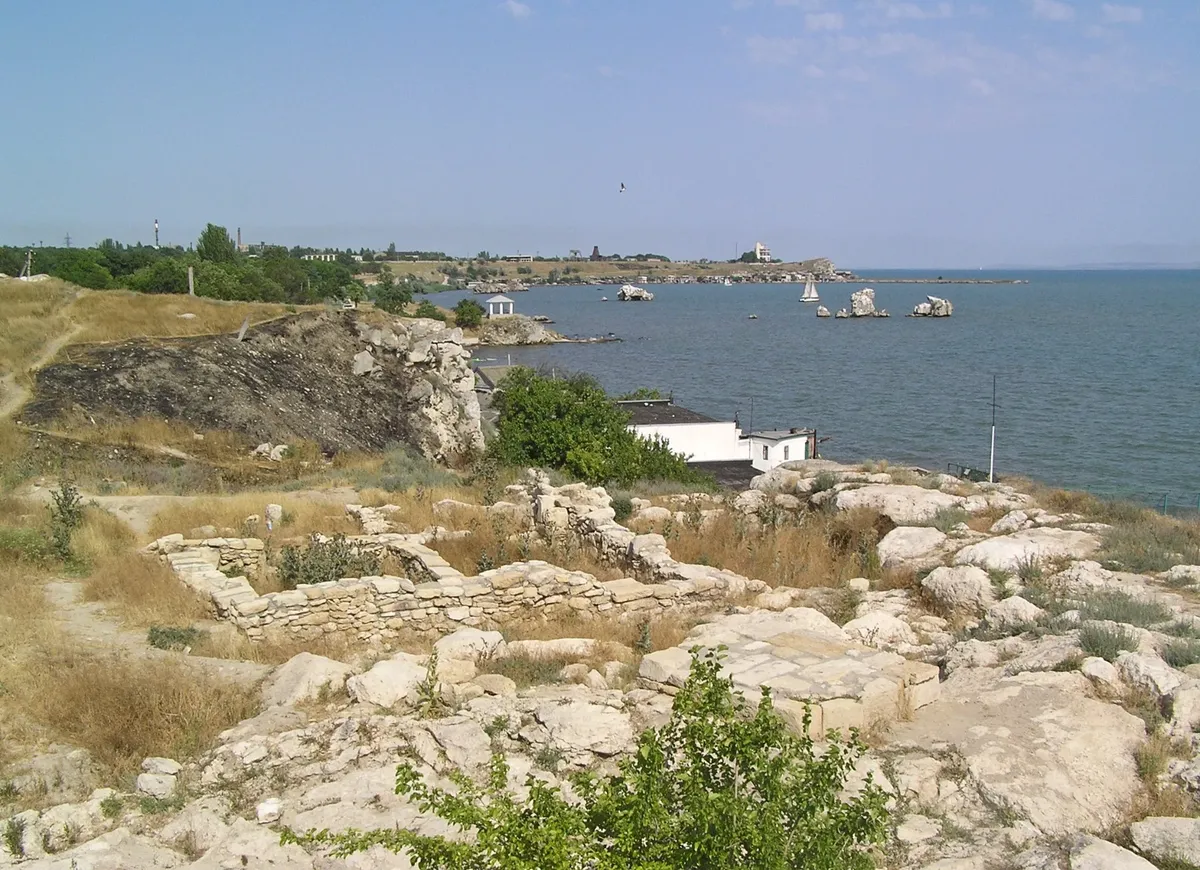
Archaeologists have to negotiate, bypassing governments, with representatives of rebel groups and tribes that control the excavation area. Turkish archaeologists (with the help, by the way, of German colleagues) are digging in Northern Cyprus. It’s a different story for Israeli archaeology, which for decades has been balancing between the need to work in areas under Israeli control and the desire to avoid an international boycott. And all this has led and continues to lead to various incidents, statements and protests, but never before to the arrest of an archaeologist for performing his professional duties. As they say on the maps: “you are here.”
The recent history of the humanities in general is full of real, and not invented, as in the case of Butyagin, legal and ethical forks. Imagine, for example, that you are a philologist, publishing an ancient monument, several copies of which are in museums and archives, and one disappeared from the museum quite a long time ago and its whereabouts are unknown. And suddenly the owner of this list comes to you and invites you to work in his library, provided that the owner remains anonymous. And you, of course, agree, because your goal is to take into account all known variants of the text, that is, to make the publication as complete and textologically correct as possible. And catching thieves and buyers of stolen goods is the task of detectives and police.
An archaeologist must dig. Dot. His moral code consists of one commandment - to correctly classify what has been excavated. State borders interest him only insofar as they help or hinder getting to the excavation site by the shortest route.
For conversations with any presidents, governments, international organizations, prosecutors and others, he has only two phrases in stock: noli tangere circulos meos and procul este profani. And to the question “Whose Crimea?” he answers without hesitation: “King Mithridates, of course.” As one smart person said, “there are people for whom the Myrmekians are real, but everything else is not so much. And they must be protected, they are rare.”
I believe that the appeal court in Poland will release Butyagin from custody and allow him to return to Russia. But if he is nevertheless extradited to Ukraine, I hope that the trial in his case will be open. I would really like to watch the broadcast together with some supporter of extradition from among people with a higher education in the humanities, preferably history. And when the prosecutor says with a serious look: “He actually carried out the destruction of a protected object and caused damage in the amount of 202 million hryvnia by removing a cultural layer two meters deep,” just look into the eyes of the person sitting next to you. Well, I wonder what will be reflected there, in those eyes, at that moment.