
Translated material
“There are ideological ones only among officers”
How a video game developer from Vorkuta couldn’t avoid being drafted, ended up on the front line, and then deserted and is now creating a political simulator
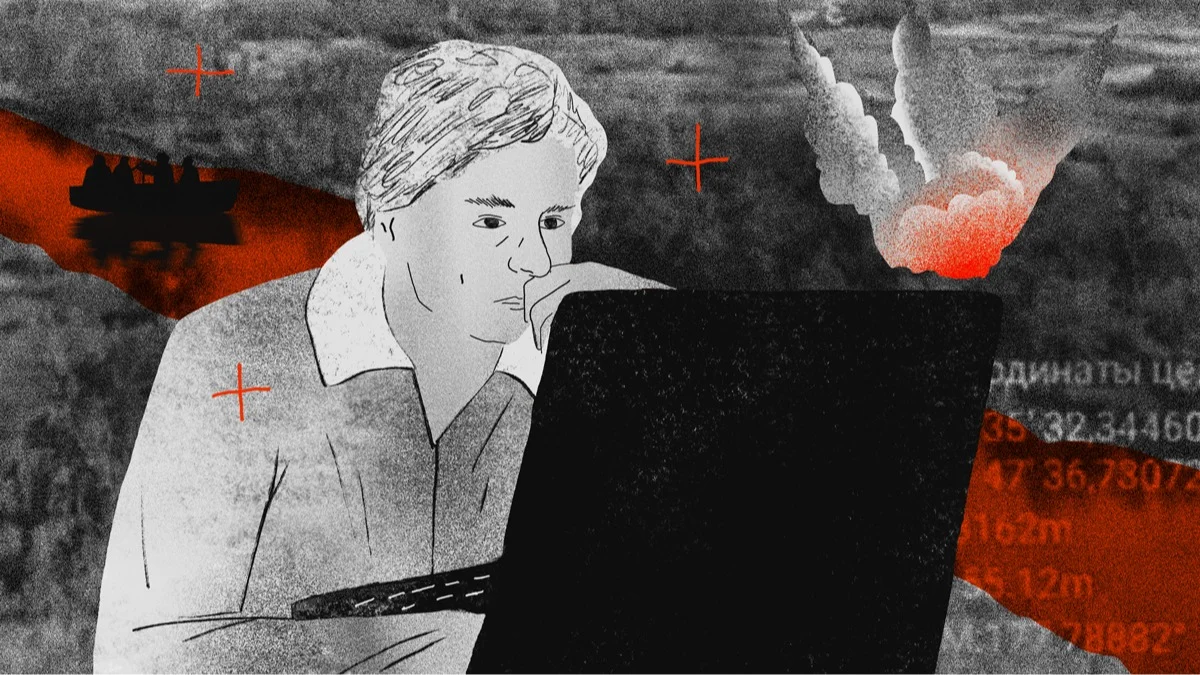
Illustration: Lyalya Bulanova / “Novaya Gazeta Europe”
In February 2025, thanks to the decision of the Altai court, it became known that conscript soldiers were being agitated to sign a contract on the direct orders of the Ministry of Defense. In fact, agitation often gives way to coercion, and conscripts regularly find themselves fighting against their will. Some of them, like 22-year-old Vorkuta resident Timur Prozorov, manage to escape from the front and hide abroad. A correspondent for Novaya Gazeta Europe talked to a deserter about how he spent nine months on one of the most dangerous sections of the front - on the left bank of the Dnieper, where the Russian army is waging a river war with the massive use of drones, how he managed to escape and what kind of video game about “a senile man who ruined hundreds of thousands of lives for the sake of his ambitions” he is making now.
Vorkuta lizards
Timur Prozorov was born and raised in Vorkuta, but always wanted to leave there: year after year everything became more expensive, there was less work, and with the beginning of the war, even “Pyaterochka” and “Magnit” began to close. If only he knew what he would have to go through before he left his home country.
In 2023, Timur graduated from the Vorkuta Polytechnic College with a degree in system administrator.
— I like setting up servers, setting up automation, I wanted to become a full-fledged qualified engineer. I worked at the same technical school for a year, then left to make games,” says Timur.
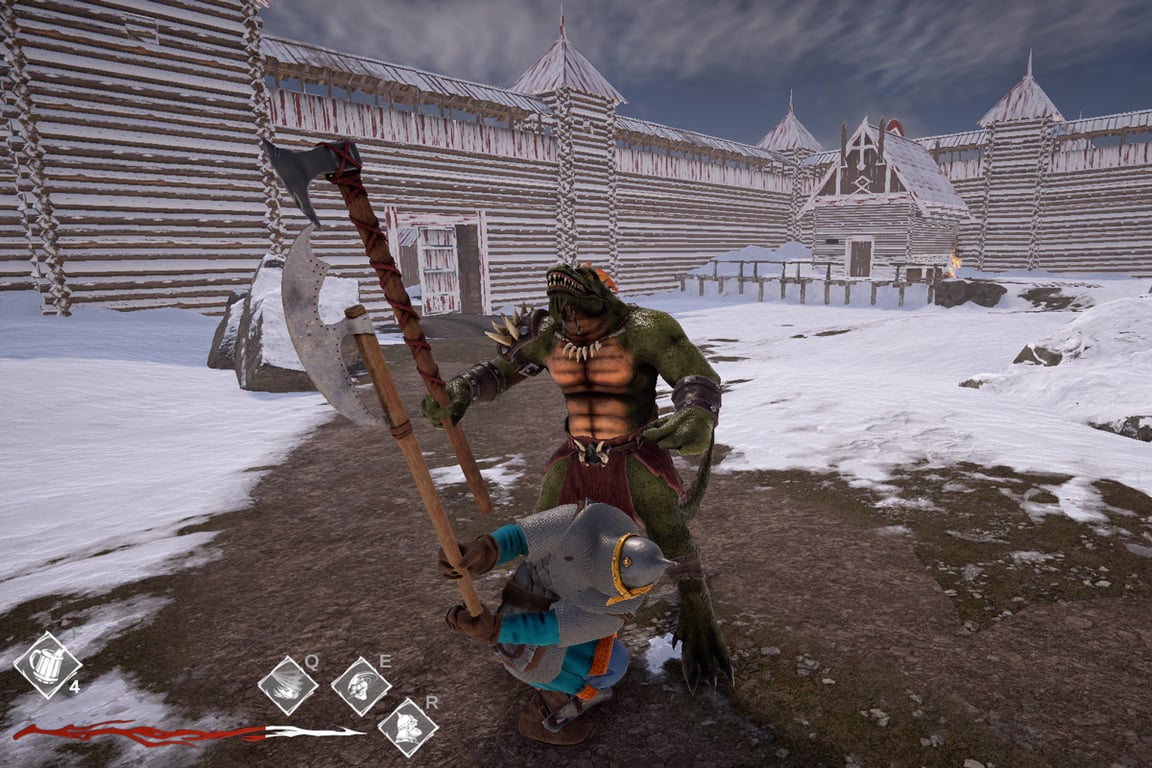
He assembled a team, and in less than a year they developed the video game “Rus vs. Lizards: Arena,” inspired by the pseudo-historical lectures of “Professor” Bagirov, a long-standing Internet meme mocking conspiracy theorists.
Soon, reality put Timur in circumstances similar to this game, only the role of the “lizards” was played by the Russian army.
At the end of the summer of 2024, Timur received a summons for military service with a requirement to appear in November.
“I had absolutely no desire to serve.” Since 2014, everything related to the war in Ukraine has evoked negative emotions in me. In communicating with friends and relatives, I made it clear: I will leave, there is nothing for me to do here. I am disgusted by the violation of a person's right to life. The very idea of protecting people in Ukraine from alleged oppression based on language seems far-fetched to me. We need to look not at historical justice, but at modern realities: there are borders of 1991, they have been ratified, and it is unacceptable to invade or violate them,” Prozorov explains his position.
Timur did not have money to live in exile, nor for a lawyer to fight off conscription. There was no bribe: it was almost impossible to promote the game because of the sanctions, and the Kazakh bank through which he withdrew money from sales was disconnected from SWIFT. Timur contacted “Go through the forest,” but human rights activists only suggested how to leave. It was unclear what to do next, especially since safe countries rarely approve political asylum for fugitive conscripts.
The last hope was for health problems: he prepared certificates about poor eyesight, problems with blood pressure and stomach. But the medical commission at the military registration and enlistment office still found him fit. He did not have the opportunity to escape then, so on the appointed day he appeared at the collection point on a summons.
Forcing a contract
On December 9, 2024, Timur was taken to the 126th Guards unit in Crimea, where conscripts were immediately encouraged to sign a contract, first voluntarily. They were told, Timur recalls, that the platoon they had come to replace had died in a drunken traffic accident. Then they admitted that the soldiers were surrounded and taken prisoner. These stories did not inspire confidence - the conscripts agreed to the contract mainly for the money.
— There are ideological ones only among officers, majors and colonels, sitting in offices on easy terms. In the forest, in the dugout, you cannot buy food or go to the canteen, but an officer can safely go to the city or home.
It’s clear that he seems more ideological: he’s cut off from reality and doesn’t see horrors,” says Timur.
According to him, when the flow of volunteers arriving at the unit dried up, the “carrot” was replaced by the “stick.” Conscripts were exhausted “according to regulations”: they were forced to constantly do push-ups and stand in uniform for 14 days in a row. The soldiers were “encouraged” with blows to the stomach and slaps in the face, saying: “We must sign [the contract], the Motherland is calling.”
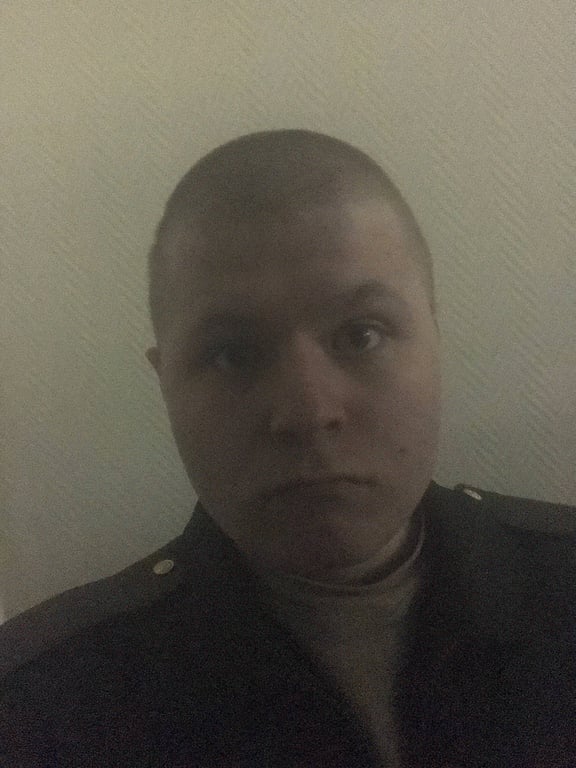
— Once every three days they would come up and say: “You’re not a man, are you? Let’s sign,” says Prozorov. — If you don’t make contact, then “either you sign it yourself, or we’ll do it for you, your candidacy has already been chosen.” Either seriously, or as a joke... However, they didn’t go too far.
Timur explains that the outfits began at noon and ended a day later. After this, the soldiers had to report for briefing, and then they were put back on duty. He recalls that there was no time allocated for either food or sleep. The torture, however, was made a little easier by the fact that in the evening the officers went to rest; colleagues could be asked to bring Snickers or Doshirak and take a nap, but not for long: at night the duty officer came to check. Timur's outfit lasted eight days, with a break of only one. He could not stand it and signed the contract:
“I decided to choose the lesser evil - the 36th Engineer Regiment, which should not have been located directly on the line of combat contact, at most five to ten kilometers away - and immediately look for ways to escape,” Timur explains his logic. — At least a contract worker can go into the city, receive allowances, can go on vacation and come up with something.
"Training" and "equipment"
Two weeks after Timur agreed, he and his colleagues were taken to a unit near Novoozerny in Crimea, from where they were to be transported to the front-line territory. But they were wearing the “office” uniform - the usual green uniform, and the command was afraid of being reprimanded for the recruits who were not dressed according to the regulations.
“They found a uniform on Avito for 500 rubles: all torn, burnt, smeared in gasoline, the fasteners didn’t work, I had a hole in my groin,” my interlocutor recalls. — We were sent for training near Kalanchak in the Kherson region - [there] there were not enough drone pilots, and there was an urgent recruitment. We were accommodated in a dugout and sent to a “laboratory” ( a place where drones are assembled and maintained - editor’s note ), trained on simulators to find out if we were even suitable. But then they took everyone away under the pretext “if you don’t want it, you’ll go on an assault.”
The “training” lasted only three days, and Timur and his colleagues were returned back to Crimea to receive additional uniforms. The equipment had to be purchased at our own expense, and the salary had not yet arrived, so we had to ask relatives for money.
Timur sadly recalls the decision to save money on a sleeping bag: after spending the night in the cold, his legs still sometimes go numb.
From Crimea, Timur was sent to battalion headquarters in a former vineyard near Novoaleksandrovka in the Kherson region. There he again had to stand in his outfits.
— At night, the military police brought a man who was supposed to go on a mission, but he got drunk, didn’t hide the bottle and got caught at the checkpoint. He was put in a hole ( in an open-air field prison for military officers who had committed crimes. - Ed. ) to sober up, they put us on guard - in the middle of the night in January. That means he was lying in his sleeping bag, sleeping, and we were standing in the cold,” recalls Prozorov.
Soon Timur was called to the “laboratory”, where he met his future crew: “Virus” and “Brownie”. “Virus,” coincidentally, was also a game developer and worked a lot with computers, hence the call sign. Timur received the vampire nickname “Tepes” for the characteristic shape of his teeth. “Brownie,” according to Timur’s recollections, was called that because he was “lax, just following the wave,” and was also constantly high on smoke.
Drugs at the front, according to him, are common: every third smoked weed, some preferred “salts.” But the absolute favorite was an anticonvulsant drug, which in large doses worked as a stimulant: physical mobility increased and mood was lifted. In Russia, its price is about 1,000 rubles per jar, and in positions it was sold for three to four thousand.
"Meat" boats
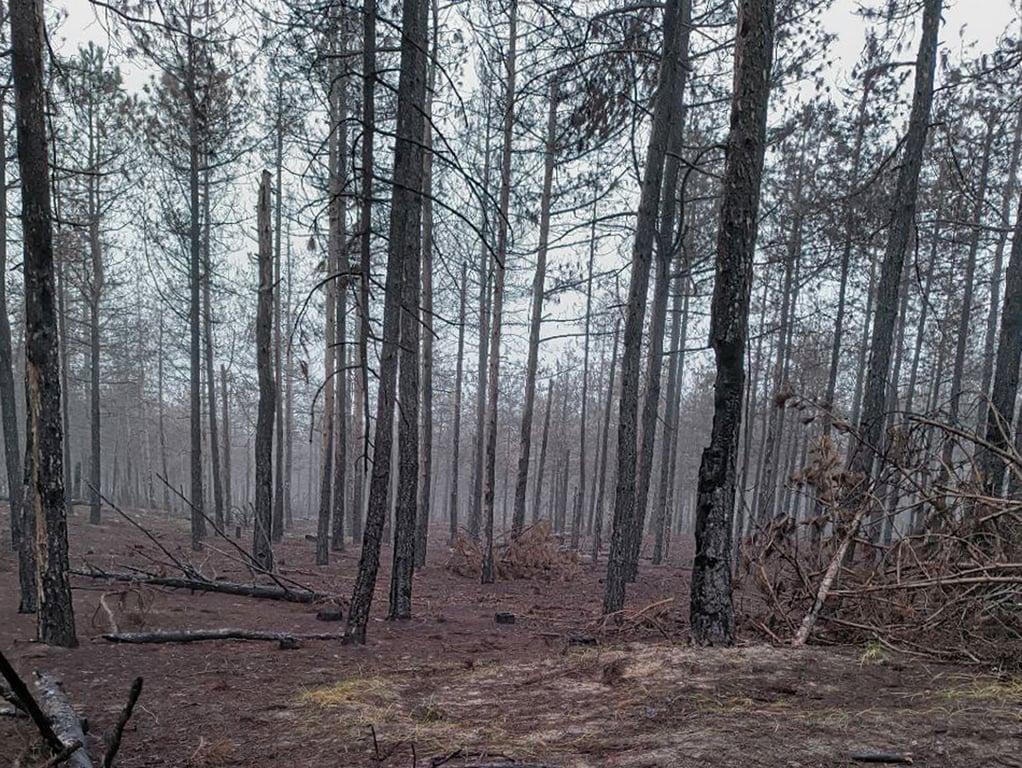
Timur was sent alternately to Pishchanovka, Podstepnoe, Oleshki and Krynki (settlements in the Kherson region) to launch drones with mines onto the opposite bank. According to him, he set up antennas and deployed drones, avoiding piloting until the last moment, because it was the bird’s controller who had the main responsibility for dropping mines and effectiveness. The command demanded that we make seven sorties a day, losing no more than two drones, otherwise they could be sent “to a boat” or transferred to assault units.
Sending to the mentioned “boat” in Russian units near the Dnieper is the local equivalent of being sent on an assault. Once every two to four weeks, both the RF Armed Forces and the Ukrainian Armed Forces tried to occupy strategic points on the opposite bank - the river had to be crossed in rowing boats. Timur claims that during the entire time he was at war - from January to September 2025 - not a single such attempt was successful: the “boat” was actually a death sentence.
“There were six people in the dugout, two of them drank alcohol,” Timur recalls one of these cases. — The unit commander reacted extremely negatively to drinking if ordinary soldiers did it. Nothing happened to drunken officers, but the soldiers were reprimanded.
All six were sent “to the boat.” “If you didn’t drink, why didn’t you stop?” - favorite wording of the authorities. As a result, six “two hundredths”; there could be no other outcome.
Timur explains why: to cross the river, a boat was launched along the narrow Konka River, which flows into the Dnieper from the south. One day, an assault unit deployed a floating drone BEC (unmanned boat), which was supposed to be controlled by Timur’s crew, and within two minutes it was destroyed by Ukrainian drones.
“The only way to bring the boat to the river is to drive onto the Antonovsky Bridge,” says Timur. “You can’t get through the open swampy area: they’ll “work it off” first.” Even if they put the boat on the water, then there are two obstacles: from the occupied side, our colleagues throw off “tangles” - ropes with weights that are wound around the motor - and that’s it, we’ve arrived... Let’s say they magically sailed through Konka, then the Dnieper, a very large open space, the current is strong, it’s impossible to overcome it quickly. The boat is clearly visible and becomes an easy target.
Once Timur personally observed the fate of the “boatmen” while watching a broadcast from a drone camera. The Russian detachment sailed along the Dnieper to Kherson from the village of Dachi - and about a third of the way a Ukrainian “bird” flew into the vessel, killing all four crew members.
Sand and stones instead of mines
An alternative punishment was transfer to the village of Dachi, which was constantly under attack by the Ukrainian Armed Forces, right at the edge of the Dnieper bank. The scouts told Timur about him. The military was not evacuated from there; some stayed there for about two years. Even supplies were delivered there exclusively by drops from drones. Prozorov describes the “suicidal” tasks that were posed to the Russian military there:
— Under the Antonovsky Bridge, soldiers of the Ukrainian Armed Forces sometimes made forays to the left bank. [To prevent this], a radio-controlled cart had to drive to the bridge section across the Dnieper from Oleshki and blow up the remains of the concrete structure. The task was set as follows: “Deal with it as you wish, she must get there.” There are many holes in the bridge from shelling, and naturally she got stuck. There was nothing to do - they ran, pulled it out and kicked it with their feet. But more often, in order not to risk their lives, they themselves “worked out” on it on the sly from the authorities - they say, it was destroyed by the enemy. Our crews did the same with the BECs, which were poorly assembled and stalled, and the commanders ordered the attack aircraft to climb into the boat and get them out. I just felt sorry for the people: they were practically swimming along the Konka River, and you couldn’t explain anything to these (the command and equipment assemblers in the “laboratories”),” says the deserter.
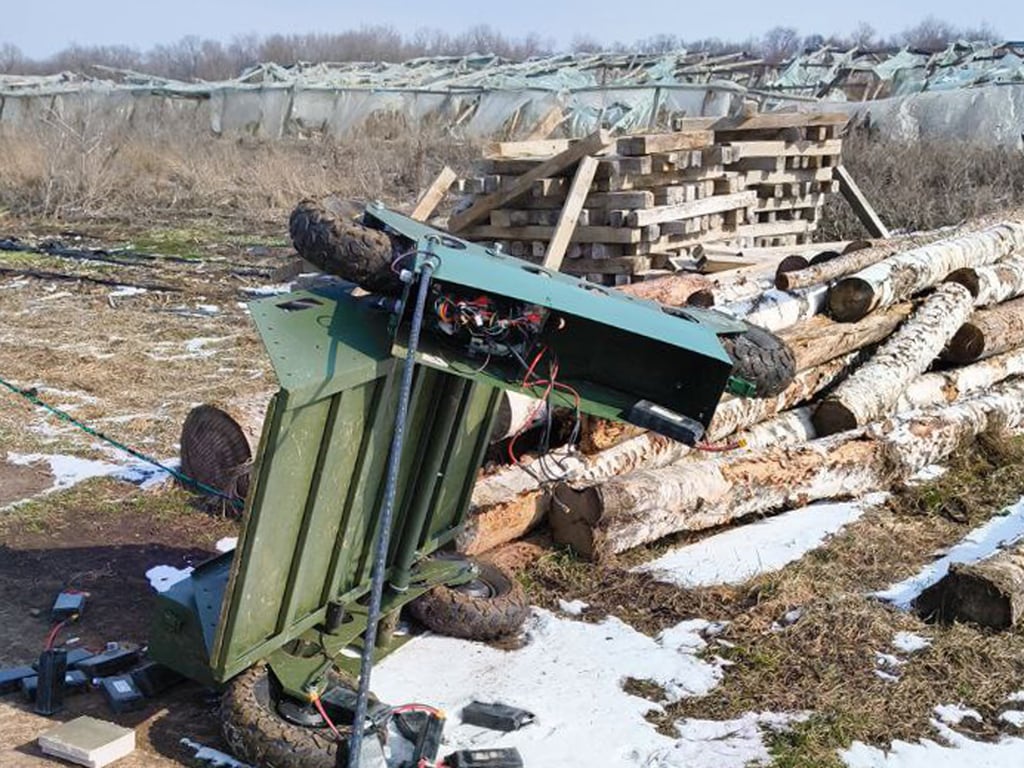
The requirements, according to Timur, were impossible to meet: the drones were hampered by Ukrainian electronic warfare systems, and Russian electronic warfare systems left much to be desired. Once, a poorly assembled drone almost killed “Virus,” who, without observing safety precautions, tested it not on the floor, but on his knees, and the drone, taking off, cut his arm from hand to elbow. The “virus” was not treated, but only bandaged and the next day he was forced to control the drone with his wounded hand, which he inevitably lost.
Problems also arose with ammunition, most of all with “joniks” - mines with electronic fuses that react to changes in the magnetic field. MAG-3 activators for them were often discharged.
Timur recalls how in Krynki a mine exploded ten seconds after connecting, destroying the drone and miraculously not killing the person who was displaying it.
To avoid being sent into an assault, the crews came up with a way to draw reports - “circles”. The pilot took off once and, instead of returning the “bird” to reload, circled between the deployment site and the release point. Then the video from the drone camera was cut and sent upstairs with a report on several flights. Timur explains that the company commander was responsible for the frequency of sorties, so he turned a blind eye to the “roundabouts.”
Timur gave the impression of an obedient and non-conflicting military man; he was trusted to keep track of the ammunition, which he used to sometimes avoid arming mines or completely replacing the contents of the drone baskets with stones, sand or sticks - the pilot did not notice the substitution if the weight of the contents of the basket did not change. He says this was only possible when there were no other units nearby to see what he was doing. Otherwise, there was a risk of getting an article for treason.
"Petals" in the city park
Replacing ammunition with dummies made a lot of sense: the main mine release points were in Sadovy, Pridneprovsky and Antonovka - residential areas near Kherson. Human Rights Watch reported that such discharges often kill civilians. Timur adds that civilians also died on the Russian-occupied left bank.
Thus, one July night in 2025 in Oleshki, one of the crews poorly secured a basket with PFM-1 and PFM-2 mines, small anti-personnel shells known as “petals,” and they scattered in the park in front of a residential building where the Russian military was based. One of the mines blew up a local courier who was delivering food and medicine to Oleshki on private orders.
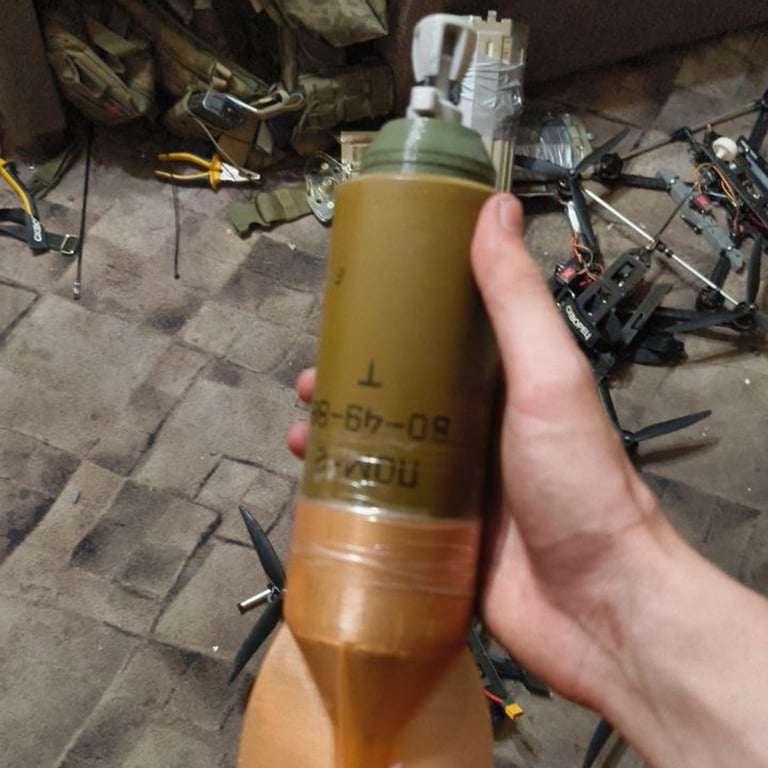
“But no one was punished; it was unclear who exactly was to blame,” says Prozorov. — Several crews were flying from the house. If our “petals” fell, I tried to eliminate them, but if the flight is at night, then you may not get well, and there are no ways to communicate with the locals other than to warn the residents of the house. The POM-2 mine fires a cartridge and releases “threads” - if even one is touched, it explodes more powerful than the “petals”. There was a case when she fell from a drone near a house into the bushes, and there were utility workers walking in the building opposite. I had to take a risk and clear it. They also told me: “Why are you doing this?” — and I didn’t want the locals to get hurt.
Others, on the contrary, deliberately aimed at residents. He recalls how a famous Russian drone operator with the call sign “Buratino” came to them with a “master class”, whom the Ministry of Defense calls a “hero” in its Telegram channel:
“We were located in a residential building near the plant in Oleshki,” says Timur. — [Buratino] worked on fiber-optic cable, not on radio communications. There was a case with me when he flew over the Antonovsky Bridge and, while looking for a target, he ran out of fishing line. And he just hit a residential building - I think deliberately.
Hostages
From time to time, Timur faced cruelty towards locals from the Russian military. He recalls that soldiers periodically came to local stores and took away food, saying they would pay for it later. Later, of course, no one paid.
“In our unit there was a man named Ainur with the call sign “Shifu,” recalls Timur. “He found a can of spray paint and wrote “Glory to Russia” on the wall of the entrance. A local approached him and became indignant: “What are you doing here?” Ainur tells him: “If you don’t like something, I can go get a machine gun.”
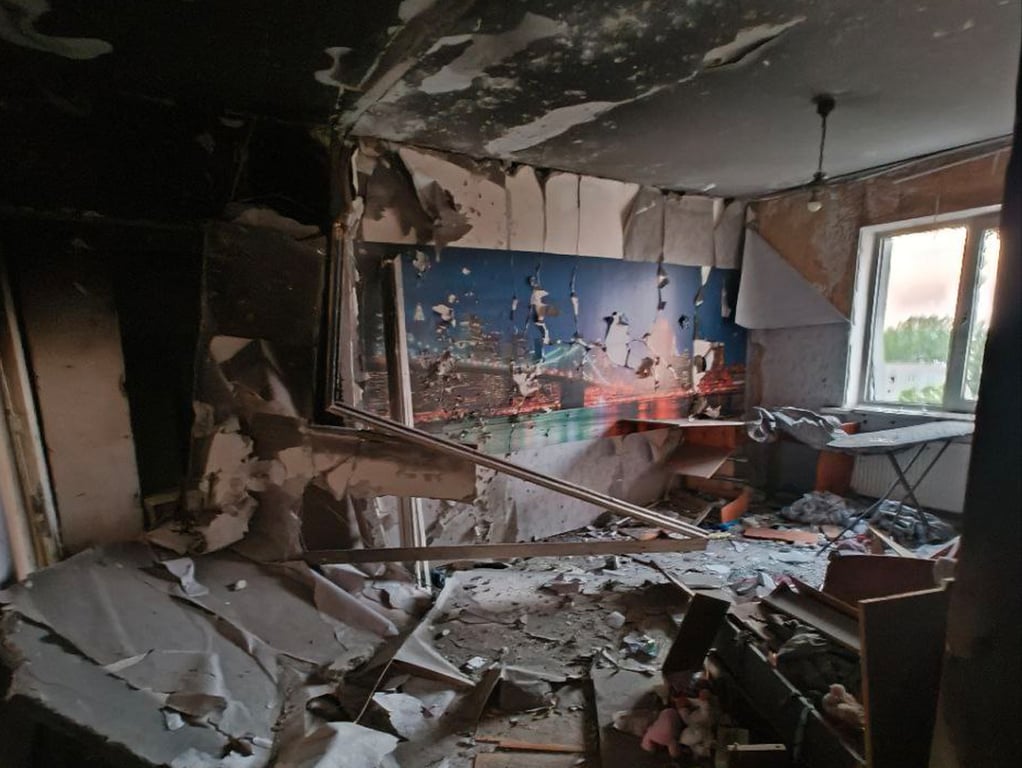
Prozorov says that the only way for locals to leave occupied Oleshki is to move to the liberated shore, to Ukraine, with the help of Ukrainian volunteers, although after a very long journey through Russia, the Baltic countries and Poland. The Russian army did not offer any escape routes, although it occupied residential buildings and exposed people to retaliatory fire from Ukraine. Civilians, according to Timur, constantly suffered and died from this. Moreover, if soldiers were ordered to occupy a living space in which someone lived, the person was simply kicked out of the house.
“Most often older people stay,” Timur says about one of these evictions. — There was an assault regiment that also dealt with [drones] FPVs. There was a convenient position on the upper floors, and a local grandfather of about 65 lived there. They knocked on his door and said: “We need a room, you must vacate it. You have two days, then we will use force.” And that’s it - the dialogue is over. I don’t know where he went, either he moved to the floors below to live with friends, or he evacuated.
Timur admits that he really wanted to stand up for the pensioner, but for any sign of weakness he was immediately sent “to the boat” or transferred to those who stood on the very shore.
“If only one settlement had been involved in the eviction, somehow it would have been possible to reach an agreement,” continues Timur. - But when there are three or four calculations in which the military does not feel pity for the locals, it is useless to do anything. We could have given money, but we didn’t have cash, payments come to cards. But the locals have Ukrainian accounts, and transfers to them from Russian cards are blocked.
How communications work for the “first army of the world”
Although the Russian crews were separated from the Ukrainian side by several kilometers and a river, the life of the engineering units could not be called calm. Timur shows videos of Russian military personnel moving exclusively at a run, fearing the arrival of a Ukrainian “bird.”
“I received my first concussion in Oleshki: the bird flew in when I was running from the fifth to the sixth floor,” says Prozorov. - Buzzing, explosion, ringing in the ears, confusion, dizziness. Then I felt sick for days, when I closed my eyes I heard this buzzing. To this day, when I see a drone or hear a similar sound, I get scared.
Timur explains that the Ukrainian military easily understood where to strike: Russian drone pilots and those responsible for electronic warfare communicated in a telegram chat with 300 people. He appeared spontaneously - the command did not care how his subordinates communicated. This chat, according to Timur, was also viewed by Ukrainians, especially during live broadcasts for the command.
The same thing happened, he said, with communications. The soldiers were not provided with walkie-talkies; the crew bought equipment in Oleshki at the market while it was intact. They were not reflashed and used “as is”.
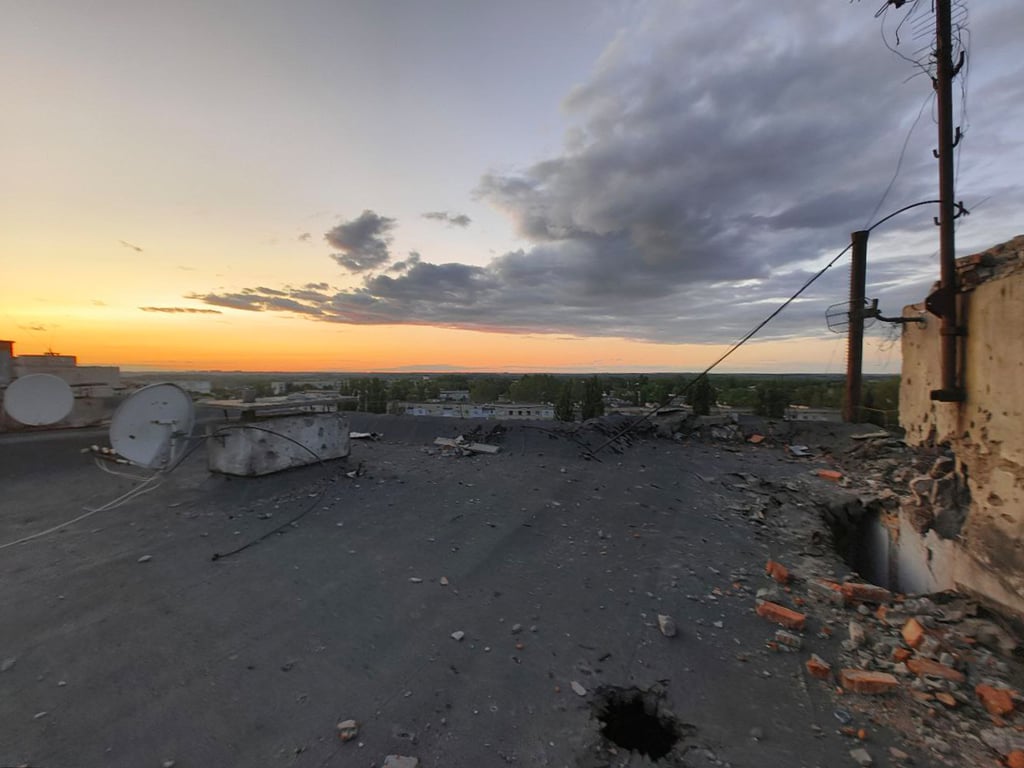
“All communications of the “first army of the world” are based on Starlink,” the deserter is sure. “If it’s not there, you’re left without contact with the outside world.” There is no connection with the checkpoint near Oleshki, there is no satellite connection, the only way out is to go to the roof and try to catch a signal from a Russian or Ukrainian SIM card, and given the drones, this is almost suicide. Once, on the day of payment for Starlink, and at the same time for all the payments in one house, the Armed Forces of Ukraine gave a very beautiful “gift”: within an hour they smashed all of our [terminals]. When the Russian position is revealed, everyone takes too long to agree on redeployment, but the Ukrainians see this, write it down and develop a good plan of attack.
Prozorov’s story about the organization of communications in the Russian army is indirectly confirmed by recent reports of a successful counter-offensive by the Ukrainian Armed Forces after the Russian Armed Forces were simultaneously faced with the inability to use Starlink terminals and the slowdown of Telegram initiated by the Russian authorities.
Escape
It's Timur's turn to pilot the drone. He delayed this moment as best he could, but now the order came directly from the battalion commander. Since the launch point of the “bird” in Krynki was only 13 meters from the crew position, it was possible to deploy the drone and cock the ammunition yourself. Timur claims that he took advantage of this by replacing the contents of the “dzhonik” with sand. The second flight, he said, was also “softened” by dropping the ammunition not near the road, but in the bushes.
After a month in the forest near Krynoki, Timur was finally approved for his long-awaited vacation.
“On the border of the occupied Kherson region and Crimea, in the Armyansk region, there is a checkpoint where the military is asked for permission to leave,” continues Timur. — I wanted to run away earlier, I tried to squeeze out a trip to buy a battery for the Mavic drone. But they only let us go to Crimea, and it’s dangerous to cross the Crimean Bridge, there is an additional check. Even more checks when leaving through the occupied territories of Zaporozhye and Donetsk. I tried to get additional training in Moscow, but they wouldn’t let me go. Therefore, I decided to wait for the vacation, and in order to get it quickly, I feigned obedience and behaved quietly.
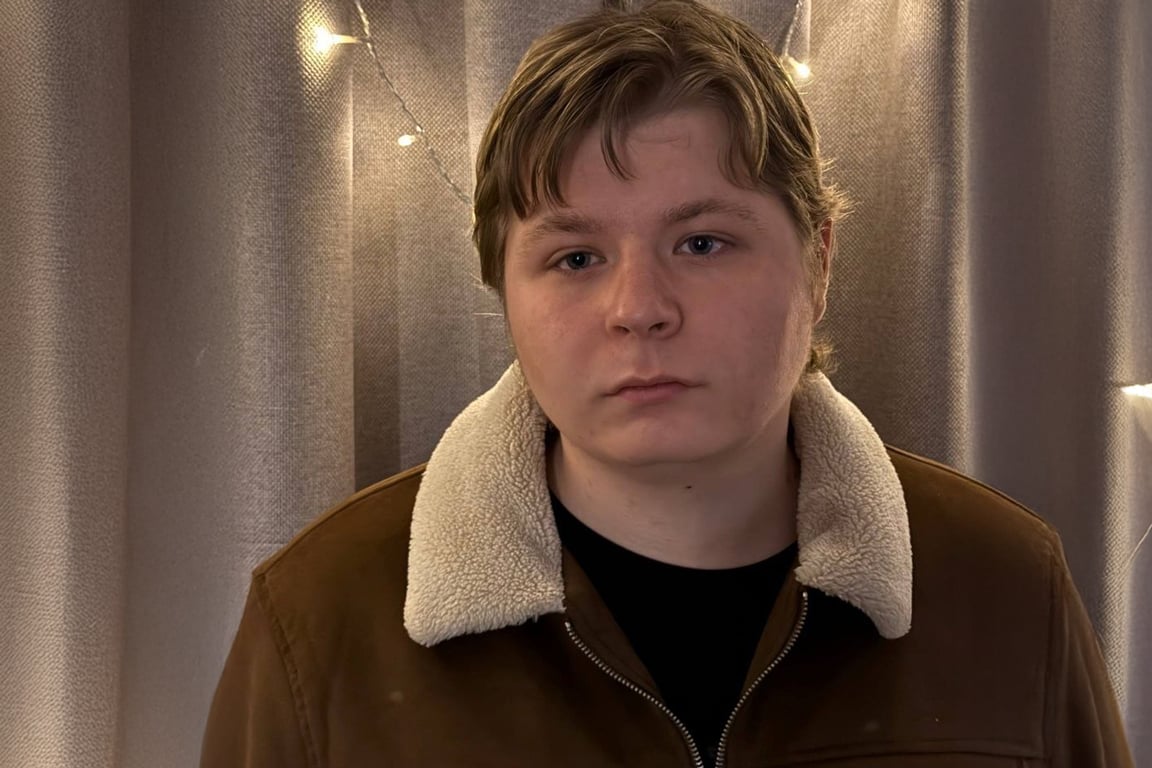
Prozorov adds that among his colleagues, the majority are thinking about desertion in one way or another, and that if it were clear not only how to escape and leave the country, but also what to do next, then “everyone would start asking for time off for “purchases.” Timur was also scared: how he would cross the border, where he would live, whether he would be able to find a job and learn a foreign language, but he took a risk, because he finally waited for the approval of a vacation, from which he did not intend to return back to the front.
On September 26, 2025, Timur arrived at the unit and the next day received a leave ticket, drove through the occupied territories of the Zaporozhye and Donetsk regions to Taganrog and returned home to Vorkuta through Moscow. He reported his arrival on September 30, took his international passport and flew out of the country. (The editorial office has tickets and other documents confirming these facts.)
“I noticed that no restrictions apply to contract soldiers unless they have access to classified information,” says Prozorov. “Everyone I asked didn’t have their military ID checked when leaving, and neither did I.” I asked “Go through the forest” about crossing the border, but there was little time, the answer came when I was no longer in Russia ( Timur’s current location is known to the editors, but is not disclosed for reasons of his safety. - Ed. ).
To confuse the command, Timur did not delete Telegram and waited until the end of his vacation. To messages demanding to return, he replied that he was “drunk.” The reaction was aggressive - then he deleted Telegram, but they continued to search for him.
“I kept in touch with my acquaintances in Vorkuta in order to understand the situation,” continues Timur. “Two people arrived there in a car: a man with the call sign “Kabardos” and some foreman.
They came to the university where I studied and taught, an acquaintance there blabbed about my backup telegram, where they immediately began to write to me: “Come back, everything will be fine, I promise.”
I deleted this telegram too. Two weeks later they left Vorkuta, posting flyers about my search.
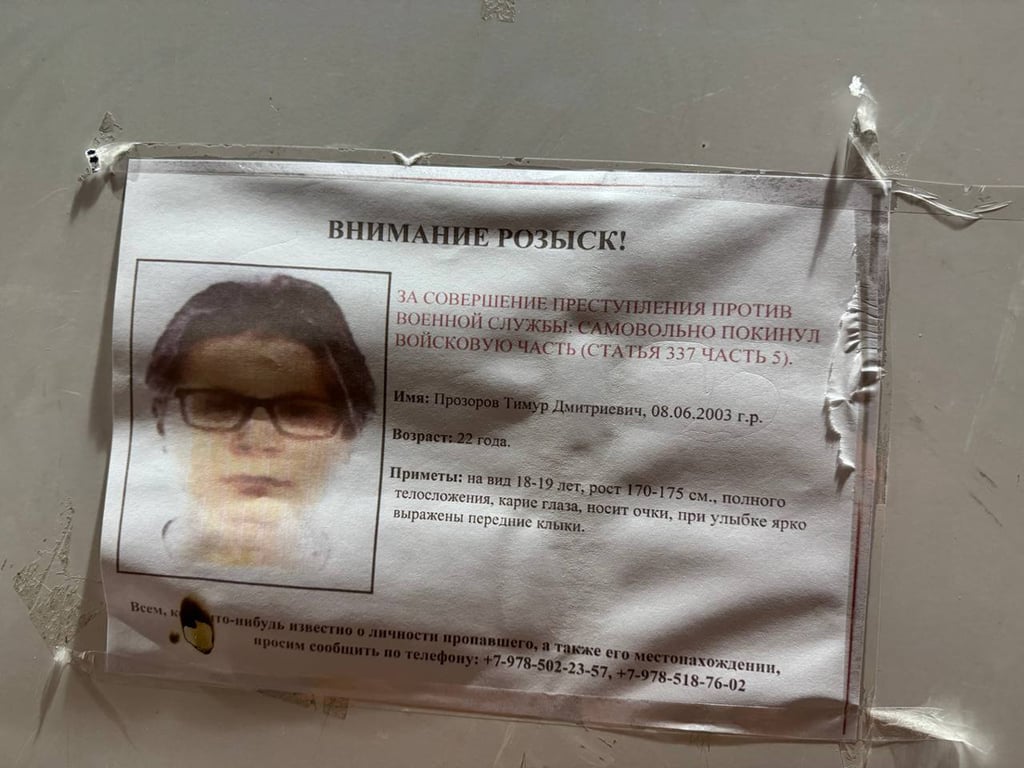
In January of this year, Timur ordered a police clearance certificate, which stated that he was wanted under the article “about leaving a unit without permission.” The deserter is glad that he left Russia. Although life in exile is difficult due to anxiety from PTSD and money problems, he does not lose heart.
“To be honest, I just want to sit down and catch my breath, without this race,” admits Prozorov. “But my education is highly specialized, and it’s difficult to find a job where I am now, so I freelance: I make websites to order and administer them. Recently I sat down to make a new game about Putin, a political simulator with a choice of actions, humor and satire. I want to show him as he is: a senile man who ruined hundreds of thousands of lives for the sake of his ambitions.