
Translated material
Time detectives
Researchers are unwittingly creating memory management technologies. If you know how it is formed, then you can influence it

Photo: Dmitry Dukhanin / Kommersant
This publication begins a new series of articles by sociologist Alexey Semenov-Troyat on the phenomenon of collective memory.
Quiet office at the RANEPA Institute. It’s the Moscow winter outside, and there are thousands of profiles on the computer screen. Daria Khlevnyuk scrolls through tables with Russians’ answers to questions that have haunted both her and her colleague Grigory Yudin* for several years.
What would you do if you knew that your neighbor was hiding a Jewish family from the authorities? What to do if it turns out that your grandfather participated in Stalin's repressions? Can informing be justified for the sake of state security?
The questions are painful, but necessary. Researchers want to understand how Russian society relates to the most difficult pages of its history. What are the moral grounds for making decisions about the past? How is collective memory formed? Pure science, the noble goal of better understanding your society.
Daria does not suspect that she is drawing up a detailed map for those who will manage this memory.
From Kolberg to the Kremlin
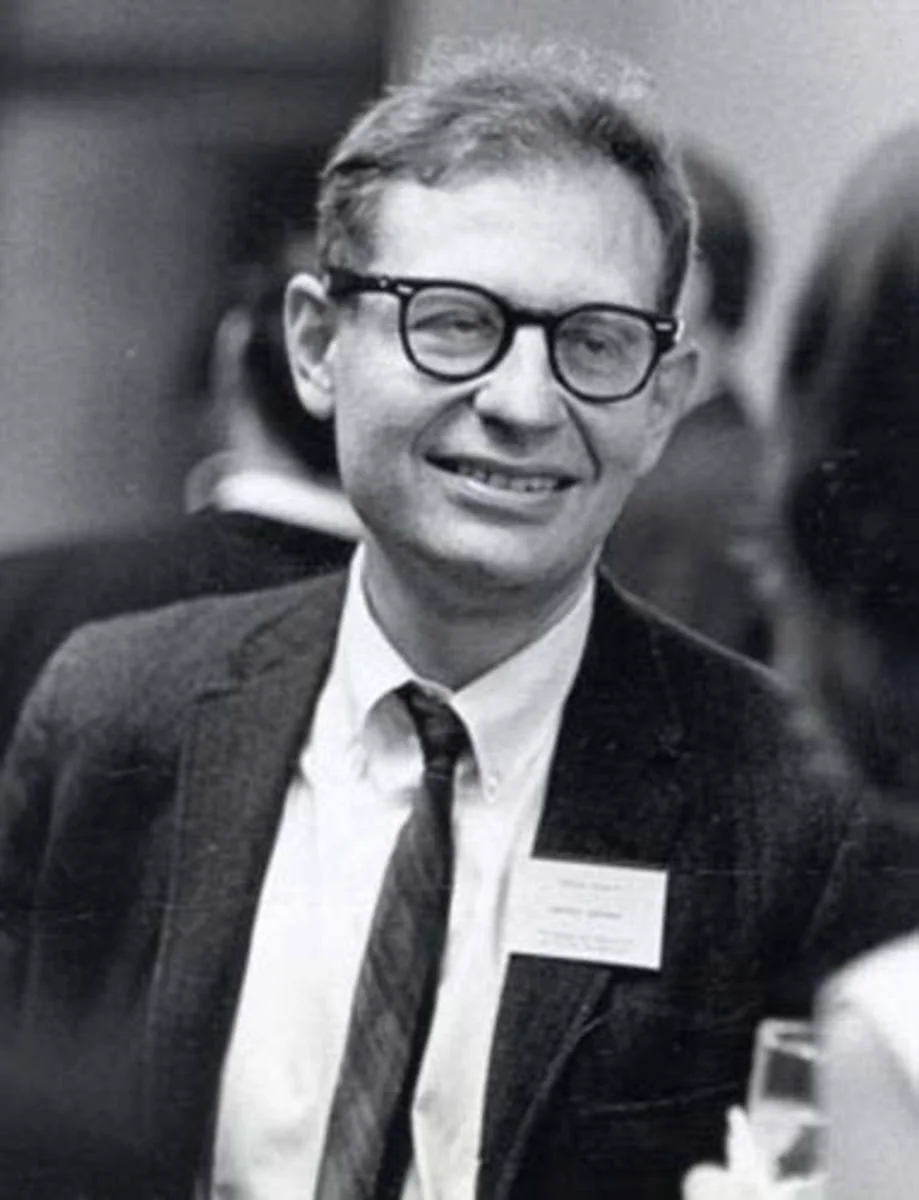
The method used by Russian sociologists was born in American laboratories half a century ago. Lawrence Kohlberg studied the moral development of children by asking them to solve ethical dilemmas. The most famous one is about a certain Heinz, whose wife was dying, and the medicine was too expensive. Steal the medicine or let your wife die? How does a child reason when making such a decision?
Kohlberg discovered an amazing thing:
in moral dilemmas, people cannot be disingenuous. Their choice reveals their true value system - not the one they declare publicly, but the one by which they actually live. The method turned out to be so accurate that psychologists still use it to diagnose moral development.
But what worked with children in the laboratory suddenly turned out to be applicable to entire nations. By replacing fictional dilemmas with historical ones, one can discover with surgical precision how a society actually feels about its past. Not what it says in opinion polls. And how it is ready to act in a situation of moral choice.
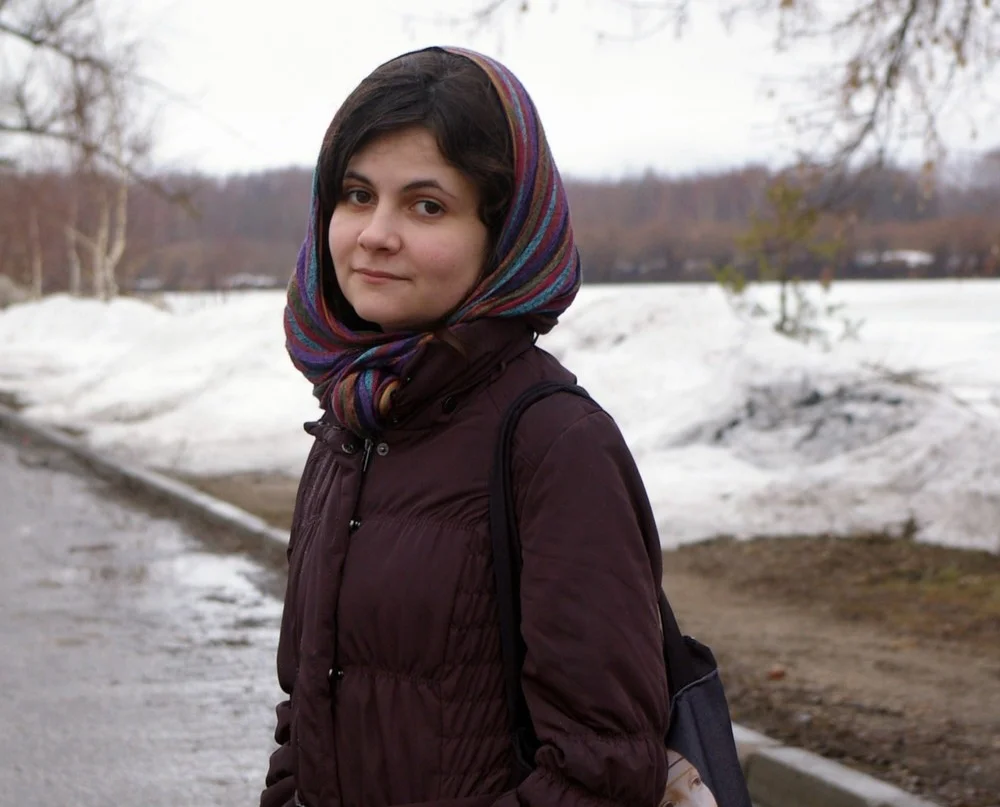
The results of the RANEPA study puzzled the authors themselves. Russian society turned out to be split into several clusters of historical memory, each with its own value system. Some are inclined to repentance - they are ready to admit the mistakes of the past and learn from them. Conditional “Spain”, as the researchers called this cluster. Others prefer oblivion - it’s better not to stir up the past and focus on the future. Conditional "Netherlands". Still others choose glorification—they emphasize achievements, while problems are either hushed up or justified by a lofty goal. Conditional "Serbia".
Researchers have mapped value cleavages with geographic precision. We found that the choice of scenario depends on education (the higher, the greater the tendency to repent), age (elderly people prefer glorification), place of residence (megacities tend to critically reflect), and religiosity (believers more often choose oblivion).
It would seem like pure knowledge. Social diagnostics. An attempt to understand what is happening with collective memory in modern Russia.
When the map becomes the territory
What happened next still surprises the researchers themselves. Their scientific findings began to take on a life of their own. The Spain-Netherlands-Serbia typology has begun to be used far beyond academic circles. Political strategists received what they could only dream of: an accurate map of public consciousness with the coordinates of each group.
Now they knew who to influence, by what methods, through what channels. Where to find allies for each memory politics scenario. How to appeal to the values of different groups. Scientific typology has turned into instructions for use.
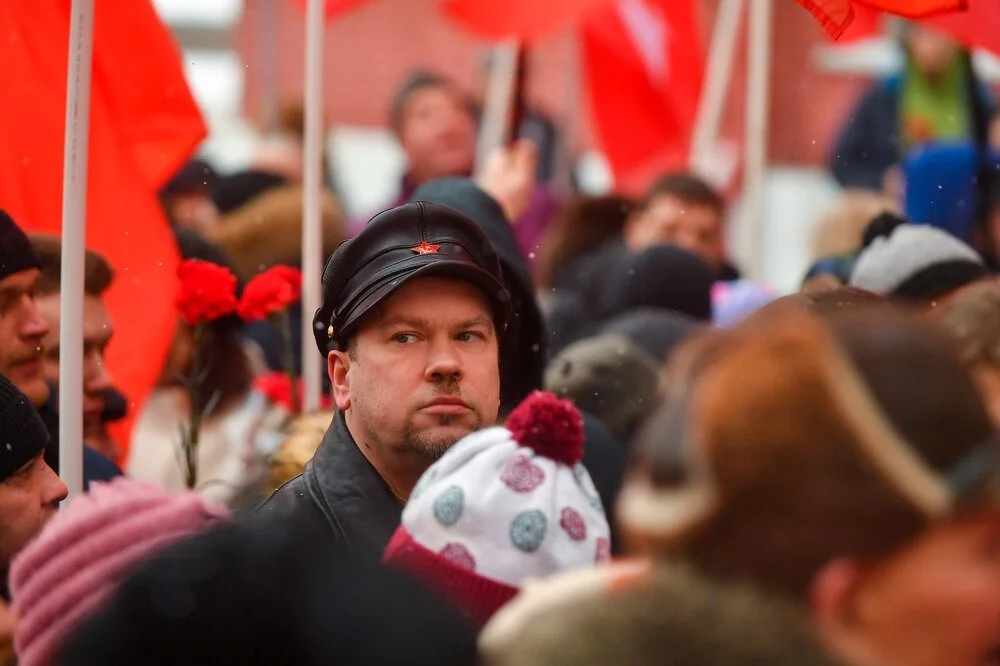
A strange feedback effect occurred. Society learned about how its own memory worked, and this knowledge immediately began to influence how that memory functions. People began to talk about the past differently, knowing that their relationship to history was being studied, classified, and used.
The social thermodynamics of the system has changed. The temperature rose - everyone began to more actively discuss historical topics, realizing that someone was very interested in this. The pressure increased - different groups felt that there was a struggle over the interpretation of history, and each began to defend its version.
But the volume—the space for free discussion—has begun to shrink, because research has shown which approaches to the past are “correct” and which are not.
This is the fundamental difference between the social sciences and the natural sciences. When a physicist studies the laws of gravity, gravity does not change. But when a sociologist studies the mechanisms of collective memory, memory itself is transformed under the influence of this knowledge. The object being studied changes from the very fact of study.
Family stories as public policy
At the same time, in a small apartment on the outskirts of Voronezh, student Anya is recording her grandmother’s story about the war on a dictaphone. How they evacuated from Leningrad in the winter of '41. How my father never returned from the front. As a mother raising four children alone. Anya is writing a coursework about family memory; she needs living evidence for her diploma.
The girl does not suspect that she is participating in a grandiose project of mapping human consciousness. That her coursework is one of thousands of drops in the ocean of research into how collective memory works. And she certainly doesn’t realize that this knowledge will be used to control how her own children will remember the past.
The biographical method seems to be the most innocent of all the tools for studying memory. The researcher sits next to the elderly person, turns on the recorder, and asks sensitive questions: “Tell me about your parents. What do you remember about collectivization? How did the family feel about Soviet power?” A simple collection of oral histories. Preserving human experience for posterity.
In fact, this is exploration of the territory of collective memory. The researcher finds out how family narratives are formed. Which events are glorified and which are hushed up. How political attitudes are passed on from generation to generation.
What mechanisms force some families to preserve the memory of repression, and others - of labor exploits.
Elena Rozhdestvenskaya, a classic of Russian biographical sociology, honestly writes in her works: through family stories one can understand the “life path curves” of entire generations. Reconstruct social history through the prism of personal experience. But at the same time, she does not notice that curves can not only be studied, they can be corrected.
The logic is simple. If you know how family narratives are formed, you can influence this process. If you understand how family memory affects political attitudes, you can create “correct” family stories.
How does this work in practice? Very subtle. The media are beginning to cover historical events from a certain angle. Documentary films set the necessary emotional accents. Books by popular historians form the general interpretive background. Gradually, these interpretations penetrate family conversations.
The grandfather, who spent his whole life talking about the war in one way, suddenly begins to talk differently - not because his memories have changed, but because the way it is “usual” to talk about the war has changed. Family memory is adjusted in real time.
The grandchildren already receive an “updated” version of the family history. On its basis they form their identity, their political preferences. Twenty to thirty years from now, a new version of the past will dominate society. People sincerely believe that it is based on a genuine family experience, not realizing that this “experience” has been delicately constructed.
Machines for the production of meaning
A third tool for studying memory, content analysis, was born during World War II. American researchers tried to decipher the code of Nazi propaganda. Thousands of texts were analyzed, repeating images were identified, and the emotional content of words was measured. They wanted to understand the logic of the enemy’s influence on consciousness.
The method worked brilliantly. But an unexpected thing emerged: the same tools can be used to create your own propaganda. Understanding the mechanisms of influence automatically turns into technology of influence.
Modern content analysis in the field of historical memory works like reverse engineering of consciousness. First, diagnostics: researchers study thousands of texts - newspaper articles, posts on social networks, comments on the Internet. They find out which images of the past dominate in the mass consciousness.
Stalin - a tyrant or an effective manager? Is repression a tragedy or a necessary measure in the face of an external threat? Is victory in war the result of the heroism of the people or the wisdom of the leadership? Collectivization—a modernization breakthrough or violence against the peasantry?
The result of such an analysis is an accurate map of the distribution of meanings in society. A kind of sociological MRI of collective consciousness, showing which interpretations of the past are localized where, with what intensity, in what combinations.
Then planning. Based on this map, a strategy for changing the balance is developed. Which images need to be strengthened, which to weaken, which to introduce for the first time. Where are the “growth points” for new interpretations, and where are the resistance zones that are best avoided?
Finally, implementation. Systematic influence on the information environment through changing the “background” discourse. Not through direct propaganda - this is too noticeable and causes rejection. And through a gradual shift in emphasis in the coverage of historical events.
The most insidious thing about this technology is its invisibility. Nobody forces people to think a certain way. It’s just that the information background against which they make decisions is gradually changing. If earlier, when talking about the Stalin era, the media emphasized repression, and now they emphasize industrialization and victory in the war, people themselves will come to new conclusions. They will seem to think for themselves.
Global memory hierarchy
The most sophisticated tool for managing collective memory has become comparative analysis. At first glance, this is a completely objective scientific procedure. We study the experience of different countries in working with painful pages of history. Germany and denazification. France and the Algerian War. Spain and the legacy of Francoism. South Africa and apartheid.
We compare approaches, identify patterns, draw conclusions about which models “work” and which do not. We create typologies of “successful” and “unsuccessful” strategies for working with the past.
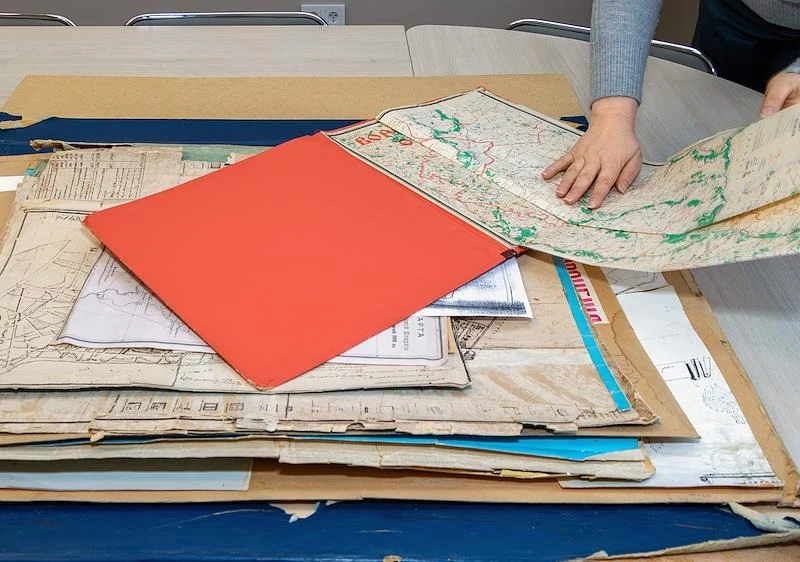
But comparison is impossible without evaluation. Inevitably, some models begin to seem “right” and others “wrong”. A global hierarchy of “maturity” in relation to the past is being formed.
Germany, with its repentance for Nazism, is a role model. Russia, with its glorification of the Soviet period, is a country “stuck in the past.” China's cover-up of the events in Tiananmen Square is an authoritarian anomaly.
Comparative analysis is becoming a tool of soft power in international politics. Academic research creates typologies of "civilized" approaches to history. International organizations accept these typologies as a basis for assessing countries. A “mature” attitude towards the past becomes a condition for membership in the “club of developed democracies.”
Countries find themselves forced to adjust their memory policies to external standards. Scientific objectivity turns into political coercion. Academic typology is turning into a diplomatic tool.
Hybrid war for consciousness
Why have all these methods been so effective as memory management technologies? Because they are hybrid - they work simultaneously at different levels of impact.
The biographical method influences family memory, forming ideas about the past at the most intimate level - in conversations between generations. Content analysis influences media discourse by determining how the past is talked about in the public space. Comparative analysis shapes international memory policy, creating pressure at the state level.
The impact goes through all channels at once - from the family kitchen to the UN halls. The effect of a total environment is created: a person receives consistent signals about how to “correctly” relate to the past from all sources of information.
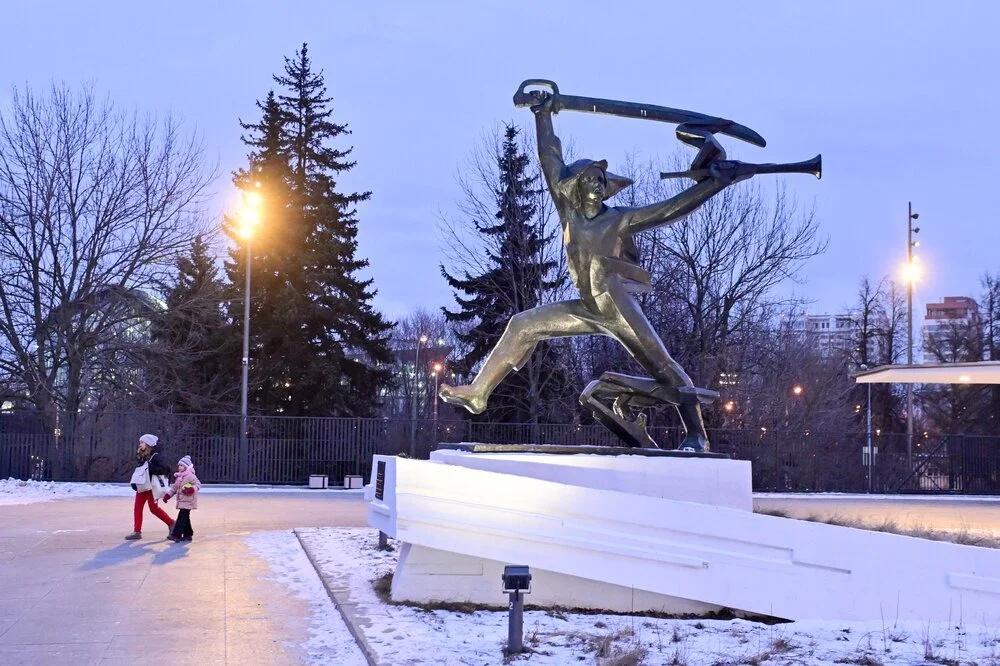
Moreover, each method has its own thermodynamic characteristics - it has different effects on temperature, pressure and the volume of the collective memory system. The biographical method raises the temperature (people talk more about the past), but can compress the volume if family histories are unified. Content analysis allows you to accurately regulate the pressure in the system - to strengthen or weaken the conflict of discussions. Comparative analysis works with scope—expanding or narrowing the range of acceptable interpretations.
Understanding the thermodynamics of memory turns its study into engineering. Social science becomes social technology.
Innocent accomplices
Can researchers be blamed for using their methods for manipulation? Daria Khlevnyuk and Grigory Yudin, who created a typology of scenarios for the politics of memory, were guided by the most noble intentions. We wanted to better understand Russian society and help it understand its attitude to the past.
Elena Rozhdestvenskaya, who developed biographical sociology in Russia, thought about preserving human experience for future generations. Content analysts sincerely believed that they were helping society better understand the mechanisms by which public opinion is formed.
But in the social sciences there is a cruel pattern: every study automatically becomes an instruction manual. Not because scientists want it, but because that is the nature of social knowledge.
Unlike physics, where the study of the laws of nature does not affect these laws themselves, in society, knowledge about the mechanisms of its functioning immediately begins to change these mechanisms.
Published research influences how people understand themselves and their past. Scientific concepts become part of everyday consciousness. Academic typologies are becoming the basis for policy decisions. Memory researchers cease to be external observers - they become participants in the process they study.
A fundamental ethical dilemma arises: is it possible to study society without giving power the tools to control it? How to maintain scientific objectivity, knowing that your findings will be used for political purposes?
Some researchers propose the principle of “methodological pacifism”: using scientific methods only to protect society from manipulation, never creating attack technologies. Others believe that the best defense is complete openness: if everyone knows about existing mind control techniques, they are more difficult to abuse.
But there is a third way - turning citizens into co-researchers of their own memory. If people understand how collective mind control technologies work, they can defend against them and, if necessary, use the same methods to defend their own narratives. The power monopoly on memory management is being destroyed.
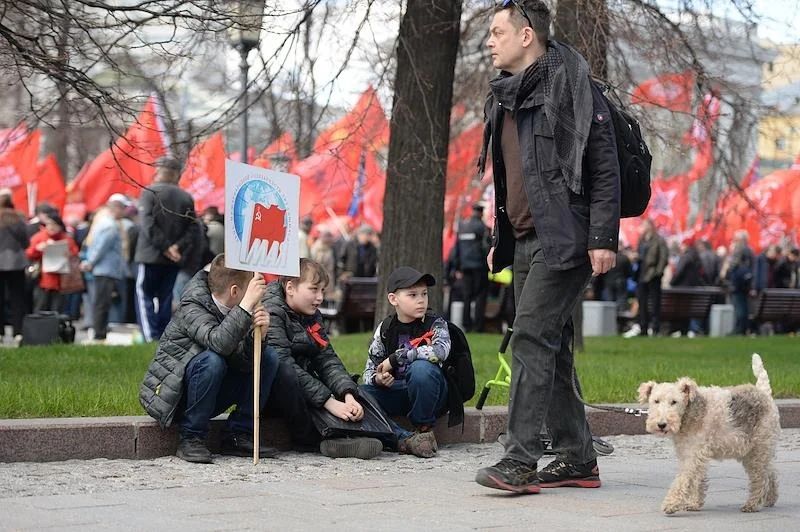
Detectives reveal their secrets
We began a detective story about how innocent scientific methods turn into memory management technologies. We saw that scientists, unwittingly, create maps of consciousness for those who want to control this consciousness.
But knowledge about these mechanisms is not a reason for despair, but a basis for protection. Understanding how memory management technologies work allows you to counter them. Citizens from objects of influence can turn into subjects who consciously participate in the formation of collective memory.
History shows that the best way to protect yourself from mind control technologies is to understand how they work. Time detectives reveal their methods. Now it’s up to us to learn to use them not for submission, but for liberation.
In the next part of our investigation, we will trace exactly how the transformation of study methods into methods of influence occurs. How biographical sociology becomes biographical engineering, and content analysis turns into a technology for programming meanings. How the science of memory is transformed into the art of managing it.
Knowledge is power. But whose power it is depends on who wields it.