
Translated material
Sausage “Deputatskaya”
Why did they demand to start a seal hunt in Murmansk?

Photo: Yuri Smityuk / TASS
Previously, the Murmansk deputy Stepakhno was the director of the oceanarium. Gray seals and ringed seals were trained there. Then Stepakhno studied them from the outside. And now I don’t mind taking a look inside: the other day he offered to feed the Russians sausage made from seals. Open a sea animal fishery and make sausage from it.
That’s what he said, here’s the quote: “Using existing experience and technologies, it is possible to produce a wide range of products from an adult seal, and there will be virtually no waste. This is confirmed by the experience of Norway, Canada and our domestic, Far Eastern - Magadan and Chukotka - producers who produce canned food, smoked lard, drinking fat and even seal sausage; restaurants prepare excellent steaks from seal meat,” said Gennady Stepakhno.
Where does this desire to imitate the West come from in the communist Stepakhno? Moreover, in fact, the quota for the slaughter of adult animals is already allocated by Rosrybolovstvo, but no one really needs it - there are no people willing, since there is no demand.
Pinnipeds are traditionally harvested by some indigenous peoples, but they have never done it on an industrial scale, only in small quantities.
However, the Murmansk resident’s proposal was supported in the Duma Committee on Natural Resources, Ecology, Fisheries and Agro-Industrial Complex. And members of the Parliamentary Association of North-West Russia prepared an appeal to the federal level for state support in catching seals.
There is an answer. A company has appeared in the Murmansk region that would like to harvest 10,000 seals in 2026. I would like to, but I can’t - there is no production base. The co-owner of the company is the former head of the Tersky district of the Murmansk region Gennady Popov. Here are the first applicants for state support. And the deputy, it turns out, met the aspirations of voters.
However, the question remains: what recipes does the deputy in the West want to borrow? Even surströmming or lutefisk can be negotiated (fermented fish, as well as fish soaked in alkali, are historical Scandinavian dishes with a specific smell).
There is also a seal analogue: the Eskimos know how to make kopalchen - this is a seal carcass fermented in a swamp, the dish is deadly for strangers due to the concentration of botulinum toxins. There is also kiwiak - a seal or walrus carcass stuffed with unplucked seagulls, fermented under the ground for several months. Will they be added to the menu of the parliamentary canteen?
Moreover, the craving for exotic products in the region did not appear yesterday: two years ago in the Murmansk region they already promised (also with state support in the form of benefits for residents of the Arctic zone) to open the production of superfood from manure and droppings.
As for sausage or seal chops, this is not widespread in any of the countries named Stepakhno. One of the Murmansk restaurateurs, shocked by the parliamentarian’s concern for the food security of the population, has already stated in the local media that sausage should not be made from seal, like the deputy himself.
Let us add that the meat of marine mammals was eaten in the Soviet Union - in the Gulag, where it was fed to prisoners.
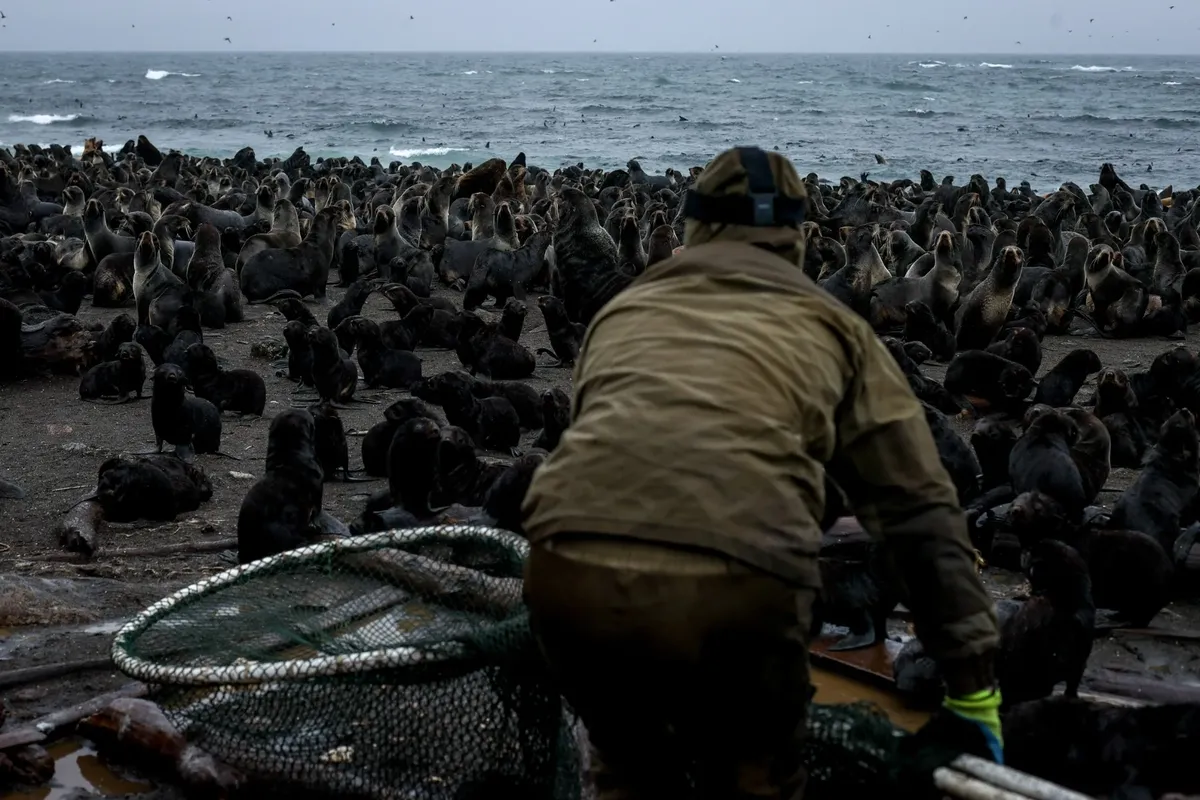
When Vladimir Putin—then prime minister—banned the harvest of newborn seals in 2009, it seemed like a victory over barbarism. It was the whites that were the main object of prey; they were killed with a club; the ice floes where the seal maternity hospital was located were red with blood. Belkov was beaten on his hats. Who's wearing them now?
Here is a fragment of the transcript of the meeting between Vladimir Putin and the head of the Ministry of Natural Resources, Yuri Trutnev, on March 18, 2009:
" Putin:
- What about hunting for squirrels? We banned it for a certain period, but judging by what I see and read now... Experts believe that the introduced ban is not enough.
Trutnev:
— Vladimir Vladimirovich, you gave instructions to extend the ban to higher age groups. Indeed, Rosrybolovstvo has banned hunting for squirrel, and the next age group is Khokhlusha and Serka. Yesterday, Rosrybolovstvo signed an order banning the hunting of harp seal pups under 1 year of age. The order is now being registered with the Ministry of Justice, and this guarantees that harp seal pups under 1 year of age will not be killed in Russia.”
But in 2015, without loud speeches, this moratorium was lifted. Has the President's order lost its relevance? All that remains is a ban on the production of white squirrels. A seal can now be killed from the age of three weeks, when it turns into a Khokhlusha - it experiences its first molt. During this period, the animals do not yet know how to swim. They don't resist. They are easy to kill or catch in order to take them to the shore for rearing - and then kill them, after molting, when the Khokhlushka turns into a silverback - covered with beautiful silvery fur.
The argument in favor of seal hunting, which was expressed by parliamentarians at various levels, is concern for biobalance. They say that since the destruction of white squirrels was banned in Russia in 2009, the population of the animal has increased greatly and allegedly amounts to 1,548,840 individuals. And this same seal is to blame for the decline in the catches of Russian fishermen - it allegedly gobbled up everything, like that “damned weevil.”
But for some reason, residents of the Murmansk region never received permission to freely harvest Kamchatka crab, which actually eats fish without restrictions and has no natural enemies in the northern seas. Fishing is allowed, but in strictly designated areas, which are actually accessible only to those who do it for the purpose of earning money. For comparison: any resident of the coast of Norway, where the breeding crab migrated from Russia, has the right to catch two individuals per month - for the table. And its meat is truly a high-protein delicacy, unlike the fishy-smelling flesh of pinnipeds that deputies liked.
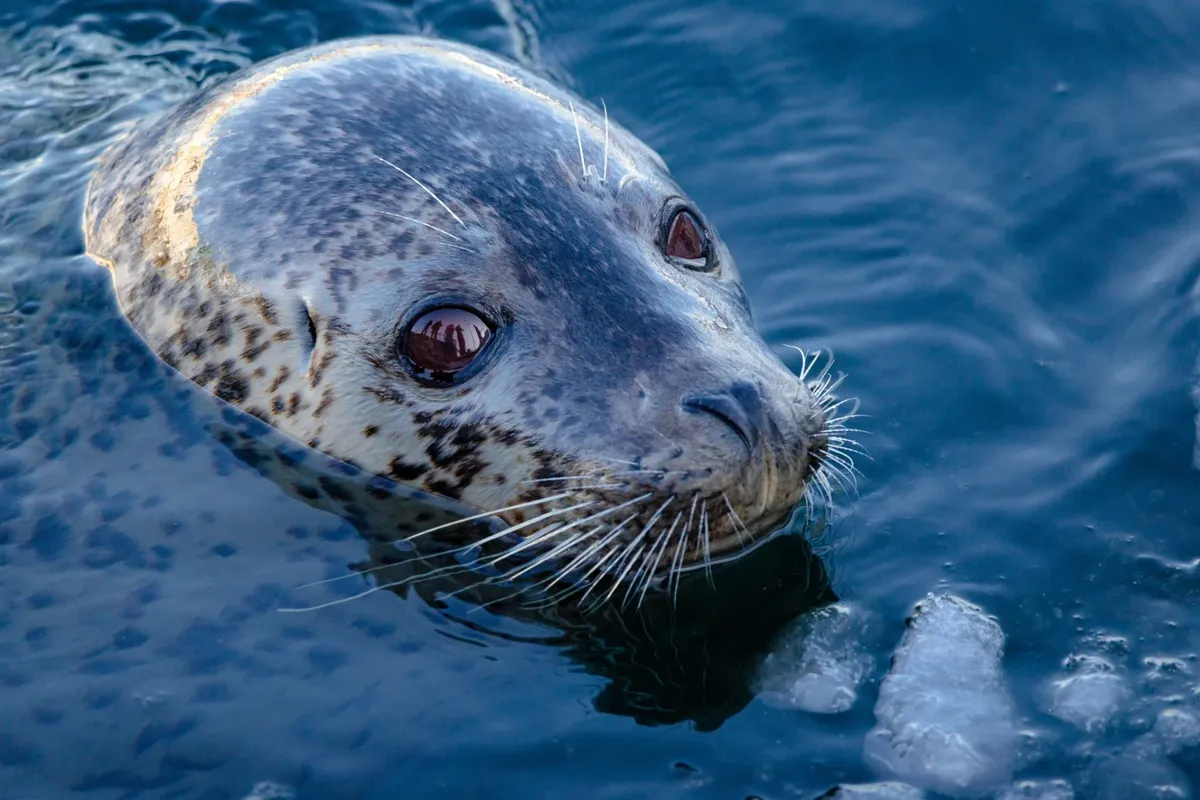
The initiative of the Murmansk resident is not new. As are the arguments. In 2024, they were also expressed by the Arkhangelsk governor Tsybulsky. He even calculated that young seals eat 10-12 kg of fish per day, and adults - up to 30 kg. Eat it up!
True, Canadians, who are often cited by those thirsting for blood, confidently state that seals do not significantly harm the fish population. But fishing is not really prohibited for them. As in Norway, where it has, however, greatly decreased since the state no longer subsidizes it.
Seal hunting is taboo in most countries. The EU has long banned the import of any products made from harp seals. By the way, Russia also has its own “anti-hunger” measures - there is a ban on the import and export of seal skins. This hunt is too similar to knackering, it is not customary to talk about it, it is not customary to encourage it.
As for “valuable raw materials for the food industry,” this story was closed back in 2014, when Deputy Prime Minister Igor Shuvalov responded to Novaya’s publication . Then the state media vied with each other to write that scientists were ready to develop a menu of seal meat for Russians. But after the reaction of the deputy chairman of the government, talk about this came to naught.
And the Russians somehow managed without seal cutlets for 12 years. What went wrong now? Why does the government want to feed the people seal meat again? Have you decided to offer a sea animal instead of slaughtered cows?
And why are we so eager to kill everything we can? In the case of seals, which have no commercial value, this is quite obvious. It's like killing cats for their skin. “They will make protein from them. They’ll go to polta,” Sharikov explained this activity. Cruelty to any form of life.
This year, the state has authorized the killing of 39,000 individuals aged three weeks and older in Bely and Barentsev. But there is no queue for the quota - there are no seal processing facilities in Russia. There is simply no need to hit the seal. It is unprofitable even for those who are extremely cynical. The only thing that can attract hunters is the same state support that the northwestern parliamentarians are talking about. That is, the hunt is not for animals, but for money. It is for their sake that the ice can be stained with blood again. There is no other purpose for hunting sea animals in the 21st century.