
Translated material
Russia spent $12 billion on annexed territories
We are talking about parts of the Donetsk, Lugansk, Zaporozhye and Kherson regions of Ukraine. Moscow does not control any region entirely
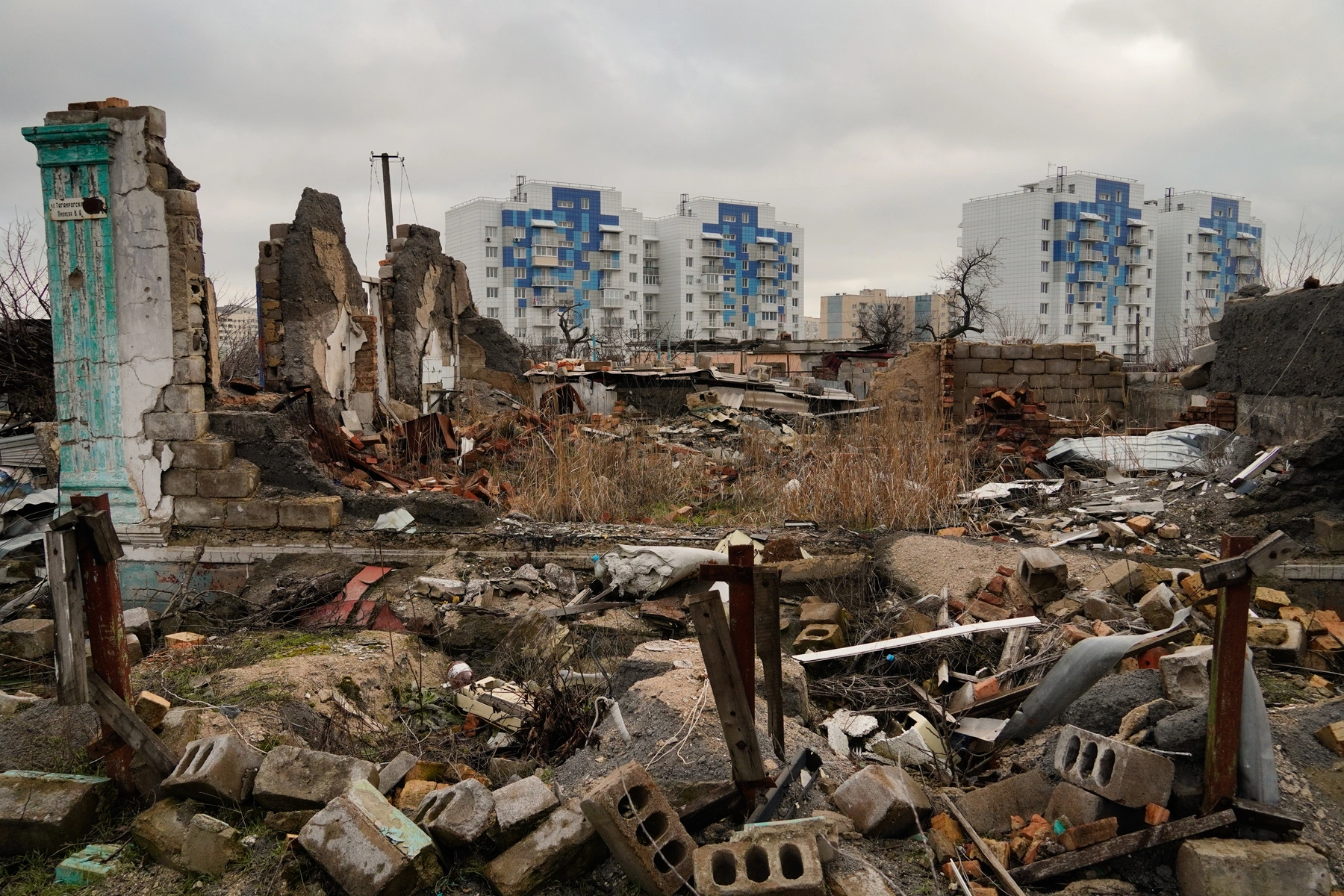
From 2024 to 2026, Russian authorities allocated almost $12 billion to develop the infrastructure of the annexed territories of Donetsk, Luhansk, Zaporozhye and Kherson regions of Ukraine. As Reuters calculated, this is almost three times more than the total investments in 20 other regions within the framework of similar national projects.
In order not to miss new texts from “Layout”, subscribe to our telegram channel
Roads, railways and ports
About $425 million has been spent on the rail network. From 2022 to 2025, more than 2.5 thousand kilometers of roads were repaired or modernized in the occupied territories and neighboring regions of Russia.
The key project was the Novorossiya federal highway, which, together with the Crimean Bridge, should form a transport ring around the Sea of Azov. At least 20 tenders worth over $214 million were announced for the construction of the highway, and an additional $123 million was later allocated.
A bypass road around Mariupol is also being built and the ports of Mariupol and Berdyansk are being modernized, which are being deepened to accommodate large ships. Tenders for these projects have been announced for more than $13 million.
In 2022, Russia announced the inclusion of these territories into its composition after holding referendums that were not recognized by the international community. At the same time, Moscow does not completely control any of the regions.
National security expert at the Washington Institute for the Study of War Caroline Hird, in an interview with Reuters, noted that the scale and long-term nature of the investments indicate that the Kremlin does not intend to return these territories to Ukraine.
The permanent representative of the President of Ukraine in Crimea, Olga Kuryshko, said that the Kremlin’s actions in the occupied territories repeat the scenario implemented in Crimea after the annexation in 2014.
“In three years of occupation, according to our analysis, the Russians achieved what would have taken them 10 years in Crimea. They took everything to the next level. Crimea was their training ground,” Kuryshko said.
In order not to miss new texts from “Layout”, subscribe to our telegram channel
Impact on oil and drop in exports
Against this background, Russia faces serious problems in the oil sector. According to Reuters, at least 40% of the country's export capacity has been disabled due to Ukrainian drone attacks on refineries, the seizure of tankers and the shutdown of the Druzhba oil pipeline. This is equivalent to approximately two million barrels per day.
Ukraine has stepped up attacks on infrastructure in recent weeks, hitting major ports Novorossiysk on the Black Sea and Primorsk and Ust-Luga on the Baltic Sea.
Due to threats on western routes, Moscow is forced to reorient itself to Asian markets, but these directions are limited in capacity. Kyiv says the attacks are aimed at reducing Russia's oil and gas revenues and weakening its military capabilities.
At the same time, according to Bloomberg estimates, despite the blows, Russia’s income from oil exports is growing. According to the agency, over the past three weeks, average daily revenue has doubled - from $135 million in January to $270 million.
The growth is associated with aggravation in the Middle East, the closure of the Strait of Hormuz and a partial temporary easing of sanctions on Russian energy resources by the United States. In particular, on March 13, the United States allowed supplies of Russian oil and petroleum products loaded onto ships before March 12.
Previously, “Verstka” looked into how long the war in Iran , which began at the end of February, could last, and how this would affect the Russian budget.
Photo: Annexed Mariupol, February 16, 2026. Vladimir Aleksandrov / Anadolu via Reuters Connect
Support “Vestka” - it’s important and safe →