
Translated material
Archipelago "Artek"
To the centenary of the “Military Secret” camp: a chronicle of a disintegrated country and its elite
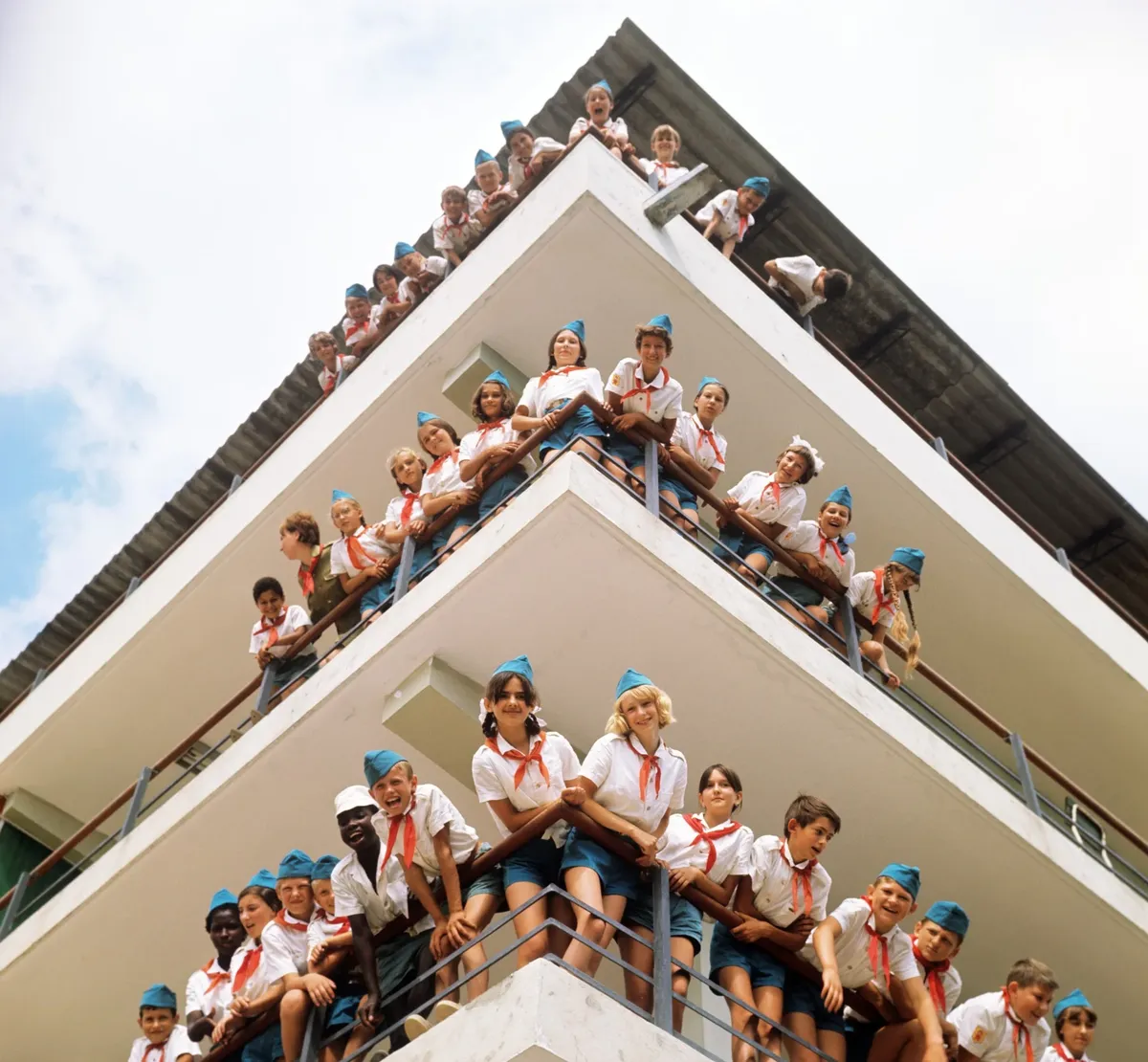
“Artek” emerged from the crucible of war; for decades its symbol has been multi-colored fire tongues. He is always at the forefront of events. Always in their crucible. Always ready! The irony is that the showcase of this uncomplicated childhood happiness, scorched by the fire, in the Land of the Soviets became a place that was by no means idyllic.
In its place
Let us leave alone the Crimean War of 1853–1856, and especially the times of the ancient Bosporan Kingdom with its capital in Panticapaeum (Kerch). The closest event to the creation of Artek happened in November 1920, when historical Russia set sail from Crimea in an organized manner (unlike the “Novorossiysk disaster” - the panic evacuation in March of the same year) on almost 200 ships. The subsequent Red Terror and famine in Crimea in 1921 was described by the prose writer Ivan Shmelev, whose only 25-year-old son was shot there along with other officers.
“Read this if you have the courage,” Thomas Mann said about Shmelev’s story “The Sun of the Dead.”
“One of the most difficult pages in the history of Russia in the 20th century. “The famine of 1921–1923,” Yulia Anshakova, historian of the Volga region branch of the Institute of Russian History of the Russian Academy of Sciences, wrote in 2018. — In historical memory, this tragedy was recorded as a famine in the Volga region, but in reality its borders extended from Petrograd to Chelyabinsk and from Perm to Dagestan; Crimea turned out to be one of the epicenters of famine.”
In 1922, there were from two and a half to four million orphans in the country, the Great Soviet Encyclopedia counted in retrospect. More precisely, the humanitarian results of the First World War and the Civil War could not be summed up: it was the era of “big battalions”; Russia sent (in waves of mobilization) approximately 15 million “men with guns” to the First World War.
And in 1925, on the southern coast of Crimea, blessed by the South Coast, between the paired rocks of Adalary in the sea in the west and Mount Ayu-Dag in the east, children appeared: 80 tuberculosis patients from Crimea, Moscow, Ivanovo-Voznesensk (as the city of Ivanovo was then called).
Children were treated with enhanced nutrition and the dry heat of the Mediterranean subtropics. And civilization: some saw a toothbrush there for the first time. And a napkin in an iron ring.
***
The historical holiday did not last long. Scientists have long agreed that there were no two world wars, the First and the Second, but just another Thirty Years' War, predicted by the already mentioned Thomas Mann back in 1919 in the polemical book “Reflections of an Apolitical.” Then he quoted Franz Grillparzer’s drama “Brotherly Feud in the House of Habsburg”:
But not before the men go to the grave
And the children will become men,
This fermentation in the blood will subside.
(Translation from German by Nikita Eliseev)
If in the 1920s Crimea became the arena of the Civil War, then in 1941–1944 a battle of peoples unfolded on the peninsula. But the Artek soldiers managed to be evacuated to Siberia before the Wehrmacht attacked; They lived in Altai for a long time - until 1945.
And Crimea saw an occupation that lasted two and a half years, a series of bloody military operations and landings, and a heroic partisan struggle. More than 10 thousand military and civilians hid and fought in the Adzhimushkaya quarries. The Yalta, Sevastopol, Zuysky, Dzhankoy, Central and other partisan detachments also fought (the underground newspaper “For the Soviet Crimea” wrote about their battles and operations).
Coincidentally or not, the fate of the post-war world, the conditions for lasting peace in Europe - and it actually turned out to be almost half a century old - were discussed at the Yalta Conference of the Allied Powers of the Anti-Hitler Coalition. Recently, “Yalta” has become synonymous with a certain type of geopolitical decisions, an abbreviation for “realpolitik.”
But the USSR, Great Britain and the USA, who agreed in the Livadia Palace, paid for their right to determine the future of the continent at the cost of efforts and sacrifices - and the destroyed but liberated Crimea spoke about this right without words.
The delegations lived in palaces that were spared by the war.
The American delegation led by President Roosevelt is at the Livadia Palace. Negotiations were also taking place there: perhaps out of respect for the place - the residence of the last Russian emperor from the Romanov dynasty; perhaps out of respect for the guest's mobility issues.
Churchill and the British delegation lived in the luxurious Vorontsov Palace, which makes sense: the Vorontsov family had long ties with the United Kingdom. The Vorontsovs did not always serve as ambassadors in London (like Semyon Romanovich Vorontsov, who survived the beginning of the Napoleonic wars there), but they were always Anglomaniacs.
Stalin, true to style, settled in the eclectic, outwardly modest Yusupov Palace.
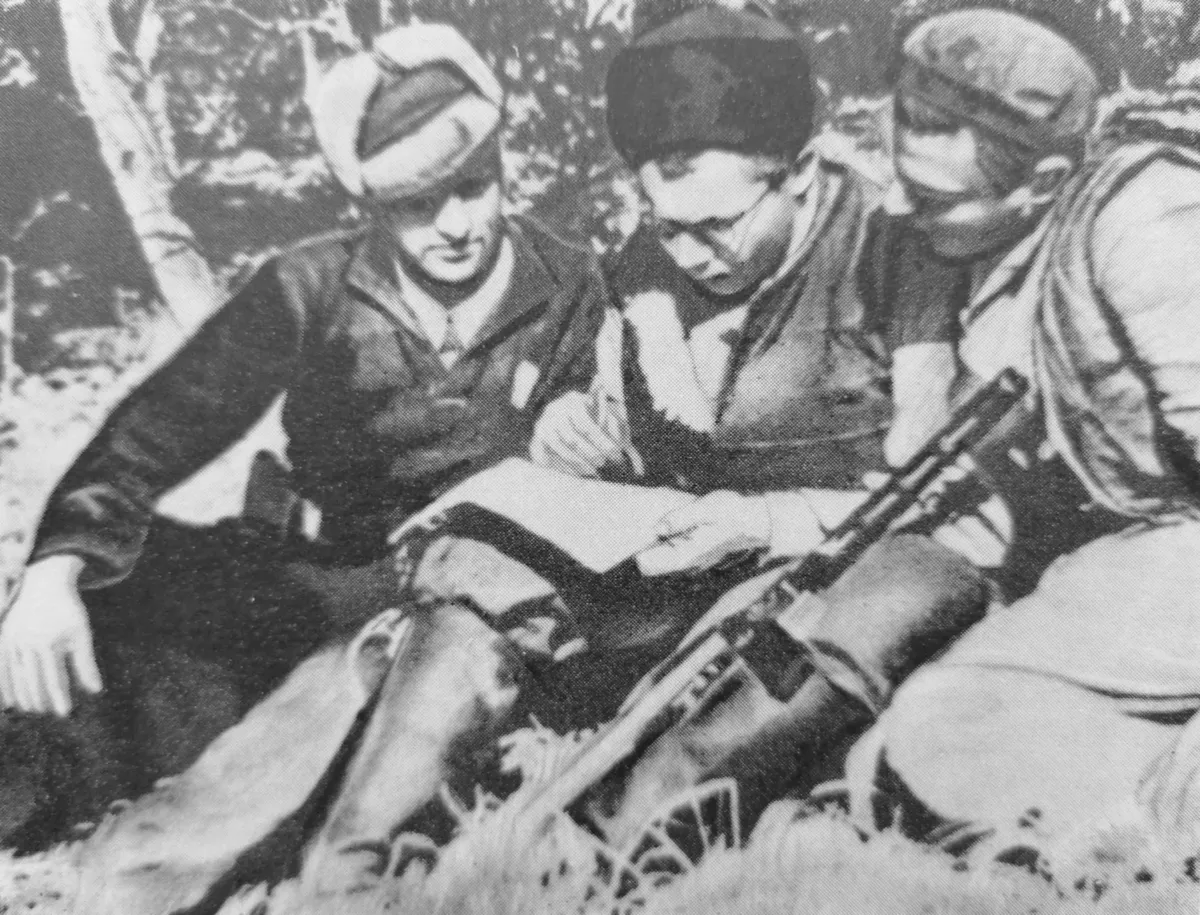
Thus, the foundations were laid for a long, although not just, peace.
And peacetime brings people to new thoughts, new sensations. It refines perceptions. Raises new questions.
Sometimes there are no answers to them. Thinking about the unresolved issue drags on.
And war, another flight to rudeness (to put it simply), to the primitive, to simplification, frankly to the “base,” becomes an irresistible temptation.
As Goethe said in a conversation with Eckermann: as soon as everything is clarified for humanity, everything becomes confused again.
But we remember a moment of clarity, a moment of peace.
There is only a moment
The early 1980s were overshadowed by war (in Afghanistan), “increasing international tension” (all over the world), but we, children, Artek residents of that time, knew that all this was nonsense, that the adults would arrange everything, that behind them, the echelon, was another generation of adults who won the last war, and they certainly would not let us down.
Having gathered in Chelyabinka (future Artek members of the Urals always gathered there, in the main city of the South Ural Railway, at the beginning of the tracks going to the southwest), we rushed to the sea.
Past the Volga, past the pyramidal poplars, under the gigantic, but not dangerous to us, sweep of the Motherland: that gazavat, that holy war had been exhausted before us, but we had peace.
His specific concerns, his questions. We were born to rule. Find answers to the complex questions of peace, not to the simple questions of war.
***
The best part of the entire Artek experience was, perhaps, this path to it. This flight is through Russia.
We joined somewhere along the way with a Kazakh kid, with German children from farms in the steppe, from the village of Sokolovka in the North Kazakhstan region, where the school, nevertheless, was already 100 years old, which means that something was here before us .
Fragments of another world and way of life stuck out everywhere - not hidden either by socialist construction, or (especially) by renovations that had not yet happened. The European-quality renovation of this century, which only confused all the issues. Including issues of property. Whose is all this? This is an important question - whose?
At the end of the 1930s, Artek received the estate and villa of Suuk-Su, bridge engineer Berezin. The villa was badly damaged during the war, restored afterwards, and the large-scale reconstruction of Artek in the 1960s, which gave the camp its status and appearance, not only rebuilt, but also renovated a lot on the territory.
But whose is all this?
A vague feeling... I’ll attribute it to the fact that my father was a cadastral engineer, a land surveyor, and I accompanied him on expeditions once or twice when his assistants did not show up: I went with a tape measure to measure the space of Russia.
And we measured it fragmentarily. They put it on the map. They wrote whose ownership it was.
Yes, in a religious sense - “The earth is the Lord’s and what fills it.” If not everyone has read Psalm 23, then many have heard it. But in an applied and temporary sense, all earth has an earthly owner. It is not only state-owned, but also someone’s privately owned.
None of these thoughts could visit me there. But the feeling, the feeling...
Where is the life that flowed in these palaces? Where are the owners? Where are their children?
Initially, back in the 1920s, the Artek people were forced - in childhood ignorance - to fit in “with someone else’s”. In 1925, the heir to the crown prince, who would have turned 21, could no longer walk in the mountains of Crimea. There, nearby, 20 versts from the Livadia Palace, the Artek people were walking. A feeling of some kind of compulsion, innocence, but awkwardness languished there. They are not telling us something. Something's wrong here. I want to go home to the forest.
Judging by what they wrote to me from home (“But you rest, don’t count the days. It’s not interesting”), it hit me specifically.
But it was a deeply hidden feeling, and, judging by the number of later letters from all over the Union, I made a lot of friends there. Ira from Leningrad, Tanya from Murmansk, Sveta, a girl from a village in Kazakhstan...
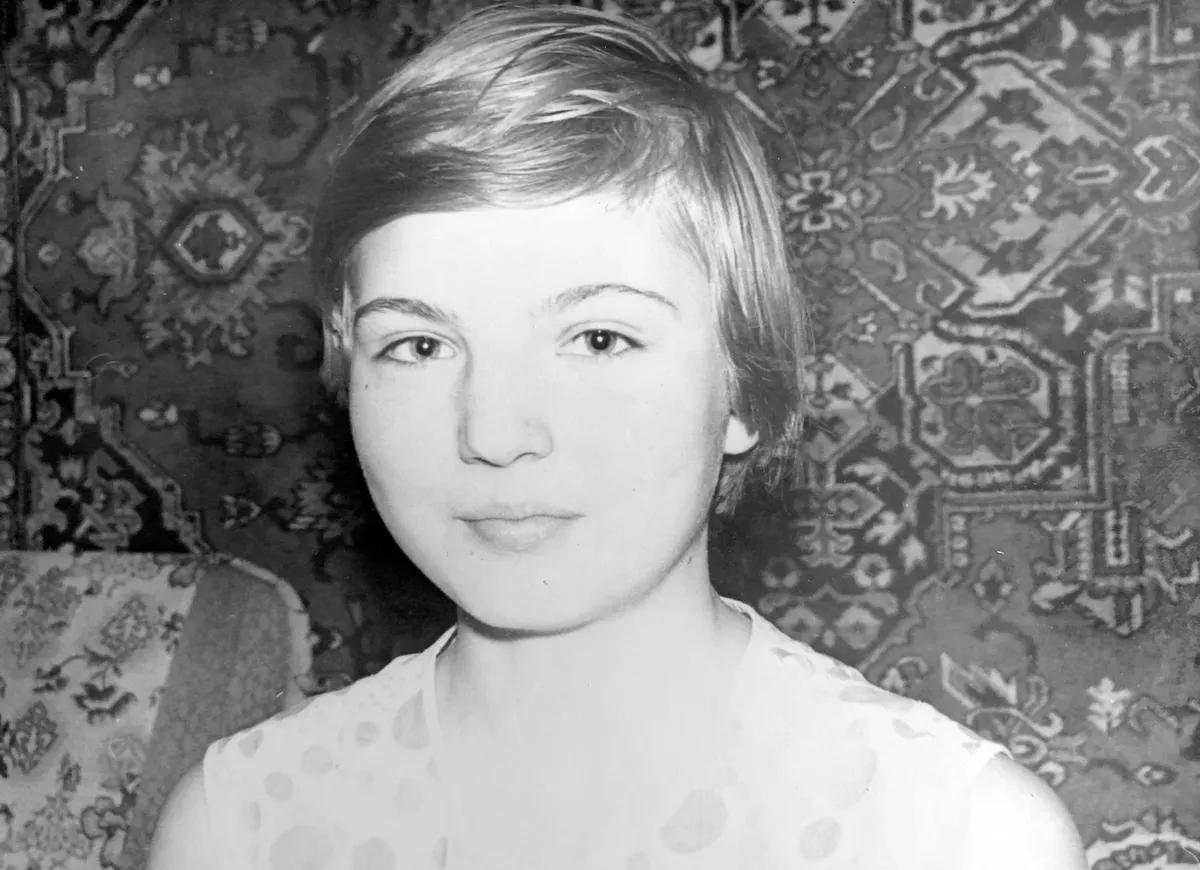
The only thing I didn’t make friends with was a girl who looked strangely like me. Yes, Artek is good for many things, you can even see your double there with your own eyes. Doppelganger.
This is my alter ego, the Riga resident Brigitte, like a sad Pierrot with a cheerful Harlequin-me, walked with a pale, blue face from close veins, on which the Artek uniform (blue denim suit) cast azure impressionistic reflections.
And reality also had some kind of double. Invisible and strangely sad.
I signed up for a geological club and went to grind Crimean limestones outside the camp. And one day I passed by a local young man about five years older than us: a Tatar in black trousers and a crisp white shirt was melancholy walking towards us, and it was clear that he had his own life, about which we knew nothing.
We, like the first Artek residents, were brought to this place by a chain of some serious events. There is something that layers behind the visible: cypress trees, the sea in the haze, detachment processions and solo singing about the stormy sea.
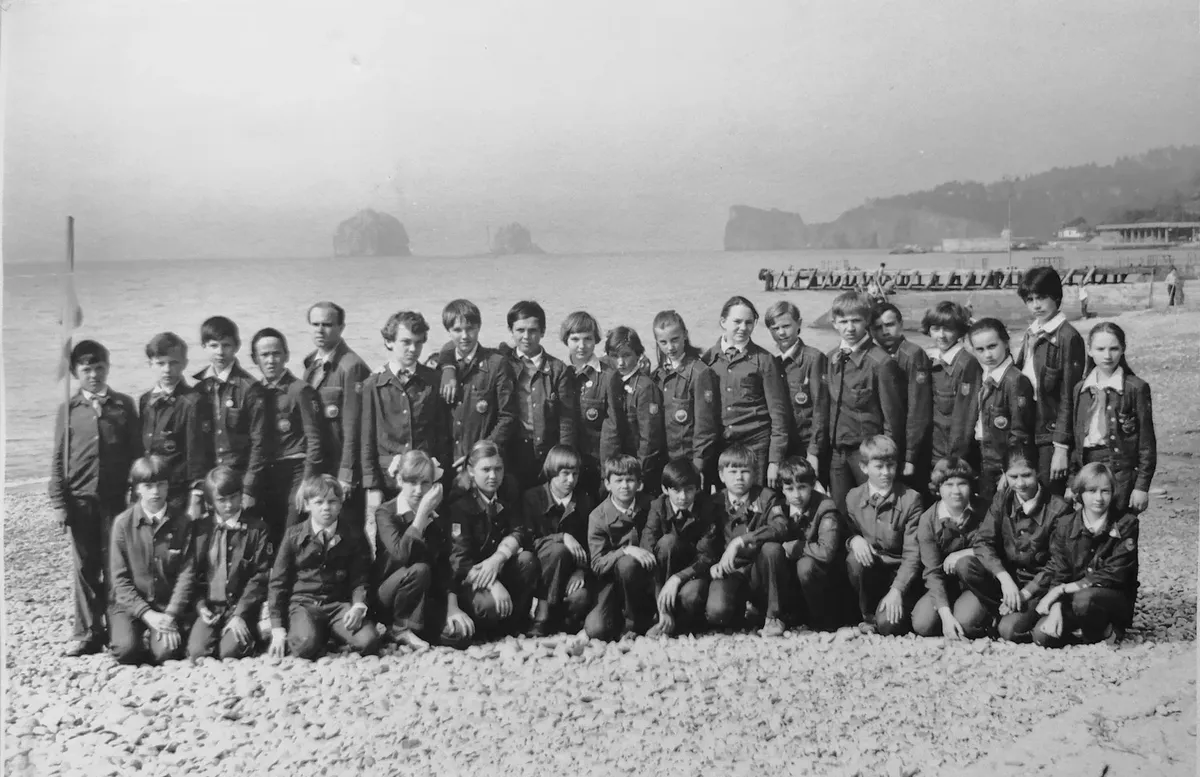
You can say: “Thirteen years is a time when the distance between a person and his environment suddenly feels like an opening abyss: his inner world is like inexhaustibility, irreducibility to anything. And somehow everything feels cramped for a person at this time. He or she is like an angel (maybe a fallen one) who is prevented by some walls from spreading his wings. How could you know what was there , on what hecatombs the Soviet Union was built, this homeland that was kind to you personally?”
I will answer.
If children don’t feel the truth, who will?
If, growing up and reaching maturity, they do not talk about hidden, deeply felt things (after all, we were phenomenally secretive), then, excuse me, what is the use of the rest of the words?
“Artekivets today - Artekivets forever”
Below is an incomplete picture of the Ukrainian fate of Artek - the result not of an interview, but of observation, a network search for evidence.
I think that our two societies need to leave each other alone for a while and just observe. Don’t interfere with your own, don’t argue, don’t sympathize for show, but be caring.
See. Remember. Know.
On the Russian-language version of the website of the private children’s camp in the Carpathians “Edelweiss” there are a few words about “Artek” in 1991–2014, about the problems and achievements of fellow teachers at that time.
“After the USSR disappeared from the world maps, Artek began to experience certain difficulties. This is not surprising - only an empire occupying 1/6 of the Earth’s inhabited land could maintain the huge complex in proper condition. For Ukraine alone, the Artek camp was too huge. By that time, its infrastructure included more than 400 buildings and capital structures, as well as outdated water, heat, and electricity supply systems, air conditioning, communications and sewerage. It constantly required huge financial investments. However, during this period there were achievements: in 1998, UNESCO recognized the camp as a “Project of the 21st Century”, and later as a “Site for International Projects”. “Artek” continued to host a wide variety of events and festivals in the early 2000s.”
One should not exaggerate the scale of Artek and understate the size of Ukraine: in 1991, the largest country entirely located in Europe (larger than continental France), it could pull out Artek. But Russia also had years when it exported almost no infrastructure except the infrastructure of dreams and dreams, appropriations and whims.
After 2014, at least 50 Artek employees—educators, counselors, teachers—left the peninsula “for the mainland,” as it was common to say in Ukrainian publications of that time.
Until 2022, at least three Ukrainian “Artek” operated: this is “Artek. Lesnoy" on the basis of the camp "Rassvet" ("Svitanok") on the western outskirts of Kyiv in a pine forest near the Irpen River, the international children's center "Artek" in the north-west of Kyiv in the famous Pushcha-Voditsa and the children's camp "Artek-Bukovel" in the Carpathians.
In 2015–2021, Artek. Lesnoy regularly accepted children: there are children’s and parent’s reviews about the camp on Google. Reliable evidence that it is working now and whether it worked at all after 2022, when the fighting took place on the Gostomel-Irpen line, could not be found on the Internet.
But here's how it worked in the peaceful summer of 2021. Speech by one of the parents, O. Sh., in Google reviews:
“Dear mothers! If you are still thinking about where to send your child, then I will tell you, as the mother of two children (5 and 7 years old), “Artek. Lesnoy" is the best trail camp. reasons:
If you want to introduce your children to the “right” society. In a society where there are rules, there is order and discipline along with the manifestation of freedom and one’s own “I”. This is the state. camp, and the good thing about it is that very different children gather here: according to their level of income and social status. level <...>, so here your children can see, understand and feel the experience that they will not get either at home, or at school, or in the yard, when we, their parents, choose for them who to be friends with, where to go... well, you yourself know how we do this for reasons of goodness and love...
Kindness and care reign here, from the counselors to the nurse. Counselors are like mothers and fathers, as well as friends and mentors, this is very important!..
Development and manifestation of talents is a priority here! Everyone, just every child here can prove themselves and receive an award or certificate, and this is very important. Not just like that, but precisely for what he can do or tried to learn to do!..
Social responsibility and excursions...
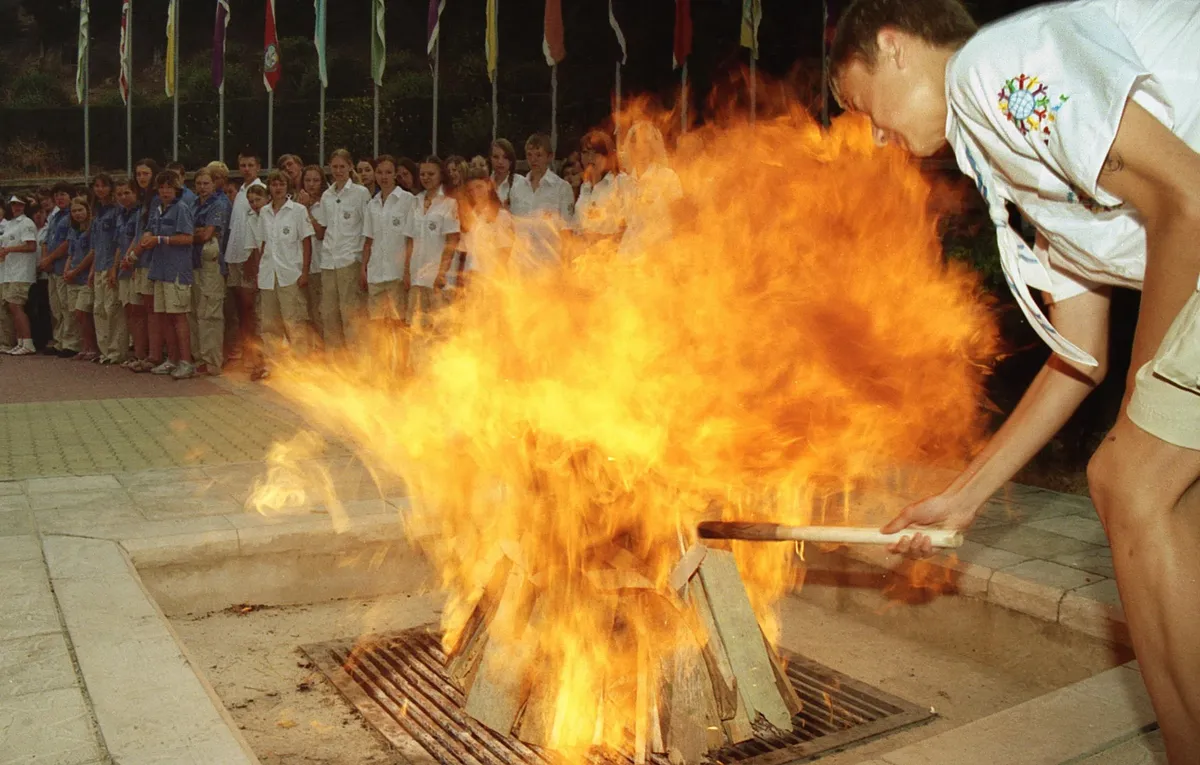
Tour. porridge and evening gatherings around the fire are a colossal experience of socializing among your own people, presenting yourself and expressing yourself in a circle of your own kind.
<…> I highly recommend this camp to all mothers who are afraid to give away and separate their children from themselves! Believe me, this is the best thing you can give to your children, besides your love and care for them! Don’t be afraid, this will come back to you with interest, even if your child adds unnecessary words to his vocabulary - after all, this is all fixable... it will be difficult to correct later what he did not experience or feel in childhood - after all, this is his experience and his emotions!
What has happened since then to this Kyiv mother? What happened to her children?
The international children's center "Artek" in Pushcha-Voditsa is still operating.
Below is a fragment of the BT Artekovka review
“I came to the anniversary (100th anniversary) of Artek. Sponsors often came (as I understand) from different countries, so on some days we had to lick the rooms (which we always did) and not enter them at all... We usually wake up at 7, breakfast at 8. If there is anxiety, they give us time to sleep (no more than an hour). About the basement. He's terrible. As a child *** I can say that sleeping on pallets with shot mattresses [ sic in the original - E.B. ] during shelling it was more pleasant than on dirty, pissed-off mattresses. The blankets are no better. Only the joint venture “Vartivniki Sontsya” has a completed basement; they simply take it there to do all sorts of inspections. I was in the 2nd detachment and we had a separate room with 1, 2 and 3 (each +-35 people), approximately 7 by 6 meters. Mattresses lay on the floor and the pipes were dripping. Some children slept on cold tiles on blankets. It was very noisy when someone was talking, but the counselors didn’t do anything... they literally slept on top of each other...
It also happened that our entire camp fell ill, we walked around with coughs and fevers... It’s good in the isolation ward, the basement is new, the rooms are separate. I would rather live there than in my room. True, not all sockets work, but this is a matter of chance.”
About the same camp - Artekovka K.:
“The camp is just something unrealistically bad! I want to speak out for everything!
Basement.
What kind of horror is this? Why are there not enough blankets and pillows for everyone? There aren't even enough places! Why do children have to run to get a normal seat? Our children fell just to get a good place. It's incredibly cold in the basement (I was there in July). All children have fever, runny nose, and cough. From our detachment alone, 5-9 people went to the first aid station every day.”
Artekovets M.:
“By the way, I completely changed my sleep schedule there; I slept after 1 day because of the anxiety when they take us to the basement for the whole night, and even when lights out they don’t bring us back until the morning.”
It seems that everything is about the minor Kyiv sufferers? The spelling and syntax of the originals, the children wrote in Russian.
The authors of the Russian-language version of the website of the private children's camp "Edelweiss", also in the Carpathians, believe that "Artek-Bukovel" is the only Ukrainian "Artek".
“What’s wrong with Artek now? - asks Edelweiss - After the events of 2014, the staff of the Artek camp officially moved from Crimea to Bukovel. And now the children’s camp “Artek” in Ukraine is located precisely in the Carpathians. The center has three camps: 1. “Ozerny”; 2. "Forest"; 3. "Mountain". Where is the Artek camp located in Ukraine? It is located on the territory of the country's largest ski resort. “Artek” and Bukovel are two well-promoted brands, popular since the very times when residents of the USSR believed that “Artek” was the best camp in the world.
We will not belittle the sociocultural achievements and traditions of the Soviet period, as well as the legends and stories that go back over 90 years and which the Artek camp in the Carpathians can boast of.”
Judging by the fact that in the photo from Bukovel the children are sitting, like the Artek residents of the classical era, around a fire pit, this Ukrainian “Artek” really took something from the world between Adalary and Ayu-Dag. He carried away part of the Crimean land on his soles.
Here's life this summer. If one parent looks at her complacently (“If there is an alarm at night, the children go to the parking lot, and in the morning an active program awaits them”), then the other is seething: “First of all, they wake up the children in the middle of the night when there is an alarm, lead them through the cold to a shelter, walk for about 15 minutes, and this is just the first floor of the central large hotel Buka, they keep them there in a cold room, where not everyone has enough space to even sit down. Children are sick. Bullying, fights, and theft are rampant. I do not recommend visiting this camp."
The response from the administration of “Artek Bukovel - Children’s Camp” is that a psychologist is fighting bullying, and “regarding night alarms, we are obliged to comply with safety standards and government requirements. Evacuation to the shelter occurs in an organized manner, under the supervision of counselors. Our shelters have beds, mats, blankets, water and other necessary things designed for the safe temporary stay of children, taking into account the temperature in the room and the age of the children. We understand that this may be an unpleasant experience, but unfortunately this is a necessary and necessary safety measure."
Parent S.N. prints:
“Artek is only worried about its own reputation as the “best camp in Ukraine”... In one of the most expensive camps in Ukraine there is not even a reliable place where children will be safe during alarms.”
And again, “Artek-Bukovel” repeats about the shelter 600-900 meters from the residence and that “in the shelter the air temperature is 21.5 degrees Celsius” and that “in the shelter children are placed on beds, sofas, chairs, carriage mats and sleeping bags. We would like to note that the simplest shelters have benches. The comfort of our Artek residents is very important, so we are using additional means to make the shelter more comfortable.”
And to the complaint that older children were motivated to help younger ones wash their hands, this “Artek” responds like this:
“Nobody forces older children to help younger ones. Camp Artek-Bukovel is a place where helping the elders to the younger is one of the principles of education. And help and mutual assistance are part of our DNA. Artek DNA."
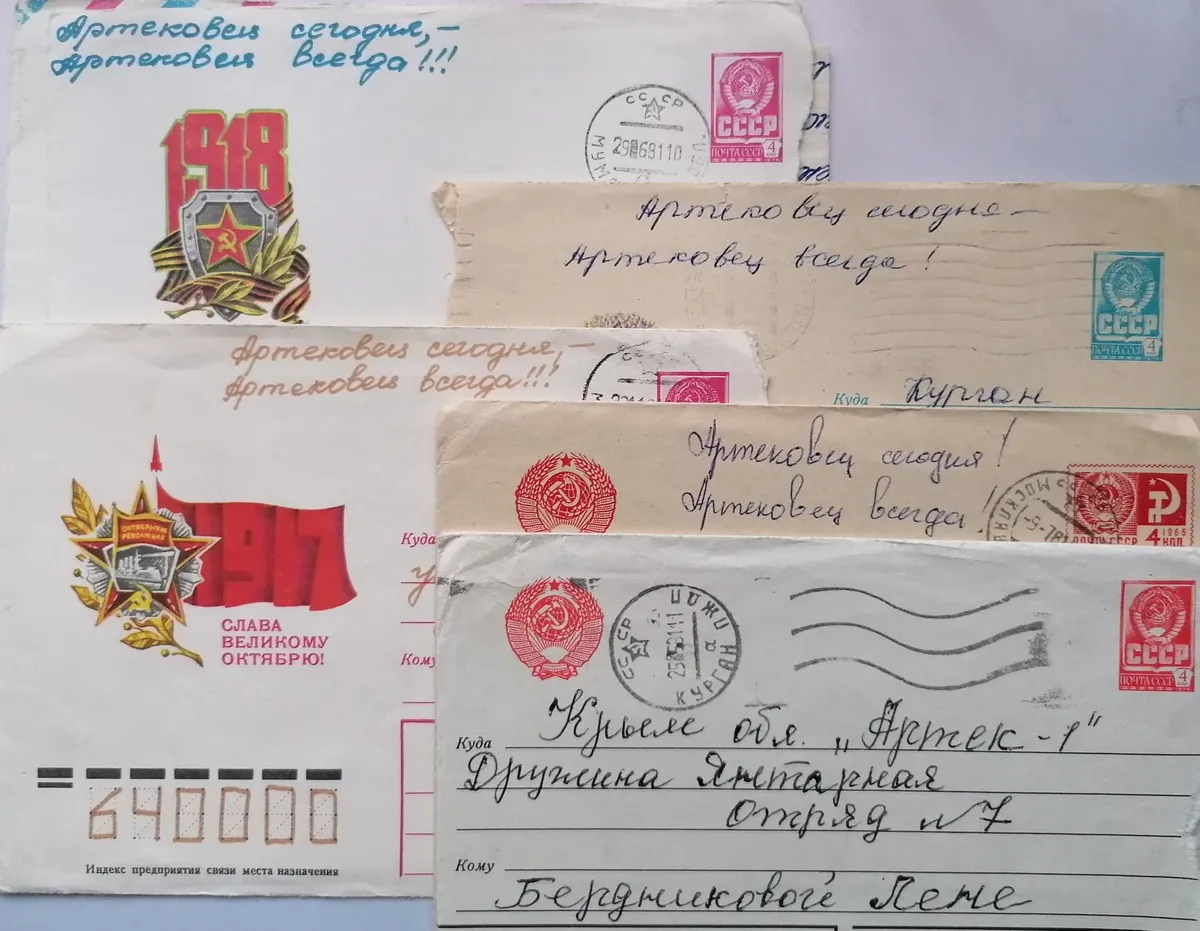
This “Artek” in the Ivano-Frankivsk region conducts public correspondence with parents in Ukrainian, just as they do with him, and the last argument given in favor of mutual assistance, “An Artek member today is an Artek member always,” is the motto that we once wrote out, giving it at least one exclamation point, on envelopes sent throughout the USSR.
Ukraine, a country of emphatic pluralism, is true to itself: it has as many Arteks as hundreds of network connections. Russia, which believes in centralism, has only one Artek. "At the base." But every country has its own Artek.
I hope none of them are harmed on either side of the border.
Your own "Artek"
Russia also has experience in creating “its own Artek”. Not in such dramatic conditions and for a different reason, but there.
When Crimea was transferred to the Ukrainian SSR in 1954, a thought arose among the leaders, in the Republican Central Committee of the Komsomol: “Artek” departed along with Crimea, sailed away like a fisherman on an ice floe, which means that an analogue of “Artek” is needed in the RSFSR. Your own children's camp No. 1.
The idea was supported by the Council of Ministers of the RSFSR. We were thinking about a health resort on Lake Baikal - it’s also a “sea”, and a sacred one at that. But they chose a place for the camp near the village of Novo-Mikhailovka, Tuapse district. In 1957, the correspondent of the Pravda newspaper Oleg Dormadekhin and the first secretary of the Krasnodar regional committee of the CPSU Dmitry Polyansky stopped there, and it was revealed to them: here!
The beach is sandy, the sea is shallow, the vegetation is marvelous. And the climate is dry Mediterranean subtropical, like in Crimea. In the RSFSR at the end of the 1950s, it was only on these incomplete (if on a line, not on a highway) 170 kilometers of the Caucasian Riviera from Anapa to Tuapse. Everything south of Tuapse is already humid subtropics, no longer a God-given ideally healthy climate.
The new camp opened in 1960.
But a strange thing... Artek created the apolitical Red Cross, its Russian branch; created as a health resort, nothing more. But the camp itself gave rise to the whole myth of “red childhood.” Let me remind you that the story “Military Secret” with its inserted, slightly earlier “Tale of Military Secret, about Malchish-Kibalchish and his firm word” was written by Arkady Gaidar in “Artek” and about him.
And back in the 1980s, children went there with Civil songs flying off their teeth. “There, in the distance, across the river, lights were coming on.” "White Army, Black Baron." And "Eaglet", of course.
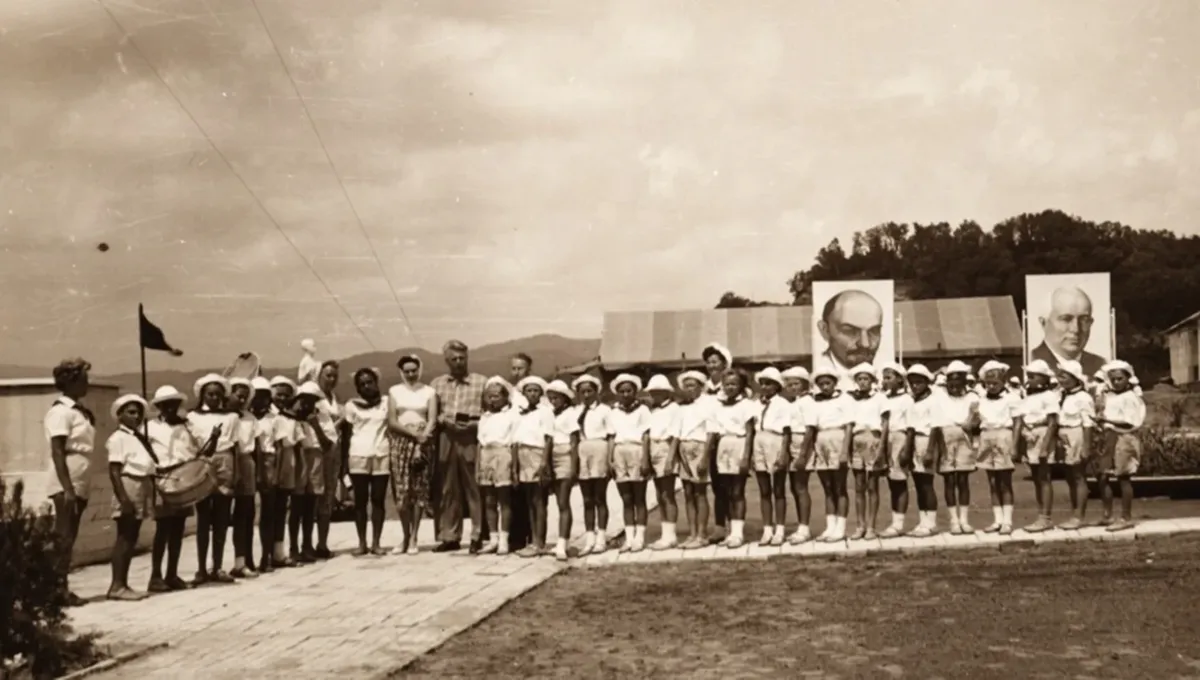
All this (“ideological”), like annual rings, was wound around “Artek” for decades, and it (I testify) remained the same apolitical scout inside; Like a sliding sea over coastal pebbles, all these ideological waves rolled along the terraces of the “condominium” that grew in the 1960s. In the 1980s, “Artek” already included the camps “Mountain”, “Kiparisny”, “Morskoy”, “Pribrezhny”, and in each there was more than one squad. The place itself dampened all vibrations except one - the “active position”.
A new seaside camp in the Kuban, on the site of the early Byzantine fortress of Nikopsia (as Hermitage archaeologists confirmed in 2024), was organized by the party and the Komsomol, and named it “Eaglet” in honor of the song Kibalchish, who “doesn’t want to think about death, believe me, at sixteen boyish years.” But the Eaglet did not fly higher than the Artek.
There was a time when the two camps were, as it were, a pair of “Artek” and “Orlyonok”, but even children who quietly loved their homeland of the RSFSR and its meek flag, with a blue stripe at the pole, much larger than the whole Union and its red cloth, did not want to go to “Eaglet”, which was in the RSFSR.
There was something in “Artek”, in its fabulous beginning, in its place near Pushkin’s Gurzuf, in its lostness among ancient and medieval fortresses... Children were drawn there, and that’s all!
Apparently, the joy of life, which was so well told by the heroine of Mikhail Zoshchenko’s story “Silence,” was absorbed into the locus. Apparently newsreel footage. Apparently, the desire to be together on the top of the mountain.
The little eagle from the song, no matter how cute he was, was secretly scary. By your early death.
But Artek did not escape trouble.
***
On the night of June 4, 1989, an explosion was heard along the Trans-Siberian Railway between Chelyabinsk and Ufa, which five seismic stations of the Union recorded as an earthquake of magnitude 3.5.
In the lowland on the Asha-Ulu-Telyak section, gas flowing from the Western Siberia - Ural - Volga region pipeline collected. A pipe with a diameter of 720 mm, approximately parallel to the railway track, was laid in violation of technology. When two oncoming trains, "Novosibirsk - Adler" (20 cars) and "Adler - Novosibirsk" (17 cars), simultaneously entered a cloud of gas, the worst railway accident in the history of the country occurred.
Last year, Rimma Buranbaeva, who worked at the scene of the 1989 events, told Lenta.Ru:
“I, from the regional trade union committee, accompanied the mothers of the children who were going to Artek, to the site of the tragedy and then to the hospitals. I remembered for the rest of my life that none of them cried. They held back: if one of them started crying, everyone would go crazy. But this oppressive situation was more pressing than tears and hysterics.”
The children were not taken. All together: from gas pressure controllers in the pipeline to employees of the Ministry of Oil and Gas Industry of the USSR, from the authors of instructions for drivers to other personnel of the Kuibyshev Railway, where the disaster occurred, from the authors of the pipeline project and the builders of the Neftetruboprovodstroy trust to the operators of the facility.
“We as a country failed” was what was burning on everyone’s forehead that day.
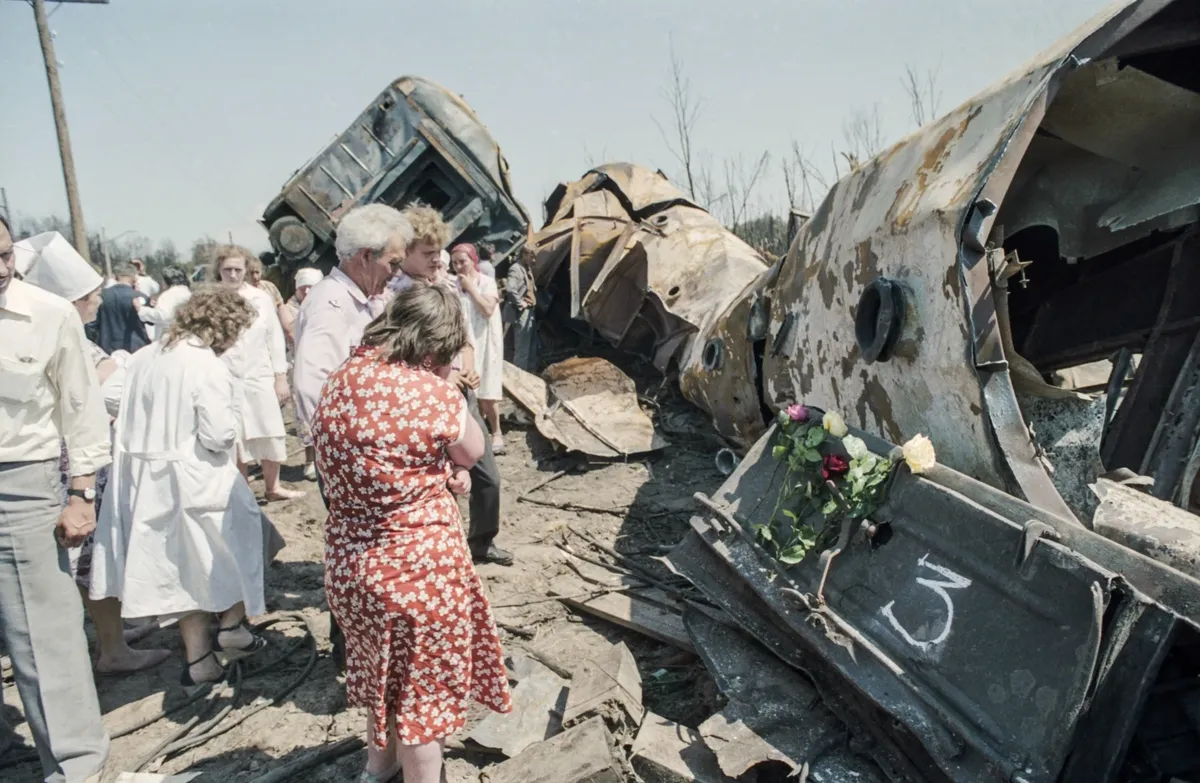
On the afternoon of June 4, Secretary General Mikhail Gorbachev, Chairman of the USSR Council of Ministers Nikolai Ryzhkov, Defense Minister Dmitry Yazov (even though the version of the terrorist attack was dismissed very quickly), Health Minister Yevgeny Chazov “and other officials” arrived at the scene of the accident.
The country's leadership arrived as if driven by panic.
There was already a disaster in 1986 at the Chernobyl nuclear power plant, the sinking (in the same year) of the cruise ship Admiral Nakhimov, which collided with a dry cargo ship near Novorossiysk. The Armenian-Azerbaijani war was already underway, and on December 7, 1988, an earthquake destroyed the Armenian Spitak and partly other cities of the republic.
But an explosion on the Trans-Siberian Railway due to a recently laid pipeline... The death of juniors from the Chelyabinsk Traktor youth hockey team... This lunar landscape...
When the future Artek residents died without even reaching the sea, a dark future became clearly visible.
In the end, it was their shift, the leaders, who died. Future nomenclature. Or the intelligentsia. Or the nomenklatura intelligentsia. The country's elite, in short.
And the Politburo stood there and didn’t know what to say. People had the skill to communicate with people. But there were no words.
The country lost its Malchish-Kibalchish, again. The country itself destroyed him.
***
Now - no matter what the film “Artek” claims. Through the Centuries,” which sent the little aristocrat, the son of the general of 1812, to “Artek” in 2025, the forge of the elite is not there. And perhaps not at Orlyonok, although at the end of September the director of this camp, Alexander Dzheus, was awarded the Order of Alexander Nevsky.
After 2015, the gathering point for those tipped to join the Russian elite is on the only federal territory in the country, which has a special structure of power and its own budget. It is located in the Imereti Lowland of the Adler District of Greater Sochi. This is the Sirius educational center, which partially inhabited the Sochi 2014 Olympic venues.
You can grin: in the humid subtropics, in Greater Sochi! In the very places that in the 1830s and 1840s Lermontov and the exiled Decembrists - ordinary soldiers - sometimes reluctantly conquered from the mountaineers. There, many (for example, the Decembrist Prince Alexander Odoevsky, whose monument you can still find in Lazarevskoye) died from the widespread “Caucasian fever.”
But the last century was not in vain: since the 1920s and 1930s, land reclamation and improvement of the climate of the Caucasian Riviera have been going on. Eucalyptus trees, you know, were planted. They drained the lowlands near the sea, in which the autochthonous population, wise by experience, had never lived.
Yes, a man-made climate, a former unenviable place where the cars of holidaymakers, imprudently parked in dry river beds, after a sudden downpour and a foamy wave from the mountains, are now carried away into the sea, sometimes with passengers.
But “gifted children,” the pedagogical fetish of post-Soviet Russia, go to Sirius, to the Russian Hogwarts of this historical cycle. International school of magic and scientific wizardry, where everything is free for children.
What does climate have to do with it? In Scotland, where the original Hogwarts is located, the climate is also not Greek.
What is “Sirius”, which grew out of the “Talent and Success” fund, except that it is a special legal world, we do not yet know. The fruits of education ripen slowly. In Russia, it usually happens that children raised on the same values and models begin adult life in conditions that require exactly the opposite qualities. The corporate glitz of the Sochi educational cluster may not be what the country and the world will demand in the 2030s.
But “an Artek resident today is always an Artek resident.” And everywhere.
This material was published in the sixteenth issue of Novaya Gazeta. Magazine". You can buy it in the online store of our partners.