
Translated material
Space as sympathy
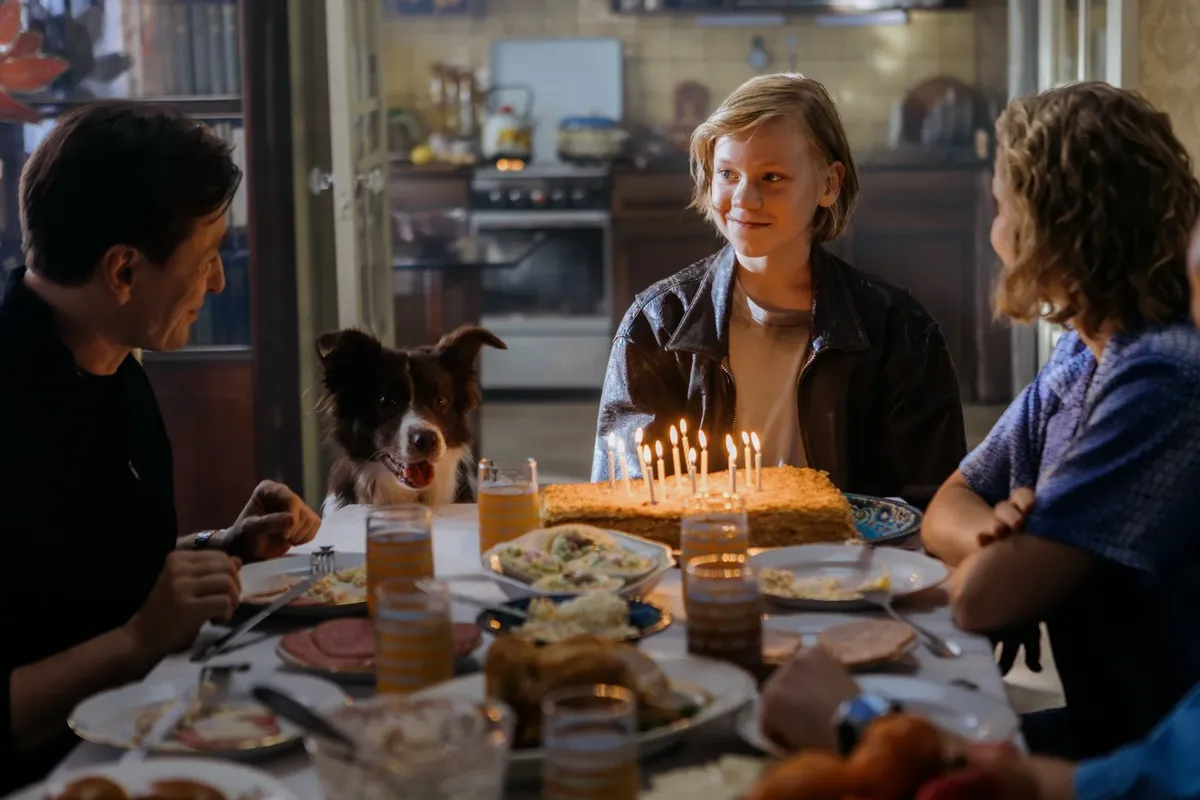
On the screens is the musical fantasy dramedy “Space Dog Lida” by Evgeniy Sangadzhiev

Still from the film “Space Dog Lida”
No, this is not about the pathos of cosmic achievements. An unexpectedly ironic, intelligent, reckless movie with increased penetrating healing energy.
The beginning of the 2000s. 13-year-old Igor lives with his mother (Yulia Peresild) and stepfather (Evgeniy Stychkin). But one day something out of the ordinary happened. The astronaut father gave his son the dog Lida, who returned from space. And as soon as Stepan’s stepfather and his pregnant mother decide to send the teenager to the cadet school, Igor and Lida run away from home. Well, since no one needs them here: mom is about to give birth to a child from someone else’s uncle Styopa.
Lida will bravely protect the boy. And not only him. The mythical dog that picked up a magical gift in space strikes with electric discharges, spinning the funnel of time, taking out their future from people. That is, imagine: meeting yourself in 30 years. And it’s not a fact that in this diverse future you will like yourself. In any case, the adult Igor - enormously fat, bald (cleaner than Brendan Fraser in "The Whale" or the "crazy Professor Klump") - does not please his young self. Puffy, with a sweaty head, he begs “musically” on trains. Who would want to see such an unsightly, breathless perspective: with tears from “The King and the Jester” (“I know that life cannot be returned”) and Decl pounding in his head (“Who are you? Huh? Who are you? Who are you?”). And for this reason you need to take the Unified State Exam?
It is Igor the adult who informs his teenage self that in three days “their” father will explode in a rocket at the launch... This means that the launch at Baikonur urgently needs to be stopped. This means we need to cross the country, the border, all the red lines... Save my father. You can change the future only by correcting the present. This is what Igor the child and about five of his various adult incarnations will do.
When Igor, with the help of Lida, “loses his temper,” the surrounding space partly remains the same—“zero.” With chandelier markets and all sorts of rubbish at the station, with gypsy kidnappers, with broken-down electric trains, provincial TV, a home-grown circus, a police station, psychics and guru-coaches.
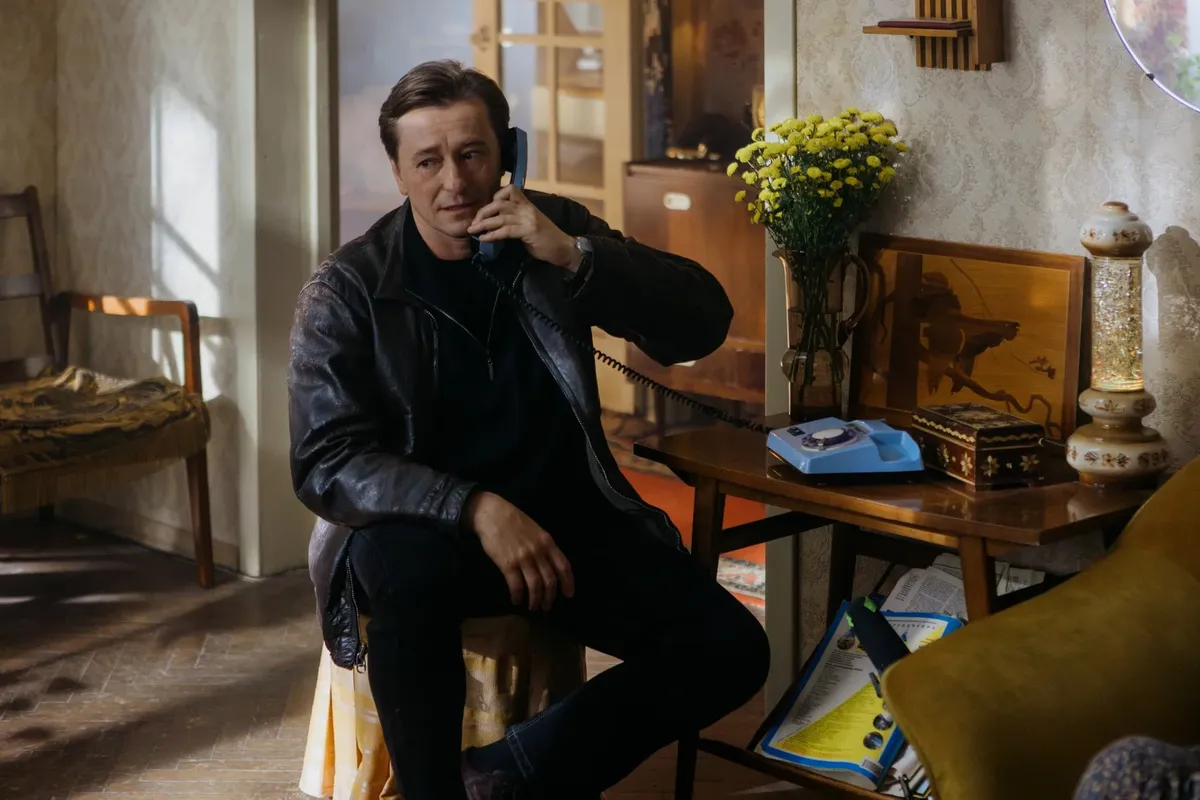
Alternate future versions of Igor include a rogue businessman with a 32-carat smile. He conducts a seminar on how to build a personal business, he has an enviable car, and “victims of suggestion” who adore and hate him. This Igor - “your ideal life” from the magazine cover - is a white-toothed cynic. He sells Lida left and right for crazy money, knowing that she will return.
There is Igor - a “lost soul”, a criminal covered in tattoos, with their common mother Peresild on his chest in the form of a tattoo. Young Igor will have to go through childish trials and find himself on the threshold of despair in the Kazakh steppe among the merciless miners of valuable metals from falling spacecraft. At the threshold of death - when an adult will have to perform artificial respiration.
Each of the adult Igors seems to help the boy move towards the treasured rocket in an alternative reality, but each time it’s a bummer and a difficult choice for the teenager.
Great dialogues. The instructions of the hero’s hypothetical sister (Alexandra Bortich) alone are worth it: “Don’t send me to kindergarten. And there’s no need to give birth to me here!”
Entertaining, but not escapist cinema (which fills the billboard). Not about nostalgia for the 2000s.
About growing up, emotional and value separation, the formation of one’s own identity in relationships with oneself and with those closest to you. About challenges and responsibility not only for yourself. About an alternative history of one’s own life and the effort to consider a pattern in accidents. About freedom as the awareness of the inevitability of death, which changes you now.
And what is there in the future? Will it help you see yourself from the outside?
Evgeniy Sangadzhiev (“Happy End”, “Ballet”) has a relict ability in Russian cinema - to shoot summer, light, emotionally heated cinema with a lining of essential questions. It's fun to play out absurd plot twists with meticulous honesty, as if they were happening here and now. Expand the grotesque and eccentricity of the abrupt plot into a story about us, with today's fears and unjustified hopes.
The entertaining duet of young Danila Kharenko and the multifaceted Evgeniy Tkachuk follows the line of a crazy road movie. Tkachuk waited for his personal benefit performance; with visible pleasure he transformed into five different images, characters, destinies of the same person.
One of the shortcomings - yes, they exist - is an excessive passion for clips, which, like Lida, drag the authors into a time funnel (the running time is almost 2 hours).
The soundtrack connects retro into the playlist with its dramaturgy, which does not illustrate the action, but enters into a semantic ironic dialogue with it: from the musical preferences of little Igor (Decl) to Mikhail Krug with the sobbing “Letter”: “Mommy-Mama, forgive me, forgive me” - the calling card of Igor the Urkagan. The swing of characters flies from Dolphin’s “Spring” to Bad Balance, from the chalk-drawn White Door to Pugacheva’s unknown world to the climax - the disarming romance of Tariverdi’s love ballad “You Have Such Eyes”.
Of course, the genesis of this movie game with time is “Back to the Future.” And on the topic of how to correct the mistakes of the past and future in the present, there is a large filmography. I'll remember Cooper (Interstellar), seeing himself in the past. Marty McFly (Back to the Future) interacting with new parents. Bruce Willis's character meets his younger self in "Baby." A killer in "Time Loop" who receives an order to kill his future self. A traveler to his younger self (“Enchanted”). But for all its universality, “Space Dog Lida” is ontologically Russian cinema in all its subject-specific, fateful recognition. Therefore, its origins are more likely to be guessed in various kinds of good adventure tales: from “The Property of the Republic” to “The Tale of Wanderings” and the recent “Top” (with the same Tkachuk in the role of a fist fighter leading a young gentleman through the dangerous adventures).
The authors describe their story as a journey into the “world of the unfulfilled.” Well why? The ending of the film - I won’t spoil it - indicates that any of our efforts, even those that do not achieve our intended goal, change reality.
But in meanings parallel to the plot, a secret thought also leaks out: what did we ourselves do to our future in the 2000s?
Did you see yourself and this “real” in the mirror?
PS During her lonely flight into space, Lida also remembers her different, different lives. So a continuation... is possible. The main thing is that the audience, accustomed to the sweet pills of the Andreasyans, come. They say the film has a small advertising budget.
PPS In the role of Lida - Shan's dog. Good job. The Oscar Academy recently published a letter from Indy the dog, who played the lead role in the horror film Through the Eyes of a Dog. She calls for animals to be included in Oscar nominations. I think Shanya would support her: she has a great chance of winning.
MORE ABOUT CINEMA
Larisa Malyukova runs a telegram channel about cinema and more. Subscribe here .