
Translated material
“Without the mark “advertised””
We tell you how much the government spends on “jeans” in the messenger, which it itself blocks

Illustration: Petr Sarukhanov / Novaya Gazeta
The annual ski marathon in Murmansk has been cancelled. The weather was bad, the track was a mess. Participants from other regions complain online, telling how much they spent on non-refundable air tickets. And even from the telegram channel of the marathon, only a bot remained. For the services of maintaining this channel and the group of the same name on VKontakte, 127 thousand rubles, not great by the standards of officials, were spent. According to State Procurement, the public was run by one of the Murmansk journalists. The draft agreement specifies the content of the work: publish news twice a week on the social network and telegram channel. This purchase is one of the smallest among those that Russian officials made this year, when Roskomnadzor announced a slowdown in service work in Russia.
When the state began to worsen Russians’ access to the most popular messenger in the country, there was no mass outflow - in February, the decrease in the audience was only 286 thousand people (from 95 million).
And advertisers logically remained where users remained. Even the FAS threat to fine for advertising in the “cart” did not prevent, which, however, was postponed until the end of 2026. One thing breaks the logic: these are advertisers who are directly related to those who messenger and block. The same government officials from the same system.
The loudest story of the season related to government procurement of telegram news happened in Primorye, where the Federal Antimonopoly Service ordered the cancellation of a contract for posting information about the work of regional authorities in a slow-motion messenger. The inspection was carried out following a complaint from a Vladivostok resident. For 41 million rubles, the Primorsky authorities wanted to order advertising in four federal Telegram channels, six channels in the Far Eastern Federal District and 18 in the Primorsky Territory. At the same time, the department focused not on the fact of the purchase itself, but on a series of formal violations in the documentation.
So far, no law restricts officials from working with Telegram. Unlike “banned” foreign networks associated with Zuckerberg’s extremist company, recognized in the Russian Federation, Durov’s messenger is not formally listed on any blacklists.
Here the question is rather about purchasing efficiency:
With one hand, the state makes it difficult for citizens to access the platform in every possible way, and with the other, it spends citizens’ money on its own advertising on it.
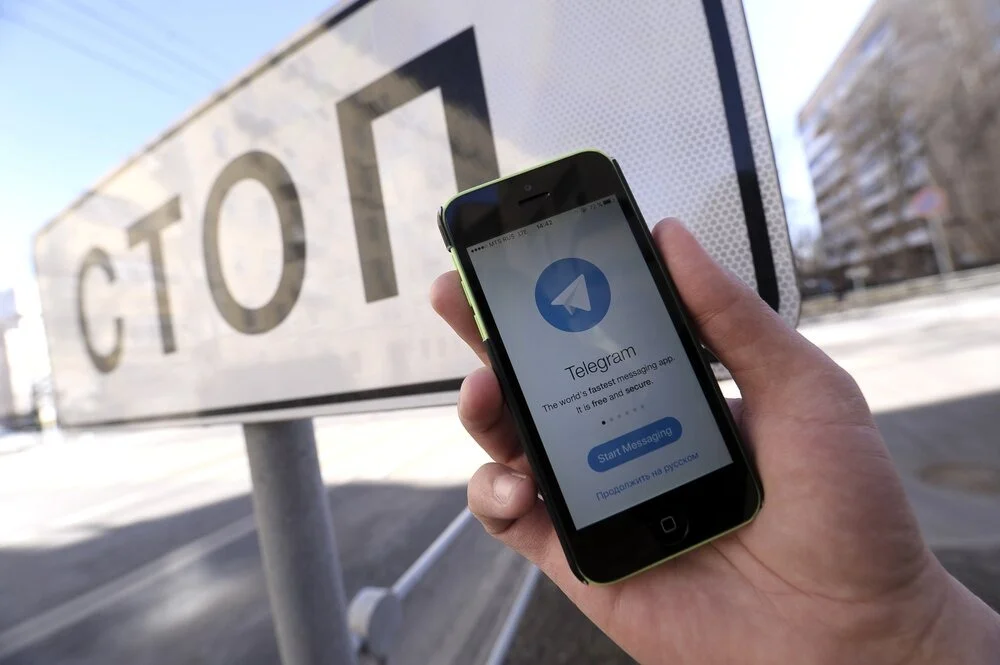
Journalists noticed that after February 10, government agencies even increased purchases of services in Telegram. At least 47 purchases are carried out by authorities at various levels - from the regional sports training center to the Ministry of Foreign Affairs (they ordered almost a million rubles). Fontanka, however, noticed that this purchase was canceled (it was put up on the very day when the FAS announced the illegality of advertising in the messenger).
The record lot was won by the Content Center, subordinate to the authorities of the Moscow region, which purchased services “to cover the activities of government bodies of the Moscow region in socio-political, economic and cultural Telegram channels of federal significance” for 119 million rubles.
According to the terms of reference, by the end of 2026, the contractor must organize the publication of at least 1015 posts on five channels selected by the customer, the text of which will be strictly agreed upon, and ensure at least 20 reposts from regional media channels. The contractor (the Moscow-based FRIART LLC) undertakes, at the request of the customer, to attract opinion leaders to increase the coverage of publications. Attached to the tender documentation is a PDF file with the answer to the question whether it is planned to re-sign the contract in the event of a complete blocking of Telegram in the Russian Federation in order to replace the messenger with other platforms. The answer is: “The draft agreement does not provide for “re-signing” in favor of alternative sources.” Now the status of the contract is designated as “Execution”.
Personally, I especially like one point in the terms of reference: “Posts are posted in Telegram channels without marks (tags) “for advertising purposes” and other similar ones.” That is, the reader should not guess that the post was paid for. In the old days, such placement in newspapers was called “jeans,” when the reader was deliberately deceived by selling an advertising product under the guise of journalistic material - for greater reliability. Only in this case, let me remind you, we are talking about taxpayers’ money, for which these same taxpayers are promised the same “jeans”, only political.
The goal was set in accordance with this idea. Here it is, in the terms of reference: “creating a positive image of the governor and the Moscow region as a whole as a developing region.” Delicate “coverage of activities” in the name of the lot, and inside there is outright PR. And we need more and more: a year ago, Content Center held similar competitions for a total of 57 million. Now the budget has doubled.
Judging by the scale of purchases, officials who have long been accustomed to buying newspaper pages or airtime have simply reoriented themselves to a more popular platform and do not at all want to give up reliable, albeit semi-blocked, communication with the population entrusted to them.
Buying media loyalty has long been legal - any administration of a city, district or region certainly holds competitions for “information services.”
Behind this euphemism are tranches to local media for texts or stories pleasing to officials. Terms of reference are shamelessly written for specific newspapers or television companies, and they take it for granted - as an opportunity to pay for utilities, buy paper, or pay employees.
At first, the authorities concluded contracts for “information services” only with the media, then the owners of large VKontakte groups were allowed into the feeder, but now money is also pouring in to certain advertising agencies that provide placement on Telegram. There is only one criterion for choosing channels - the number of subscribers.
Thanks to the Moscow region tender, we also know the prices: a post in a telegram channel with a federal agenda costs no more than 150 thousand rubles, in local ones - 14 thousand rubles.

Compared to the scale of the Moscow region, the Novosibirsk tender for “organizing the preparation and placement of information materials aimed at implementing the information policy of the Novosibirsk region” seems quite modest. A total of 5.3 million. For this money, the contractor (LLC “Network of Urban Sites”) must place on the main page and duplicate in the messenger more than a hundred materials at 48 thousand rubles per piece. The range of topics is wide: “bringing to the population of the Novosibirsk region information about socially significant events, socio-economic development, the activities and decisions of government bodies, information materials aimed at strengthening civil unity, educational materials, and other materials aimed at implementing the information policy of the Novosibirsk region.”
Novosibirsk residents, however, covered themselves in case of possible blocking: the agreement provides for the possibility of replacing the messenger (Telegram/MAX).
The Kirov region is even more modest: it signed two contracts for a total of 3.7 million with IP Smirnov, which provide for 676 materials about the governor and government agencies. Some should be posted on media websites, some in print, on radio, on VKontakte, MAX and Telegram. In the latter, the customer wants to receive more than 100 posts. All this is “to meet the state needs of the Kirov region.” It is a matter of state to write posts in the “cart”!
The Tula region, for 3.1 million, ordered an entire campaign “about the socio-economic development of the Tula region” - exclusively on Telegram. In March, Digital Agency 5 LLC was supposed to post 32 posts in telegram channels, as well as 8 texts with quotes from “federal experts on the socio-economic development of the Tula region.”
The Leningrad region will pay 2 million for network “information campaigns” in Yandex, VKontakte, Telegram and MAX. In the “cart” the customer is interested in “channels of public opinion leaders”. In total, 50 such posts will be released in the messenger by the end of the year, the performer is TLS Media LLC. Bashkiria advertises “Product of Bashkortostan” - that is, local food - on VKontakte, Odnoklassniki, Telegram and MAX for 800 thousand rubles. With a nutritionist and cooking videos (products at the expense of the performer). From March to December, 15 posts per month should appear in the “cart”. Mordovia for 687 thousand rubles will talk about the economic and social life of the region with duplication in the Telegram channel.
The Samara region is right now running a competition with a starting price of 3 million for posting materials on Telegram, MAX and VKontakte. Well, okay, now it’s clear that they won’t be fined until the end of the year, and it’s also clear that there hasn’t been a drop in the audience. But the administration of Ugra took a risk by placing a tender for telegram PR right the next day after the start of blocking. The performer must place 1806 texts worth 10.5 million rubles in “VK” and in the “cart”. It turns out to be 5800 rubles. per piece. The list of desired channels and publics is attached. An amazing detail - the draft agreement states that texts for online publication will not be sent to the performer on the Internet - only given in person. Just old school! “The transfer of information materials for placement occurs daily in person at the Customer’s location, the materials are transferred on a physical medium.” Is it on a floppy disk?
And in Sergiev Posad they dump : they buy 2,500 “unique messages” on the media website, on the social networks “VKontakte” and “Odnoklassniki”, on Telegram and MAX for only half a million.
Regional parliamentarians are not lagging behind. The Yakut City Duma decided to promote itself “in the social networks TG, VK, Odnoklassniki and the MAX messenger” for 318 thousand rubles, the City Duma of Petropavlovsk-Kamchatsky will generously pay 700 thousand rubles for 10 news on the website of the news agency and on social networks, including Telegram.
In total, since February - the month the blocking began - we have counted government purchases of telegram posts for at least 150 million rubles.
It’s hard to say what’s more important here: the confidence that the fight against the messenger will once again not be crowned with success, or the desire to quickly master the means - while there is something to do.