
Translated material
Reuters: Ukraine has disabled approximately 40% of Russian oil export capacity. Oil workers are already warning partners about force majeure and disruptions
Reuters analyzed the consequences for the oil industry of the March strikes by the Armed Forces of Ukraine on the infrastructure of Russian ports through which export oil passes - southern Novorossiysk, northern Murmansk, but above all - the northern Baltic ports of Ust-Luga and Primorsk.
According to Reuters experts, Russia lost approximately 40% of its oil export capacity in March. But after that, on the night of March 27, the Ukrainian Armed Forces launched another major raid on the Baltic ports - and again hit their infrastructure.
Reuters then added a report that Russian oil producers warned buyers of a possible declaration of force majeure on supplies.
Pro-war telegram channels published satellite images showing the consequences of recent attacks on targets in the Leningrad Ust-Luga (cover), with black smoke rising above.
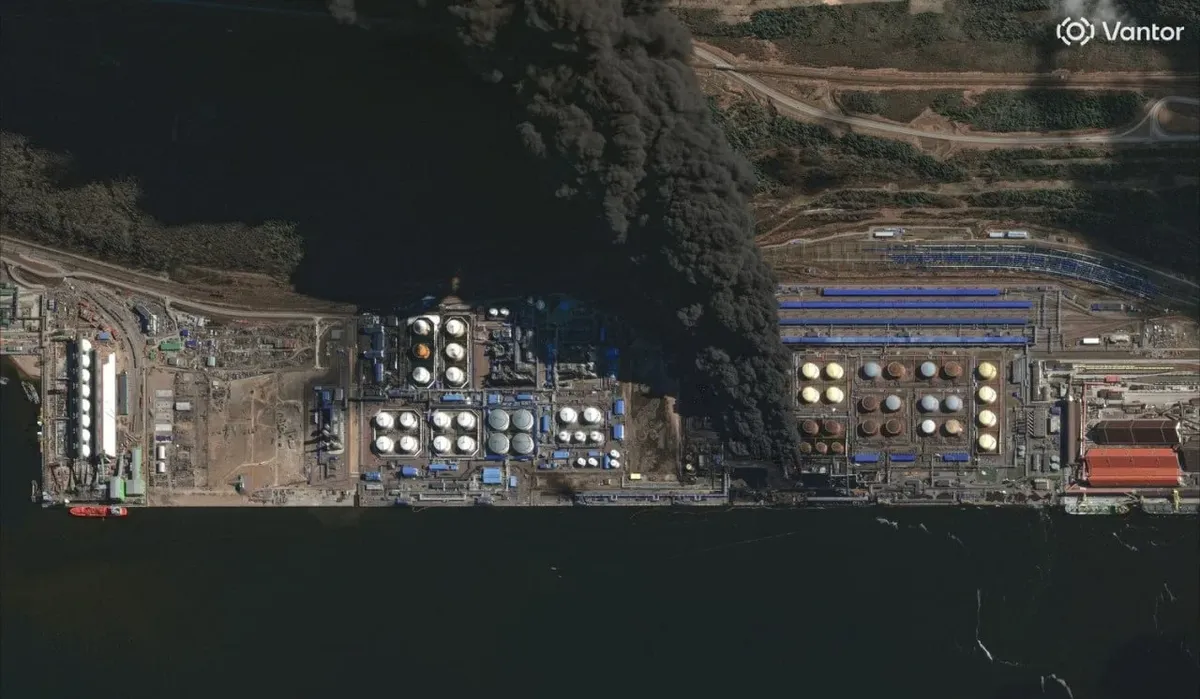
The Ministry of Emergency Situations warned residents of St. Petersburg about the deterioration in air quality after the Ukrainian strikes; the wind carries “combustion products” into the city; eyewitnesses talk about a “barely noticeable haze” in the air. And local media are talking about fires that have been going on for several days in Ust-Luga, Primorsk, and at the plant in Kirishi.
The governor of the Leningrad region says that the region has been subjected to almost daily “unprecedented” massive raids since March 22. The last attack on the Leningrad region at the time of writing this message was launched today from 4 to 6 am .
The attacks are always accompanied by blocking of the mobile Internet.
In addition to the partial disabling of the Baltic port hub, other Russian ports also have problems.
Murmansk is experiencing difficulties after increasing delays of ships passing through it.
The Novorossiysk port is still restoring its infrastructure after attacks by the Ukrainian Armed Forces.
While the pipeline export of oil to Europe via Druzhba has not been opened, the pipeline is also out of order.
What remains is the eastern direction, and it is overloaded due to the low capacity of this transport artery.
Problems with exports and mostly remaining sanctions prevent Russia from fully taking advantage of the rise in oil and gas prices caused by the US and Israeli war against Iran.
Speaking to big Russian businesses on Thursday, President Putin warned oil workers and traders against eating up windfall profits and paying dividends to shareholders because oil prices could soon fall again. At the same meeting, businesses were asked to voluntarily make a donation to the state.