
Translated material
Drain the water, turn off the lights!
Residents of the gold mining town of Bodaibo in the northeast of the Irkutsk region have been without heat supply for a month. And in Irkutsk, citizens are getting used to paying for heat in a new way
The winter in the country was marked by utility failures (in some regions they occurred during severe frosts) and communal shocks - this was greatly facilitated by new figures in payments for housing and communal services. The Irkutsk region taken separately was no exception. A large-scale - not even an accident, but a catastrophe occurred in Bodaibo. Almost all federal media wrote and talked about it. In addition, the accident at the thermal power plant deprived most of Angarsk of heat. In Shelekhov, several areas of the city were left without water just before our arrival.
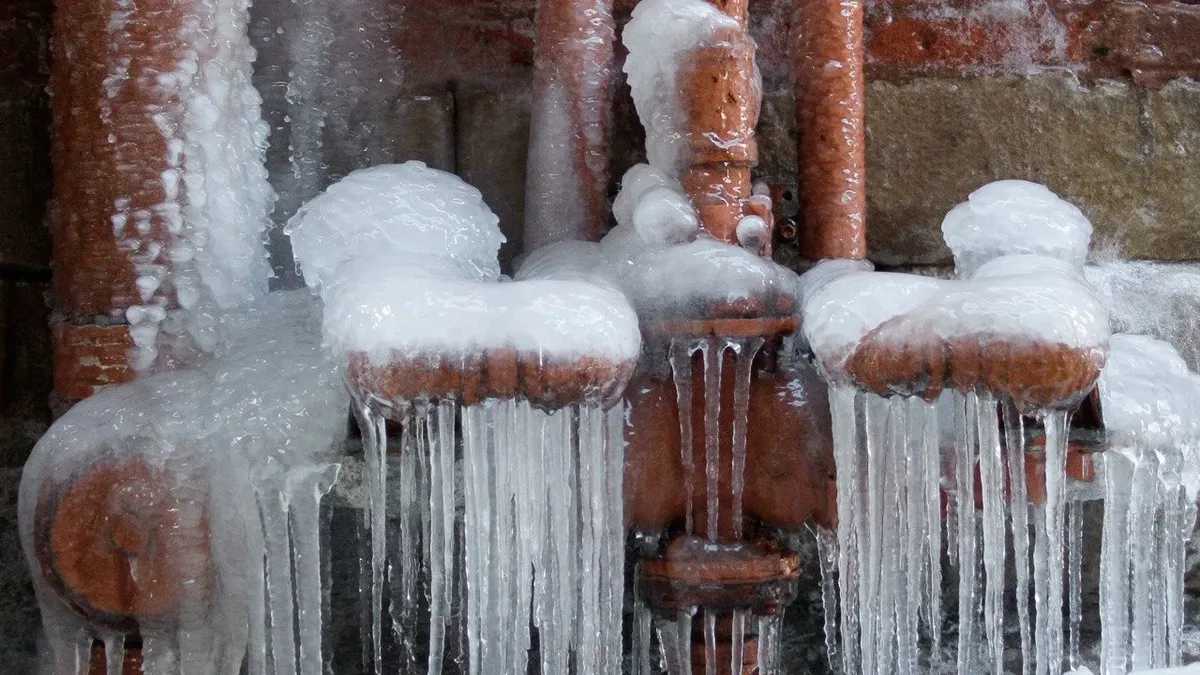
It's getting warm...
At the entrance to the city of metallurgists there is a stele with the inscription “Shelekhov” above the letters there is a red AL icon. The IrkAZ aluminum plant is a city-forming enterprise. We drive through an area of neat, low-rise buildings. The two- and four-story buildings look freshly renovated and open onto lavishly spacious courtyards. Pines add a special charm to the area.
The eye catches on a small cafe with disproportionately huge windows. Getting more sun in an iodine-deficient region is an understandable desire. We stop at the Yunost cinema. Its poster is impressive with the abundance of offers, and the foyer is impressive with the number of spectators who come on weekdays for the afternoon show. These are mostly teenagers. Of course, they heard about the accident on the water pipeline.
I ask, how did you manage without water? In response they laugh: “We didn’t wash, that’s all.”
A girl with the appearance of a convinced excellent student reports that all the jars in which her mother usually keeps water for watering flowers have come in handy.
We get to the right place. The 1st microdistrict is one of the victims of the accident. Its development cannot be called dense. Among the standard panels there are many parking spaces and free space. A smiling middle-aged man in an impressively sized fur hat and sheepskin coat comes out from the entrance of a nine-story building. He joins in conversation willingly.
— How long have you had no water?
- Not long, two days. My son and daughter-in-law live in this house, and I myself live in a neighboring microdistrict. We didn't have water either. But when they gave it to me, they told me not to use it.
- Why?
— The pipes were washed. Actually, they fixed everything quickly. But there, go and look, they were digging here, it wasn’t even covered with snow yet (traces of excavations are really visible). They dug very deep, the workers could not be seen from the hole. They are said to have been lowered down by a tractor on a bucket. They even worked at night.
The leak, it turns out, was discovered in early February. But due to the deep location of the pipe, it was difficult to get to it. When it was possible, the damaged area had to be replaced rather than repaired. A high alert regime was introduced. It took several days to fix.
— How did you manage without water?
— Yes, by the end of the day they had already brought it to us (an operational headquarters was created at IrkAZ for the supply of drinking water). And before that, we stocked up on five-liter eggplants.
A woman with two heavy bags sits down on a bench at the entrance. In this part of the microdistrict there are low-rise red brick houses. Atypical. There are few people on the street - it's a working day. I'm asking about the accident. The woman clarifies: you’re not local, or what? Everything is logical, the Shelekhovites are well aware of what happened. For example, according to official information, almost 170 apartment buildings, several schools and kindergartens were left without water here - about 20 thousand people in total. However, the townspeople with whom we were able to communicate claimed that the accident affected almost everyone. So our interlocutor says that the entire city was cut off from water for a day.
— They said there were several microdistricts.
- No, it wasn’t everywhere. Even in the city children's hospital there was no cold water. The pipe burst first in one place, then in another. The whole city suffered.
After a pause, the woman adds decisively:
“But it’s still easier here than in Bodaibo.”
— Is everything okay with the water now?
— They turned on the water, the sanitary and epidemiological station gave permission. The pipes are new; at first, process water flowed. Then the sanitary and epidemiological station checked and gave the go-ahead for use. All residents received an SMS notification.
— So, your pipes were not repaired, but replaced?
- What was there to fix? A hundred year old junk. They showed a piece of this pipe on TV...
Communications are, indeed, more than half a century old. Some have expired twice. But this story is typical for the whole country. An important detail: shortly after the official announcement of the restored water supply, several photographs were sent to regional television. They were made by students in one of the Shelekhov schools. The water in the sink in the photo is an unpleasant yellow color and clearly does not look like it is suitable for consumption.
Permafrost and communal permafrost
Flying from Irkutsk to Bodaibo on the fly is not an easy task. There are flights, but tickets are more difficult. The prices are scary, and the weather gives no guarantees. But it is possible to talk to eyewitnesses of the accident, which seriously affected the city, almost immediately. One of them (works in the Ministry of Emergency Situations) says that he himself was among the victims and lived at home for three weeks at a temperature of 13–15 degrees.
Let me remind you of the essence: the main networks in the city were frozen, the work of four boiler houses stopped. More than one and a half thousand people were left without heat and water. The communal collapse has become protracted. The situation today is far from normal. It all happened on January 30 - at the very peak of frost. In news reports, special attention was paid to this. Because staying in a house without heat when it’s minus 40 outside is downright scary. But this does not mean that at this temperature communications are expected to fail. One of the experts gave an exhaustive comment on this matter, recalling that the entire Bodaibo region is located in the permafrost zone. When heating networks were laid here, the conditions were no different. The soil remains frozen all year round. Therefore, local infrastructure must initially be oriented towards severe cold weather.
It’s not the weather that’s to blame, but completely different reasons, says one of the former heads of the city, who was contacted while hot on the trail.
— I would not refer to abnormal frosts; such temperatures are not uncommon in Bodaibo in winter. In my opinion, this is poor quality preparation of housing and communal services facilities for winter. And the operational error that RSO made in precisely this situation.
— That is, when it gets cold?
- Yes, that's right. Because -40 and even -50 is not a critical temperature, and the water pipeline could work at it. The Teplovodokanal municipal unitary enterprise and the city administration were simply not prepared for the possible negative consequences. At such low temperatures, a high alert mode is usually activated. Not in a day and not when everything has already happened. It is administered in advance and lasts quite a long time. During this period, possible negative situations are predicted and adjustments are made to plans and response schemes. Resources and funds are specified (if necessary, strengthened) - all this is approved by the decision of the emergency commission. Information is communicated to organizations that may be in a possible emergency zone or be involved in localizing and eliminating the consequences.
— It turns out that in this case the possibility of an accident was simply ruled out?
“I think this is a careless attitude towards a situation that could happen.” Speaking of which, this has happened before. There were winters when other branches of the water pipeline froze, including this one. It’s just that the enterprise and the administration were ready then, and the emergency situation was quickly dealt with. During this emergency, I did not notice that everything was harmonious. Weather forecast - it also passes through the Ministry of Emergency Situations system. If a drop in temperature is expected and is quite stable, this is a signal for immediate action. And such a cold week usually happens every winter. Plus, at each site, be it a boiler room or a water intake, its own observations are carried out and there are monitoring devices. And knowledgeable personnel can predict the problem based on deviations from the parameters.
— According to preliminary information, more than two dozen apartments are subject to resettlement, some of the defrosted houses are considered unsafe. Where were people resettled?
— They weren’t moved anywhere. Many simply refused to leave their homes. Someone went to visit relatives. The heating system in their apartments defrosted, and by leaving they created even more problems. But this is their right, because there were no conditions. Most people stayed. They warmed up the living quarters, literally “sitting” on the heaters.
Groups of volunteers worked very well, many people got involved. They brought heaters, gas stoves, drinking water, and food. Some people preserved entire houses; heat guns and heaters were installed in hallways and basements.
— It turns out that ordinary residents worked more efficiently?
“They worked effectively together with emergency response workers. Not everyone, you know, was ready to leave home and leave.
— A temporary water pipeline was laid through the snow from fire hoses, the process was shown by local TV channels. A man who lived for a long time in the permafrost zone in Yakutia drew our attention to the strangeness of the design. And he told how in the northern village the pipes were closed in wooden boxes with thermal insulation - these heating mains went above the ground. Why was a design needed here, the unviability of which was obvious even to people far from communal issues?
“This suggests that the people who were at the origins of solving the problem, including the city and district administration, or rather, the leaders, turned out to be simply incompetent. There was no plan, no strategy. People didn't understand what they were doing. And it’s simple: in the winter I went to various situations related to fires, and I saw perfectly well how long the water line from the fire hose lasts when the fire is being extinguished in the cold. It was clear that this option would not work. This is my personal opinion. To my great regret, I was not involved in liquidation due to health reasons. But we lost time - that's a fact.
— Officials publicly promised to overhaul the networks to prevent what happened from happening again. It turns out there were no repairs before the emergency? And given the state of communications throughout the country, they are hardly new here.
— The length of the networks is 40–50 km. Taking into account the funding that is available, repairs are always done where they are thin. Where exactly should be determined by the resource supply organization, and the administration should reflect this in a single plan for preparing for winter. But if we talk about heating and water supply networks, they suffered not because they were worn out, but because they were defrosted.
-What do you mean?
— Look: the boiler rooms stopped working because there was no cold water coming in - the water pipe froze. Consequently, the coolant did not enter the heating networks.
— What did the defrosting process look like?
— There were many teams working there. And they did a great job. Somewhere they were heating it up, somewhere they were laying new temporary pipelines.
— You are in the city now, tell me, what is the situation in Bodaibo?
— According to the information that is available, heating is turned on almost everywhere, even water is supplied. In any case, a lot has really been done: temporary water pipelines and temporary heating networks. Tremendous work has been done to replace internal networks in basements, entrances of houses and apartments. But this emergency is not over, and city residents will feel its consequences for a long time.
— How would you evaluate the actions of the city leadership in this situation?
— I wouldn’t rate the city at all, because there wasn’t really any work. They wasted precious time. As practice shows, if an emergency is localized within 3–6 hours, the consequences are always minimal. I will not comment on the area. But as for me, the regional emergency regime was introduced late. All the reasons for its introduction were immediately available. When Igor Ivanovich ( governor of the Kobzev region - O.P. ) arrived, everything started to spin faster. But in any case, even six days before the emergency was declared, a lot was done.
— After such stories, don’t mayors and heads resign?
- This is not about Bodaibo. And this is provided that the mayor is decent. I think everyone will continue to work. And those who are not involved will also be rewarded.
It would seem that freeing the affected citizens from utility bills is an obvious step in this story. Our colleague’s sister Inna lives in Bodaibo. We called her and, having asked only one question, we heard a very emotional answer. I even had to correct some of what was said for publication: “They present this as some kind of benefit for us! Like, we understand everything, we won’t take money from you. So you should not take it, but give it to us - for the damaged property! And let them return the money to us for the maintenance. We pay for it, they raise prices, and they’ve added major repairs. And what? They keep it so much that everything cracks and bursts! Who will cover the costs for people? The neighbors' wiring was shorted out and everything went to hell. Just change it now! The compensation they give is simply ridiculous - 15 thousand. It’s not enough to rent a room!”
And it shines, and it warms, and it bites
Electricity tariffs for residents of the Irkutsk region have more than quadrupled over five years. In the second half of 2025, they simply flew up somewhere. We tried to figure out why such things are especially noticeable in the Angara region.
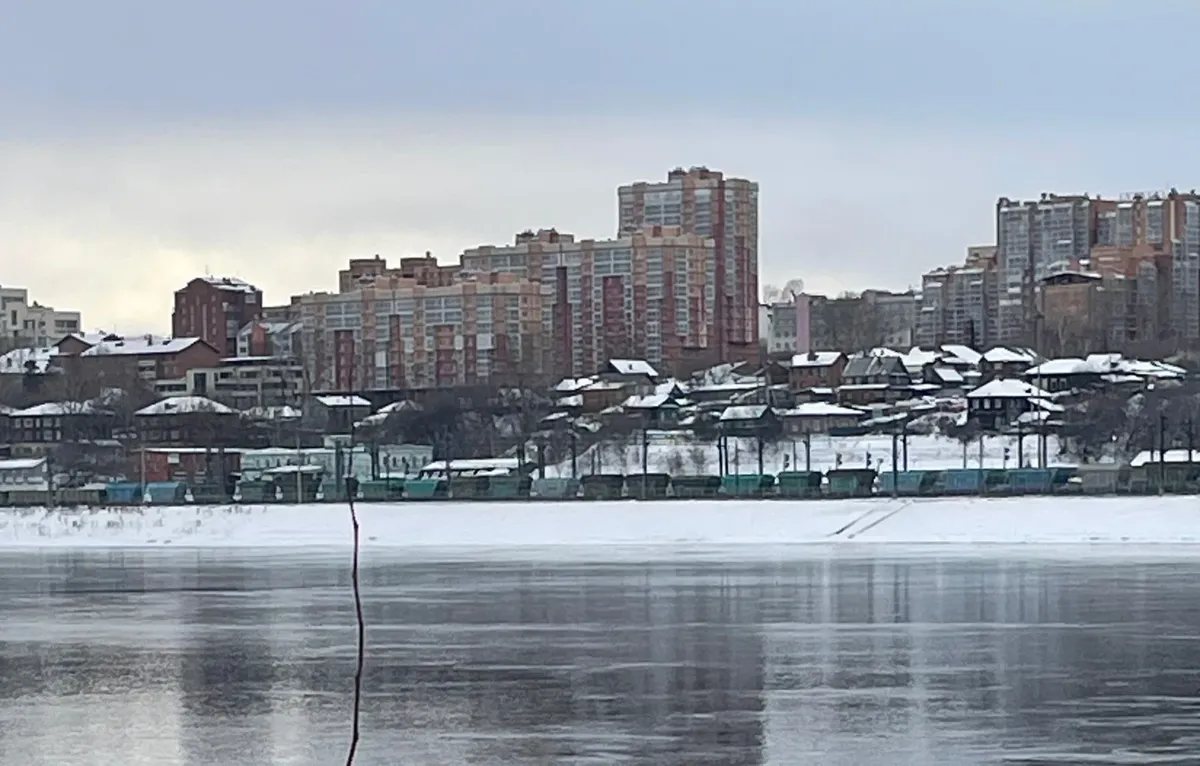
Residents of the regional center consume energy generated by the Irkutsk hydroelectric station. It is to this grandiose structure that we are heading. Just to see. The Angara divides the city into two parts. And the dam that blocked it connects the left bank with the right. The dam offers views of the reservoir. Now there is ice on the Irkutsk Sea (as many people call the reservoir). And in summer you can get to Baikal quite quickly along it.
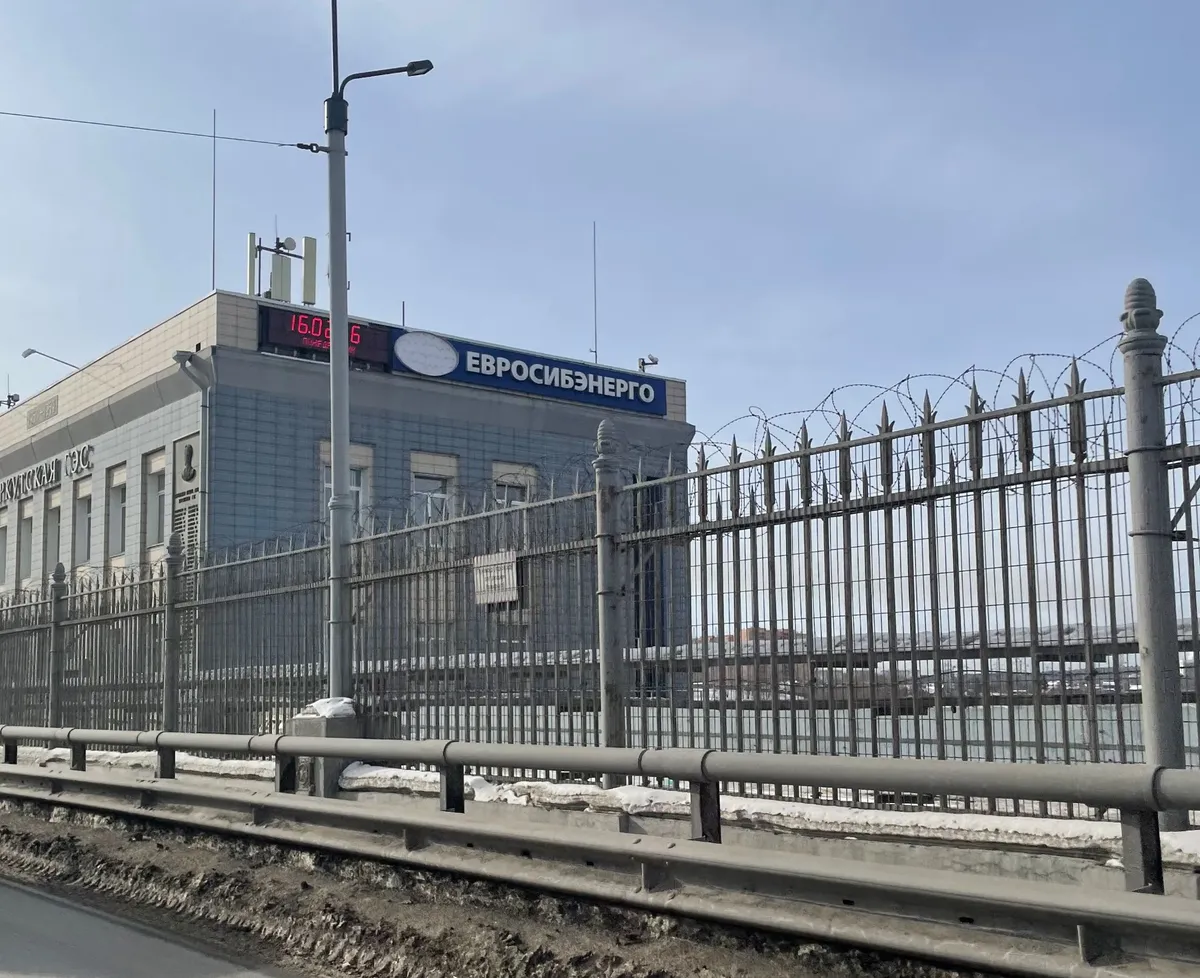
The dam itself is a structure of incredible power and beauty. Having passed through it all, we find ourselves at the control building - strict and solid. On the facade there is a memorial plaque with many names and three-dimensional letters “Irkutsk Hydroelectric Power Station”, construction dates - 1950–1959. For some time now, another name has appeared - “Eurosibenergo”. Local residents have an ambiguous attitude towards him. I ask where this comes from? They explain: in Europe, blades, turbines, etc. are ordered for hydraulic structures. Google provides information: it turns out that Eurosibenergo is the brand of the largest private electricity producer in Russia .
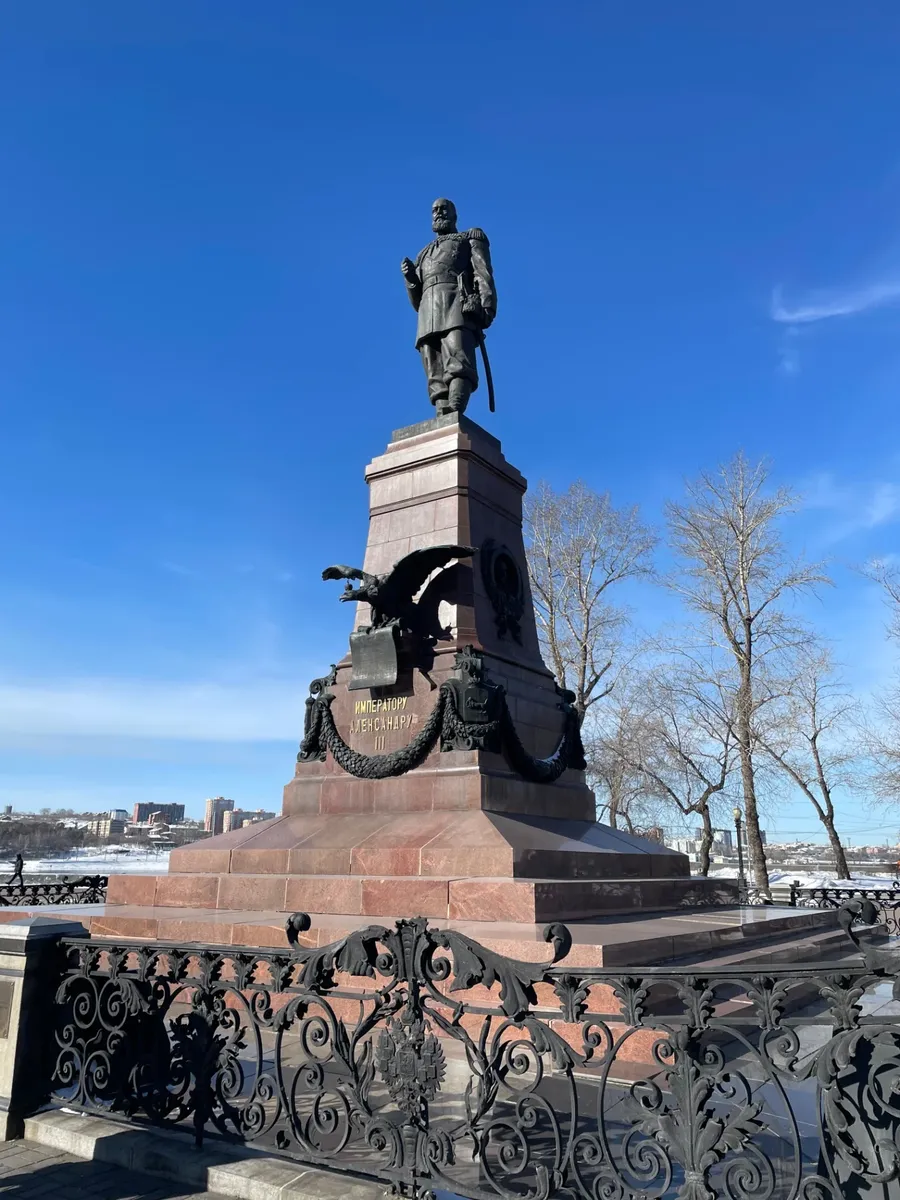
Diagonally in a small park there is an impressively sized monument to Lenin, new benches and something like art objects - a gift from energy workers to the townspeople, as the inscription says.
Know your range
In December 2024, the headline “Authorities of the Angara region have established electricity tariffs and consumption ranges” appeared on the Irkutsk information portal. There are more than a hundred comments under the message. Only a few support the innovation. Opponents ask whether the authors of the idea are familiar with local climate realities? At that time, other regions began to switch to a similar format. What went wrong in Irkutsk?
In a differentiated system, those who consume more pay a higher tariff. The thresholds for each range have been determined by the government. Within this framework, regions set their own parameters. The Angara region has a number of features that cannot be ignored. In addition, the city, literally called for a hydroelectric power station, at one time defended the right to cheap electricity.
This order of things persisted for quite some time. But, apparently, it haunted many people, especially outside the region. Unlike the residents of Irkutsk, who were proud of the fact that they pay pennies for electricity (in the literal sense of the word). However, this benefit was cheap not only for ordinary citizens. At some point, miners began to consume electricity in gigantic quantities. It was here, in the Irkutsk region, that mining boomed.
In the dead of night we drive past an impressively sized building that glows like a fragment of Las Vegas. The taxi driver, noticing my interest, explains: this is a swimming pool.
- Does it burn like that at night?
“We have a lot of electricity, we can afford it,” the driver laughs. - The TV tower, you know how it lights up, 300 meters (actually, 180) - all lights!
— Do you have cheap electricity?
— It was just recently. Now everything has changed. Because of the crypto diggers. We have the capital of mining here, don’t you know? There were so many of them that they even began to catch them.
- In what sense?
— I passed the miner and received the money. Why should I get into trouble because of him? There are commercial tariffs, let them take energy at them. But not in such a way that an ordinary person suffers. Because of them, they came up with such a gimmick with these tariffs.
There is no gas, take a boiler
With mining, the driver hit the nail on the head. At some point, it became a very common opinion that tariff policy in the region was seriously influenced by the uncontrolled scale of cryptocurrency activity.
This is where our conversation begins the next morning with Sergei Levchenko, the former governor of the Irkutsk region, and now a deputy of the State Duma of the Russian Federation. We meet in a cafe on Gagarin Boulevard - practically on the banks of the Angara. Levchenko flew in the night before from Moscow, which was covered in snow. And in Irkutsk there is bright sun and comfortable minus 10.
— Was payment for electricity based on consumption ranges in the region really introduced in order to somehow streamline the activities of miners? - I ask my interlocutor.
“This is the official version,” answers Sergei Georgievich.
- What about the unofficial one?
“The fact is that there is a lot of pressure on governors from electricity producers. For everyone. And they put pressure on me to introduce a differentiated tariff. I resisted, argued that there were other options. There is a so-called cross-subsidization, when individuals underpay, and the underpayment is passed on to enterprises - they, accordingly, pay more. But this still does not compensate for the funds lost from the population. And the energy supplier says: let's remove the cross story. Let the one who consumes pay, and as much as is due. The problem of housing and communal services debtors has been practically solved in the region. But there is another one: we have an investment component fixed in our tariffs - 2 billion rubles. They automatically turn into profit.
— Without being used for its intended purpose?
- Yes! But if you write down the so-called investment component in the tariffs, then fulfill it. But no one does. There are many questions for both power engineers and the current leadership of the Irkutsk region.
— Why do people in the region react so sharply to the introduction of consumption ranges?
— Here we need to touch on the history of the issue. Each end user spends electricity depending on what equipment they have. For decades, the region has encouraged and practically forced people to install boilers in their individual housing construction homes. After all, everything has always been fine with electricity in the region; they tried their best back in Soviet times. We have the strongest power grid in the country. When RAO UES of Russia began to be formed, the region retained a blocking stake. The merit of Yuri Abramovich Nozhikov ( governor of the Irkutsk region from 1991 to 1997 - O.P. ) is that he retained this stake for the region - 25% + one share. At one time, at his request, I joined the specialized commission, just when these percentages were being established. He asked me to come and get involved, because at the time when all this was happening, we had a very strong faction in the State Duma ( we are talking about the Communist Party faction - O.P. ).
— They could promote heating with electricity only where it was cheap. Otherwise, what's the point? People installed boilers and used them for years, so what has changed?
“Then they told people: we will now introduce a differentiated tariff for you.” And all your heating comes from electricity! If people weren’t forced to install boilers, increasing their costs significantly, then maybe everything would somehow go away—that’s the first thing. Second: in November of the year before last, a government decree was issued ( on the procedure for applying differentiated electricity tariffs for the population. - O.P. ). By his decree, Kobzev (governor of the Irkutsk region) introduced diphtariffs as a calculation method. And based on the introduced scheme, a resolution was adopted on specific figures for three ranges. As a result, the size of the tariff and the consumption rate turned out to be the same as in Sochi.
— Strange, to put it mildly.
- It’s simply unfair to us! As soon as I received this resolution, I wrote a rather harsh letter to the chairman of the government saying that they had missed the mark when introducing the same ranges. We managed to get an increase in the coefficient. But the process is still running. And it leads to the fact that twice a year it is not the ranges that are increased, but the tariffs themselves.
Took more - pay more
From the regional center to the Smolensk region (this is a village in the Irkutsk region) - half an hour by car. The place is picturesque and prestigious - the shore of Irkutsk. True, the river itself has become shallow in some places - this is the result of clever hydro-surveys by the local authorities. One boss really wanted to drain the island in order to sell the land for construction. Now some have expensive cottages in a secluded place, others have remnants of their former beauty.
In a local store, as it turns out, you can easily buy something for tea, focusing on the preferences of a particular resident. The conditional “what does Seryozha, the son of such and such, usually take from you” works almost flawlessly. And now with “Napoleon” and the “rum women” we go for a visit and an interview at the same time. “They’ve been complaining about the tariffs for a long time, so they’ll agree to talk” — these were the introductory notes they gave me before the trip.
The house of the M. family is a two-story log house - one of those buildings that is not in fashion, but out of time. Thorough and kind. In the courtyard we are greeted by a shaggy and all sorts of cozy dog. And inside there are cute cats.
— You heat your house with a boiler, right? — I ask the hostess A.
— Yes, we run everything on electricity. Now, when there were severe frosts, I paid according to the smallest range and did not go over 7000 kW (standard). The first range is up to 7 thousand at a price of 1.25 rubles. But it still hurts your pocket. When we were just building (until 2024), prices were lower. We then paid 4-5 thousand for everything (everything is a house of 155 sq. m and a heated garage). Now they started paying 8 thousand. Since July, payments have increased especially sharply.
— It turns out that electricity prices have doubled over the last two years?
- Almost yes. In summer, consumption is, of course, less. But the increase in price is still very noticeable. We started building because we considered it the best option for living. People pay large sums for apartments. We thought it would be more economical in the house. We didn't even put the stove on. After all, electricity has never been expensive in our country. But what’s most interesting: I crossed the barrier in the cold. As a result, they calculated 7 thousand for me according to the first range. And what burned on top is the second. And it's already more expensive. For 900 kW above the standard I paid 2100 rubles. 11 thousand came out in a month.
— So you pay more for overkill?
- Yes, for overpricing at a higher price. That’s exactly what the receipt says: part at one rate. But what's on top is different.
And we thought it would be good
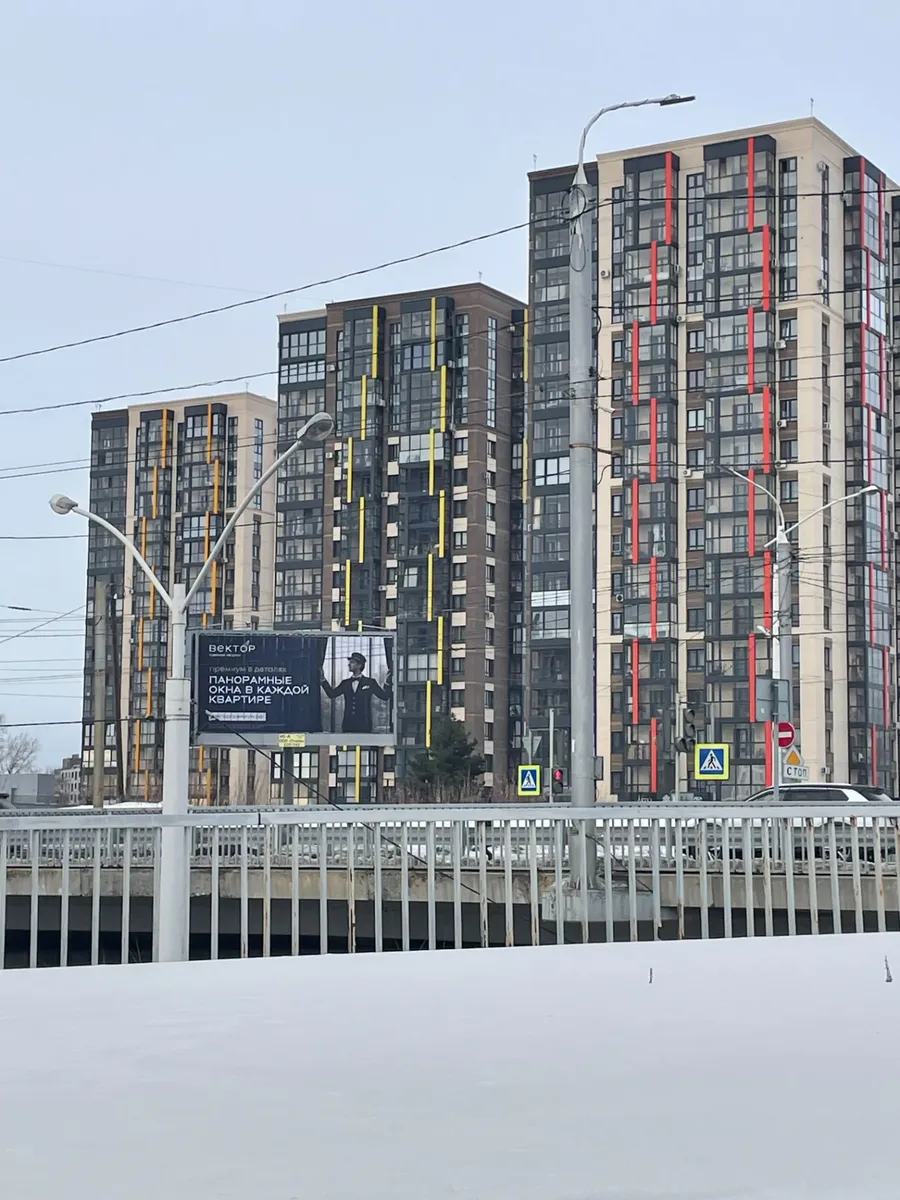
The Ershovsky microdistrict is located in close proximity to the hydroelectric dam and on a hill. One of the roads leading to Ershovskaya Mountain runs along the Irkutsk Reservoir. Adult residents of Irkutsk remember well when its shore was completely free - walk, sunbathe. You can still walk now; the coastal area has been landscaped and equipped. Only there are fewer and fewer trees around, and more and more monotonous high-rise buildings. Land overlooking the bay is especially valuable.
Ershovsky interested us for several reasons. There is a whole block of apartment buildings here, which are heated by boilers. One of them suffered from a serious fire in 2024. There is a persistent version that the fire happened due to the fault of the miners who dug in here. The building was renovated out of order. And they forgot about the crypt adherents.
V.P. - native Irkutsk resident. The house in which she lives has four floors and three entrances, the boiler is in the basement. The woman admits: yes, we are used to cheap electricity, but how could it be otherwise - a hydroelectric power station is nearby. But they didn’t come up with the idea of heating with electricity. But at first, he says, they were happy: autonomous heating - good!
Then all this mess with tariffs happened. “When the story with consumption ranges began, we were supplied with only 3900 kWh/month. Scientists from SEI ( Institute of Energy Systems - O.P. ) were involved in the topic. And they said: what are you guys talking about 3900, the region needs 7000. Last year they went on an experiment and set these parameters. But the winter was warm, and the story turned out to be not indicative. When winter is over, they tell us: you didn’t even choose 3 thousand, but you demand more. But smart people understood that a warm winter for Siberia was atypical. And now we have finally been given a consumption standard of 7,000 in cold weather, and 3,900 in warm weather. This whole mess lasted almost a year. We went to Energosbyt, Irkutskenergo, the management company, and the tariff service. They promised a recalculation. And indeed, they returned - as much as three thousand. But the tariff remained the same - 1.78 rubles per kW, but should be 1.25.
- Why exactly like this?
— Because we are heated by a boiler and are not dependent on the central heating system.
— Are there many such houses in the city and around it?
— All gardens, dachas, country houses, the entire Baikal highway (something like the capital’s Rublyovka). Specifically, we simply have no other option for heating. Buying firewood is now very expensive, there is no gas in the city.
— When boilers are in private houses, this is understandable. But they are not installed everywhere in MKDs.
“That’s why we fell out of the spotlight.”
— Are you satisfied with such autonomy?
- Yes, somehow it’s not very good lately. The batteries are just dying now. When it gets warmer, a mechanic should come (if he comes) and adjust the boiler. But this is wrong! The boiler must operate from a temperature sensor, and this story is generally impossible.
— It turns out that how much heat they supply is what they will charge for?
- Certainly! Whether I reduce it or not, nothing will change in the accruals. Every year I ask the management company: it’s already warm outside - turn down the heat in the apartments. And they answer me: you need it, you reduce it. Just as they turned on the heating in October, it will continue to scorch until May. In the next entrance, people agreed and removed the heat gun (it heats the entrance in cold weather). And here it threshes all winter. Then the amount is set for each apartment. If we go beyond 7000 kW, we will pay not at the reduced tariff, but at the full tariff - 1.78 instead of 1.25. Maybe even higher - at a commercial price.
“There was a very cold period this winter, it reached -40. We went overboard, of course. They paid more for “overkill” - I heard this idea in different versions in Irkutsk more than once. The answer to the question “who is to blame” arose naturally: of course, the climate. Well, who else is to blame for the fact that it gets cold in Siberia in winter?
— Are you flying away? - asks the driver on the way to the airport.
“Yes,” I answer. — I was on a business trip and am returning to Moscow.
- During. We have a promise from Sunday to Monday around thirty.
Irkutsk region
This material was published in the seventeenth issue of Novaya Gazeta. Magazine". You can buy it in the online store of our partners.