
Translated material
“Take everything and divide it”
At the last Council for Culture, Vladimir Mashkov proposed to Putin to abolish copyright for the “wrong” heirs - including Bulgakov’s heirs

Vladimir Mashkov and Nikita Mikhalkovna at a meeting of the Presidential Council for Culture and Art. Photo: Sergey Fadeichev / TASS
The Cultural Council under the President of Russia spoke with Vladimir Putin online. The loyal figures gathered there, after beautiful numbers, compliments and other words pleasant for the head of state, did not hesitate to try to resolve the financial and property issues of their cultural institutions, and even their own. The rules of the meeting were strict, so it was impossible to hide such motives behind a stream of general words. Although many tried. But in the end, it was not this that was remembered, but the proposals to speed up the issue of quotas for foreign cinema, to give “our answer” to the Nobel Prize in Literature, and finally to deprive the copyright of disloyal heirs of writers living abroad and refusing the “correct” directors.
Once again about genocides
Karen Shakhnazarov is a permanent speaker of the Council for Culture. To begin with, he reported that he had compiled a list of one hundred films “for mandatory screening in educational institutions” as part of the school subject “History of Russian Cinema” (this list appeared last summer, but why not really report on creative achievements again). Then he asked that Mosfilm be equalized with oil and gas pipelines in terms of land rent: 3% of the cadastral value is paid by cultural organizations, and oil pipelines - 1.2%, and gas pipelines even less - 0.4%. And finally, for himself personally, Shakhnazarov asked for filming in the Kremlin. Once, Vladimir Putin, looking at film sets, said that there was no need to build the Kremlin sets: “We have the Kremlin, we can film it.” But go get that permission. Shakhnazarov, in the presence of his colleagues, took advantage of the opportunity: “I have a new painting. Will you help film a few scenes on the territory of the Kremlin? Not even inside, but just on the territory. I would be very grateful to you." “Let’s agree, I don’t see any big problems here,” the president consoled. But he did not promise to make Karen Georgievich financially equal to gas pipelines. But he didn’t refuse: “We’ll see, we’ll work with the Ministry of Finance.”
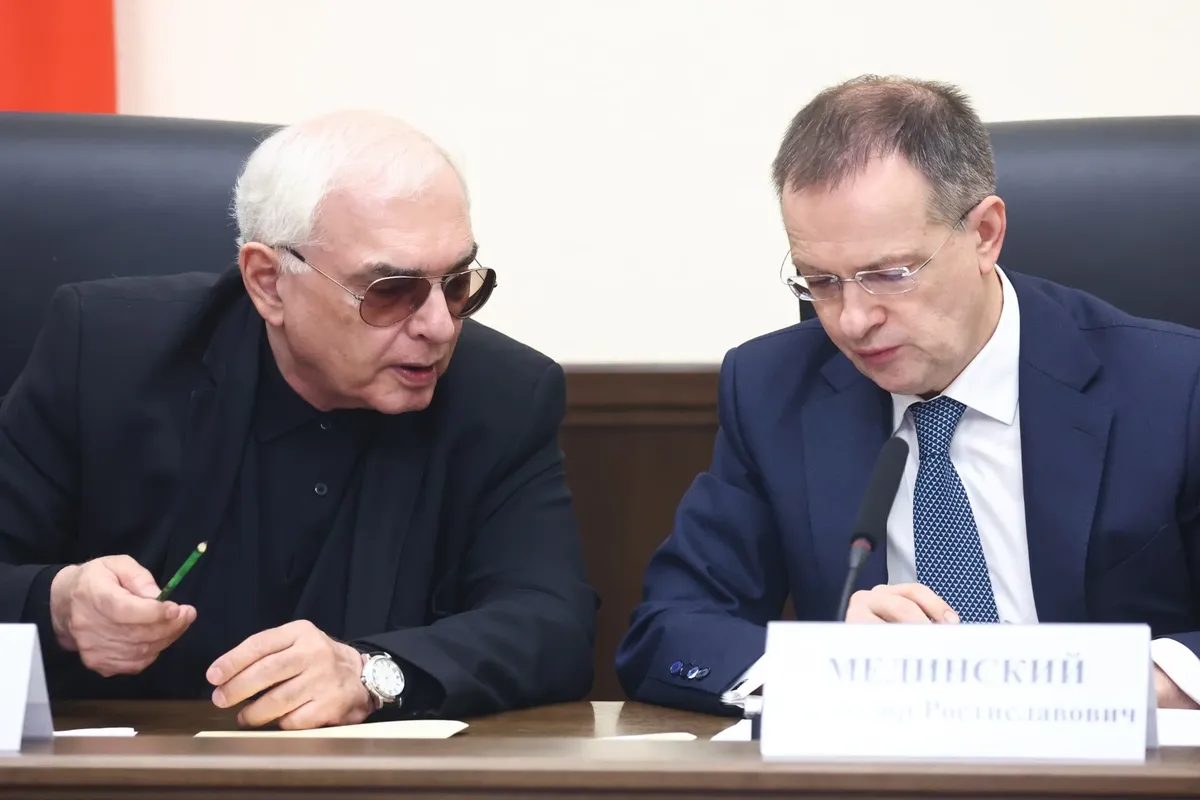
The speech of Vladimir Mashkov caused the greatest resonance. He compressed the introductory part in the form of gratitude for the money to celebrate the 150th anniversary of the Union of Theater Workers into just five sentences. And then he asked permission to “voice one pressing question.” “Some heirs of great authors who left Russia forbid us to stage performances based on the literary works of their ancestors - those who wrote in our country and about our country,” Mashkov said. “The genocide of Russian culture continues, and these so-called heirs do not even think that their refusal will lead to the oblivion of the authors themselves. Last year, the silence, and in fact the refusal of the heir-right holder, led to legal uncertainty during the production of Alexander Volodin’s play “Don’t Part With Your Loved Ones” at the Oleg Tabakov Theater, although the theater was ready to pay all the royalties. Problems also arise with staging performances based on the works of Mikhail Afanasyevich Bulgakov. This is connected not only with possible distortion of the work or the size of the remuneration. Refusals come with the wording: “I don’t think it’s correct to grant rights in the current situation.”
Having become a victim of legal genocide, Mashkov believes that “some heirs may abuse their rights.”
The actor formulated his final proposals in a legally vague manner: either he proposes to deprive heirs of rights to works not 70 years after the first publication of the work, as now, but 70 years after it was written, or to deprive them of such rights altogether. Even for the Putin of 2026, who tirelessly fights “internal enemies,” such proposals seem to have seemed radical at first. He admitted the problem, but twice made the reservation that it must be solved in a “civilized way.” However, if it is considered civilized today to curtail the basic rights of “dissenters” who are included in various lists, making them virtually second-class people, then recognizing heirs living in “unfriendly” countries as “undesirable” and rewriting the Civil Code for this matter is a trivial matter. Solovyov and Zakharova will speak, explain to us about the traitors (now not only of their homeland, but also of their fathers and grandfathers), equate them to the Ukronazis demolishing monuments to Bulgakov in Kyiv - and voila.
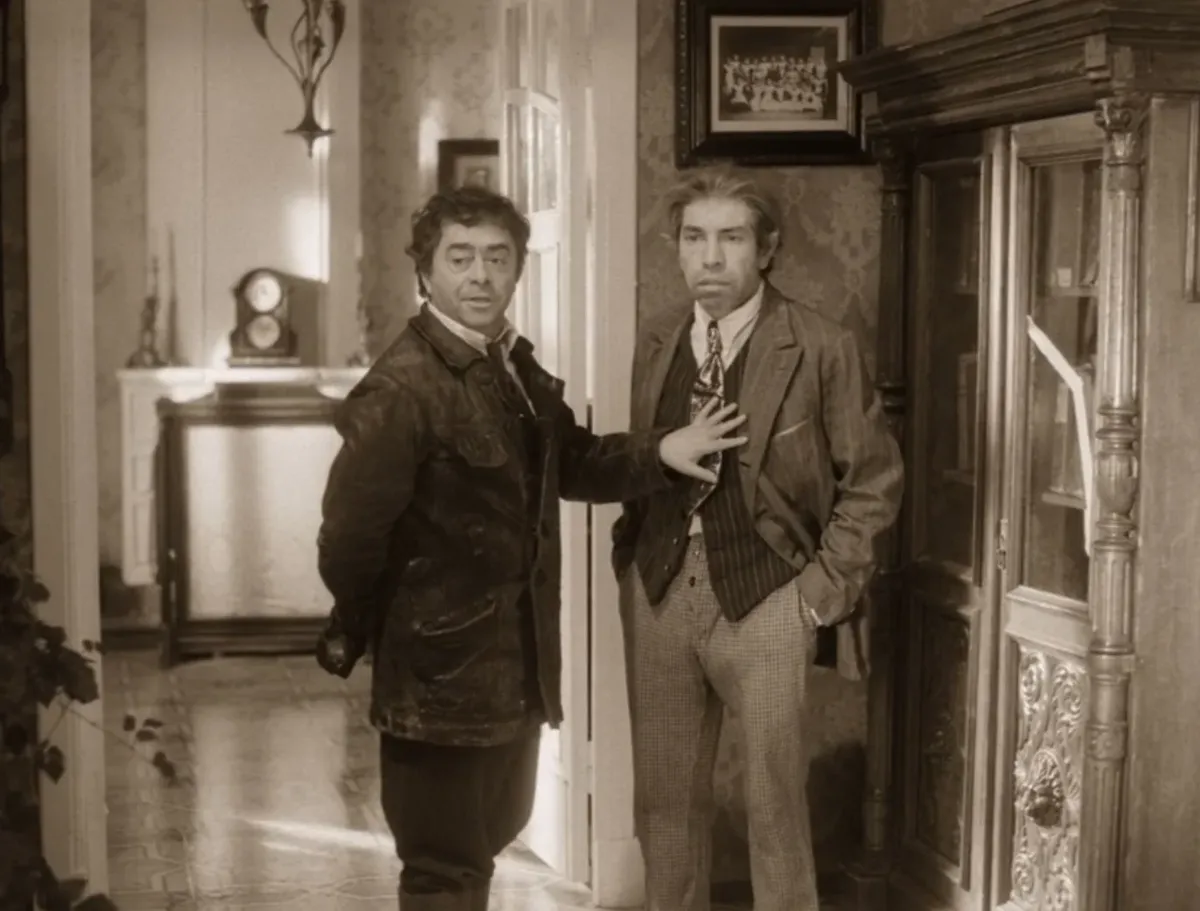
At the same time, it is not clear why Mashkov, guided by Sharikov’s principle of “taking everything and dividing,” would fight for Bulgakov. Either he is “offended for the state,” or we should see a new interpretation of the classics, and Sharikov, together with Shvonder’s group, will turn into exemplary characters in Russia, concerned with state interests. And Professor Preobrazhensky will be a typical fifth column. There was little time at the Culture Council, and Mashkov did not have time to reveal his vision of the world of Bulgakov’s characters. But similar hints are already heard on Russian stages - for example, in the Maly Theater production in December 2022, Sharik was presented as the victim of a professor. At the same time, for some reason Maly did not have any problems with copyright then. Maybe the heirs began to refuse Russian theaters for no reason? Maybe they don’t want the world of Mikhail Afanasyevich, who has already suffered a lot from the totalitarian state machine, to be turned upside down, citing the fact that since perestroika “many accents in the view of the work have shifted,” as stated in the annotation to “Heart of a Dog” 2022?
If Bulgakov had been published without waiting for the “thaw”, but immediately, his heirs would have lost the copyright to “The Master and Margarita” 15 years ago and to “The Heart of a Dog” 30 years ago.
These works would enter the public domain. The totalitarian system, with its censorship and the eternal search for enemies, including among writers, has greatly slowed down this process, and now it is hindering people like Mashkov. Whether he is aware of this is unclear. As well as why his heirs refuse him in principle.
“We meet sometimes”
Nikita Mikhalkov also made some noise at the meeting: having received the floor, he started talking about quotas for foreign cinema, which worries him greatly. He complained to Putin that “it’s already the 390th day since this order of yours has not been fulfilled.” A dialogue ensued, during which it became clear that Vladimir Putin considers restrictive quotas for foreign cinema to be important not only in a commercial, but also in an ideological sense: “[In China] everything is strictly regulated. Well, why are we keeping our mouths open? And ideologically we skip some completely stupid things that we don’t need, and we don’t financially support our manufacturer.”
Mikhalkov showed obvious dissatisfaction with the fact that the government has no time for cinema these days, that the money they allocate for filming arrives slowly and at the wrong time, and that all this should be passed on to “professional” filmmakers. This was all said in such a tone that the main message sent to colleagues was read as follows: Mikhalkov at court is now more important than Tatyana Golikova, Olga Lyubimova, and Vladimir Medinsky, who also participated in the meeting. And Putin confirmed that he holds informal meetings with the director: “There is no secret here, you and I sometimes meet.”
While running away to the performance, Nikita Sergeevich said another phrase, which spread across the news feeds a few hours later: “It is thanks to you, Vladimir Vladimirovich, that Misha Efremov found a new life on stage today. I really invite you to watch our performance with him and my daughter Anna. By the way, speculators are selling tickets for 200 thousand. There was an idea to buy them earlier and make money, but it didn’t work out. This was done by people who are smart about this. I invite you for free." What role Vladimir Putin played in the creative destiny of Mikhail Efremov remains a mystery.
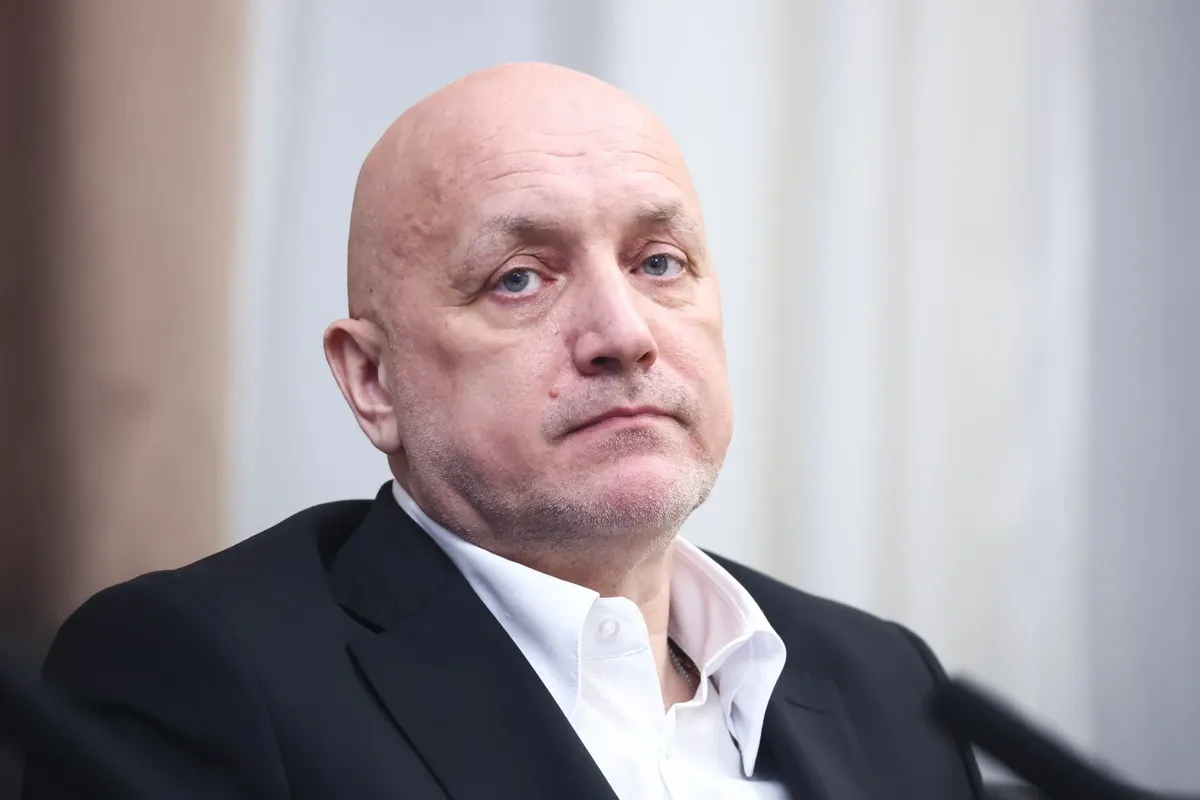
Writer Zakhar Prilepin, it would seem, did not ask Putin for anything for himself - only for his homeland. But it depends on how you look. At the international level, in culture and sports, Russia was excluded from almost everywhere, and Russia is now actively practicing “import substitution” of either the Oscars, Eurovision, or the Olympics. The analogue of the Oscars in Moscow is managed by Nikita Mikhalkov, the analogue of the Eurovision by Konstantin Ernst, with the support of the Ministry of Foreign Affairs. If the original awards and competitions in the damned West live on self-sufficiency and/or at least do not give out money to the laureates, then in Moscow there are gigantic budgets with generous prizes and often titanic PR trying to convince the target audience of how many billions of people are following these events. Almost all significant areas have already been mastered in this way, but the hated Nobel Prize remains unnoticed.
In the field of chemistry or medicine in Russia, they do not yet plan to award their own equivalent of the Nobel Prize, but in literature Zakhar Prilepin is ready to lobby for this issue in the most decisive manner. “The fact is that the Nobel Prize has become an unconditional political instrument in recent decades,” he said. “This could be seen, viewed, appreciated during the beginning of the SVO, when about 20 former Nobel Prize laureates in literature immediately signed, so to speak, an anti-war letter.” And he spoke in favor of building “a new world literary hierarchy - not only Russian, I call this the creation of a world majority prize, which we are able to create along with China, India, the aforementioned Latin America and Africa.” Direct cosplay from Mikhalkov’s “The Diamond Butterfly”. Like Nikita Sergeevich, Prilepin has already held a “test BRICS award”.
The interest of the “world majority” in Russian endeavors in various areas where Russia has ceased to take part so far boils down to the opportunity to receive prize money from our state budget.
Neither the Eurovision Song Contest, nor, especially, the Nobel Prize or the Olympic Games were created on their knees by governments in batches over a couple of years. Such projects are born on a completely different level and gain authority and cult status over decades or even centuries.
To believe that the oppressed world was just waiting for the writer Prilepin or the director Mikhalkov to start handing out their figurines in Russia instead of American and European ones is very naive.
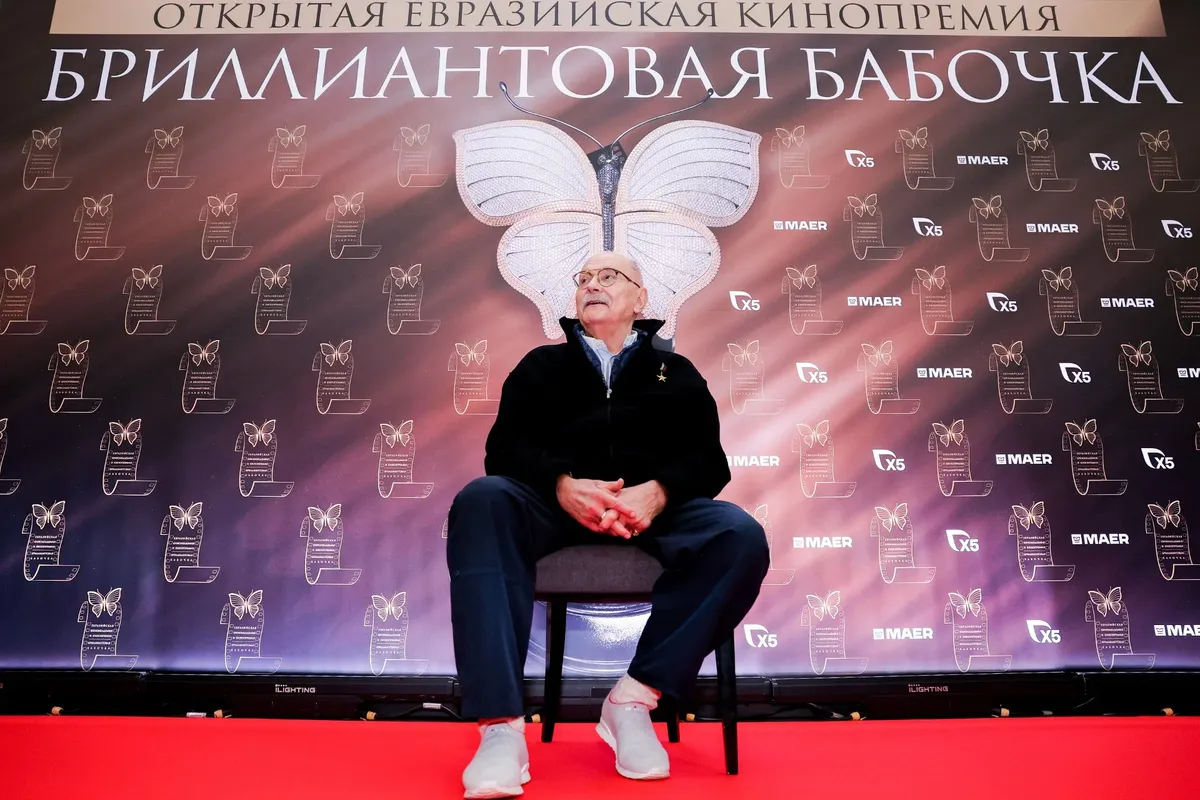
At the same time, such Russian remakes are declared non-political: the Minister of Foreign Affairs, who organized the “Intervision” competition, sits at a press conference or in a box at the competition itself, and without any embarrassment declares his non-political nature.
But Vladimir Putin saw this as the right strategy and supported Prilepin. He called the Nobel laureates in literature “lovers of the art of epistolary” and noted that they “hardly wrote anything after the start of today’s difficult, tragic events in the Middle East” (obviously, this means something anti-war in relation to Israel and the United States). The instruction will be given to the Ministry of Foreign Affairs, and along with the instruction, of course, the budget. Somewhere inside this scheme the writer Prilepin and his associates will loom.
The remaining participants did not lay claim to landmark projects. Evgeny Mironov was laconic: he asked to support the traveling interregional festival “Vershina”. Edgard Zapashny, who reported on concerts in Donetsk, Lugansk, Mariupol and Sukhumi, asked to include his circus in the “Pushkin Card” program, which obviously promises good income and about which the Minister of Culture Olga Lyubimova had a different opinion: the circus is more entertainment than education. But Zapashny seemed to push through the topic. Putin told Lyubimova that “communication with animals, communication with circus performers” also “is important for raising even very young children.” Svetlana Zakharova asked for a new building for the Academy of Choreography in Moscow, and Nikolai Tsiskaridze complained that his Academy of Russian Ballet in St. Petersburg had not yet acquired a certain sports and fitness complex. The “petty” ballet and circus ones can be understood: international awards in their fields are not particularly an eyesore and are of interest only to the professional community, quotas are not needed (the hated “Du Soleil”, which took away the audience from the Zapashny tigers, no longer comes, and in the field of ballet we are always ahead of the rest). There are no problems with the heirs either, so shouting “let’s renounce the old world” is somehow useless.
So you can calm down and, relax, ask for a simple human thing - money.