
Translated material
Old age is a joy
Life expectancy is becoming a privilege of the rich and a new criterion of inequality between eternally living leaders and ordinary people.

Petr Sarukhanov / Novaya Gazeta
(18+) THIS MATERIAL (INFORMATION) IS PRODUCED, DISTRIBUTED AND (OR) SENT BY FOREIGN AGENT ANDREY VLADIMIROVICH KOLESNIKOV OR CONCERNES THE ACTIVITIES OF FOREIGN AGENT ANDREY VLADIMIROVICH KOLESNIKOV.
High-ranking leaders, who consider themselves masters of time because they have absolutely no intention of leaving power, have their own understanding of temporality. “The current generation of Soviet people will live under communism!” - the party proclaimed in 1961. One of the then speechwriters and even, perhaps, the author of this phrase, Elizar Kuskov, remarked: “This slogan will survive centuries.” And indeed, more than half a century has passed since then, and there is still no communism.
The current generation of political figures with goal-setting is worse than that of the Khrushchev Presidium of the Central Committee, and they are focused not on the future, but on the past, somewhere in the depths of “thousand-year history.” And traveling through time and turning your countries into great again requires an extremely long life and, so to speak, active longevity. This is what we see in the example of Trump, Putin and Chairman Xi - based on their age, they could well have entered the Soviet Politburo of the early 1980s and even been considered old-timers there.
As Bulgarian political scientist Ivan Krastev noted in a recent article , “there is a growing feeling that we are on the threshold of a time when the richest and most powerful will consider themselves immortal, while the lifespan of many countries will seem finite due to falling birth rates and mass migration.”
And we know this man
The famous conversation between Putin and Xi about extending life pointed to an important property of modern autocracies - their unconditional claim, if not eternal, then to long-term rule, in comparison with which Stalin’s thirty years will seem like a short episode. Previous generations of autocrats did not have such impressive health, they drank, smoked and did not exercise, and the achievements of medicine in those years and now are incomparable.
Another fundamental point: a healthy and long life is the privilege of the “top people”. It is this quality that will distinguish the top management from the masses. But not in the symbolic zone on Granovsky Street, which embodied the life cycle of the nomenklatura - there was an apartment, a “canteen for medical nutrition”, and a hospital.
Inequality will be expressed not only in property, income, regional differences, but also in access to technologies for health and longevity.
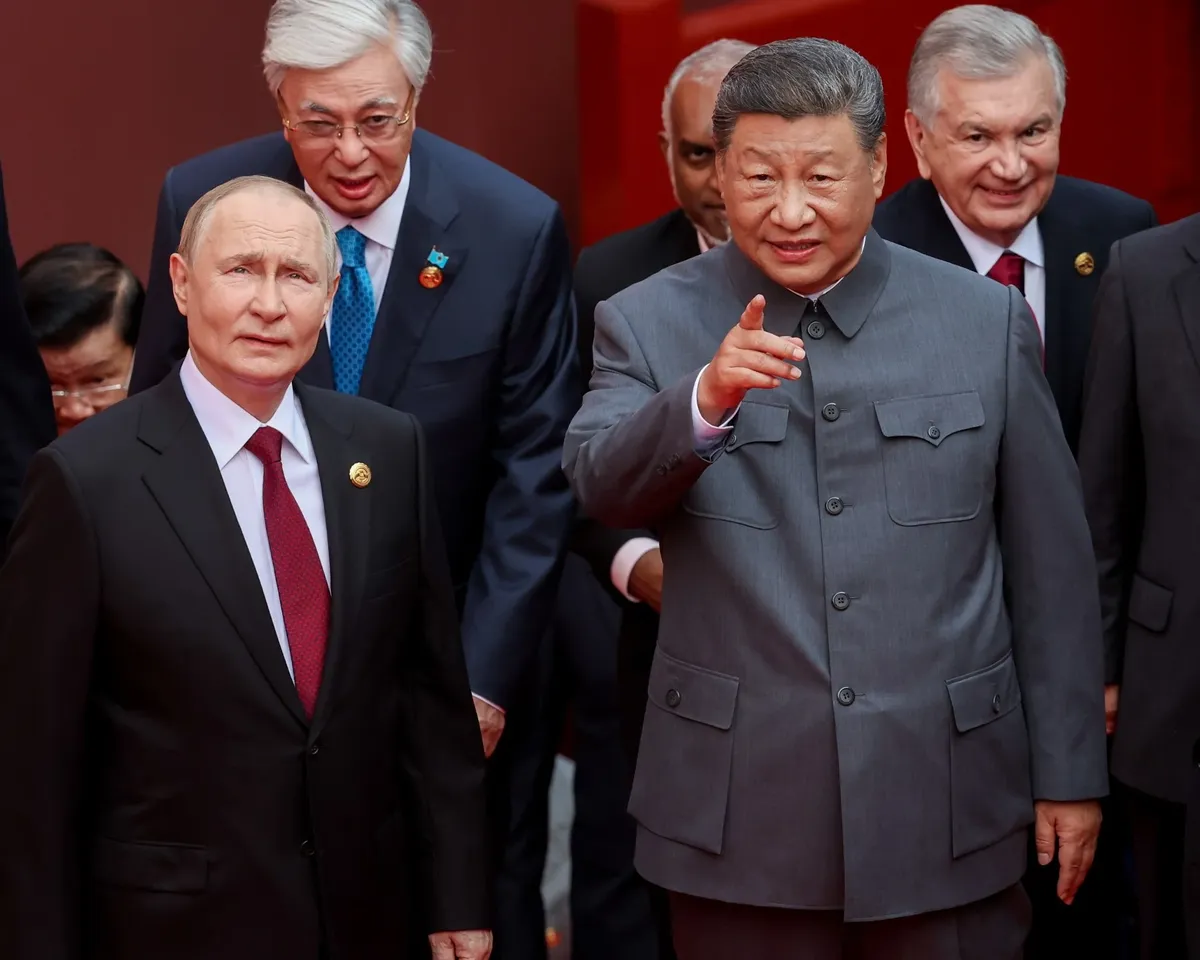
In February 2026, Putin, at the forum of new technologies, discussed a new industry - the bioeconomy, which improves the quality of life. The meeting was called “Bioeconomy for Humans.” Probably the organizers were too young to remember the Soviet joke: “Everything in the name of man, everything for the good of man. And we know this man.” Any autocrat is the crown and end of history in itself, and he would like to fix himself at this peak forever. Until this “forever”, as Alexey Yurchak puts it, will not end.
It is difficult to say how real or, on the contrary, how illusory this (quasi-)eternal life is. Health care, according to Academician Chazov, also extended the life of members of the Politburo equal to the board, directing members of the Areopagus to sanatorium and resort services. (Leonid Ilyich, according to the recollections of the translator of summit meetings Andrei Vavilov, complained: “The rest of us take a vacation twice a year. I’m already tired of signing statements for them. But Uncle Lenya works hard here!”) Which did not help avoid a period of ruling the country by decrepit and incompetent people (Brezhnev, evil tongues said, runs on batteries, and Andropov runs on mains), and as a result, the funeral “carriage races.”
Food and care
People of older age cohorts determine the social climate in the country. Among them there are more of those who support everything that the Kremlin does. They go to vote in a disciplined manner. They consume television propaganda product. There are still more women than men among them, because old men die before old women. This does not mean that the older generations are all for power. Not at all. But a significant portion of those who live to an advanced age are more likely to support it. In the end, it is the state, albeit poorly, that feeds and nourishes them (feeds them with propaganda more and more as the actual food becomes less).
Long-term negative selection brings middle-aged people to the highest level of power with the consciousness not so much of pensioners in the broad sense of the word, but of military pensioners.
These people decide for the young how they should live and what they should die for. More precisely, for whom. “Old people rule the world,” said Alexander Galich sixty years ago.
The special operation and its consequences, including irreparable losses, as well as the emigration of the educated and young, will change the age structure of the population and the situation in the labor market. Raising the retirement age has somewhat eased the situation of the pension system, but the population is still actively aging, and the distribution “pension”, under the burden of maintaining pensioners, will simply no longer cope with payments after a few years. The authorities themselves abandoned the funded pension system as part of total demodernization and doomed themselves to a well-predictable problem, if not a disaster. When at the same time there is no one to work, no one to give birth and nothing to pay those who live out their days watching TV, this is called a crisis.
The picture was completed by Samoyed migration policy. At first they refused to teach migrant children in schools, and now they are going to expel them from the country upon reaching 18 years of age. There was a chance to make Russian citizens out of migrants - children and teenagers. Assimilated, acquired a Russian identity, received an education, and are able to enter the labor market. The degree of misunderstanding of economic and demographic processes is such that this potentially huge human reservoir has been abandoned in a pathetic manner. Political resentment blurs vision. Xenophobia cancels pragmatics.
Is it easy to be young? It's scary to be young. The state willingly offers them a trench or a drone, as well as a test in the “Fundamentals of Russian Statehood.”
Is it easy to be old? The average life expectancy in Russia is just over 74 years. The “survival period” after retirement is short, less than two presidential terms. To slightly paraphrase Father Lukashenko, we can say that we will live poorly, but not for long: the replacement rate - the ratio of the average pension to the average salary - has been steadily declining in recent years and is somewhere at the level of 23%+, although according to the standards of the International Labor Organization it should be 40%. But this organization is international, globalist-destructive, so it is not a decree for us.
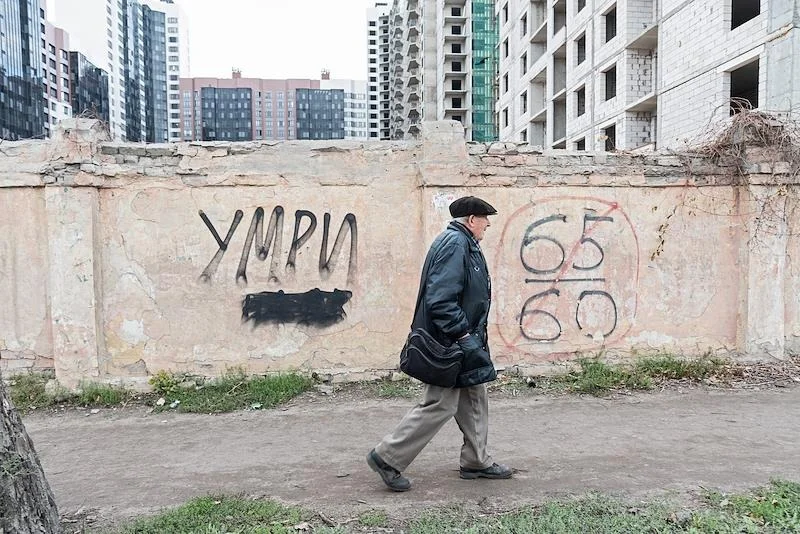
In a word, the gap between about a hundred top people and the rest of the population in the expanding expanses of our “baby zone” in terms of quality and life expectancy is turning into an abyss. Unlimited power - it is in itself the elixir of youth, a rejuvenating apple and the same strawberry.
Surviving Together
“It’s hard to get rid of the feeling,” writes Ivan Krastev, “that in the future our politics will become similar to the world of Greek mythology, in which the intrigues of immortals determine the course of world history. All that mortals can hope for is to please the immortals.”
Actually, within the Russian Federation, this future is already our present. Putin has ruled the country for more than a quarter of a century, and he is entitled to another ten years according to amendments to the Constitution of the Russian Federation in 2020. But where is the guarantee that the entire building of the Basic Law of 1993 will not be recognized as dilapidated and outdated and will not be completely demolished? Together with a ban on ideology and a list of human and civil rights and freedoms, which radically contradict everything that the state is doing today.
There is not and cannot be an image and concept of the future in Putin’s model.
Every new day is Groundhog Day, every new year is the year of the same groundhog, only a little lost in its fur and more intoxicated by its world-historical mission and the need to fight enemies.
There is no future in the sense that there is no rotation of power: due to a strange irony of the historical process, the title of the famous book by Francis Fukuyama acquired the opposite meaning to its intended meaning - “The End of History and the Last Man.” The story ends with the last man. And we - see above - know him.
Politicians, officials and oligarchs can leave (including out the window), the inner circle of the autocrat can get younger, creating the impression of a race for successors, although this is just a race of loyalty, and the top person still remains.
SVO also seems to be an eternal background of what is happening, a way of life for years to come. But on to the question of “bio-economy” - the biological fabric of society is being erased and deteriorating. Unlike the crème de la crème of the state, which is fueled by the biological elixirs of youth, it cannot be eternal. The combination of the absence of a future with the decay of the biosocial fabric turns the Russian state into some kind of cabinet of curiosities. And if the political line of isolating the country and generously wasting human capital (previously indoctrinated by Russian messianism) continues, the “common yardstick” by which Russia will have to be measured will only be a period of survival.
The main thing is that the TV works - with the eternal Solovyov. And Max messenger. The new generations entering life will be dealt with by the aging authors of uniform textbooks, propagandists, paramilitary youth organizations, and higher educational institutions that mainly teach how to control drones. And the eternal leadership will send them to defend the “thousand-year history.”
That's all biopolitics with bioeconomics. Active longevity and aging in joy.
This material was published in the seventeenth issue of Novaya Gazeta. Magazine". You can buy it in the online store of our partners.