
Translated material
Push will not work
MAX does not work correctly under whitelist conditions. To isolate Runet, the authorities will have to create a new OS
Photo: Vasily Kuzmichenok / Moscow Agency
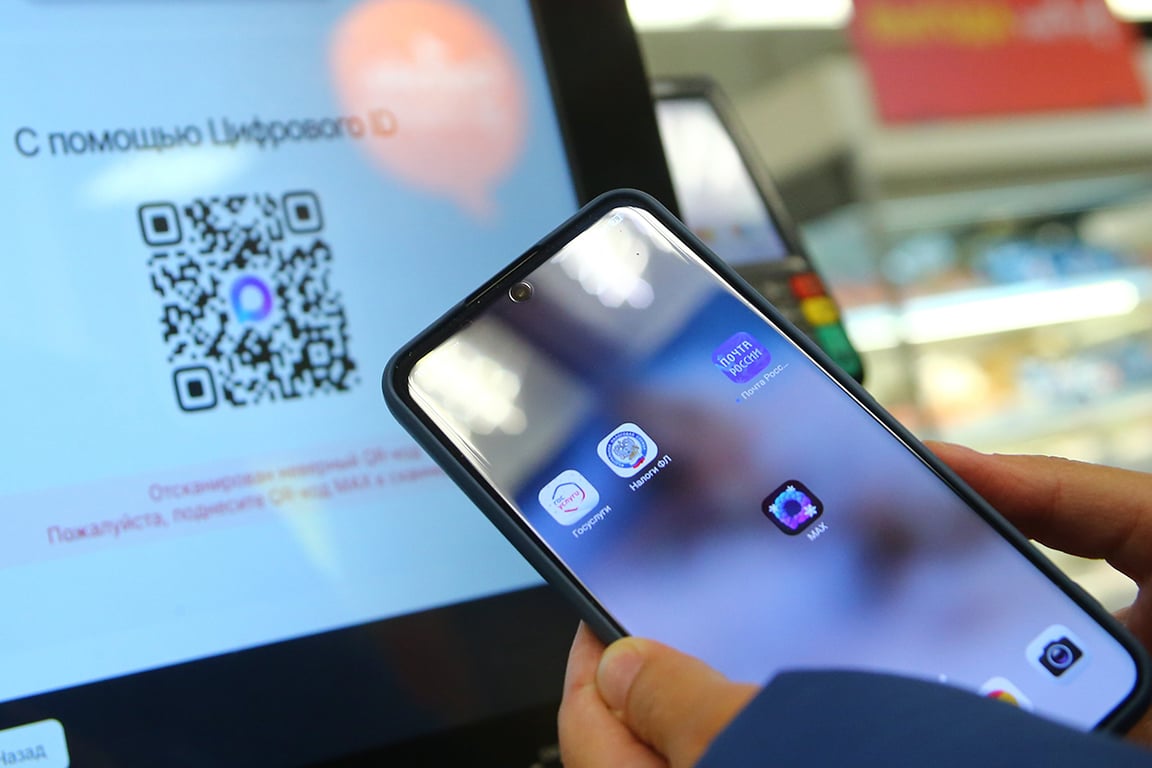
The governor of the Belgorod region, Vyacheslav Gladkov, goes to Moscow to “resolve the issue” about the MAX: residents of the region do not receive air raid notifications through the “national messenger” when “white lists” are turned on. Gladkov explains the situation by MAX’s dependence on the services of foreign companies. For push notifications in the messenger to work correctly, Russians’ phones must still be connected to the global Internet. Thus, the Runet is structurally not ready for self-isolation: Roskomnadzor and the security forces are implementing “white lists” and conducting “MACHification”, without thinking about what the real user experience will look like. “New-Europe”, together with experts, explains why Android and iOS stood in the way of the censors.
During air raids in the Belgorod region last week, notifications about them in the MAX messenger did not reach users. The governor of the region, Vyacheslav Gladkov, explained that “it is impossible to receive a push notification through MAX, because the software is released to foreign manufacturers” (that is, Google and Apple services). If you include the services necessary for the correct operation of the messenger and other applications in the “white lists,” this will make censorship meaningless: through the same Google, it will be possible to conduct traffic necessary to bypass blocking.
Gladkov admitted that Internet blocking in the region is “one of the most difficult problems that is currently worrying the entire border region.” He emphasized that the emergency notification system is built on push notifications that are received in the event of danger. For now, the governor suggests that Belgorod residents, when turning on the sound siren on the streets, go into the notification channels in MAX and independently “monitor the angle of attack of the unmanned aerial vehicle,” as well as “listen to the street sirens” and then check the messenger.
With whitelists, but without push notifications
In February, conversations about restrictions on access to Google services returned to the news agenda. Then the deputy chairman of the State Duma Committee on Information Policy, Andrei Svintsov, said that blocking Google services was “quite technically feasible.”
However, his colleague on the committee, State Duma deputy Anton Gorelkin, admitted that for now Russia cannot block Google, as it would entail a whole range of negative effects .
“As for loud statements about blocking, there are actually no such plans: I specifically clarified this with the regulatory authorities. It is obvious that blocking will entail a whole range of negative effects: first of all, problems with the performance of the Android operating system (which accounts for 60% of all smartphones of Russian users),” the deputy wrote.
Most Russians use smartphones running the Android operating system. According to T-Bank analysis , from September 2022 to October 2024, the share of owners of phones with this operating system was 58–60%, and iOS — 40–42%.
Cloudflare, the world's largest company engaged in traffic analysis and website protection, notes that the ratio of Android and iOS among Russian users in 2025 is 66% to 34%.
With any blocking by the authorities, the owners of these devices are under attack. The fact is that push notifications on Android are tied to Google systems. MAX messenger also uses the FCM (Firebase Cloud Messaging) service from an American company. Technically, there are alternatives that can use, for example, Telegram and Signal, but in practice the vast majority of applications, including Russian ones, depend on FCM. An IT specialist interviewed by New Europe, who wished to remain anonymous, explains the connection with the FCM service using the example of a high-rise building:
— Imagine that your smartphone is an apartment building. Each messenger (Telegram, WhatsApp, Viber) is a resident waiting for a letter. In the Android world, there is a main "post office" for the whole house - this is FCM (Firebase Cloud Messaging) from Google.
How does this work?
The expert explained to New Europe how this system works:
— Someone is calling you via messenger.
— Messenger servers do not run to your home. They pass a note to Google's "post office" (FCM): "User A is receiving an urgent call from User B!"
— FCM, which works in the system constantly and at the same time consumes little energy, is immediately knocking on the door of your phone.
- Only after this the messenger application “wakes up” and promptly shows you the incoming call.
Why such difficulties? To save battery power. If each application independently and constantly checks email, the battery will run out in hours. FCM solves this problem by being one efficient dispatcher for all.
Push notifications from RuStore, a Russian Android app store launched in 2022 amid restrictions from foreign companies, will not be able to replace notifications from FCM. Its creators have developed their own API (a software interface for exchanging data between applications) for a push notification service, which largely replicates the work of Firebase.
They, as the expert notes, “boast” about instant delivery, but they themselves admit that for some users it does not happen on time.
— FCM is a Google system service. It is built deep into the core of the operating system and has the highest priority in the OS. The RuStore service is just another application. For Android, starting from version 14, it is the same background process as MAX. Without interfering with the operating system itself (at the level of firmware from phone manufacturers), it is unrealistic to make RuPush an effective replacement for FCM, says Novaya-Europa’s interlocutor.
In addition to push notifications, if blocked, problems may arise with card payments from the phone: although Google Pay no longer works in Russia, Android allows you to download Mir Pay, SBPay and other payment applications, which can use Google Mobile Services to confirm payment security. There will also be problems with auto-updating applications and some system updates.
— Theoretically, the authorities have room for maneuver. We see from the example of Huawei, which lost access to Google Mobile Services, that it is possible to regroup and continue to work - even if not ideally. In a user sense, this is a rather specific experience. Such smartphones are more suitable for those who are willing to put up with restrictions or like to “cope with difficulties.” Is it possible in principle to implement such a scenario? With proper preparation, yes. But preparation takes years,” explains Leonid Yuldashev, IT specialist, coordinator of Russian-language projects of the organization for the protection of digital rights eQualitie.
In China, Google services have not worked since 2014 as part of the construction of a national censorship system. At the same time, the country has a group of strong smartphone manufacturers that use an open-source version of Android (AOSP) in their devices, on which they install their own analogues of Google services, developed specifically for the domestic Chinese market. Specifically, the companies have formed a coalition to support the Unified Push Alliance (UPA) push notification system to replace Google's Firebase Cloud Messaging. This coalition ceased to exist in 2020, and since then the push notification landscape in China has remained fragmented, with each hardware manufacturer running its own service.
It is for this reason that you can find different versions of Chinese smartphone models on the market: intended for domestic consumers and global, on which familiar Google services can be installed.
The case of Huawei, China's largest government-linked electronics manufacturer, is special: the company has been unable to use Google services even in global markets since 2019 due to US sanctions and has developed a similar ecosystem of services called Huawei Mobile Services (HMS).
Russia does not have its own smartphone production; devices for the Russian market are imported from China, usually in a global version. Full implementation of “white lists” would require the development or at least adaptation of an operating system for the Russian market and the replacement of most of the devices that users currently have (there are about 102 million smartphone users in Russia, the number of active devices is even higher).
For Apple devices running iOS, which traditionally has a more closed infrastructure, the same rules apply. For notifications and other system functions to work correctly, access to company services is required, in particular, Apple Push Notification Service (APNs). There is no open version of iOS that could be used to adapt to the conditions of the domestic market, so for the iPhone to work correctly in Russia, the authorities will have to negotiate with the company to add its services to the “white lists.” For example, in China, Apple made a deal with the authorities: services are available to users within the country, while user data is stored on local, not American, servers for censorship reasons. Additionally, many apps that Chinese authorities consider censorship threats, including VPNs, are not available in the local App Store.
Delete MAX
In February, Yulia Navalnaya and the Anti-Corruption Foundation launched the “I’m Connected” campaign against Internet restrictions in Russia. As part of this campaign, they, in particular, plan to ask Google and Apple to remove the Russian state messenger MAX from the application stores. This measure could, according to the authors of the campaign, significantly complicate forcing users to switch to the “national messenger” and would slow down the onset of censorship.
Leonid Yuldashev, commenting on this point of the campaign, notes that it is difficult for him to discuss it on its merits, because he is working to ensure that people can open blocked sites and have access to any applications.
At the same time, the expert believes that the task of putting pressure on Apple and convincing the company to remove the MAX messenger from the App Store “does not look unrealistic.” He recalls that similar cases have already occurred: in 2017, Apple began to remove Iranian applications due to “sanctions imposed by the United States on Iran.” Android users then noticed almost no changes, while owners of Apple devices faced restrictions. Developers tried to get around the bans by republishing applications under different names. However, in 2019, Apple closed the ability to use corporate certificates for such purposes. As a result, Iranian government apps on iOS have effectively disappeared, while they remain available on Android.
Since iOS doesn't allow you to install apps from third-party sources, removing MAX from the App Store will effectively make it unavailable to iPhone users in Russia, explains Yuldashev. The situation is different with Android: alternative installation methods are saved there.