
Translated material
Off the rails
In the life of Sergei Lipatov there was both murder and accusations of billions of dollars in embezzlement. Why did he remain immune to investigation?

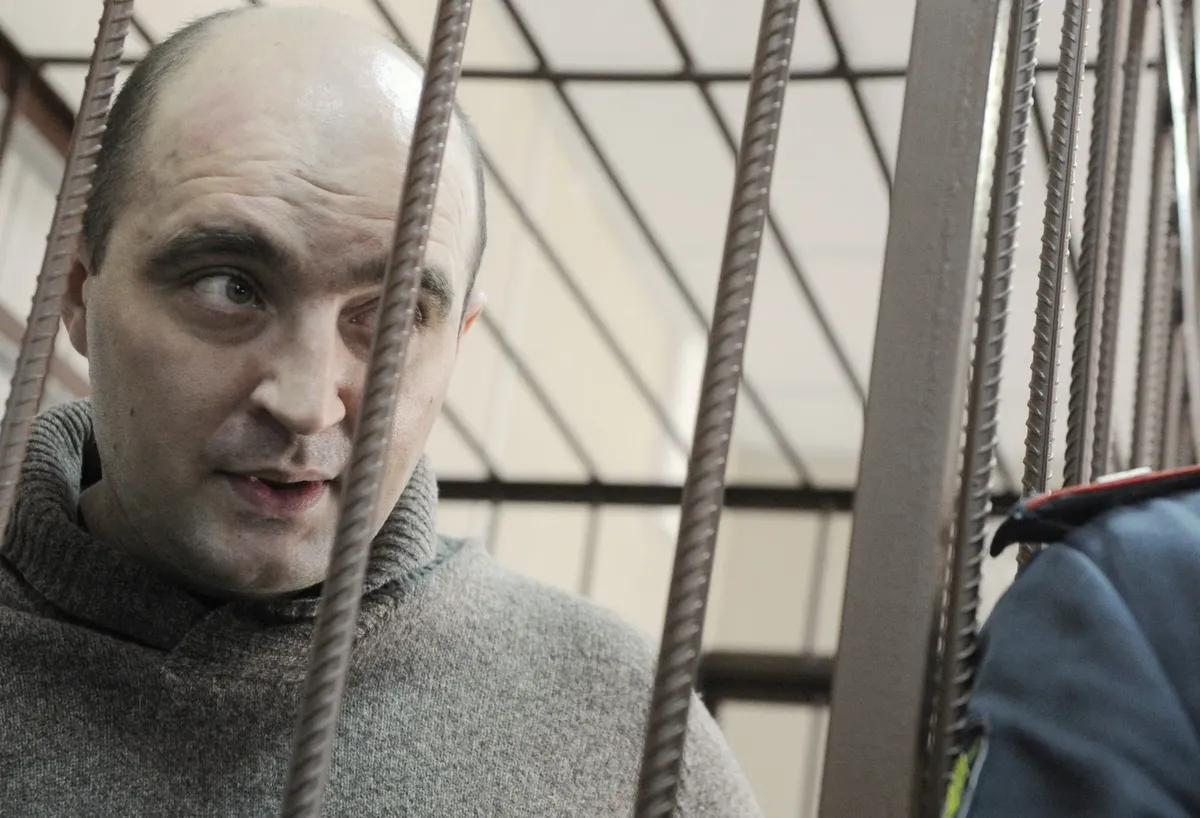
Sergei Lipatov in court. Photo: Anton Velikzhanin / Kommersant
The Odintsovo City Court sentenced Sergei Lipatov, the former chairman of the board of directors of the Lokomotiv football club, to 10 years in a maximum security colony, who at the same time also worked as the chairman of the board of directors of Transtelecom (a subsidiary of Russian Railways).
Lipatov was found guilty of instigation and aiding in the murder of 52-year-old Igor Fominov, a retired KGB officer and adviser to the first deputy minister of railways.
Killers shot Igor Fominov on March 15, 2002 near the Agrarnik cottage village near Odintsovo. From the very first days of the investigation, the name of the customer was heard during interrogations, but Sergei Lipatov was arrested only in April 2025. Initially, he did not admit guilt, insisting that he was slandered by members of the so-called “gang of special forces,” which included officers of the special forces unit of the Ministry of Internal Affairs “Vityaz”, who accepted orders for murders in their free time.
But after studying the testimony of gang members, after confrontations with the direct organizers and perpetrators of the murder of Igor Fominov, Lipatov admitted guilt.
The prosecution demanded 12 years in a maximum security colony for him. The Odintsovo city court, however, showed humanism and sentenced him to only 10 years in prison.
The entire career of Sergei Lipatov, culminating in his imprisonment, is the modern history of Russia in miniature. There were also “dashing 90s” here, in which friendship with the special services coexisted with contract killings; and the obese noughties with crazy amounts of money spent on buying little-known football players and other entertainment; and confident tenths, when the state could simply forgive billions of dollars in waste, so as not to spoil its mood. And if now, after the verdict, Lipatov manages to sign a contract with the Ministry of Defense, another “canonical” page for Russian history will appear in his biography.
"Visyak"
Sergei Lipatov was born in 1962 in Leningrad. In 1987 he graduated from the Pyatigorsk Pedagogical Institute of Foreign Languages, and in 2006 from the Chicago Graduate School of Business. Doctor of Law, Candidate of Economic Sciences, he built his career in several dimensions at once.
Initially working in a business associated with large volumes of rail transport, in 1999 Lipatov became deputy head of the financial and economic department of the Federal Tax Police Service of Russia. In 2001, he managed to work as a representative of the city of Sochi in Moscow with the rank of deputy head of the city administration.
However, he did not abandon the transport business either. Among other things, he founded the company Inyurconsult, the director of which was occupied for some time by Igor Fominov, a retired KGB officer who worked for a long time on a business trip in the States.
Judging by the testimony given in court, Fominov was a very useful employee. In February 2002, he became a voluntary adviser to the First Deputy Minister of Railways.
As we later learn from the testimony of Vladimir Yakunin, who was interrogated during the investigation, at that time the Deputy Minister of Railways, he met and became friends with Fominov back in the late 1980s, when both of them served in the KGB. Fominov is at the USSR Embassy in the USA, and the future head of Russian Railways is the first secretary of the Permanent Mission of the USSR to the UN.
For many years they did not lose touch.
In February 2002, Yakunin was appointed First Deputy Minister of Railways. And he invited his old friend Igor Fominov to the position of adviser on personnel matters on a voluntary basis, “trusting him as a competent and loyal specialist.”
During the interrogation, the protocol of which was read out in the Odintsovo City Court, Yakunin admitted that he avoided unnecessary contacts and “closed representatives of big business to Fominov,” thanks to whose help many issues were resolved in the Ministry of Railways.
Apparently, Fominov’s work track also intersected with the interests of Lipatov, who managed to develop a fairly large business tied to the power of Russian Railways.
As the investigation established, Lipatov feared that his former employee would finally come under Yakunin’s wing, taking a full-time position in the Ministry of Railways, and cut off all his contacts with railway workers. For example. Lipatov’s company had a contract with India to supply a large batch of rice to Russia.
There was a need to enter into a subcontract with Russian Railways for hundreds of railway cars to deliver cargo from the port to end consumers in Moscow. But this contract was disrupted; it was not possible to reach an agreement with Russian Railways. And Lipatov believed that it was Fominov who thwarted the contract. That's when he decided to order his liquidation.
With a request to find the perpetrator of the murder, he turned to his acquaintance Leonid Rakogon, who at that time served as the head of the 5th department of the RUBOP of the Moscow Main Internal Affairs Directorate.
Lipatov offered 200 thousand dollars for the execution of the order.
Rakagon agreed. Having left himself 100 thousand dollars - for “organizational troubles” - he turned to his former colleague in the RUBOP Oleg Mikhalev (by 2002 he had already moved to the FSB).
Mikhalev estimated his mediation efforts at 70 thousand dollars, and for the liquidation of the adviser to the federal deputy minister he offered the remaining 30 thousand US dollars. to a soldier of the special forces detachment of the internal troops of the Ministry of Internal Affairs “Vityaz” Alexey Chebotarev.
He did not bargain and agreed, and also involved two more special forces in the crime.
On March 15, 2002, the order to liquidate Igor Fominov was executed.
Chebotarev and his accomplice stopped the car in which Fominov was returning from work and fired at least four shots. The bullets hit Fominov's chest and pierced his lung. He was able to reach his home, but died from loss of blood before the ambulance arrived.
The investigation that began died out quite quickly. And this despite the fact that the widow of the murdered man, Marina Takoeva, already in March 2002 told the operatives that her husband had a conflict with Lipatov, that there was a raised conversation about the “rice contract” between Lipatov and Fominov. And that she suspects Lipatov of organizing the crime.
True, during the official interrogation Takayeva did not confirm her suspicions. As a result, the version of Sergei Lipatov’s involvement in the crime in the spring of 2002 was dismissed as unpromising. The same Yakunin stated during interrogation that this murder was committed with the aim of disrupting the work of Russian Railways.
Sergei Lipatov continued to build his career at an accelerated pace.
Trace in Lokomotiv
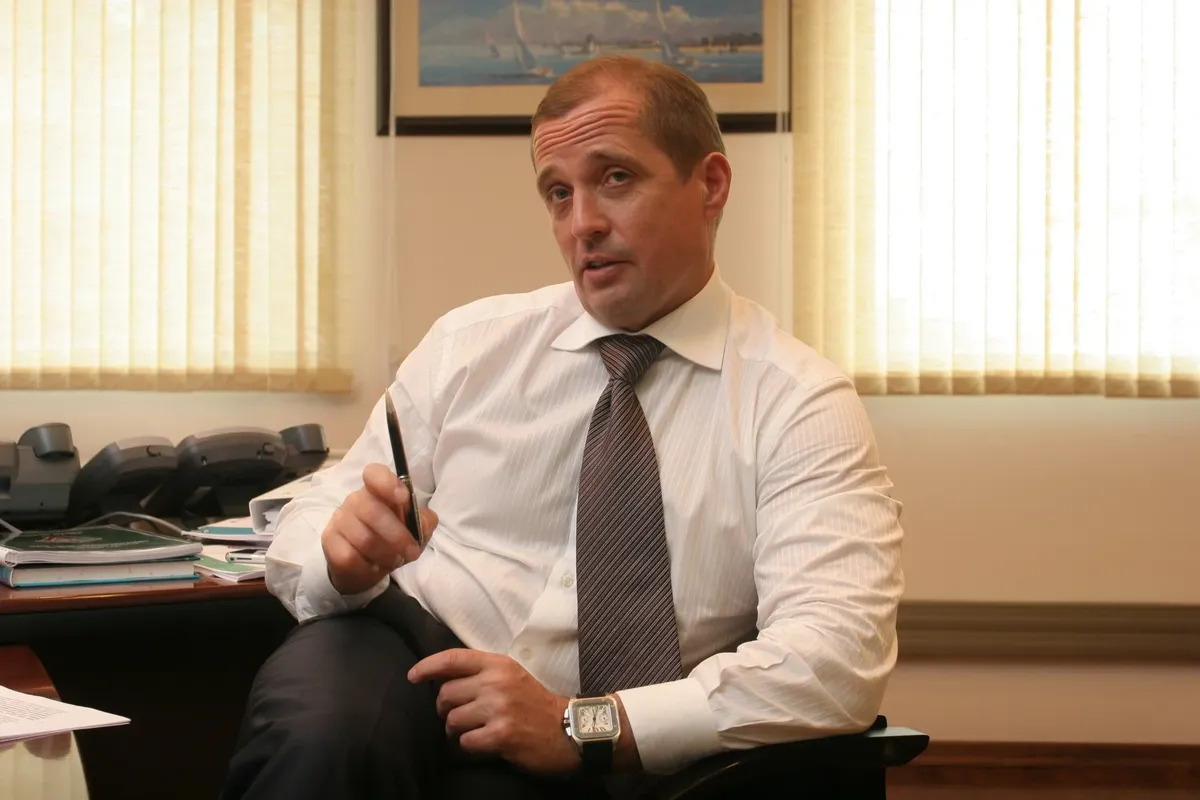
On June 14, 2005, Vladimir Yakunin was appointed president of the open joint-stock company Russian Railways. Soon after his appointment, he instructed Lipatov to take over the patronage of the Lokomotiv football club. In 2002, shortly after the murder of Fominov, Lipatov headed CJSC Transtelecom Company, a subsidiary of Russian Railways. And since the main financing of Lokomotiv comes from railway workers, Yakunin’s request seemed logical.
At the beginning of the 2000s, football Lokomotiv was a top Russian club. In 2002 and 2004, he already won the title of national champion, and by 2007 he added to the list of trophies with a victory in the Russian Cup. At the end of 2005, it was Sergei Lipatov who came to this team, who headed the board of directors of Lokomotiv.
By that time, the club’s budget had exceeded one hundred million dollars; Lipatov entered into numerous contracts with football players, mainly foreign players.
For example, in 2007, Lokomotiv signed 17 contracts, 12 of which were with foreign players. Even the fans of the team did not remember most of the names of these players, although tens of millions of dollars were spent on their acquisition.
The scandals were also fueled by the exorbitant amounts of bonuses that Lokomotiv players received under Sergei Lipatov.
In the summer of 2007, Lokomotiv legionnaire and Scotland national team striker Harry O'Connor shared the figures for his salary and bonuses at the club in an interview with the Guardian newspaper. Verbatim:
“Of course, money was the main factor that prompted me to move to Lokomotiv. I received two thousand pounds a month, and that was before taxes. At Lokomotiv they offered me 16 thousand pounds a week (more than 32 thousand dollars!), and that’s net! My coach told me: “You are my best player and I don’t want to let you go. But you have to think about your future and your family. If you stay there for a couple of years, you will provide for yourself for life. And so it happened. In the little over a year that I stayed there, I filled up my bank account well, bought several expensive cars, and made a decent investment in real estate. The salary there was fantastic, and the bonuses were simply admirable.
If we won the derby, which was 14 out of 30 matches in the season, then the bonus for such a victory was 100 thousand pounds. In May we won the Russian Cup, so for this victory I received 250 thousand pounds. By the way, I bought a brand new Ferrari with this award.
I dreamed about this as a child. In general, during my stay in Russia I also bought a Hummer, and in addition, I bought a very good car for my wife. But this money did not go to our heads. That's why we decided to return. Money is not everything in life.”
At the same time, even colossal bonuses did not help the players show stable play. The club rapidly deteriorated. And in 2010, Lipatov was quietly removed from his position as a football functionary. In the same year, at the same time, they were freed from the hassle of managing Transtelecom.
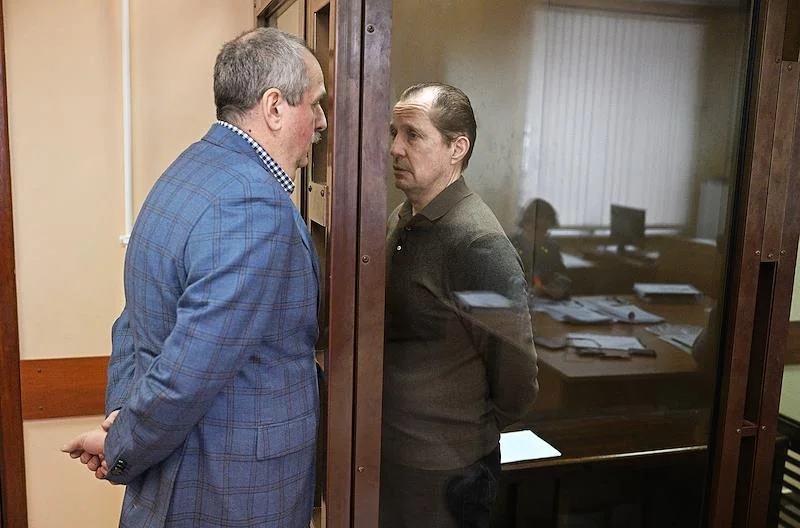
Lipatov switched to the construction and banking business, becoming a member of the board of directors of Mezhtrustbank. But in January 2016, the bank’s license was revoked “due to the implementation of a high-risk credit policy and questionable transit transactions in large volumes.” The Deposit Insurance Agency, paying money to affected clients, initiated an investigation into the circumstances of the bank's bankruptcy. During this investigation, in November 2017, Sergei Lipatov was arrested and sent to a pre-trial detention center, preliminary charged with embezzlement of 4 billion rubles. But he was soon released from custody, and the criminal case was closed. Officially, because the investigation failed to collect the necessary evidence of Lipatov’s involvement in this crime.
But today I have every reason to believe that in 2017 Sergei Lipatov avoided a prison sentence for embezzling four billion rubles thanks to football.
Lipatov and the Laundromat
The fact is that by the time Lipatov was arrested in the Mezhtrustbank case, law enforcement agencies had in their hands the testimony of Pyotr Chuvilin, a famous Russian banker who acted as a witness in a series of cases of the “Moldovan Laundromat”.
Despite the fact that Chuvilin passed away three years ago, the interrogation protocols of Pyotr Yuryevich are still read out at criminal trials regarding the shadow cashing and conversion of sums amounting to tens of billions of dollars.
So, at the time of Lipatov’s arrest, investigators in the Laundromat case had at their disposal a protocol from Chuvilin’s interrogation, which, in particular, stated that in 2005–2009, Sergei Lipatov, chairman of the board of directors of Lokomotiv, was allegedly one of the Laundromat’s largest clients. Investigators found that the “Moldavian Laundromat” could be used by more than one football club to pay bonuses to football players and pay for football transfers.
But it was autumn 2017. There was a little more than six months left before the World Cup in Russia. Nobody needed a huge scandal in Russian football related to the payment of shady bonuses.
All in all,
in 2017, Lipatov, who was involved in the Mezhtrustbank case, was released from the pre-trial detention center, he went into the shadows and was engaged in business. And they decided to quietly forget about the role of football cash flows in the “Moldavian Laundromat”.
But in May 2025, Lipatov again found himself in a prison cell.
Hour of Reckoning
In 2025, 23 years after Fominov’s murder, this crime was finally solved. Earlier, as part of the investigation of another case, a retired lieutenant colonel of the Ministry of Internal Affairs, a former soldier of the Vityaz special forces, Alexey Chebotarev, was arrested.
Having concluded a deal with the investigation, Chebotarev gave detailed testimony on a dozen crimes that were considered “hanging.” Thanks to his testimony, 18 more members of the special forces gang were arrested, which was responsible for more than 40 contract killings.
Among the accomplices in numerous crimes, whose names were named by Chebotarev, was Oleg Mikhalev, who by that time had already become an FSB pensioner. During interrogations, he said that he received money for the elimination of Fominov from Leonid Rakagon. And retired colonel of the Ministry of Internal Affairs Rakagon, in turn, told such details of receiving the order from Lipatov, confirming the execution and transfer of money that no one had any doubts about who exactly ordered the murder of Igor Fominov.
On June 30, 2025, the Pushkin City Court of the Moscow Region sentenced Alexey Chebotarev to 15 years in a maximum security colony for 12 murders committed in the early 2000s. And in September 2025, a special forces lieutenant colonel who had gone through two Chechen wars went to the Northern Military District as part of an assault battalion.
FSB pensioner Oleg Mikhalev, who was sentenced to eight years in prison for complicity in the murder of Igor Fominov, also signed a contract with the Ministry of Defense and went to the combat zone.
For complicity in this murder, retired Interior Ministry Colonel Leonid Rakogon was sentenced to eight years in prison.
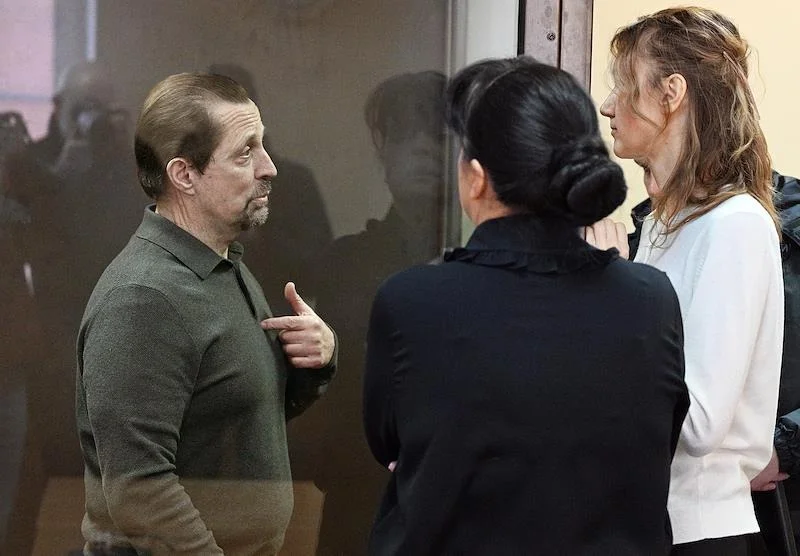
And on February 27, 2026, the Odintsovo City Court found the former head of the Lokomotiv football club and Transtelecom company Sergei Lipatov guilty of instigation and complicity in murder. And he sentenced him to ten years in prison.
Sergei Lipatov did not appeal this decision. The prosecutor's office also did not protest the verdict of the Odintsovo City Court. The verdict came into force. But the former chairman of the board of directors of the Lokomotiv football club and the Transtelecom company hopes to avoid being transferred to a colony, since he has already applied to the Ministry of Defense with a request to conclude a contract with him and send him to the combat zone.