
Translated material
Interview "for four"
The French Foreign Minister responded to Lavrov's interview with France 2, revealing "four examples of lies"

Jean-Noel Barrot. Photo: Yuri Safronov / Novaya Gazeta
Russian Foreign Minister Sergei Lavrov gave an interview to the famous France 2 journalist Léa Salama. He declared Kremlin narratives that you could hear at any moment by turning on any Russian state channel. The interview was subjected to devastating criticism from other French media, forcing the France 2 editors to make excuses. The French Foreign Minister also did not stand aside, indignant that Lavrov “was able to calmly launch his propaganda” on public television. And he cited “four examples of lies” from the head of Kremlin diplomacy.
The pre-recorded interview was conducted via video link and aired on Thursday 26 March. The ten-minute segment was shown in prime time, on the 8 p.m. newscast (it was watched by 3.4 million viewers, according to audience monitoring service Médiamétrie), and the full hour-long version was posted on the France Info website . 3.4 million is slightly below the average audience (more than 4 million), but taking into account the location and time of release, as well as the very fact that Mr. Lavrov received the floor on one of the main channels in France, we can talk about an unconditional propaganda success for the Kremlin. For an hour, his chief diplomat was able not only to express criticism of the American-Israeli war in Iran (largely fair and, admittedly, in some places even coinciding with the criticism addressed to Washington from Paris), but also talk about the goals of *** in Ukraine.
Léa Salame (“a very capable journalist,” as Lavrov flattered her at the very beginning of the interview, and here he definitely did not lie), one of the most famous stars of political broadcasting in France, showed herself very poorly in this particular interview. I see the main reason for the appearance of this interview in the usual desire of an ambitious journalist (who introduced the hero of her interview as “certainly the second most influential person in Russia”) not only to increase her popularity, but also to test her level.
The first task, of course, has been completed 100% - at least if we consider the number of mentions of your name in the press and the fact that your interview is specifically commented on by the head of the Foreign Ministry of your country as an inevitable part of popularity. The second task was failed because in a conversation with Lavrov, who was experienced in his field, Ms. Salame showed very poor psychological preparation and actually swam with his flow.
On this occasion, the Russian Foreign Ministry even published a transcript of the interview on its website. Without failing to distort the translation of many of the journalist’s questions for his own purposes.
"Catastrophic episode on public television" in France
French researchers of Russian propaganda unanimously called this broadcast a failure and catastrophic, condemning, in particular, the lack of clear opposition to the Kremlin discourse.
“Useless, poorly prepared and ultimately dangerous interview. If France TV teams still underestimate the information struggle, let them understand that Moscow has made it the central weapon of its war against the West,” complained Russia specialist Dmitry Minik from the French Institute of International Relations (IFRI) on social network X.
Slate , which called the interview an unexcusable failure, wrote: “Sergei Lavrov is no ordinary diplomat. He is the more or less combed face of authoritarian power, used to distort reality***.” And he emphasized:
“The invitation of Sergei Lavrov is in itself a political act - a gesture full of meaning, which we, the French, supposedly must accept under the pretext that any opinion should be heard.
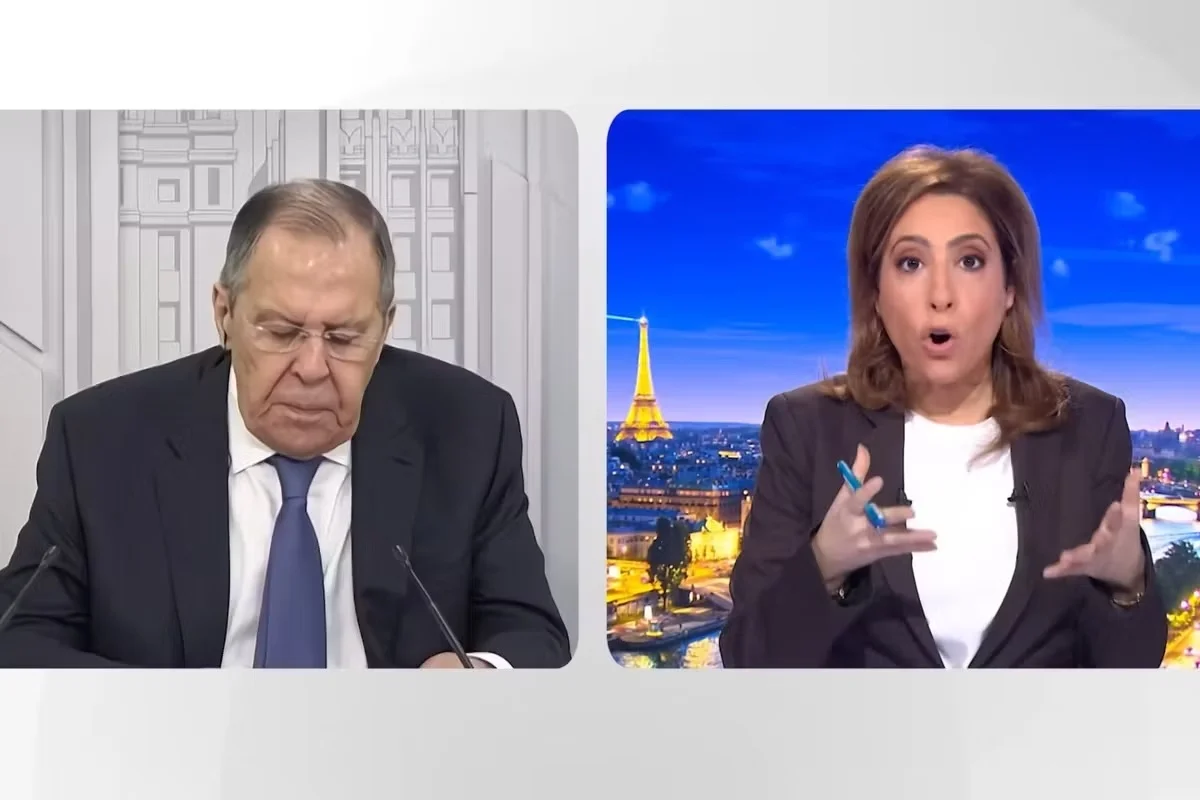
The editors of France Télévisions seem to have forgotten a fundamental principle of journalism, sacrificing it to the “bright television moment” so dear to Léa Salamé: one does not talk to state lies without raising objections to them. It needs to be dissected according to the facts, it needs to be resisted, it needs to be exposed. But that didn’t happen.”
“For an hour, Lea Salame faced a steamroller. Sergei Lavrov felt at home, and this old wolf could only present his argument: a false reconstruction of the history of Ukraine, insinuations against NATO, delusional accusations against Europe,” the publication noted. And she emphasized once again: “The role of a journalist in the face of a representative of an authoritarian regime is to, at a minimum, tirelessly remind the truth of the facts. By failing to do this, Lea Salameh has turned her news into a showcase of Russian discourse, and our state television into a mouthpiece for deadly propaganda.”
“A disgraceful interview in which the minister of a hostile power can calmly present his propaganda theses in prime time on the main public television channel in France with almost no objections, except for one case, and even then a very timid one. What is the benefit of this broadcast for France Télévisions? How does he enlighten the French citizen? Why wasn’t he [Lavrov] asked much tougher, more direct questions about hostile actions directed against Europe? I hope that at the very least this interview will be the subject of a thorough analysis in the next news release,” wrote Etienne Marcuse of the Foundation for Strategic Studies (and was wrong).
Another well-known researcher, the author of several books on Russian propaganda, Maxim Odine, in an interview with Médiapart, called for a calmer assessment of the very fact of the interview, but agreed that the France 2 journalist did not cope with the task: “It is important to say right away that deciphering the words of a figure from an authoritarian regime is not in itself a problem. There is no point in going to the opposite extreme of demanding systematic censorship of these voices. The central question is to create mechanisms of opposition strong enough to contextualize these words, subject them to criticism and immediately expose their limits. However, this was clearly not done in this case. As far as the press can tell, this interview had been planned for a long time by France Télévisions, which was very keen to get it. However, consent was allegedly given at the last moment, on the same day, which likely led to the lack of preparation that is felt when viewing the full version. Opposition seems insufficient in the face of a series of (...) well-known propaganda stories.”
In this regard, Odinet recalls another similar case: “This, by the way, is a point that we already raised in a collective letter [of Russia specialists] published in Libération a few months ago regarding Alexander Dugin’s interview on [radio] France Culture (published in November 2025 - Novaya). And then we noted the shortcomings in contextualization and critical distancing from this kind of discourse.”
Dugin on France Culture - the phrase itself seems surreal, but this is the reality of excesses that arise in a country with a truly high level of freedom of speech.
At the same time, Odinet emphasizes, unintentional journalistic errors, as in the case of Léa Salame, who “is not pro-Kremlin”, but rather took the interview in search of a “sensational format”, are not the only reason for the provision of platforms in France to repeaters of the Kremlin line.
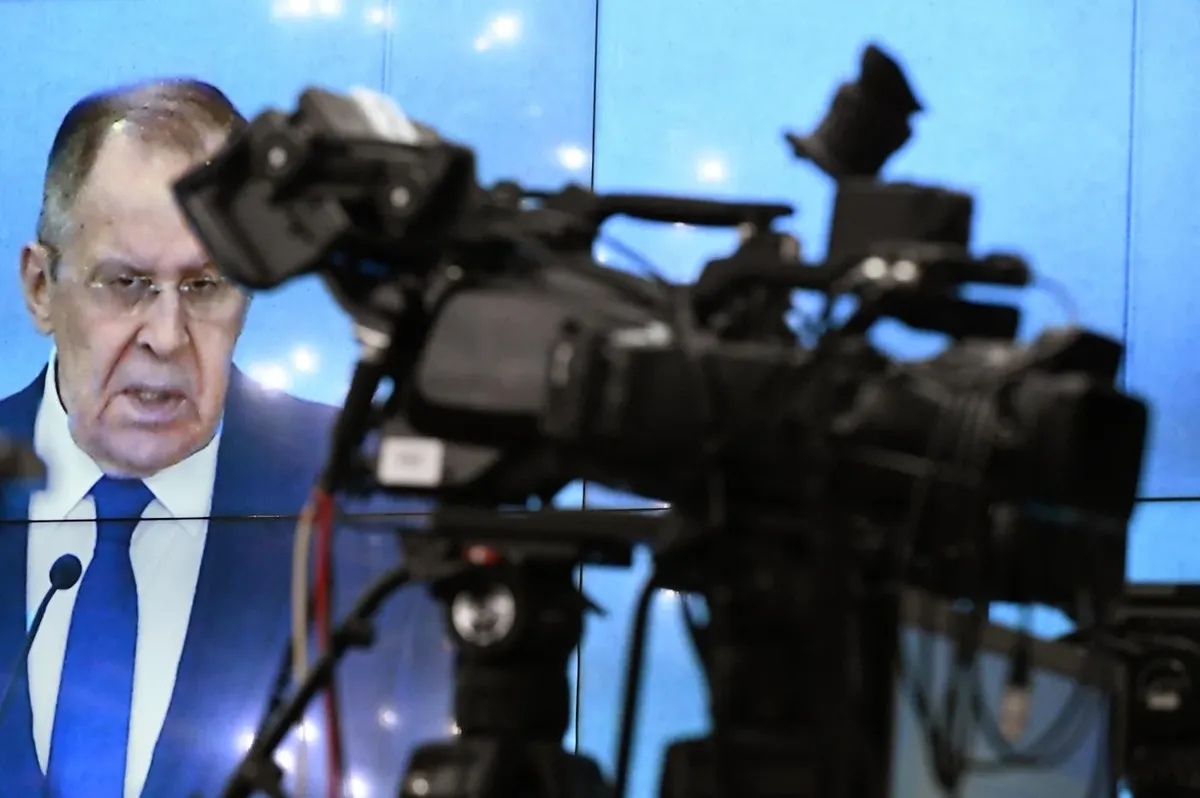
According to Odine, there are two other main factors as to why “some media outlets, consciously or not, end up relaying propaganda narratives and thereby engaging—sometimes against their will—in influence strategies, particularly Russian ones.”
The first factor is related to the ideological bias of “some media actors”: “For political reasons, some find interest in relaying discourses from the Russian sphere of influence because they fit into their own editorial line - often sovereignist, conservative or reactionary. You can think, for example, of some of [conservative billionaire] Bollore's media group. The hiring of Ksenia Fedorova, the former director of RT France, at CNews is an illustration of this . She relays on these broadcasts or on the pages of JDD ( recently purchased by Ballore and until then a respected newspaper - Yu. S. ) narratives that are very close or even coincide with official Russian positions (...).”
“The second factor is a form of admiration or even romanticization towards certain Russian “intellectual figures.” This can go as far as the aestheticization of such profiles. The case of Alexander Dugin is very indicative: his words arouse curiosity or even admiration, which sometimes leads to their broadcast without sufficient contextualization. This is explained by the desire to understand opaque political systems. In the face of authoritarian regimes, they are looking for clues to the interpretation of the “gray cardinals” who supposedly influence the government. <...> But by doing this, we sometimes contribute to artificially strengthening the influence of these actors,” says Odiné ( Dugin published on France Culture with the headline “An interview with the Russian ultranationalist thinker who inspires Putin.” - Yu. S. )
It is also important to note that such incidents with the voluntary admission of Kremlin officials into the information space of France at least do not go unnoticed by the French journalistic community.
“Ten minutes of Sergei Lavrov on air at 20 o’clock on France 2 - and the entire editorial team of France Télévisions found itself in the position of being on the defensive,” noted the Libération newspaper.
France Télévision responds: “This interview is not at all condescending”
The criticism was such that the editors of France Télévisions published a special explanation the very next day. To the question “Why (need) to interview Sergei Lavrov?” the editors respond: “Russia is the most important player in the war in the Middle East. Iran and Russia are allies. In this context, the interview with Sergei Lavrov is of obvious journalistic interest.” “The insincerity of the responses is part of the equation, and these types of interviews provide insight into possible changes or, conversely, the persistence of discourse.”
France Télévisions information director Philippe Corbet disagreed with the view that the presenter had failed the interview: “Our task is to insist if the answers differ from the information we have from other sources. That's what we did."
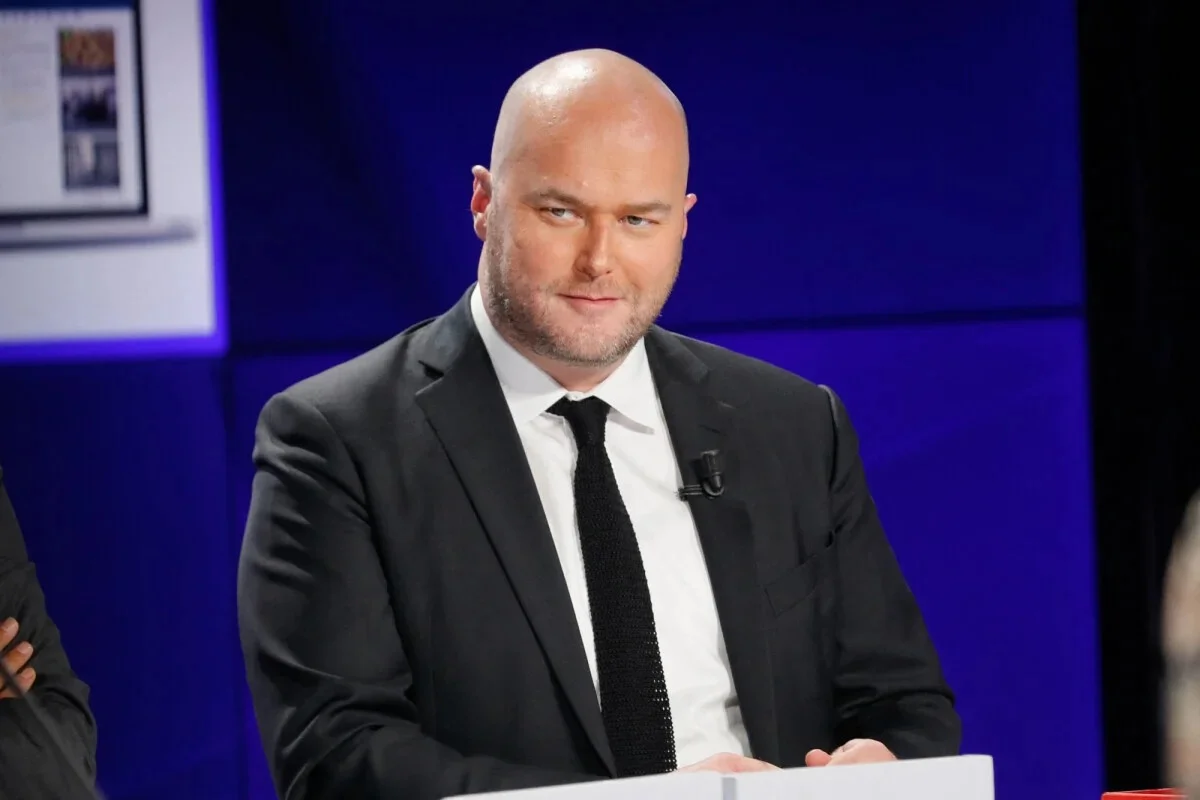
His next statement actually gives the presenter few arguments to justify the quality of her opposition to the interlocutor (which, according to most independent experts, was either absent or not heard). “Sergei Lavrov’s team did not set any conditions <…>. At no point did they try to ban this or that issue - Lea Salameh would have refused it anyway. The Russian minister also did not ask for questions in advance. This would also be denied to him. On the other hand, he demanded that the interview be shown to the public in full,” said the head of the France Télévisions news service.
The author of this response to the television company nevertheless also referred to technical problems: “Obviously, the form of the interview - duplex with translators in Moscow [in Russian] and in Paris [in French] - was not conducive to quick clarifying questions. Moreover, the Minister [constrained by the sound delay? or as an experienced interview tactician?] regularly took out his earphone, depriving Léa Salamé of the opportunity to immediately challenge certain statements with facts,” writes the author of the response to France Télévisions.
“Léa Salamé still formulated her opposing questions, even if a few minutes later than usual, when Sergei Lavrov was already moving on to something else,” said Hugo Plannard, editor-in-chief of the 20 Hours news program on France 2. “This interview is not at all condescending. Viewers of “20 Hours” could see that Lea Salame reminded the facts in interview conditions that were not easy,” added Philippe Corbet.
At the same time, in response to critics, the TV channel rightly reminded that when talking about this interview, they should not forget the rest of the work of the journalistic team of the French public television broadcasting [really significant]: “Commenting on Sergei Lavrov’s interview makes sense only if the entirety of the editorial work on the Russian and Ukrainian agenda is taken into account. The France Télévisions bureau in Moscow carries out work that has almost no analogues in Europe. For example, (...), our almost 400 reports from the ground in Ukraine or direct interviews with Vladimir Zelensky given to several European journalists on March 25, 2025 and Leah Salama on February 4 this year .”
Ministerial dispute
French Foreign Minister Jean-Noël Barrault did not agree with the channel’s opinion and that same evening at a press conference after the G7 foreign ministers’ summit, he mentioned the interview almost immediately. Said after briefly outlining the main results of the summit: “On Ukraine: we reaffirmed - as the G7 heads of state and government did on February 24 last year - our unwavering support for Ukraine in defending its territorial integrity, its right to exist, its freedom and independence. And since Mr. Lavrov was able to broadcast his propaganda unhindered on a French television channel last night, let me contradict him.”
He objected as follows ( due to censorship restrictions in the Russian Federation, we cannot give the answer in full. - “Novaya” ): “No, Russia does not protect international law. Not in Iran, not in Ukraine, not anywhere else. Mr. Lavrov, international law is not protected (...). International law is not defended by invading a neighboring country. International law is not defended by denying the sovereignty of a nation. (...) The first lie. (…) No, Russia does not spare the civilian population. <…> Second lie.
No, Europeans do not close their eyes when it suits them. Our position is very clear. Wherever this happens, France condemns and mobilizes forces against violations of international law and international humanitarian law: in Ukraine - by Russia, in Israel - by Hamas, in Gaza - by Israel, in Lebanon - by Israel, in Israel - by Hezbollah, in Sudan - by the armed forces, in Syria and Iraq - by the executioners of the Yazidis, in Iran - by the mullah regime. Mr. Lavrov, if you are looking for evidence of hypocrisy, do not look far - they are in your own camp. Third lie.
No, France does not silence journalists. Mr. Lavrov, there are 20,000 information media in Europe. <...>Your independent editorial offices, such as Novaya Gazeta, Ekho Moskvy or the Dozhd TV channel**, were systematically closed or forced to go into exile. And any information that runs counter to the official Kremlin line is simply prohibited. Journalists face violence, threats and intimidation. I think about the fate of Anna Politkovskaya and about the many killed or persecuted journalists, including our compatriot Anthony Lallikan <...> ( photographer Anthony Lallikan died on October 3, 2025 in the Donetsk region - Novaya ). This is reality, Mr. Lavrov. The fourth lie.
The list is still long, I could go on for a long time. Since my Russian colleague mentioned me personally, I thought it was important to make this clear. After all, repeating a lie on prime time doesn’t make it the truth.”
***
It is important to note that the mistake of the presenter, and even of an entire TV channel, 100% funded by the state, will not become a reason for reprisals in France - neither in relation to the channel, nor in relation to the presenter.
No matter how harsh the words of the Minister of Foreign Affairs may be.