
Translated material
What to do if the FSB is trying to recruit you?
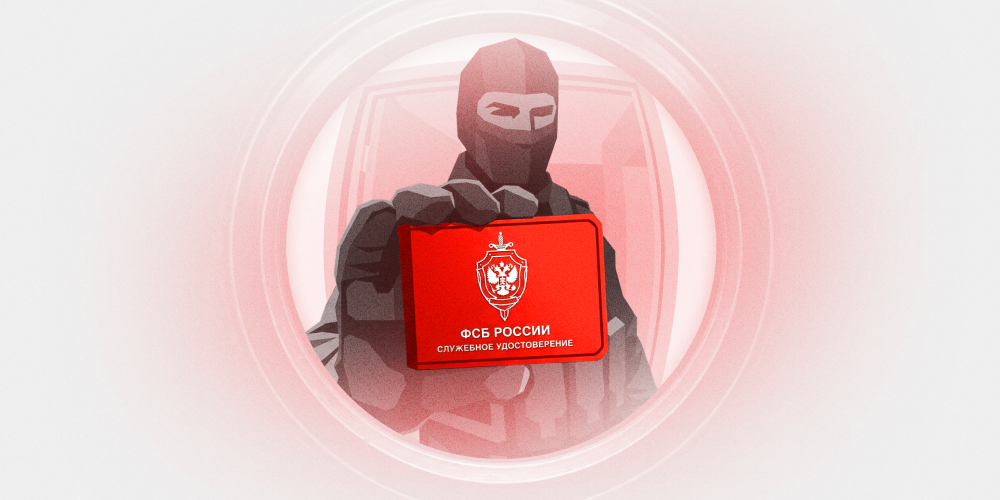
Law enforcement operatives have always worked to recruit potential informants in a variety of areas. After the full-scale invasion of Ukraine, such cases became even more numerous.
Who is at risk? Under what circumstances do security forces usually offer to cooperate? What should I do if they are trying to recruit me? What happens if you refuse? We answer these questions in the memo.
1
Which intelligence services recruit people and why?
As a rule, recruitment is carried out by operatives of law enforcement agencies - the police (including the "E" center), the FSB.
The main goal is to obtain information about specific people, movements, organizations, events, and sources of funds.
2
Who is at risk?
This depends on the goals of specific departments of the FSB and the Ministry of Internal Affairs - they can recruit not only oppositionists, but also employees of industrial organizations, officials, entrepreneurs, students and even homeless people.
If we are talking about recruitment in order to obtain information about the opposition, security forces will look for potential informants and provocateurs among activists, journalists, volunteers, human rights activists, and students. Recruitment is not done so often abroad - usually people with whom they have established contact in Russia are sent on “business trips”.
“The security forces have a whole methodology for drawing up psychological portraits. Often they involve psychologists who literally choose from a list of people who, in their opinion, are easier to approach with a proposal for cooperation. People are different, if you collect some information from a person, it is not very difficult to find out how malleable he is, whether you can put pressure on him, what he is afraid of.
After observing a person for even a few days, it is easy to see his weaknesses. For example, he drives carelessly or buys drugs every Friday, goes to clubs whose purpose he would like to hide. Before recruiting, security forces look for a person’s weak points,” says First Department lawyer Evgeniy Smirnov.
3
Under what circumstances does recruitment occur?
- After arrest - often for a non-political offense, for example, for buying drugs.
- Under threat of criminal prosecution for posts on social networks, comments, activism, assistance to Ukraine and other activities for which they are prosecuted in Russia.
- When crossing the border, if a person was engaged in activism/volunteering abroad.
- Security forces can contact a person if it is known that he works in independent media and is involved in activism and human rights activities. Usually this happens in a way that is unexpected for him - for example, in a bar, at the MFC, at the airport
- An active student may be called to the university administration and begin to say that participation in any activity may have a bad effect on their studies or career, and then offer cooperation. “Important Stories” told more about such methods.
- Security forces actively cooperate with prisoners. For example, to provoke a person to make certain statements/actions in order to initiate a new criminal case.
4
What happens when a person agrees to cooperate?
He is given a document to sign about voluntary confidential cooperation and non-disclosure. Afterwards, the operational officer explains the details - how communication will be carried out, under what conditions cooperation will take place, etc.
5
What risks might there be if you refuse to cooperate?
Legally - none.
Trying to persuade a person to cooperate, they may threaten him. Or, conversely, promise to solve problems, guarantee generous rewards, etc.
Often this is simply intimidation to deter a potential informant.
“Azamat (FSB officer - Note) said that they have enough materials for several criminal articles for me and that now I better start talking to them normally. <…> “Azamat” stated that I would be under their protection if I helped. He said: you need to return to Georgia. I replied that yes, I have an apartment there, a cat, things - my whole life for the last three and a half years. And then he said: you will come back. But if you leave, you may not come back. It got me. I still have my mother in Russia. I burst into tears. He saw this, took me out into the corridor, gave me water, began to calm me down, and then sat me down at the table and dictated the text of an obligation for voluntary confidential cooperation. I had to write it by hand and choose a pseudonym for myself,” anti-war emigrant Roman Evseev, whom they tried to recruit after crossing the Russian border from Georgia, told the First Department.
If a person agreed to cooperate and then changed his mind, the consequences will depend only on the operative who recruited him. It is impossible to predict how he will behave in such a situation, but most often this does not lead to serious problems.
6
They're trying to recruit me. What to do?
If the situation allows, try to firmly refuse.
“It’s easier to let a person go, not waste time on him, but find a new one. If a person starts to break down and says, “I wouldn’t want to, I need to think about it,” then difficulties may arise. Security forces are able to physically threaten a person because they see that he can still be persuaded to cooperate. Those who clearly refuse are most often left alone,” says Evgeny Smirnov.
If you can’t immediately say “no”, immediately contact human rights activists.
There are cases when people agreed to be informants in order to remain free, and then left the country. This was the case with Kirill Parubets, who, during his administrative arrest, was threatened with a case of “treason” if he did not transfer information about his friend to the security forces. Parubets decided that he had to agree and then figure out how to proceed. Soon they brought him a confidential cooperation and non-disclosure agreement. The parties agreed that when 15 days of arrest expire, Kirill will contact the security forces and receive new instructions. Three days later, Kirill and his wife were indeed released, and then left the country. Details of this story are in our text .
It is important to remember that each situation is unique and the possible consequences consist of many factors. If they are trying to persuade you to cooperate, contact human rights activists. They will help you assess risks and think through a further plan of action.
7
How to protect yourself?
It is impossible to predict such a situation. But you can minimize the risks.
- If security forces contact you, immediately contact human rights activists.
- Get a second passport.
- Do not discuss sensitive topics (including your interaction with security forces) in unsafe instant messengers (Telegram, WhatsApp, Viber) and Russian services. We talk about alternative communication channels in the memo .
- If you live in Russia, be careful when speaking publicly on social networks.
- Beware of provocations. More details in the memo .
- Keep in mind that contacts with people who are interesting to the security forces, communication in activist chats and attending opposition events can make you a potential informant in the eyes of the FSB. Be sure to have contact information for a lawyer/human rights defenders you trust.