
Translated material
Who needs honesty?
On the screens is the scandalous film “What a Drama!” with Zendaya and Robert Pattinson

Still from the film “What a Drama!”
Starting April 9, a sensational provocative romantic comedy with a long tail of scandals will be released. Director: Kristoffer Borgli
Charlie saw Emma in a chain coffee shop, avidly reading Harper Alison, creator of the social bestseller To Kill a Mockingbird. It was funny how they met. He tried to speak several times. But her eyes are in a book, in her ear there is an earphone with music, and after the injury she cannot hear anything else. The acquaintance almost failed.
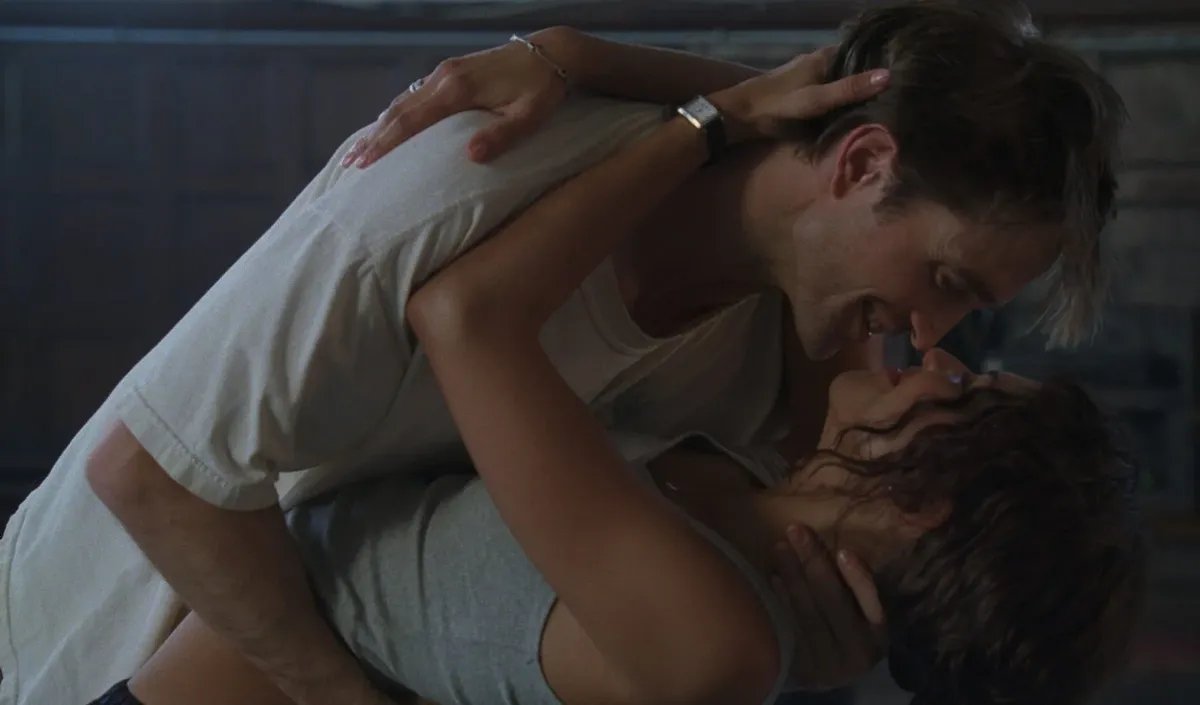
However, now it’s fun to remember this - they feel so good together. Fooling around, teasing each other, laughing. He loves her loud, stupid laugh. Have sex. Impress each other: first, second as first... and so on. It seems that for two thirty-year-olds this is their first love, aka their first love.
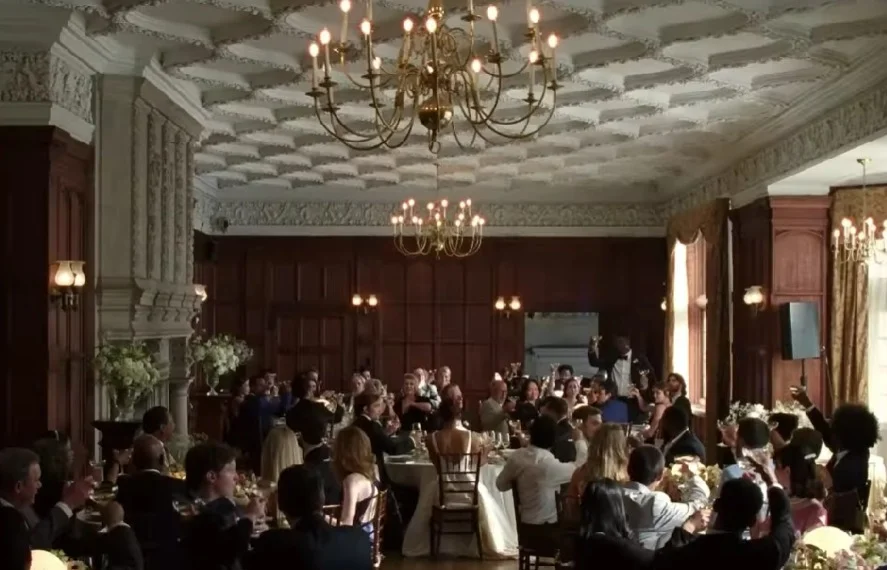
The wedding is coming soon. The location has been chosen and invitations have been sent out. Parents will arrive on Saturday. They prepare the speeches of the bride and groom. They discuss the nuances. Rehearsing a dance with a hired wedding DJ. There are only a few days left until the long-awaited ceremony. But one day, during pre-wedding gatherings with friends over a glass of amber, they play a game: tell each other about “the worst thing you’ve ever done.”
Everyone reluctantly remembers some “shameful” rubbish that causes forced laughter (“Did you bully a peer?”).
However, Emma’s story about how as a teenager, being rejected at her new school, she almost committed a mass execution... even in the forest she used her dad’s gun for practice (that’s when the membrane burst) - produces the effect of a shock wave.
The most traumatized is the bride's friend Rachel (Alana Haim) - her sister once suffered a similar tragedy at school. But Charlie...
He, of course, is trying to understand, to justify: depression, trauma... Emma was a child - she has changed... the fashionable game of guns... who doesn’t shoot in America...
But it seems that he himself is already deeply mentally damaged. Fear and disappointment are irrational. All wedding preparations turn into a forced artificial show. And the photographer’s team “I’m filming!” sounds like a shot (shoot in English means both “to shoot” and “to shoot”).
Cracks crawl across the delicate skin of relationships. Now there are three of them: he, she and... a gun.
And it seems that the couple in love is barely able to withstand this onslaught on the verge of psychopathy. When, upon waking up, you look at the person next to you, no longer understanding exactly: “Who is he?” How, where will your life go. What can happen in critical situations, which are a dime a dozen today?
In this story, superbly filmed and acted, the threads of a variety of problems are tangled into one ball. Including non-film ones.
For example, the question of the space of anonymity in personal connections. Or the search for identity in relationships, in the reflection of the eyes of another. What doesn't destroy a connection makes it stronger? Question... Can honesty be destructive? And who then needs this honesty with themselves and others?
The story is generational, millennials really prefer to discuss everything, “publicizing” a problem turns into a tool – if not for a solution, but for self-identification. But “new sincerity” sometimes turns into “sincerity without request,” which violates the partner’s boundaries.
Of course, art critic Charlie would prefer not to know about Emma this truth that “shoots” their love. The main thing is lost (or almost lost) - the territory of safety together. Mutual admiration, admiration even for shortcomings. The collapse of the illusion of “our own person” occurs (or not). When a slightly fairy-tale (all weddings with their rituals are partly a fairy tale, the life of a princess and a prince made up for a day) romantic flair turns against your will into something viscous, almost nauseating.
We choose / we are chosen: love or the instinct of self-preservation? And will love have the strength to transform from a romantic one into a deeply conscious adult complex relationship?
But all this is just one side of the coin.
It seems that Borgli, having touched on seemingly light themes of psychology, ethics and the nature of human intimacy in his rom-com, walked in his story along the very edge of the abyss. He combined a light rom-com with a dark, disturbing, super painful topic in modern American culture - school shooting, or Columbine - mass shootings in schools.
The film has not yet been released, and the scandal around it is already growing. Before the star-studded premiere, major publications published articles that asked the question: “Does Drama dehumanize the perpetrators of such violence by “normalizing” the shooting, even though Zendaya’s character refused to take part in the attack? I will say right away that the authors of the film do not hush up the problem; on the contrary, just like their heroes, they “publicize” their own questions, delicately touching on the most complex, “unspoken” topics.
But it’s no coincidence that Studio A24 refused to pre-release the film at festivals, including Sundance, for fear of reviews with spoilers. It is known that Tom Mauser, the father of the child killed during the Columbine school shooting, has already expressed his dissatisfaction with the picture, which he has not yet seen. He considers the very fact of using such a theme in a romantic comedy “terrible.”
Director of Norwegian origin Borgli is not afraid of provocations; he has long been interested in psychology and philosophy, the ideas of which he integrates into the plots of his films.
In the surreal comedy “The Hero of Our Dreams,” in which Nicolas Cage’s professor is seen in people’s dreams on different parts of the world, the problems of the collective unconscious are raised based on the theory of Carl Jung, and the “Kafkaesque trial” staged by the public over Cage’s hero refers to “cancel culture.”
And in his new English-language dramedy, taboo topics are again touched upon, the story again takes you out of your comfort zone, without fear of provocation, encouraging heated discussions.
However, our inflamed times prefer ceasing and various forms of ostracism to discussions. It looks like a whole campaign has been launched against Drama. “Suddenly” an essay by Kristoffer Borgli for the Norwegian magazine Dagens Naeringsliv, which he wrote in 2012, has surfaced, justifying his so-called “May-December” romance (the significant difference in the ages of the lovers). Borgli, 40, was dating a 16-year-old girl, which is the age of consent in Norway. A new campaign of condemnation is rising that threatens to deprive the film of part of its audience. I think this is unlikely to affect Russia. We have our own taboo topics and problems.