
Translated material
Espanola from a snuff box
How the Espanyola battalion became involved in the scandalous bill banning the mention of the names of corruption suspects

Photo: Oleg Kharseev / Kommersant
My native Tatarstan surprised all of Russia again. In early March, special mail delivered a package of documents from Kazan to Moscow with a legislative initiative to limit “...the public dissemination of incriminating information before the court decision enters into legal force.”
The project was posted on the State Duma website under number No. 8-899.
There are many prohibitions in the project.
For example, the law proposes to establish a prohibition for law enforcement agencies to conduct checks on materials obtained as a result of unauthorized sampling of soil, water, waste, raw materials, and products. Or based on materials obtained as a result of hidden photo, video or audio recording at objects with limited access.
That is, if rusty water flows from your tap, you will not have the right to put this water in a bottle and send it to the environmental prosecutor’s office with a demand to check why it is not water that is flowing from the tap, but something unclear.
But the main prohibition of the project is a complete taboo on making public the names and surnames of those involved in criminal cases before the court verdict comes into force.
That is, if this law were already in effect, the names of generals, governors, and major officials who became defendants in criminal cases involving large-scale thefts in the military department, criminal extravagances in federal and regional ministries, and the theft of money from the budgets of the constituent entities of the federation would have to be suppressed.
It would be impossible to even name the names of the thugs who committed the terrorist attack at Crocus.
Russians still would not know the names and surnames of the members of the Taganskie gang, since the verdict against these bandits, passed in the Moscow City Court on the basis of a jury verdict back in May last year, has been appealed, and the appeals of the convicted are awaiting consideration in the Supreme Court of Russia.
The subject of the “right of legislative initiative” is the State Council of the Republic of Tatarstan. This means that, in accordance with Articles 112–114 of the regulations of the State Council of Tatarstan in Kazan, the initiative went through all the required discussions and was approved first in the relevant committee, then in the presidium and, finally, at the plenary session of the republic’s parliament. And, most importantly, it was supported by the majority of current regional deputies.
Moreover, before entering the State Duma, the Tatarstan legislative initiative had to, according to the legally established procedure, also receive positive opinions from the Russian government and the Supreme Court of Russia. This is an indispensable requirement of Articles 114 and 115 of the State Council Regulations.
And, perhaps, the most important thing for Tatarstan itself: according to the regulations of the State Council, the draft federal law and the materials attached to it, before going to Moscow, are submitted - quote - “to the State Council in both state languages of the Republic of Tatarstan on paper and digital media.” That is, in Russian and Tatar languages.
But it turned out that this project had never been seen in Tatarstan. Neither in Russian nor in Tatar.
It was not discussed either in the relevant committee of the State Council or at the plenary meeting. Having violated its own regulations, the project was immediately sent from the office of the State Council of Tatarstan to the office of the State Duma. With a covering letter from Chairman of the State Council Farid Mukhametshin addressed to Chairman of the State Duma Vyacheslav Volodin.
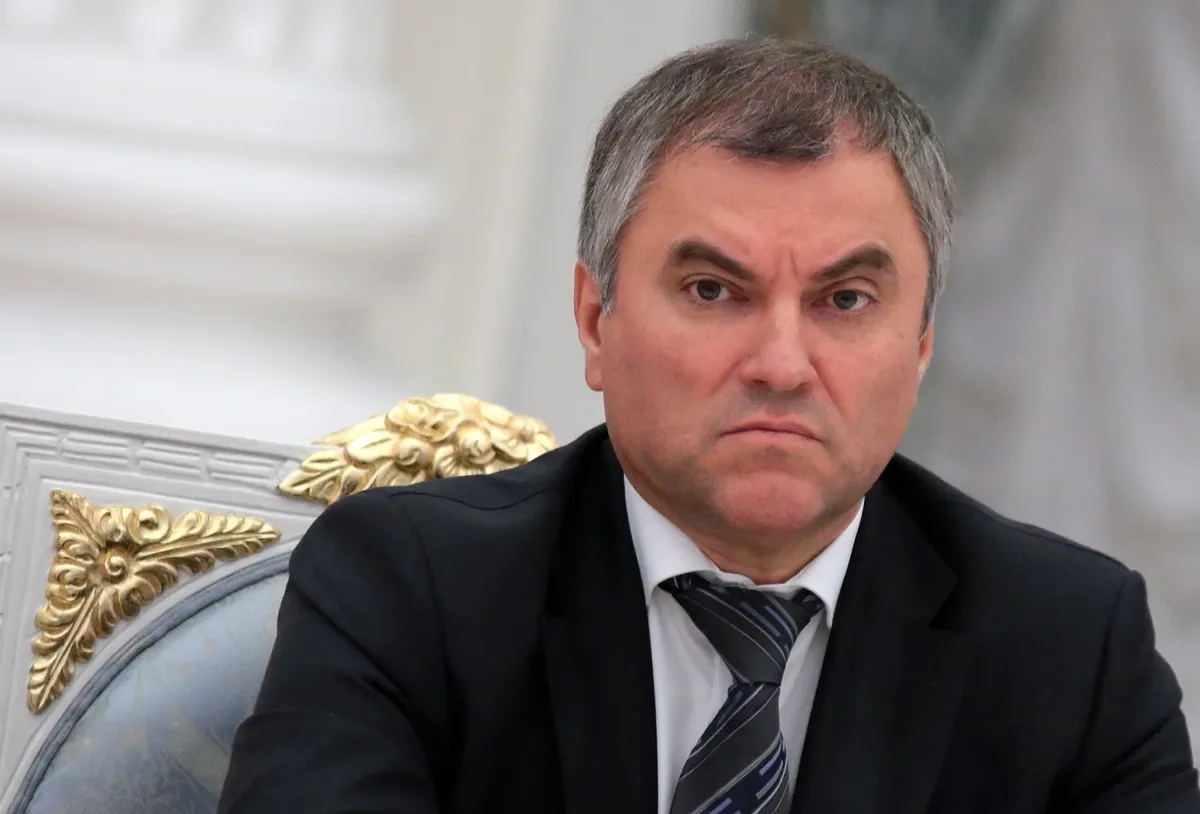
When information about Tatarstan’s legislative initiative became public, a rare unanimity occurred. The right, the left, and the normal have already spoken out sharply against the initiative, which encroaches on the foundations of the Russian Constitution, which guarantees freedom of speech.
Even Ilshat Aminov, deputy of the State Council of Tatarstan of five convocations, chairman of the Union of Journalists of Tatarstan, media manager, who for almost a quarter of a century has headed the main information resource of the republic - the television company TNV (Tatarstan - New Century) and hosts the final program "7 days" - the main mouthpiece of Tatarstan propaganda, spoke out.
Ilshat is one of the key figures shaping the information agenda of the republic. And if Aminov was literally enraged by the document, which in Moscow is called the “legislative initiative of the State Council of Tatarstan,” it means that this project really jumped out like a devil from a snuff box. It’s unclear how and why. This is what Ilshat Aminov specifically said in an interview with Kazan journalists who asked to comment on the draft law. Verbatim:
“My opinion is negative, sharply negative, I would say, because we already have a fairly extensive legislative framework limiting the activities of the media. It is, in my opinion, exhaustive. It already covers too many areas of our journalistic activity.
The adoption of such laws is harmful not only for journalism. It is also harmful for legal proceedings, because the openness of the court, the adversarial nature of the court, is very important. Journalists help make the court more open, more competitive, and more objective.
Unfortunately, such initiatives arise periodically; this is not the first and will not be the last. There are people who believe that all our troubles come from the media. Although they absolutely do not understand that the media today, on the contrary, these “islands” are even more or less legislatively and legally stable, because everything main happens on social networks.”
Chairman of the Union of Journalists and deputy of the State Council of Tatarstan Ilshat Aminov says everything correctly. I am ready to subscribe to almost every word. But the genie has already been released from the jug. The noise was so loud that mother, don’t worry. Even State Duma Chairman Vyacheslav Volodin was forced to speak out, somewhat irritably putting a stop to the resonant initiative.
This is what Speaker Volodin said :
“The whole country is discussing. But they are discussing from the point of view that the Duma is considering the legislative initiative of Tatarstan. We are not considering it. Maybe we won’t consider it. But it is presented in such a way that it is sent to the State Duma. Although this document was sent to the Council of Legislators for examination, to the specialized commission, which is represented by our same colleagues from the regions, from the State Duma, the Federation Council”...
But here's what's surprising. These words of the Chairman of the State Duma were heard during a plenary session of the Russian Parliament on March 24. And on the same day, March 24, the commission of the Council of Legislators, ignoring the words of Vyacheslav Volodin, quickly considered this same project and made a decision: “accept for consideration; send the draft legislative initiative to the chairman of the State Duma Committee on State Building and Legislation.”
At the same time, the commission of the Council of Legislators to consider this project was created only on March 18. And she was instructed to consider the project thoroughly, without haste. The deadline for consideration was also specified - until April 24. But it seems that someone decided to force the issue. And now the Duma committee is obliged to take up the project, which turned out to be outside the regulations on Okhotny Ryad.
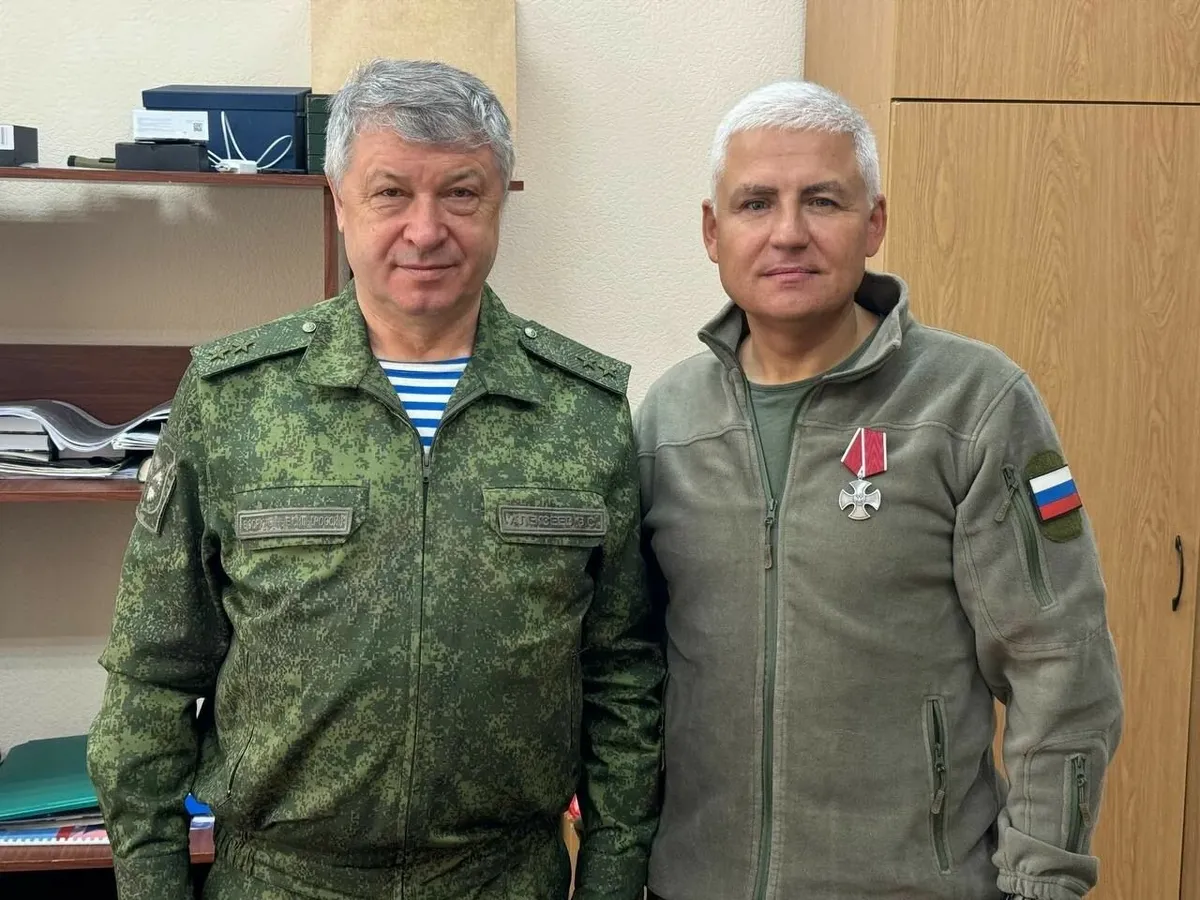
The fact is that the specific author of this specific legislative initiative is Marat Galiev, a twice-respected deputy.
Firstly, Galiev is a member of the United Russia faction of the State Council of Tatarstan. That is, he represents in the republican parliament not only his voters, but also the party in power, United Russia, of which he is a member. That is, he knows perfectly well what party discipline is.
Secondly, Galiev is a front-line soldier. In the fall of 2023, the deputy took a leave of absence from the State Council and went to Donbass. Where he signed a three-month contract and became a volunteer of the Espanyola battalion.
In three months, Galiev managed to complete the young fighter course there, and take the position of deputy battalion commander for technical matters, and fight well, showing courage and dedication. For which he was nominated for state awards. On March 26, 2024, the First Deputy Chief of the Main Directorate of the General Staff of the Russian Armed Forces, Lieutenant General Vladimir Alekseev personally presented Marat Galiev with the Order of Courage, and on July 22, 2024 - also the medal of the Order of Merit for the Fatherland, II degree. This time, the deputy commander of the Hispaniola volunteer battalion was awarded “for his great contribution to the defense of the Fatherland, success in maintaining high combat readiness and ensuring defense capability, as well as strengthening Russian statehood.”
How can you ignore the initiative of such a respected person? Moreover, he was awarded an order, including for “strengthening Russian statehood”? Perhaps the restriction on “...the public dissemination of incriminating information before the court decision enters into legal force” was initiated solely for the sake of “strengthening Russian statehood”?
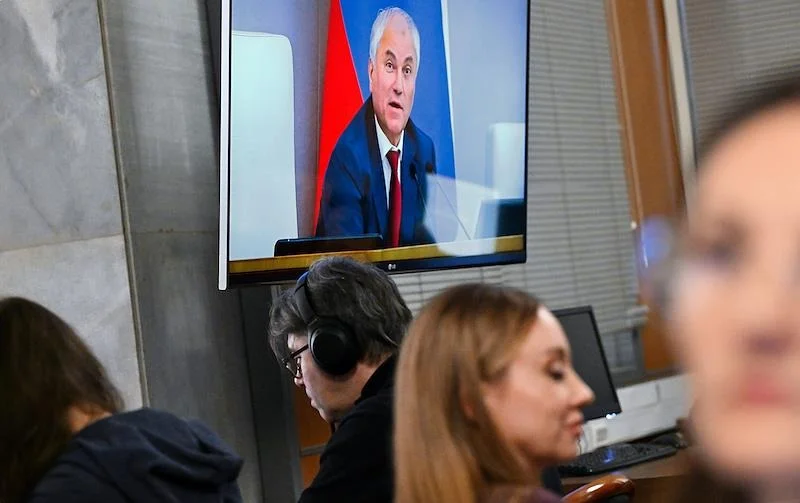
Meanwhile, during the plenary session of the State Duma on March 24, Vyacheslav Volodin called the bill crude. And he advised us to discuss it in the region with civil society. It was in vain that the State Duma speaker remembered the Tatarstan “civil society.” I have strong suspicions that in Tatarstan there may be a lot of supporters of the ban on making public the names of those involved in criminal cases. Because in recent years, a lot of criminal cases have been initiated in the republic, in which deputies of the State Council, heads of district administrations and other major officials of the republican level have become defendants.
Here are just a few of those involved.
Ilshat Gafurov, former head of the Yelabuga administration and former rector of Kazan University. Arrested in December 2021, when he was a current deputy of the State Council of Tatarstan. Sentenced to 22 years in a maximum security colony for ordering the liquidation of a political opponent in 1999.
Aglyam Sadretdinov, former head of the district administration, former Minister of Ecology of Tatarstan and former State Council deputy. In 2022, he was sentenced to 8 years in prison for inciting the murder of a political activist, committed in 2003.
Rustam Khasanov. On September 17, 2023, the police caught him red-handed while planting a drug cache. At the time of his arrest, the mephedrone dealer was a current deputy of the State Council of Tatarstan.
Engel Fattakhov, former Minister of Education of Tatarstan, former head of the district administration and former deputy of the State Council of Tatarstan. Arrested in May 2024, accused of receiving a bribe on an especially large scale.
The list of names of heads of administrations of Tatarstan districts and major officials can be read out for a long time. All of them were once very famous and influential people in the region. And they would hate to have their names appear in publications and reports about crime investigations or trials. And they could well mobilize “civil society” in support of the law. Thousands of university students and teachers came out in support of the same former rector of Kazan University, Ilshat Gafurov, immediately after his arrest.
But very serious changes have taken place in the republic precisely in terms of equalizing everyone before the law. There are practically no untouchable persons left in Tatarstan. And this happened primarily because the heads of law enforcement agencies in the republic changed. All local generals were replaced by generals from other regions of Russia.
Changes began in 2020. It was then that an outside general with no ties to local clans was appointed head of the FSB department for Tatarstan. The new head of the Tatarstan FSB department is Igor Khvostikov, who before his appointment headed the FSB department in the Penza region and Chechnya.
Then, in 2020, Valery Lipsky was appointed head of the Tatarstan department of the Investigative Committee of Russia. Before moving to Kazan, Lipsky served in the Moscow region and Bashkortostan.
In 2023, Albert Suyargulov became the prosecutor of Tatarstan, who arrived in Kazan from St. Petersburg, where he worked as a deputy city prosecutor.
And finally, in February 2024, Damir Satretdinov was appointed head of the Ministry of Internal Affairs of Tatarstan. Before moving to Kazan, he worked his way up from a detective officer to the head of the Russian Ministry of Internal Affairs department for the Khanty-Mansiysk Autonomous Okrug. And he served in the Astrakhan region and Khakassia.
More recently, the heads of the local Ministry of Internal Affairs, the FSB, the prosecutor’s office, and the Investigative Committee were either invited or summoned to meetings with the government of the republic or the head of Tatarstan. And the generals, putting everything aside, came. And they sat through their pants and stripes at hours-long meetings. But now the situation has changed.
Security forces no longer go to meetings in the Kazan Kremlin or Freedom Square, where the government of Tatarstan is located. On the contrary, sometimes they invite officials to their place.
It is clear that the attitude of the security forces towards bureaucracy and crime with connections among officials has also changed. I repeat, today in Tatarstan dozens of deputies and officials have been arrested for corruption and other crimes. One gets the impression that Tatarstan legislators have formed an inferiority complex, and they are bending over backwards to refute this (primarily to the federal center). Hence the wave of legislative initiatives sent from Kazan to Moscow.
It was the State Council of Tatarstan that proposed an amendment to the Law “On Education”, providing for the introduction of mandatory socio-psychological testing in schools in order to prevent the involvement of schoolchildren in extremist and terrorist activities.
And the State Council of Tatarstan put forward an initiative to allow Russian constituent entities to create regional academies of sciences. Why not? Can you imagine? For example, the Academy of Sciences of the Vologda Region would appear. Or the Academy of Agricultural Sciences of the Krasnodar Territory. Or the Academy of Fisheries of the Murmansk Region. Imagine how many new academicians will appear in the country!
The State Council of Tatarstan also has a legislative initiative to seize the property of relocants brought to administrative responsibility. Deputies of the State Council of Tatarstan unanimously voted for a legislative initiative proposing to seize the property of Russian citizens who “in other states conduct activities directed against state and public security.”
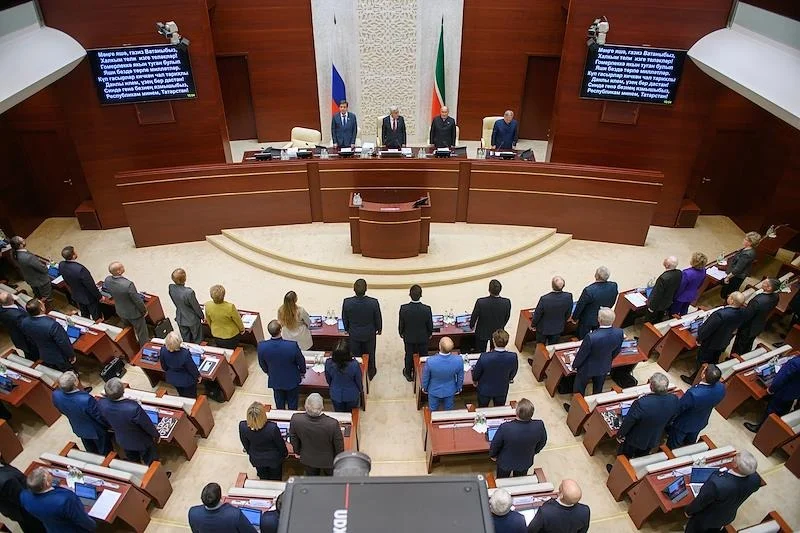
In 2024, the State Council of Tatarstan sent 12 legislative initiatives to Moscow. In 2025 - three. This year - so far only one. But what! On the restriction of “...public dissemination of incriminating information before the court decision enters into legal force.”
Chairman of the State Council of Tatarstan Farid Mukhametshin, who led the Tatarstan parliament for almost 30 years, resigned on March 17, 2026. Ahead of schedule. This happened on the very day when information was made public that it was Mukhametshin who signed the cover letter addressed to Vyacheslav Volodin to the package of documents with the initiative of United Russia deputy, front-line soldier and order bearer Marat Galiev.
Such coincidences do not happen by chance. Most likely, Farid Mukhametshin knows much more than us. Including this bill.
On March 31, information appeared that the author of the bill, Marat Galeev, had recalled it from the State Duma.
PPS Read the report of our special correspondent in the coming days about the political storm that has broken out in Tatarstan these days.