
Translated material
Ordinary judge
What makes a judge hand down cannibalistic sentences? “Novaya” examined a number of decisions that were made by the judge (now retired) of the Istrinsky City Court Grigoriev

Photo: Irina Bujor / Kommersant
The Moscow Regional Court overturned the decision to detain Aliya Galitskaya, accused of extortion from her ex-husband. But I canceled too late. Behind bars, Aliya committed suicide.
After the woman’s death, Novaya spoke with judge Fyodor Grigoriev, who sent Galitskaya to a pre-trial detention center. A very frank interview published on our website caused a great resonance. Several people contacted us who also had to deal with the same judge. The motives for the judge's frankness remain unclear to us. He seems to be making excuses for the decision he made regarding Galitskaya - but to whom? Before colleagues, management, one’s own conscience or “before the whole world”? Was this the only decision made (if you believe Grigoriev) under pressure from the Moscow Regional Court? We analyzed two more cases that were pending before this judge, with which representatives of the defendants came to us. But first, let's briefly repeat the interview - with some abbreviations.
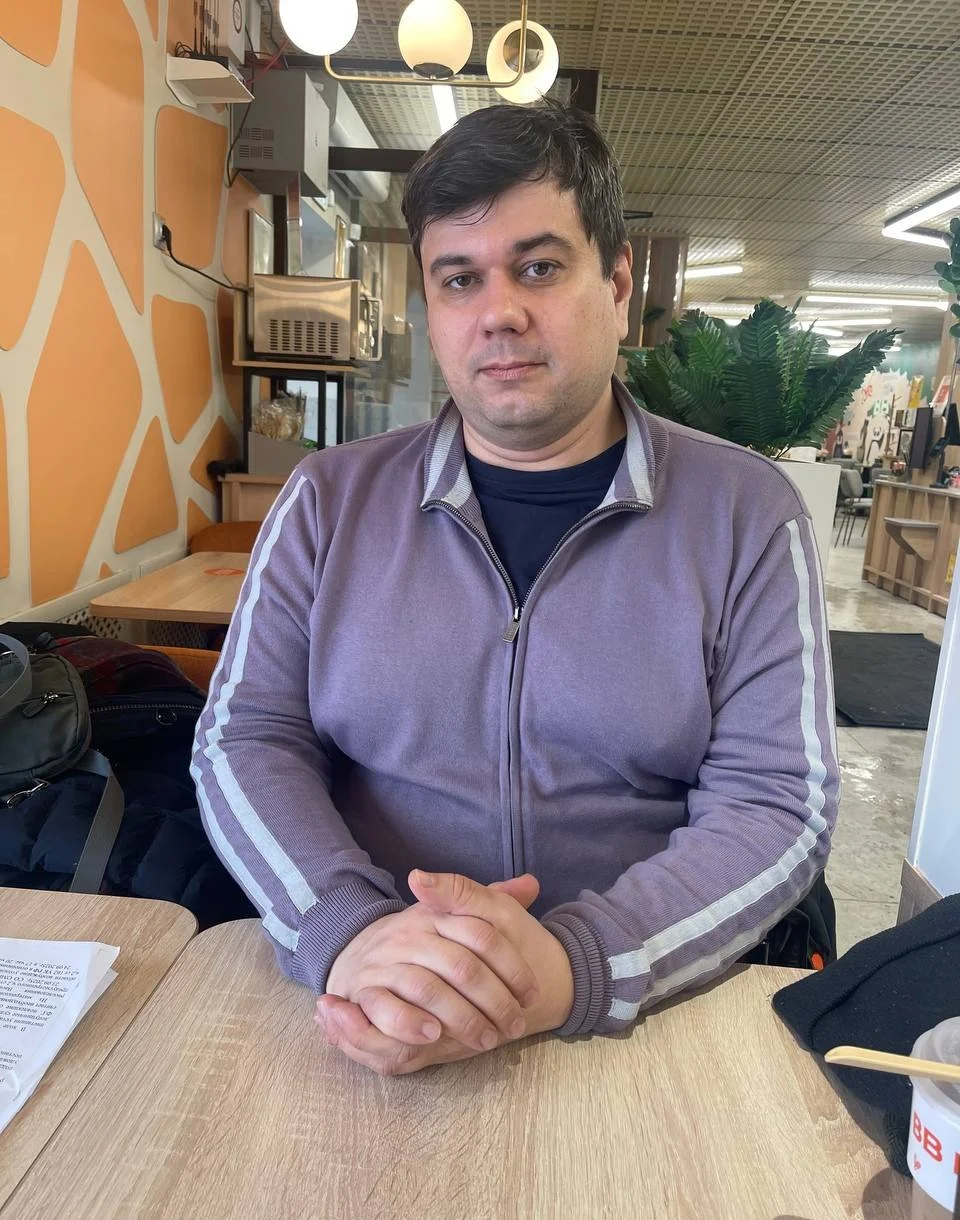
"Judges speak in euphemisms"
“— I graduated from the Faculty of Law of Moscow State University in 2004 and went to work at the Moscow Regional Court, first as a consultant and then as an assistant judge. In 2009, I defended my Ph.D. thesis, in 2010 I passed the qualification exam and took the position of judge in the Istra City Court. Over these 15 years, I was nominated for “judge of the year”, I handed down a dozen acquittals, including for unproven murder, almost all of them were not overturned.
In 2019, the Moscow Regional Court was headed by Alexey Sergeevich Kharlamov, who transferred from the Supreme Court, where he himself had never tried cases in the first instance. Under him, acquittals were no longer handed down, that was the policy. The Istra court has been headed by Irina Aleksandrovna Putynets since December 2024.
Before talking about the Galitskaya case, I must say that on September 29 last year I reviewed the material regarding the suppression against a certain Vasilyeva. The crime event took place two years earlier. The prosecution demanded that she be taken into custody, but I considered a bail of 3 million rubles with additional prohibitions sufficient. On October 15, the Moscow Regional Court canceled my decision and appointed a guard, and issued a private ruling against me, which stated that I had committed a disciplinary offense and violated the Code of Judicial Ethics. For this, the Qualification Board of Judges reprimanded me on January 23, 2026...
— Before this, your decisions on preventive measures were not canceled?
- Of course, it happened. This is a normal process, but it is not a violation of judicial ethics unless there is some extraneous interest behind it. The investigator applying for a preventive measure may come for advice in case of doubt. This happened more than once when I warned that this is not suitable for custody; ask, for example, for house arrest.
— Doesn’t such consultation violate the law?
- Of course not, this is also a normal process (oh? - L.N. ).
Now, as for Galitskaya. I learned that such material had been submitted to the court on February 6, sometime after lunch. I was the judge on duty that day, but the material did not reach me right away; judge Irina Kukushkina met it first.
— Is this the deputy chairman?
- No, ordinary judge, young. Putynets established such a procedure that all materials on preventive measures first go to Kukushkina, who comes with them to the judge on duty. Handing me the folder with Galitskaya’s case, she said: “Be careful!” The judges speak in euphemisms, but then she directly said that Galitskaya’s detention was agreed upon with the chairman of the regional court. Putynets, who once worked as his assistant, called him. But I can’t call him to clarify, and Kukushkina doesn’t have his phone number either.

- So it doesn’t happen in every case?
- Of course not, if the case is not significant, why will the management delve into it. I looked through the folder in front of Kukushkina - there was a protocol of interrogation of the victim and a copy of the passport of the Republic of Vanuatu in the name of Aliya Galitskaya, and according to her, she also had a Romanian passport. This, of course, was an argument in favor of electing guards, but I was confused that the protocol of Galitsky’s interrogation was dated 2024. I asked Kukushkina if we could get by with a deposit of twenty lemons, to which she told me meaningfully: “Be careful! You already have a disciplinary officer for a preventive measure.” I took this as a threat.
I do not absolve myself of guilt for not being resilient. But who could have imagined that she would commit suicide? On the other hand, if I had freed her, she would have fled to her Vanuatu or wherever. I would have enjoyed it even more then.
I learned that Galitskaya committed suicide from telegram channels, and, of course, it was a shock for me. And on February 9, Putynets and I were summoned to the Supreme Court. The weather was also so good, I told her: “I wish I could just go for a walk now, and not go to the carpet...” She says: “You know what? Don’t tell me anything about Kharlamov, say that it was your own decision. And we’ll sort everything out somehow.” Two people who are involved in personnel selection spoke with us at the Supreme Court in the personnel department. I said as much as Putynets asked me to, and they let us go.
-Can you somehow prove this?
-Only if she also tells the truth.
We thought it had passed, but on February 11, Wednesday, Irina Aleksandrovna announced that she was resigning as chairman and remained an ordinary judge. And on Friday, February 13, I received an SMS from her: “I spoke with management, it is in your interests to resign until the issue of applying sanctions is resolved.”
They announced another penalty to me and approved my resignation, so for now I remain with the status of a retired judge. But Galitskaya’s lawyers can appeal to the Qualification Board with a demand to deprive me of the status of a judge, then instead of the lifelong maintenance that I have honestly earned, I will get a wolf’s ticket.
— TASS and Interfax reports on February 19 said that the suicide story “outraged” the Chairman of the Supreme Court Igor Krasnov. This means that he personally intervened. But it turns out Krasnov doesn’t know all the details of this story?
- Of course, I didn’t tell the truth when we were summoned to the Supreme Court. So everything was presented to Krasnov. A
as a result, I was leaked: I alone am to blame for Galitskaya’s death, and Kharlamov, Putynets and Kukushkina have nothing to do with it. I want everyone to know the truth.
I have 22 years of specialized experience, including 15 years as a judge. I am 43 years old, I liked my job, I had no intention of resigning. Well, I'll go teach. But I don’t want students to point fingers at me: this is the one”...

1. “The Morkovkina Case”
Veronika Morkovkina separated from her husband Artem Mityurin and left Istra, where she lived with him, to her home in the village of Vsevolozhsky, Leningrad region. In August 2023, in the center of St. Petersburg, their three-year-old son was kidnapped by his father and the men accompanying him.
Morkovkina turned to the Defenders of Childhood Foundation, headed by Alexandra Marova, who undertook to handle her civil case in the courts. In January 2024, the Vsevolozhsk District Court made a decision according to which the child was supposed to live with his mother, but the father at that time was hiding with him at a location other than his place of registration. In April 2024, law enforcement agencies established Mityurin’s place of residence and returned the child to Morkovkina.
On May 1, 2025, Mityurin’s car burned down in Istra, and at his request, a criminal case was opened for extortion of 5 million rubles and deliberate destruction of property. In May, Andrei Sidnev, an acquaintance of Morkovkina and Marova, was taken into custody, and on June 10, Morkovkina herself “went” to the pre-trial detention center, and the child went back to her father.
As evidence of the woman’s guilt, the case contains transcripts of Morkovkina’s conversations with her ex-husband and with Sidnev, but there is nothing there that could be clearly interpreted as extortion.

In the absence of evidence, the custody of Morkovkina was extended, among other things, by Judge Grigoriev. Only after Galitskaya’s suicide did the prosecutor’s office decide to return the criminal case to the investigative authorities, and the preventive measure was changed to house arrest.
Marova continues to work on this case as a representative of Morkovkina and, after reading Judge Grigoriev’s interview, contacted Novaya. The Morkovkina case, in fact, is similar to the Galitskaya case, although here we are not talking about the division of property, but about the child’s place of residence.
2. Alfa-Bank against Shumilin
Novaya learned about the case of Konstantin Shumilin from his father Alexander Shumilin, our colleague. The same judge Grigoriev examined him and pronounced a guilty verdict.
According to Shumilin Sr., the judge was allegedly outside the scope of the process and himself complained to the lawyers about pressure from the Moscow Regional Court and the prosecutor’s office.
Konstantin Shumilin has headed the Russian part of the Ambermanor group of companies since 2011. This is a specific structure consisting of many foreign and Russian companies that own non-core assets of Alfa Group. Before the Shumilin case arose, Alpha preferred not to advertise its connection with Ambermanor and not to include this group of companies in its financial reports.
In the spring of 2021, Shumilin, according to him, allegedly refused to comply with another instruction from the management of Alfa Group to cash out a large sum of money. He was going to resign of his own free will, but he possessed information that was too sensitive for Alpha, which, in his opinion, was the real reason for the initiation of a criminal case and arrest against him. In statements from the pre-trial detention center, he now tells a lot of different things, but the price of information from a prisoner in a fraud case is small.
The Russian structures of Ambermanor included Istrinskie Zemlya LLC, which owned three land plots with a total area of six hectares. These plots brought losses due to the need to pay taxes for them and partially cultivate them, but were not sold at the price agreed upon by Alpha. Shumilin ordered an appraisal of the land and in December 2020 sold the plots at auction to a certain realtor at the price indicated by the appraiser: 15 thousand rubles. per hundred square meters for a total amount of 90 million rubles.
On September 25, 2021, investigator of the investigative department of the Department of Internal Affairs in Istra, Yu.V. Dementyev. issued a resolution refusing to initiate a criminal case against representatives of Alfa Group, indicating that there was a commercial dispute and it was necessary to apply to the judicial authorities for its resolution. In October, following a complaint from the defense, the decision to initiate the case was canceled by the Istra Court, but in December the case was opened again.
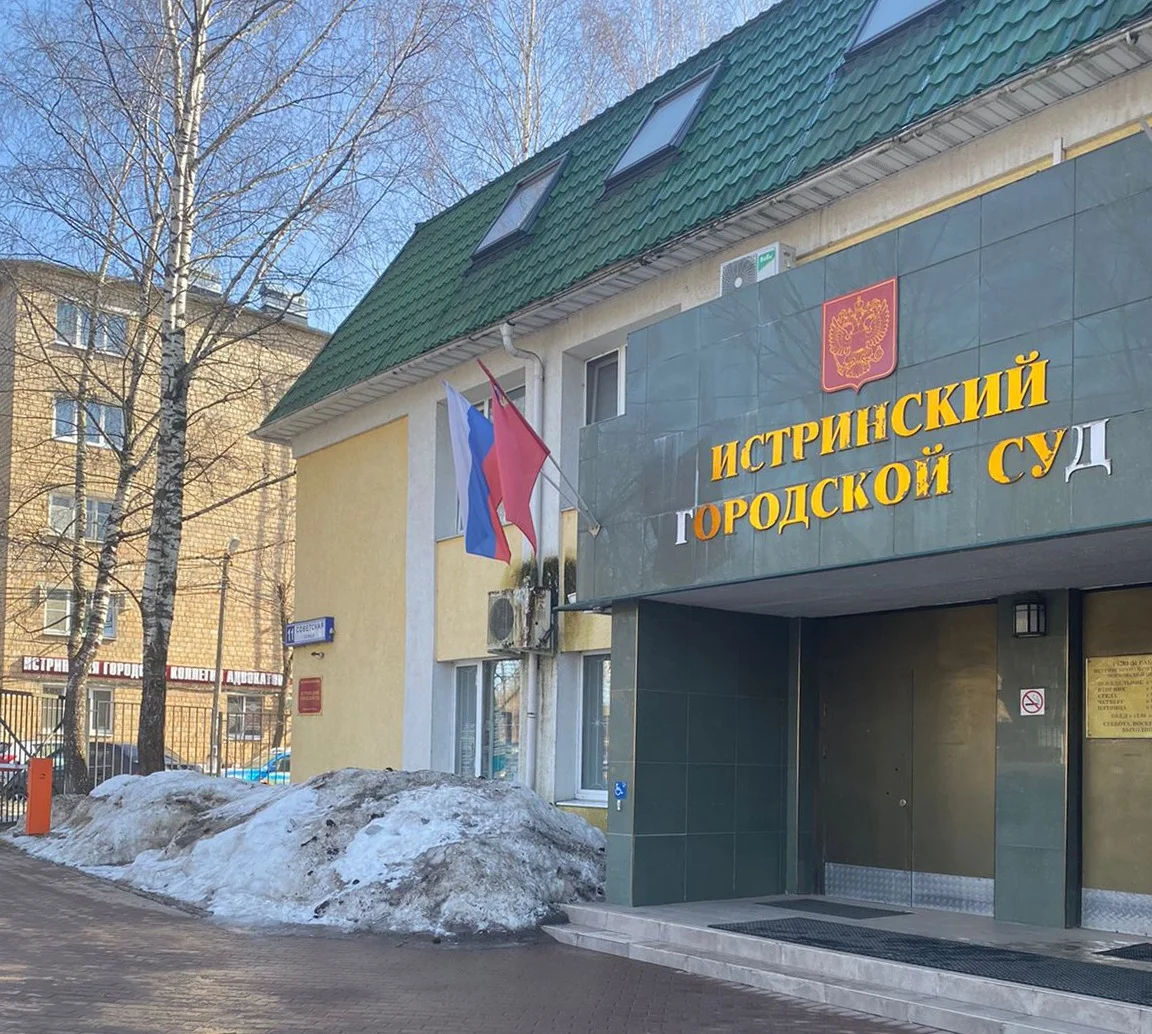
On January 21, 2022, a hearing was held in the Istra City Court to select a preventive measure for Shumilin on charges of fraud. The investigator filed a motion for house arrest, but the next prosecutor demanded detention, despite the fact that Shumilin has a young child and a sick wife to support him. After consultations with management, the investigator also requested guards. Since then, Shumilin has not left various pre-trial detention centers for four years and two months.
During the first interrogations of the accused and witnesses, the investigation led to the fact that Shumilin, in collusion with a realtor, sold the disputed plots to himself, that is, he stole them through fraud. However, the conspiracy could not be proven, and then an expert examination appeared in the case, according to which the total price of the plots at the time of sale was not 90, but 336 million rubles. Any assessment is controversial and depends on the methodology; the examination was carried out by a company controlled by Alfa Group, but it is important here that the subject of “theft” at the second stage of the investigation was not the plots, but the difference in their price.
In this case, it is no longer possible to talk about fraud as the gratuitous seizure of property by deception. The realtor paid Istrinskie Zemlya LLC in full. In such circumstances, there is either a civil dispute (as investigator Dementyev indicated), or, in extreme cases, the contents of Article 165 of the Criminal Code of the Russian Federation: “Causing property damage by deception or abuse of trust” (maximum punishment - up to two years in prison).
In September 2022, the case was sent to court, but judge Ilyas Alimov returned it to the prosecutor's office to eliminate shortcomings. Judge Grigoriev received Shumilin’s case in October 2022, found no flaws in it and issued a guilty verdict on May 18, 2023: 6 years in prison.
Konstantin Shumilin is not the hero of Novaya Gazeta. In fact, he admits that he participated in very strange combinations that the leadership of the Alfa Group did not dare to bring to light, limiting themselves to the story with the Istra Lands.
The price of this transaction with the plots is probably not comparable with the amounts that were cashed and transferred abroad through the Ambermanor group of companies. Shumilin could have confirmed this - if he had not been in a pre-trial detention center, where a number of other criminal cases were filed against him.
Mechanism of dehumanization
Aliya Galitskaya's lawyer Dmitry Yemelyanov broke up with her in the Istra temporary detention center on February 8 at about 5 p.m. According to him, she was depressed, like anyone who is deprived of freedom for the first time, but they discussed further procedural actions, Galitskaya asked to convey her orders regarding her business to her friends.
There was nothing to indicate that she intended to commit suicide, however, the suicide note supports this version. What made Galitskaya make such a decision? Probably a lack of faith in judicial justice and the understanding that from the moment of her arrest her fate is predetermined for years to come.
In my book “Concepts,” recently published by Novaya Gazeta, there is a chapter about “character marks made with invisible ink.” Such cases include, firstly, cases with a political component, and here the judges themselves understand what decisions their superiors expect from them. Secondly, these are cases in which there are implicit signs of a commercial “order”, and in relation to them, as in the Galitskaya case (if you believe Judge Grigoriev), “telephone law” applies.
We do not have access to other cases passed through Judge Grigoriev, but in the cases of Morkovkina and Shumilin, the decisions he made in the context of their plots speak for themselves. What can be said about Judge Grigoriev based on the available information? Perhaps he is the most ordinary and even very competent career judge, to whom, as far as we know, no cases with a political component have been brought before him. But in other cases he acted within the framework of the traditional accusatory bias and made exactly the decisions that were expected of him.
Having learned about Morkovkina’s case after the interview, I called Grigoriev back, but he didn’t even remember that he had extended the detention of a woman with a child with such a memorable surname and with such evidence of her guilt. That is, for the judge it is a routine, he does not see a person in the one who sits in front of him in the dock.
The most important and interesting question is about the mechanism of such dehumanization of judges (as well as investigators and prosecutors), and we have the right to formulate some conclusions about it.
After recording the interview with Grigoriev, I turned off the recorder and asked permission to ask him a few more general questions. He agreed, and I asked him about the Berkovich and Petriychuk case, and he asked again: “What is this case? I haven't heard of him...
It turns out that you can work as a judge and not be very interested in what is happening in the next room. So calmer.
Grigoriev’s interview is not addressed to the readers of Novaya, or even to the Chairman of the Supreme Court, Krasnov, who took part in his fate. Grigoriev explains what happened to people like him in his circle. In the same way, other judges justify their most cannibalistic sentences - their comrades will understand them, but they simply don’t care about others, we all belong to the “everyone else” category, the uninitiated.
The circle to which Grigoriev is answering does not even include the chairman of the Moscow Regional Court, not to mention the Supreme Court. These are successive chairmen of district courts of Moscow and the Moscow region, judges, operatives, investigators, prosecutors. In this circle, they visit each other and drink, speak frankly, make friends, have affairs, get married, eat each other, but outsiders have no access here.
This isolation and separation of “courts and law enforcement agencies” (as it was called in more open Soviet times) makes the judicial system irresponsible to society and, in its existing form, fatally unreformable.
This material was published in the seventeenth issue of Novaya Gazeta. Magazine". You can buy it in the online store of our partners.