
Translated material
Viktor Orbán's Decisive Battle
Hungary is on the eve of its most tense election in years. Country portrait on a cloudy background
On April 12, parliamentary elections will be held in Hungary, which promise to be extremely dramatic. What caused the increased attention in the world to political events in not the largest and richest country of the European Union? How is the election campaign developing and is the end of the long-term rule of Prime Minister Viktor Orban, who enjoys a reputation as one of the most authoritarian and pro-Kremlin politicians in the EU, really close?
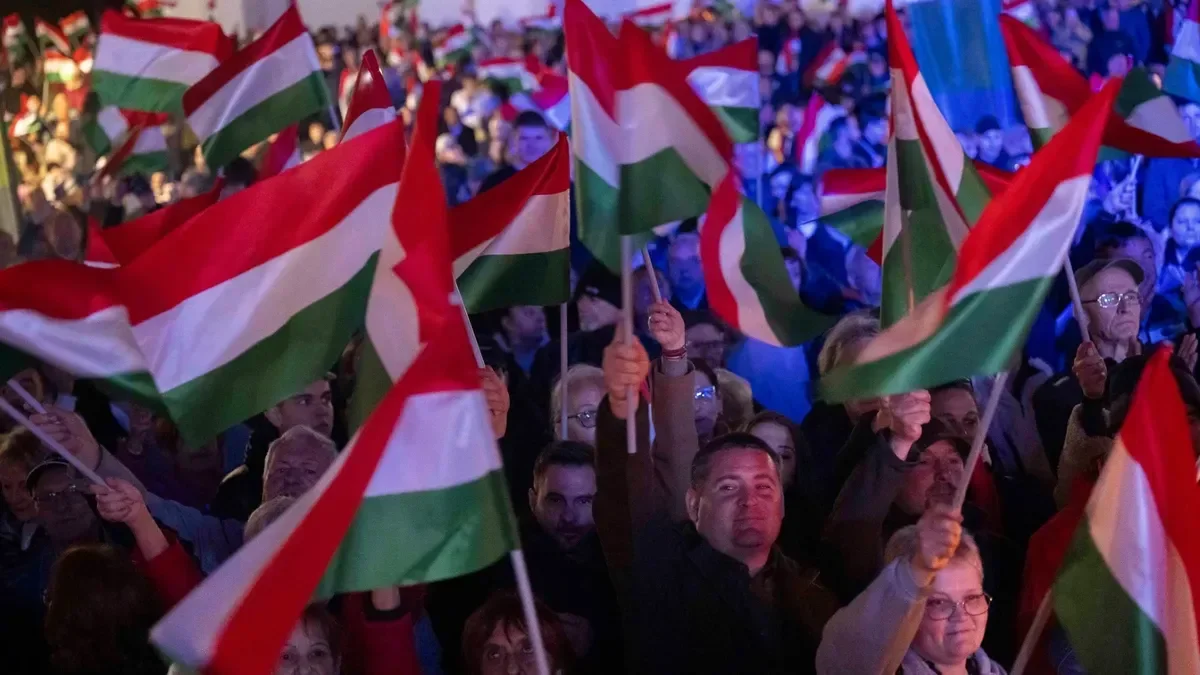
There are quite a few countries similar to Hungary in Europe. Relatively small in area, with a population of just over 9.5 million people, it is not one of the leading European countries. According to European Commission data for 2025, Hungary's GDP per capita, taking into account purchasing power parity, was 76% of the EU average. This is the fifth lowest figure among EU countries: Hungary is between Croatia and Slovakia and lags behind other Central European neighbors - the Czech Republic (92%), Poland (81%) and even Romania (78%). This is a rather offensive situation for the former country of “goulash socialism” , whose standard of living in the 1980s was one of the highest in the socialist camp.
Hungary has, at the very least, coped with the consequences of the crisis caused by the Covid pandemic. Its economy has been growing in recent years, although not at the fastest pace, and inflation fell to 3.3% at the end of last year. Nevertheless, Hungarians have enough socio-economic problems, and without EU subsidies the situation would be much more serious. According to data for 2023, the country received about 6.5 billion euros from the EU, while its own contribution to the European coffers amounted to just over 2 billion. This situation continued in the next two years. The situation is aggravated by political disputes between Budapest and Brussels, which regularly reproaches the Hungarian authorities for violations of European legal norms and attacks on civil liberties, which is why it has frozen payments to this country several times.
Another Hungarian problem was the emigration of the young and educated population leaving to work in the West. 80% of emigrants are people under the age of 40, and a third of those who left have a university education.
Government attempts to combat brain drain through propaganda campaigns and increases in some social benefits have had little success. According to a survey conducted at the end of 2023, only 43% of Hungarians aged 16 to 24 linked their future in the next 10 years with their home country.
Orbán's path
But this whole rather gloomy situation is hidden by one political trump card, thanks to which Hungary appears in world news headlines much more often than other countries in its “weight class”. He has a first and last name: Viktor Orban. The leader of the national conservative Fidesz party has been head of the Hungarian government since 2010 (previously he was prime minister from 1998–2002). Constant polemics with the leadership of the European Union, friendship with Donald Trump and almost unconcealed sympathy for the Kremlin even after the outbreak of the military conflict in Ukraine made Orban one of the most prominent figures on the European political scene.
One of the members of the European Parliament, in a conversation with the author of this article, once described the role of the Hungarian leader in the EU with the not very parliamentary expression “pain in the ass.” The Orban government has repeatedly tried to block the extension of European sanctions against Moscow, and is currently preventing the allocation of a new aid package to Ukraine worth 90 billion euros. Budapest is playing a high-stakes game and trying to play a much more prominent role on the European and world stage than Hungary's size and potential would suggest. That is why so much attention is being focused on the upcoming elections. After all, this time there is a greater likelihood than ever that Fidesz and its permanent leader will be defeated and the Orbán era will come to an end.
Viktor Orban (he will turn 63 on May 31) entered politics very early. Already in 1988, when the Hungarian communist regime was rapidly collapsing, Orban became one of the founders of the Fidesz party, then called the Union of Young Democrats. A year later, Orbán became famous for his fiery anti-Soviet speech at the reburial ceremony of former Prime Minister Imre Nagy, the leader of the 1956 Hungarian national uprising, executed by victorious Moscow-backed conservative communists.
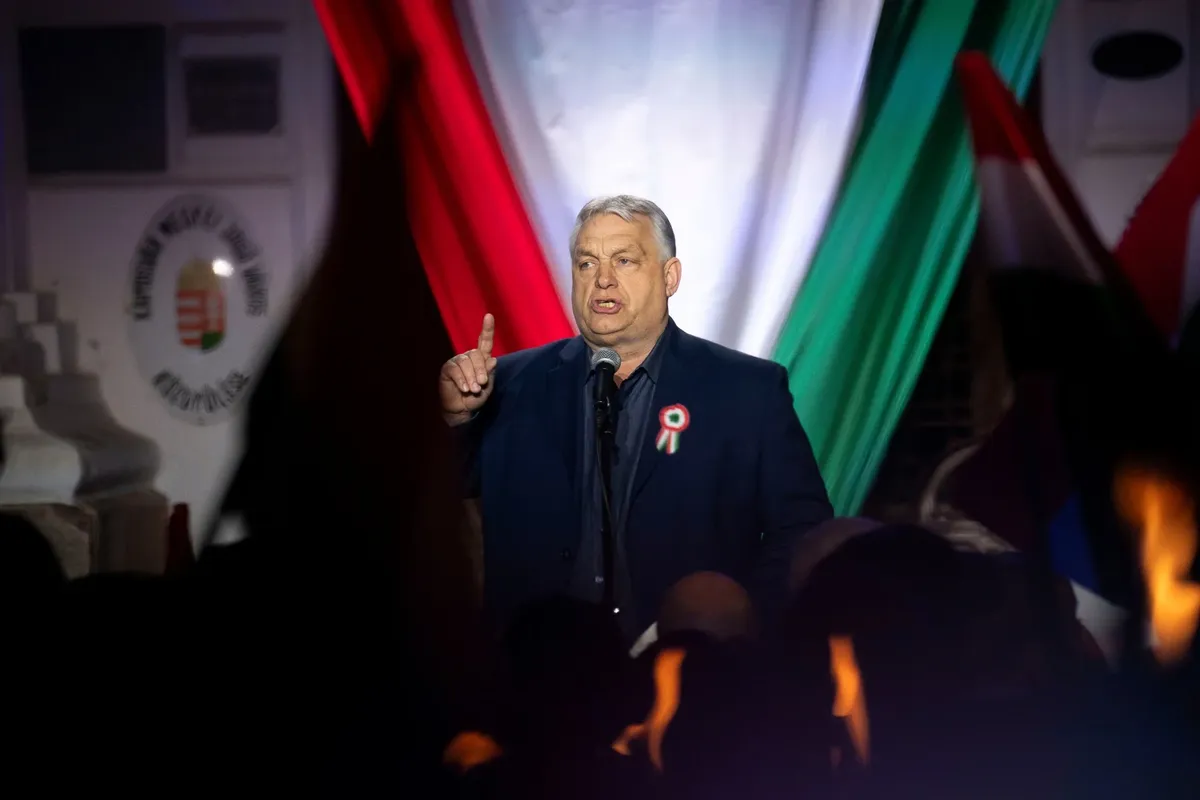
In the 1990s, Fidesz, whose sole leader was the charismatic Orbán, was a fairly standard Central European right-wing liberal party that advocated radical economic reforms and the integration of Hungary into the Western community. At 35, after his party's election victory, Viktor Orban became one of the youngest prime ministers in the country's history. But four years later, Fidesz suffered a painful defeat from the socialists, and, having gone into opposition, Orban began an ideological transformation, moving increasingly to the right, towards nationalism and conservatism.
It is difficult to say what was more in this - sincere evolution or political calculation, but Orban made the right decision. After a series of corruption scandals and extremely imprudent statements by then Prime Minister Ferenc Gyurcsany, the Socialists' ratings sank, and in 2010 Fidesz returned to power. It was already a different party - both ideologically and structurally. Orbán became the undisputed leader of the Orange (the color of Fidesz) and remains in this role to this day. “No one dares to do anything without Orbán’s consent. He is an autocrat,” former Hungarian diplomat Gyorgy Varga notes in an interview with the Czech publication Forum 24 .
Orbán system
Since the early 2010s, the Hungarian political system has gradually transformed from an imperfect but quite liberal democracy into a different type of regime. Orban himself calls it illiberal democracy, emphasizing that the framework of the system he created is “traditional Christian values”, supposedly reflecting the views and will of the majority of Hungarians. To strengthen these values, Hungary has adopted a number of repressive laws reminiscent of current Russian ones, in particular, the law on “foreign agents” and on restricting “LGBT* propaganda.”
In practice, we are talking about such a transformation of democratic institutions that would help the Fidesz party stay in power for an indefinitely long period. To this end, a number of changes were made to the Constitution, and a reform of the judicial system was carried out, which actually made this branch of government dependent on the government. The electoral system was also transformed: electoral districts were divided in a way more favorable to the “orange”, and the party that wins with more than 50% of the votes (Fidesz succeeded in 2022) now receives additional “premium” seats in parliament, which provides it with a constitutional majority.
In addition, the Orbán government has made it possible for ethnic Hungarians living abroad to obtain Hungarian citizenship through a simplified procedure.
Hundreds of thousands of residents of Hungary’s neighboring countries – Romania, Slovakia, Serbia and Ukraine – took advantage of this, the vast majority of whom joined the Fidesz electorate. The ancestors of these people ended up on the territory of other states after the Treaty of Trianon (1920), which was extremely painful for Hungary, which sharply narrowed the country’s borders. Trianon has been the main historical trauma of Hungarians for more than 100 years, and Orbán actively exploits this. Under him, memorials to the “seized territories” arose in Budapest and other Hungarian cities, and the prime minister himself once caused an international scandal by appearing on the stadium podium during a football match wearing a scarf depicting a map of Hungary in its pre-Trianon borders. This is one of Orbán’s main skills - to switch the public’s attention from internal problems to external ones, true or imaginary.
Hungarian political scientist Balint Magyar (namesake of opposition leader Peter Magyar) claims that during the years of his rule, Viktor Orban created a “mafia state” in Hungary. “What I mean is that the political corporation has taken over the state apparatus, the economy, and even the oligarchs themselves,” explains Magyar. — The political elite, through state institutions, subjugates business. Decision-making is transferred from the ministries to the informal court of the main patron. There are ministers and people without any positions, but with enormous influence... It is difficult for clan members to go against the system. At the very top is Lorenz Meszáros , an oligarch and essentially Orban’s wallet. He is ranked 875th on the Forbes world list. The fortune of the Orbán clan is estimated at about 2% of the GDP of all of Hungary. And going lower, to the mayors of the villages, we see the same corruption, just on a smaller scale.”
The binding of government and business by mafia mutual responsibility and institutional adjustments in the spirit of “illiberal democracy” are the foundations of Orban’s system. All this is complemented by pressure on the opposition and the media that support it. One of the techniques is transparent hints to advertisers: placing advertisements in “undesirable” media may cause government agencies to pay close attention to your business. Many formally private media outlets are actually owned by owners closely affiliated with the ruling party. And of course, one cannot discount the outstanding populist gift of the Hungarian Prime Minister and his ability to take steps at the right time that bring additional support from voters. Thus, before the 2014 elections, the Orban government achieved a 25% reduction in utility bills, which was helped by a lucrative contract for oil and gas supplies from Russia.
But lately something has gone wrong. A couple of weeks before the elections, polls showed that Fidesz was behind its main rival, the Tisza party led by Peter Magyar, by 10–15%. Among voters who have decided to participate in the elections, this gap is even greater. At a pre-election rally on March 27 in the city of Győr, where opposition supporters also came, Orban was booed , after which his nerves lost and he began shouting that people who want to see a “pro-Ukrainian government” in Hungary are against him.
What happened? Has Viktor Orbán's magic stopped working on Hungarians?
The Magyar Path
For a decade and a half, the Hungarian opposition made a rather pathetic impression. The coalitions that emerged over the years were, firstly, too heterogeneous: they united all of Orbán’s rivals - from socialists to the far right - and therefore could not present any convincing common program. Secondly, the opposition remained too “Budapest-centric”: the capital has long disliked Viktator, as Orbán was nicknamed by his opponents, but the provinces until recently stood strongly behind him. Thirdly, for a long time the anti-Orban forces did not have a leader who could compete with Orban in eloquence, self-confidence and the ability to talk to voters from a wide variety of social groups.
It seems that 45-year-old Peter Magyar, a man who entered politics just two years ago, was able to solve all these problems. Before that, he was a lawyer, worked in the corporate sector, and served for several years in the Hungarian mission to the EU, which helped him acquire useful contacts in Brussels. He had many such contacts in his homeland, including through family connections: Magyar’s great-uncle, Ferenc Madl, was the president of Hungary in 2000-2005, his mother was an influential lawyer, and his ex-wife Judit Varga became Minister of Justice under Orbán. At one time, this pretty and energetic lady was even called Crown Princess “Fidesz” and they predicted a great future for her.
It was with Judith, with whom Peter had managed to break up by that time, that the beginning of his political career turned out to be connected.
At the beginning of 2024, a scandal erupted over the pardon of a former orphanage employee who was convicted of covering up the crimes of his boss, who was involved in pedophilia.
The pardon, for which, as it turned out, there was no basis, was signed by the then President of Hungary Katalin Nowak (under Orban, all presidents (this position is mainly ceremonial) are his creatures). But according to the law, such decisions must be endorsed by the Minister of Justice, who was that same Judit Varga. As a result of the scandal, both the president and the minister resigned. And Prime Minister Orban washed his hands of it, although the media discovered that the decision in favor of the scandalous pardon was lobbied by influential people associated with his party.
Until then, little-known Peter Magyar unexpectedly went on the attack. He stated that he did not want to "be part of a system in which those who are truly responsible hide behind women's skirts." After which he made a series of revelations and criticism of people from Orban’s inner circle. In a matter of weeks, Magyar turned into a hero of the opposition (although he did not reconcile with his ex-wife, who calls him a traitor), joined the ranks of the moderate Tisza party, which existed on the outskirts of Hungarian politics, quickly became its leader and launched a wide opposition campaign. The first success came in the summer of 2024, when Tisza won almost 30% of the votes in the European Parliament elections in Hungary, finishing second after Fidesz (about 45%).
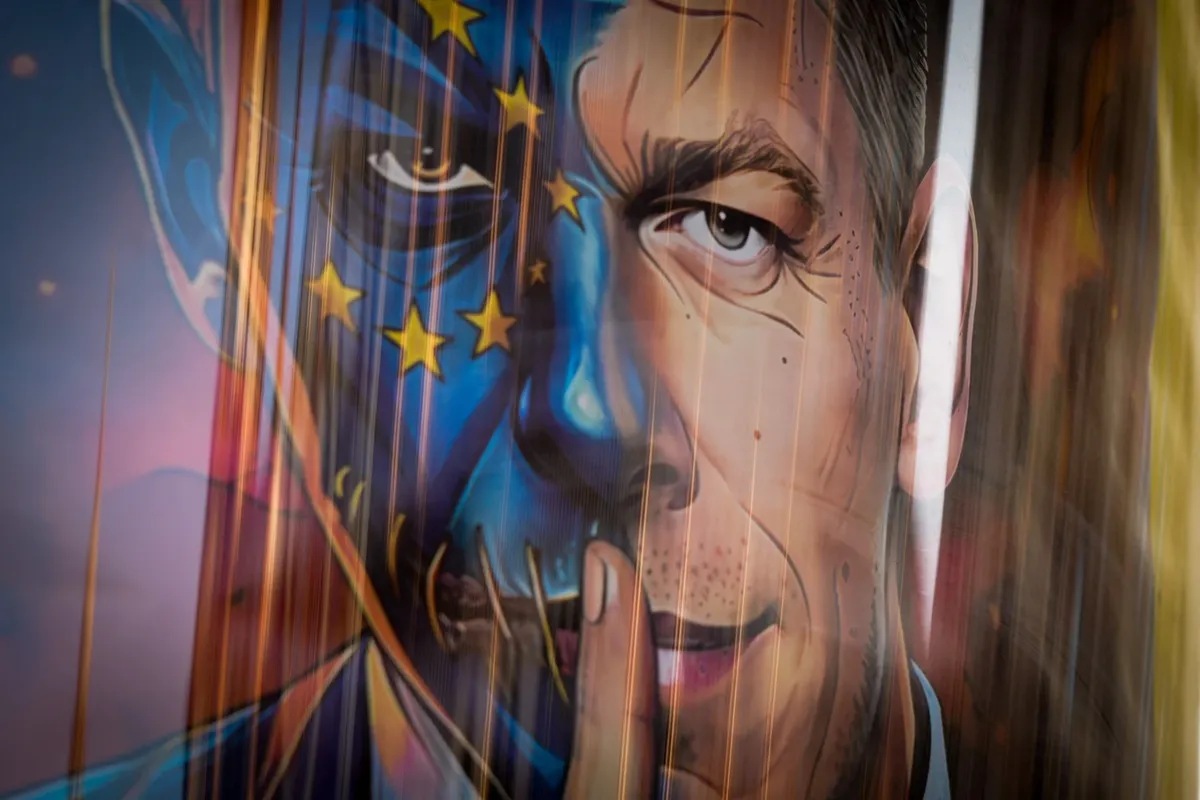
Many considered Peter Magyar to be a one-day politician, but this turned out not to be the case. Youthful and energetic, he even visually seems to many to be a suitable alternative to the flabby, elderly Orbán, about whose health there are various pessimistic rumors in Hungary. But the main thing is different. Magyar was able to understand that it was possible and necessary to compete with Orban on his own field, so he adopted nationalist rhetoric. As Hungarian political scientist Rudolf Metz notes , “Magyar’s strategy so far has not been to outdo Orbán in nationalism, but to expose the gap between his nationalist rhetoric and his failure to govern. From Brussels’ point of view, this makes him a less unpredictable nationalist and a potentially stabilizing factor.” Magyar advocates ending the confrontation with the EU, but on terms that “take into account Hungarian national interests.” Orban responds with constant accusations against his rival that he is a “puppet of Brussels.”
The Tisa party focused its campaign on provincial voters. “Magyar has three to five rallies every week, including in small towns and villages. These meetings with local residents always generate great interest, and Magyar conducts them with obvious enthusiasm and dedication. This is an important lesson: without it nothing will work. Peter Magyar is perceived as a real leader who united Budapest with the provinces and won over even Hungarian nationalists,” says diplomat Gyorgy Varga. The fact that Magyar is a former insider of the Orbán system and knows its strengths and weaknesses also works in his favor, although this is what initially caused distrust among many voters.
Both rivals radically differ in their views on *** Russia and Ukraine, which has become one of the main topics of the current election campaign.
Budapest between Moscow and Kyiv
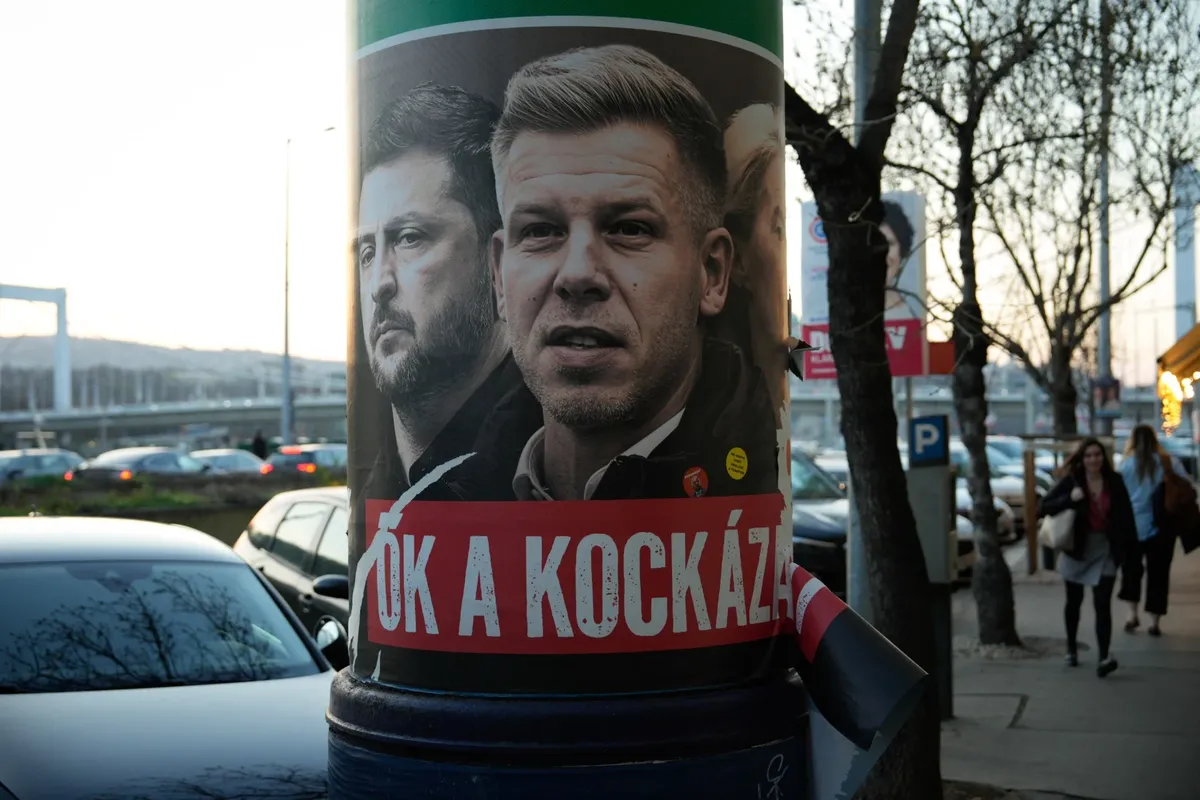
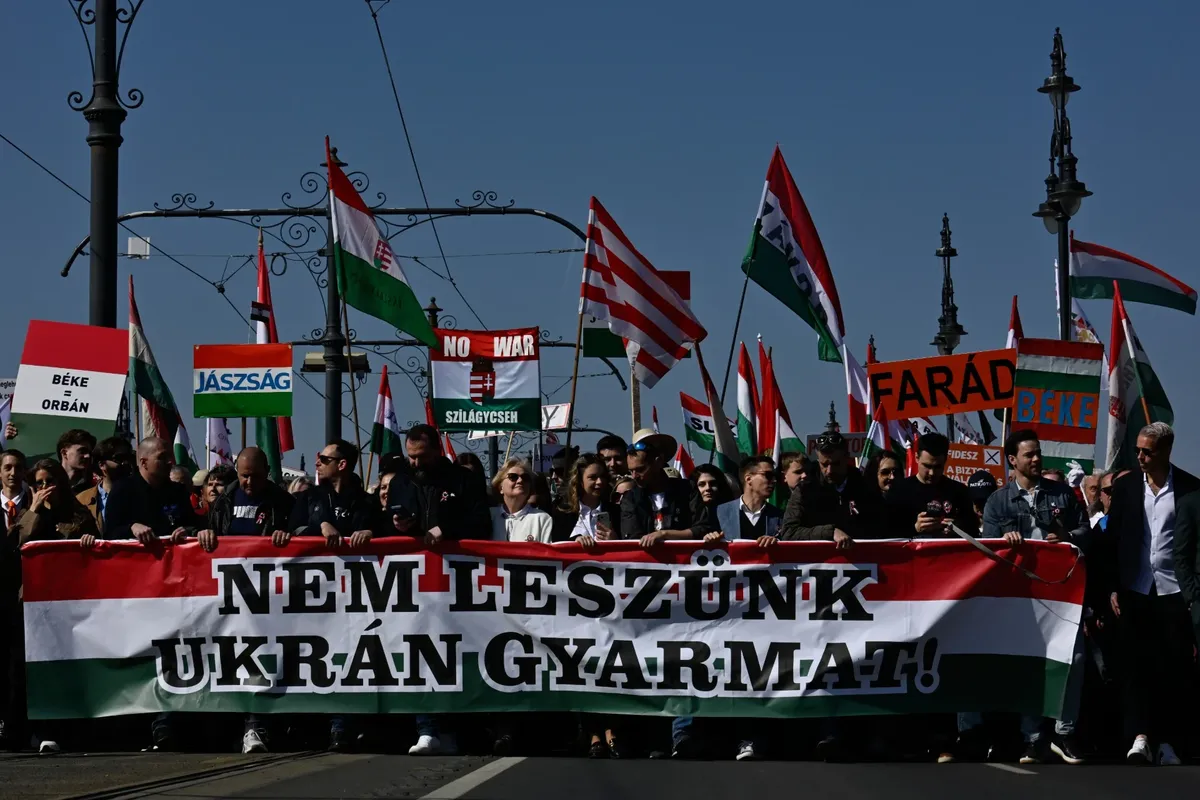
On the election posters of the Fidesz party, the portrait of Viktor Orban can be found much less frequently than the image of Vladimir Zelensky. On one of them, the smiling face of the Ukrainian president with a somewhat devilish expression is accompanied by the inscription: “Zelensky should not have the last laugh.” As is often the case with Orbán, it is difficult to say whether this is just a matter of political calculations or the Hungarian prime minister’s sincere obsession with the Ukrainian issue. Be that as it may, at the largest pre-election rally of Fidesz supporters in Budapest on March 15, among others, a large banner was visible with the inscription “We will not be a Ukrainian colony!” “The Hungarians flatter us shamelessly,” a Kyiv journalist friend commented on this.
Viktor Orban’s sympathies for Putin’s Russia have long been well known. Behind them is not only a pragmatic interest in Russian energy resources and Rosatom, with which Hungary entered into a multi-billion dollar contract in 2014 for the construction of new reactors at the Paks nuclear power plant. There is also an ideological point here: as experts note, after the eurozone crisis and the migration wave of 2015, to which Hungary reacted extremely harshly, Orban came to the conclusion that Western civilization is in decline, and Russia, China and Turkey represent viable alternatives to this decadence personified by Brussels. He proclaimed a policy of “openness to the East” and began to negotiate with the listed countries on investments in the Hungarian economy, while simultaneously raising the level of polemics with the EU. The first election of Trump, with whom Orbán has an excellent relationship, gave the Hungarian leader confidence.
February 2022 put Orbán in a difficult position. He was forced to join EU sanctions against Moscow, but found a way out of the situation by becoming the main spokesman for the “cause of peace” in Europe and a critic of Ukraine, to which Hungary refused to provide military assistance. Orban met with Putin after the outbreak of hostilities, tried unsuccessfully to play the role of mediator between Russia and the West, and Foreign Minister Peter Szijjarto has visited Moscow and Minsk at least 15 times since 2022. It was Szijjártó who became the protagonist of the recent scandal when it turned out that he regularly passed information about what was discussed at EU meetings to his Russian counterpart Sergei Lavrov.
Relations between Hungary and Ukraine became even more strained when, in early March of this year, Hungarian police seized two small vans in Budapest, containing more than $40 million, 35 million euros in cash and 9 kg of gold bars.
The passengers of the two cars were seven Ukrainian citizens who were traveling from Austria to their country. Hungarian police arrested the passengers and even released a somewhat theatrical video of the arrest, accompanied by an action movie soundtrack. Ukraine explained the presence of valuables by their transportation from an Austrian bank to a Ukrainian bank, confirmed by relevant documents. The Ukrainian citizens were soon released, but what was confiscated from them remained in the hands of the Hungarian authorities, despite protests from Kyiv. In the pre-election atmosphere, this incident played into the hands of Fidesz, giving voters the impression that Ukrainians were engaged in some illegal activity on Hungarian territory.
The situation was not improved by some of the expressions of Vladimir Zelensky, who said regarding Hungary’s blocking of EU financial assistance to Ukraine: “We hope that one person in the European Union will not block 90 billion and Ukrainian soldiers will have weapons, otherwise we will give the address of this person to our armed forces, our guys - let them call him and communicate with him in their own language.” Even Orban’s rival Peter Magyar responded to this in a spirit quite consistent with the image of a Hungarian patriot: they say, no one has the right to insult any Hungarian like that, and Zelensky should apologize. At the same time, Magyar himself more than once expressed solidarity with Ukraine and was in Kyiv, where he laid flowers at the memorial to the victims. At his election rallies the slogan Ruszkik haza! (“Russians - go home!”), reminiscent of the 1956 uprising.
Uncertain Victory
The elections should show whether Orbán's political instincts have failed him. Namely, what turned out to be closer to the Hungarian voter: the prime minister’s cries about the Ukrainian threat and the impending involvement of Hungary in a “foreign” *** in the East or his rival’s attacks on the Orbán system of power with its corruption, the decline of the healthcare and education systems and eternal squabbles with Brussels. However, everything may turn out to be more complicated than simply summing up the voting results. The authors of a recent study by the Danube and Central European Institute (IDM) warn that Orbán's system gives him a number of opportunities to remain in power even if his party loses the election.
Among these possibilities there are quite exotic ones - for example, the introduction of a state of emergency in the country after a serious incident was staged. The Washington Post recently claimed, citing European intelligence sources, that Russia's Foreign Intelligence Service was considering a scenario in which an assassination attempt on Orban would be staged. The Kremlin called these reports disinformation. There are, however, other options. According to the law, the new parliament will convene only a month after the elections. During this time, if Fidesz is defeated, IDM analysts point out, the former, tame Orbán parliament may accept the resignation of the equally tame president of the republic and elect Orbán in his place, while simultaneously expanding the powers of the head of state.
Such scenarios are very risky and can certainly plunge Hungary into an acute political crisis. But there are also more realistic scenarios in which the possible victory of the Tisza would turn out to be Pyrrhic. Everything will depend on the degree of mobilization of the electorate of both parties. Orbán's voters, who are predominantly elderly and provincial, as well as overseas Hungarians from neighboring countries, have traditionally been more disciplined. As a result, the gap between Tisza and Fidesz may be noticeably smaller than polls predict. In addition, there are small players whose role can become decisive. This is primarily the far-right party “Our Motherland” ( Mi Hazánk ), which is balancing on the brink of the 5% barrier. If it passes into parliament, and the gap between Tisza and Fidesz turns out to be small, Orban may invite the far right to join him in a coalition and thereby snatch victory from the opposition.
In general, on April 12, Hungary will be closely watched both in Western European capitals and in Moscow, Kyiv and Washington (Donald Trump has already expressed his full support for Viktor Orban). Apparently, the outcome of the current Hungarian elections will not be clear until the very end.