
Translated material
Where does the past go?
In the main Annecy competition, the film by Oscar nominee Anton Dyakov “Black Box”

Still from the animated film “Black Box”
Completely unexpected for a director with bright humor, fiery temperament, and a tough narrative - a sensual impressionistic animated essay, in which there is an awareness of the fragility of one’s own existence. And something else deeply personal, human, beyond description.
In a small house, sandwiched on both sides by hefty buildings with a sharp roof and a bird weathervane at the very top, there was an old photographic studio. And here comes the gray-bearded photographer.
And his last year of life, in which he tries to remember “all of them.”
Glasses with a sparkling black temple, unsteady shadows running along the glass. From the flickering of these shadows... from the flickering of the dark surface of oily water... memories shine through - significant and passing.
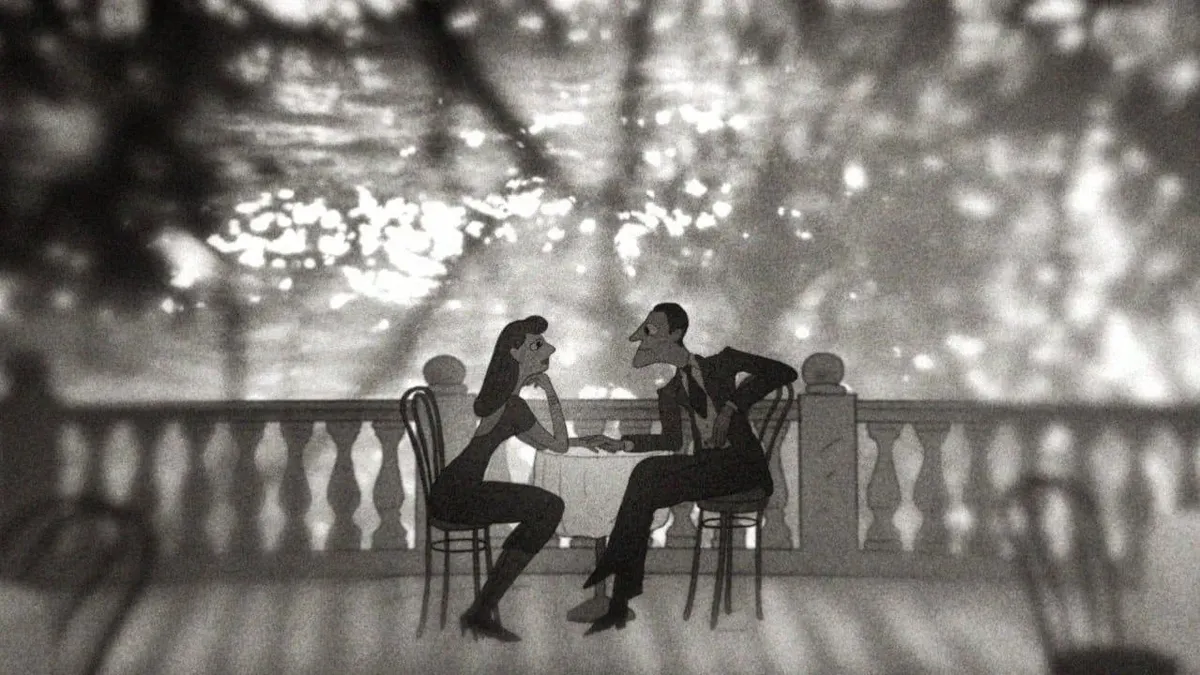
The photographer is a cozy, pot-bellied old man with big ears. He himself is a passing nature. Morning - scrambled eggs, tea, bicycle... And the past flashes before my eyes, like camera flashes. For example, water sparkling with splashes of sun. A retro couple froze on the embankment - lovers at a table with a white tablecloth - hands cannot be separated. Pre-war happiness. Military troubles... Bombers over the high dome of the church. Burning cities.
Black water with reflections absorbs memories, all whispers and screams.
He scrolls through the photo under the chandelier with a moth fluttering. There are dozens of faces on them, people who visited his home studio. Considers the moments captured and sunk into the past.
Here is a cheerful, spry sailor with dressed-up girlfriends in an embrace...
Here is a family: dad, mom and son with unruly bangs. Will something happen to him?..
These flashing moments are connected into an intermittent thread, a drying up stream of the past. And is he alive and is she alive?
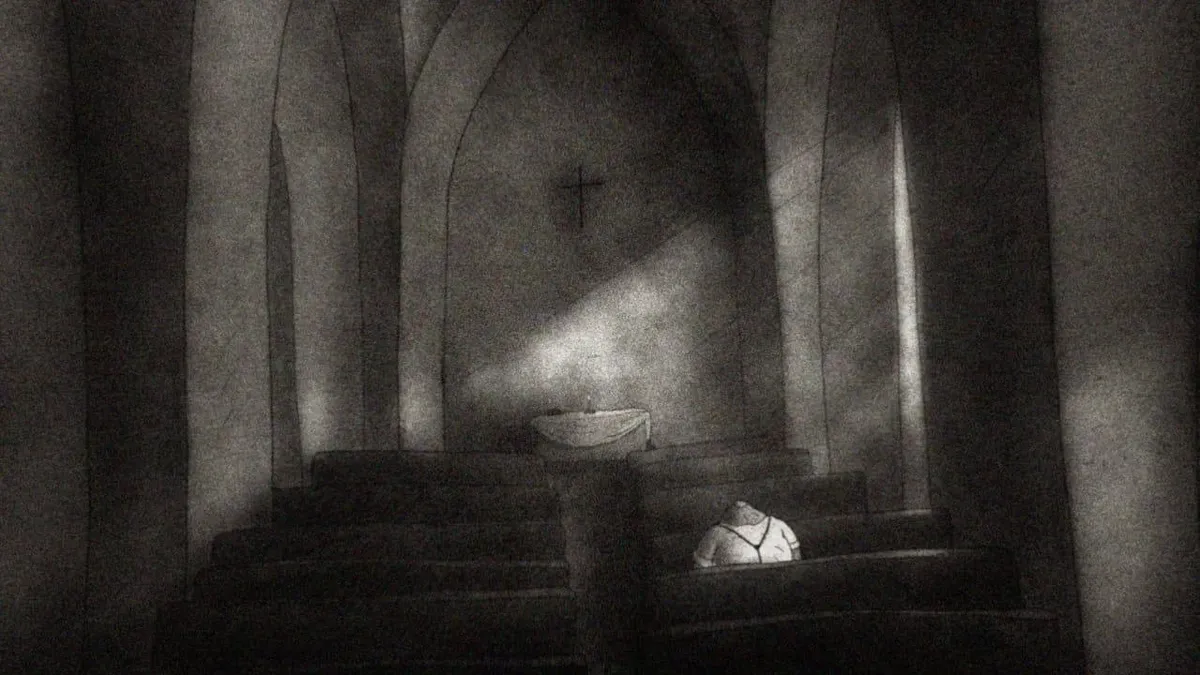
The lovers will separate, the little son with stubborn bangs will turn into an adult man who has long lost his parents; a sailor crippled by the war - into a disabled “samovar” on a cart. And only in the photo they will remain unchanged. But even a photo doesn’t last long.
The hero of the film is time itself. Or a memory crumbling into fragments. An attempt to answer the question for yourself: “Where does the past go?” All these voices, smiles, touches. Read and unread books. Memorable verses. Pain, quarrels, falling in love, resentments, losses, bombings, burned cities.
Maybe he is the last one to remember “and faces long forgotten.” He will try to revive them... at least in memory. Call into the past. Don't let the fire consume these cards - fragments of memories. The faces of our ancestors, the inhabitants of the tragic 20th century, who do not yet know that it will be replaced by the apocalyptic chaos of the 21st century, flash in real, not drawn photographs. And they quickly fly away with sparks of fire and black ash into the sky.
For me, “Black Box” is animated poetry about the transience, the ephemerality of the once dense, sleepy and sleepless, with the smells and bright sounds of life.
As Anton himself says, it is a quiet requiem for a bygone era and those who personified it. Like Chekhov, “And when our time comes, we will die obediently, and there, behind the grave, we will say that we suffered, that we cried, that we were bitter.”
“Black Box” is a reflection on the futility of trying to remember people as they were. About the experience of loss, which is both universal and unique. Does time heal? For some reason, it seems that only oblivion dulls the pain.
But even when the old empty photo studio is swallowed and crushed by an excavator, the shadows will rush along the streets, along the embankment. The shadows here are once “former.” They are “all here.”
Including this embankment. At a table with a flying white tablecloth right next to the black sea.
A black box is something unknowable, indecipherable. A symbol of the incomprehensible hidden from the observer. And also a symbol of the final secret, death, indecipherable.
Anton Dyakov is attracted by contrasts brought together. In “Kosta,” a cheerful skeleton got out of a cemetery, walked through a gloomy metropolis with a balloon, trying to give joy to “those living today.” “Python and the Caretaker” is a story about the friendship between Python, who escaped from the Zoo, and his guard, the Janitor-Career. In the “Box-Ballet” of brutal gravity, a die-hard boxer fell in love with a weightless, unearthly reed. In the very first frames of “I’m Burning!” birds made love on the body of a doomed homeless man.
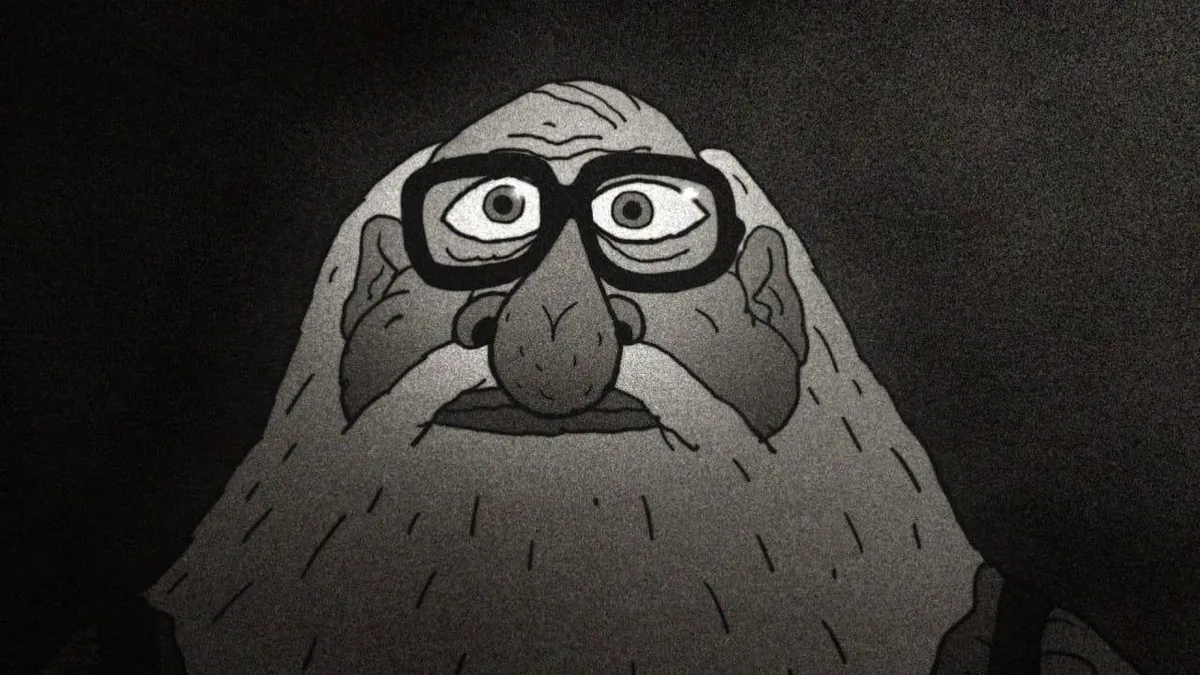
And our plump Photographer on a bicycle (hello to Michael Dudok with his brilliant poetic nostalgia “Father and Daughter”) is riding, it seems, into oblivion. Accompanied by the baby's roaring laughter. Maybe himself?.. And the sun, flickering, accompanies him behind the tops of the tall treetops.
For himself, Anton described his film as a requiem. Perhaps... and it really suits today's mood. But when I think about the film, I first of all see a gray-haired photographer with a thick beard - a keeper of memory - riding a bike along an avenue of poplars, accompanied by children's laughter through the splashes of light.
In addition to Dyakov’s film, Natasha Mirzoyan’s “Winter in March” from the Berlin program was in the main competition, where it was noted in the short film program.
MORE ABOUT CINEMA
Larisa Malyukova runs a telegram channel about cinema and more. Subscribe here .