
Translated material
The investigation raises the stakes
The article on “foreign cooperation” is being replaced by “treason”, the terms triple – human rights activists document a new repressive trend

Detention of Igor Kulzhenkov. Screenshot of TASS video
The repressive articles introduced after the start of the special operation not only continue to be applied, but they change their “weight.” Human rights activists from the project “Support for Political Prisoners. Memorial"* noticed a new trend: security forces began to tighten the charges in cases of confidential cooperation with foreigners (Article 275.1 of the Criminal Code) to a more serious article - high treason. Since mid-2025, at least 13 such cases have been reclassified. The difference is not only in the wording, but also in the timing: if, according to Art. 275.1 on average is given a little more than four years, but in cases of treason - already over 12. The charges are becoming wider, the evidence is becoming more vague, and the sanctions are becoming as harsh as possible. Several such stories from recent weeks are in the Chronicle of Current Repressions.
Treason
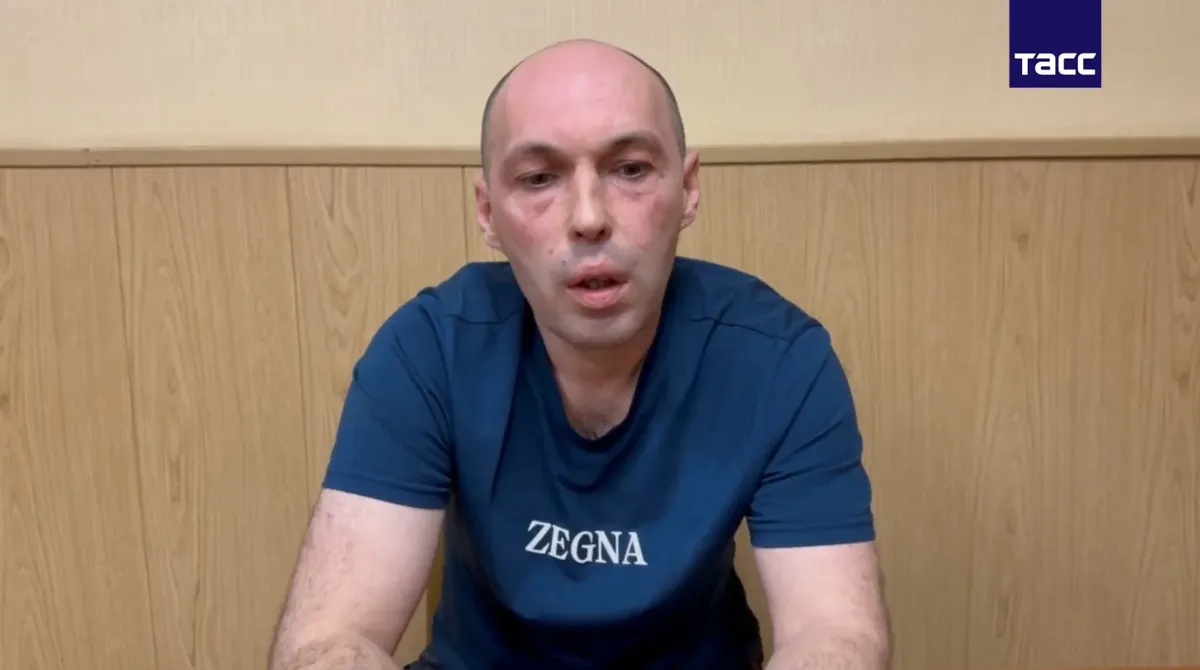
The Moscow City Court sentenced Igor Kulzhenkov to 13 years in a maximum security colony and a fine of 200 thousand rubles in the case of high treason (Article 275 of the Criminal Code), the FSB reported .
According to investigators, in September 2024 Kulzhenkov corresponded with a “representative of the Ukrainian special services” on Telegram, and later, on the instructions of this representative, collected and transmitted information about unnamed objects of the Ministry of Defense. The FSB reported that Kulzhenkov was detained in March 2025 at the Tambov railway station.
In the FSB operational recording, two security officers press Kulzhenkov to the ground with their knees and handcuff him, and then take him into the car. After this, the man speaks to the security forces’ camera already in the room: “I assumed that this information was of interest to the Ukrainian special services, and realized that in the future it could be used by the Ukrainian side to commit actions directed against the security of the Russian Federation.” It is unknown when exactly this video was filmed.
***
The Samara regional court sentenced a minor youth to six years in a general regime colony in a treason case.
According to the investigation, in September 2024, the accused collected photographs of administrative buildings in Syzran, and then handed them over to “a representative of the Ukrainian military movement.” The images allegedly could be used against the security of Russia.
It is unknown how old the teenager was at the time of his arrest. His current age is also not specified.
***
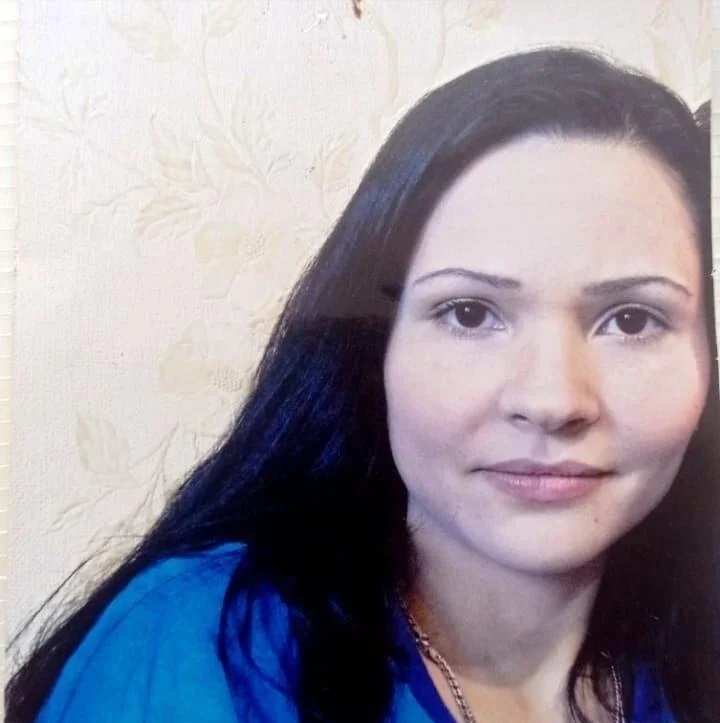
The Kursk Regional Court sentenced Svetlana Savelyeva, a translator from the Irkutsk region, to 15 years of general regime imprisonment in the case of attempted treason and preparation for illegal border crossing.
Savelyeva was detained in October 2024 in the Kursk region, after which the woman was kept under administrative arrest until mid-December under the pretext of disobedience to police demands (Article 19.3 of the Administrative Code). In December, Svetlana was sent to a pre-trial detention center for a criminal case.
According to the FSB, Savelyeva underwent “military training” in Kazakhstan, after which she was going to join the Ukrainian army during the attack on the Kursk region. Svetlana herself said that she wanted to get to Ukraine to reunite with her lover, a serviceman of the Armed Forces of Ukraine named Alexander.
According to the report of the special rapporteur on the situation of human rights in the Russian Federation, Mariana Katsarova, FSB officers may have used torture on Savelyeva to obtain a confession: they allegedly kept her in the cold without clothes, beat and strangled her, used electric shock, and threatened her with murder and sexualized violence.
As evidence, the investigation used photographs of train stations from Svetlana’s phone, as well as correspondence with Alexander.
In addition to the case against Savelyeva, a criminal case was also opened against the driver Igor Sandulyak, who agreed to take her to the front line in the Kursk region. The court fined him 150 thousand rubles for helping prepare to cross the Russian border.
***
In Chita, a journalist was detained on suspicion of treason, Chita.Ru reported , citing an unnamed source.
The publication does not provide the full name of the detainee. This is a certain Alexander A. According to journalists, the detainee worked as a correspondent for Kasparov.Ru, published a report in MBKH Media from a rally of supporters of the shaman Alexander Gabyshev in Chita, and was the chairman of the local branch of the Western Choice party of Valeria Novodvorskaya.
According to Chita.Ru, two more people were searched in this case, including the former head of the Mogochinsky district on the border with China; this man “was last on social networks on March 18.” The second person who was searched “neither confirmed nor denied this information” in a conversation with the publication.
"Fakes" and "discredit"
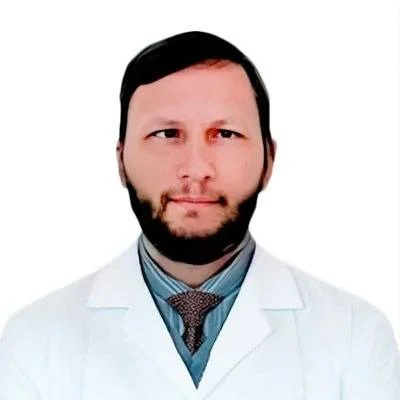
52-year-old Mikhail Fetisov, a former neurologist, was sent into custody on charges of distributing “military fakes” (clause “d”, part 2, article 207.3 of the Criminal Code) and public appeals, which the investigation interprets as a threat to state security (clause “c”, part 2, article 280.4 of the Criminal Code), writes “Mediazona”**.
According to the publication, Fetisov was detained in mid-October 2025. The basis for criminal prosecution was his publications on the Internet: he actively maintained personal pages on social networks and commented on what was happening.
The publication “Activatika” also drew attention to Fetisov’s recordings. In particular, in June 2025, Mikhail discussed on social networks the case of a Ukrainian prisoner of war.
A source familiar with the case materials told Mediazona that this is not the first time that security forces have become interested in Mikhail. In the summer of 2024, a search of his place was already carried out, but then the case did not proceed, and he remained at large. After the visit of the security forces, Fetisov resigned from the fourth city hospital. Formally - at their own request, citing deteriorating health. For a year he could not find a new job and ended up getting a job as a guard at a kindergarten.
The publication’s interlocutor claims that Fetisov’s condition has noticeably worsened after suffering from COVID-19: the man spent a month on a ventilator, after which he received the third group of disability and began to walk with a cane. According to the same source, the illness also affected Fetisov’s emotional state - he became more irritable. At the same time, Mikhail never received the required compensation for the severe course of his illness.
***

The Leninsky District Court of Tyumen fined local resident Anastasia Alontseva 30 thousand rubles for “discrediting” the army (Article 20.3.3 of the Administrative Code). Mediazona drew attention to this decision.
The reason for the protocol was a live broadcast on the VKontakte website. During the broadcast, Alontseva, laughing, talked about the possibility of sending her partner to SVO in order to receive the due payments.
In the protocol, police officers indicated that a “girl of Slavic appearance” allegedly “laughingly speaks about the method of enriching herself through marriage to a serviceman and his subsequent assignment to a special military operation.”
In court, Alontseva admitted guilt and explained her words as an emotional reaction. According to her, she soon deleted the recording of the broadcast. Nevertheless, as Anastasia herself claims, after this strangers continue to write to her condemning her.
Banned LGBT***
The Ingodinsky District Court of Chita sentenced the 23-year-old owner of a local gay club, Tatyana Zorina, to four years in prison, Chita.ru reports .
Zorina was found guilty of organizing the activities of an extremist organization (Part 1 of Article 282.2 of the Criminal Code). According to investigators, Tatyana held events and managed the social networks of the Jackson gay club. According to a friend of Zorina, at first she worked there as a DJ, and after buying the business she began to work in management and costumes.
Zorina was awaiting her verdict under house arrest. She was taken into custody in the courtroom after the verdict was announced. She was also banned for four years from engaging in activities related to the management of public organizations and the administration of Internet pages, and after her release she was given a restriction of freedom for a period of one and a half years.
In October 2024, a raid took place in Jackson, during which Zorina was detained. The Russian Community movement and pro-government blogger Vladislav Pozdnyakov published videos in which security forces humiliated employees of the establishment.
***
The Soviet district court of Astrakhan sent a resident of the region suspected of participation in an “extremist LGBT organization” to a pre-trial detention center.
According to investigators, from November 30, 2023 to December 29, 2025, a resident of the Astrakhan region published photographs and videos on his page on the VKontakte website in which security forces found “propaganda of the ideology of the international LGBT social movement and encouragement to participate in the activities of this community.”
"Financing extremism"

The Kuntsevsky Court of Moscow began considering a criminal case against 21-year-old Fyodor Sidushkin on charges of financing extremism (Article 282.3 of the Criminal Code), Mediazona learned.
Sidushkin is originally from Yoshkar-Ola, however, judging by his activity on social networks and participation in legal proceedings, in recent years he has worked in Moscow and positioned himself as a practicing lawyer.
The history of his conflict with security forces began long before the criminal prosecution. In the summer of 2025, Sidushkin was detained under an administrative charge of petty hooliganism. As follows from his own complaint, filed on June 19 in the same Kuntsevo court, the reason was a report of a “mass fight”: according to the police, on the night of June 5, Fedor, together with another man, chased a third person after a conflict. A few hours later he was taken for a medical examination, which he refused, and then released, having drawn up a report in the morning.
Subsequently, Sidushkin tried to challenge the compiled protocol in the courts and investigative authorities. Within six months, Fedor filed at least 10 complaints. Already on June 10, he appealed to the Investigative Committee with a demand to open a case of falsification of evidence and official forgery. According to Sidushkin, the police officers forged his signature in the protocol, indicating that he allegedly agreed with what was stated.
In September, at his request, a handwriting examination was carried out, but it did not produce any results: the expert referred to the insufficiency of graphic material and the impossibility of establishing who made the signatures. They refused to initiate a criminal case. An attempt to obtain a re-examination was also unsuccessful.
The last time the inspection at Sidushkin’s request was extended was on December 12. What happened next is not reflected in the materials. However, exactly two months later they came to search Fedor, after which the man was sent to a pre-trial detention center on charges of financing extremism. He was charged with transferring 100 rubles to the “Male State” movement**.
***
Former employee of the Central Bank and Transneft Vyacheslav Krysko left the country after the prosecutor in the debate asked him for four years in a general regime colony in the case of financing extremist activities.
The debate took place in the Meshchansky Court of Moscow on March 13. Krysko did not come to the next meeting, March 16. On March 25, the court suspended the consideration of the case due to the fact that the defendant fled. Krysko was arrested in absentia and put on the wanted list.
Vyacheslav was detained in July last year. On the same day, his home was searched. During the investigation, a ban on certain actions was chosen as a preventive measure for the man. The case was opened because of a donation of one thousand rubles, which Krysko transferred to FBK**** on August 5, 2021.
"Telephone terrorism"
The 1st Eastern District Military Court sentenced a minor from Khabarovsk to five years in an educational colony in the case of telephone terrorism and connections with an organization recognized as terrorist.
In 2024, a teenager called one of the schools in Khabarovsk and reported an explosive device planted in the building, which turned out to be untrue.
The following year, the guy, according to FSB investigators, began collaborating for a fee with a terrorist organization whose name is not disclosed.
After that, he sent anonymous emails that spoke of an impending explosion in the Khabarovsk administration building, which the security forces qualified as a false message “in order to destabilize the activities of the authorities.”
Deadline for a comment made five years ago
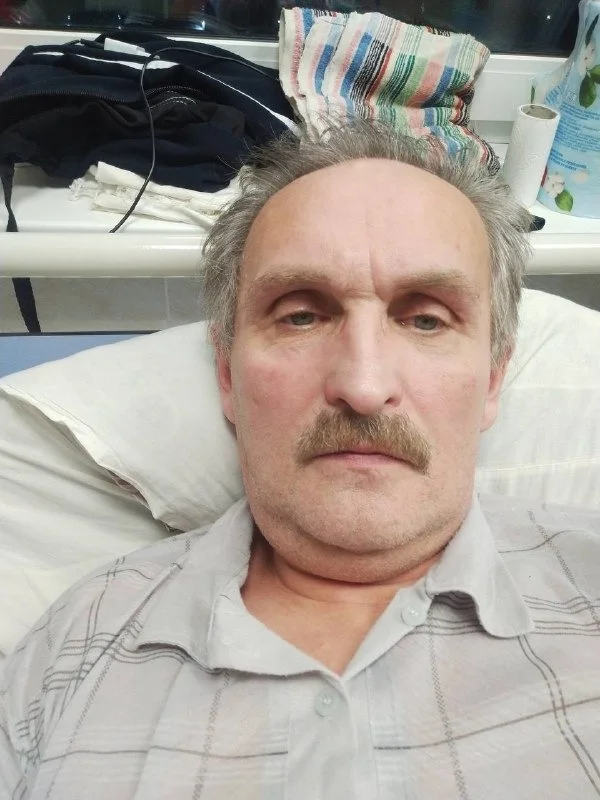
58-year-old disabled and pensioner Andrei Ivanov received two years in a general regime colony under the article on calls for terrorist activities (Part 2 of Article 205.2 of the Criminal Code). The reason was a five-year-old post left under a post about Vladimir Putin, writes Mediazona.
The state prosecution requested a more severe punishment for Ivanov - four and a half years in prison. Before the verdict was announced, Ivanov was under house arrest; he participated in the hearing via video link with lawyer Sergei Tikhonov from the Vologda Garrison Court.
According to investigators, in March 2021, Ivanov, after reading a publication in the Financial News community, left a sharp comment calling for violence and criticizing the authorities. It was this recording that formed the basis of the criminal case.
As follows from his materials, in December 2025, Ivanov wrote a confession. He himself claims that he did this after his arrest: they came to his home, laid him on the floor, handcuffed him and took him to the investigator.
The defendant's wife, Galina Ivanova, spoke at the trial. She said that after several heart attacks, her husband moved to the village of Pavshozero - away from the city and stress - while she remained in Cherepovets. As Ivanova noted, her husband is a calm person, not prone to aggression, and they tried not to discuss political topics in the family.
At the same time, in the interrogation protocols read out in court, both the wife and daughter of the defendant, Victoria Malakhova, said that the head of the family spoke critically about the authorities, linking this with economic difficulties.
Ivanov himself refused to participate in the interrogation in court. Instead, his testimony given during the investigation was read out. Then he explained that he wrote the comment “out of emotion,” simply expressing dissatisfaction with the economic situation in the country. He admitted guilt and expressed remorse.
The pensioner also spoke about the state of his health: according to him, he almost never leaves the house and constantly takes medication. The defendant noted the difficulties with registering disability and the low amount of the pension, about 22 thousand rubles, and also expressed his readiness to pay a fine if the court deems this possible.
Torture in the colony

24-year-old resident of Bratsk Dmitry Mikheev said that he was subjected to violence in the Verkhneuralsk prison, where he is serving a sentence in the case of arson of the military registration and enlistment office.
Mikheev was given a questionnaire about conditions in prison. When asked if the guards beat him, he replied: “It happens that the camera doesn’t see, or they take you away.”
He also said that he was not allowed to make calls, was not given letters, and was not allowed to order necessary products and items from the prison store. “And they don’t give us their own products either,” Dmitry wrote. When asked about prison food, he replied that it had gotten better since February, but before “it was a disaster.” The convict said that he could not properly wash himself: “A bathhouse takes no more than five minutes.”
In January 2025, Mikheev was sentenced to 18 years in prison on charges of committing a terrorist attack (Part 1 of Article 205 of the Criminal Code), teaching terrorism (Article 205.3 of the Criminal Code) and high treason (Article 275 of the Criminal Code). According to security officials, in January 2023, Dmitry threw a Molotov cocktail through the window of the military registration and enlistment office. He was also accused of financing a terrorist organization.
"Dadinskaya" article
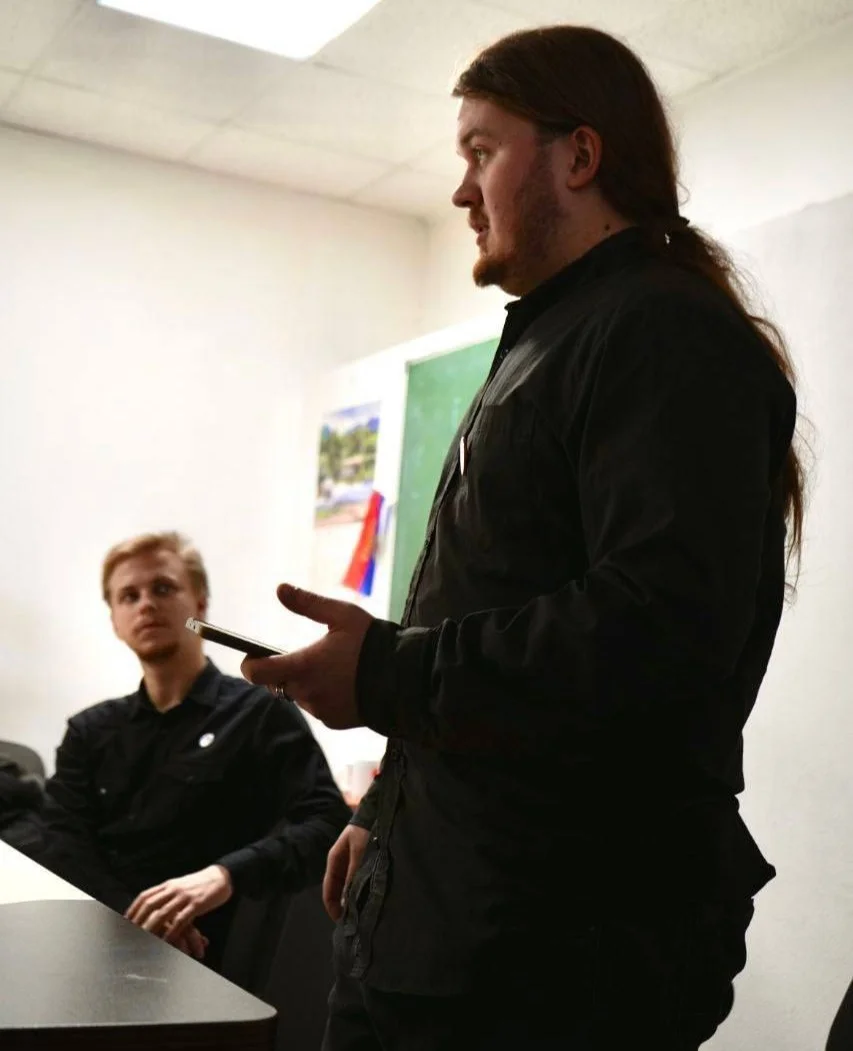
In Yaroslavl, a case was opened against the local National Bolshevik Mikhail Bitov under the so-called Dadin article - about repeated violations of the procedure for holding public events (Article 212.1 of the Criminal Code), the telegram channel "National Human Rights Protection" reported .
The investigation charges the activist with repeated violations of the rules of holding protests. The court chose a preventive measure for him in the form of a ban on certain actions.
The criminal case was preceded by administrative penalties. Previously, Bitov was twice charged with violating the procedure for holding rallies. In January, the Kirovsky District Court of Yaroslavl imposed a fine of 20 thousand rubles on him for participating in a picket against Roskomnadzor. Together with Mikhail, Andrei Strizhov and Alina Antonova took part in the action. Already in February, the activist was arrested for five days for posting leaflets. Both decisions came into force.