Translated material
Mobilization of shrines
The Tretyakov Gallery transfers the pearls of the ancient Russian collection - the Vladimir and Don icons of the Virgin Mary - to the church. This became possible only in the context of SVO
A dry protocol message appeared on the morning of April 3 in the official telegram channel of the State Tretyakov Gallery (STG).
OFFICIALLY
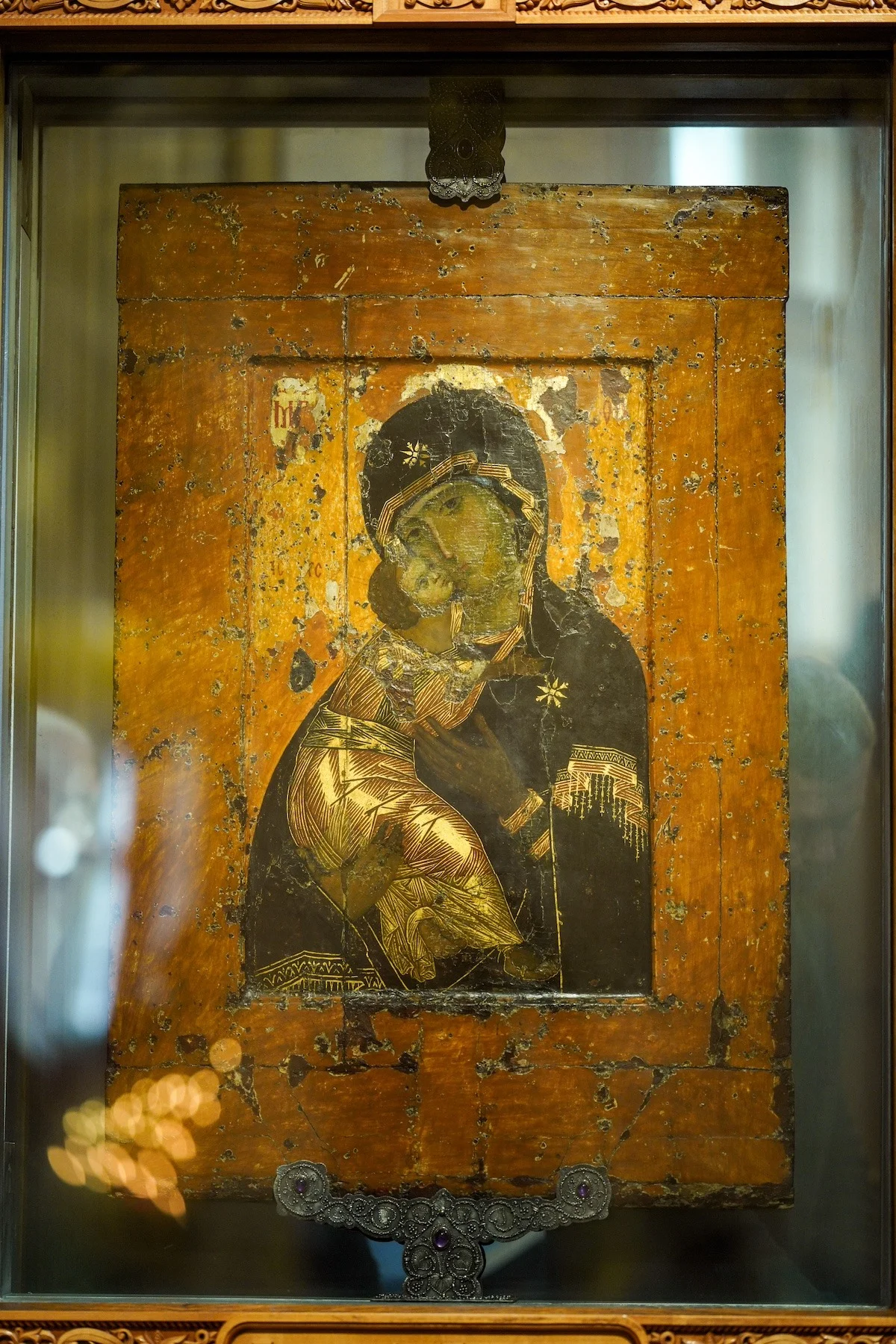
“The icon “Our Lady of Vladimir” from the first third of the 12th century (Tretyakov Gallery, inv. 14243) and the icon “Our Lady of the Don” from the end of the 14th century (Tretyakov Gallery, inv. 14244) will be transferred for free use to the Cathedral Cathedral of Christ the Savior in Moscow of the Russian Orthodox Church (Moscow Patriarchate) and from April 4, 2026 will be exhibited in the Cathedral of Christ the Savior. After restoration work is completed in the Great Church of the Donskoy Stauropegial Monastery, the icon “Our Lady of the Don” will be placed in the iconostasis of the monastery church.”
Soon after the publication appeared, the transportation of shrines from the Tretyakov Gallery to the Cathedral of Christ the Savior began.
The message does not convey the drama of the situation, fraught with a cultural catastrophe on a global scale. Only the last phrase timidly hints at the museum workers’ disagreement with what is happening:
“Since 1999, the icon has been in the church-museum of St. Nicholas in Tolmachi, in a specially equipped showcase-case, which made it possible to both prayerfully honor the ancient shrine and preserve it for future generations.”
This temple is located in the courtyard of the main building of the State Tretyakov Gallery, and the patriarch served there several times. It would seem that the balance between the religious needs of believers and museum storage conditions was found ideally.
Why it is now so important for the Moscow Patriarchate to transport these icons to premises that do not provide museum storage conditions is not officially explained. The gallery only stipulates that the transferred shrines remain part of the museum’s state fund and continue to be included in the collection of the State Tretyakov Gallery, where they arrived in 1930. It is also stated that “the icons will be placed in specialized display cases that maintain the necessary climate and eliminate any risks of deterioration of the monuments.”
Wartime icons
Obviously, the desire of the Russian Orthodox Church to obtain the Vladimir and Don icons received support in the Kremlin not so much because of the exceptional cultural value of these monuments, but because of the military-patriotic associations that they evoke. In Russian church tradition, a number of important military victories are attributed to both icons, and Vladimir, in addition, symbolizes the movement of the sacred center of Rus' from Kyiv through Vladimir to Moscow.
Russian medieval sources attribute the authorship of the Vladimir Icon to the Apostle and Evangelist Luke, who is considered the first Christian icon painter. However, art historians date it to the beginning of the 12th century, pointing to the characteristic features of Byzantine iconography of that time, which were preserved on the faces of the Mother of God and Jesus (the remaining parts of the icon are later layers).
Around 1130, the icon was brought to Kyiv from Constantinople by the Greek Michael, who was appointed head of the Metropolis of All Rus'. The icon was placed in the women's monastery of the Mother of God in the Kyiv suburb of Vyshgorod, so in the Ukrainian tradition it is called the Kiev-Vyshgorod icon. The son of Yuri Dolgoruky, Andrei Bogolyubsky, quarreled with his father, the Grand Duke of Kyiv, took the icon to Zalesye, placing it first in his country residence, and then in the Assumption Cathedral of Vladimir-on-Klyazma, where it received its current name.
In 1395, by the will of the Moscow Grand Duke Vasily I, the icon was moved to the new capital - Moscow, which was under threat of being captured by the hordes of Tamerlane. At the site of the solemn meeting of the icon, the Sretensky Monastery was founded on what is now Sretensky Boulevard.
Later, the intercession of Vladimirskaya was credited with the final liberation from the Mongol-Tatar yoke in 1480 and the victory of Ivan the Terrible over the Kazan Khanate. Actually, the era of Ivan the Terrible’s reign is the apogee of the cult of the Vladimir Mother of God, which became the main shrine of the main cathedral of the Moscow Kremlin.
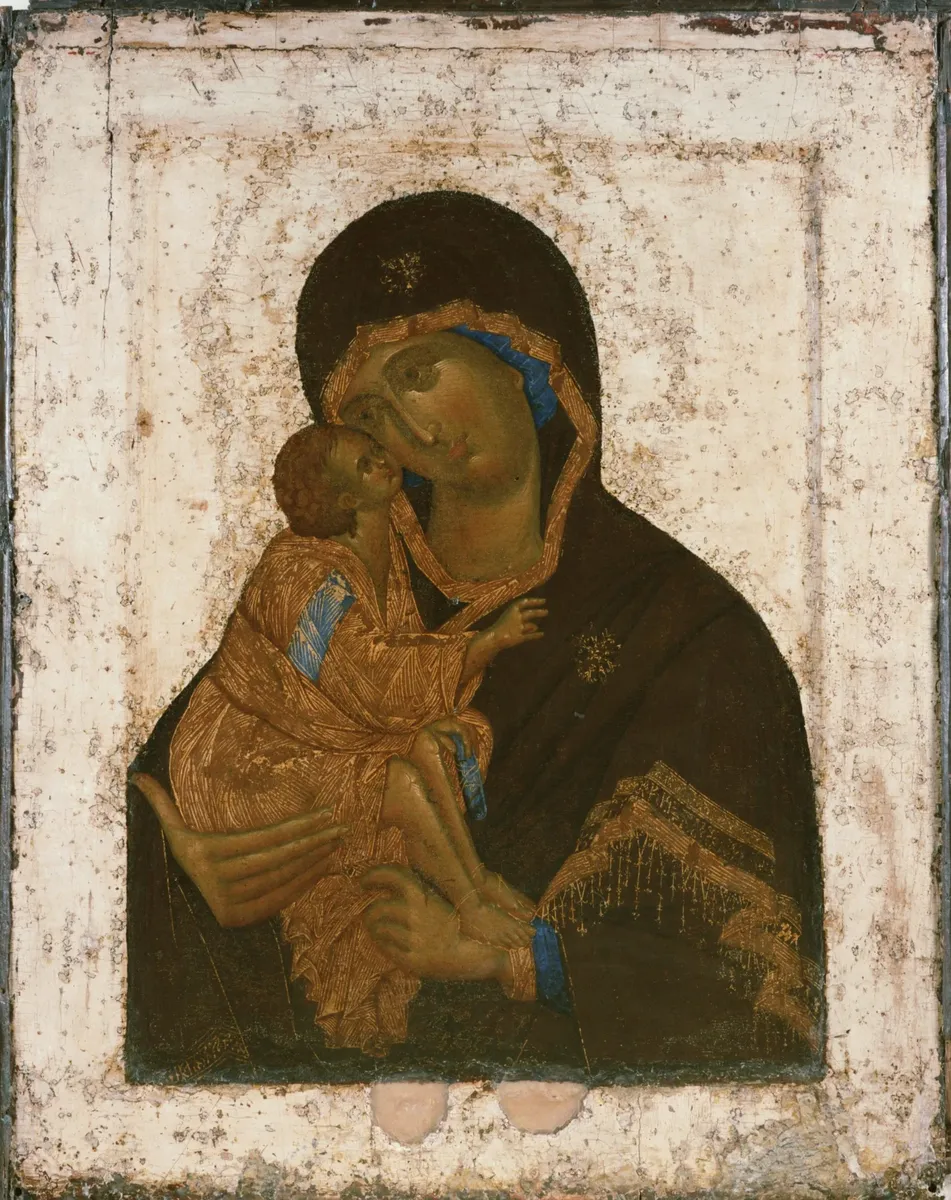
The mythology of the Don Icon is also “military”. According to church tradition, the Don Cossacks presented it to Grand Duke Dmitry Donskoy on the eve of the Battle of Kulikovo, which became the first major Russian victory over the Horde.
Art historians tend to attribute the authorship of the icon to the circle of Theophanes the Greek and date its writing to the very end of the 14th century. Ivan the Terrible also drew attention to this icon, but it truly became famous under his son Theodore Ioannovich, who in 1591 won a victory over the superior army of the Crimean Khan Kazy-Girey on the outskirts of Moscow. This victory was attributed to the miraculous icon that accompanied the army, and the Donskoy Monastery was built on the site of the battle, where it is now planned to “return” the shrine.
Even a brief overview of the history of the two icons is enough to see the implications of their current transfer to the Russian Orthodox Church. It is Patriarch Kirill and other speakers of the Moscow Patriarchate that never tire of reminding of their special usefulness in wartime conditions, because, according to them, only religion can provide some higher meaning to a tragedy of such a magnitude. In addition to propaganda participation directly in partial mobilization (as we remember, the Patriarch guaranteed paradise to all soldiers who died in the Northern Military District), the Russian Orthodox Church is also involved in the mobilization of shrines .
This approach is in tune with the occult-magical teachings preached by the current patriarch and which finds understanding among the post-Soviet post-atheistic elite, especially among the security forces.
“Why do we say “miraculous icon”? Yes, because prayers of special power were offered before her, and an ordinary physical substance, a tree covered with paints, absorbs this energy and then gives it to people,” the head of the Russian Orthodox Church teaches.
In the conditions of the Northern Military District, the Russian Orthodox Church is tasked with accumulating energy of such power that it will be enough for victory. Let’s leave the question of what all this has to do with Christianity…
Resistance is broken
The head of the ideology department of the Orthodox channel “Tsargrad” and a member of the Inter-Council Presence of the Russian Orthodox Church, Mikhail Tyurenkov, considers it completely justified to transfer two pearls of the ancient Russian collection of the Tretyakov Gallery to his church without any preliminary discussion, “without noise and dust.” “This act was prepared for many years,” says Tyurenkov, “and was associated with considerable difficulties and a negative information background from anti-church media and bloggers. Therefore, the silence that accompanies this happy event for millions of believers is quite understandable.”
In fact, if the Russian museum and, more broadly, cultural community had any opportunities for resistance, there would be no silence around the transfer of icons. Suffice it to recall the story of 2022–2023 with the forced museum workers to hand over Rublev’s “Trinity” to the Russian Orthodox Church.
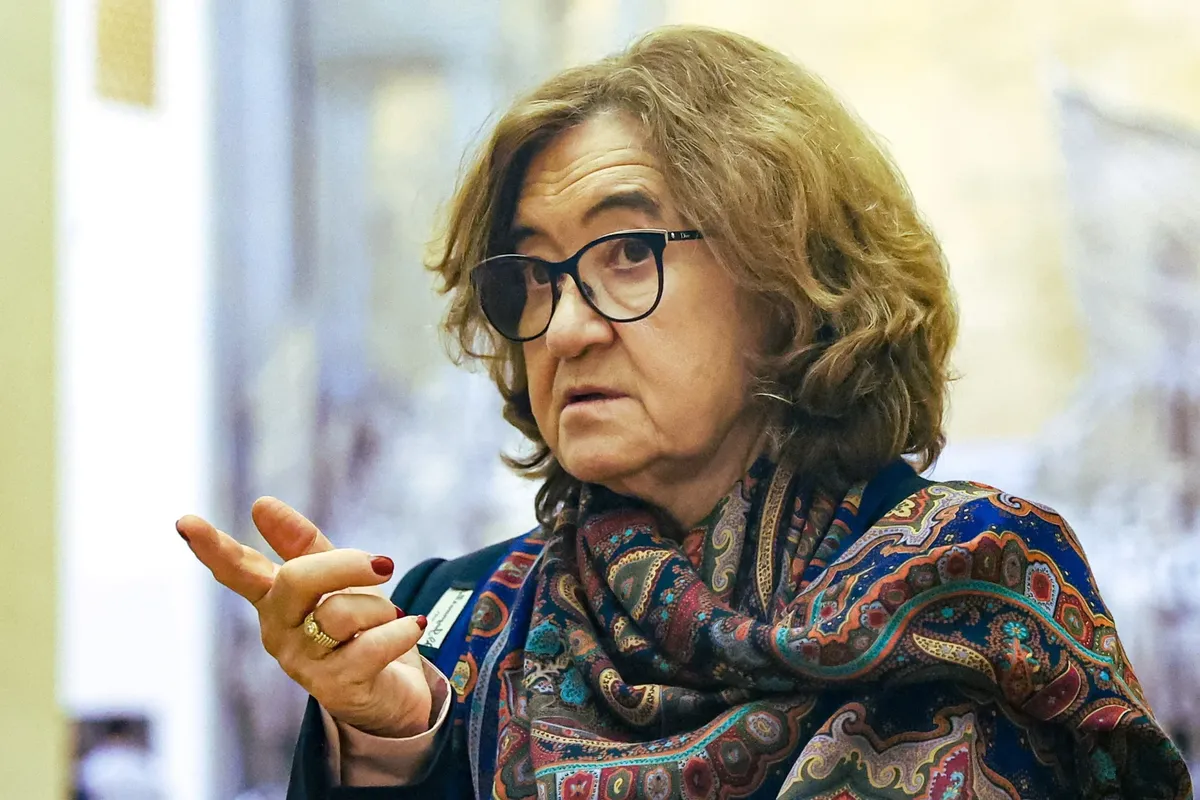
At the very beginning of the campaign, in May 2022, the then general director of the State Tretyakov Gallery, Zelfira Tregulova, notified the Ministry of Culture of the unanimous decision of the expanded restoration council of the gallery “on the impossibility of issuing the “Holy Trinity” for participation in divine services in the Trinity-Sergius Lavra due to the fact that the risks of irreversible damage to the monument in this case are very high.” After a “test” trip of the icon to the Lavra for three days in the summer of 2022, 61 areas with peeling of the soil and paint layer from the base were recorded on the monument. At the next extended meeting of the Tretyakov Gallery restoration council on September 8, 2022, the largest Russian experts in the restoration of ancient icons admitted that the further transfer of the “Trinity” to the Russian Orthodox Church and its “display” in the existing Trinity Cathedral of the Lavra threatens the very “existence of an ancient and fragile monument.”
Despite the fact that earlier guarantees were given that the icon would be placed in a special capsule where the optimal temperature and humidity conditions for it would be maintained, these guarantees were immediately violated.
As stated in the memo from the restorers dated July 15, 2022, Rublev’s masterpiece was taken to the Lavra and exhibited for worship “not in special climate capsules, but in an ordinary display case... with weak glass fastenings.” The current state of the “Trinity” in the display case, which blocked the lower row of the iconostasis of the Trinity Cathedral of the Trinity-Sergius Lavra, is not known for certain. But footage of her being worshiped in Putin’s new place has been widely circulated, which is intended to put an end to any concerns of the dissatisfied public.
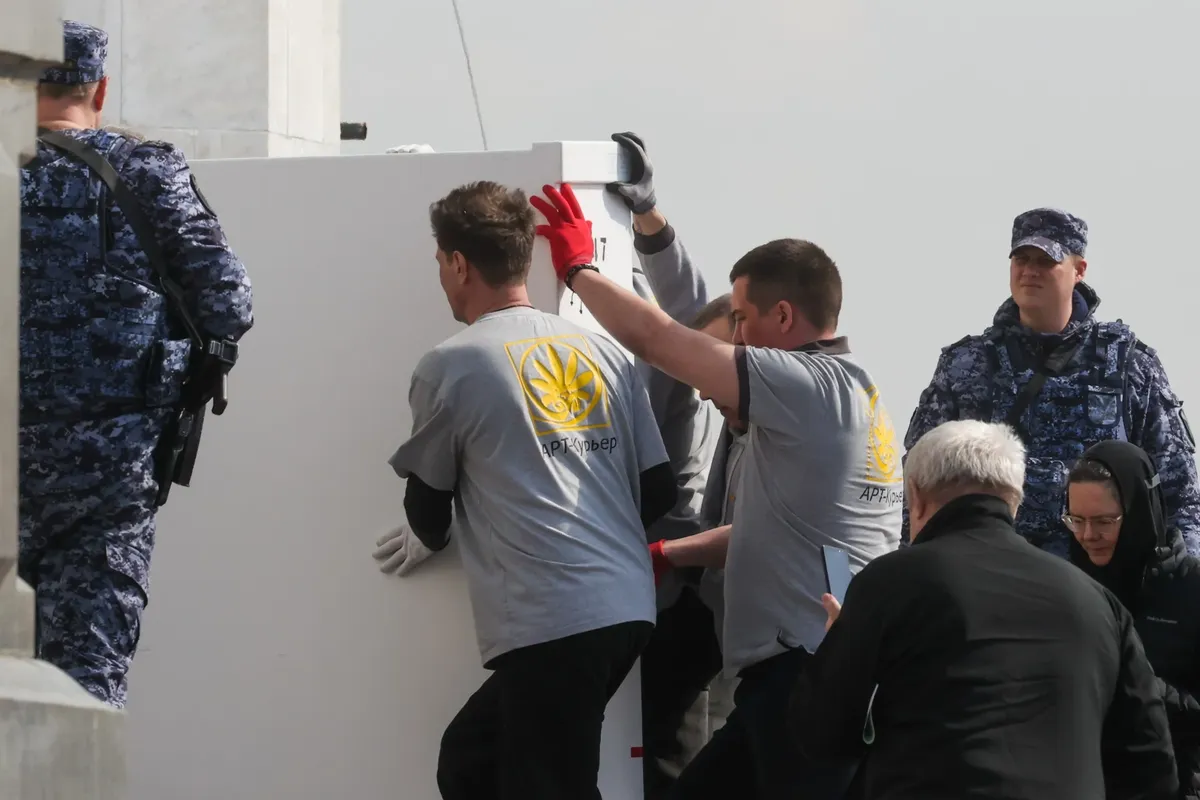
As Novaya learned from a source in the museum community, the fundamental decision to transfer the icons was made at the beginning of last year, but the Tretyakov Gallery team managed to delay the final decision. However, the team was deprived of any opportunities to involve the general public in the protection of monuments. Moreover, for her principled position, the director of the State Tretyakov Gallery, Elena Pronicheva, lost her position, and was replaced by the more accommodating Olga Galaktionova on January 14 of this year.
The icons handed over to the Russian Orthodox Church today are more modest in size than Rublev’s “Trinity”, but their condition also inspires great concern.
As Tatyana Gorodkova, the chief curator of the State Tretyakov Gallery, told the Orthodox magazine Neskuchny Sad ,
Vladimirskaya “is simply stuffed with nails! Inside the boards themselves it looks like a minefield: the nails are ancient, forged, bitten off in some places, and there is rust around them somewhere. This makes a very strong impression. At Donskaya… all the ends are clogged with nails from the frame, and this is visible to the naked eye.”
“In ancient times,” the curator reminds, “they did not stand on ceremony with icons, as they do now in our museums. An icon was an object that performed a specific function.” Actually, the removal of ancient monuments from liturgical use, which began even before the revolution, revealed to the world masterpieces of Russian icon painting, previously hidden under thick layers of “renovations,” drying oil and soot.
The liberation of the “Trinity” from these layers began in 1904 by the restorer Vasily Guryanov, who headed the committee of imperial guardianship of Russian icon painting. In 1918–1919, a more thorough restoration took place, in which the already famous Soviet academician Igor Grabar participated. By 1929–1930, almost all the main masterpieces of ancient Russian icon painting were concentrated in the collection of the State Tretyakov Gallery, which took exceptional credit for their preservation and popularization. The current snobbish remarks of church representatives about the “museum captivity of shrines” and the fact that icons were created “for narrow liturgical use” are monstrously unfair.
***
No matter how hard the philosopher Dugin and Patriarch Kirill try to give the SVO an eternal, metaphysical character, sooner or later it will end. But the real metaphysical trace from desecrated or destroyed shrines will remain forever.