
Translated material
"Red lines" of power transmission
Nikol Pashinyan faces infrastructure claims in Moscow

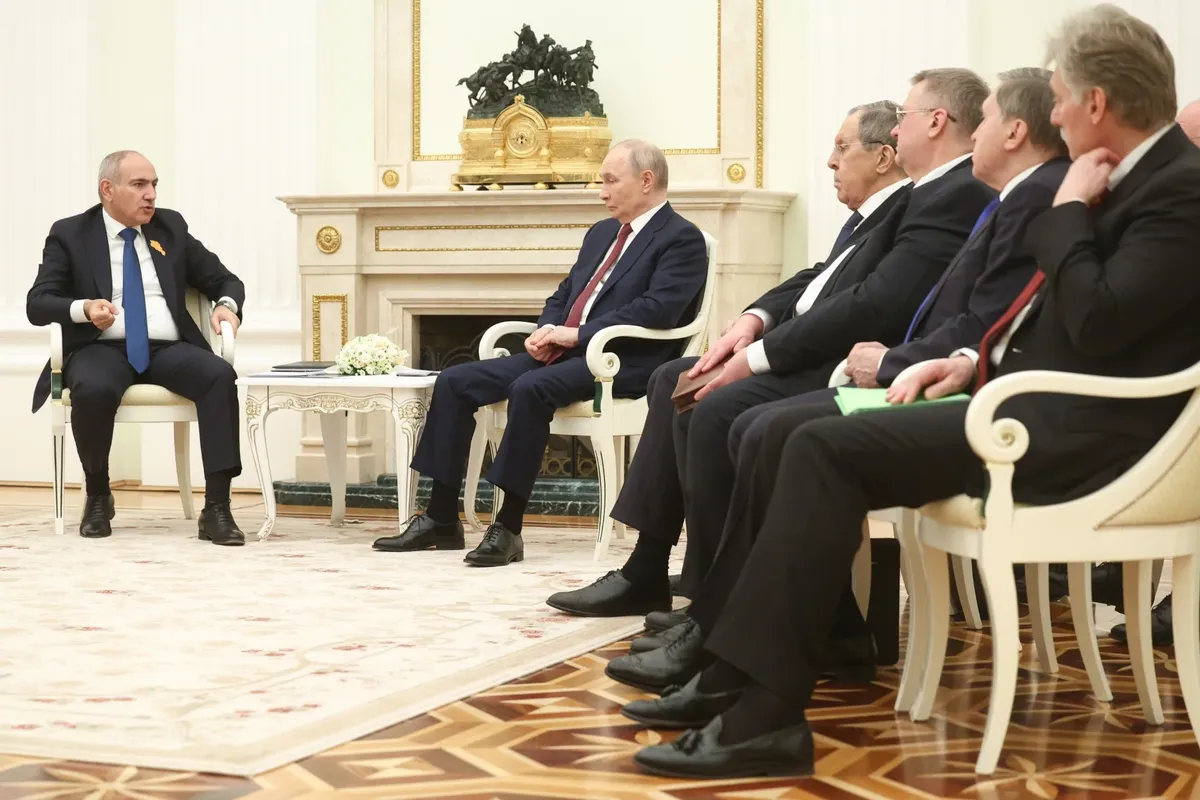
Nikol Pashinyan during a meeting in the Kremlin with Vladimir Putin. Photo: Sofya Sandurskaya / TASS
Armenian Prime Minister Nikol Pashinyan did not mark his visit to Moscow with a traditional finger-shaped heart-shaped rail for the first time in a long time. Just as an exception to the rule sometimes confirms the rule, so breaking a tradition sometimes turns out to be more significant than consistently following it. There is a time and a place to believe in the best, but not today. And not in Moscow. Instead of a short, cheerful video that doesn’t need words, there’s a 20-minute video of a conversation with Putin.
Pashinyan could not help but guess what kind of clinch the meeting in the Kremlin could turn out to be: a few weeks earlier, approximately the same questions and in the same tone were asked in Moscow to the Speaker of Parliament Alen Simonyan, but then this warm-up was entrusted to journalists. This was generally part of the genre - dissatisfaction with Yerevan’s position has always been the prerogative of trusted political scientists and TV presenters, at most an official representative of the Ministry of Foreign Affairs. The top officials showed interested, sometimes even benevolent restraint - both in the Foreign Ministry, and in the government, and in the Kremlin itself. For discontent to become public, a lot had to coincide. And it coincided.
We remember our own
The very style of conversation proposed by Moscow was based on the general understanding of the Armenian political calendar: in June there will be parliamentary elections, which Pashinyan expects to win, if not with a constitutional majority, then at least with a simple one. There are almost no other intrigues and mysteries left in these elections, and the Kremlin, presumably, understands this and proceeds from the fact that in the foreseeable future it will have to deal with Pashinyan.
Therefore, the elections are just the beginning of the conversation. Moscow is not even trying to show that it can or even really wants to truly influence them. On the contrary, the topic is only indicated without being developed. The Kremlin's stated interest in the mass participation of its Armenian supporters and even the millions of Armenians living in Russia in the elections sounded too deliberate to become a storyline in its own right, and did not.
Variations on the election theme were rather a debut, played out as competently and predictably as possible. On the one hand, Moscow cannot help but show at least a formal interest in the fate of its citizens, one of whom, billionaire Samvel Karapetyan, founder of the Tashir business empire, ten years ago became the owner of Electric Networks of Armenia. Then it became a compromise solution in the conflict, which went down in modern Armenian history as “Electromaydan”. Outraged by the intention of the Russian InterRAO, which owned power grids, to raise electricity prices, Yerevan residents, mostly young, took to the streets. As part of a solution that was considered a compromise at the time, the power grid was transferred to Karapetyan, who was formally Russian but had not lost touch with his homeland. Skeptics believed that the asset was rather a form of social responsibility that the business takes upon itself for some bonuses in other areas.
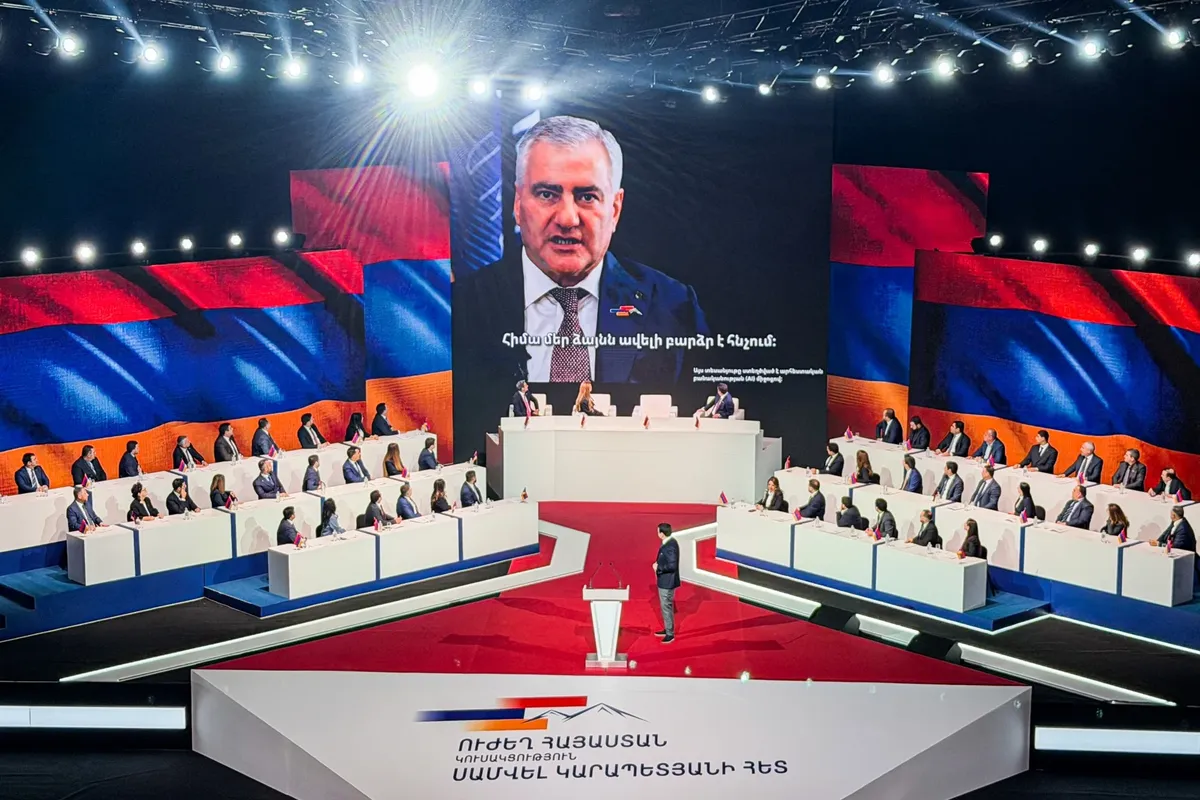
Karapetyan managed to maintain quite constructive relations with both Serzh Sargsyan and Pashinyan, who came to power three years later. However, when the latter challenged the Armenian Church in his political self-affirmation, Karapetyan publicly spoke out in its defense, which was regarded as a call to overthrow the government, and the Russian citizen Karapetyan ended up in prison.
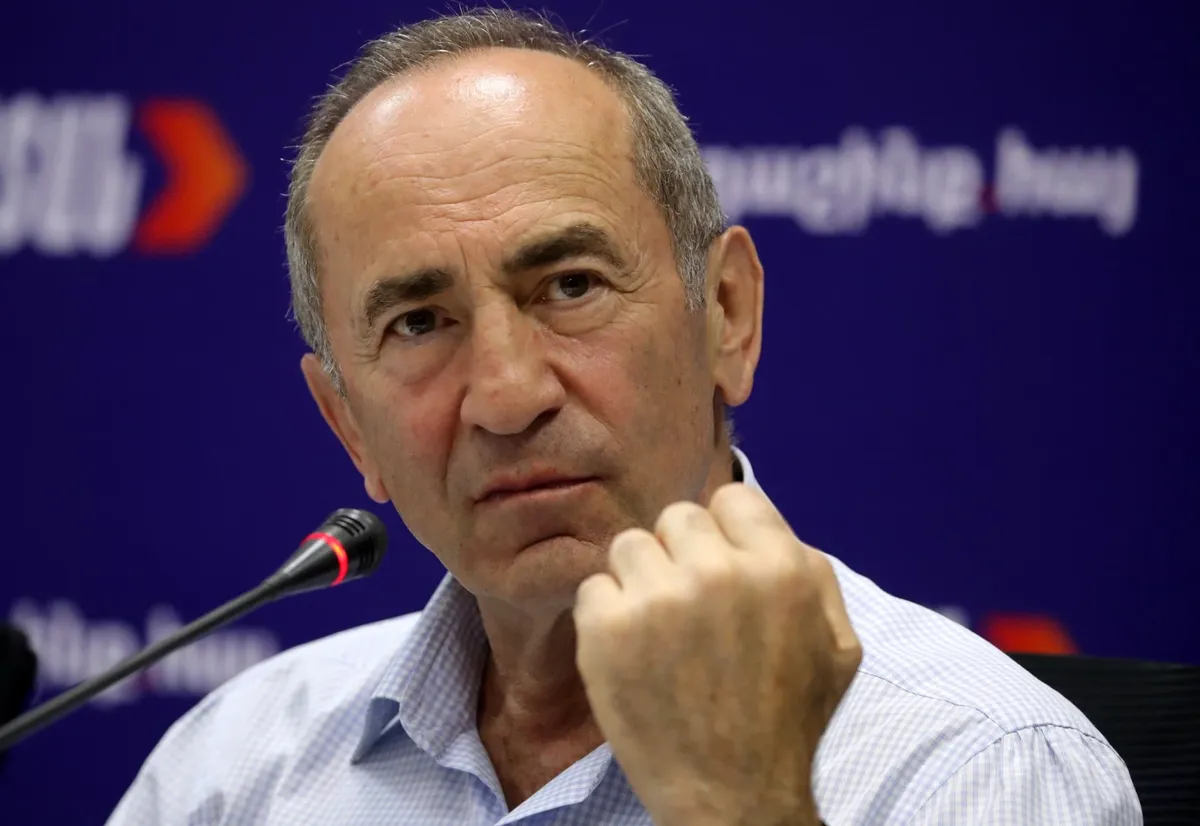
And although the preventive measure has now been replaced by house arrest, Russian citizenship does not allow him to formalize his political leadership. Therefore, his work in the elections is continued by his nephew, Narek Karapetyan, and his “Strong Armenia” party, the entire election message of which basically boils down to the consolidation of all opposition forces. And although the opposition, which has occupied the pro-Russian spectrum, has another center - ex-President Robert Kocharyan - it is Samvel Karapetyan’s party that is Pashinyan’s main rival in the elections.
Apart from occasional mentions of this topic by Maria Zakharova, the fate of Samvel Karapetyan previously worried Moscow no more than the Baku trial of Ruben Vardanyan. The Kremlin has not insisted on this topic even now. Karapetyan’s case is interesting to him in a different, not electoral context, but from the point of view of the fate of Russian investments and Russian business in Armenia in general.
Off-road map
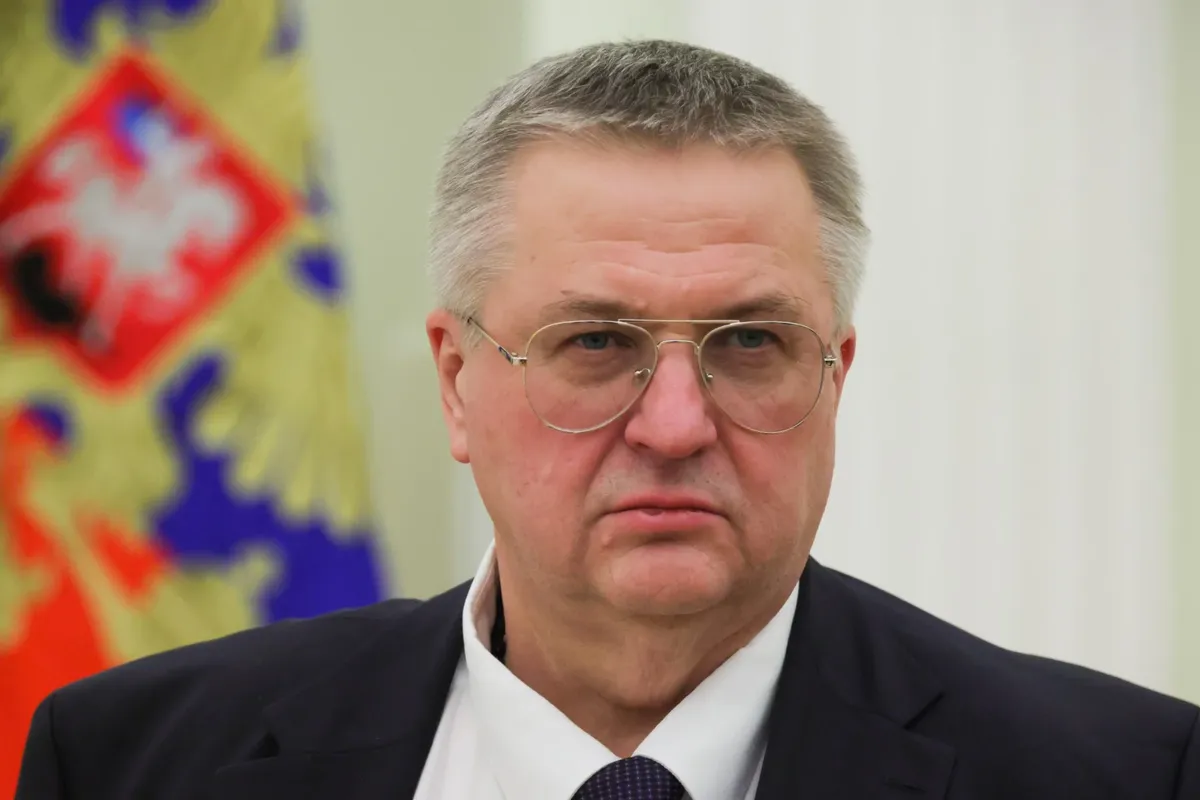
The impressive dialogue between Putin and Pashinyan, meanwhile, largely anticipates the publication of an interview with Deputy Prime Minister Alexei Overchuk in TASS, which, however, was clearly recorded before this historic meeting. In this interview, without mincing words and with utmost clarity, all Moscow’s claims against Armenia are formulated. Neither geopolitics, nor Karapetyan, nor even Karabakh are among them.
Overchuk is the Russian representative in the tripartite commission, in which Moscow, together with Baku and Yerevan, discussed, in particular, the unblocking of transport communications. These discussions, as we know, ended with Russia’s virtual removal from infrastructure issues, which for it was the number one issue. What eventually became the American TRIPP project, and before that was the Zangezur corridor and, as American interest in it fades, remains so, Moscow is accustomed to consider its future asset.
But this was only the first of Moscow’s losses, the history of which Overchuk, one of those who until the last maintained a restrained correctness towards Yerevan, formulates. The last straw was the Armenian railways, which were transferred to Russian concession for thirty years in 2008. Now Yerevan, as Pashinyan said, would like to transfer this concession to some other country that does not alienate those who want to drive on these roads. For example, Kazakhstan. Astana, however, does not confirm its participation in the relevant discussions.
It is clear that Russia did not take over these roads in order to transport goods from Yerevan to Gyumri and back.
The calculation was strategic - that the border with Turkey and, perhaps, Azerbaijan would open, and then the provincial track system would turn into a global infrastructure key.
It is unlikely that Moscow has greater illusions about TRIPP than it is worth, but the list of possible options for the internationalization of local interchanges may not be limited to them, and in this case Moscow clearly expects to fit into any of them. Precisely because it has something to offer - infrastructure, railway, gas transportation.
So the Kremlin could easily ignore the offensive words about the CSTO and give up on the electoral prospects of its old friends, the same Kocharyan. But the infrastructure resources in Armenia are like the Ark of the Covenant. And above all - railways. The threat to them, even at the level of rhetorical exercises, is beyond any red lines. Even if they are just as rhetorical.
invisible atom
But the railway is the main, but not the only part of the package of grievances. Not so significant, but much more substantive, is the intrigue with the construction of a new nuclear power plant, which Overchuk also reminds of. The life of the Metsamor Nuclear Power Plant expires this fall, and it has already been practically extended for another five years. But the decision about who and how will build the new station later must be made, if not tomorrow, then certainly the day after tomorrow. Based on the needs of Armenia, it does not need a powerful station; the ideal option is the so-called modular nuclear power plant. And the memorandum on the construction of such is listed as one of the main results of the visit of US Vice President J.D. Vance to Armenia.
The problem is that there is no experience in the industrial use of such nuclear power plants in the world. There is such a station in Russia, in Chukotka, but it is floating, which is hardly relevant for Armenia. There is one in China, but it works in experimental mode. Americans and Europeans give different deadlines for readiness, but they do not suit Yerevan - time is running out much more quickly. And in these circumstances, it rather works for Russia - as time pressure approaches, voices will sound louder about the advantages of the existing experience of cooperation, which is really important in these circumstances. In a word, be that as it may, the nuclear issue is vulnerable for Pashinyan.
Just like the railway. Overchuk asks: Armenia raised the question of transferring the concession to another country just a few days after it turned to Moscow with a request to build two small sections of the road. She needs them to connect the Armenian network with the Turkish border and with the very Zangezur project connecting Azerbaijan with its Nakhichevan exclave.
It is unlikely that this is due to the inconsistency of the Armenian side, which Overchuk hints at. The point may be something else. Moscow, which is verbally ready to help the friendly Armenian people, is not yet very interested in these initiatives of Yerevan. Including, perhaps, because they are not interesting to Baku and Ankara. What Moscow could have made Yerevan understand.
And the prospect of again being alone at the negotiating table, against, albeit momentarily, a consolidated trio of opponents, is another point of vulnerability for Yerevan, as Moscow reminded it of. Taking into account the fact that no one is going to overestimate the support of the Europeans.
In a word, Moscow has outlined its ultimate goal - an infrastructural return, the terms of which it is ready to discuss. Everything else, including talk about the impossibility for Armenia of simultaneous cooperation with the EU and the EAEU, is an accompaniment and necessary decoration:
no EU is expected either in the near or medium term, and in Armenia itself the topic is purely of a taste nature.
Hints about increasing gas prices are from the same genre. Moscow will not receive any special bonuses from this given the existing volumes, and the experience of gas pressure, as experience shows, leads to the opposite results. And you can negotiate with Pashinyan. In any case, on nuclear issues he may well meet Moscow halfway, especially since the memorandum with Vance does not oblige him or Vance to anything. Just like TRIPP, by the way.
Pashinyan’s ultimate task was more difficult, and he solved it to a certain extent. As usual, he needed to combine something that is not easy to combine. On the one hand, among his voters, and especially among those voters who do not yet know whose they are, there are many for whom it is important to know: in spite of everything, the thesis “Forever with Russia” has not been canceled. And disputes are not a rejection of old friendship, but a sign of a new one, one in which polemics are a sign of mutual respect. Those who are attracted in Pashinyan’s speeches, on the contrary, by theses about the European choice and, accordingly, rejection of the fate of an outpost, should have heard approximately this, with a reminder of the freedom of social networks.
At the same time, each side did not prevent the other from playing its game. Moscow, marking the area of its claims, indifferently watched the election performance of its counterpart, and he, in turn, took full advantage of this. But the compromise on its vulnerabilities will still be calculated in a different place, in a different tone and without cameras.
Therefore, for all the entertainment of the action, which, for the reasons described, corresponded to the sentiments of both sides, only opposition optimists in Armenia could see in it an ultimatum or a semblance of a memorable conversation between Trump and Zelensky. Just like Pashinyan’s supporters are signs of his daring readiness to break with the past. Moscow and Yerevan discussed how they will play the long game. And certainly after the elections.
The European Community summit is expected in Yerevan on May 4. And on May 9, Pashinyan will probably receive an invitation to Moscow. And so far there is nothing visible that will prevent him from accepting it. Even if there are more important things to do, Moscow will also understand.